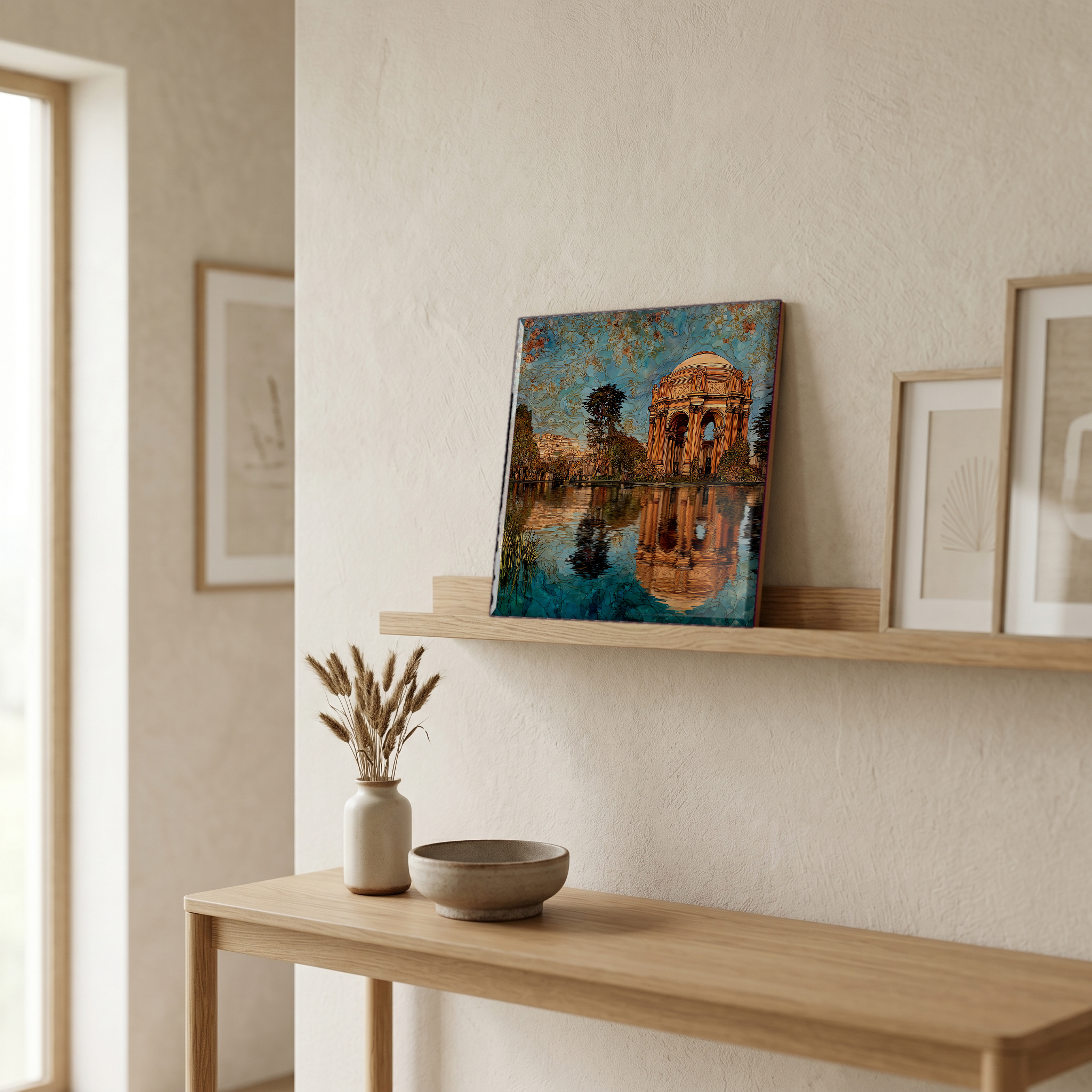
Wender·Vista
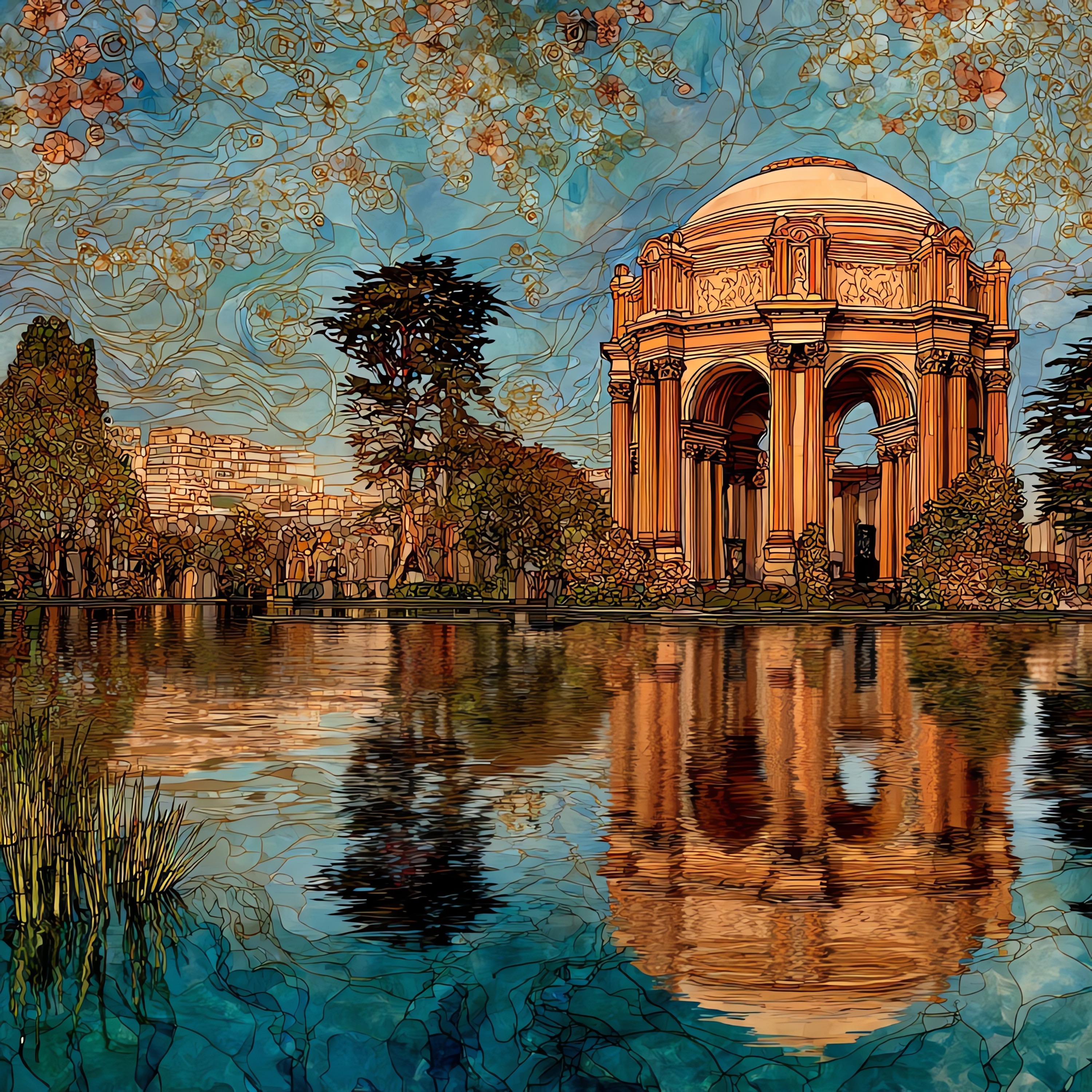
Palace of Fine Arts
shown on ceramic, 12-inch tileCalifornia · United States
in the Marina District, west of Crissy Field

Palace of Fine Arts

a Roman ruin built for one fair, then kept.

Where it lives

Not only on a wall.

A small tile on the nightstand catching the morning. A larger one above the fire. Yours, wherever you spend the slow hours.
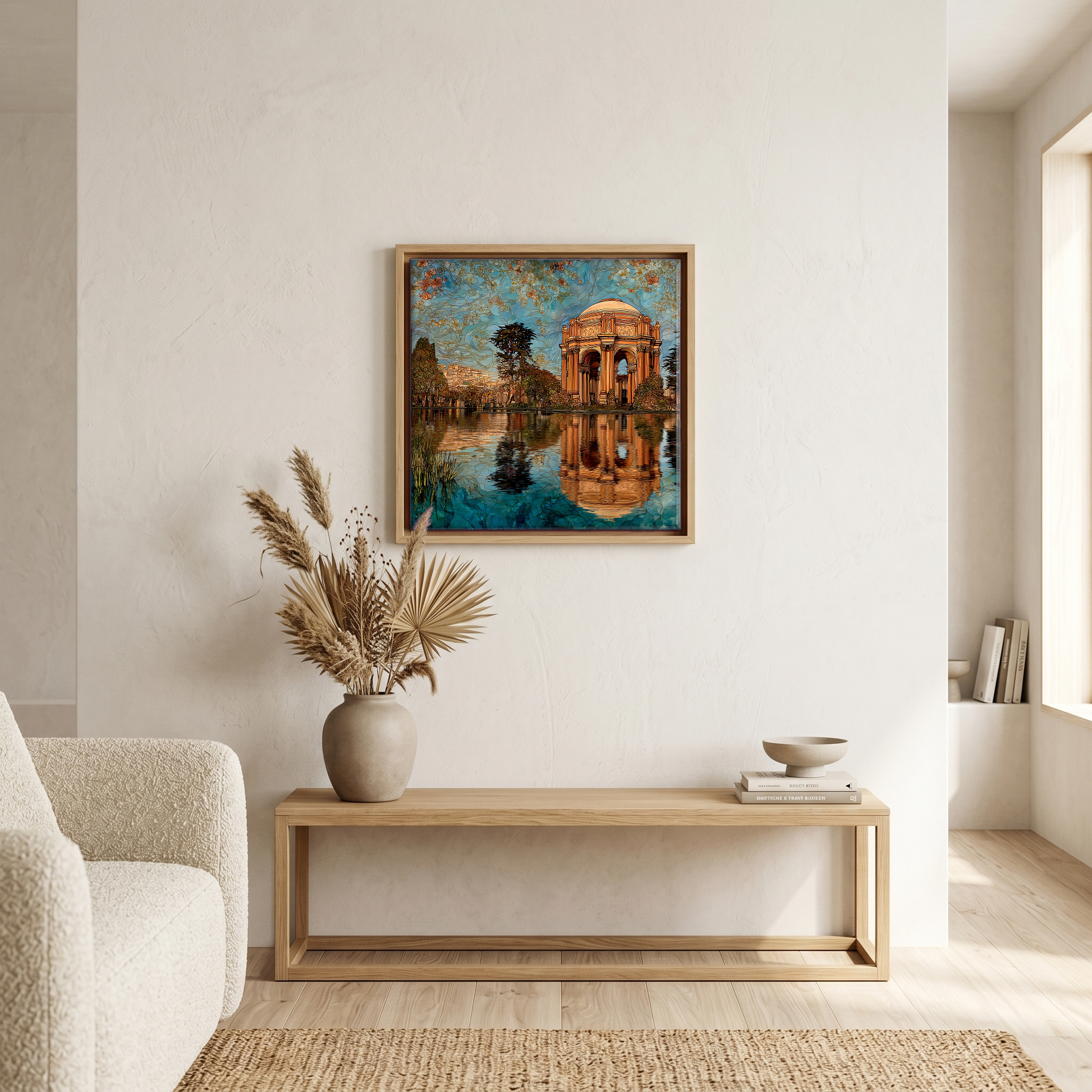
Above the bench, in a warm oak surround.
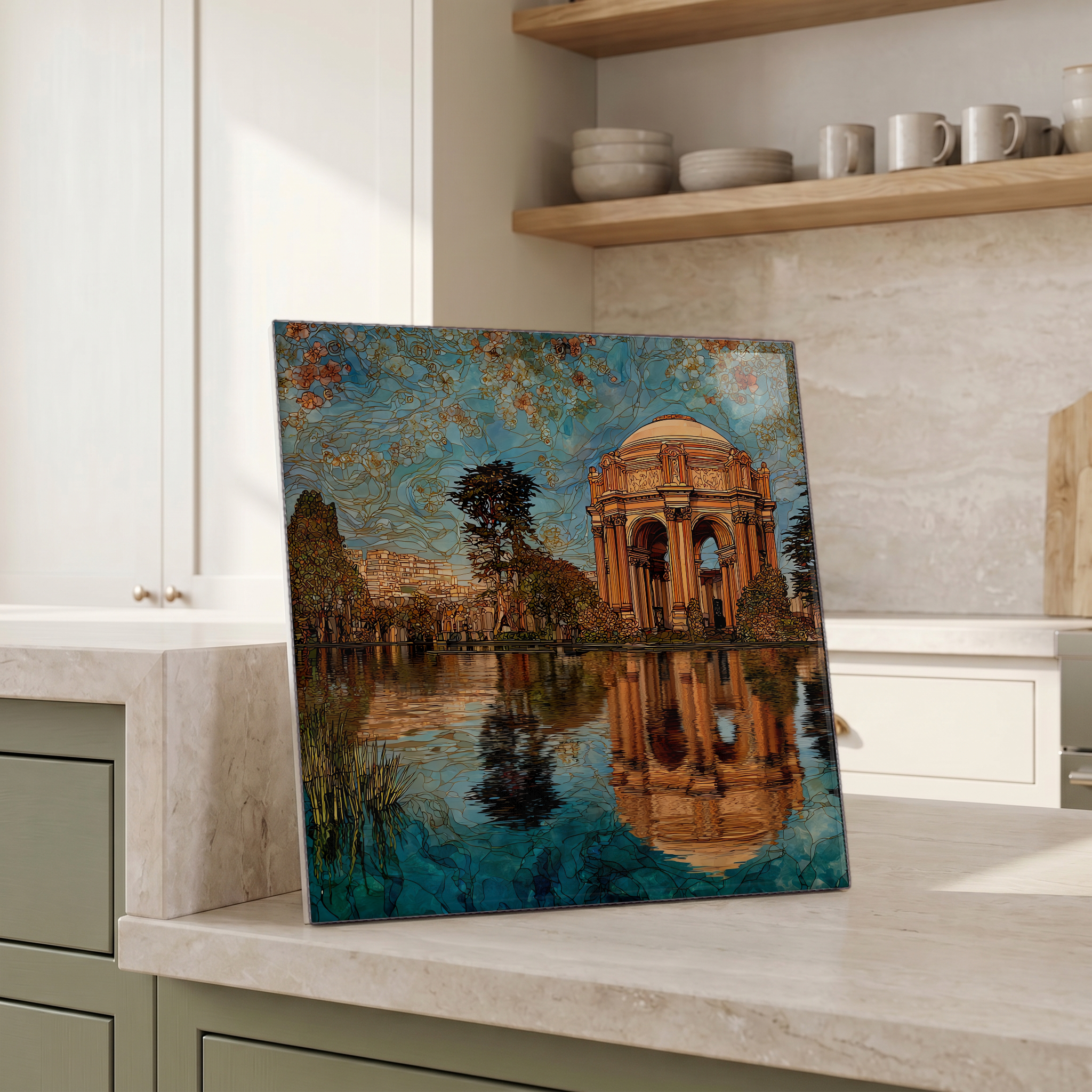
Beside the kettle, propped on the counter.
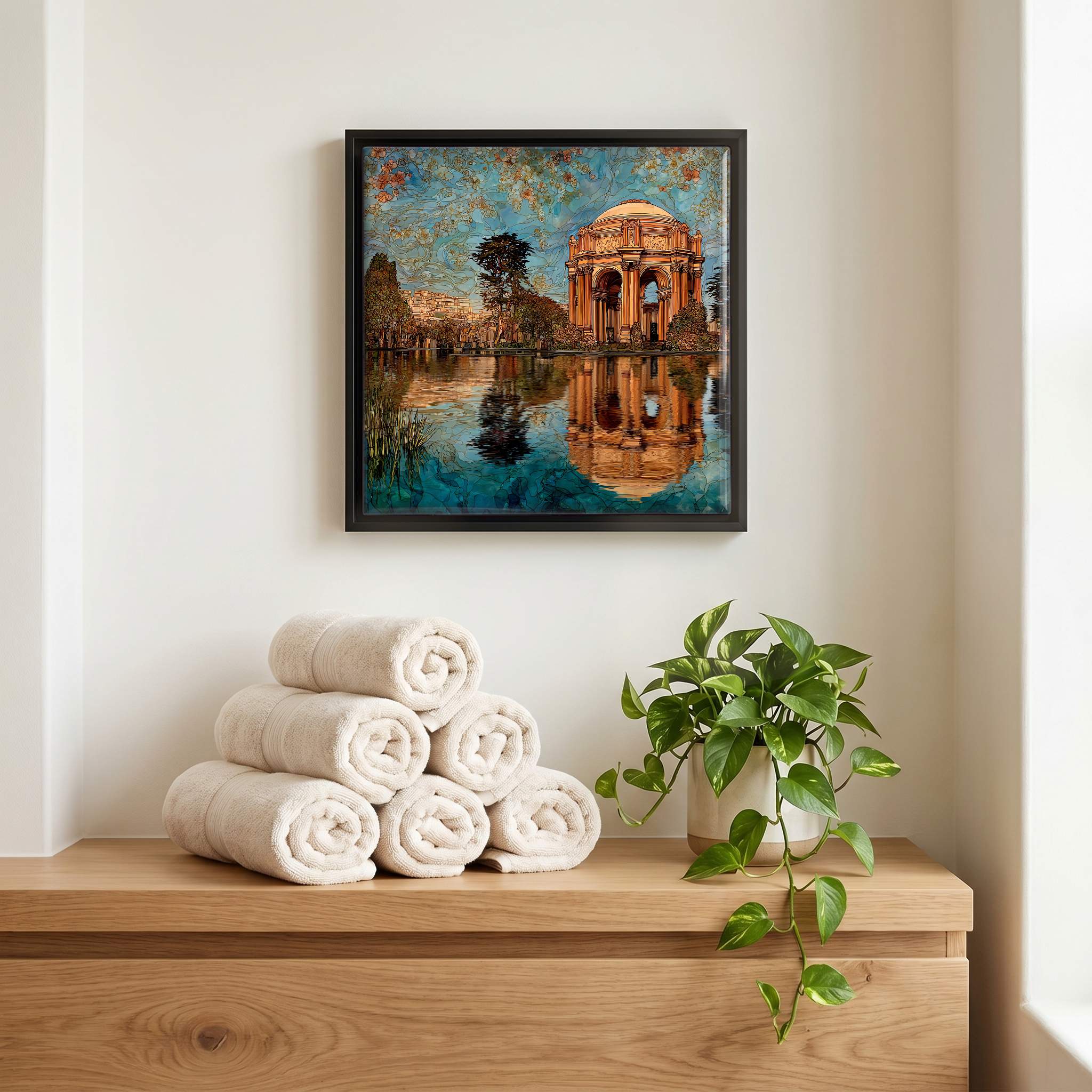
Above the linens, in a slim black surround.
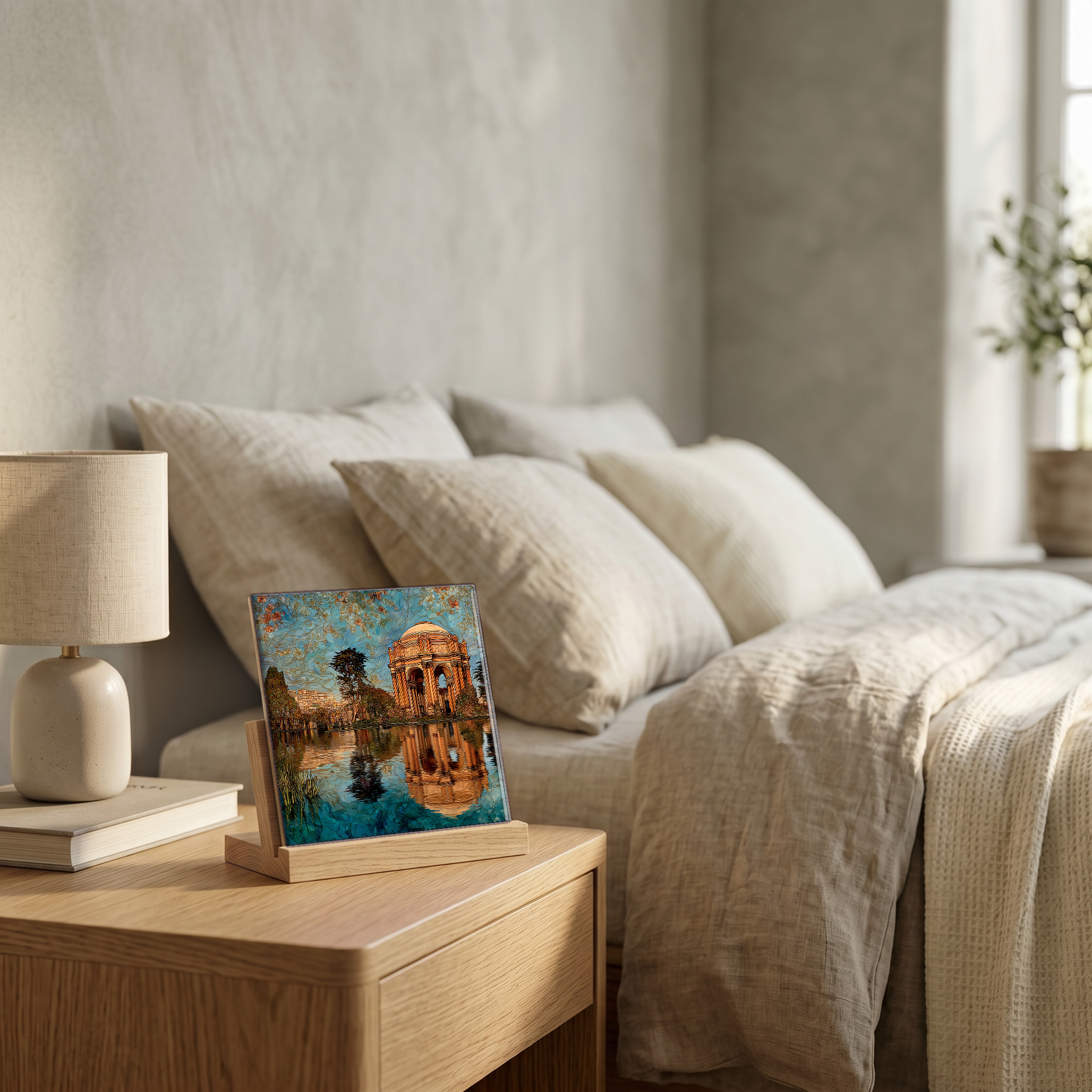
On the nightstand, on a light oak stand.
On a picture ledge, where the light comes in.
a note from the studio

A Beaux-Arts rotunda and curved colonnade on a small lagoon in the Marina District of San Francisco. Bernard Maybeck designed it for the 1915 Panama-Pacific International Exposition, the fair the city threw to announce its full recovery from the 1906 earthquake. The whole exposition was meant to come down at the end of the year. The Palace was loved enough that it stayed. The original was plaster and burlap over a wood frame, beautiful and crumbling by the 1950s. A 1965 reconstruction in poured concrete kept the form and the lagoon; a 2009 seismic retrofit brought it forward again. The swans still work the water. The columns do what Maybeck wanted: stand as a ruin that was never one.
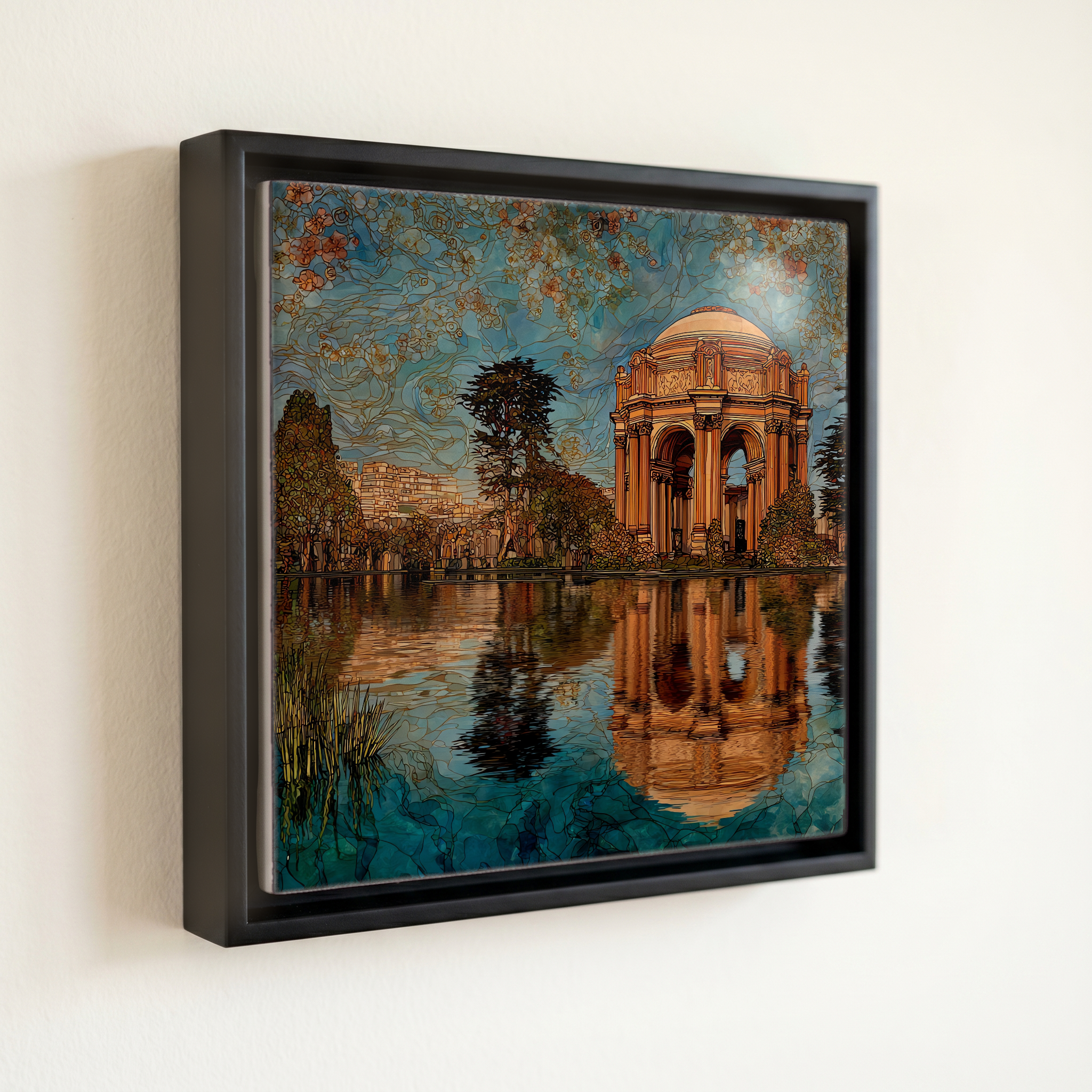
from the studio
shown in a slim black floating frame · 6 × 6 in
— bring it home

Palace of Fine Arts, on ceramic.

Each tile is finished by hand in our Knoxville studio. Artwork is slowly infused into the ceramic surface under high heat and pressure, and rests beneath a thin glossy finish. The colour lives in the surface, not on top of it.

What kind of piece?
One tile — square or rectangle.
How big?
the popular one — counter, shelf, nightstand
6 × 6 in · 15 cm · 1.6 lb
Surface finish
A clear glossy finish — the artwork reads as if under resin. Ideal for show-pieces and framed wall art.
How it sits
A hidden cleat — sits ¼″ proud of the wall.
$58
Hand-finished and shipped from our studio at the foot of the Smokies. On your wall in about ten days.
size
6 × 6 in
15 cm
weighs
1.6 lb
solid in the hand
surface
ceramic, hand-finished
art rests beneath a thin glossy finish
from
Knoxville, TN
our family studio, at the foot of the Smokies
— start a Coaster Set

Pick any four 4-inch tiles — National Parks you've been to, a Smokies set, the four seasons of one place. $ for a set of , cork-backed, ready to live on the table.
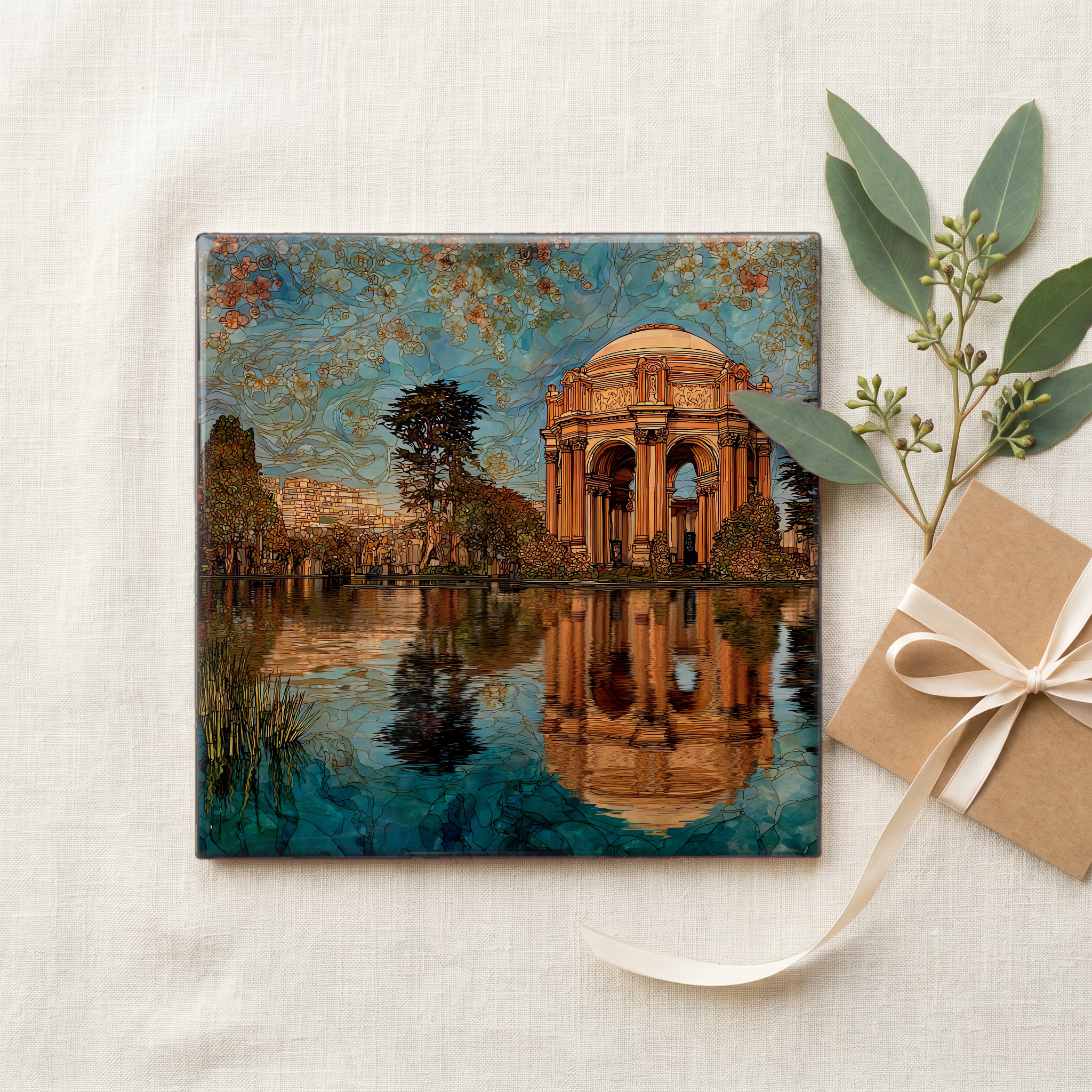
comes gift-ready
comes gift-ready

Each tile ships in a kraft box, tied with cream ribbon, with a handwritten note from the studio if you'd like to add one.
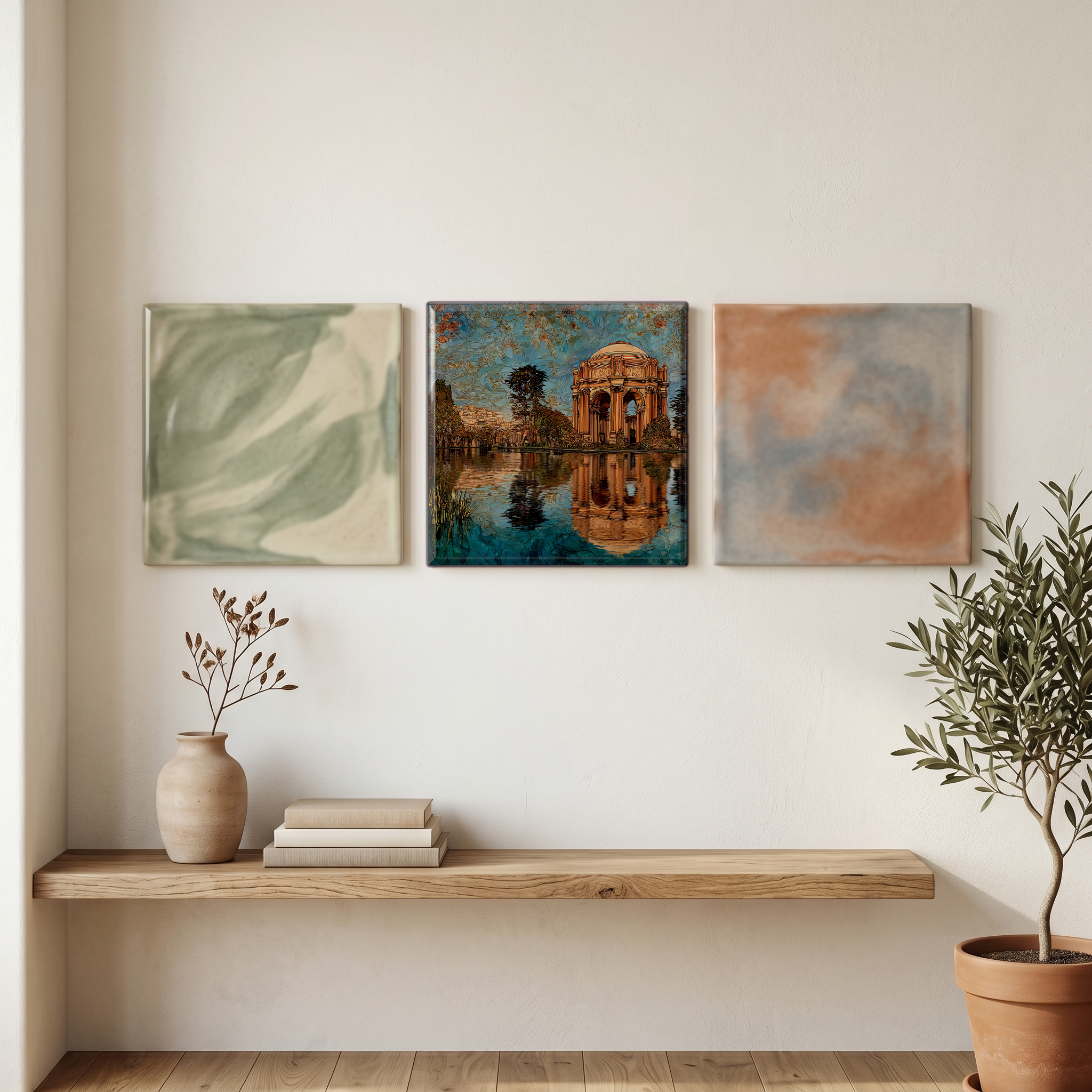
or build a grouping
or build a grouping

Three or five different vistas, hung together — a chapter of places you've been, or want to go.

about Palace of Fine Arts

The place, in three passes.

A little of what's known, in case you fall down the rabbit hole — or want to go see it yourself.
the place

The Palace of Fine Arts is a Beaux-Arts rotunda and curved colonnade in the Marina District of San Francisco, set on a 17-acre site with an artificial lagoon. Bernard Maybeck designed it for the 1915 Panama-Pacific International Exposition, a fair that ran from February through December of that year and drew about 19 million visitors over its run. The exposition stretched along the northern waterfront from Fort Mason to the Presidio. The Palace was the only major exposition structure preserved; the rest of the fairgrounds came down at the end of 1915, leaving the rotunda and colonnade as a single survivor. The site is bordered by Lyon, Bay, and Baker streets, west of Crissy Field.

the stone

The original structure was plaster, hemp, and burlap over a wood frame, intended to stand only for the duration of the 1915 fair. By the 1950s it was visibly crumbling. A community campaign supported by the philanthropist Walter S. Johnson and matching funds from the State of California financed a full reconstruction in poured concrete, completed in 1965. The reconstructed columns and frieze hold Maybeck's original forms: Corinthian capitals, a band of weeping women on the rotunda dome, and an octagonal ring of urns. A 2009 seismic retrofit by the City of San Francisco strengthened the colonnade for current code. The lagoon was reshaped and the surrounding garden replanted as part of the project.

the visit

The grounds at 3601 Lyon Street are open to the public twenty-four hours a day, and there is no admission charge. The rotunda colonnade is reached by paved paths from any side of the lagoon. The adjacent Palace of Fine Arts Theatre, on the south side of the lagoon, operates as an event and performance venue under separate management. Parking is on Bay, Baker, and Beach streets. The site is a short walk from the Marina Green and from the southern end of the Golden Gate Bridge approach. Sunset light hits the columns from the west and brings up the warm peach tones in the concrete; swans and Canada geese are usually on the lagoon at dawn.

where
United States · San Francisco, California
elevation
6 m · 20 ft
position
37.8029° N · 122.4484° W
the neighborhood

What's nearby.

A handful of named places within an hour's walk or short drive. Some we've already painted; some we will.
1 km N
Crissy Field
recreation area
2 km NW
Golden Gate Bridge
bridge
1 km W
Presidio of San Francisco
national park site
1 km NE
Marina Green
park
2 km E
Fort Mason
historic site
1 km S
Lyon Street Steps
public stairs
N
Palace of Fine Arts
Crissy Field
Golden Gate Bridge
Presidio of San Francisco
Marina Green
Fort Mason
Lyon Street Steps
common questions

What people ask.

A few questions we get about Palace of Fine Arts — and about bringing the piece home.
about the place

The original Palace was built in 1915 for the Panama-Pacific International Exposition, a world's fair held in San Francisco from February through December of that year. Bernard Maybeck designed it as the art-display pavilion. It was the only major exposition structure kept after the fair closed.

The American architect Bernard Maybeck designed the Palace as the art-pavilion of the 1915 exposition. Maybeck had trained at the École des Beaux-Arts in Paris, and the design draws on Roman and Greek precedent: a domed rotunda, a Corinthian colonnade, and a deliberately incomplete frieze meant to read as a ruin.

Maybeck designed the Palace to evoke the melancholy of an Italian or Greek ruin, on the theory that the contemplation of beauty included a sense of its passing. The rotunda frieze and the open colonnade carry that intention. The result reads as a ruin built new and kept that way for a century.

Yes. The 1915 structure was plaster and burlap over a wood frame, intended to last only for the fair. By the 1950s it was crumbling, and a community campaign with state matching funds financed a full reconstruction in poured concrete, completed in 1965. A 2009 seismic retrofit followed.

The rotunda colonnade is an outdoor architectural space; visitors walk freely through and around the columns. The adjacent Palace of Fine Arts Theatre, on the south side of the lagoon, is open only for the performances and events held there under separate operation.

The Palace is at 3601 Lyon Street in the Marina District of San Francisco, between the Marina Green and the Presidio. It is a fifteen-minute walk from the Marina, and on the route from Crissy Field to the Lyon Street Steps. Muni buses 28, 30, and 43 stop within two blocks.

about the piece in your home

It has been a meaningful gift for many of our customers with ties to the city. The Palace is one of the small specific places people walk past in their twenties and remember in their forties. A Medium with a handwritten studio note works well as a wedding or housewarming gift; a Coaster Set carries the colour into daily use.

The warm-peach and lagoon-teal palette sits well in Classical, Traditional, and California Coastal interiors. It also reads as a single architectural note in a Modern room where the rest of the palette is white and oak.

Yes. Quiet Luxury and Classical Revival have held since the early 2020s and continue to reward architecture-led wall art. The Palace of Fine Arts tile carries enough warm stone to anchor a small wall on its own, or to thread into a larger gallery of architecture pieces.

The Large carries the wall above a console or a reading chair. Over a standard 84-inch sofa, the 4-tile Mural fills the visual field; over a wider sectional, the 9-tile Mural holds the format.

Yes. Specify Dura Satin or Matte at checkout for vertical wet locations. Glossy is the right finish for framed wall art in a dry room and is the default if no finish is selected.

A soft microfibre cloth with plain water handles the work. No solvents, no abrasive pads. The colour is slowly infused into the ceramic surface and lives in the surface itself, so it does not wear off the way a printed image would.

Yes. Every WenderVista painting is made by Reid Wender in his Knoxville studio and is not licensed from any other source. The Palace of Fine Arts tile carries the same hand and visual signature as the rest of the atlas.

if this one stayed with you

A few you might also love.

Hand-picked by the eye that found Sorapis. Same air, same kind of quiet.