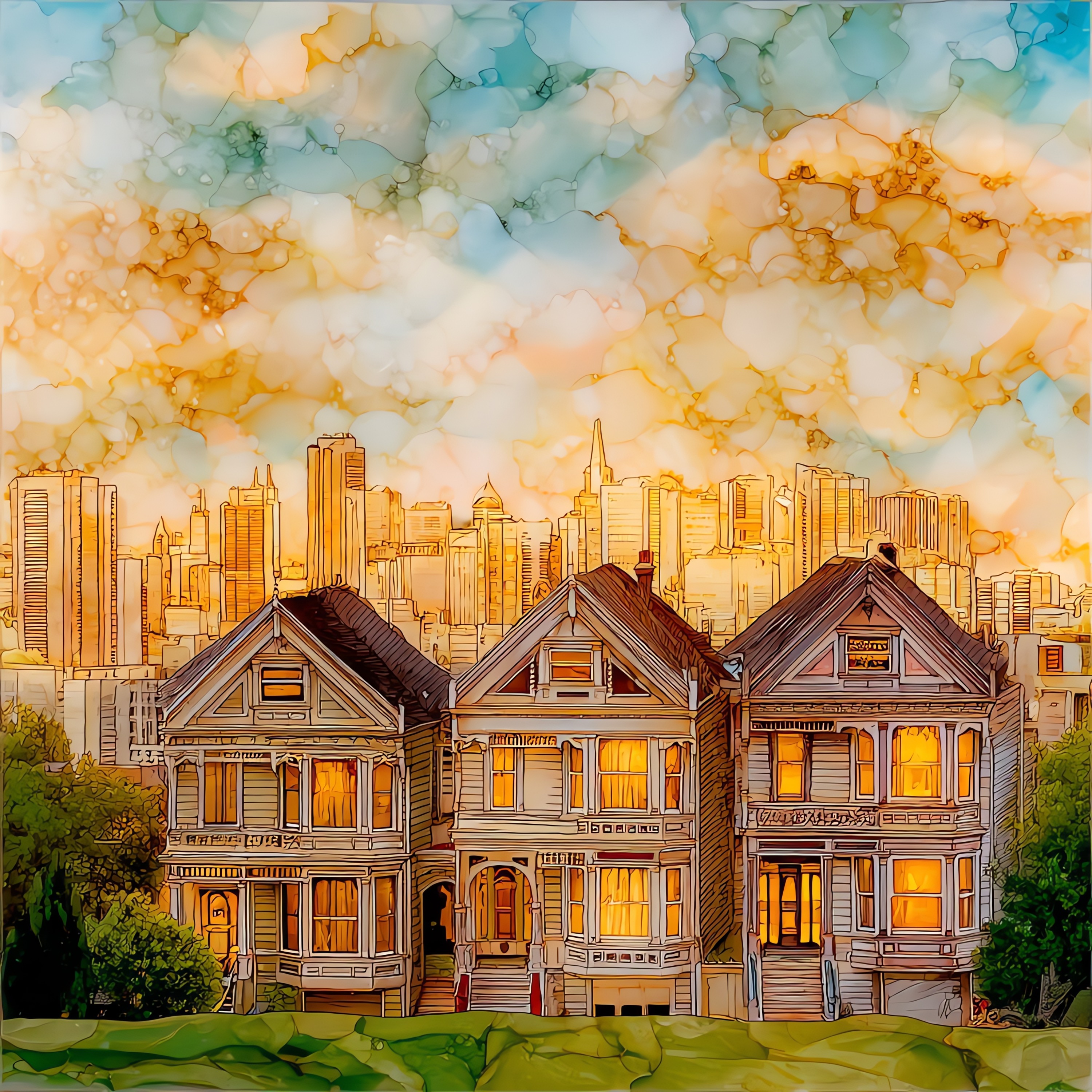
Painted Ladies
— the row the postcards know by heart.
Not only on a wall.
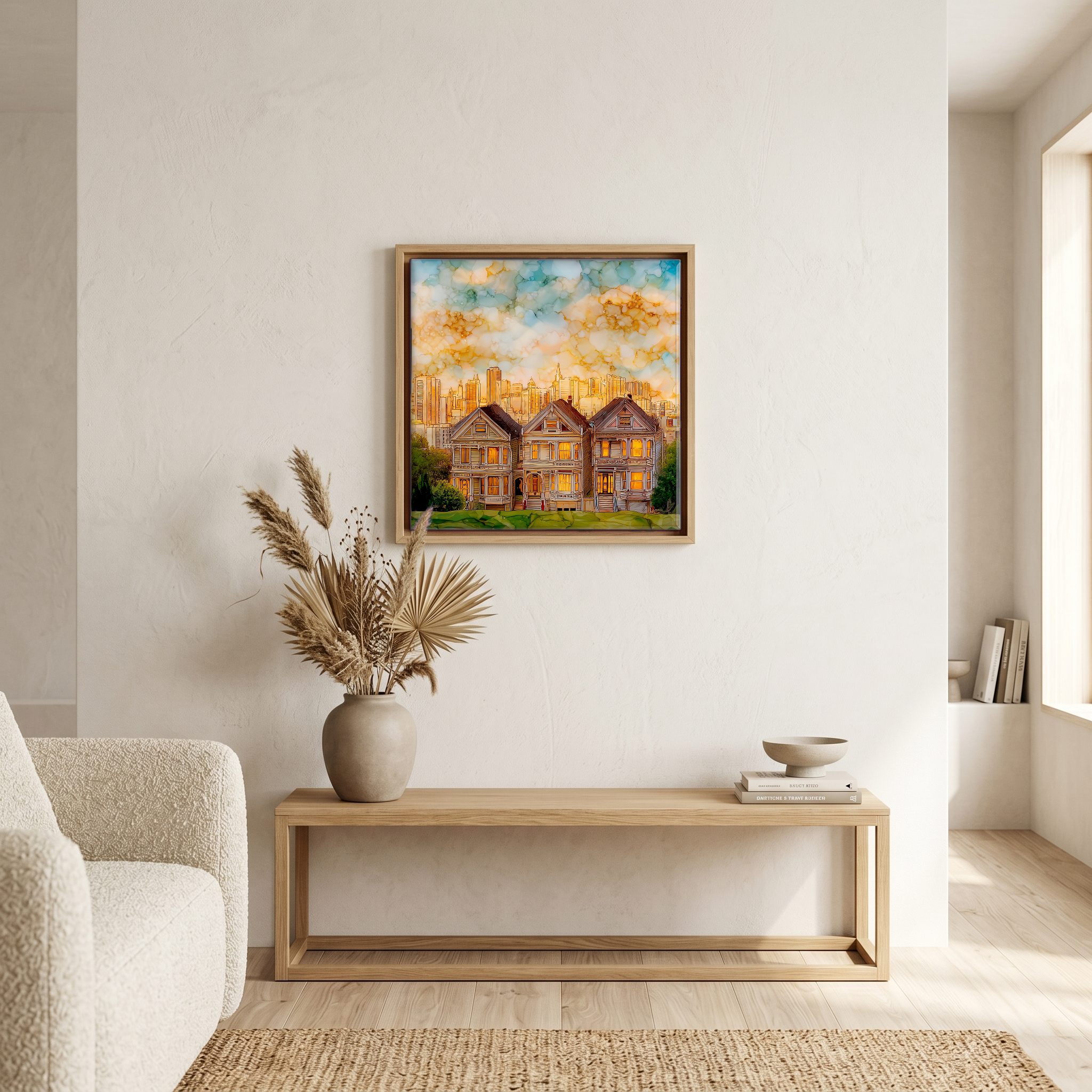
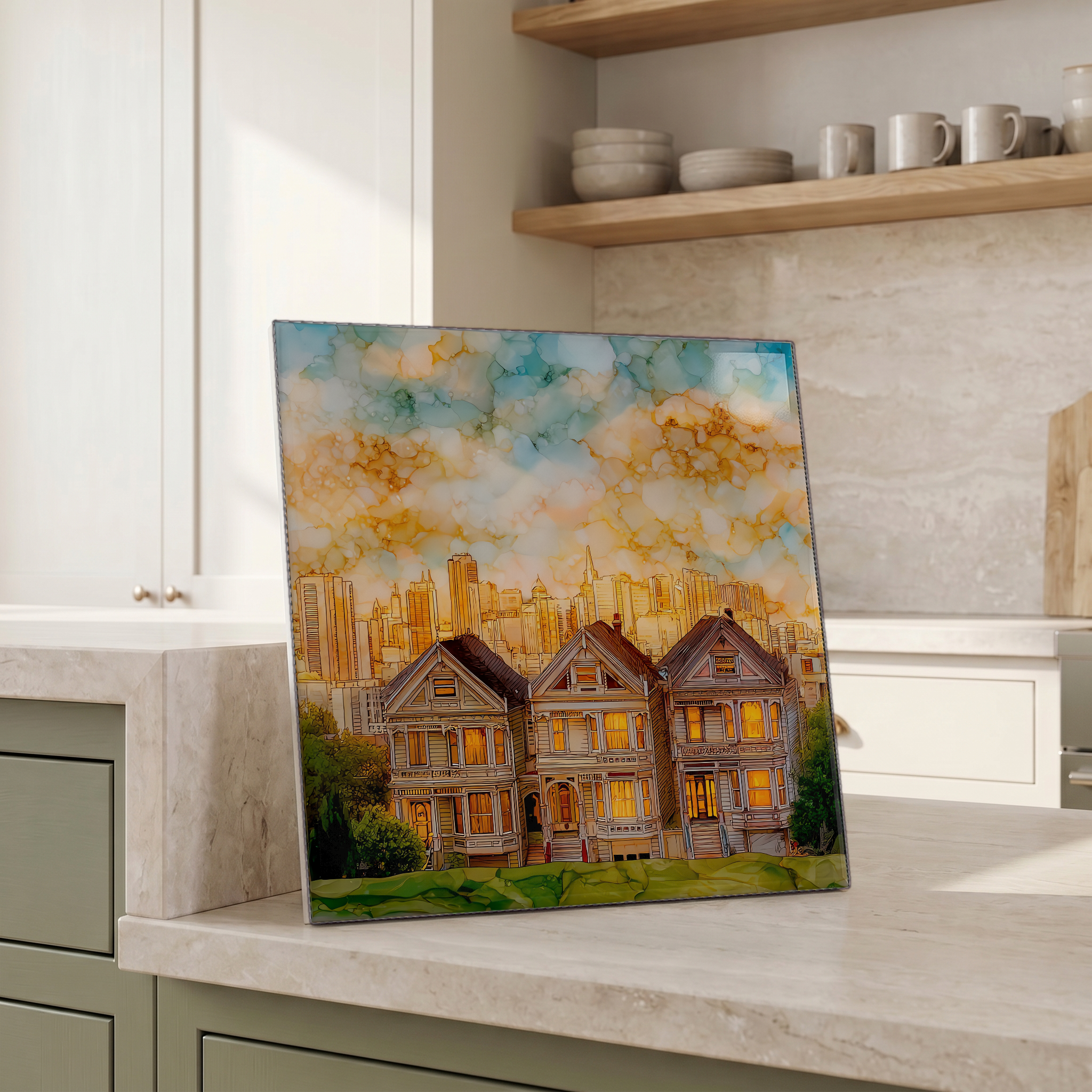
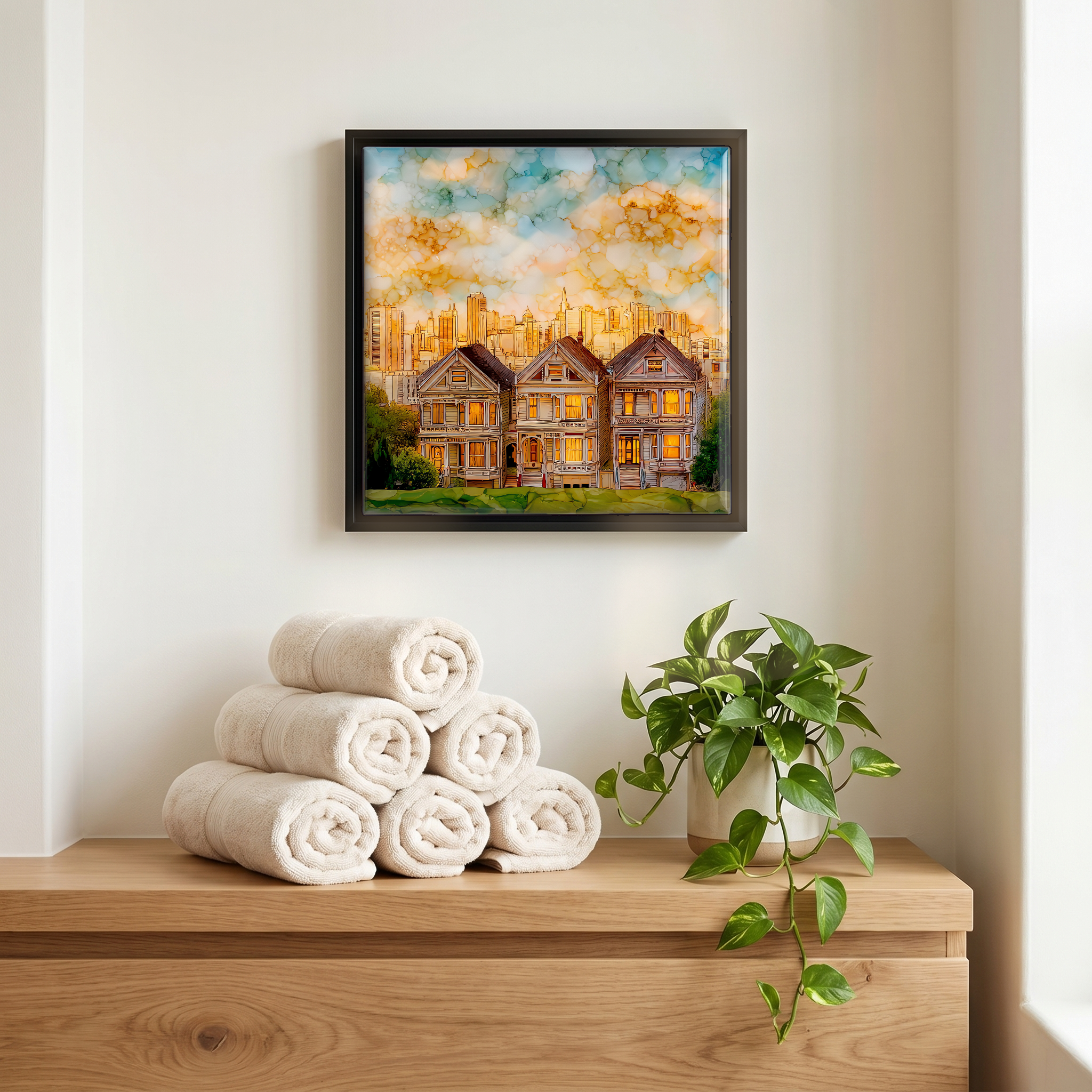
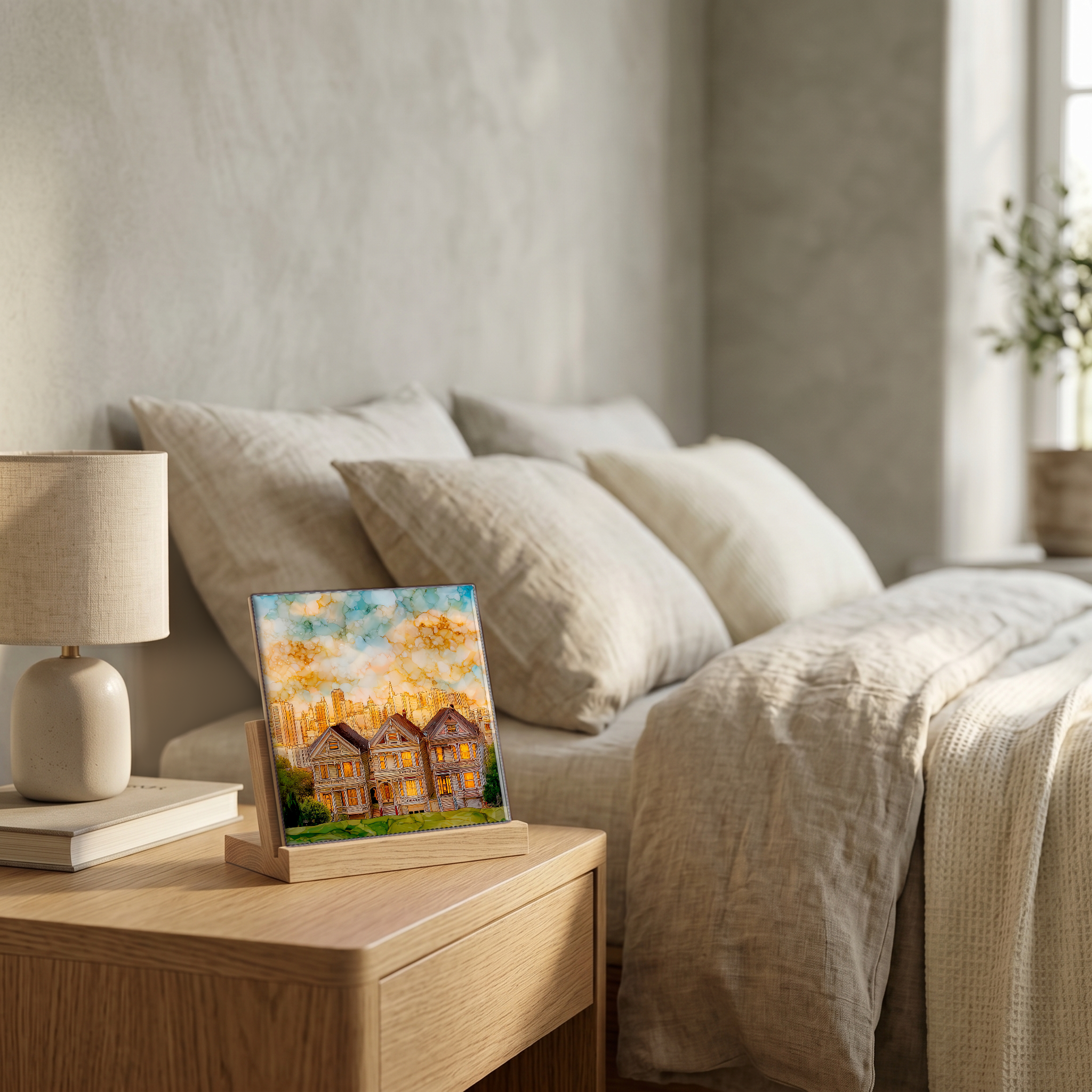
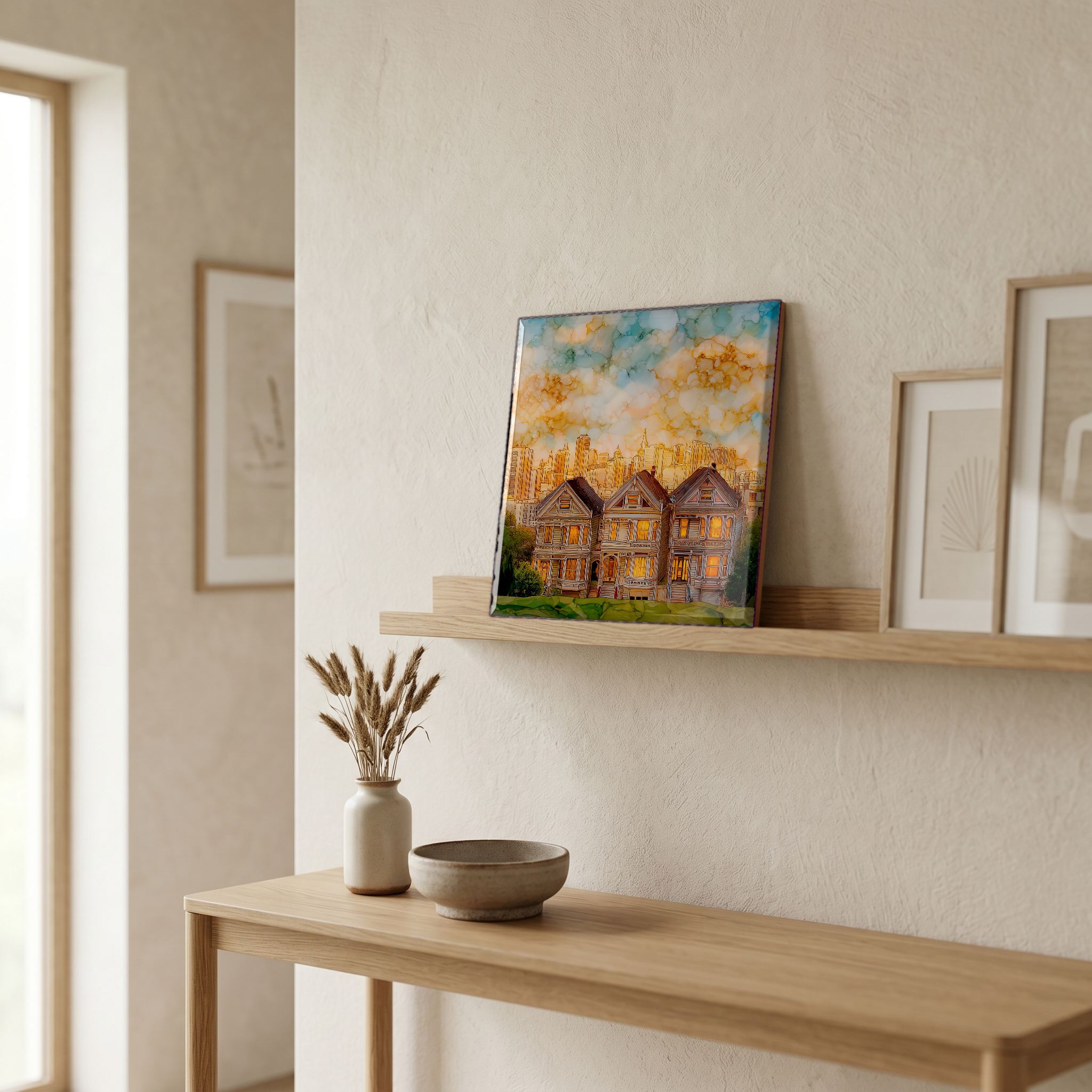
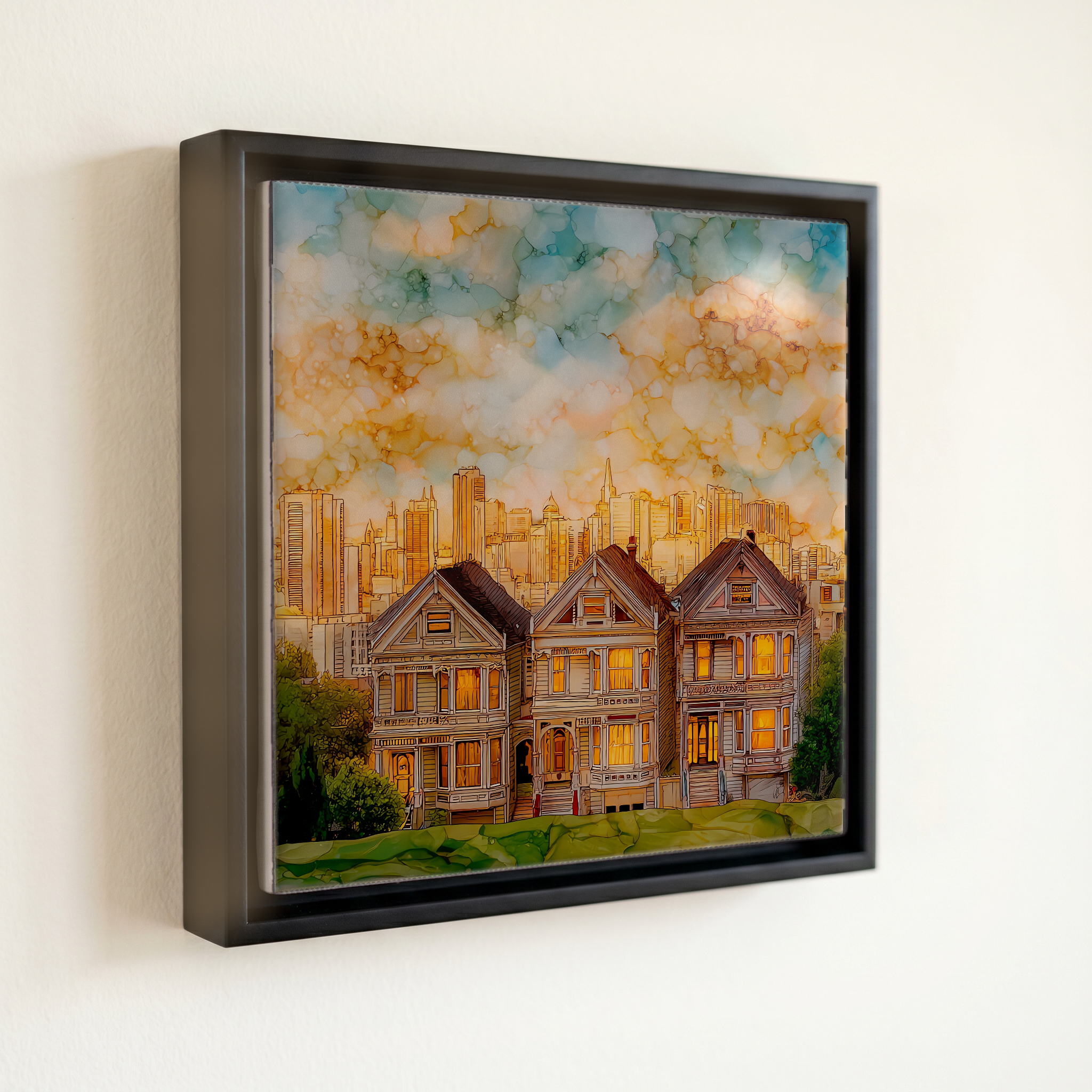
“The row at 710 to 720 Steiner Street, facing Alamo Square Park in San Francisco. Seven Queen Anne houses built between 1892 and 1896 by the developer Matthew Kavanaugh, painted in three or more colours to bring out the trim, the brackets, the bargeboard. The term Painted Ladies was coined in 1978 by Elizabeth Pomada and Michael Larsen for a movement that had begun in the early 1960s, when a few owners pulled the wartime grey off their houses and reached for hardware-store colours. The downtown skyline rises behind the gables. Most days a few visitors sit on the lawn at Alamo Square and the row works as it has for more than a century.
Painted Ladies, on ceramic.
Each tile is finished by hand in our Knoxville studio. Artwork is slowly infused into the ceramic surface under high heat and pressure, and rests beneath a thin glossy finish. The colour lives in the surface, not on top of it.
Pick any four 4-inch tiles — National Parks you've been to, a Smokies set, the four seasons of one place. $ for a set of , cork-backed, ready to live on the table.
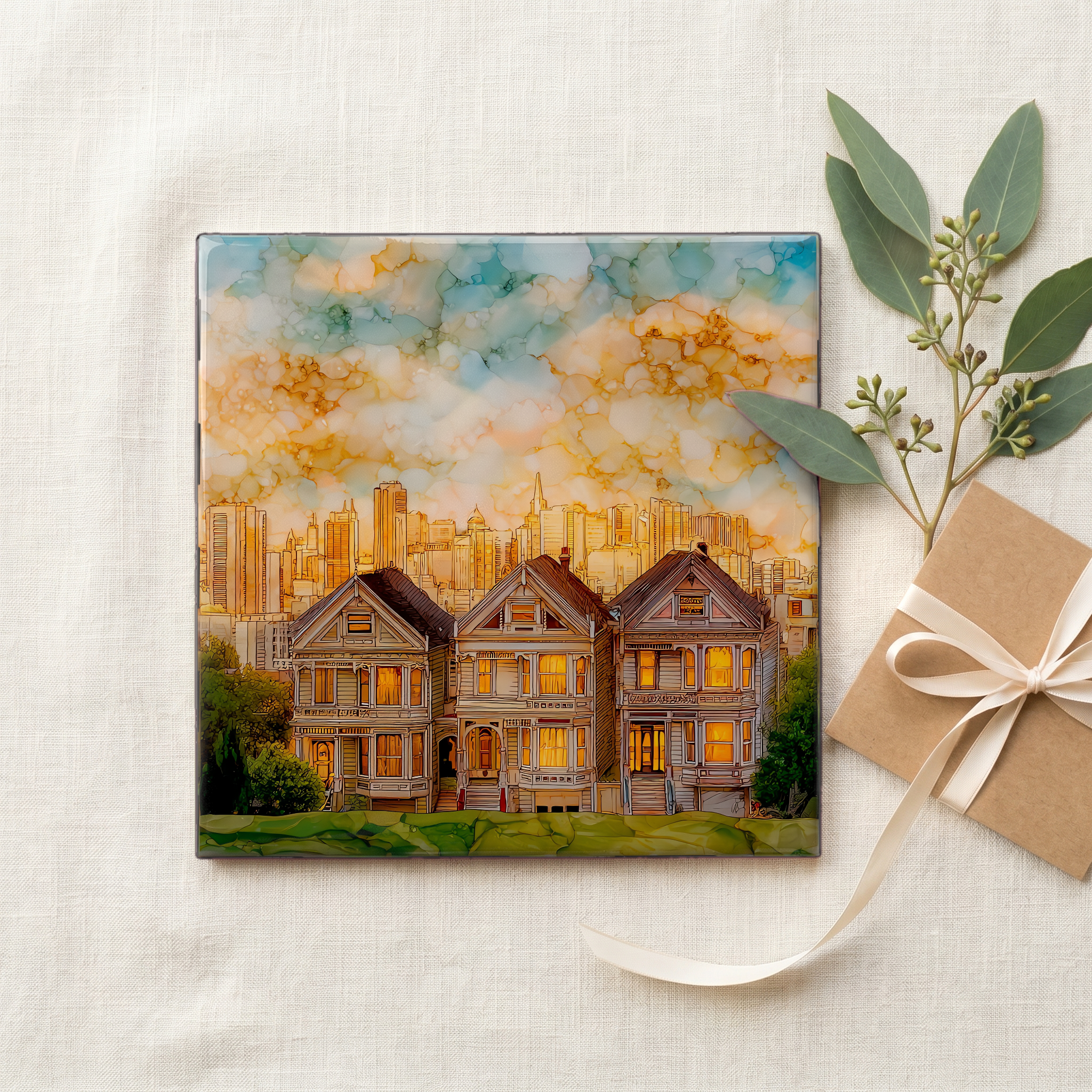
Each tile ships in a kraft box, tied with cream ribbon, with a handwritten note from the studio if you'd like to add one.
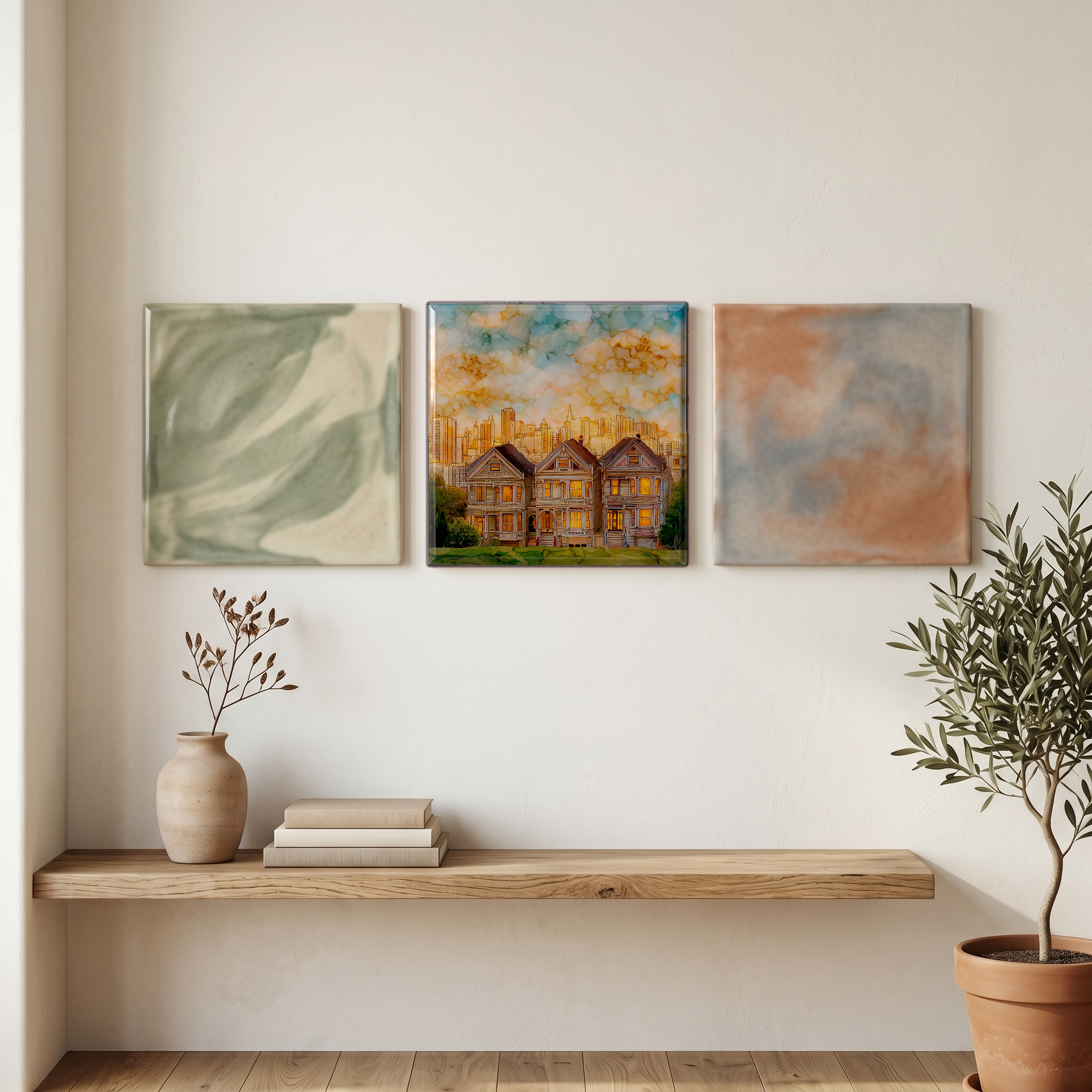
Three or five different vistas, hung together — a chapter of places you've been, or want to go.
The place, in three passes.
The Painted Ladies are a row of seven Queen Anne Victorian houses on Steiner Street in San Francisco, California, facing Alamo Square Park. They were built between 1892 and 1896 by the developer Matthew Kavanaugh as a speculative middle-class subdivision, with addresses now numbered 710 through 720 Steiner. Alamo Square sits in the Western Addition, one of the few neighbourhoods that survived the 1906 earthquake and the fires that followed. The row stands on the east-facing slope of the square, so the downtown skyline of Russian Hill, the Transamerica Pyramid, and Salesforce Tower rises directly behind the gables. The houses are private residences; the park is open to the public from six a.m. to ten p.m.
The colour scheme is the point of the name. In 1963 the painter Butch Kardum began stripping the wartime grey from a Victorian on Steiner and reaching for the saturated reds, blues, and greens he had drawn from old paint cards. The movement that followed spread through the Haight, the Castro, and Pacific Heights; by the late 1970s a few thousand San Francisco Victorians had been repainted. Elizabeth Pomada and Michael Larsen named it in their 1978 book Painted Ladies: San Francisco's Resplendent Victorians, which set the rule of three or more colours used to bring out trim, brackets, bargeboard, and window frames. The row at 710 Steiner is the most photographed example.
The best view of the row is from the southeast corner of Alamo Square Park, where the lawn rises just enough to align the houses with the downtown skyline behind them. Morning light brings out the trim colours; late afternoon flattens them and brings up the city. The park covers 12.7 acres on a small hill at the centre of the Western Addition, with paved paths, a dog play area, and benches along the east side. The Painted Ladies themselves are private homes, so visitors stay on the park lawn and the public sidewalks. Steiner Street has no parking restrictions specific to the row, but the surrounding blocks fill on weekend mornings.