
Pacific Grove Monarchs
— a hundred thousand wings, folded into the pines.
Not only on a wall.
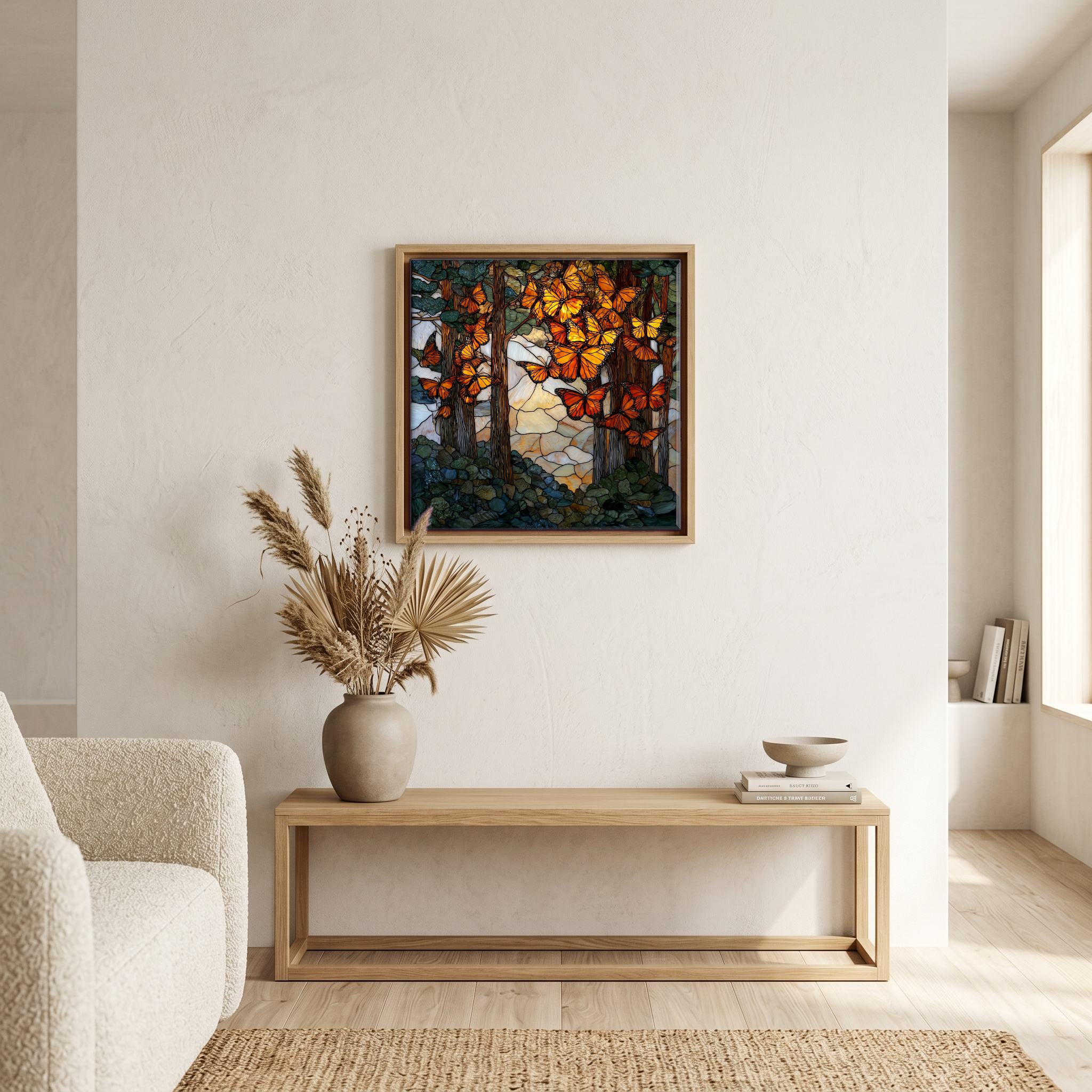
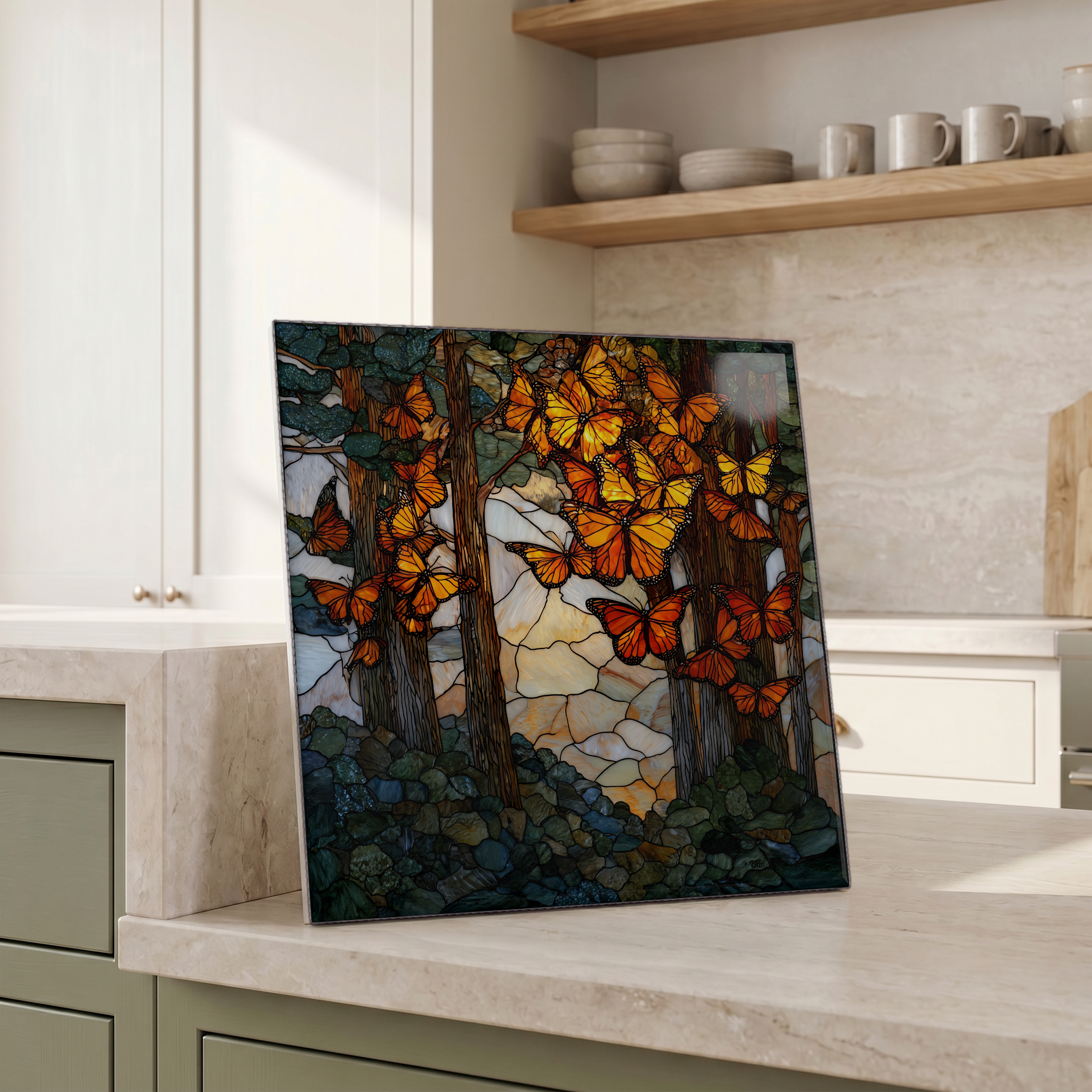
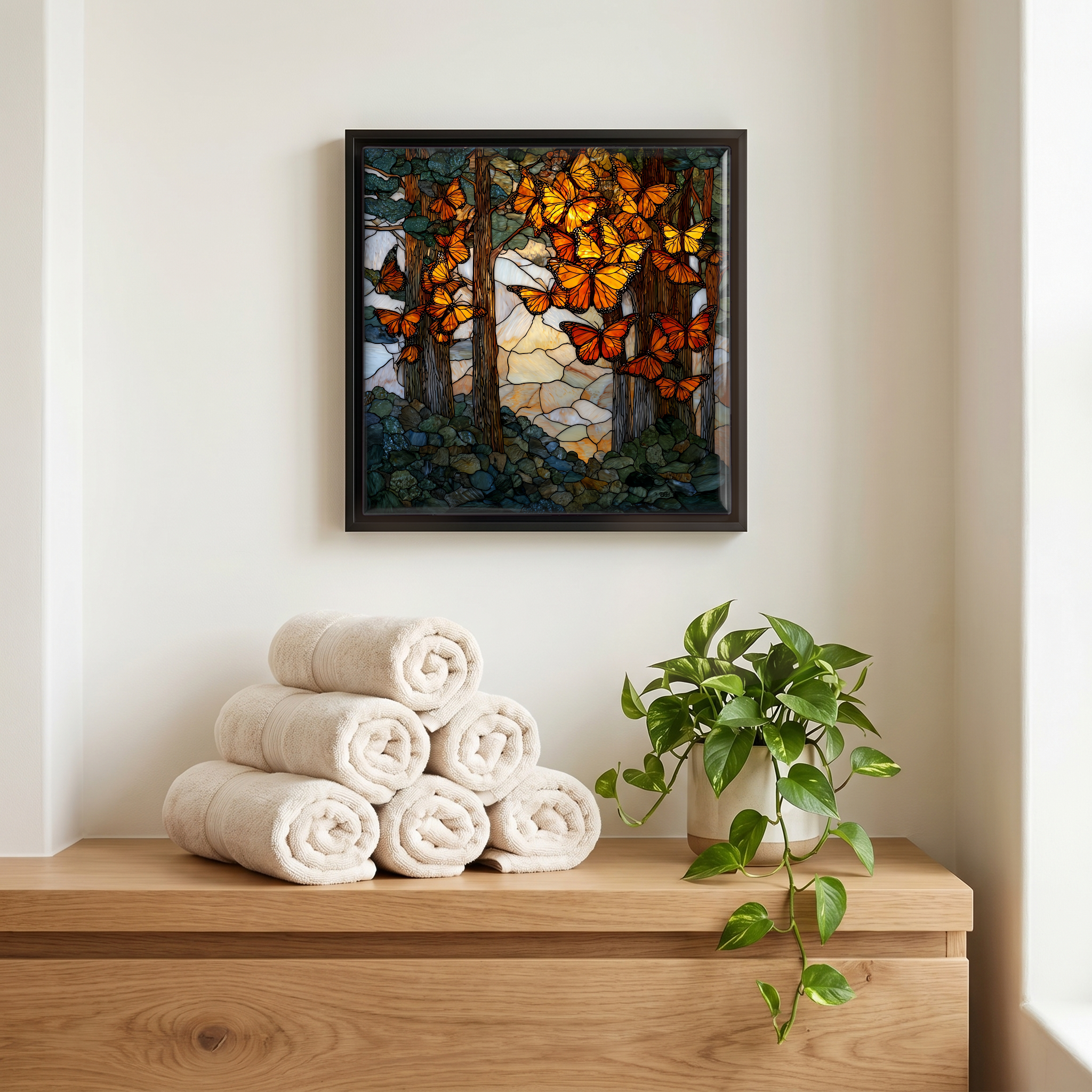
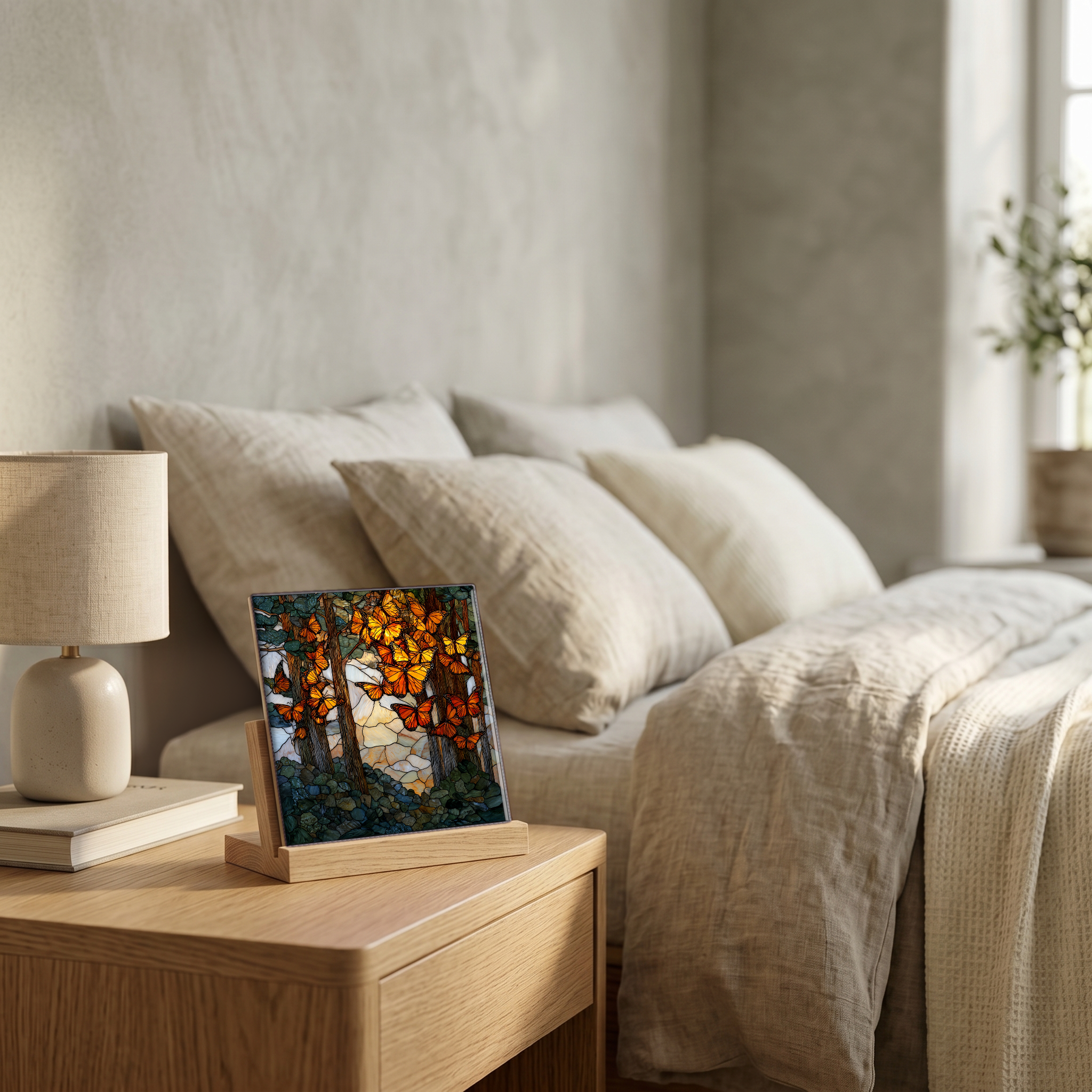
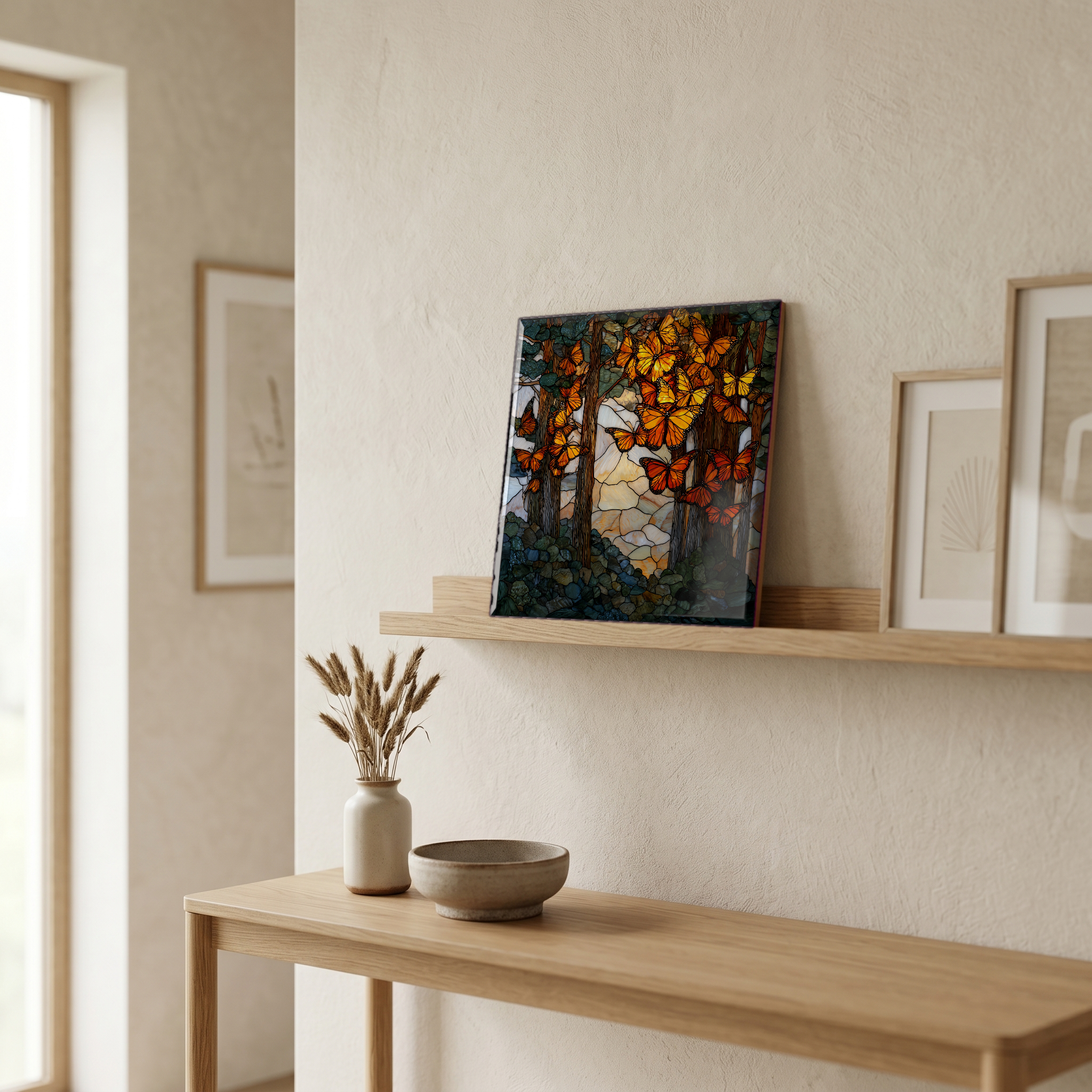
“The Monarch Sanctuary holds a grove of Monterey pine and blue gum eucalyptus on the south end of Pacific Grove. From late October through February, western monarchs cluster on the same branches their great-grandparents used; cold mornings keep them folded into shapes that read like brown leaves. By noon a few break free into the light, then more, then the air through the grove is moving. Pacific Grove has called itself Butterfly Town USA since the 1930s, and a city ordinance protects the colony with a fine for disturbing it. Numbers are smaller every decade, which is why winter mornings here matter more now than they did.
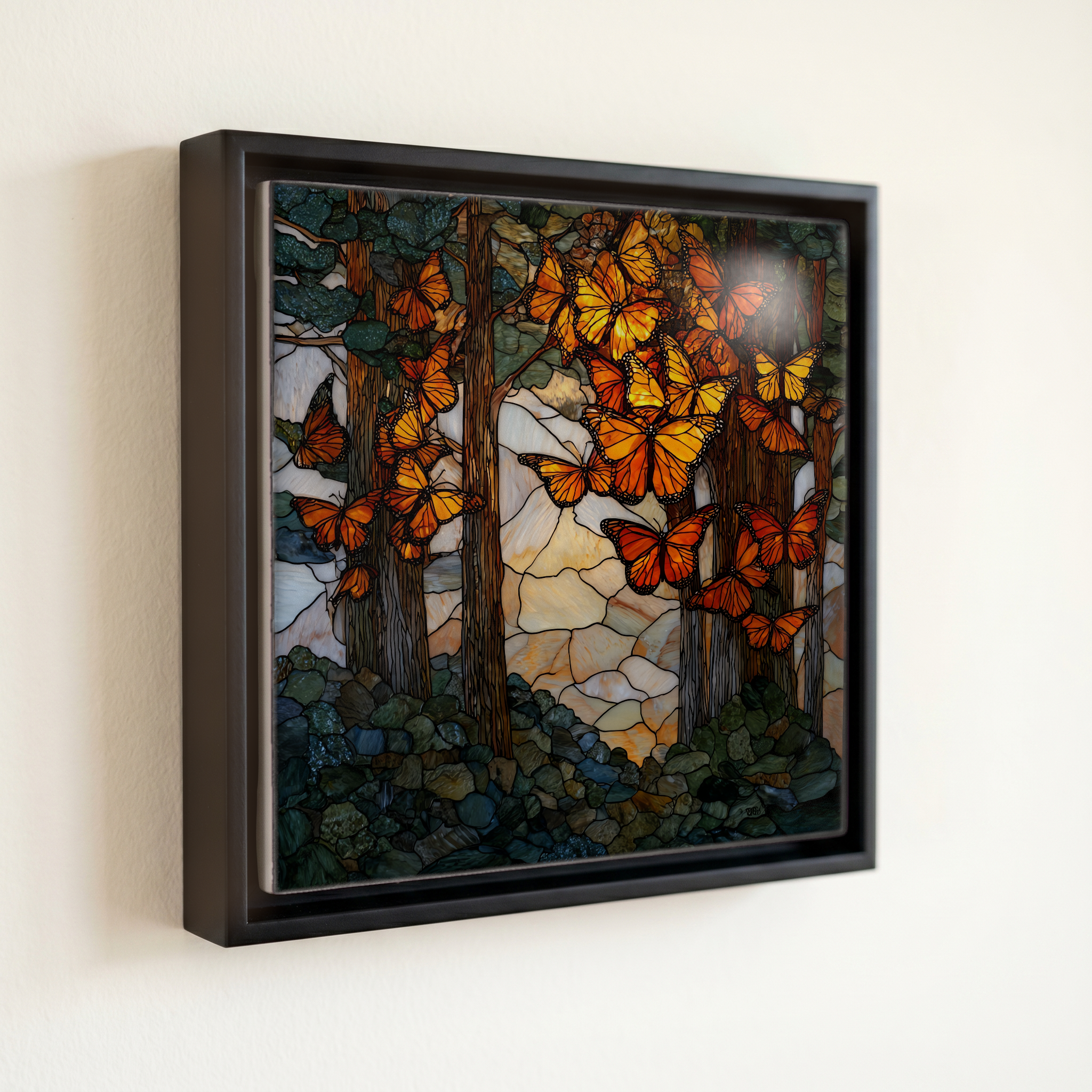
Pacific Grove Monarchs, on ceramic.
Each tile is finished by hand in our Knoxville studio. Artwork is slowly infused into the ceramic surface under high heat and pressure, and rests beneath a thin glossy finish. The colour lives in the surface, not on top of it.
Pick any four 4-inch tiles — National Parks you've been to, a Smokies set, the four seasons of one place. $ for a set of , cork-backed, ready to live on the table.
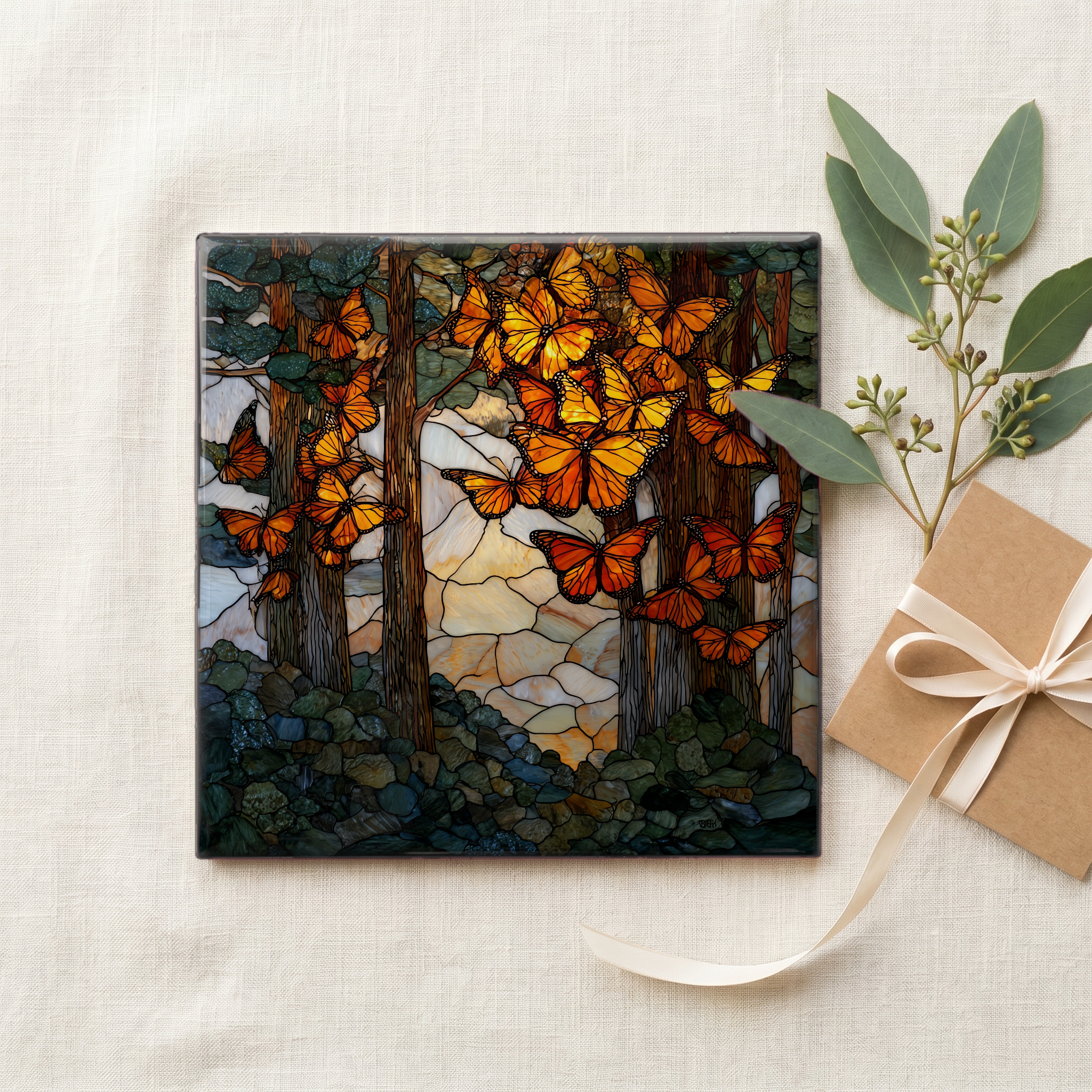
Each tile ships in a kraft box, tied with cream ribbon, with a handwritten note from the studio if you'd like to add one.
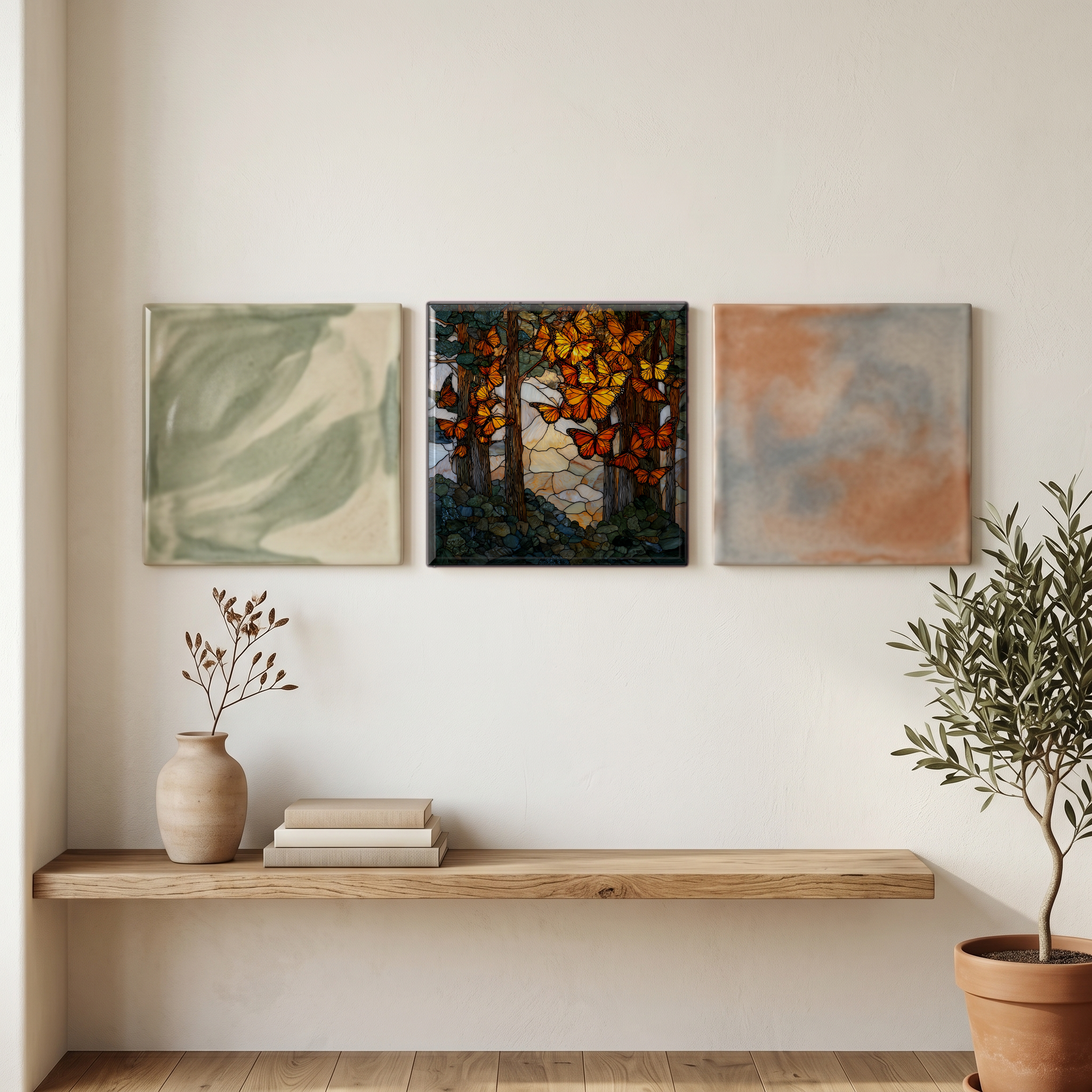
Three or five different vistas, hung together — a chapter of places you've been, or want to go.
The place, in three passes.
The Monarch Grove Sanctuary sits at 250 Ridge Road in Pacific Grove, on the southern tip of the Monterey Peninsula in California. The grove covers about 2.7 acres of Monterey pine and blue gum eucalyptus on the slope above the Pacific. It is one of the most reliable overwintering sites for the western monarch population, which migrates from breeding grounds across the Rocky Mountains to a string of coastal California groves between Mendocino and Baja. Pacific Grove sits on the western edge of Monterey Bay, fifteen minutes from Monterey itself and at the start of 17-Mile Drive. The colony and its protections are documented by the City of Pacific Grove and by the Xerces Society's annual Western Monarch Count.
The cluster forms between mid-October and early November and disperses by late February. Cool nights drop the butterflies into torpor, with thousands hanging in motionless pendants from a few preferred branches. When the sun warms the grove above about 55°F, the clusters loosen and the monarchs lift off into the light. The Xerces Society's annual Western Monarch Thanksgiving Count has tracked the population since 1997. Numbers fell below 30,000 in 2020 from millions in the 1980s, then partially recovered to over 200,000 in several recent years. Volunteer docents from Friends of the Monarchs are on site every day during the season to point out which branches the colony has chosen that morning.
Admission to the Monarch Grove Sanctuary is free, and the gate at 250 Ridge Road is open during daylight hours from October through February. Mornings before about 11 a.m. show the densest clusters in repose; midday warmth thins the colony into the air. Pacific Grove has protected the colony since 1938, when a city ordinance set a fine of $1,000 for disturbing or molesting a monarch within city limits. Parking is on Ridge Road and surrounding streets; the path through the grove is short, level, and gravel-surfaced. The Pacific Grove Museum of Natural History, six blocks away on Forest Avenue, holds the visitor-centre exhibits for the colony and runs school programs through the season.