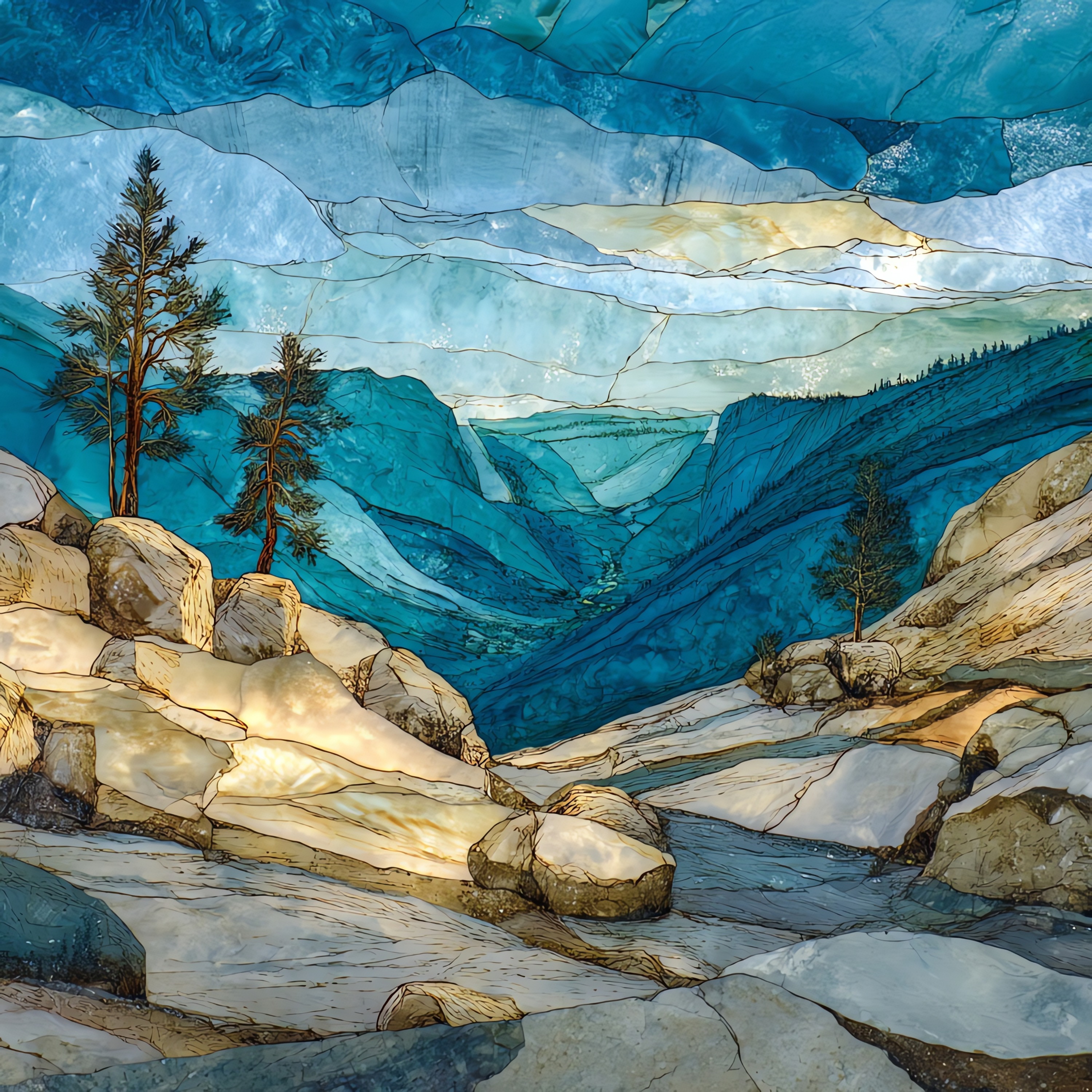
Olmsted Point Granite
— the rock that remembers the ice.
Not only on a wall.
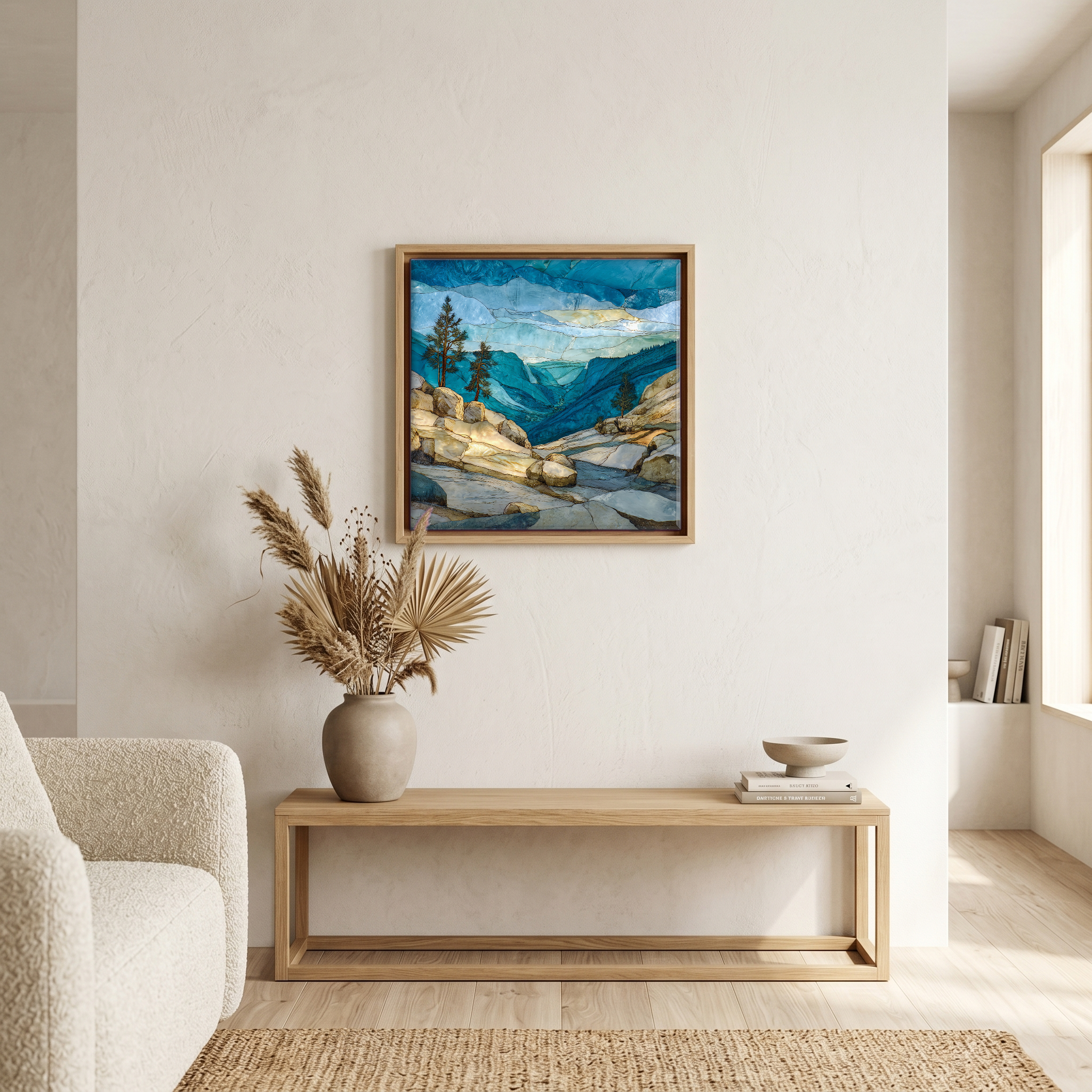

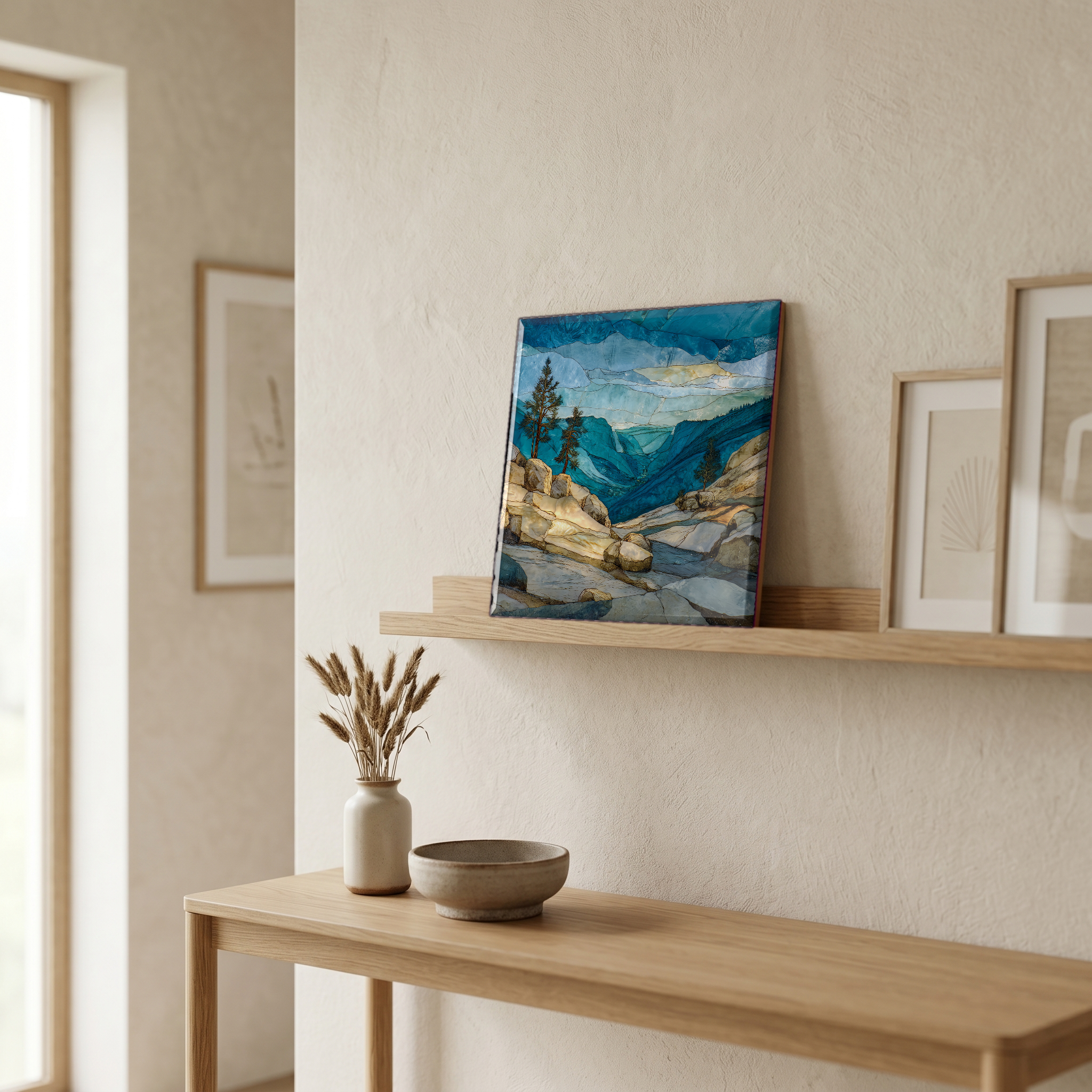
“A pullout on Tioga Road at about 8,400 feet. The view runs south to the back of Half Dome, the only common angle that shows it from behind, and down to Tenaya Lake in the basin below. What holds the eye is what's underfoot: acres of glacial polish on the granite, with house-sized boulders the last ice age left scattered across the slabs. Named for Frederick Law Olmsted and his son, both landscape architects who shaped how Americans see public land. The road closes from November through May.
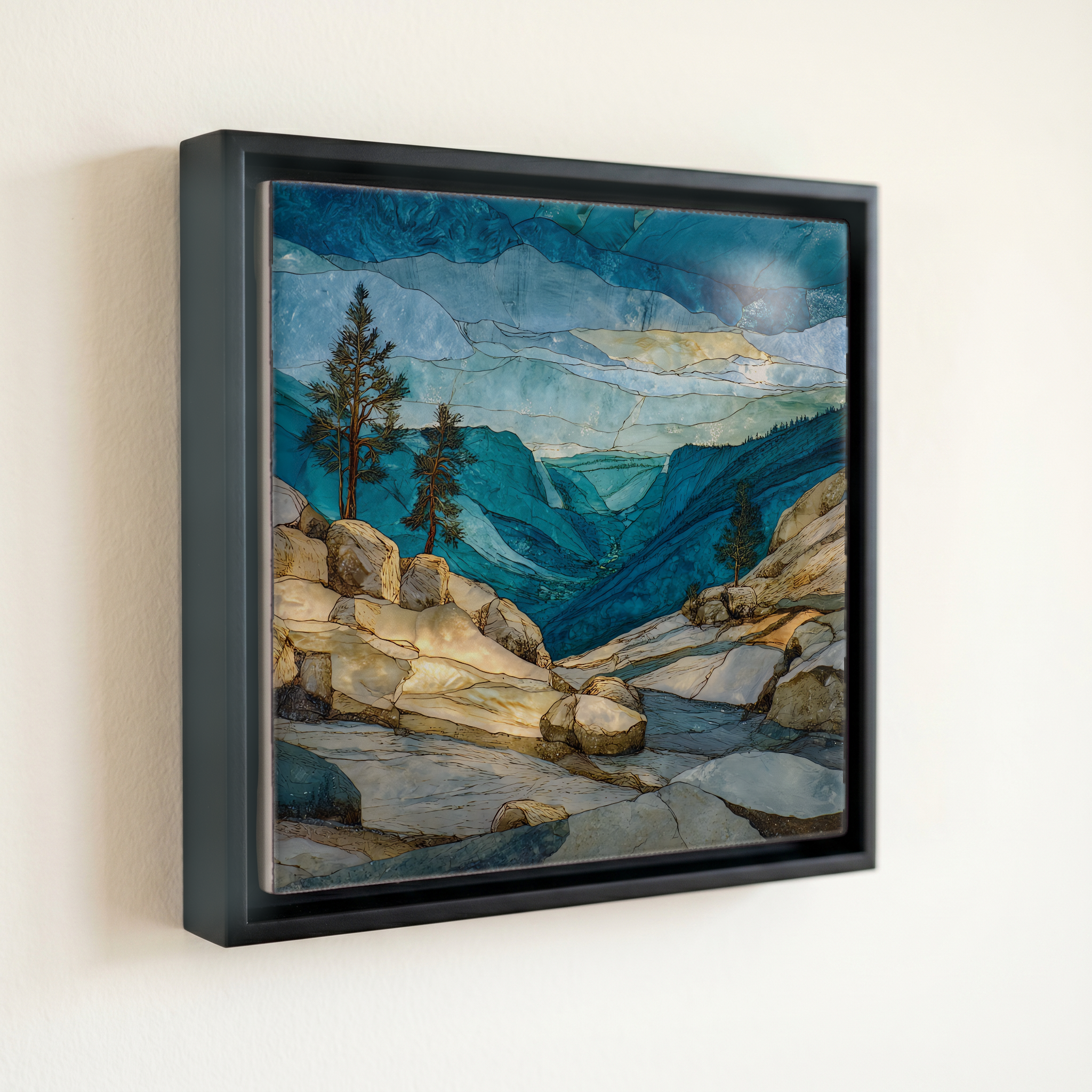
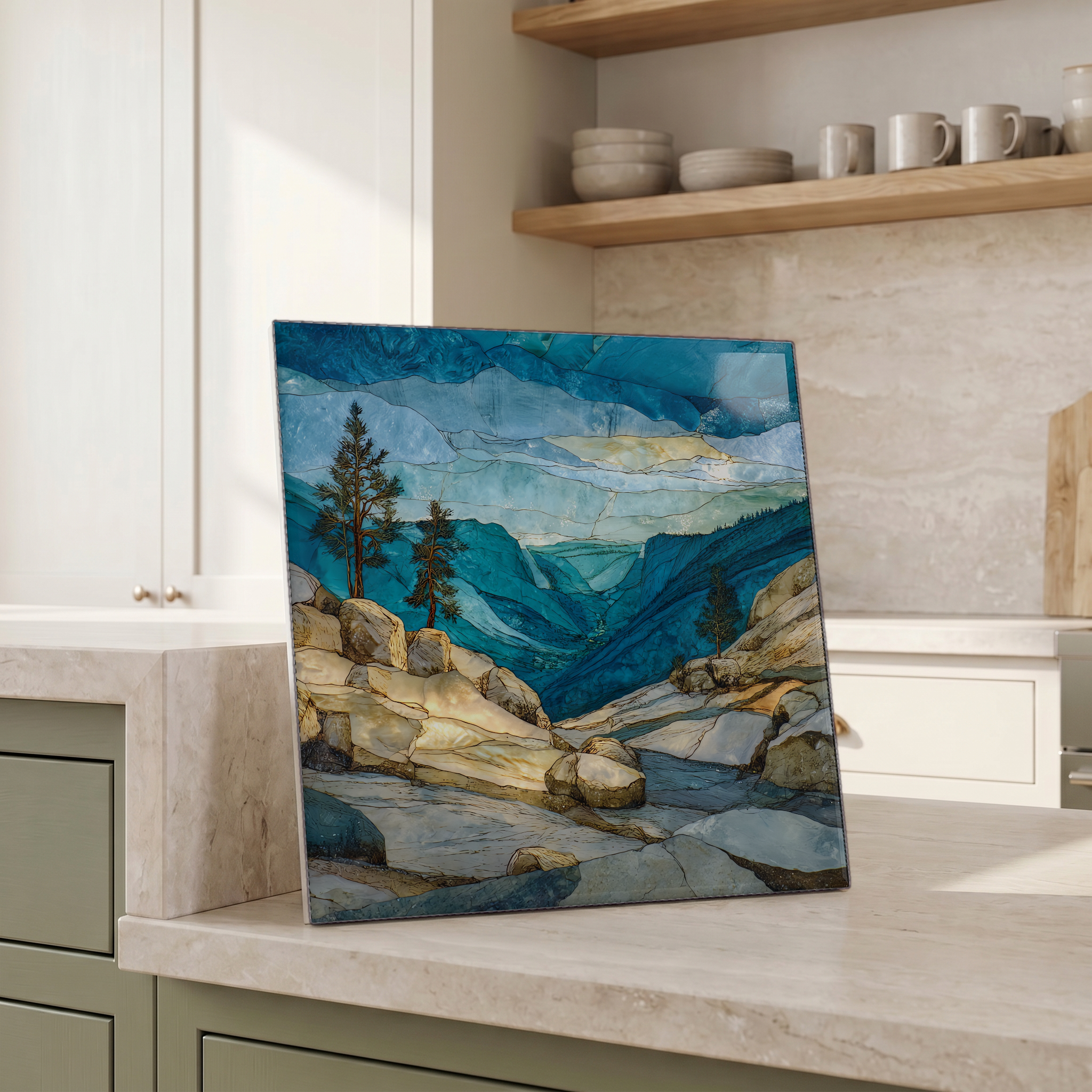
Olmsted Point Granite, on ceramic.
Each tile is finished by hand in our Knoxville studio. Artwork is slowly infused into the ceramic surface under high heat and pressure, and rests beneath a thin glossy finish. The colour lives in the surface, not on top of it.
Pick any four 4-inch tiles — National Parks you've been to, a Smokies set, the four seasons of one place. $ for a set of , cork-backed, ready to live on the table.
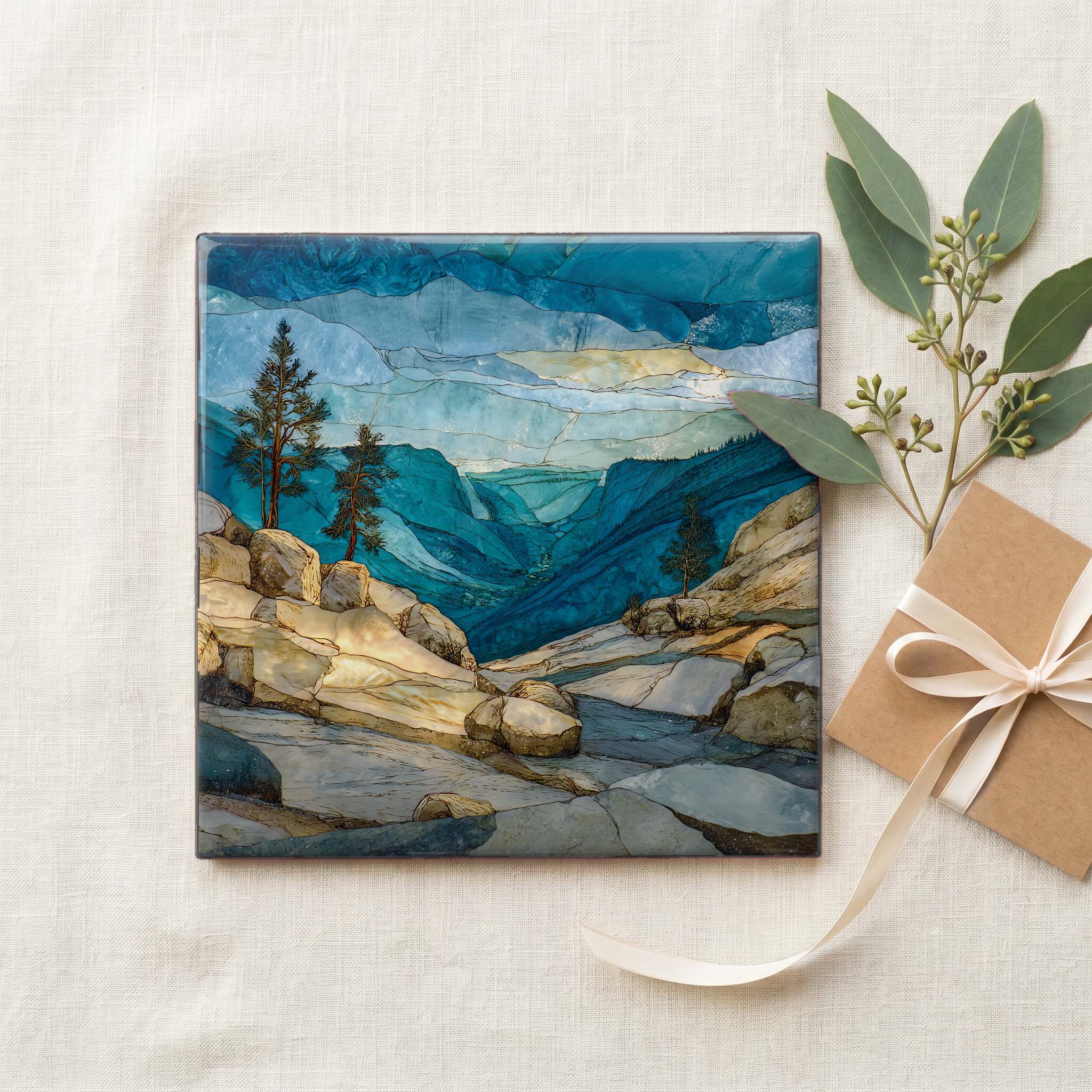
Each tile ships in a kraft box, tied with cream ribbon, with a handwritten note from the studio if you'd like to add one.

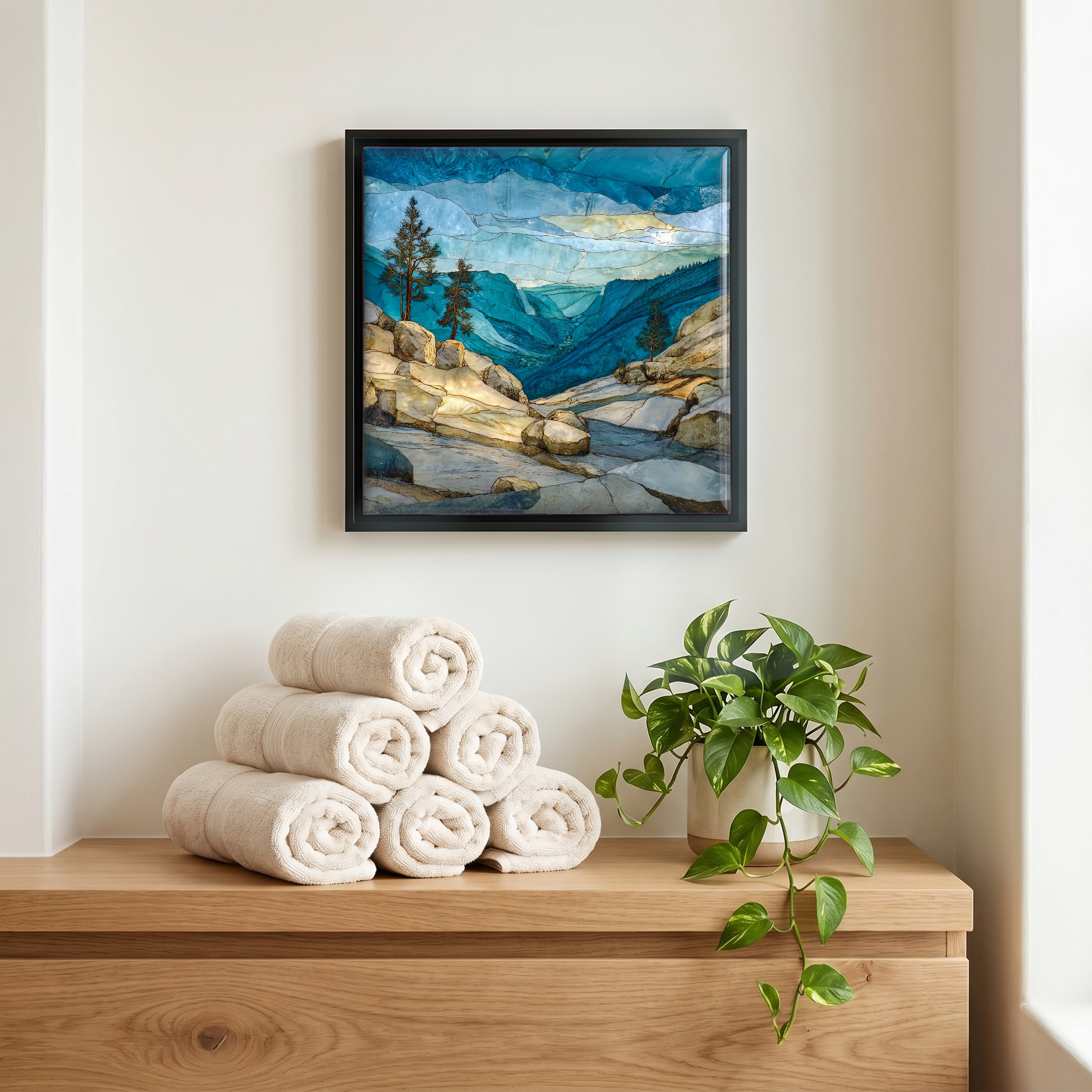
Three or five different vistas, hung together — a chapter of places you've been, or want to go.
The place, in three passes.
Olmsted Point sits at roughly 8,400 feet on Tioga Road (California Highway 120) in Yosemite National Park, between Tenaya Lake to the east and the Yosemite Valley rim to the southwest. The point is named for Frederick Law Olmsted, the landscape architect who designed New York's Central Park and served as one of the first commissioners of the Yosemite Grant, and his son Frederick Law Olmsted Jr., who helped draft the 1916 founding legislation of the National Park Service. The pullout looks south across the Tenaya Lake basin to the rounded north face of Half Dome, the angle the dome shows the high country rather than the valley below. Tioga Road is plowed open from late May or June through October or early November, depending on snow.
The bedrock at Olmsted Point is Cathedral Peak Granodiorite, a coarse-grained intrusion of the Sierra Nevada batholith emplaced roughly 86 million years ago. The Tioga glaciation, the last major Sierran ice advance that ended about 14,000 years ago, ground across these slabs and left them polished smooth, flat and almost reflective in low light. Glacial erratics rest on the polished surface where the ice dropped them, including granite boulders the size of cabins that travelled here from peaks miles to the east. The same exfoliation jointing that rounded the domes of Tenaya, Polly, and Pywiack is visible underfoot. The polish wears slowly; in spots, footprints from decades of visitors are beginning to dull it.
Tioga Road (California Highway 120) is the only route into Olmsted Point. The pass it crosses, at 9,943 feet, is the highest paved crossing of the Sierra Nevada. The road closes with the first heavy snow each fall, usually in October or November, and reopens after plowing finishes in late May or June. The most rewarded windows are sunset and just after, when the polish on the granite catches the low sun and the north face of Half Dome turns warm. The parking pullout is small and fills on summer weekends. There is no separate fee; a Yosemite entrance pass covers it. The walk down to the lower slabs takes a few minutes from the cars.