
Natural Bridges Santa Cruz
— the last of three arches the sea left standing.
Not only on a wall.
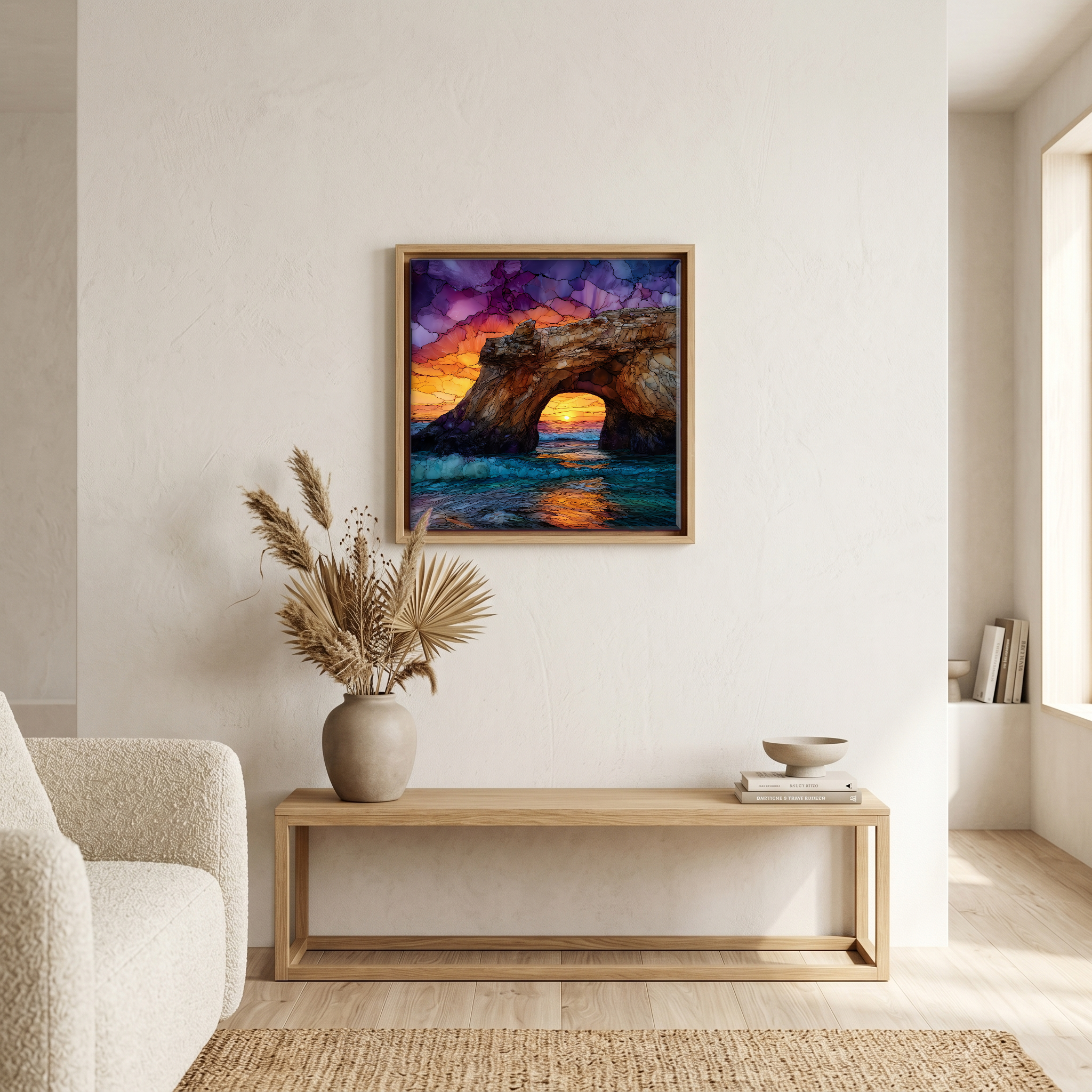
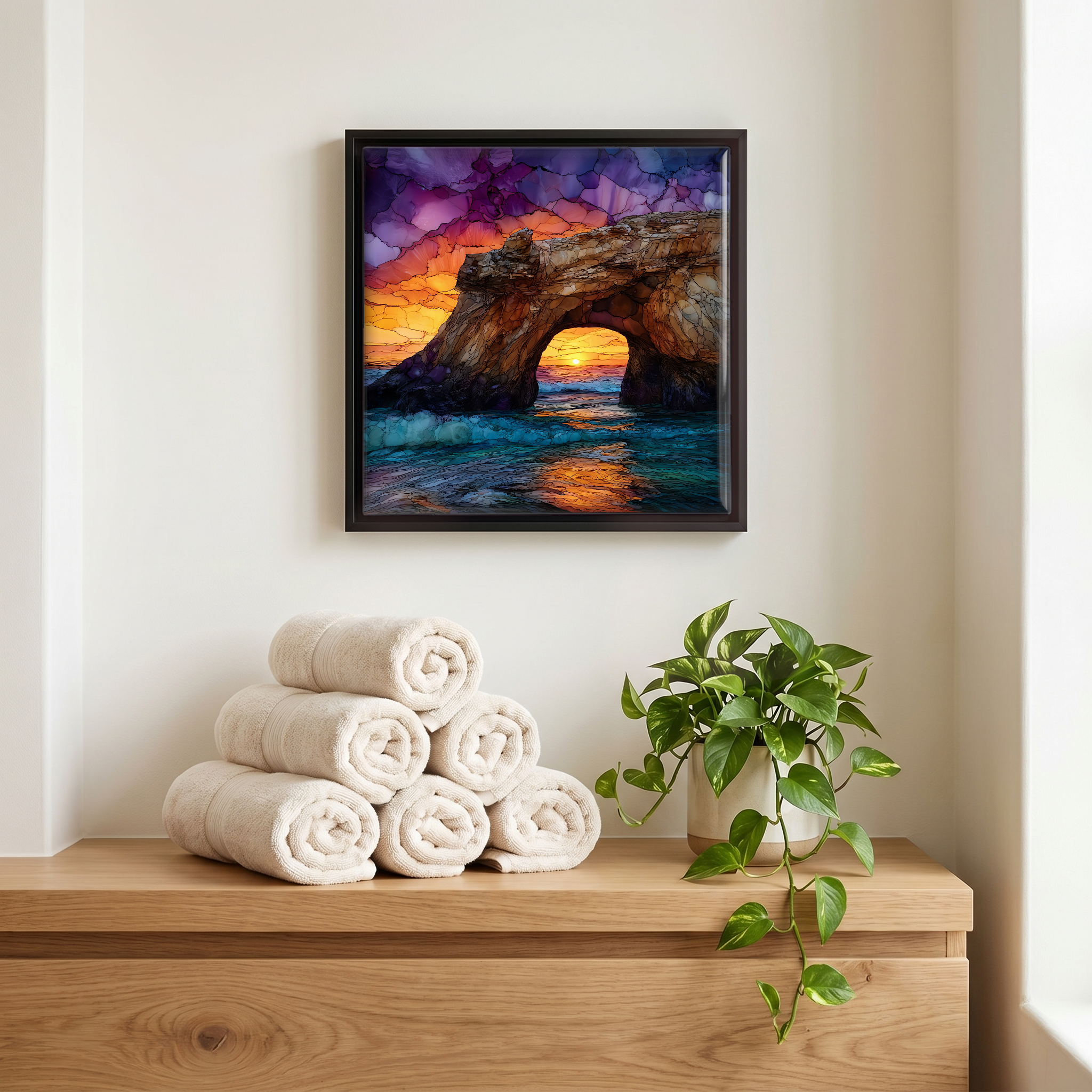

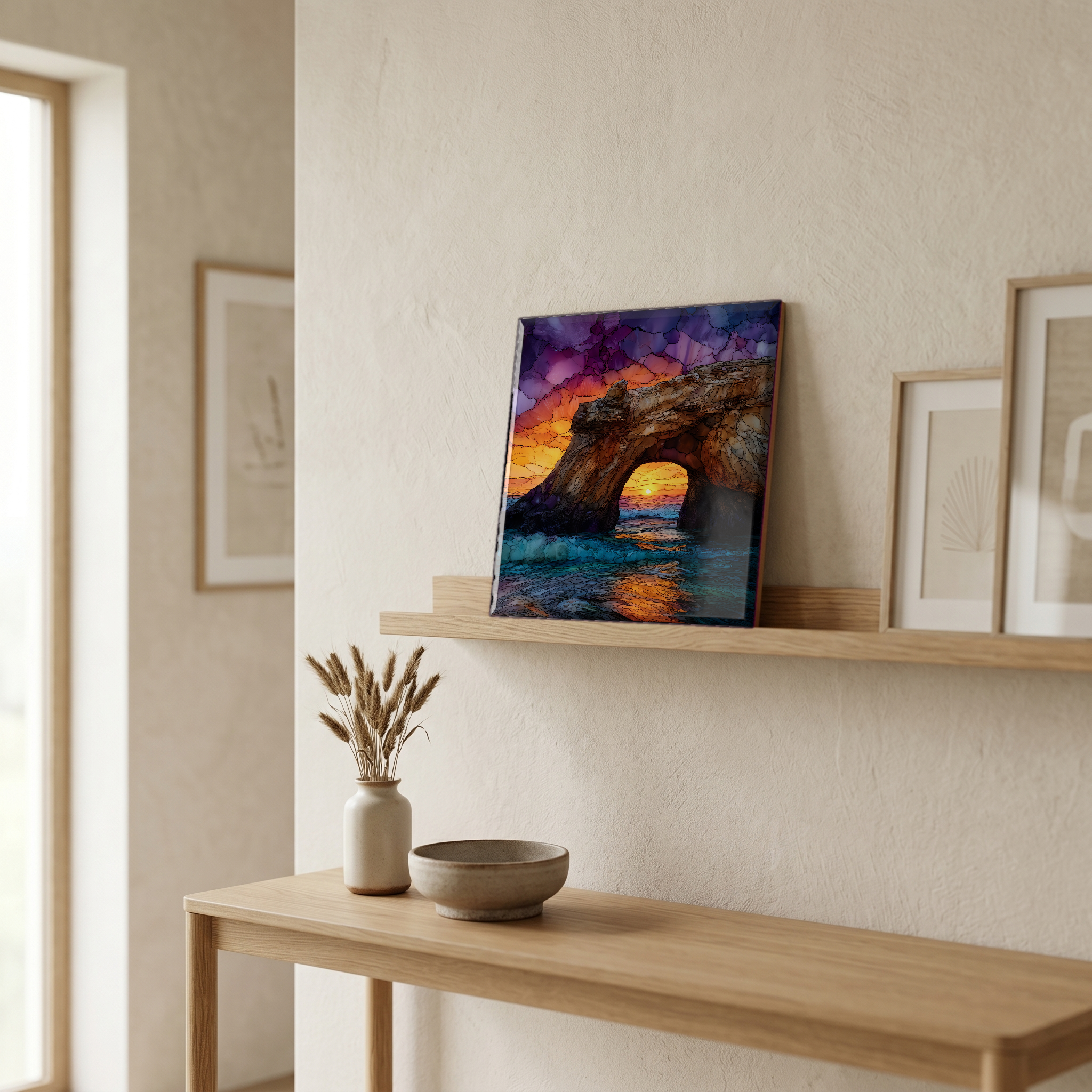
“65 acres on the western edge of Santa Cruz, at the mouth of Moore Creek. The name was honest once. Three mudstone arches stood out in the surf. The northernmost fell in 1905, a second in the early 1980s. The remaining arch is the one that stayed, framing a small piece of the Pacific from a rocky outcrop a hundred yards offshore. In winter the eucalyptus grove behind the beach turns orange with monarchs. The rest of the year the bridge does the work alone.
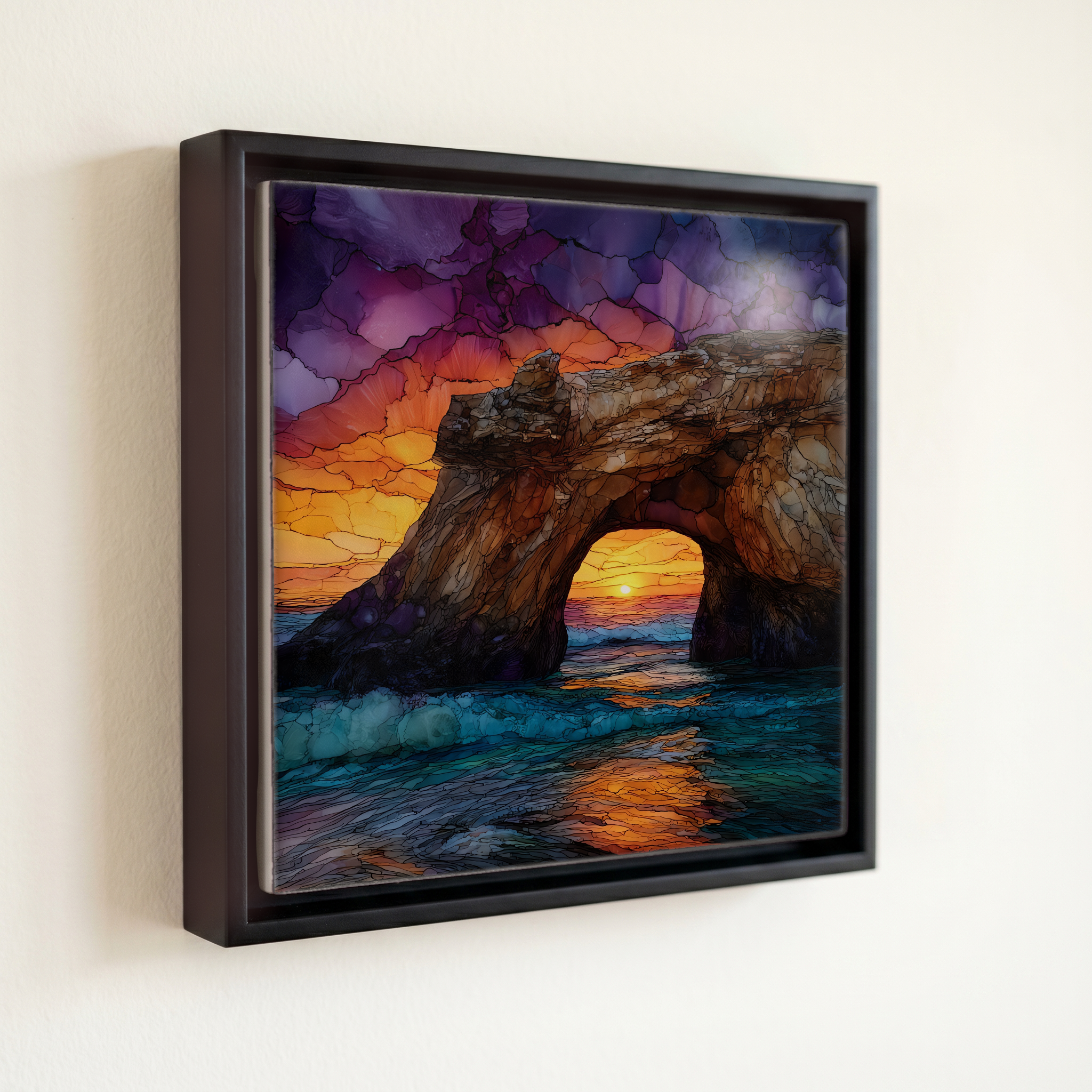
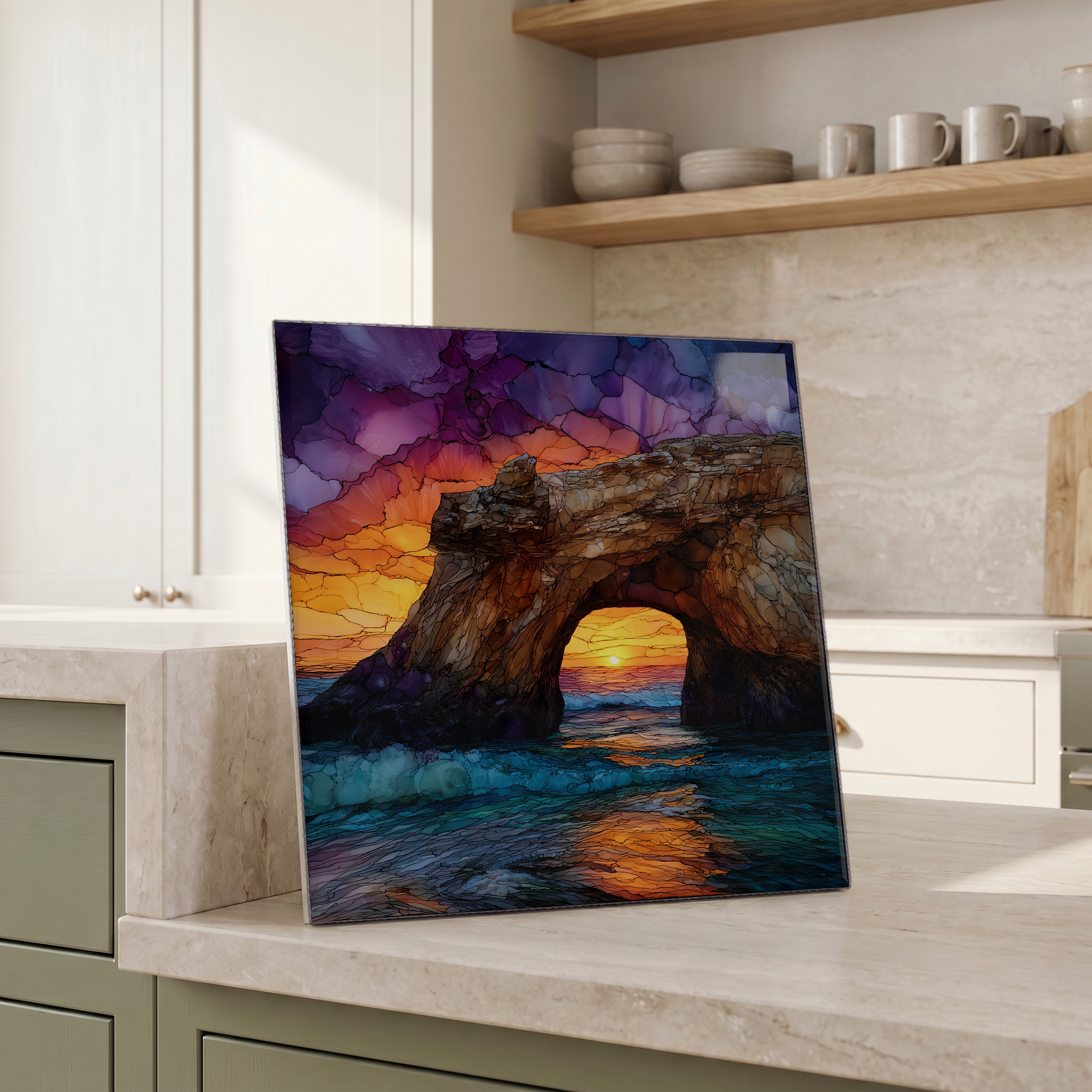
Natural Bridges Santa Cruz, on ceramic.
Each tile is finished by hand in our Knoxville studio. Artwork is slowly infused into the ceramic surface under high heat and pressure, and rests beneath a thin glossy finish. The colour lives in the surface, not on top of it.
Pick any four 4-inch tiles — National Parks you've been to, a Smokies set, the four seasons of one place. $ for a set of , cork-backed, ready to live on the table.
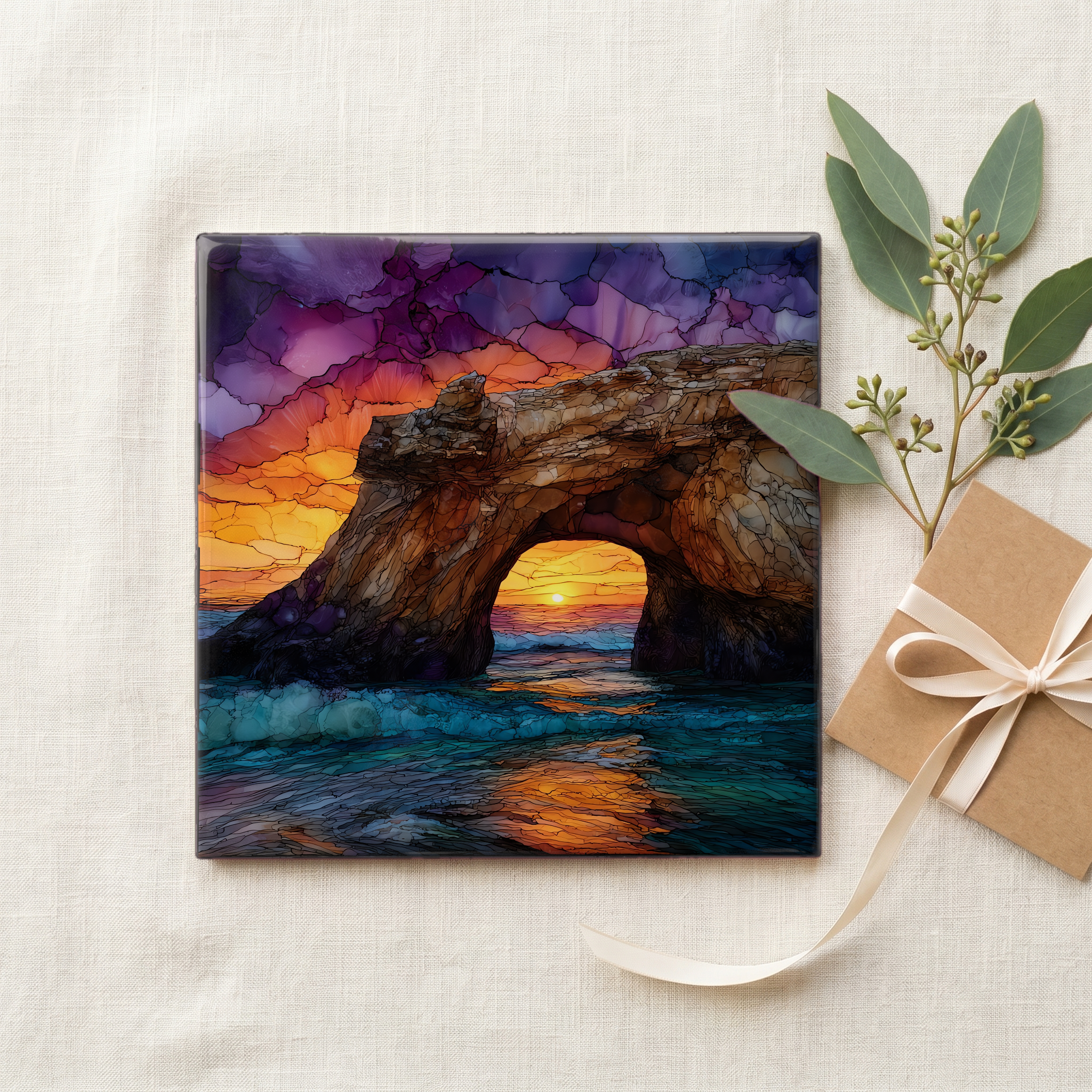
Each tile ships in a kraft box, tied with cream ribbon, with a handwritten note from the studio if you'd like to add one.
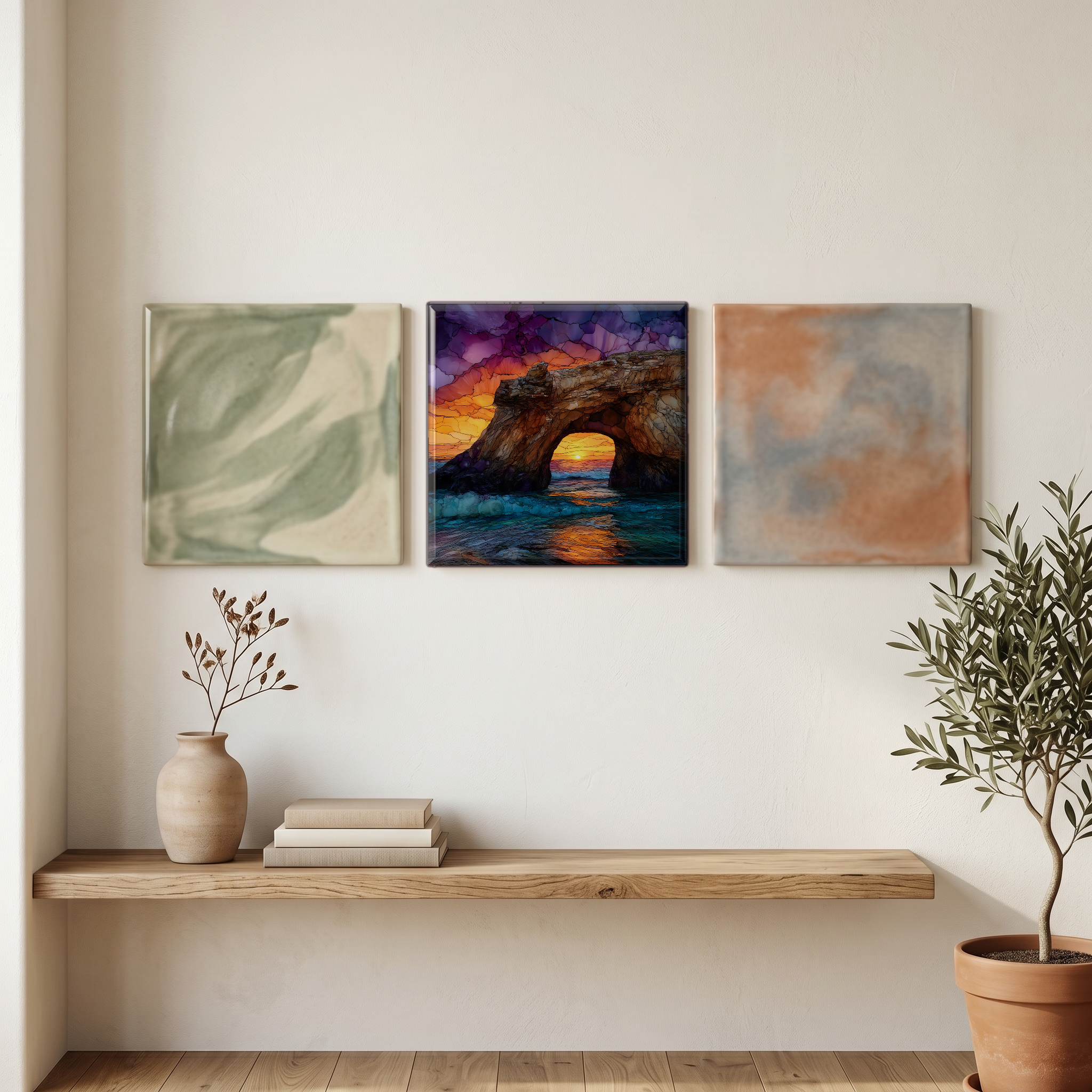
Three or five different vistas, hung together — a chapter of places you've been, or want to go.
The place, in three passes.
Natural Bridges State Beach occupies 65 acres on the western edge of Santa Cruz, California, where Moore Creek opens into Monterey Bay. The park sits at the terminus of West Cliff Drive, the coastal road that runs from the city wharf out to the open Pacific. The land was acquired by the California State Park system in 1933 and named for three natural mudstone arches that once stood in the surf zone offshore. Only one remains. The park is managed within the Santa Cruz District of California State Parks and serves as both a day-use beach and a state-designated monarch butterfly preserve.
The arches were cut from Santa Cruz Mudstone, a soft Miocene-era marine sedimentary rock that forms most of the cliffs and pocket beaches along this stretch of coast. Sea erosion opened three windows through the same headland, leaving a row of free-standing bridges by the late 19th century. The northernmost collapsed in 1905. A second arch gave way in the early 1980s during winter storms. The remaining bridge sits roughly a hundred yards offshore, a single stone window framing the Pacific. The same rock holds the tide pools below the cliff at the south end of the beach, accessible at low tide.
The park's eucalyptus grove draws one of the larger overwintering colonies of western monarch butterflies on the central California coast. The first monarchs arrive in mid-October. The colony peaks in November and December, then scatters inland by February. Counts vary sharply year to year. The Western Monarch Thanksgiving Count run by the Xerces Society recorded a near-collapse across California sites in 2020 and a partial rebound by 2022. The state designated Natural Bridges as a Monarch Butterfly Natural Preserve in 1984, the first such state designation in California. A wooden boardwalk runs through the grove with ranger talks during peak season.