Wender·Vista
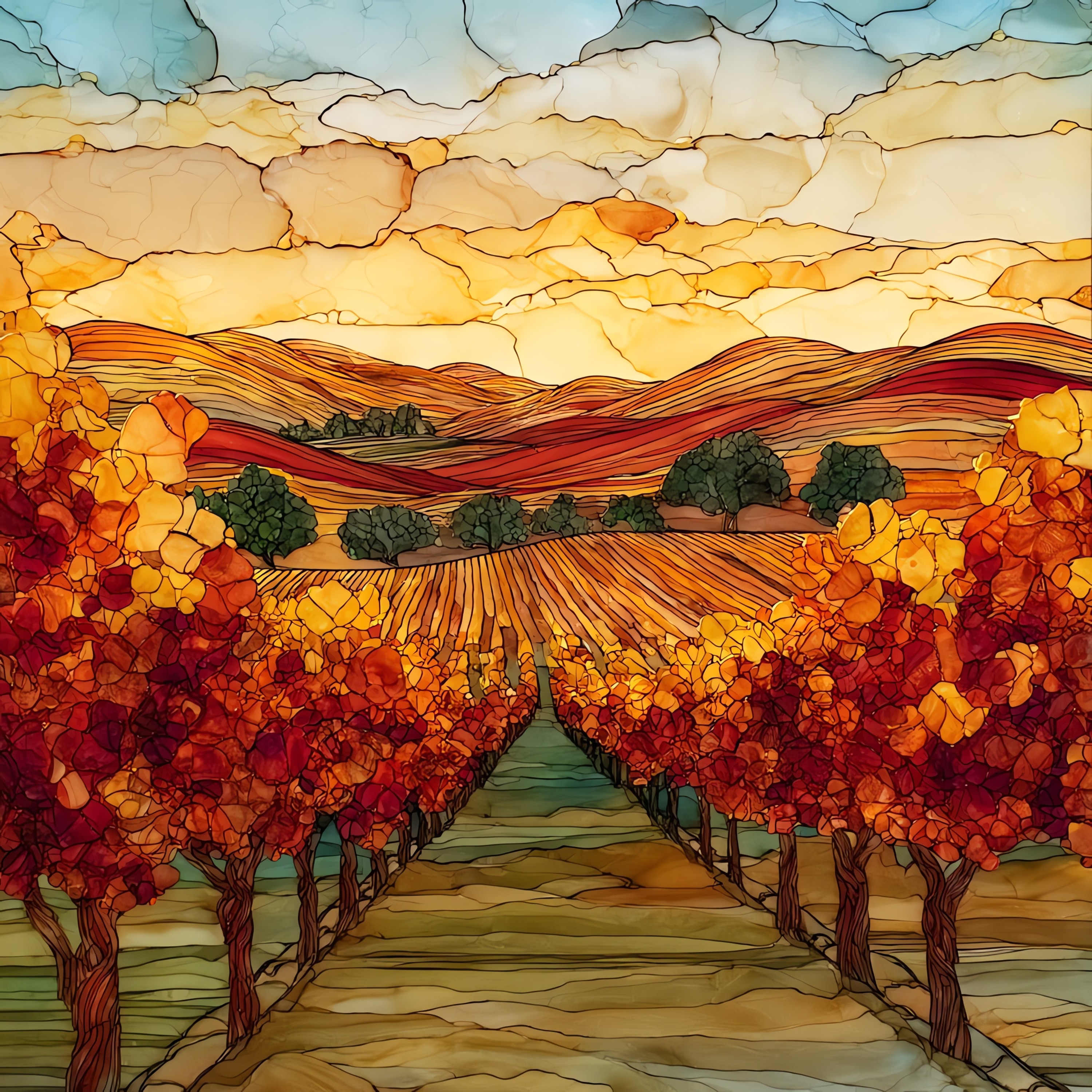
Napa Valley Vineyards
shown on ceramic, 12-inch tileCalifornia · United States
an hour north of San Francisco Bay, between two coast ranges

Napa Valley Vineyards

— the hour the fog lifts off the rows.

Where it lives

Not only on a wall.

A small tile on the nightstand catching the morning. A larger one above the fire. Yours, wherever you spend the slow hours.
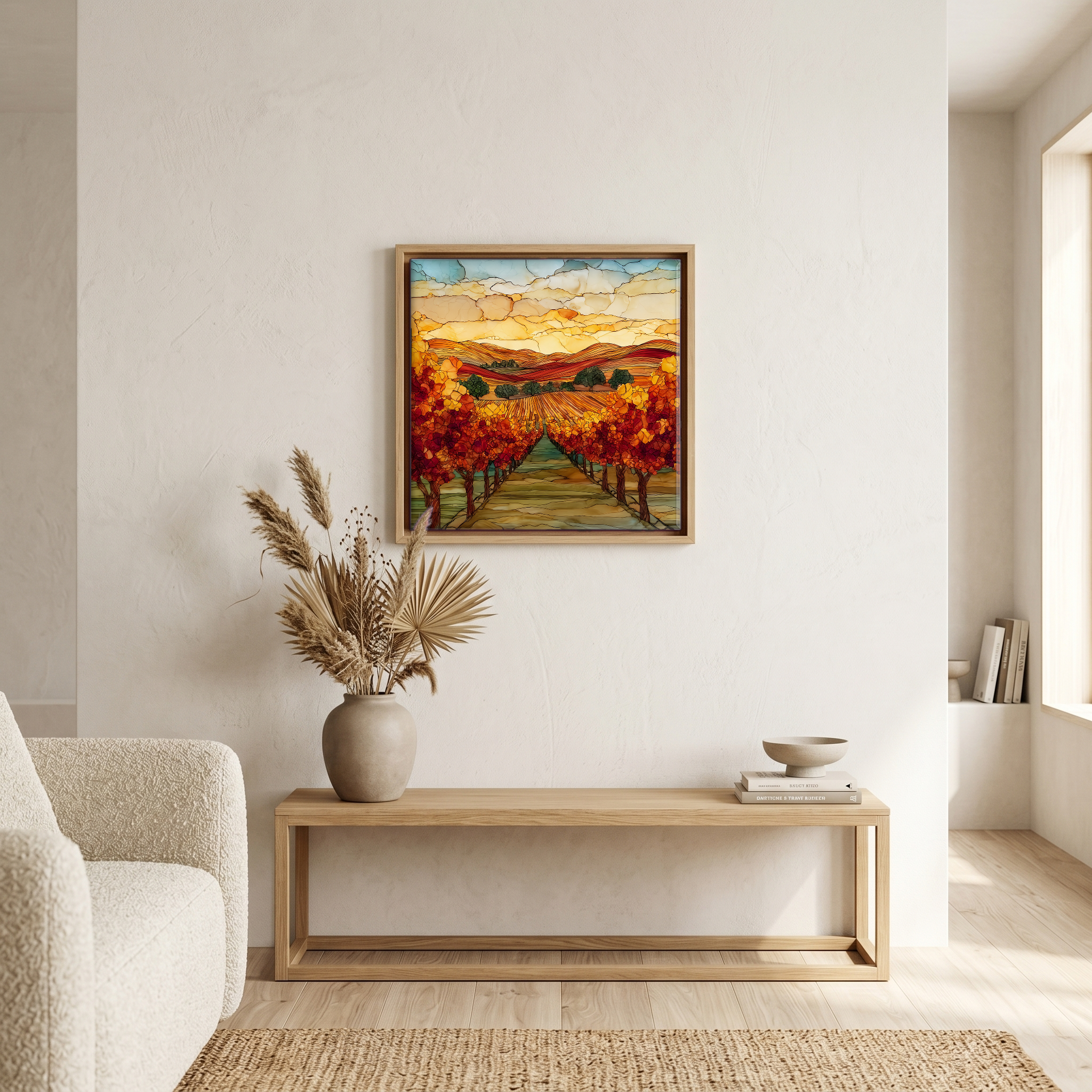
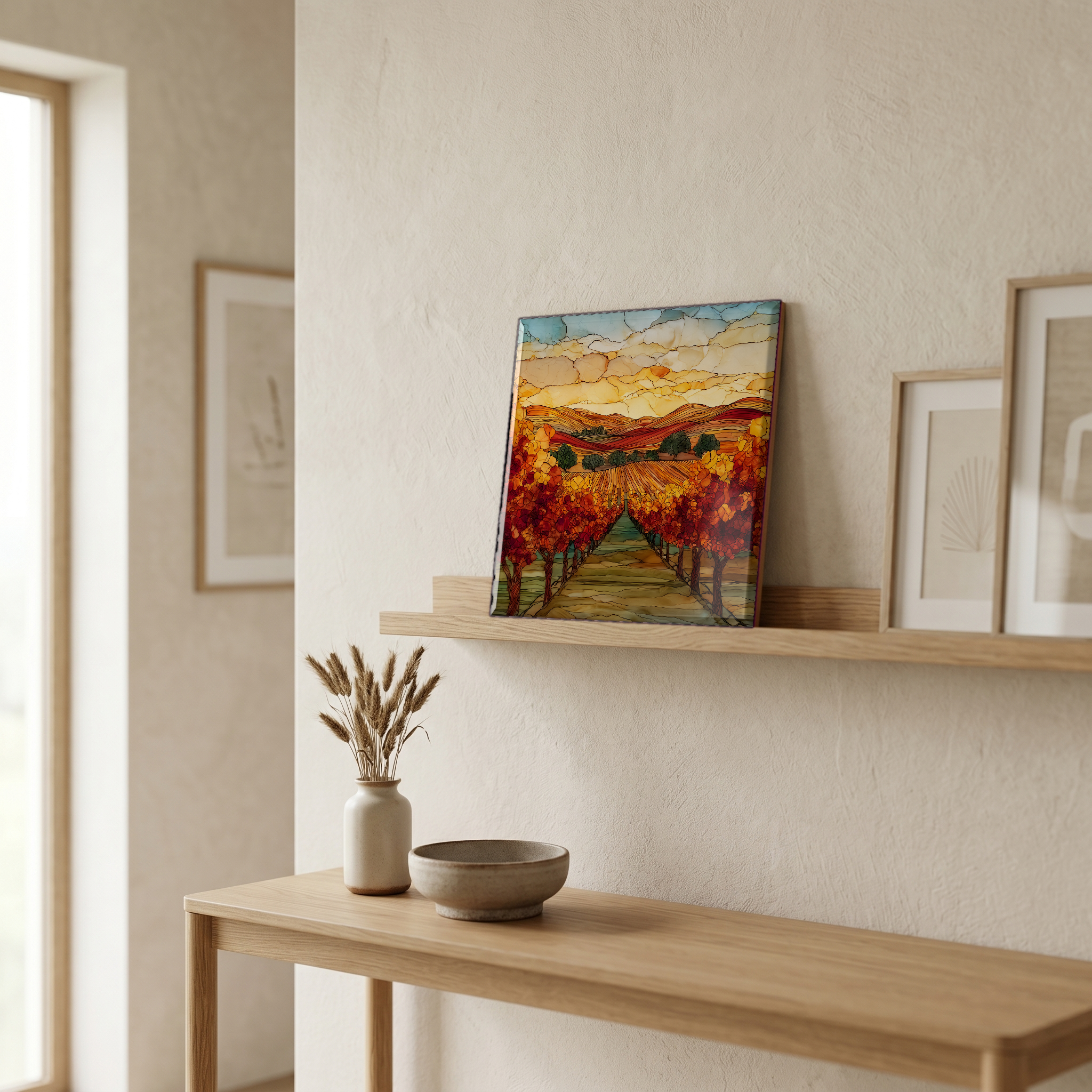
Above the bench, in a warm oak surround.
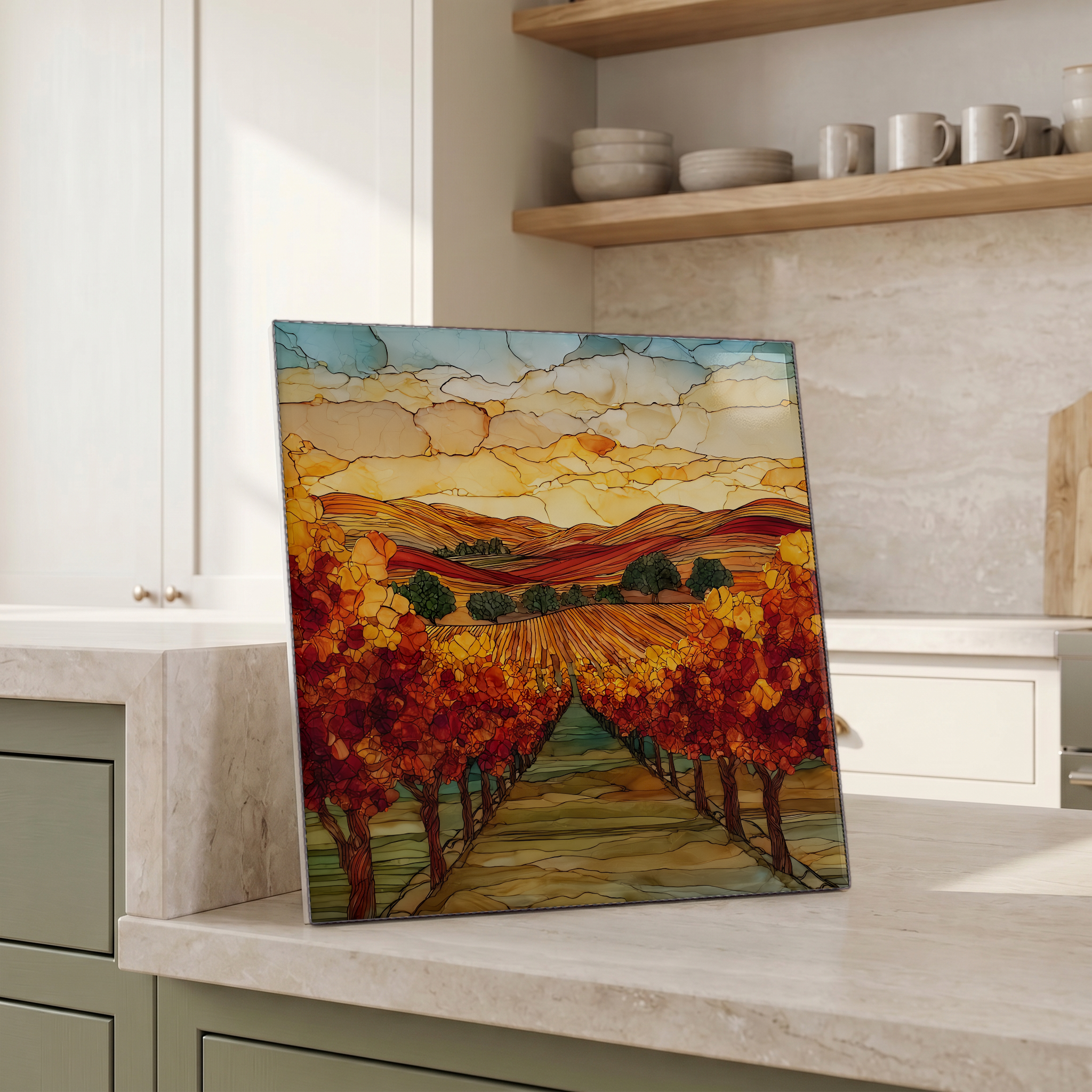
Beside the kettle, propped on the counter.
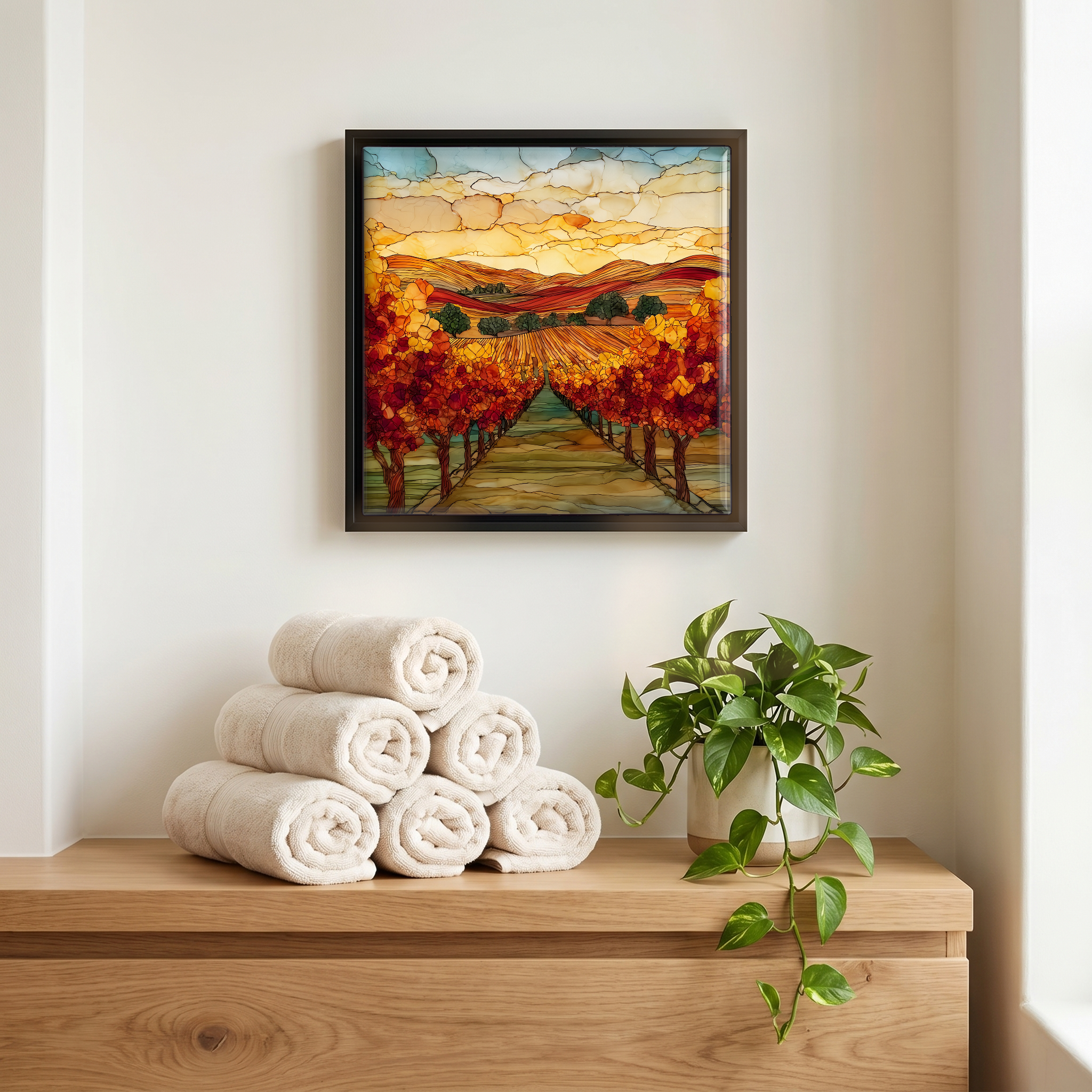
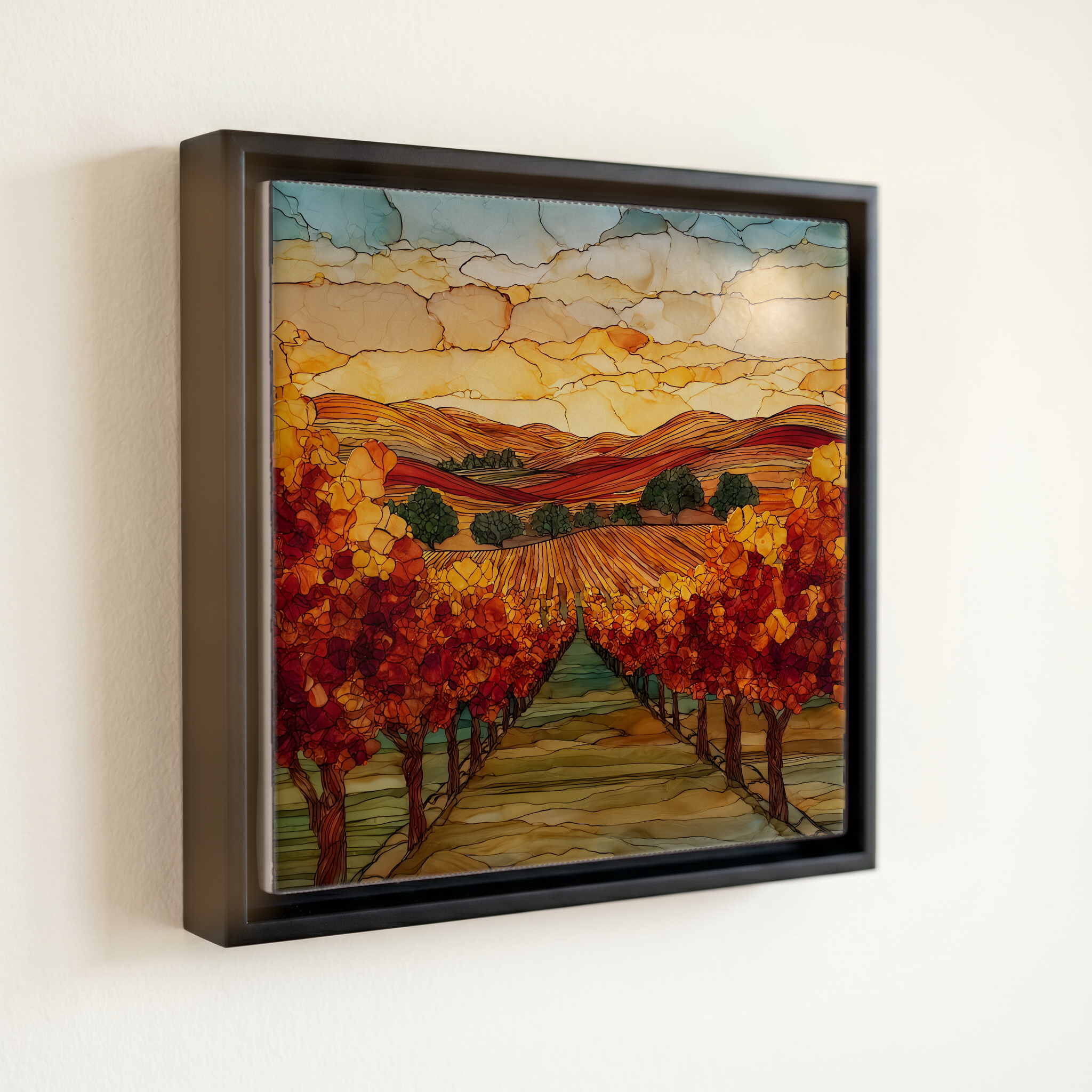
Above the linens, in a slim black surround.
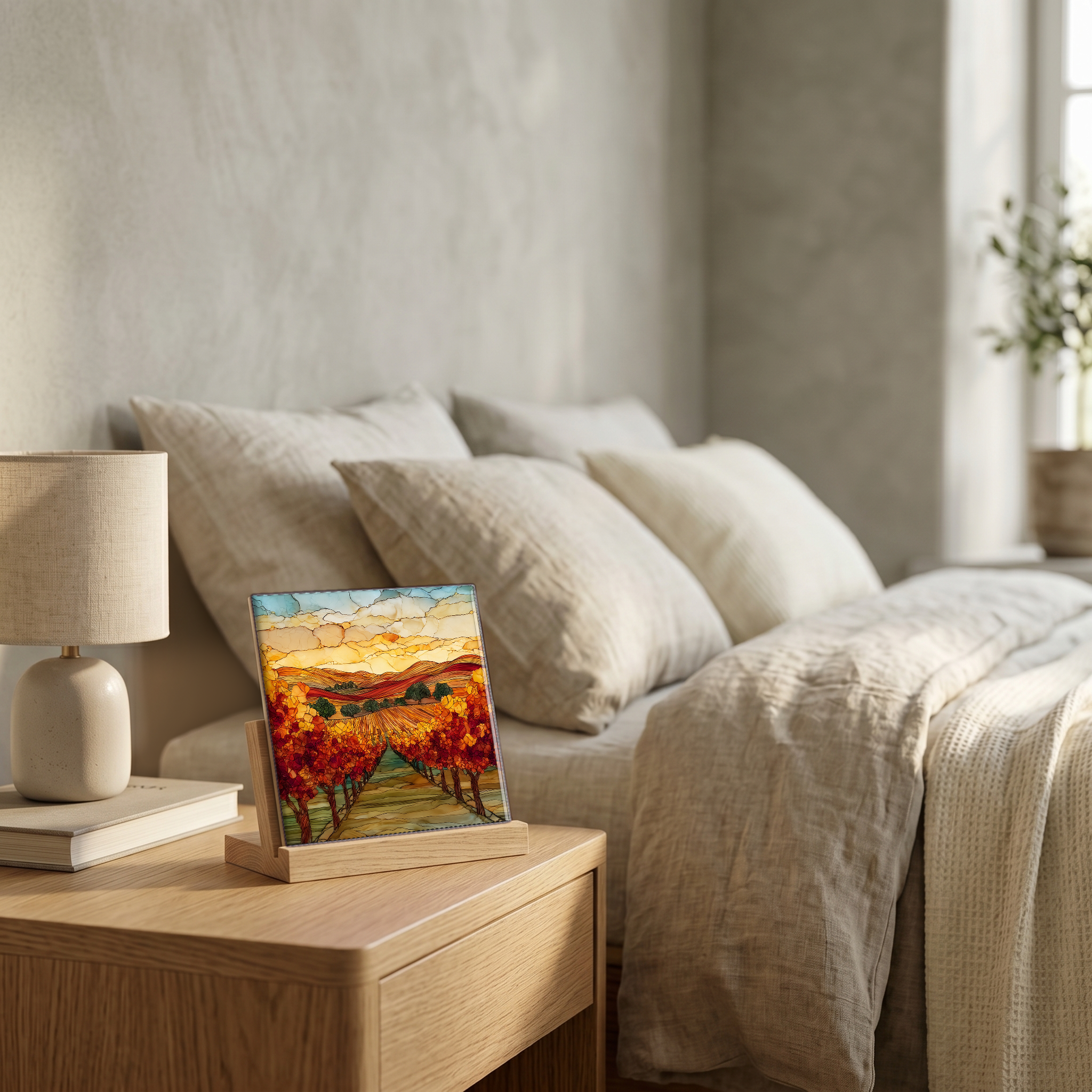
On the nightstand, on a light oak stand.
On a picture ledge, where the light comes in.
a note from the studio

The valley runs north from San Pablo Bay, thirty miles long and rarely more than five miles wide, with two coast ranges holding it on either side. The vineyards begin at the city of Napa and follow Highway 29 up through Yountville, Oakville, Rutherford, St. Helena, Calistoga. Morning fog crosses the valley floor and lifts by midmorning. The rows turn gold and bronze in October, hold for three or four weeks, then drop. The light is best late in the day from the Silverado Trail, when it comes in low across the slopes and the rows seem to go on without ending.
from the studio
shown in a slim black floating frame · 6 × 6 in
— bring it home

Napa Valley Vineyards, on ceramic.

Each tile is finished by hand in our Knoxville studio. Artwork is slowly infused into the ceramic surface under high heat and pressure, and rests beneath a thin glossy finish. The colour lives in the surface, not on top of it.

What kind of piece?
One tile — square or rectangle.
How big?
the popular one — counter, shelf, nightstand
6 × 6 in · 15 cm · 1.6 lb
Surface finish
A clear glossy finish — the artwork reads as if under resin. Ideal for show-pieces and framed wall art.
How it sits
A hidden cleat — sits ¼″ proud of the wall.
$58
Hand-finished and shipped from our studio at the foot of the Smokies. On your wall in about ten days.
size
6 × 6 in
15 cm
weighs
1.6 lb
solid in the hand
surface
ceramic, hand-finished
art rests beneath a thin glossy finish
from
Knoxville, TN
our family studio, at the foot of the Smokies
— start a Coaster Set

Pick any four 4-inch tiles — National Parks you've been to, a Smokies set, the four seasons of one place. $ for a set of , cork-backed, ready to live on the table.
comes gift-ready
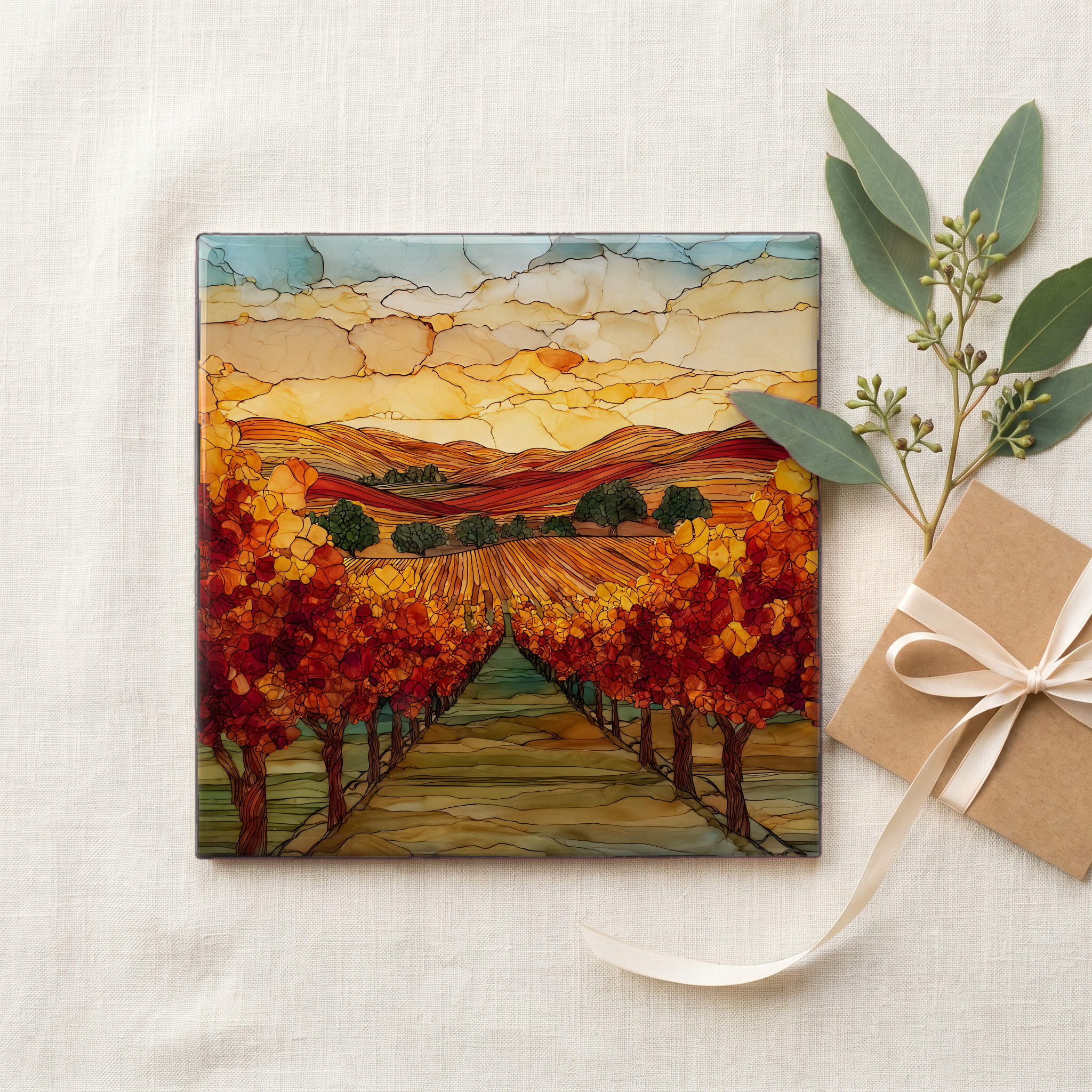
comes gift-ready

Each tile ships in a kraft box, tied with cream ribbon, with a handwritten note from the studio if you'd like to add one.
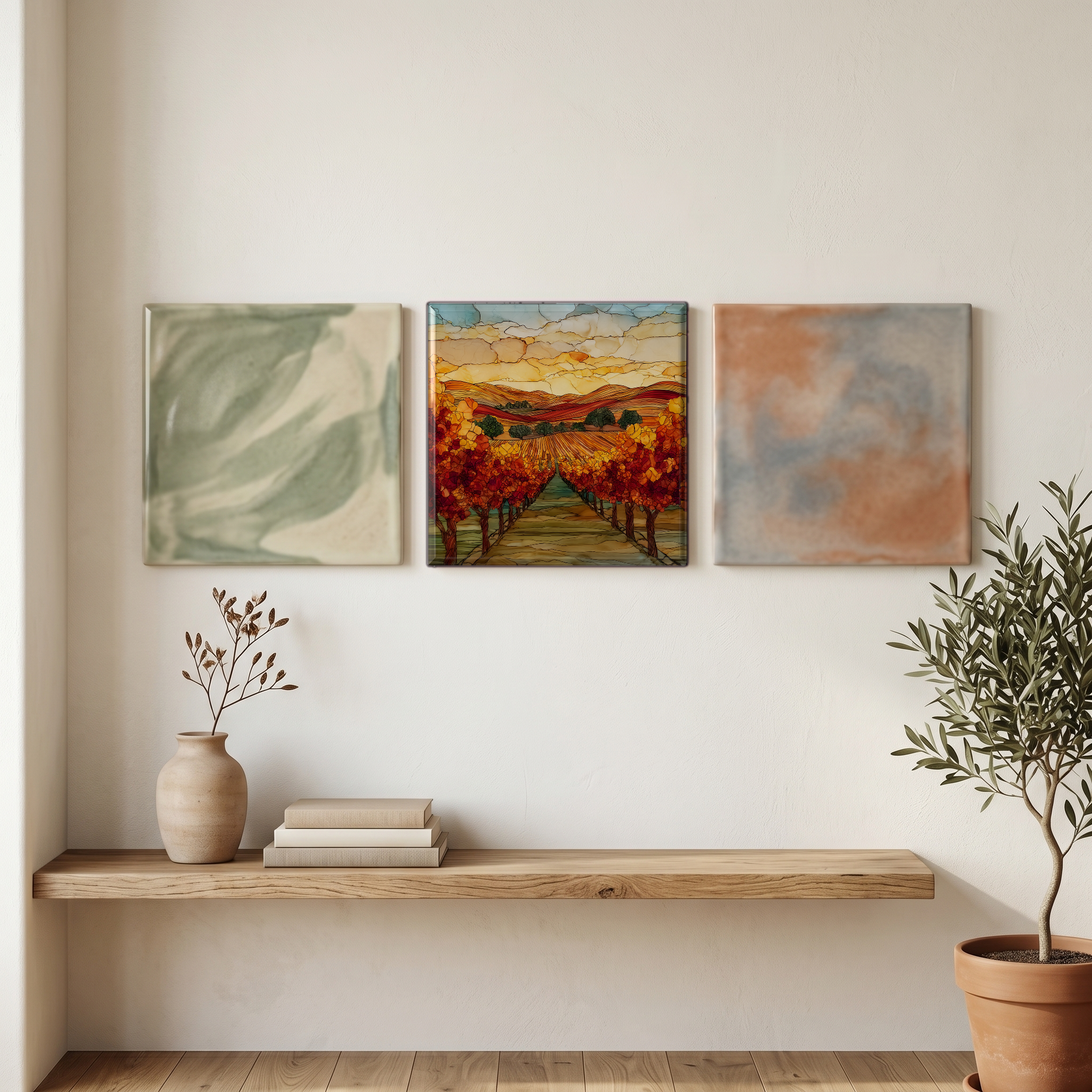
or build a grouping
or build a grouping

Three or five different vistas, hung together — a chapter of places you've been, or want to go.

about Napa Valley Vineyards

The place, in three passes.

A little of what's known, in case you fall down the rabbit hole — or want to go see it yourself.
the place

Napa Valley runs roughly thirty miles north from the head of San Pablo Bay, hemmed by the Mayacamas Mountains on the west and the Vaca Range on the east. The valley floor is narrow, five miles at its widest and less than a mile across at Calistoga, tilting gently from sea level at the city of Napa to about 360 feet at the northern end. Highway 29 follows the western edge through Yountville, Oakville, Rutherford, St. Helena, and Calistoga; the Silverado Trail mirrors it on the east. Napa Valley was the first viticultural area established in California, designated by federal regulators in January 1981, and now contains sixteen nested sub-AVAs and roughly 45,000 acres of vines.

the air

What makes Napa work as a wine region is the air that comes in from the bay. Cool marine fog moves up from San Pablo Bay each summer night, settles on the valley floor, and burns off by late morning. The diurnal swing, sometimes 50°F between predawn and afternoon, slows the ripening of fruit and concentrates flavour. The southern end of the valley around Carneros stays coolest; Calistoga at the northern end runs ten to fifteen degrees warmer on a typical August afternoon. This temperature gradient, combined with a roughly thirty-three-soil-series patchwork on the valley floor and benches, is why a single thirty-mile valley can grow Pinot Noir at one end and late-ripening Cabernet Sauvignon at the other.

the season

Vineyard work in Napa runs on a year-long calendar. Bud break comes in March, flowering in late May, and véraison, the moment the berries change colour and begin to soften, in mid to late July. Harvest begins in mid-August with the white varieties at Carneros and continues into late October for the Cabernet Sauvignon of Howell Mountain and Pritchard Hill. The vines drop their leaves in November, the rains return, and the cover-crop mustard blooms yellow across the valley floor through February. The visible vintage, when the rows themselves change colour week by week, runs roughly mid-September through early November, with the strongest gold and bronze in the second and third weeks of October.

where
United States · Napa County, California
position
38.4500° N · 122.4200° W
the neighborhood

What's nearby.

A handful of named places within an hour's walk or short drive. Some we've already painted; some we will.
10 km S
Yountville
valley food town
5 km N
St. Helena
mid-valley wine town
20 km NW
Calistoga
north-valley spa town
20 km S
Napa
valley head city
25 km SW
Sonoma Valley
parallel wine valley
25 km NE
Lake Berryessa
Vaca-Range reservoir
N
Napa Valley Vineyards
Yountville
St. Helena
Calistoga
Napa
Sonoma Valley
Lake Berryessa
common questions

What people ask.

A few questions we get about Napa Valley Vineyards — and about bringing the piece home.
about the place

Napa Valley sits in northern California, roughly an hour's drive north of San Francisco, running about thirty miles from the city of Napa at the head of San Pablo Bay up to Calistoga. The Mayacamas Mountains form its western wall; the Vaca Range holds the east.

Napa Valley is California's most established wine region and the state's first American Viticultural Area, designated in January 1981. It is best known for Cabernet Sauvignon, which accounts for roughly half of the valley's vineyard acreage, though it also produces Chardonnay, Merlot, Sauvignon Blanc, and Pinot Noir.

Late September through the first week of November is the visible vintage. The rows turn gold and bronze, harvest is in full swing, and the light is warm and low. October weekends draw heavy traffic on Highway 29; the Silverado Trail tends to move better.

The combination of marine fog from San Pablo Bay, which cools the valley each night, and warm afternoon sun creates a large diurnal swing that ripens grapes slowly and evenly. Napa also has unusually diverse soils, roughly thirty-three soil series within a thirty-mile valley.

Napa Valley has roughly 475 physical wineries and around 700 wine brands. About 45,000 acres are planted to vines across the valley floor, the surrounding benches, and the mountain AVAs such as Howell Mountain, Mount Veeder, and Spring Mountain.

The most common route is north on Highway 101 across the Golden Gate Bridge, then east on Highway 37 and north on Highway 29; it runs about 50 miles and takes 75 to 90 minutes without traffic. The Napa Valley Wine Train also runs from downtown Napa to St. Helena and back.

From south to north along Highway 29: Napa, Yountville, Oakville, Rutherford, St. Helena, and Calistoga. Yountville is the food town, with The French Laundry and Bouchon. St. Helena anchors the middle of the valley. Calistoga at the north end is known for its hot springs.

about the piece in your home

It carries well for someone with ties to the valley: a wine-country wedding, a milestone harvest visit, a long association with a particular winery. The Small or Medium hangs in a kitchen or wine room without crowding it; the Coaster Set or a single Keepsake works as a hostess gift or a thank-you to a sommelier.

The warm gold-and-bronze palette of the rows reads well against wine-country modern, California ranch, Tuscan, and farmhouse interiors. It also softens a colder Modern or Industrial kitchen where a warm focal piece is wanted. It carries against white, linen, slate, or oak.

Yes. Wine-country modern has been a steady through-line in California design for two decades, and the warmer end of the palette, terracotta and oak and late-harvest gold, has come back in the last few years against the cooler Japandi swing. A vineyard piece in this palette holds its place.

A single Large reads as a focal point above a console or a sideboard. Above a full-length sofa, a 4-tile Mural or a 9-tile Mural carries the wall. For a narrow runner or a hallway gallery, a row of three Mediums or a Triptych gives the rows themselves room to extend.

Yes. Order the Dura Satin or Matte finish for any wall that sees steam, splatter, or temperature swing. The colour is slowly infused into the ceramic surface under high heat and pressure, so it holds up in a working kitchen and a wine room alike. The Glossy finish is best kept for dry rooms.

A soft microfibre cloth with warm water handles everyday dust. For kitchen residue, mild dish soap and water is enough. Avoid abrasive pads, ammonia, and bleach on the Glossy finish. The Dura Satin and Matte finishes tolerate gentle scrubbing without dulling.

Yes. Every WenderVista piece is original to the studio, curated by Reid Wender and hand-finished in Knoxville, Tennessee. We do not license or syndicate the work; what you see here lives only on a WenderVista tile.

if this one stayed with you

A few you might also love.

Hand-picked by the eye that found Sorapis. Same air, same kind of quiet.