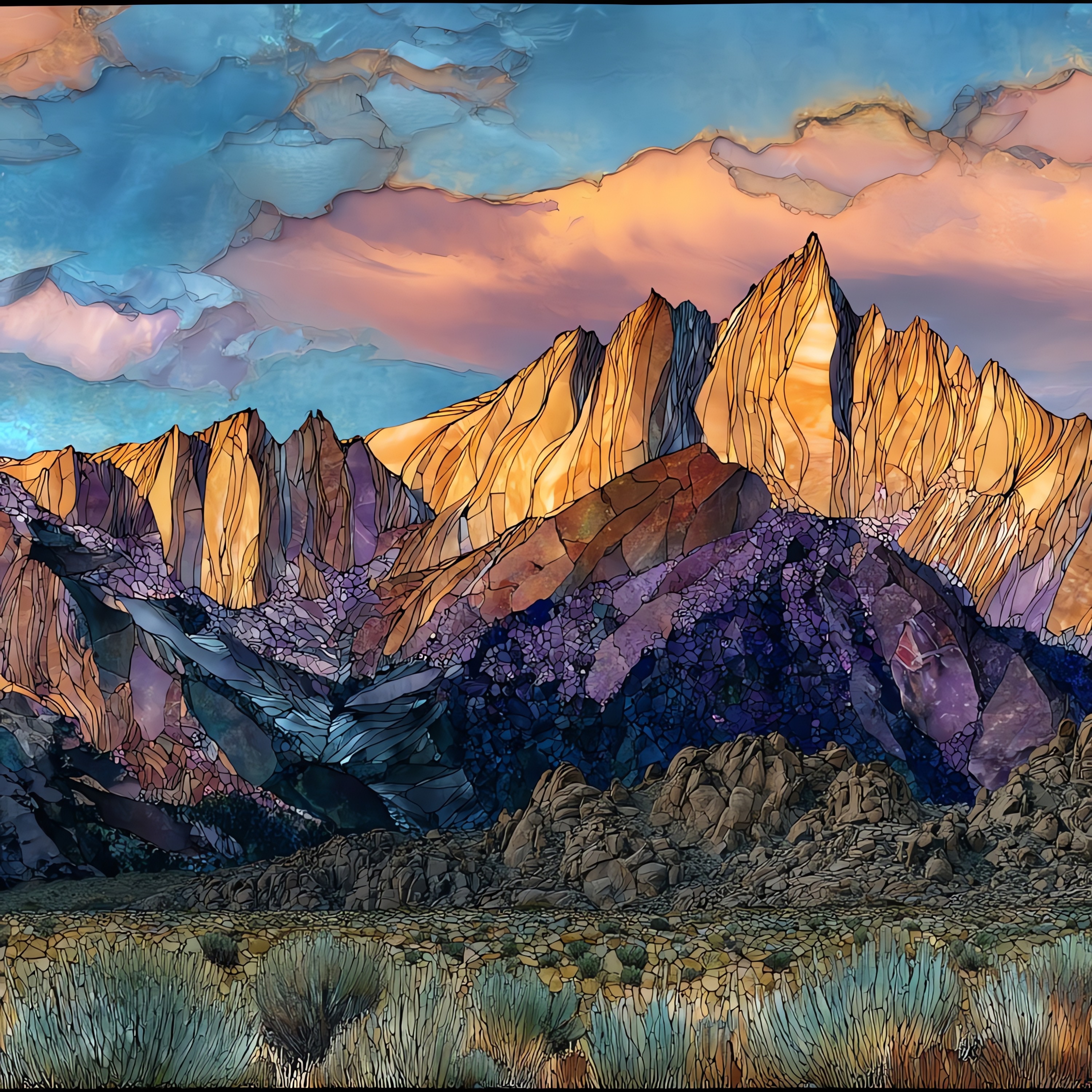
Mount Whitney Lone Pine
— — the wall the morning finds first.
Not only on a wall.
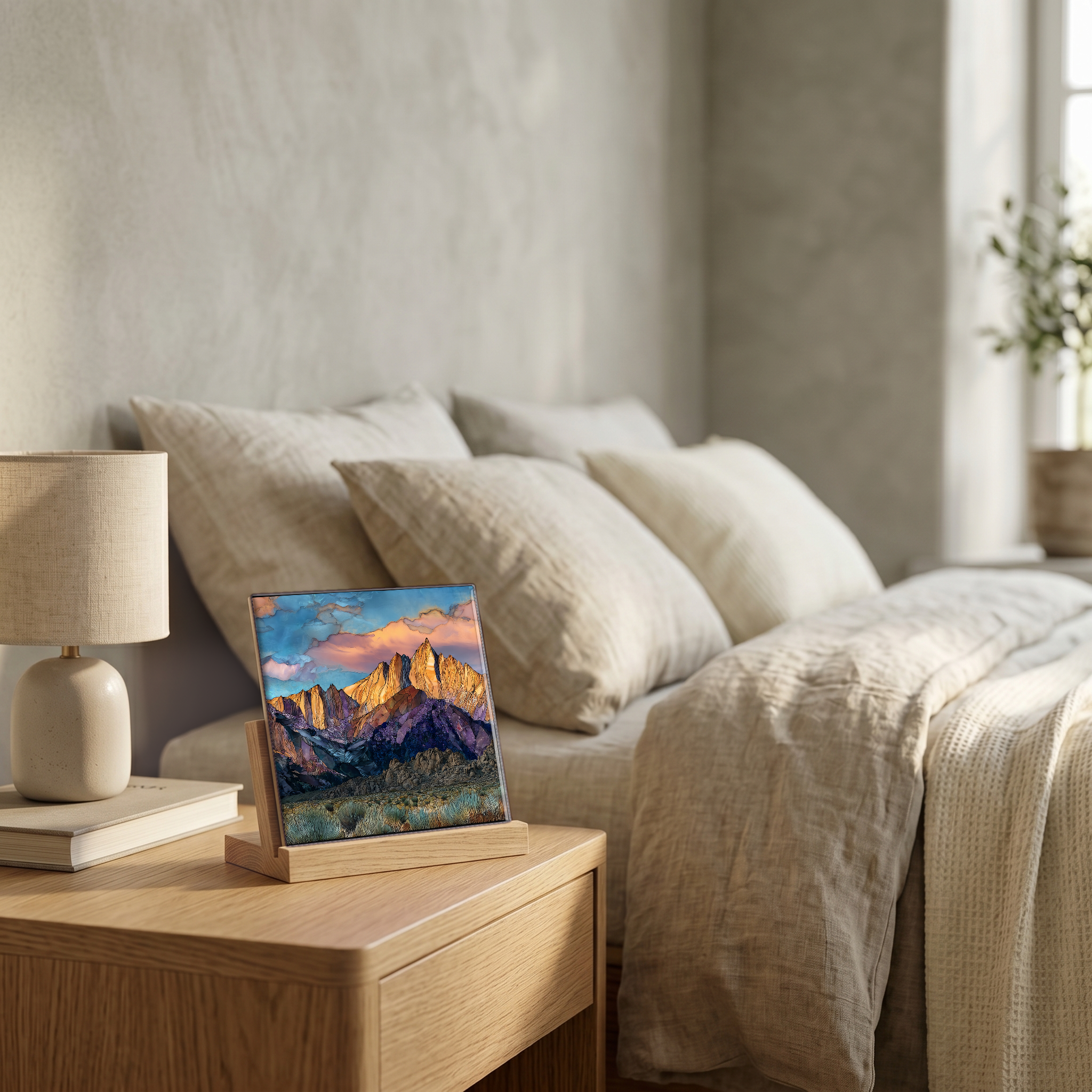
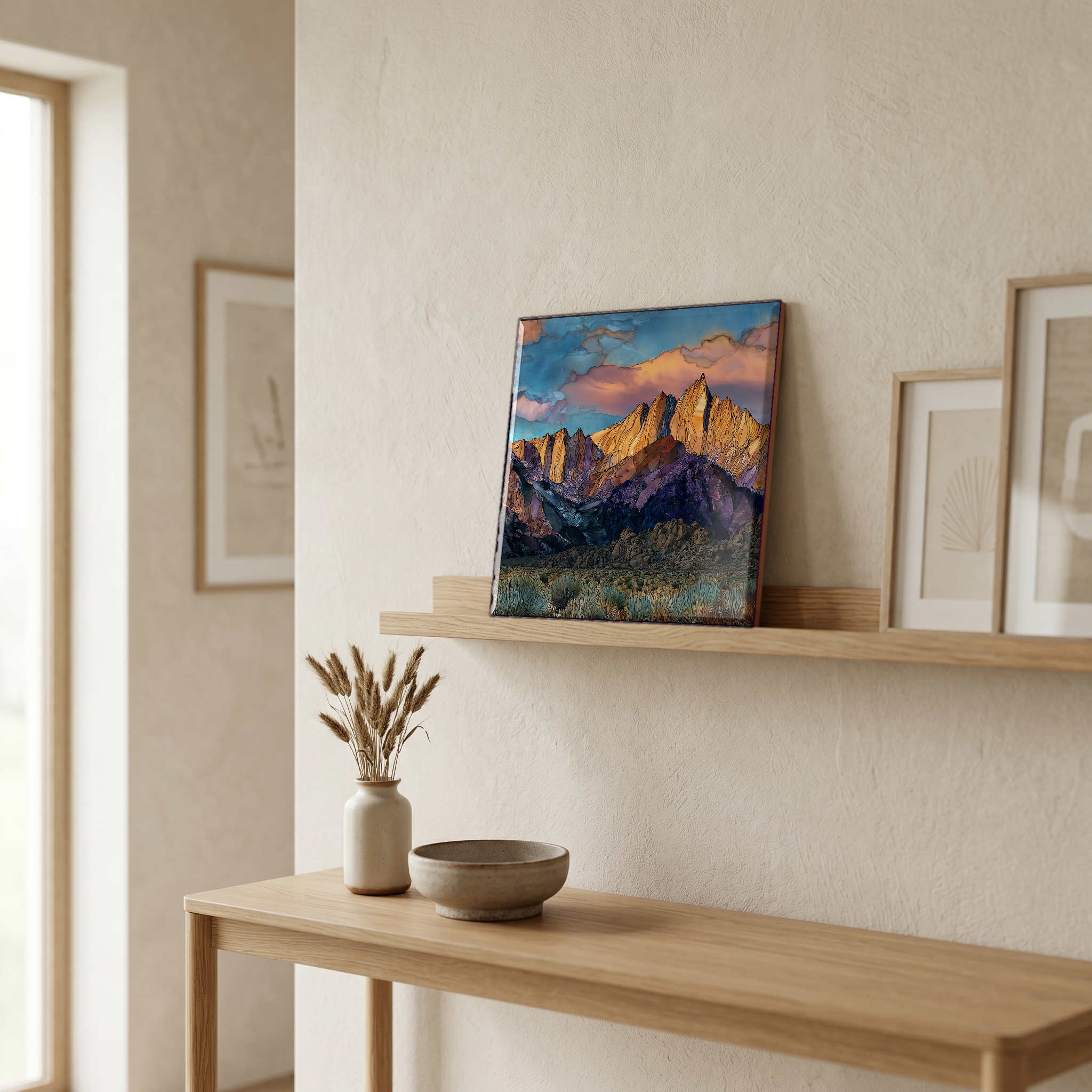
“The east face of Mount Whitney climbs almost two miles above the floor of the Owens Valley. From the Alabama Hills, west of Lone Pine on Whitney Portal Road, the whole Sierra crest catches the morning before the valley floor sees it. Photographers gather at Mobius Arch most days to frame the granite through the rock window. Hikers leaving Whitney Portal at three in the morning are aiming for the summit before the afternoon thunderheads build. Most mornings, the wall keeps its colour for about twenty minutes.
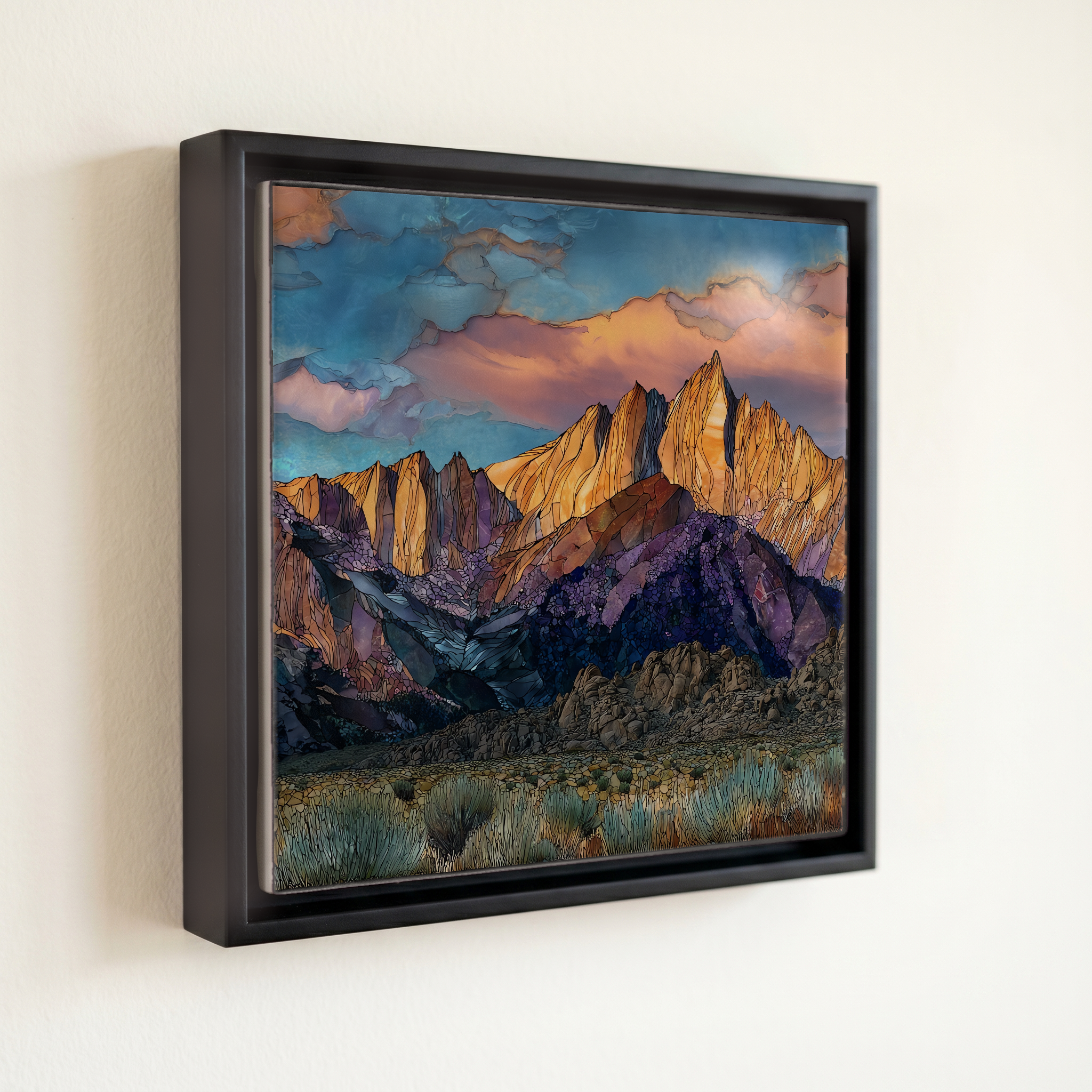
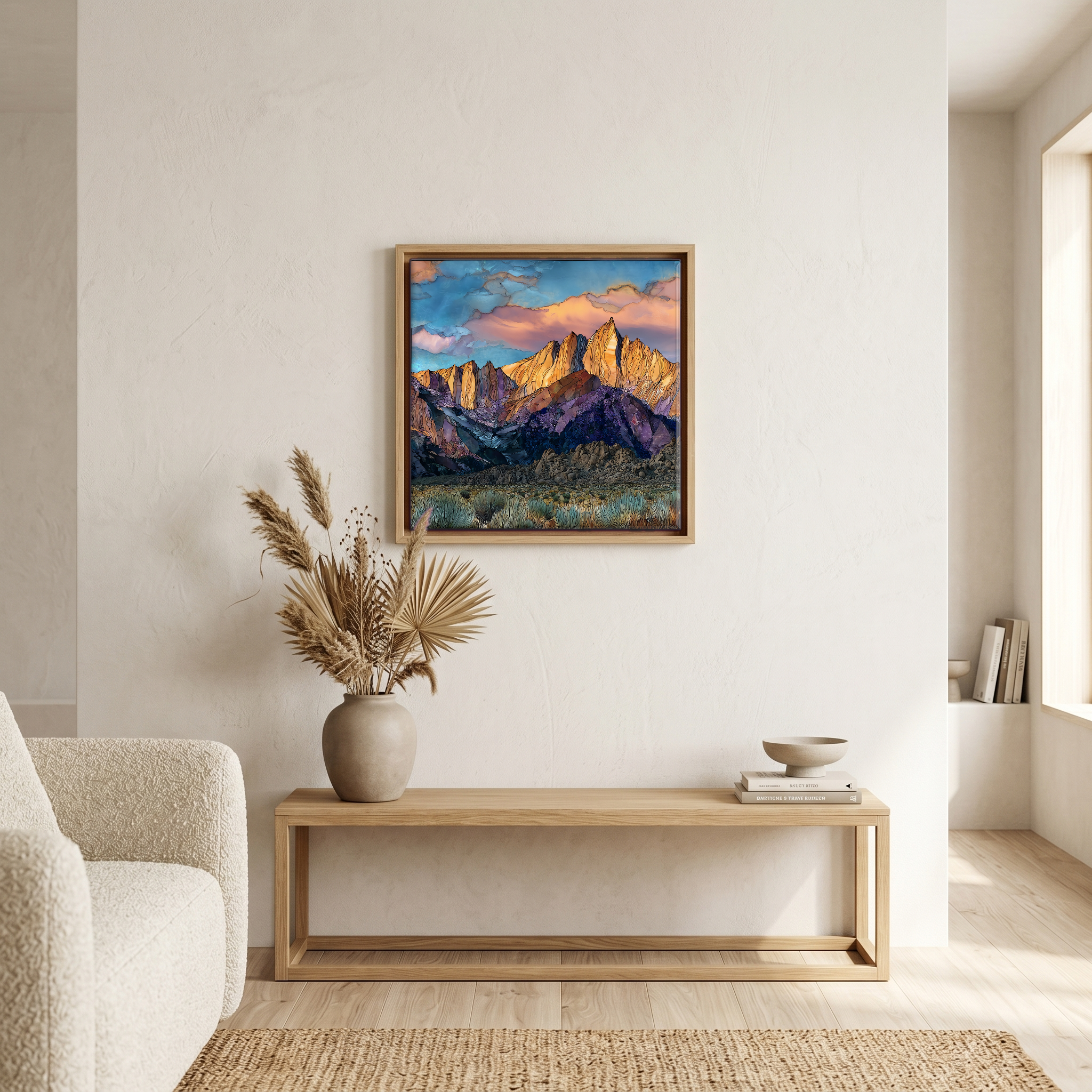
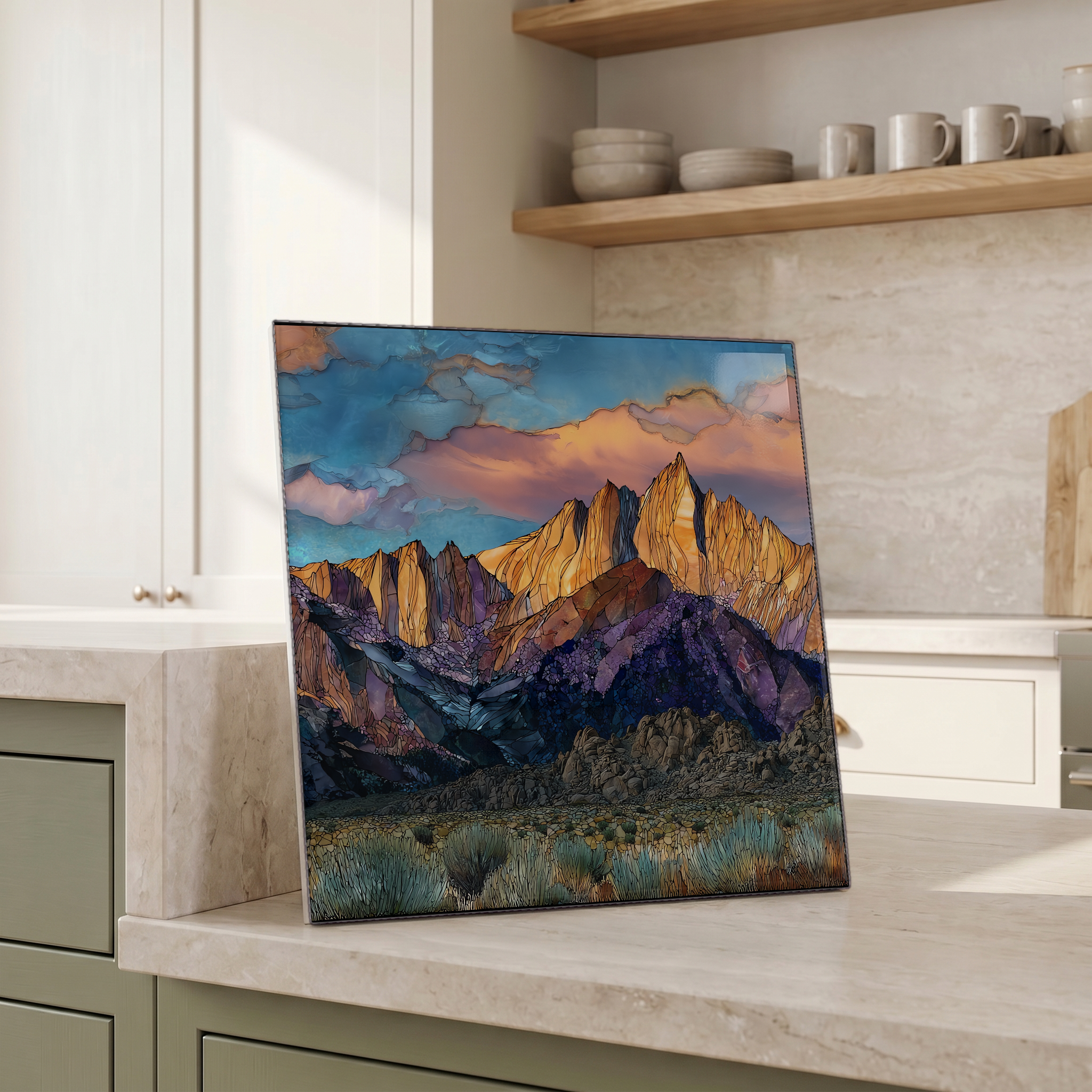
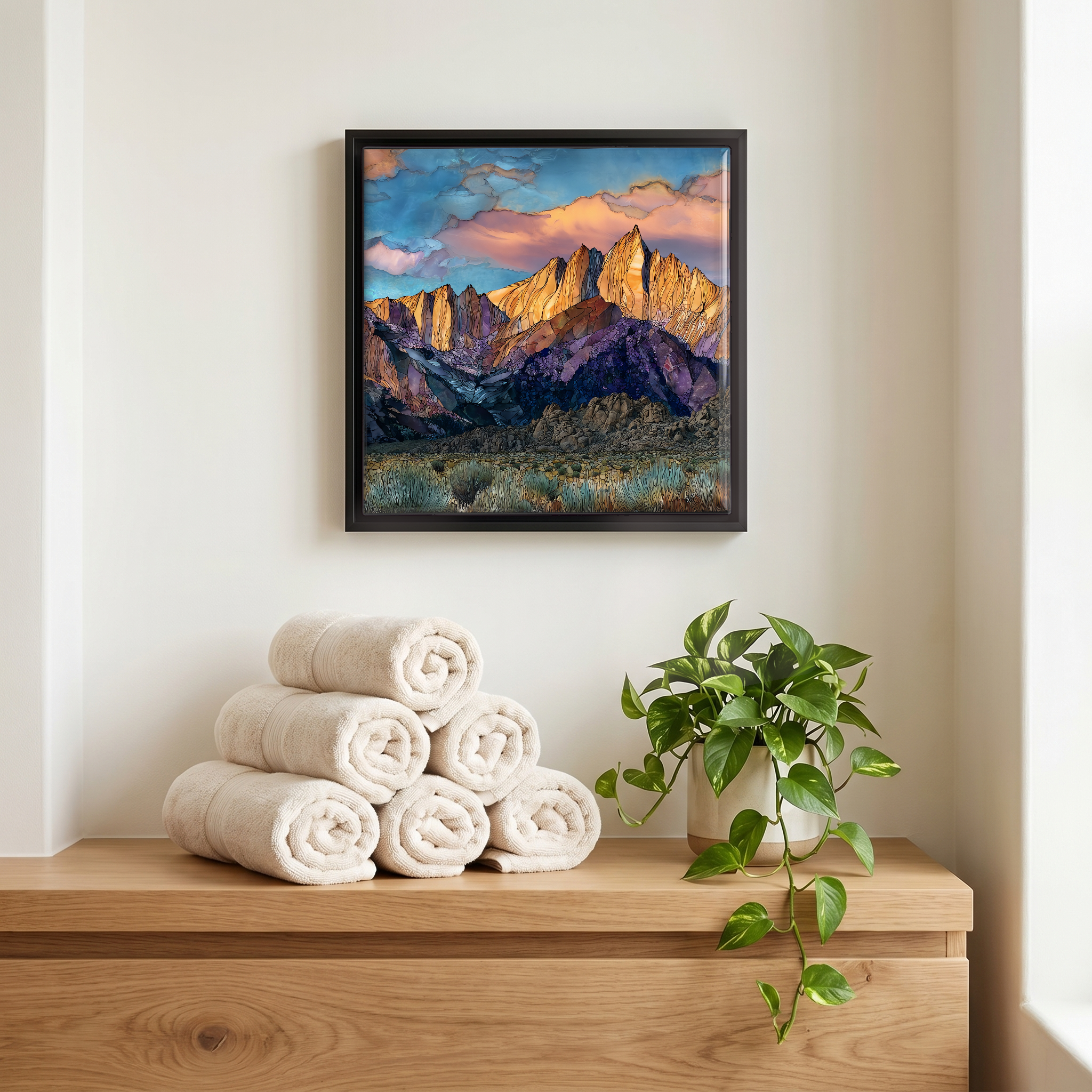
Mount Whitney Lone Pine, on ceramic.
Each tile is finished by hand in our Knoxville studio. Artwork is slowly infused into the ceramic surface under high heat and pressure, and rests beneath a thin glossy finish. The colour lives in the surface, not on top of it.
Pick any four 4-inch tiles — National Parks you've been to, a Smokies set, the four seasons of one place. $ for a set of , cork-backed, ready to live on the table.
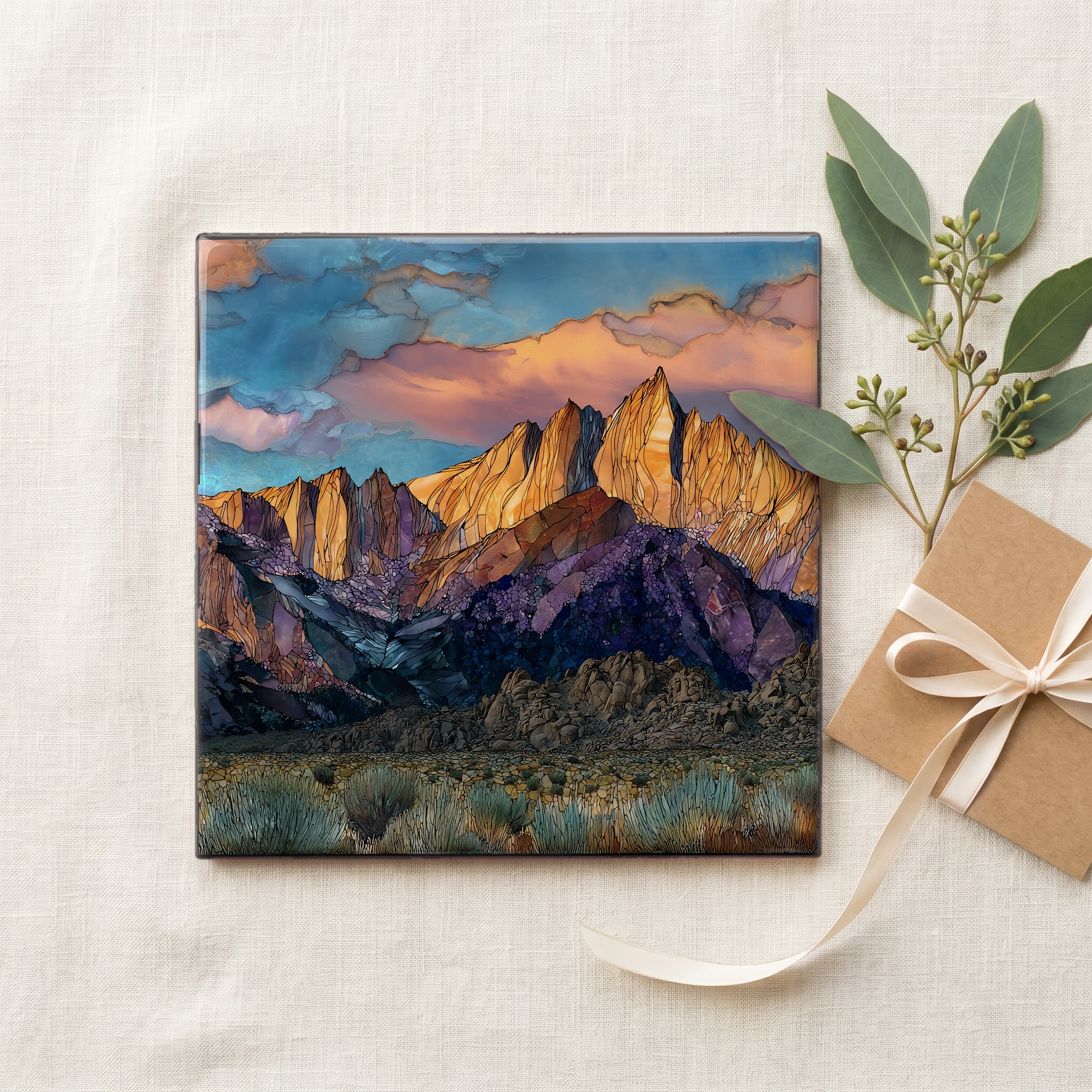
Each tile ships in a kraft box, tied with cream ribbon, with a handwritten note from the studio if you'd like to add one.
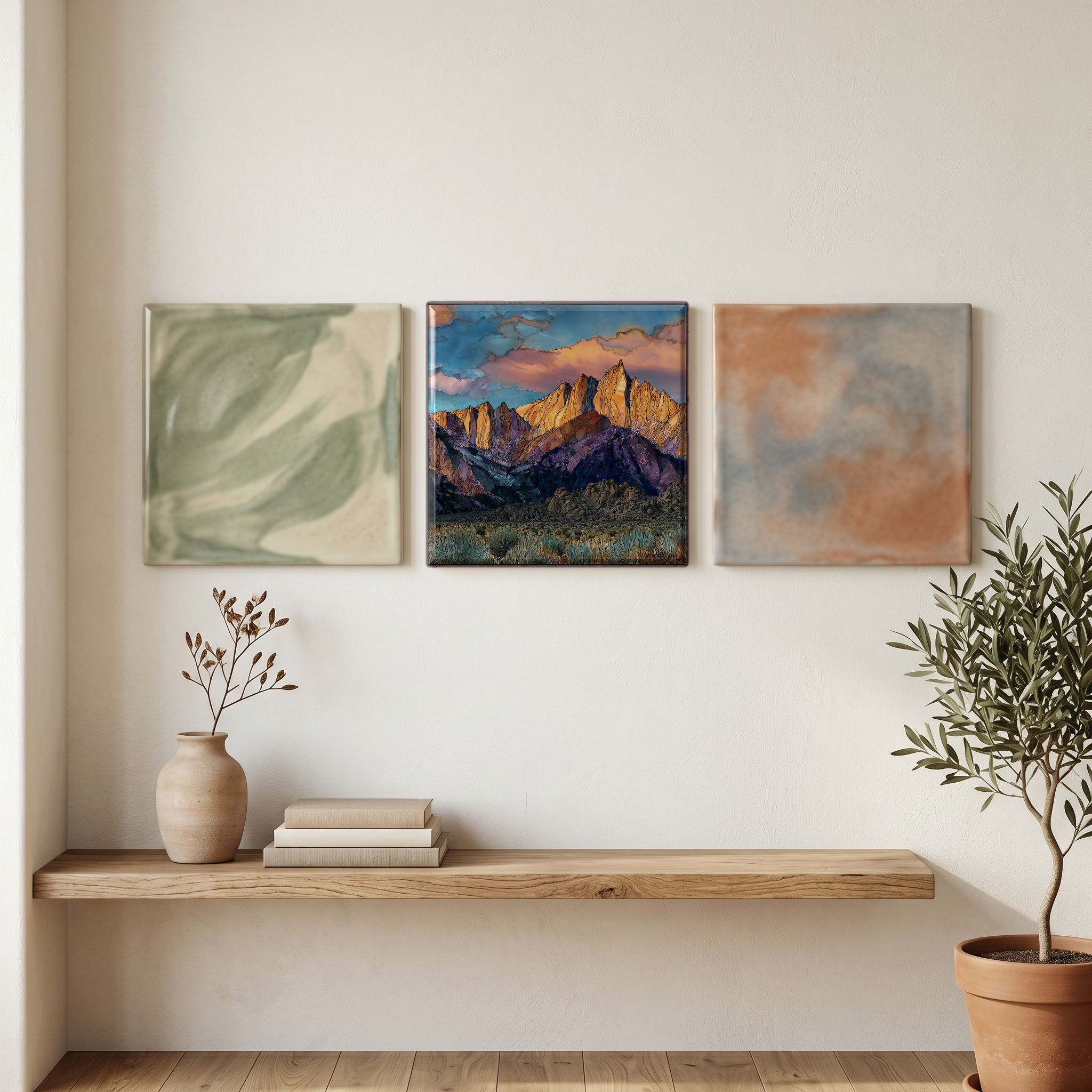
Three or five different vistas, hung together — a chapter of places you've been, or want to go.
The place, in three passes.
Mount Whitney rises to 14,505 feet at the crest of California's Sierra Nevada, the highest summit in the contiguous United States. Its eastern face climbs almost ten thousand feet above the floor of the Owens Valley, one of the most abrupt mountain walls in North America. The peak sits on the boundary between Sequoia National Park and Inyo National Forest, in California's Inyo County. The town of Lone Pine, on US Highway 395, is the gateway. Whitney Portal Road climbs thirteen miles west from town, gaining over four thousand feet to the trailhead at 8,360 feet. The Mount Whitney Trail covers about twenty-two miles round trip from the Portal.
Because the Sierra Nevada runs north to south and Mount Whitney's main face looks east, the summit is among the first peaks in California to catch sunrise. The granite turns a deep rose for roughly fifteen to twenty minutes before the alpenglow fades into the colour of any other dawn. The effect is most visible from the Alabama Hills, a Bureau of Land Management National Scenic Area about three miles west of Lone Pine, where weathered granite outcrops sit between the photographer and the wall. Mobius Arch, a small natural arch a half-mile from Movie Road, frames the peak almost exactly. The Lone Pine Film History Museum catalogues nine decades of films shot in those hills.
Access to the summit is regulated by Inyo National Forest. From May 1 through November 1, a permit is required for any day hike or overnight trip past the trailhead at Whitney Portal, and the daily quota is small. Permits are awarded by a lottery that opens in February and closes in mid-March; results post in late March. Hikers usually start in the dark to reach the summit before the afternoon thunderstorms that build over the Sierra crest most summer afternoons. Whitney Portal Road closes in winter at the lower gate. The town of Lone Pine, elevation 3,727 feet, has a handful of motels, a small grocery, and the Mt. Whitney Restaurant on Main Street.