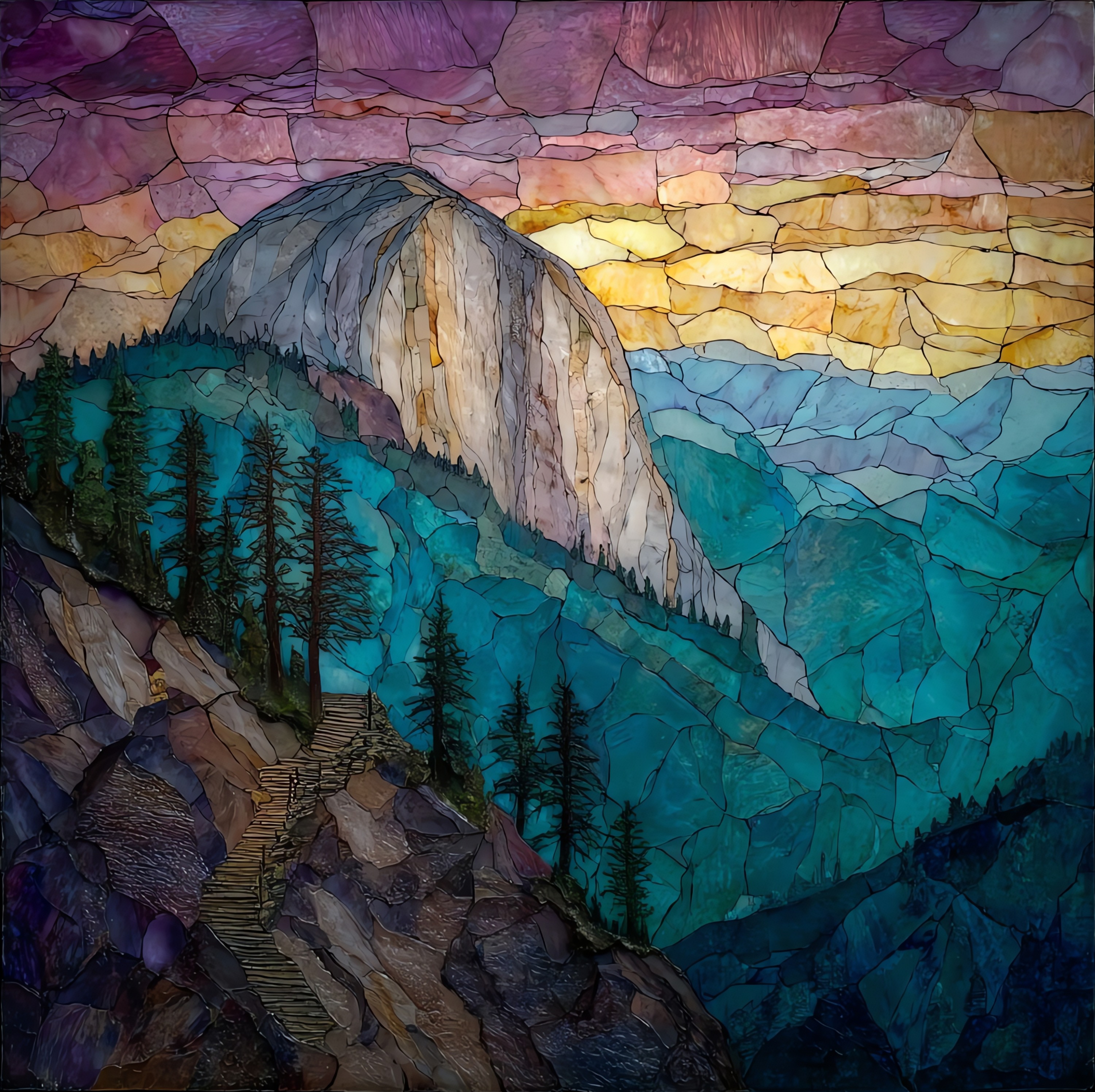
Moro Rock Dusk
— the last light the Sierras hold.
Not only on a wall.
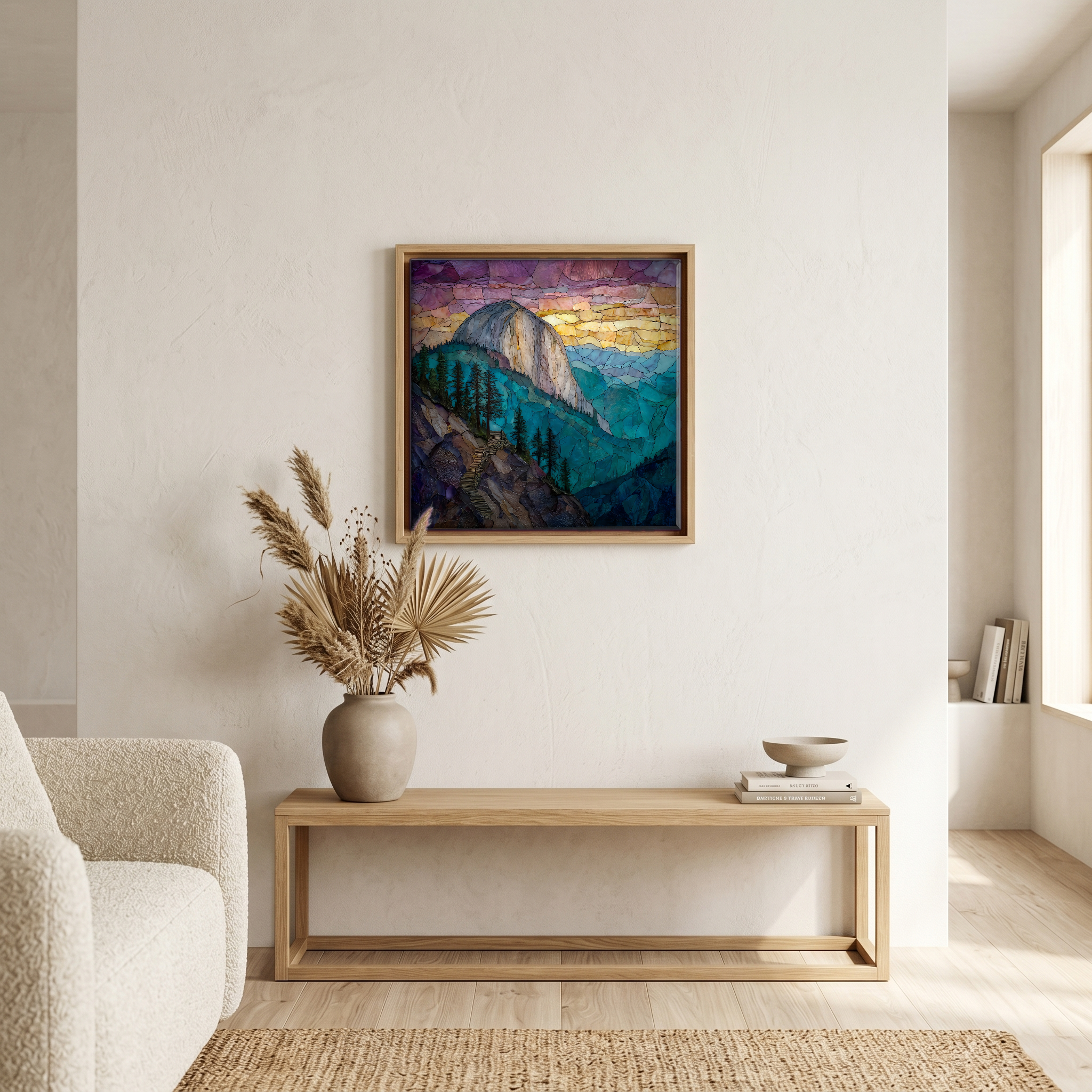
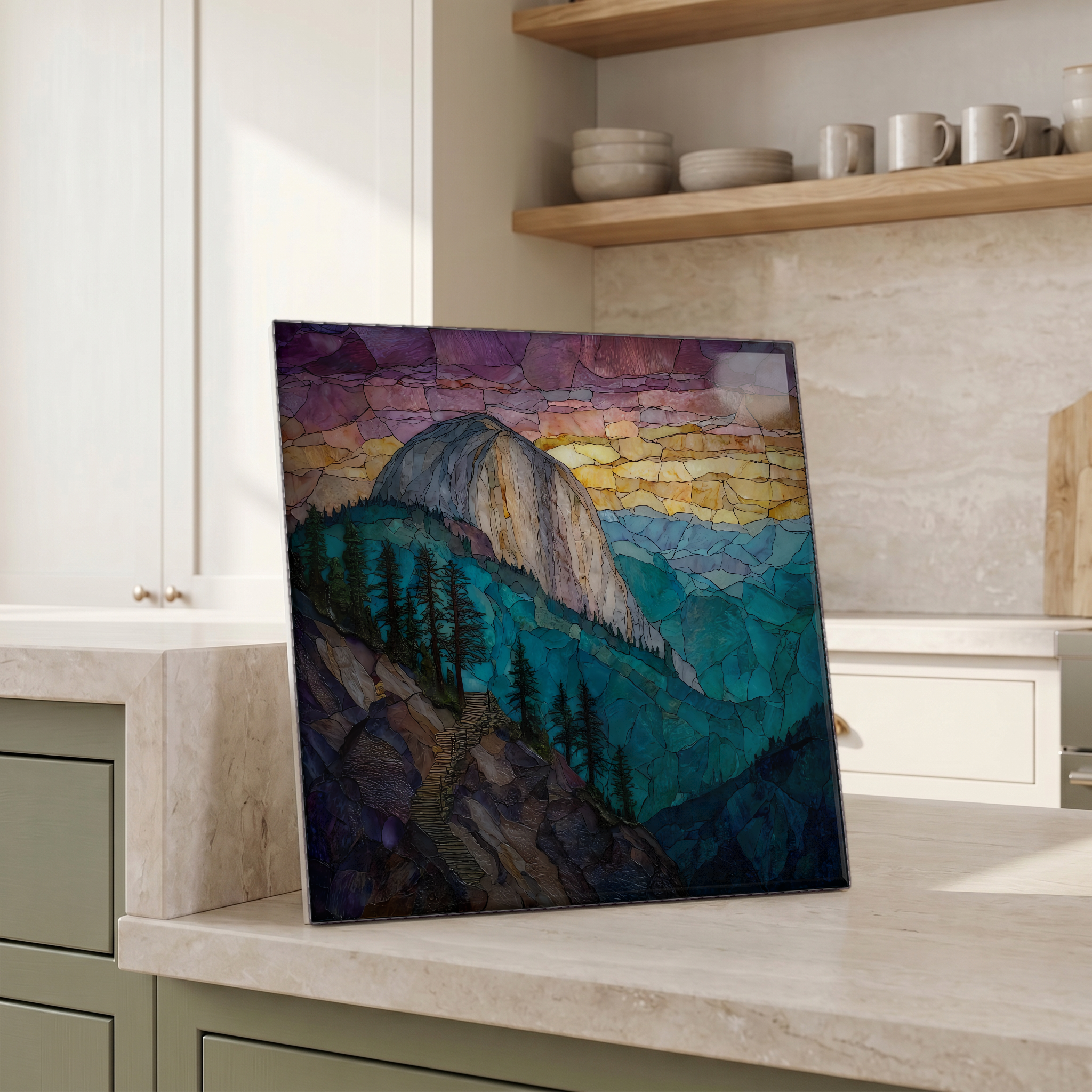
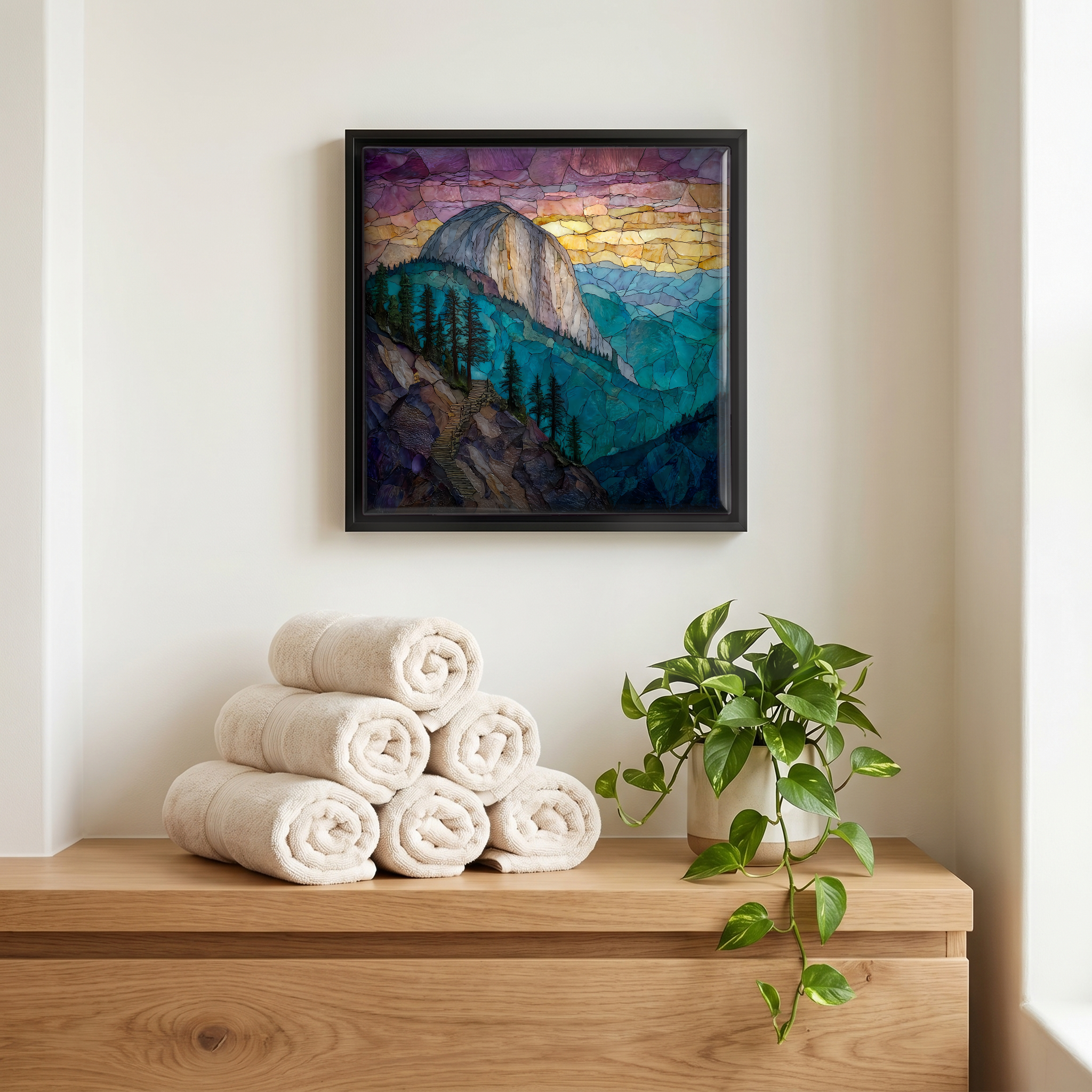
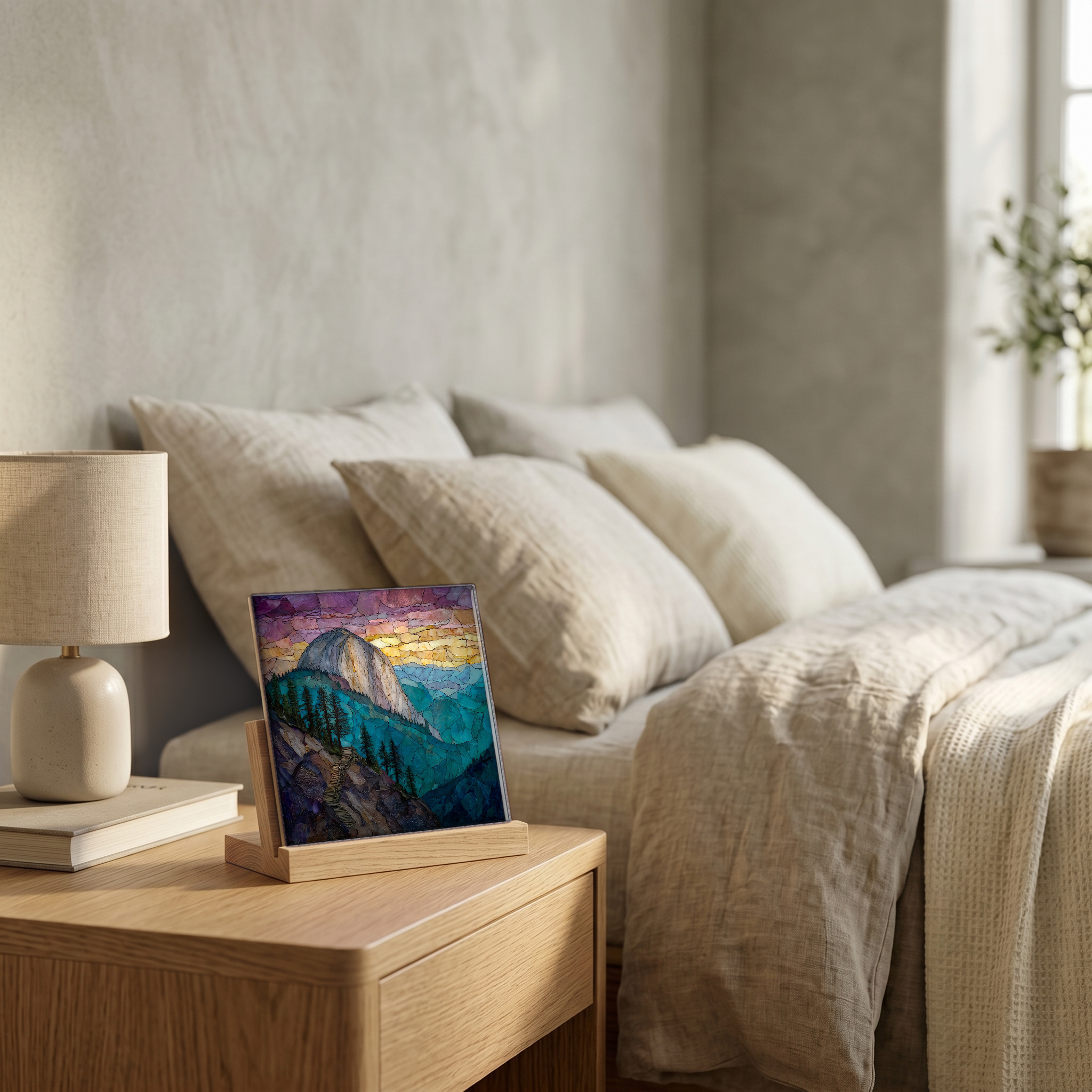
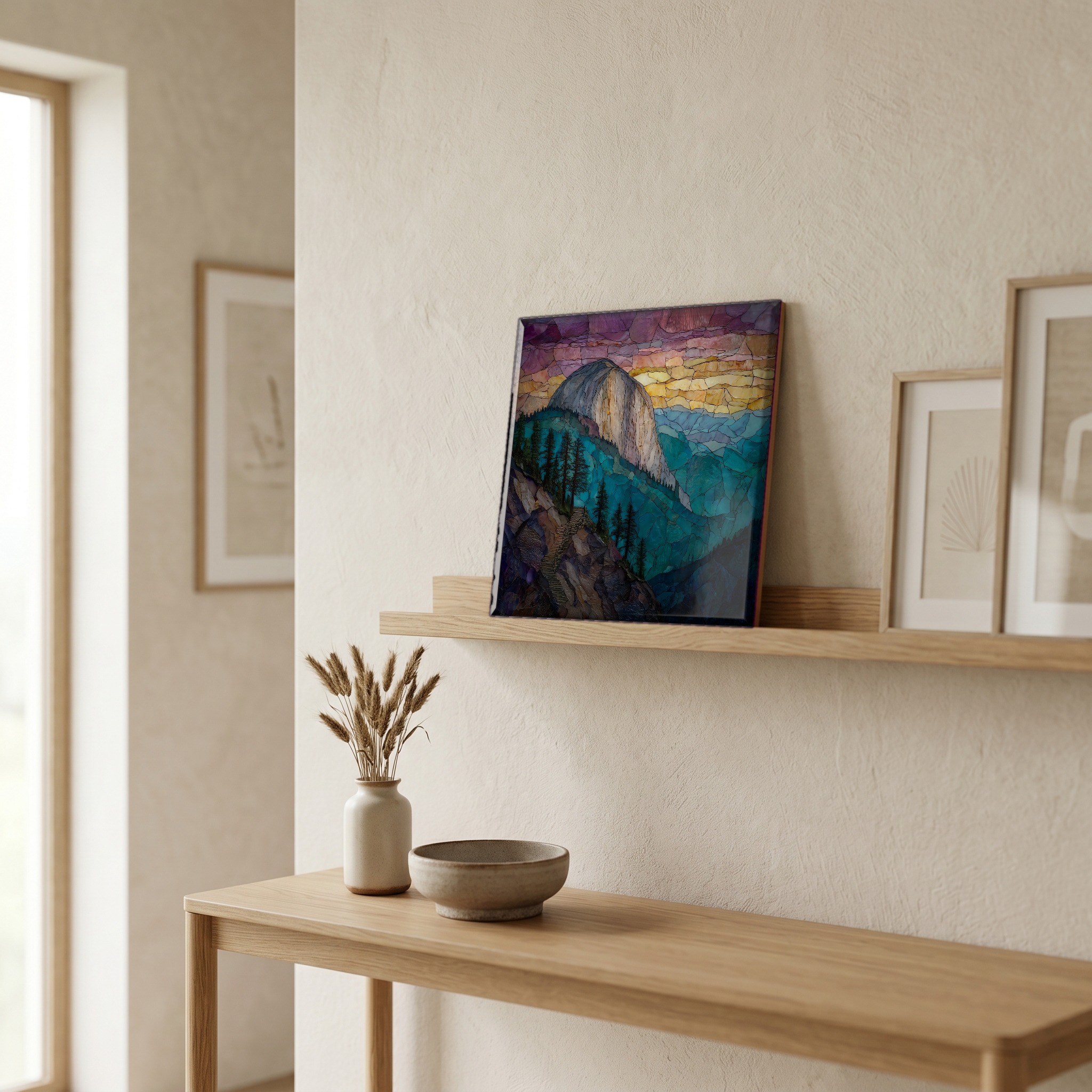
“A granite dome rising above the Kaweah Canyon, with a 400-step stone staircase the Civilian Conservation Corps set into it in 1931. Most people come up in the last hour. The Great Western Divide sits across the valley to the east, thirteen-thousand-foot peaks holding the light a few minutes longer than the rock. Then the colour walks up. Off the granite, off the canyon walls, off the peaks, into the sky. Nobody talks much on the way back down.
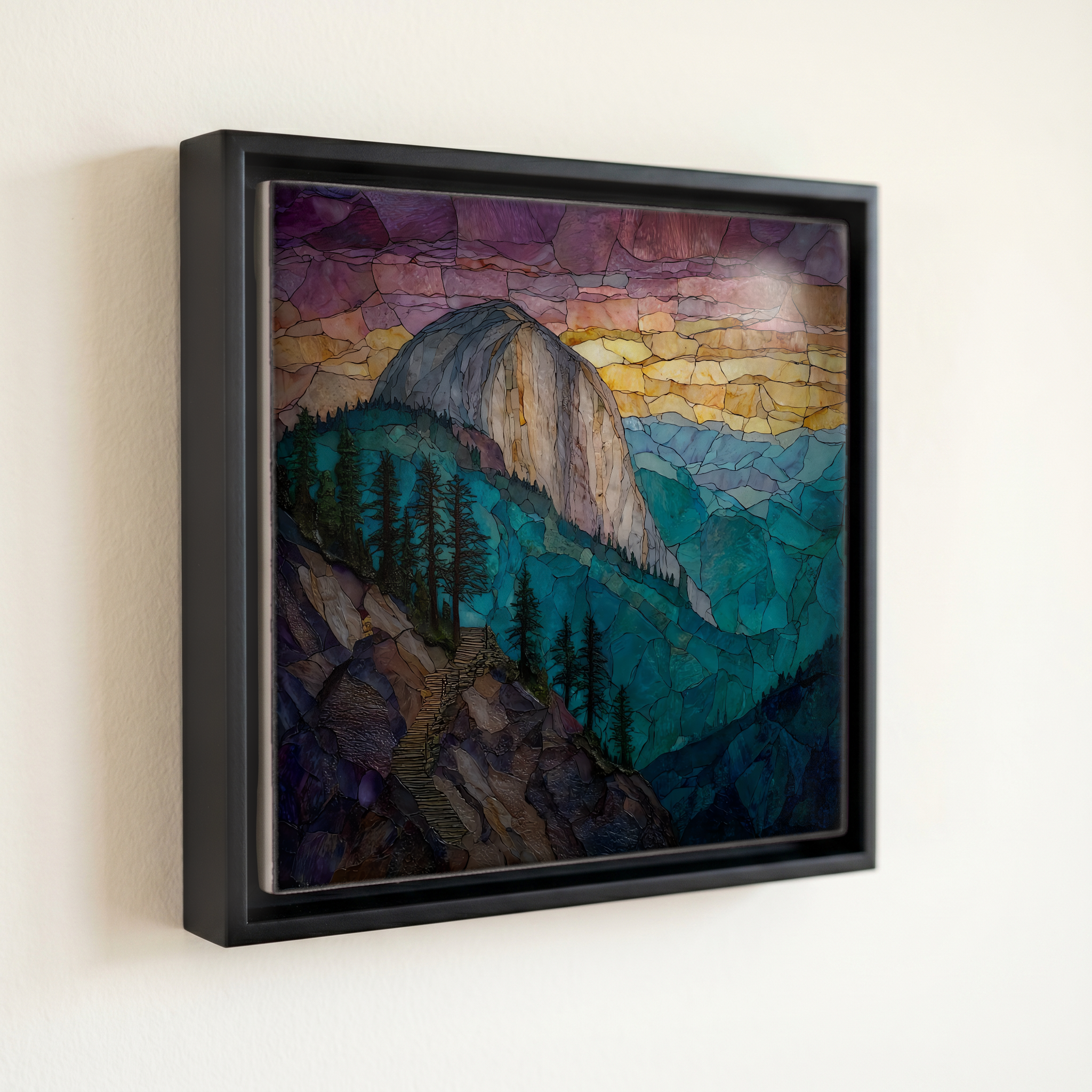
Moro Rock Dusk, on ceramic.
Each tile is finished by hand in our Knoxville studio. Artwork is slowly infused into the ceramic surface under high heat and pressure, and rests beneath a thin glossy finish. The colour lives in the surface, not on top of it.
Pick any four 4-inch tiles — National Parks you've been to, a Smokies set, the four seasons of one place. $ for a set of , cork-backed, ready to live on the table.
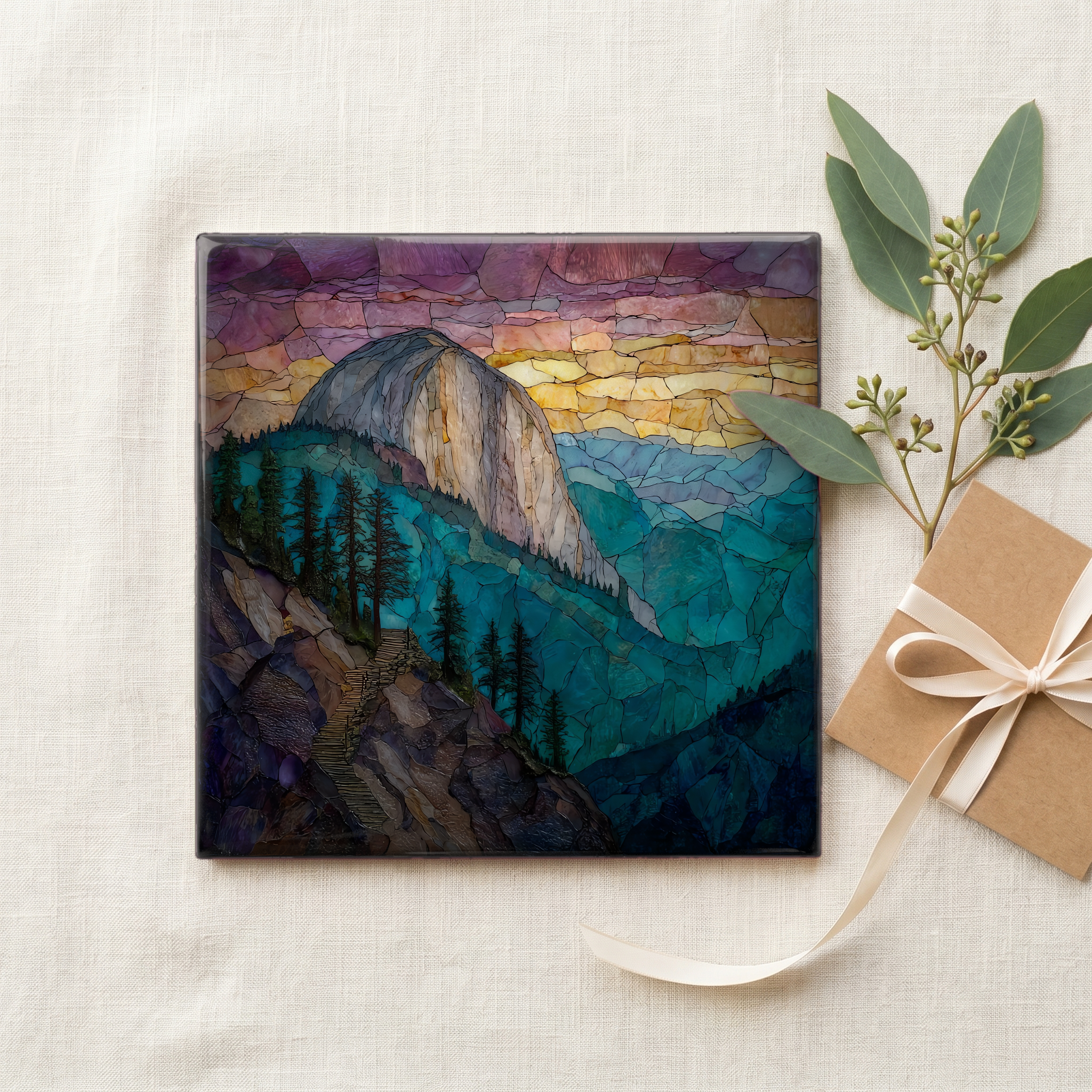
Each tile ships in a kraft box, tied with cream ribbon, with a handwritten note from the studio if you'd like to add one.

Three or five different vistas, hung together — a chapter of places you've been, or want to go.
The place, in three passes.
Moro Rock is a granite dome in Sequoia National Park, on the western slope of the southern Sierra Nevada in Tulare County, California. The summit rises to 6,725 feet, roughly three hundred feet above the surrounding Giant Forest plateau, on the south rim of the Kaweah River canyon. A stairway of about 400 stone and concrete steps, set into the rock by the Civilian Conservation Corps in 1931, climbs the dome's exposed face from a small parking area on Moro Rock-Crescent Meadow Road, a short drive south of the Giant Forest Museum and the General Sherman Tree. On busy summer days the road is restricted to a free park shuttle.
At dusk the summit of Moro Rock looks east across the Kaweah canyon to the Great Western Divide, a sub-range of the southern Sierra Nevada whose peaks rise above 13,000 feet. After the sun drops behind the western foothills, the divide holds direct sunlight a few minutes longer than the dome itself. The granite warms and then cools; the high peaks across the canyon keep a slow alpenglow as the colour shifts from gold to coral to violet. The same Rayleigh-scattering effect lights the Eastern Sierra and the Tetons at sunset, but the open summit of Moro Rock and the east-facing wall of the divide make the full sequence visible from a single viewpoint.
Moro Rock is a granitic exfoliation dome, formed when overlying rock was stripped from a buried pluton and the pressure release caused the granite to fracture in concentric sheets. The same process shaped Half Dome and Sentinel Dome in Yosemite, and the smaller domes scattered through the Giant Forest. The first wooden stairway to the summit was built by Sierra Club volunteers in 1917. In 1931 the Civilian Conservation Corps replaced it with the present stairway, fitting about 400 stone and concrete steps to the contours of the rock, with iron railings anchored into the granite. The Park Service still maintains the original CCC route. The Moro Rock Stairway was added to the National Register of Historic Places in 1978.