Wender·Vista
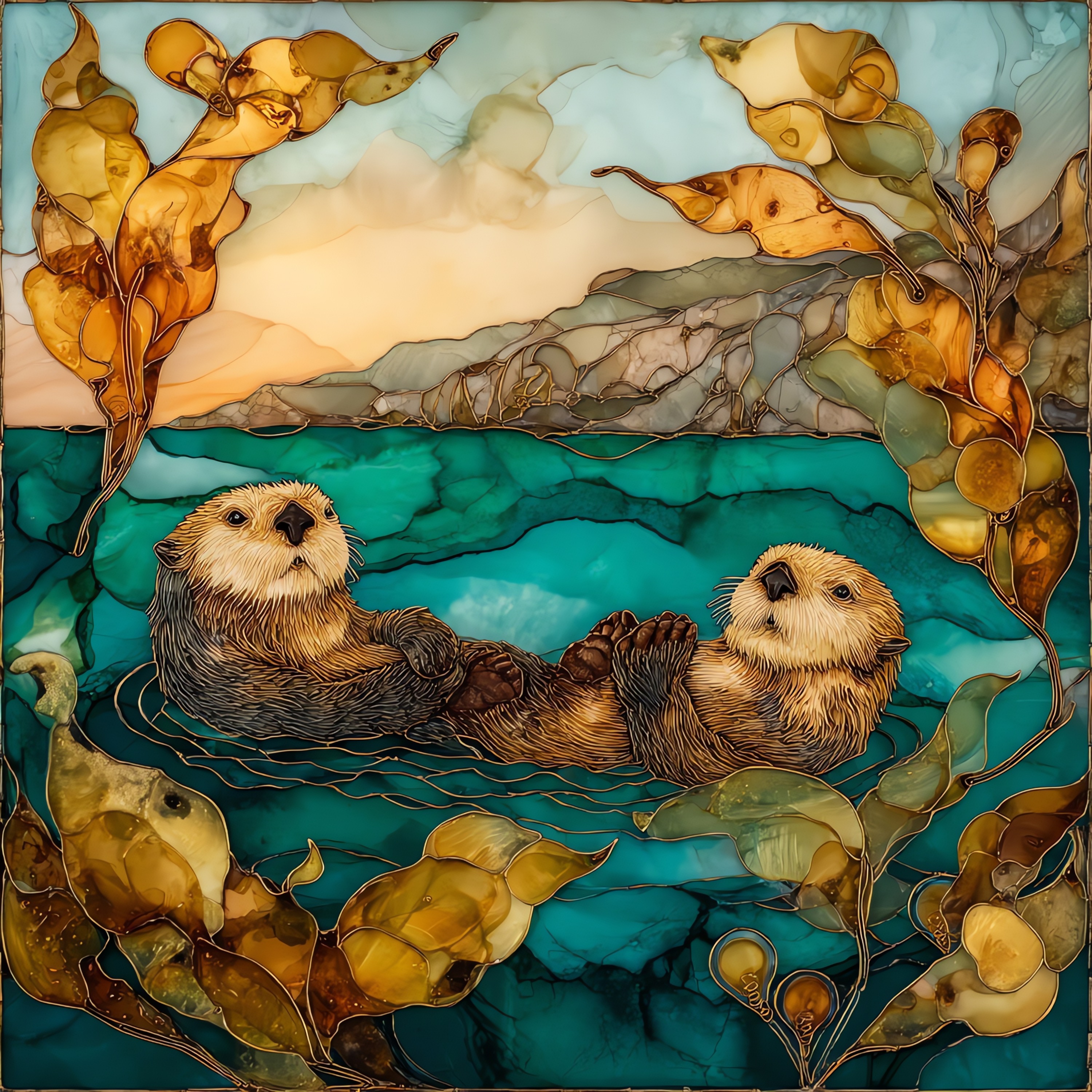
Monterey Bay Sea Otters
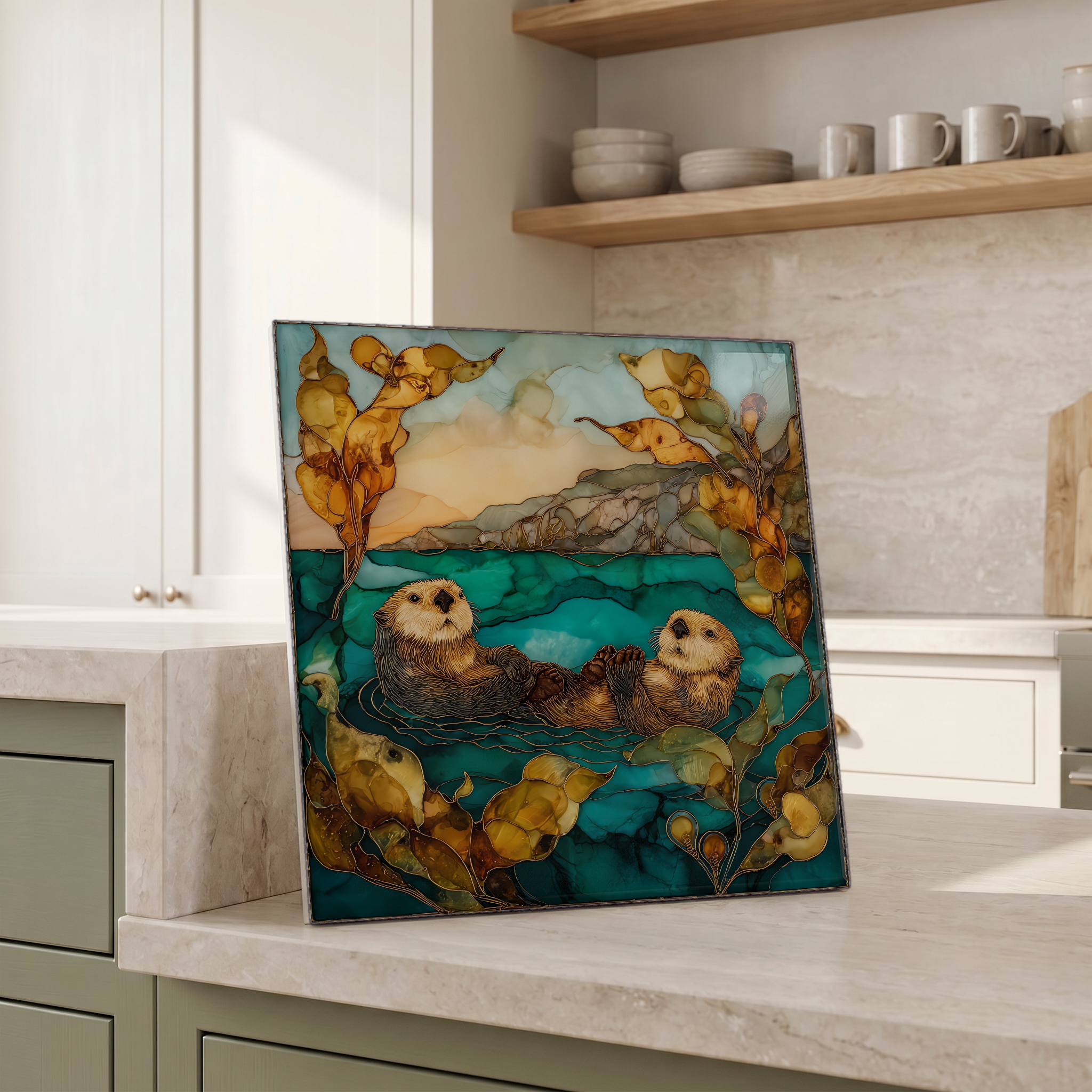
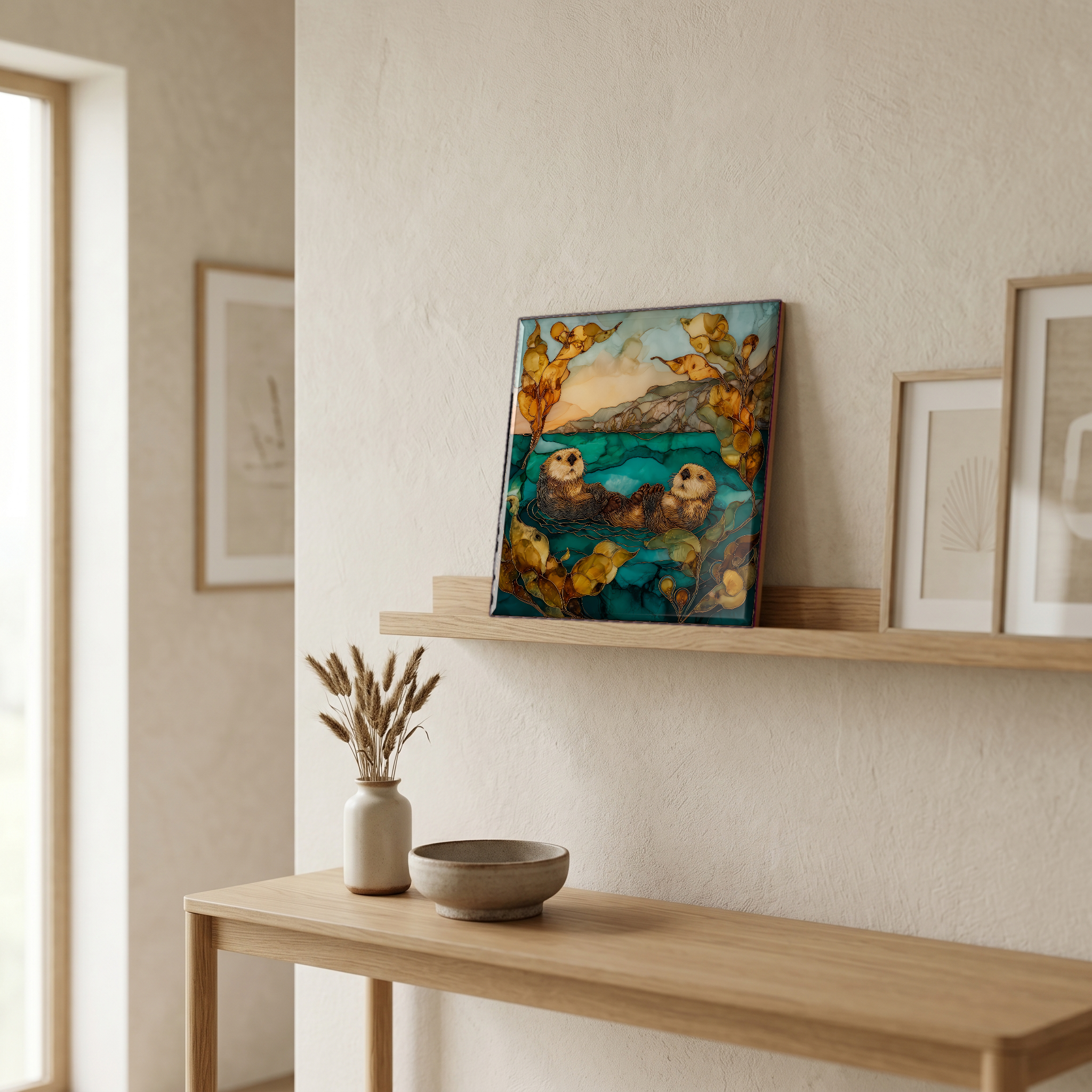
shown on ceramic, 12-inch tileCalifornia · United States
on California's central coast, between Santa Cruz and Monterey

Monterey Bay Sea Otters

— a small body asleep, anchored in the kelp.

Where it lives

Not only on a wall.

A small tile on the nightstand catching the morning. A larger one above the fire. Yours, wherever you spend the slow hours.
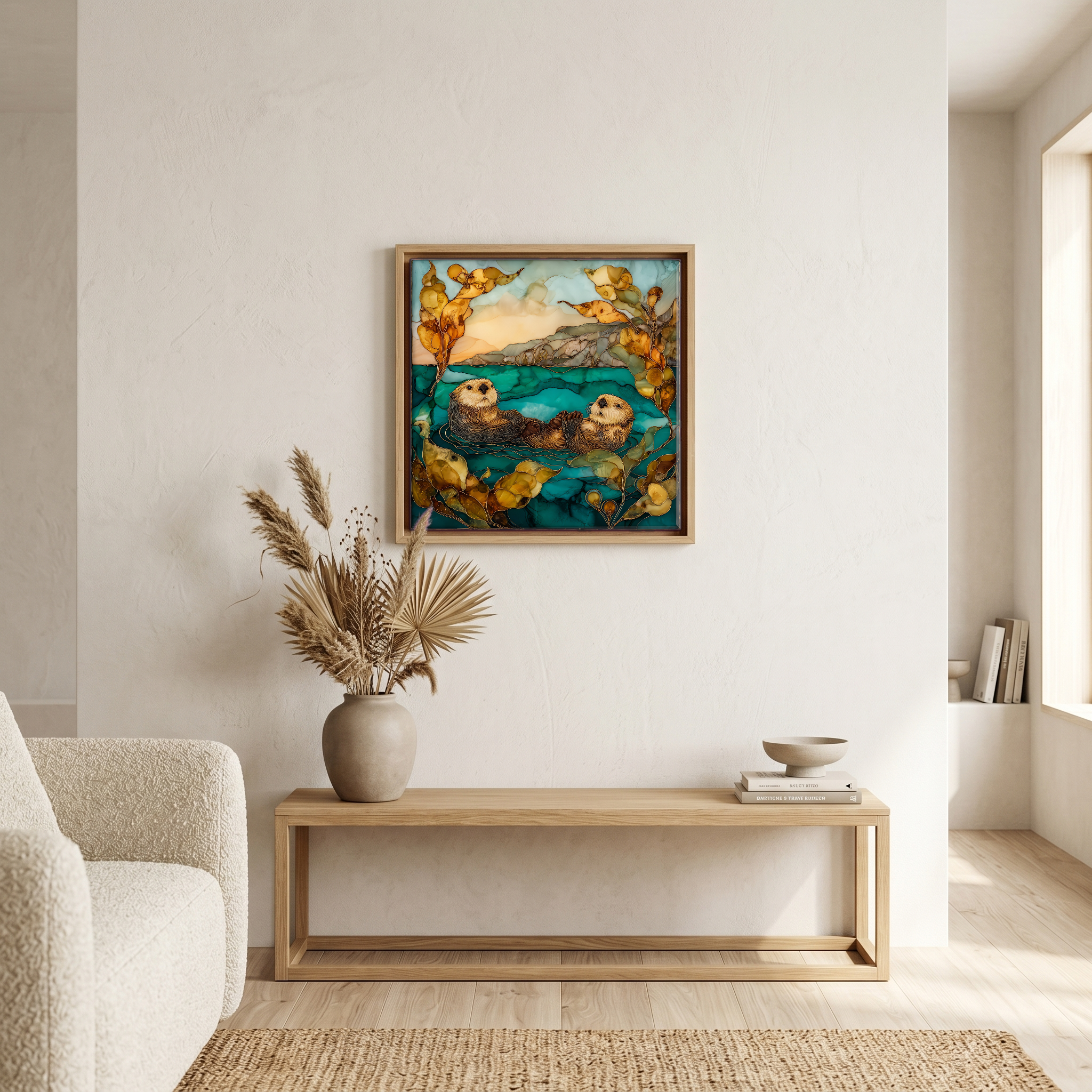
Above the bench, in a warm oak surround.
Beside the kettle, propped on the counter.
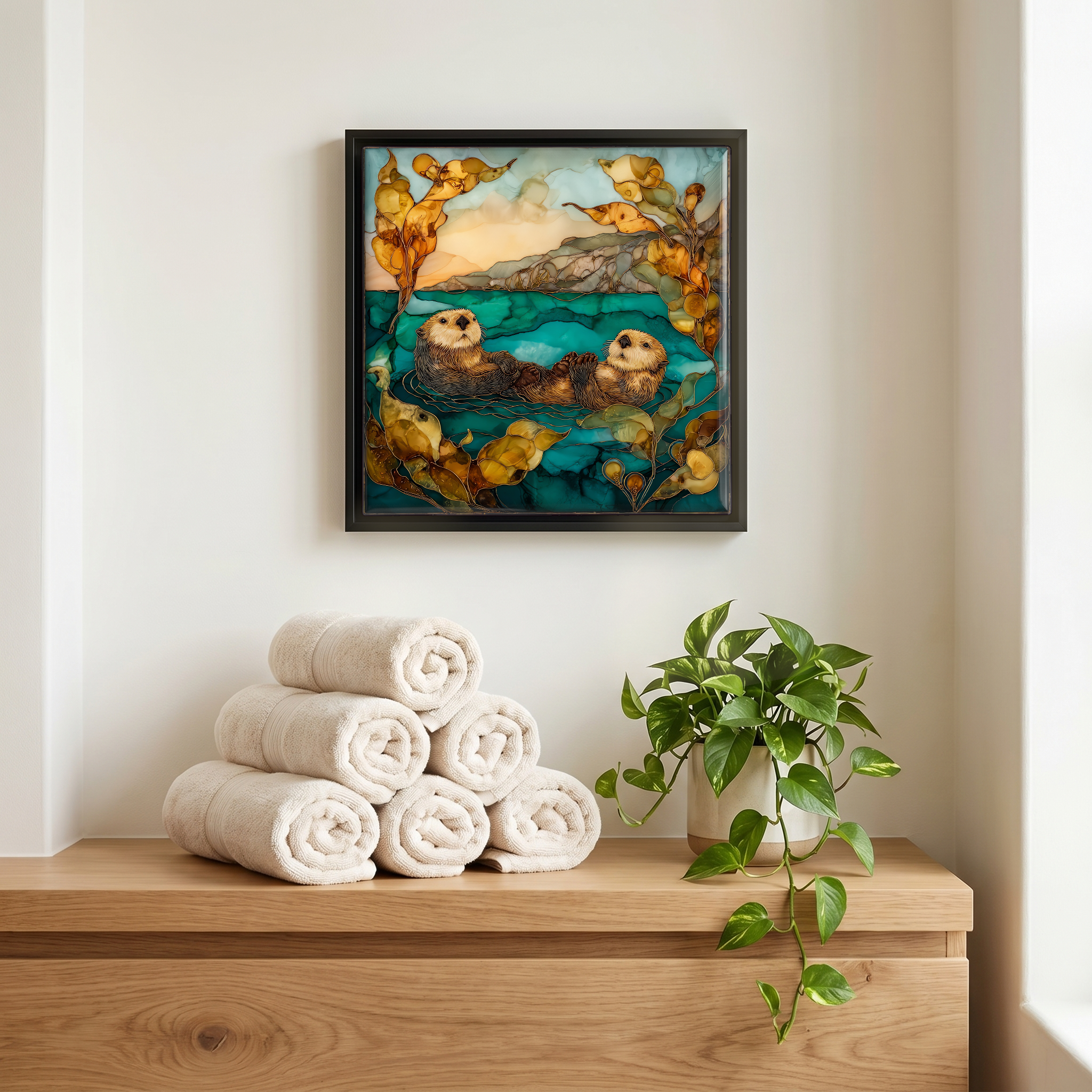
Above the linens, in a slim black surround.
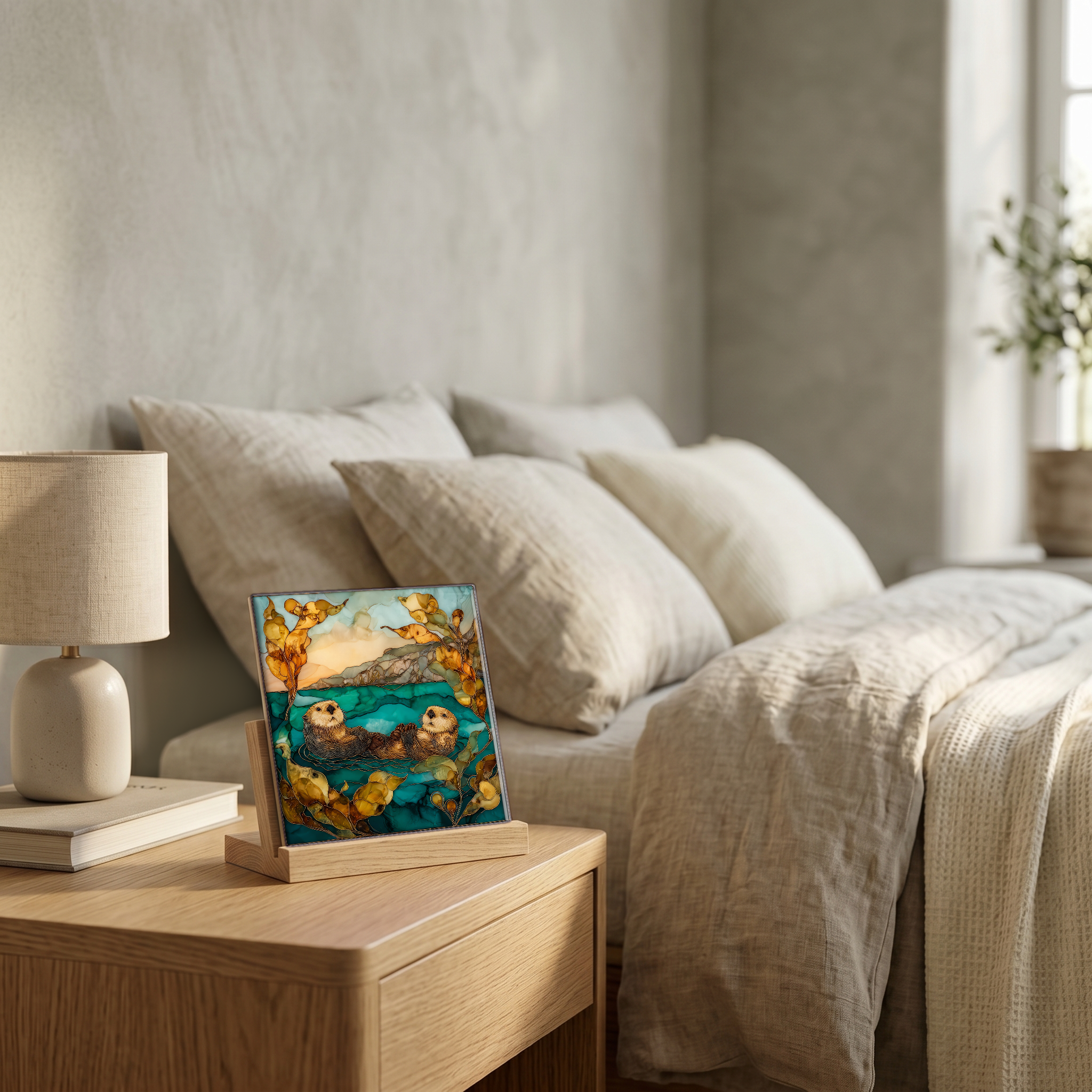
On the nightstand, on a light oak stand.
On a picture ledge, where the light comes in.
a note from the studio

The southern sea otter, twice almost gone from this coast and twice come back. From the breakwater above Cannery Row you can watch them work the kelp at the edge of the bay, diving for urchins, surfacing on their backs to crack a shell on a stone they keep tucked in their fur. At Elkhorn Slough, twenty miles north, mothers and pups raft together in the channel, holding hands while they sleep so the tide doesn't take them apart. The kelp forest exists because the otters do.
from the studio
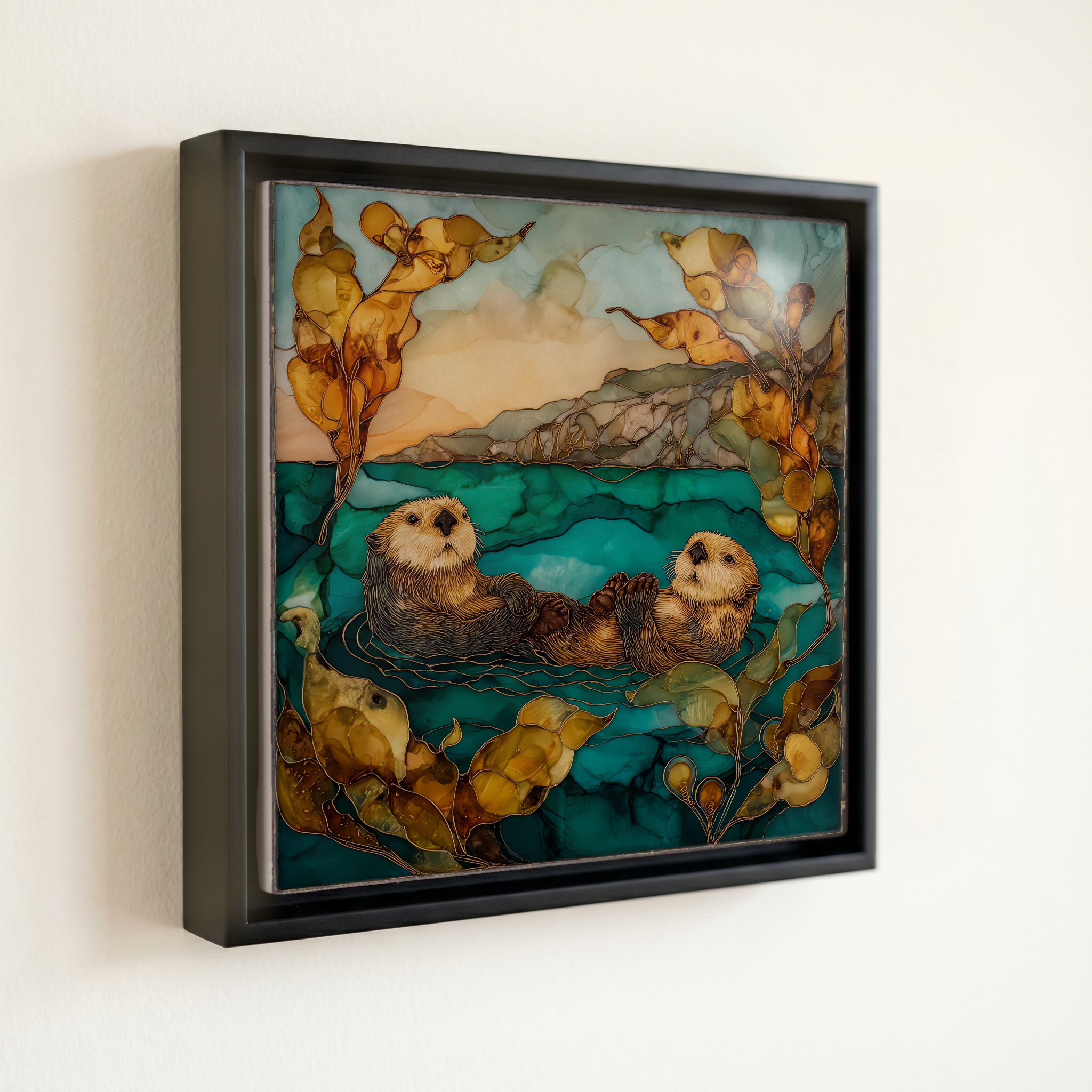
shown in a slim black floating frame · 6 × 6 in
— bring it home

Monterey Bay Sea Otters, on ceramic.

Each tile is finished by hand in our Knoxville studio. Artwork is slowly infused into the ceramic surface under high heat and pressure, and rests beneath a thin glossy finish. The colour lives in the surface, not on top of it.

What kind of piece?
One tile — square or rectangle.
How big?
the popular one — counter, shelf, nightstand
6 × 6 in · 15 cm · 1.6 lb
Surface finish
A clear glossy finish — the artwork reads as if under resin. Ideal for show-pieces and framed wall art.
How it sits
A hidden cleat — sits ¼″ proud of the wall.
$58
Hand-finished and shipped from our studio at the foot of the Smokies. On your wall in about ten days.
size
6 × 6 in
15 cm
weighs
1.6 lb
solid in the hand
surface
ceramic, hand-finished
art rests beneath a thin glossy finish
from
Knoxville, TN
our family studio, at the foot of the Smokies
— start a Coaster Set

Pick any four 4-inch tiles — National Parks you've been to, a Smokies set, the four seasons of one place. $ for a set of , cork-backed, ready to live on the table.
comes gift-ready
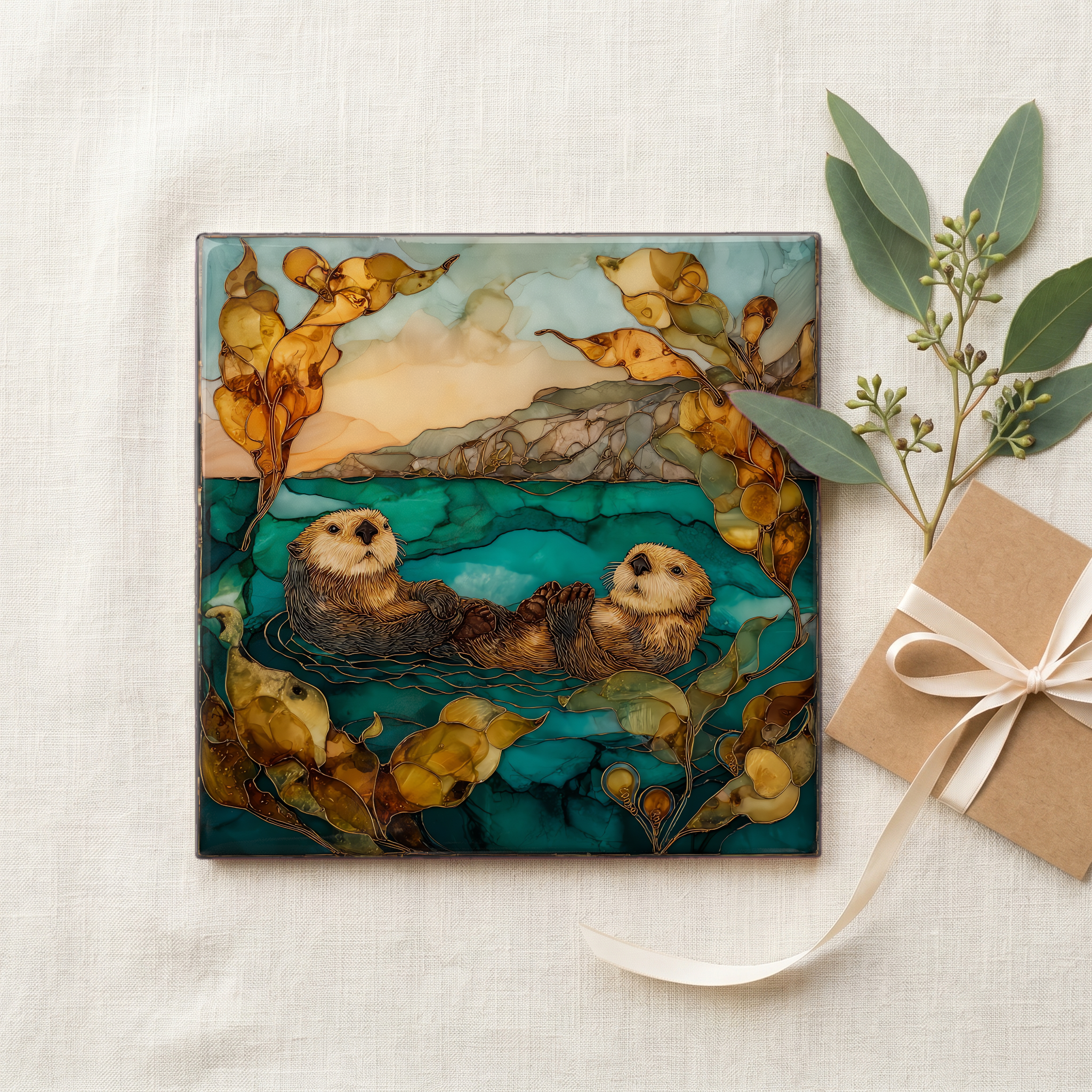
comes gift-ready

Each tile ships in a kraft box, tied with cream ribbon, with a handwritten note from the studio if you'd like to add one.
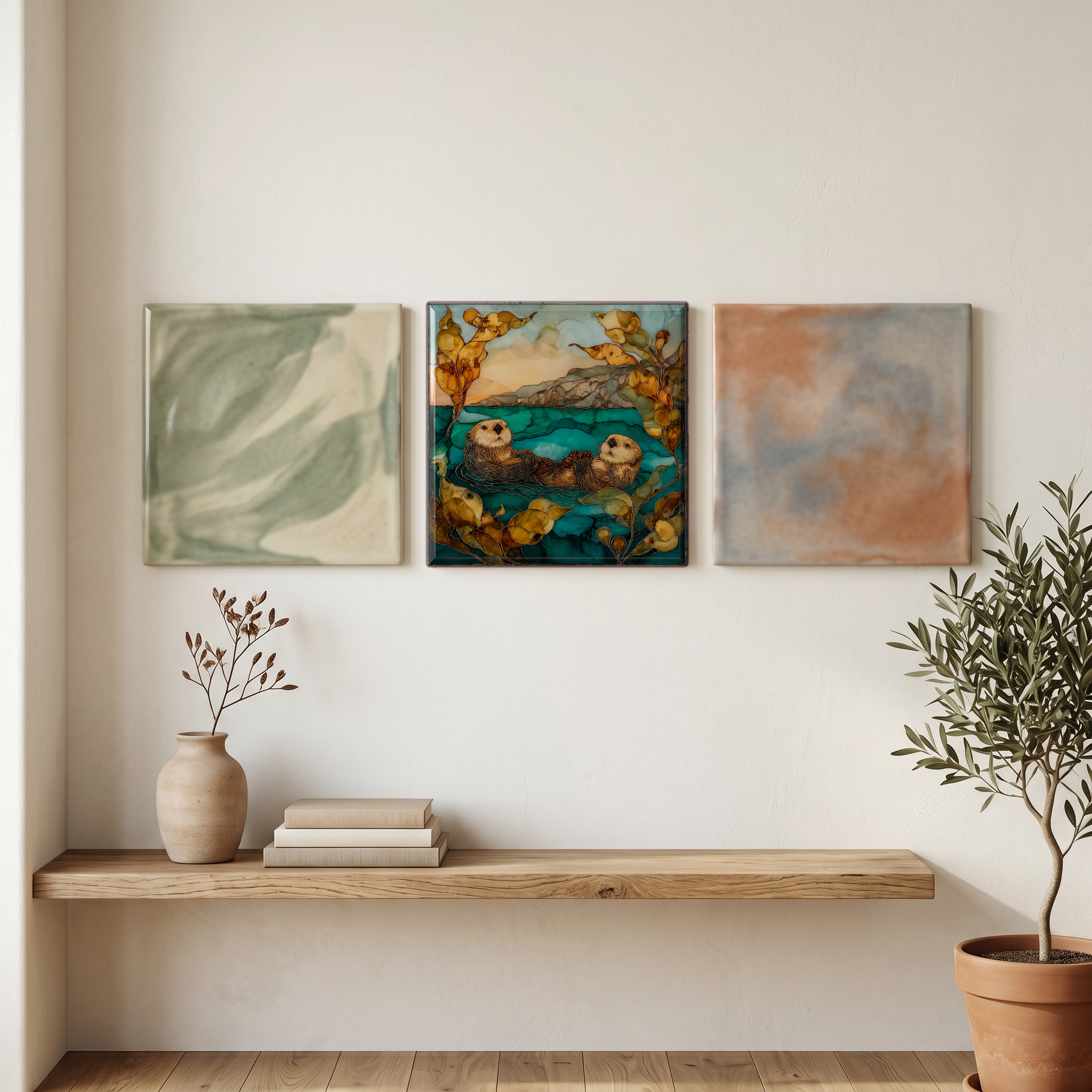
or build a grouping
or build a grouping

Three or five different vistas, hung together — a chapter of places you've been, or want to go.

about Monterey Bay Sea Otters

The place, in three passes.

A little of what's known, in case you fall down the rabbit hole — or want to go see it yourself.
the place

Monterey Bay opens into the Pacific along California's central coast, roughly 120 miles south of San Francisco, between Santa Cruz at its northern hook and Pacific Grove at its southern. Beneath its surface lies the Monterey Submarine Canyon, a chasm nearly two miles deep that drives nutrient-rich upwelling along the continental shelf and feeds the dense giant-kelp forests offshore. In 1992 the federal government designated the Monterey Bay National Marine Sanctuary, at roughly 6,094 square miles one of the largest protected coastal marine areas in the United States. The southern sea otter (Enhydra lutris nereis) lives in the bay's nearshore kelp, a thin ribbon of habitat hugging the coast from Año Nuevo down to Point Sur.

the water

The kelp forest is the otter's house and the otter is its keeper. Without sea otters, the bay's sea urchins multiply unchecked and graze the holdfasts of giant kelp (Macrocystis pyrifera) down to bare rock, a state ecologists call an urchin barren. With otters present, urchin populations stay low and the kelp can rise sixty feet from the seabed to the surface, where it forms the canopy that shelters rockfish, harbour seals, and the otters themselves. A single adult otter eats roughly twenty-five percent of its body weight in shellfish every day to fuel its metabolism in cold water. The densest fur of any mammal, around a million hairs per square inch, is what keeps the body warm enough to dive.

the visit

There are three reliable places to watch sea otters in Monterey Bay. The Monterey Bay Aquarium on Cannery Row, opened in 1984, runs a Sea Otter Program that has rescued and released hundreds of stranded pups, and the bay-side exhibit window often shows wild otters surfacing in the kelp tank just outside the building. Elkhorn Slough, a seven-mile tidal estuary near Moss Landing about twenty miles up the coast, holds one of the densest rafts of southern sea otters in the world and can be kayaked from the slough's mouth. Closer in, the breakwater at the end of Cannery Row and the rocks off Lover's Point in Pacific Grove are free public vantages where otters work the kelp through most of the year.

where
United States · Monterey County, California
within
Monterey Bay National Marine Sanctuary
elevation
0 m · 0 ft
position
36.6177° N · 121.9018° W
the neighborhood

What's nearby.

A handful of named places within an hour's walk or short drive. Some we've already painted; some we will.
1 km E
Cannery Row
historic waterfront
2 km NW
Lover's Point
headland
3 km W
Pacific Grove
coastal town
6 km SW
Pebble Beach
coastline
8 km S
Carmel-by-the-Sea
coastal town
12 km S
Point Lobos State Natural Reserve
marine reserve
N
Monterey Bay Sea Otters
Cannery Row
Lover's Point
Pacific Grove
Pebble Beach
Carmel-by-the-Sea
Point Lobos State Natural Reserve
common questions

What people ask.

A few questions we get about Monterey Bay Sea Otters — and about bringing the piece home.
about the place

The Monterey Bay Aquarium, the breakwater at the end of Cannery Row, the rocks off Lover's Point in Pacific Grove, and Elkhorn Slough near Moss Landing are the most reliable vantages. Elkhorn Slough, about twenty miles up the coast from Monterey, holds one of the densest concentrations of southern sea otters on Earth.

Sea otters eat sea urchins, which would otherwise graze giant kelp down to bare rock. Where otters are present in Monterey Bay, the kelp canopy can reach the surface and shelter rockfish, harbour seals, and many other species. Ecologists call them a keystone species for exactly this reason.

California's southern sea otter population numbers roughly 3,000 individuals along the central coast, with Monterey Bay among the densest stretches of habitat. The species was hunted to near-extinction for its fur in the 1800s, and a small colony rediscovered near Big Sur in 1938 anchored the recovery.

Rafts of sea otters often link paws while resting on the surface so the tide and current don't drift them apart. Mothers will also wrap pups in kelp for the same reason. The behaviour is most visible at Elkhorn Slough, where large rafts gather in the calm interior of the estuary.

Sea otters are resident in Monterey Bay through every season and are visible most days from shore. Pupping peaks between February and April, when mothers and small pups raft together in protected coves and along Elkhorn Slough's channels.

The southern sea otter is listed as threatened under the United States Endangered Species Act and as fully protected under California law. The California population is monitored annually by the U.S. Geological Survey and has held in the low thousands since the turn of the century.

about the piece in your home

It's been a meaningful gift for people who have a tie to the central California coast, the aquarium, or the kelp forest itself. The Small or a Coaster Set carries well in a card; the Medium suits a kitchen or a desk above the water glass.

The piece reads well in Coastal-modern rooms where blue, sea-green, and warm wood are already present, and in Pacific-Northwest-modern or California-craftsman interiors that favour kelp greens, fog grey, and natural fibre. It also lives quietly in a Minimalist room as the only piece of colour on a long wall.

Animals of place, especially the kelp-forest species, have become a stable thread in Coastal-modern and biophilic design. Wender Studios sells more single-animal vistas from Monterey Bay and the Pacific coast each year as buyers move away from the generic beach print toward art that names what lives in the water.

For a standard three-seat sofa, a single Large reads at the right scale above the centre line. Above a console table or a long credenza, a 4-tile Mural in a 2x2 grid carries the eye across the wall. For a feature wall with no furniture beneath, a 9-tile Mural in a 3x3 grid is the larger move.

Yes. Order the tile in the Dura Satin or Matte finish, both of which are scratch-resistant and humidity-tolerant for backsplash, shower-surround, and powder-room installations. Glossy is for framed wall pieces in dry rooms.

A soft microfibre cloth and water are enough for normal dust and fingerprints. For kitchen or bathroom installations, a mild non-abrasive cleaner is safe on the Dura Satin and Matte finishes. The colour lives in the ceramic surface and won't lift with cleaning.

Yes. Every WenderVista tile is original to the studio in Knoxville, Tennessee. The art is hand-finished in-house and slowly infused into the ceramic surface under high heat and pressure, beneath a thin glossy, Dura Satin, or Matte finish. No image is licensed from a third party.

if this one stayed with you

A few you might also love.

Hand-picked by the eye that found Sorapis. Same air, same kind of quiet.