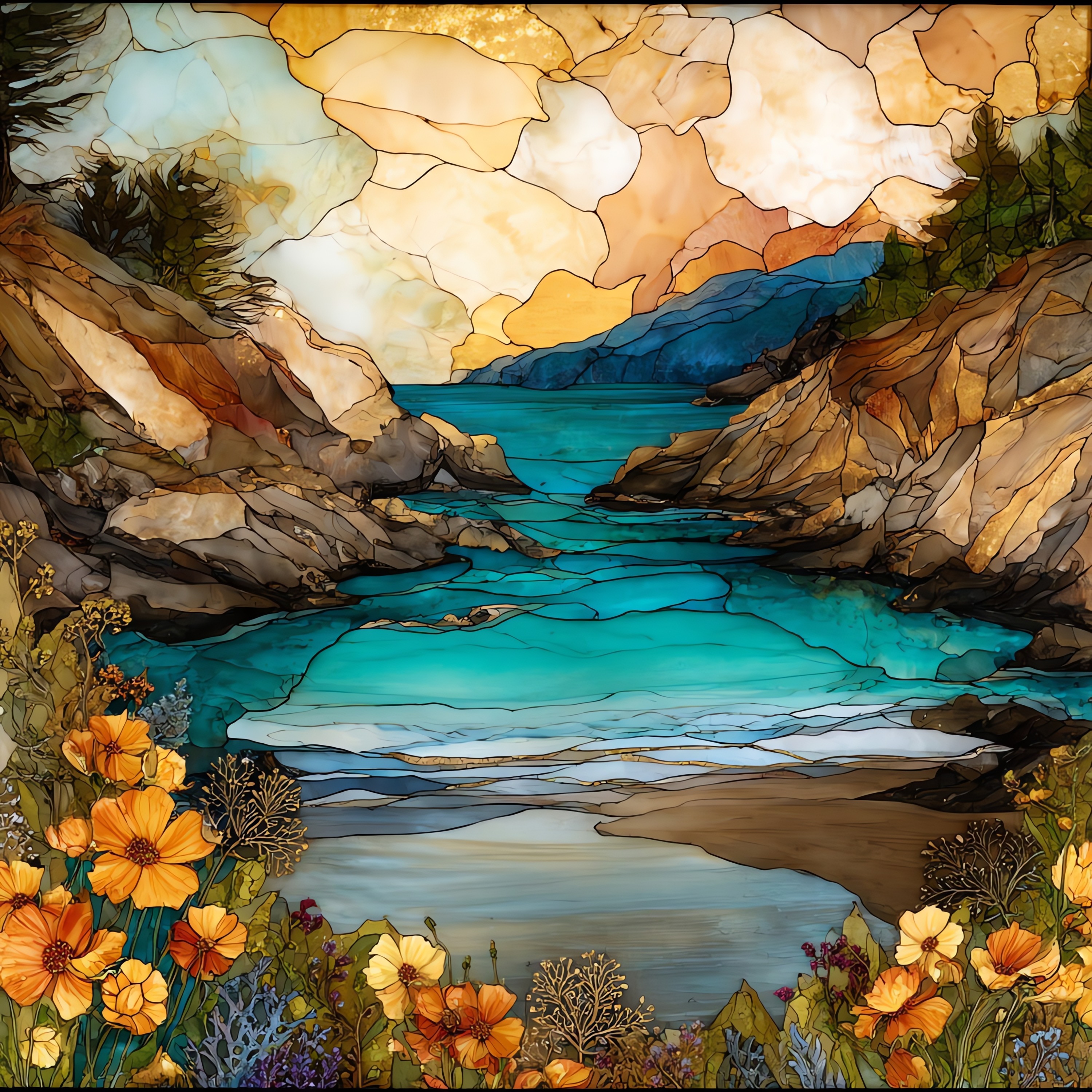
Montaña de Oro
— the gold the hills are named for.
Not only on a wall.

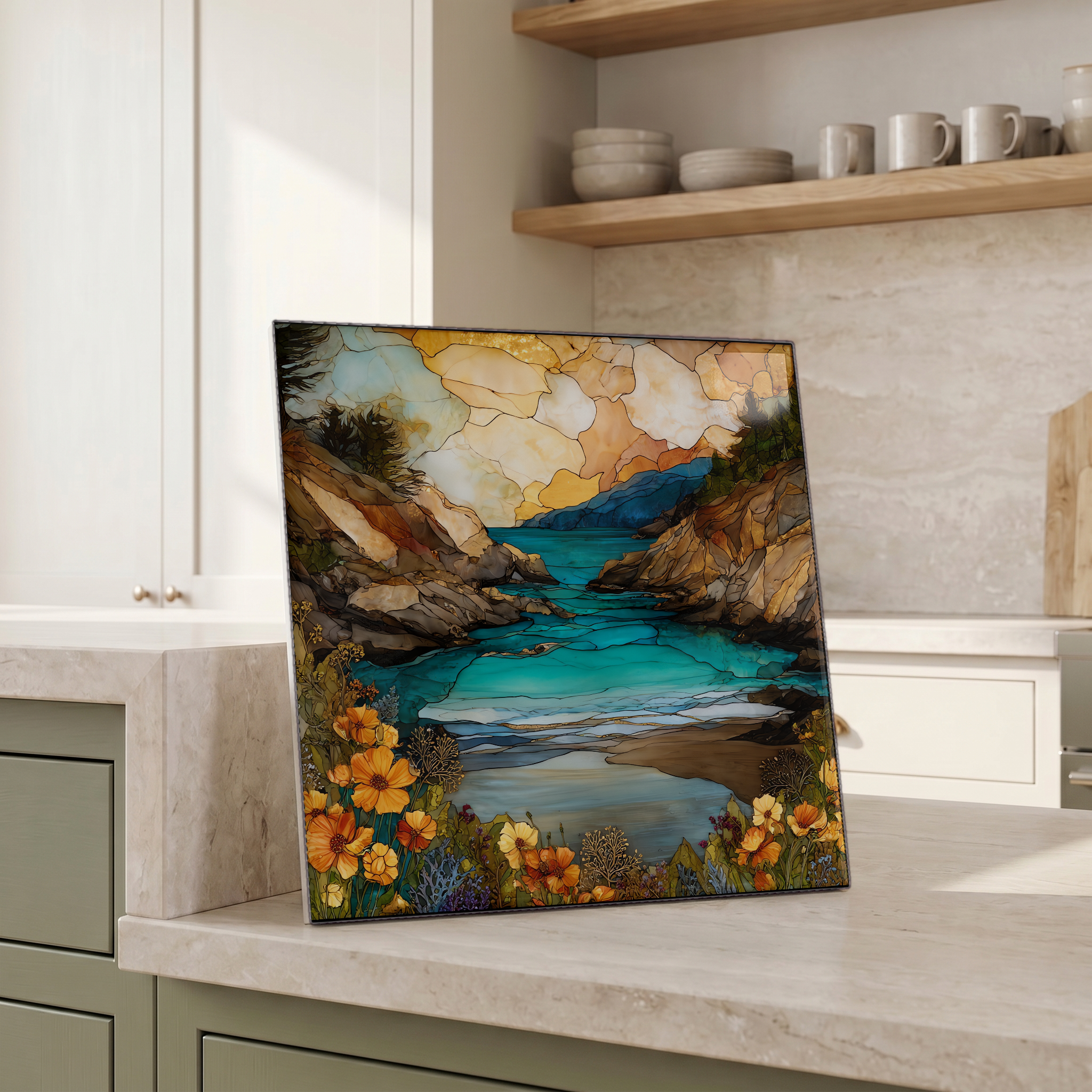


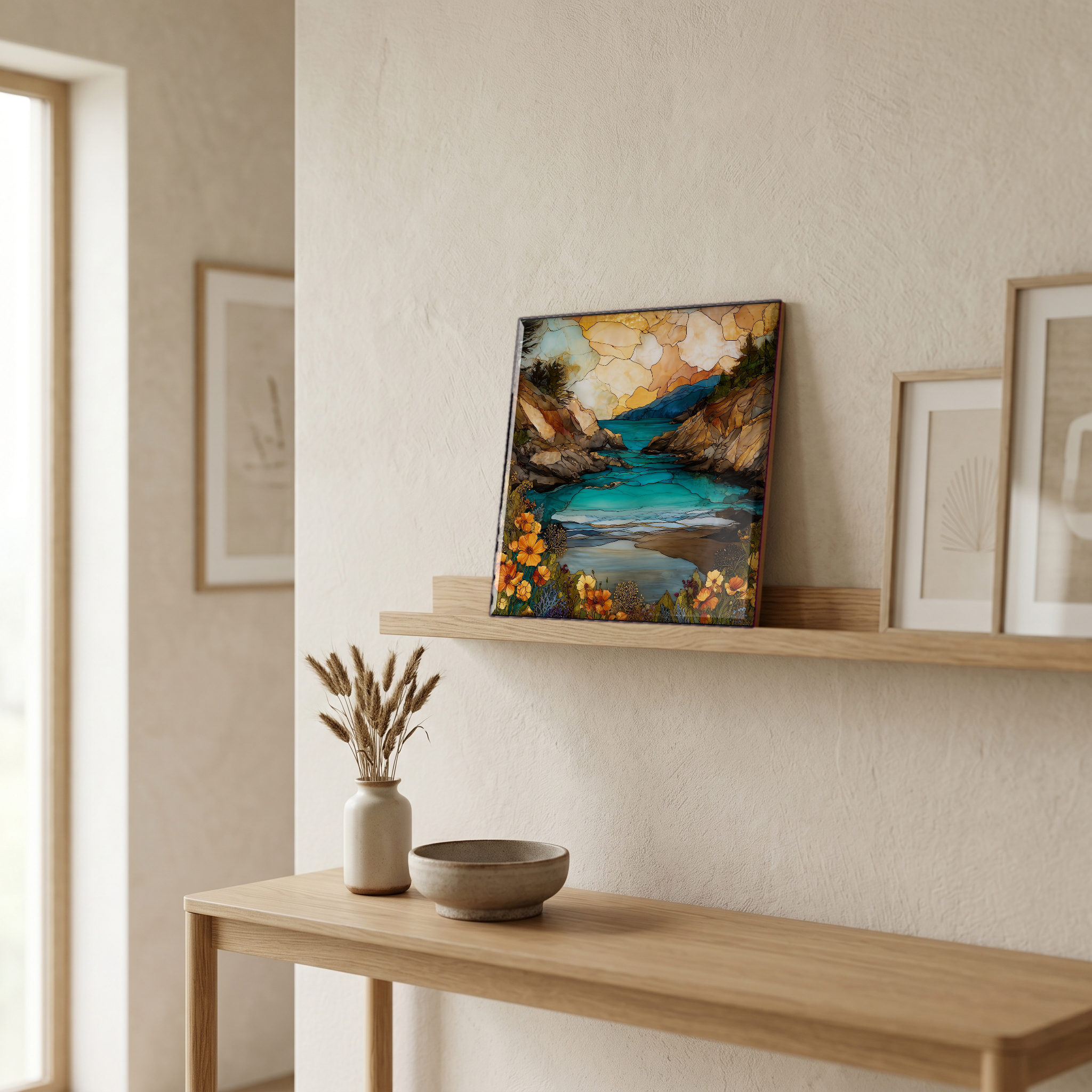
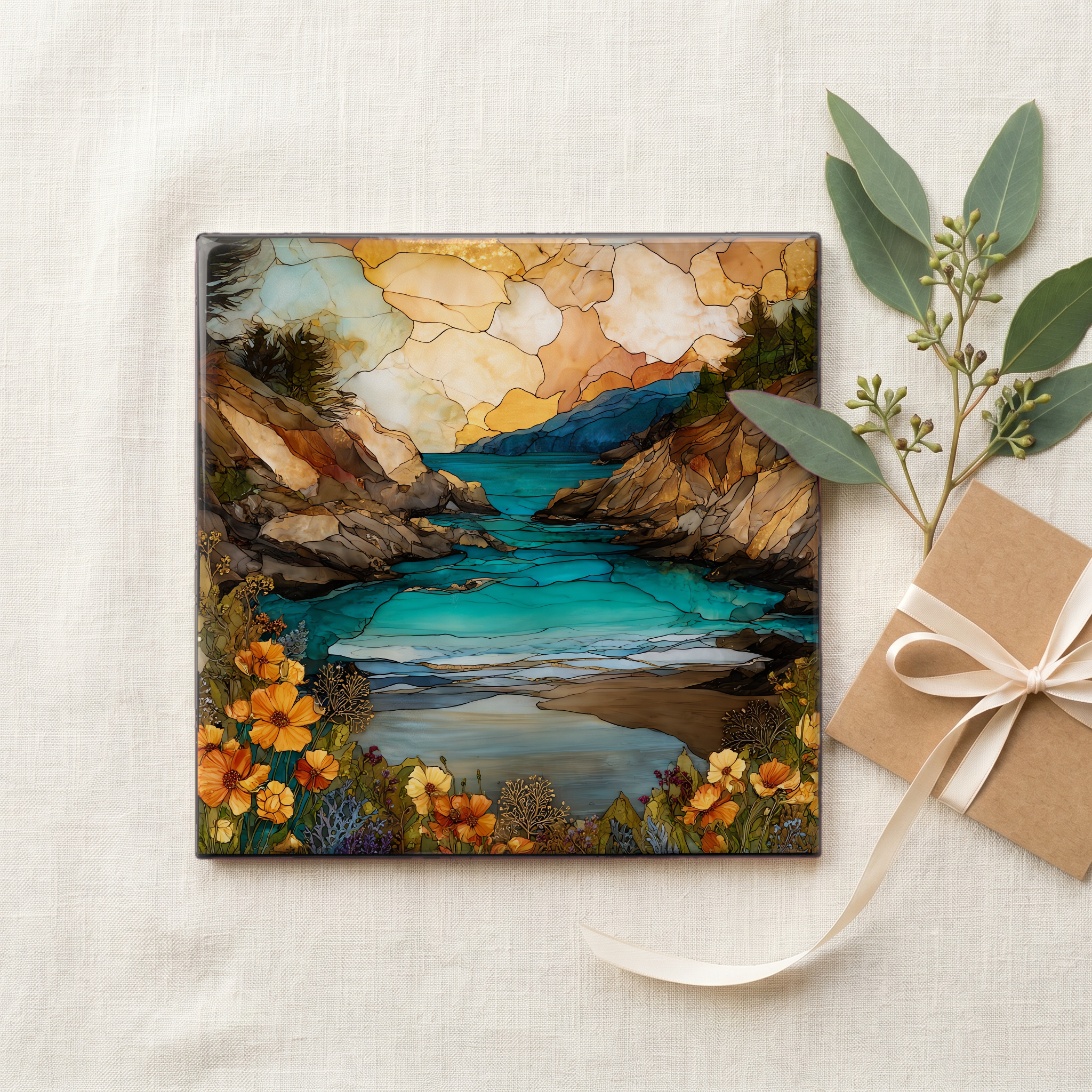
“Eight thousand acres of California coastline south of Morro Bay, where Pecho Valley Road ends at the Pacific. The Spooner family ran a dairy here before the state made it a park in 1965; the old ranch house still stands above the cove. In spring the hillsides go gold with wild mustard, California poppy, and monkeyflower. That is the colour that gave the place its name. The Bluff Trail follows the sea cliffs above Spooner's Cove and the tidepools below. Monarchs winter in the eucalyptus stands near the campground. Most days the fog is in by noon and out again by three.
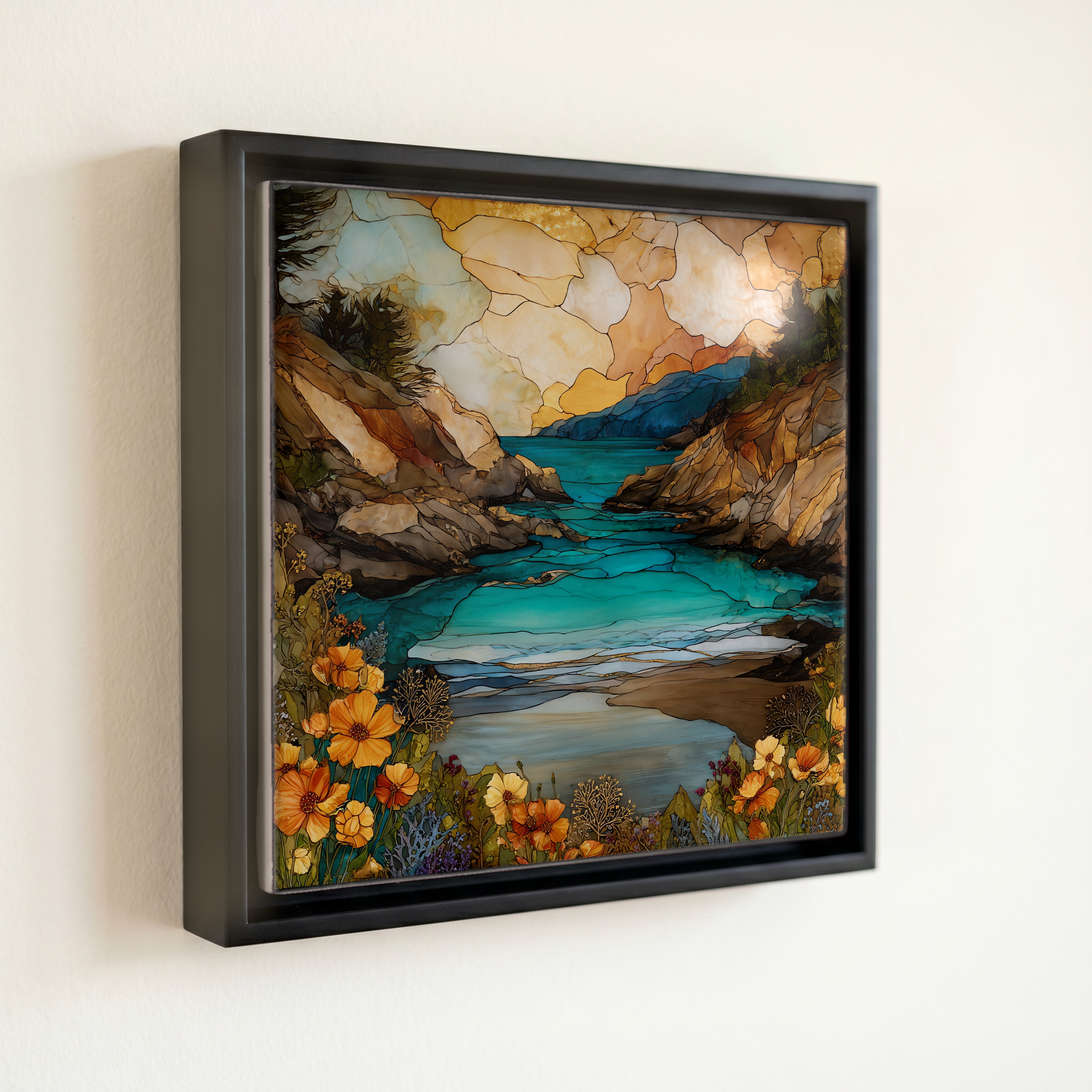
Montaña de Oro, on ceramic.
Each tile is finished by hand in our Knoxville studio. Artwork is slowly infused into the ceramic surface under high heat and pressure, and rests beneath a thin glossy finish. The colour lives in the surface, not on top of it.
Pick any four 4-inch tiles — National Parks you've been to, a Smokies set, the four seasons of one place. $ for a set of , cork-backed, ready to live on the table.
Each tile ships in a kraft box, tied with cream ribbon, with a handwritten note from the studio if you'd like to add one.

Three or five different vistas, hung together — a chapter of places you've been, or want to go.
The place, in three passes.
Montaña de Oro State Park sits on the central California coast in San Luis Obispo County, about twelve miles south of San Luis Obispo and four miles south of Los Osos. The park covers roughly eight thousand acres of coastline, hills, and canyons, with seven miles of shoreline running from the southern end of Morro Bay's sandspit down to Hazard Canyon. Pecho Valley Road leads in from the north past dune pines and the Hazard Peak trailhead, ending at Spooner's Cove. Valencia Peak rises 1,347 feet behind the cove, the highest point in the park. The land was a working dairy until California acquired it from the Spooner family in 1965.
Montaña de Oro means mountain of gold in Spanish, and the name comes from the wildflowers that turn the hillsides golden each spring. The dominant blooms are California poppy (Eschscholzia californica, the state flower), wild mustard, sticky monkeyflower, and goldfields. Peak bloom typically runs from mid-March through early May, depending on the winter's rain. In a wet year the gold rolls in unbroken sheets from the Bluff Trail up the flanks of Valencia Peak. In a dry year it patches and waits. The Chumash people lived along this coast for thousands of years before Spanish-speaking ranchers gave the place its name.
Montaña de Oro State Park is open every day and charges no entrance fee. Pecho Valley Road is paved to Spooner's Cove and the visitor center; it continues unpaved to the southern trailheads. The campground at Islay Creek has about fifty primitive sites with vault toilets and no hookups, booked through ReserveCalifornia. The Bluff Trail leaves from the cove and runs south along the sea cliffs; the climb up Valencia Peak is steeper, roughly four miles round trip. Coastal fog is common on summer mornings; most afternoons clear by three. Spring brings the wildflowers. Winter brings the monarchs to the eucalyptus stands near the campground.