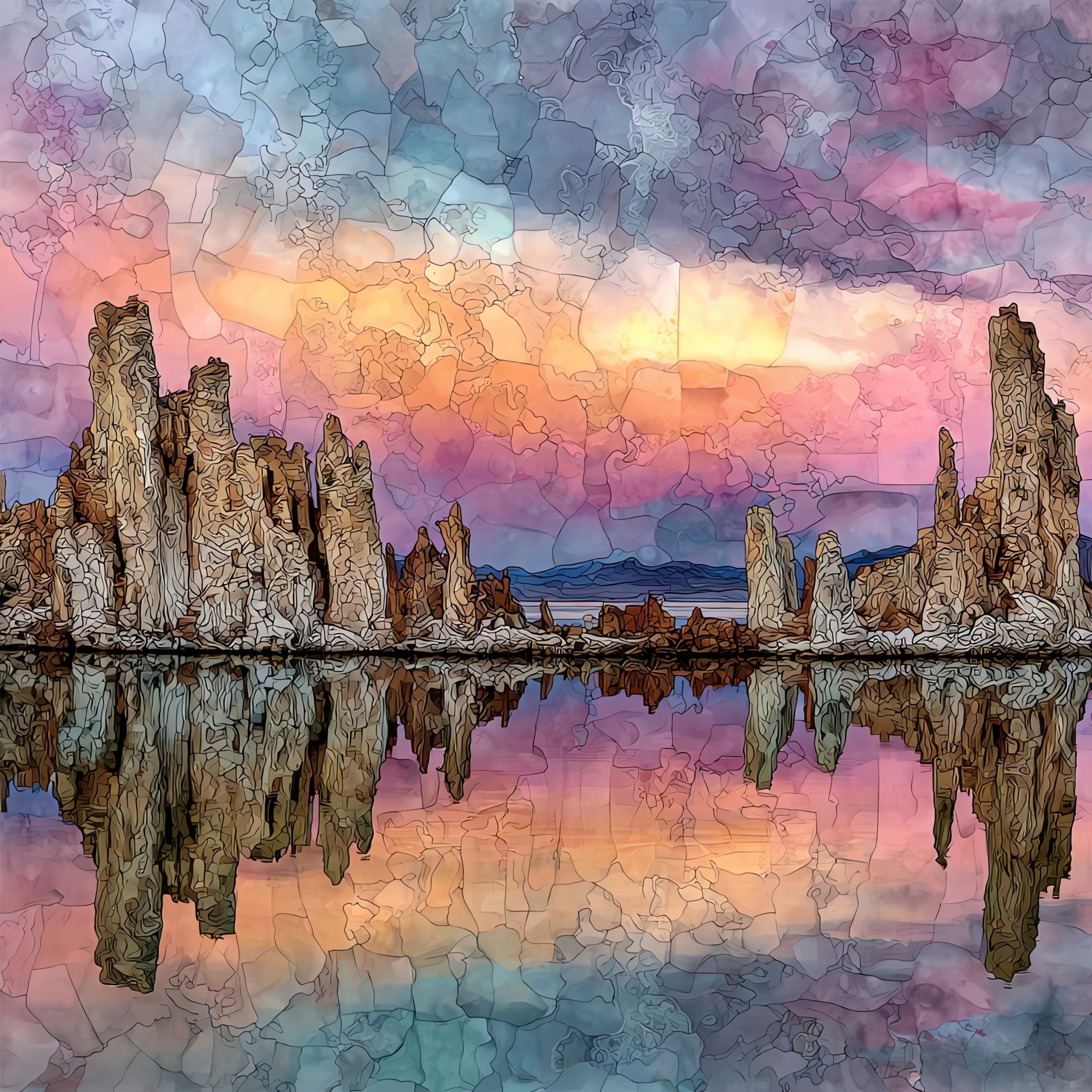
Mono Lake Tufa
— — the towers the lake left behind.
Not only on a wall.

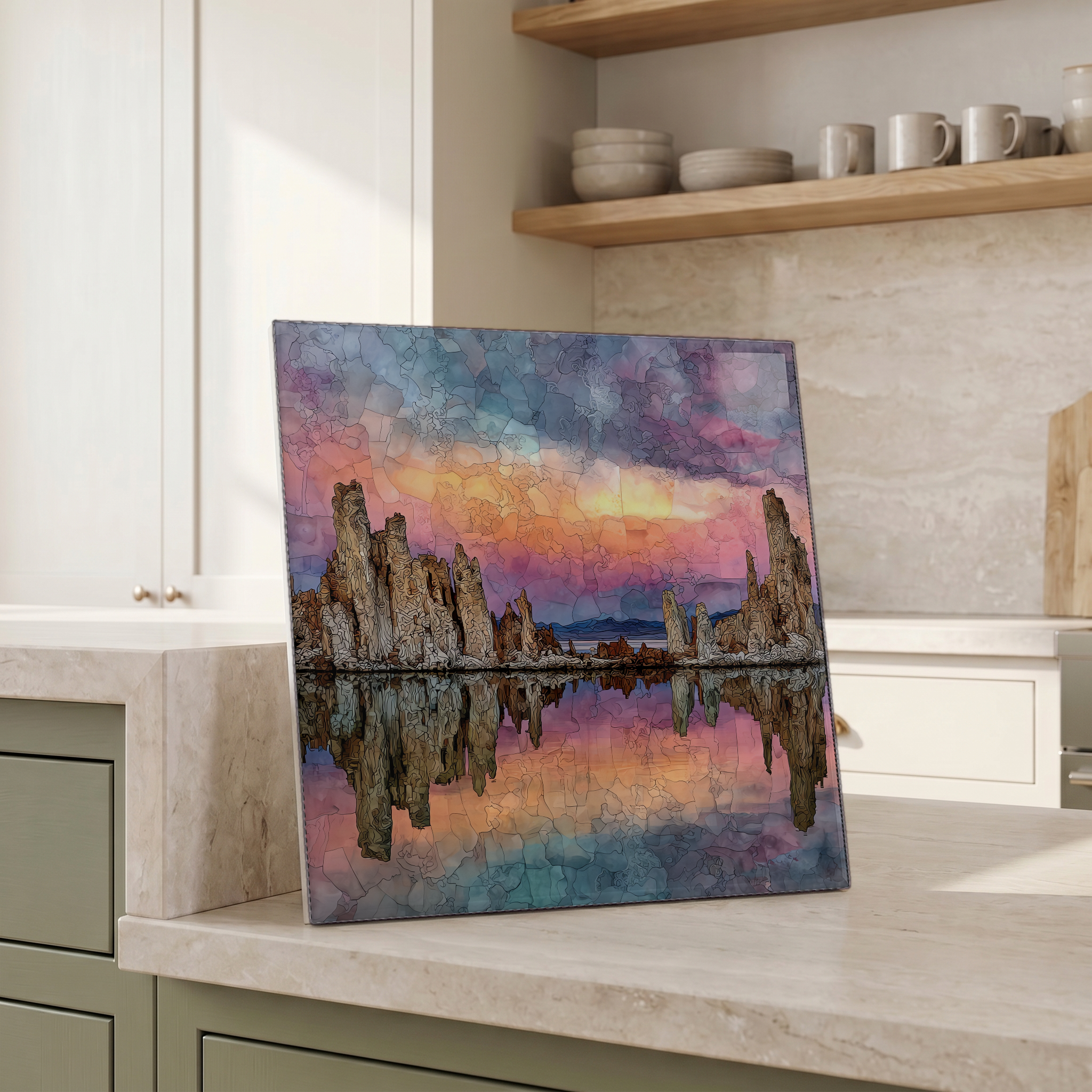


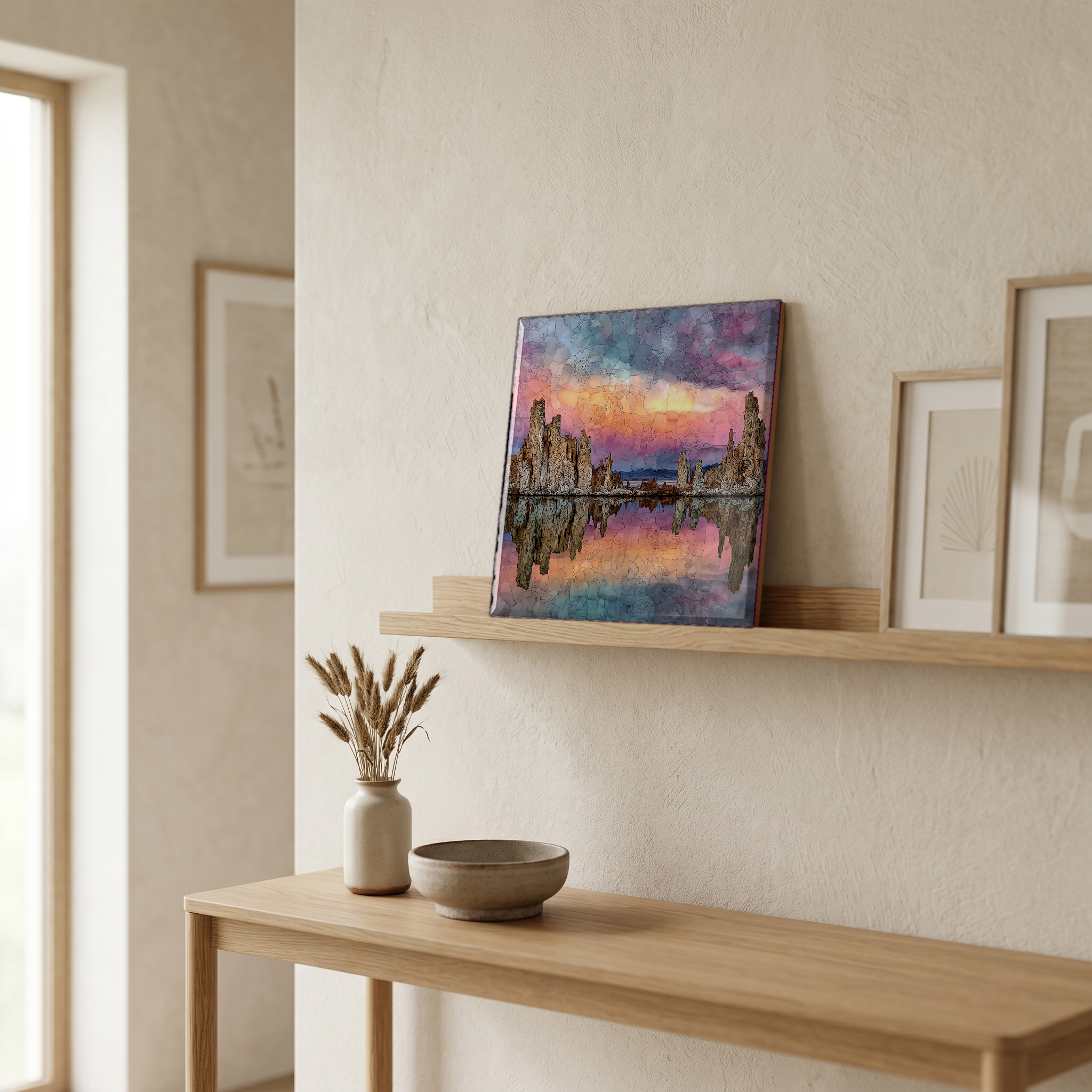
“A salt lake on the dry side of the Sierra, older than most of the mountains around it. The tufa towers, limestone spires, grew underwater for centuries, where calcium springs met the lake's heavy alkaline chemistry. When the city of Los Angeles began diverting the inflow streams in 1941, the lake dropped and the towers came into the air. South Tufa is the photographed shore. People drive up Highway 395 from Mammoth, park before dawn, and wait for the light to come over the Sierra and find the stone.
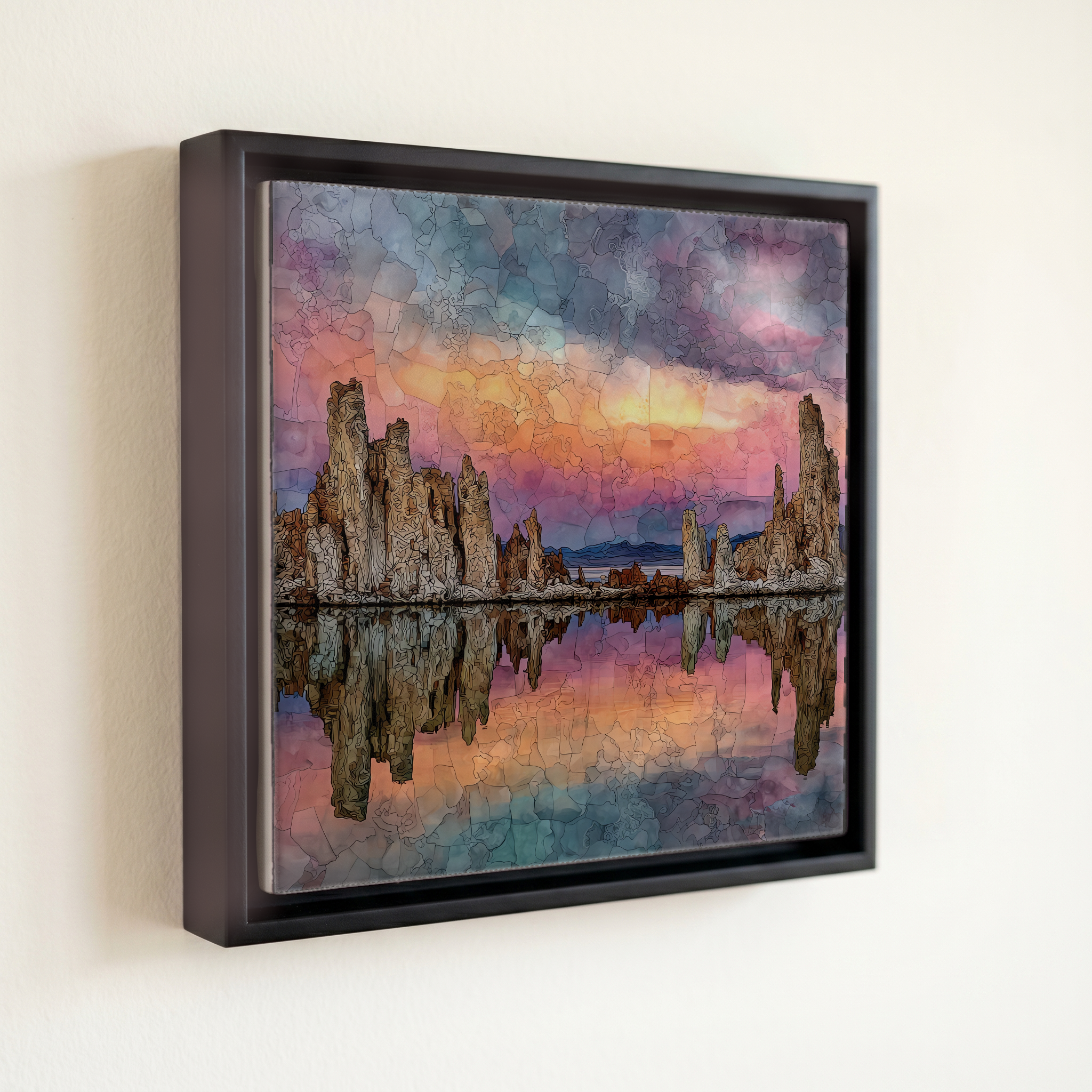
Mono Lake Tufa, on ceramic.
Each tile is finished by hand in our Knoxville studio. Artwork is slowly infused into the ceramic surface under high heat and pressure, and rests beneath a thin glossy finish. The colour lives in the surface, not on top of it.
Pick any four 4-inch tiles — National Parks you've been to, a Smokies set, the four seasons of one place. $ for a set of , cork-backed, ready to live on the table.

Each tile ships in a kraft box, tied with cream ribbon, with a handwritten note from the studio if you'd like to add one.

Three or five different vistas, hung together — a chapter of places you've been, or want to go.
The place, in three passes.
Mono Lake sits at about 6,378 feet on the east side of the Sierra Nevada, in Mono County, California, with the town of Lee Vining at its western shore and Yosemite's Tioga Pass climbing into the mountains directly above. The lake is at least 760,000 years old, one of the oldest in North America, and has no outlet, so water leaves only by evaporation. That evaporation concentrates its salts, which is why the water is alkaline and saline. Most visitors reach the photographed shoreline, South Tufa, by turning off US 395 onto Highway 120 East and following the signs into the Mono Basin National Forest Scenic Area. The reserve is co-managed by California State Parks and the US Forest Service.
The tufa towers are calcium carbonate. Springs rich in calcium rose from the lake bed into the alkaline, carbonate-heavy water above, and the two chemistries met. Limestone precipitated out around the springs and grew slowly for centuries, all of it underwater. The towers most visitors see today were never meant to be seen. They were exposed in the decades after 1941, when the Los Angeles Department of Water and Power began diverting four of the lake's five tributary streams into the Owens Valley aqueduct, dropping the lake by more than forty vertical feet. A 1994 ruling from the State Water Resources Control Board, known as Decision 1631, ordered the lake refilled toward a 6,392-foot target.
The photograph that puts Mono Lake into the world is almost always made at first light from the South Tufa shoreline. The Sierra Nevada rises directly behind the lake to the west, so the sun comes up over the open desert to the east and lights the towers from behind the photographer, while the peaks across the water hold the cold shadow until later in the morning. The basin is at altitude and dries quickly after rain. Mornings in spring and autumn are commonly still, which leaves the surface mirror-flat for forty or fifty minutes. The Mono Basin Visitor Center near Lee Vining posts current access conditions and the small per-person fee for South Tufa.