Wender·Vista
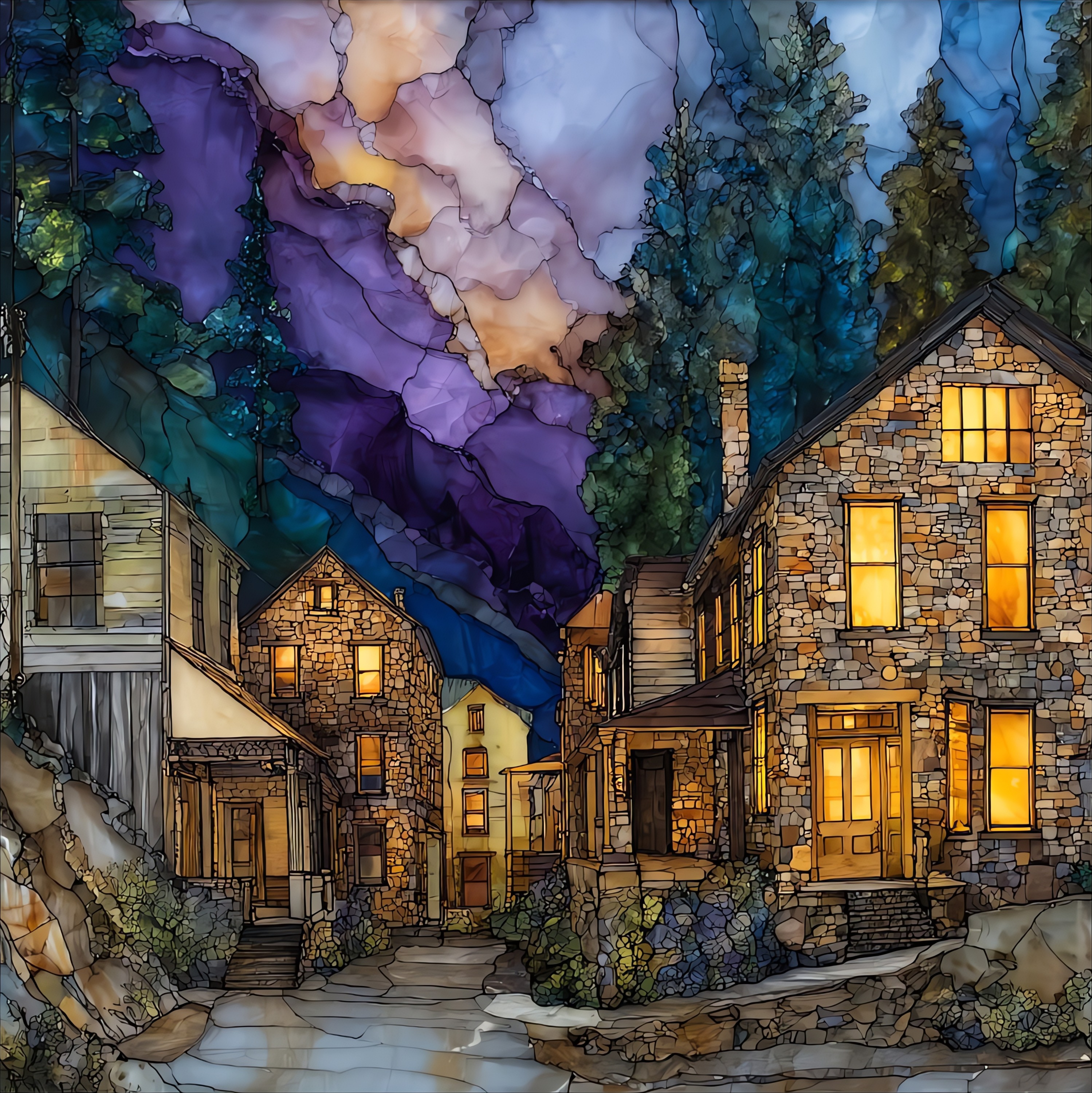
Mokelumne Hill
shown on ceramic, 12-inch tileCalifornia · United States
in California's Gold Country, on Highway 49

Mokelumne Hill

the stone the fire couldn't take.

Where it lives

Not only on a wall.

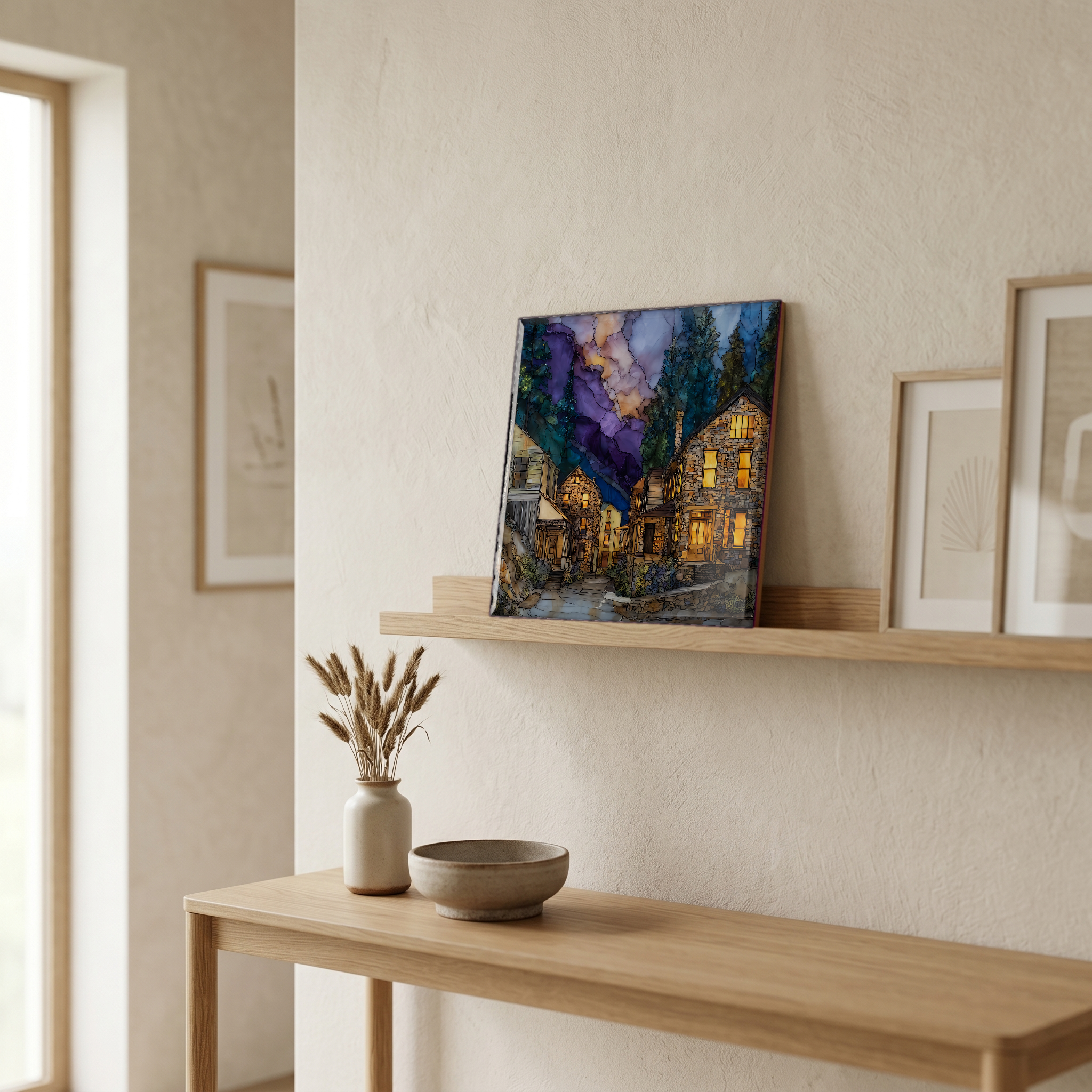
A small tile on the nightstand catching the morning. A larger one above the fire. Yours, wherever you spend the slow hours.
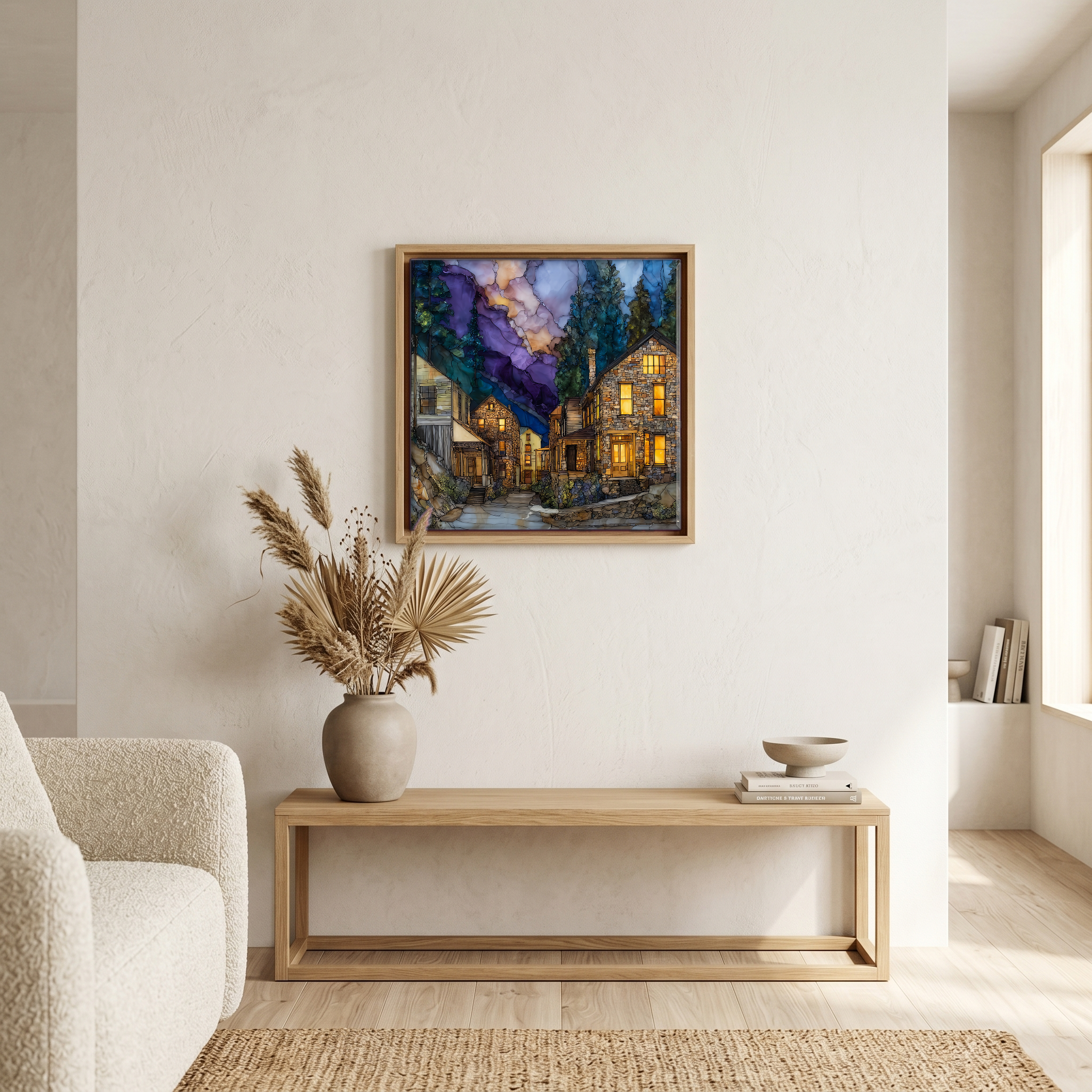
Above the bench, in a warm oak surround.
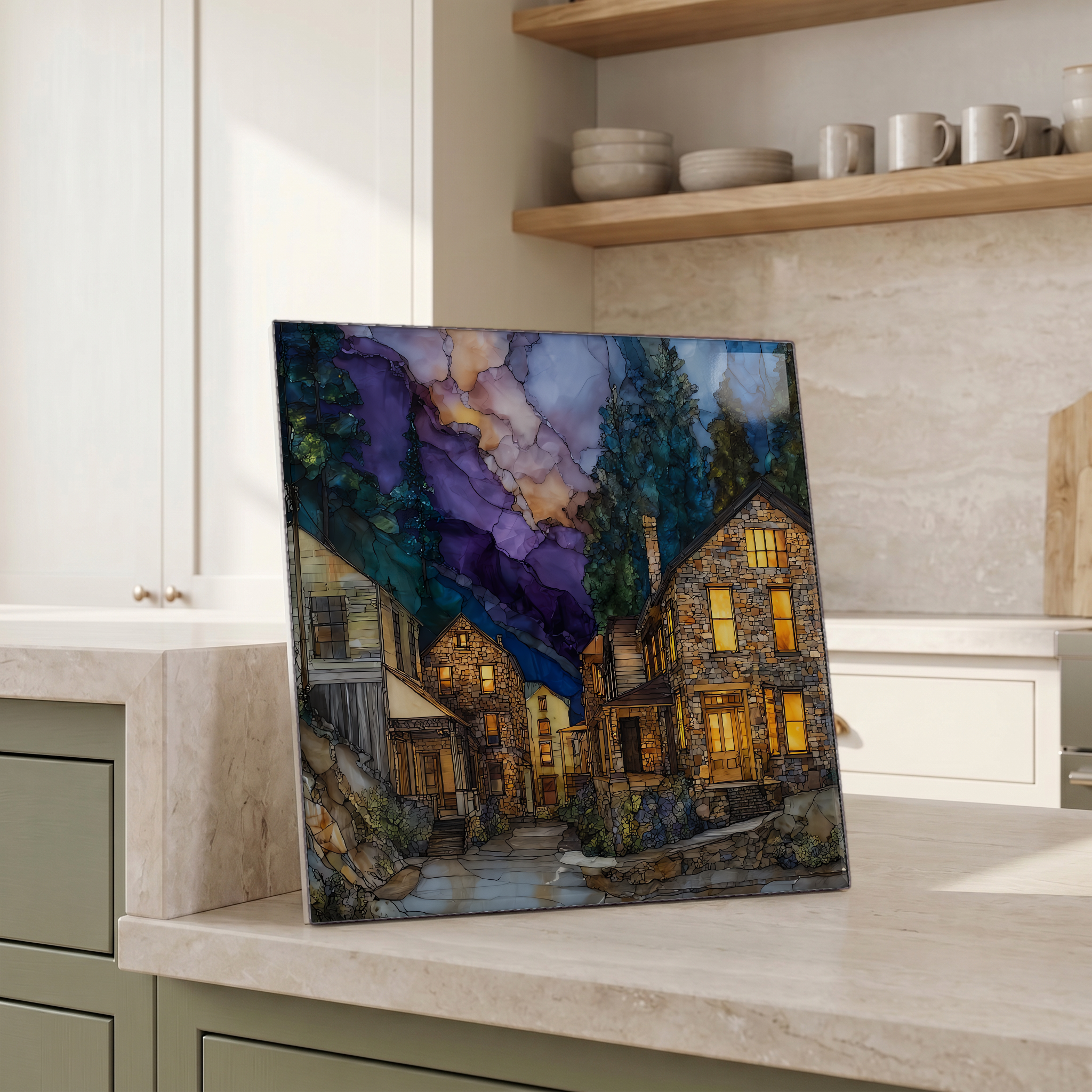
Beside the kettle, propped on the counter.
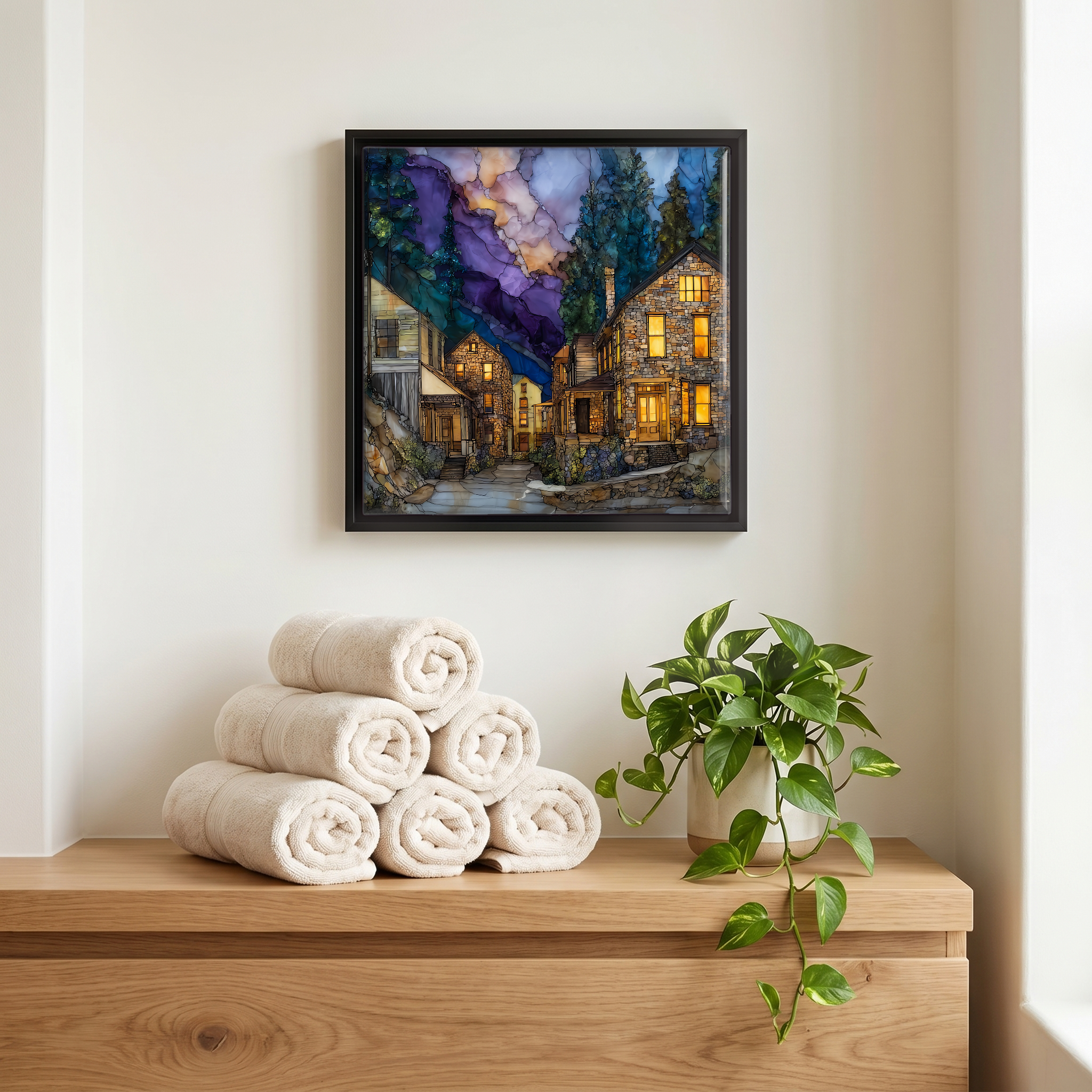
Above the linens, in a slim black surround.
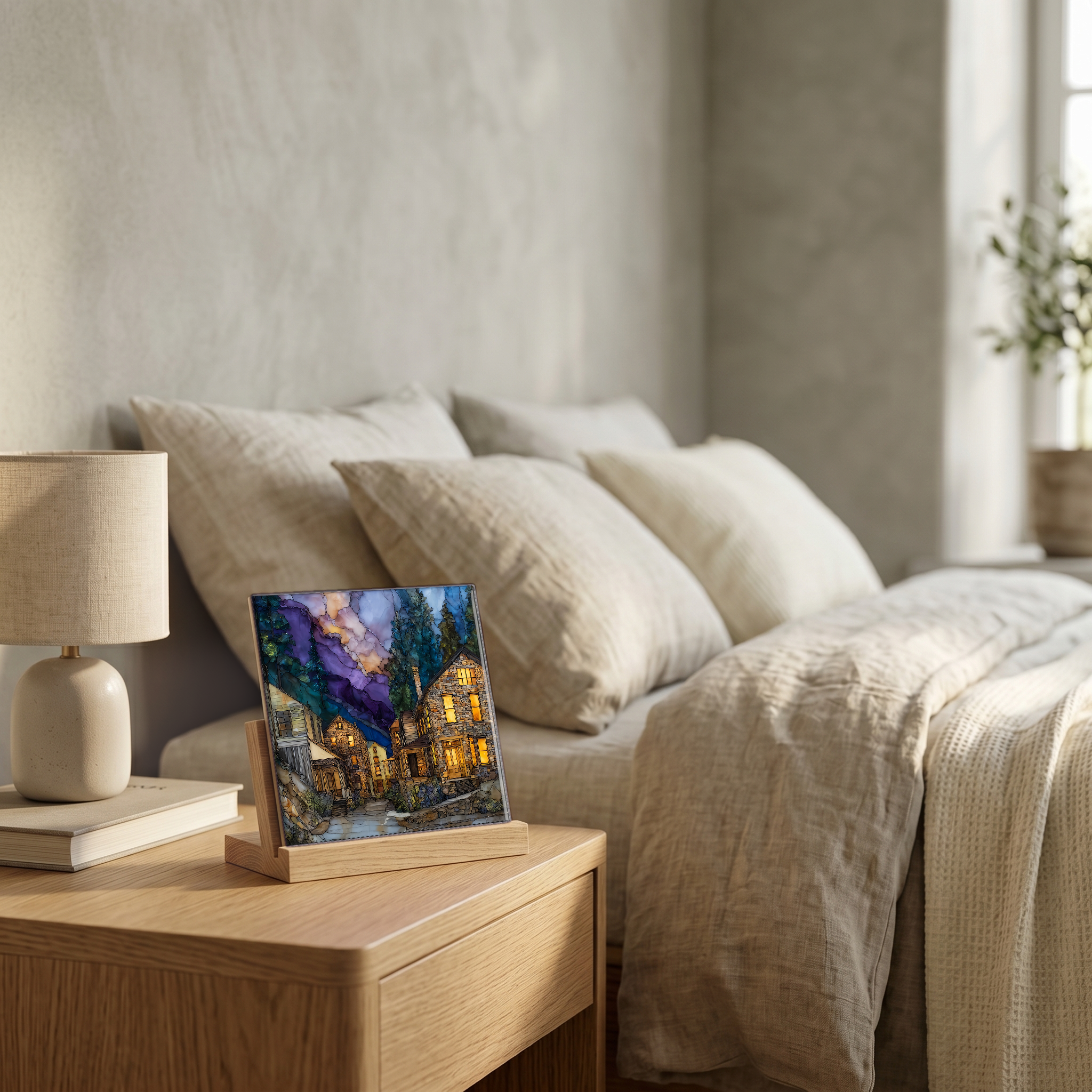
On the nightstand, on a light oak stand.
On a picture ledge, where the light comes in.
a note from the studio

A Gold Rush town on Highway 49, in the Sierra Nevada foothills above the Central Valley. Fifteen thousand people lived here in 1850, the year the placers were so rich miners wouldn't leave to resupply in Stockton. Now there are under seven hundred. The Hotel Léger has been pouring drinks at the same bar since 1851; the stone walls of the I.O.O.F. Hall were the first three stories built east of the California coast. The town burned almost flat in 1854 and what stood up was the stone. Most of what stood is still standing.
from the studio
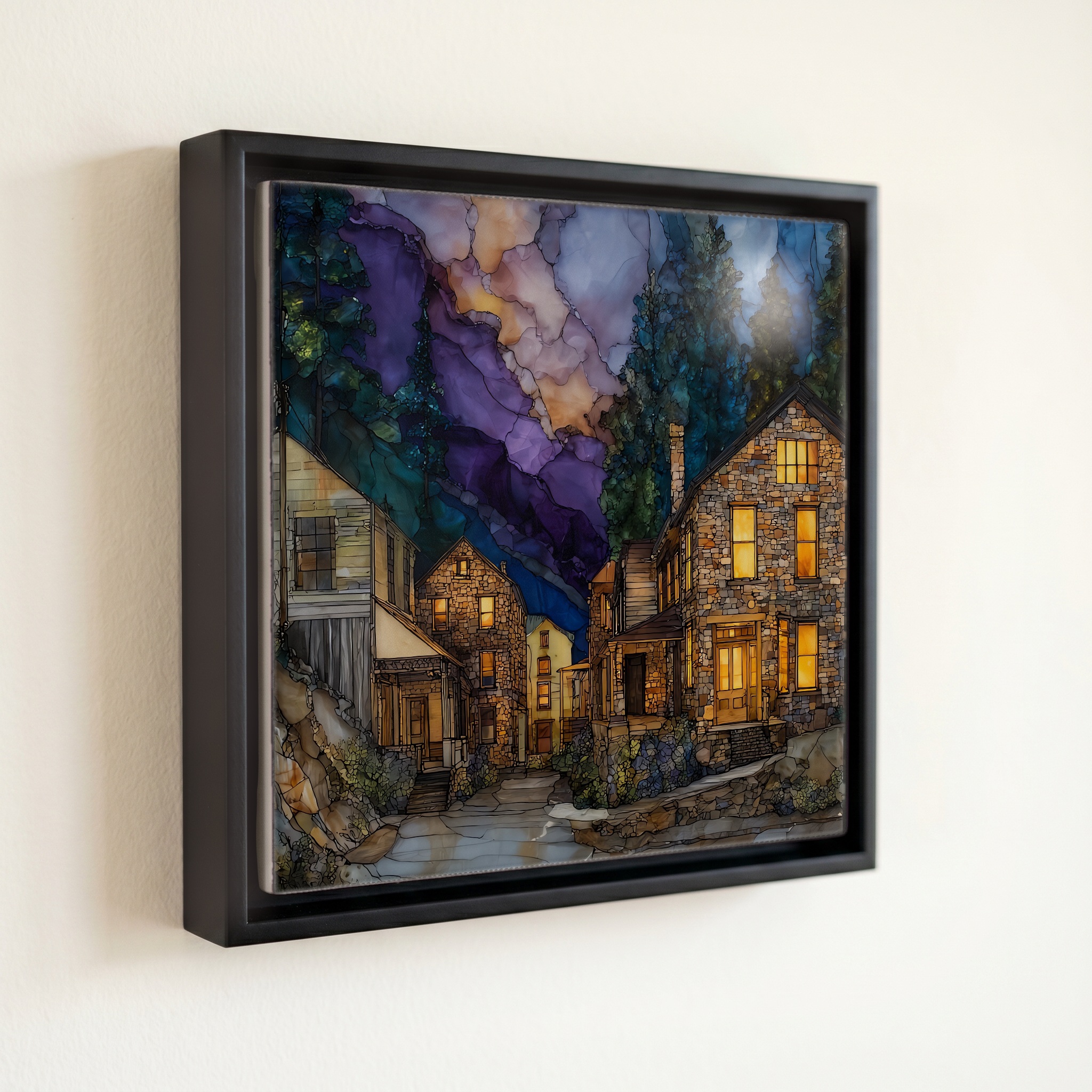
shown in a slim black floating frame · 6 × 6 in
— bring it home

Mokelumne Hill, on ceramic.

Each tile is finished by hand in our Knoxville studio. Artwork is slowly infused into the ceramic surface under high heat and pressure, and rests beneath a thin glossy finish. The colour lives in the surface, not on top of it.

What kind of piece?
One tile — square or rectangle.
How big?
the popular one — counter, shelf, nightstand
6 × 6 in · 15 cm · 1.6 lb
Surface finish
A clear glossy finish — the artwork reads as if under resin. Ideal for show-pieces and framed wall art.
How it sits
A hidden cleat — sits ¼″ proud of the wall.
$58
Hand-finished and shipped from our studio at the foot of the Smokies. On your wall in about ten days.
size
6 × 6 in
15 cm
weighs
1.6 lb
solid in the hand
surface
ceramic, hand-finished
art rests beneath a thin glossy finish
from
Knoxville, TN
our family studio, at the foot of the Smokies
— start a Coaster Set

Pick any four 4-inch tiles — National Parks you've been to, a Smokies set, the four seasons of one place. $ for a set of , cork-backed, ready to live on the table.

comes gift-ready
comes gift-ready

Each tile ships in a kraft box, tied with cream ribbon, with a handwritten note from the studio if you'd like to add one.
or build a grouping
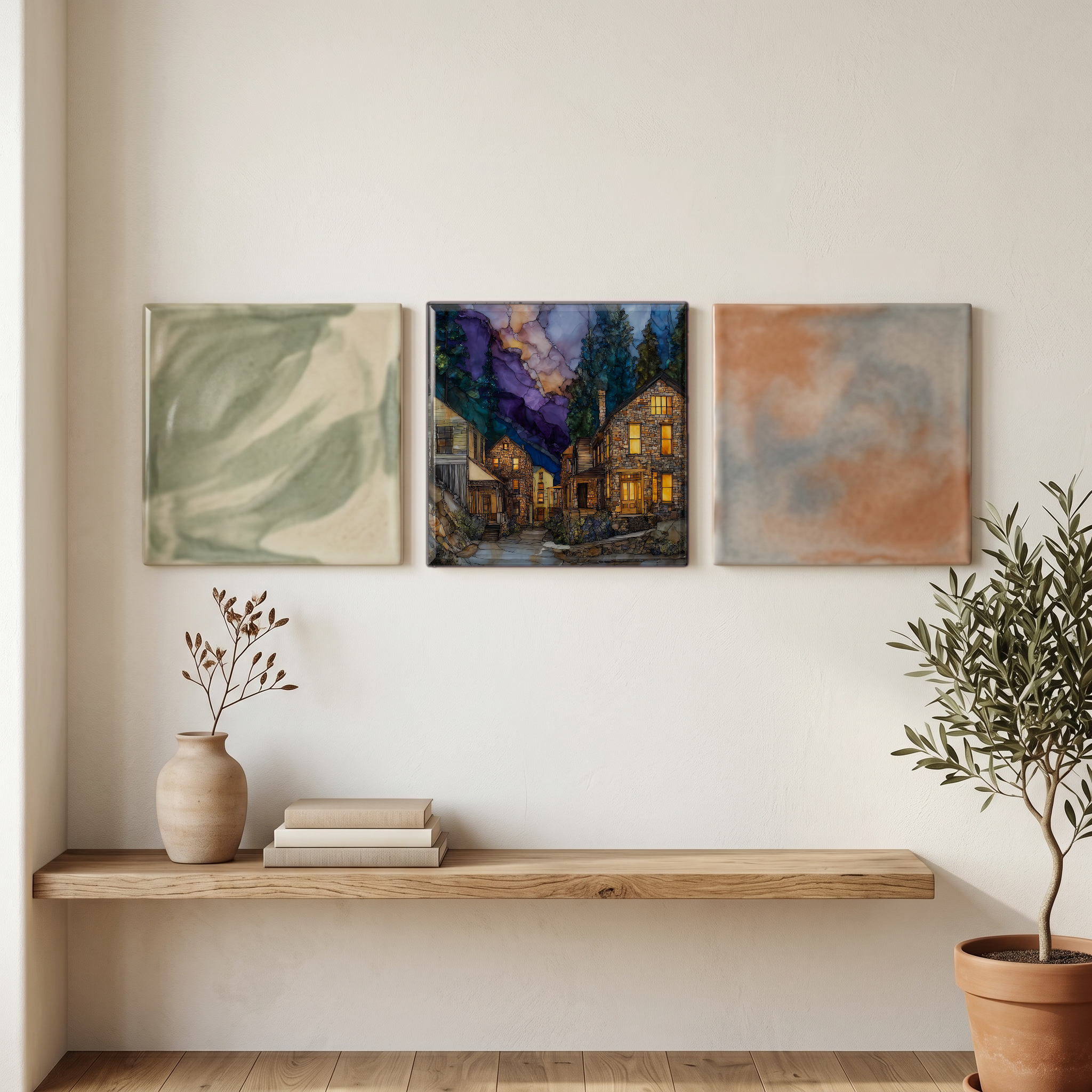
or build a grouping

Three or five different vistas, hung together — a chapter of places you've been, or want to go.

about Mokelumne Hill

The place, in three passes.

A little of what's known, in case you fall down the rabbit hole — or want to go see it yourself.
the place

Mokelumne Hill sits at 1,473 feet in the Sierra Nevada foothills of Calaveras County, on Highway 49 in the run of historic Mother Lode towns north of Sonora and south of Jackson. The 2020 census counted 691 residents in the census-designated place. The town takes its name from the Mokelumne River; the Miwok word translates roughly as 'people of Mokel,' a Native village that pre-dated the gold camp. A group of Oregonians worked the surrounding placers in 1848, and within two years the camp held fifteen thousand people. The town is California Historical Landmark No. 269.

the stone

After fire took almost everything on August 24, 1854, the town rebuilt in stone. The Hotel Léger on Main Street started as George Léger's Hotel de France in 1851; when San Andreas took the county seat in 1866, Léger bought the abandoned stone courthouse and folded it into the hotel. Its bar, whose back bar reportedly came around Cape Horn, has been in use ever since. The I.O.O.F. Hall (Landmark No. 256) was reportedly the first three-story building built inland from California's coast. The Congregational Church (Landmark No. 261) is the oldest of its kind in the state.

the visit

Mokelumne Hill sits along Highway 49 in California's Gold Country, the Mother Lode road that connects most of the surviving Gold Rush towns. The Historic Hotel Léger still rents rooms and serves dinner from the original courthouse-and-saloon building at 8304 Main Street. The town is small enough to walk in an hour; the surviving 1850s and 1860s stone-and-brick storefronts cluster on Main Street and the side blocks. San Andreas, the present county seat, is six miles south. Sacramento is about 70 miles northwest. The Calaveras Heritage Council maintains the visitor information.

where
United States · Calaveras County, California
elevation
449 m · 1,473 ft
position
38.3006° N · 120.7064° W
the neighborhood

What's nearby.

A handful of named places within an hour's walk or short drive. Some we've already painted; some we will.
10 km S
San Andreas
Gold Rush town and current Calaveras County seat
8 km N
Jackson
Gold Rush town, seat of Amador County
3 km N
Mokelumne River
Sierra Nevada river the town is named for
20 km NE
Volcano
Gold Rush mining village in Amador County
20 km E
West Point
Calaveras County Gold Rush settlement
N
Mokelumne Hill
San Andreas
Jackson
Mokelumne River
Volcano
West Point
common questions

What people ask.

A few questions we get about Mokelumne Hill — and about bringing the piece home.
about the place

Mokelumne Hill is a small unincorporated community in Calaveras County, California, on Highway 49 in the Sierra Nevada foothills. It sits at 1,473 feet, about six miles north of San Andreas and roughly 70 miles southeast of Sacramento. The 2020 census recorded 691 residents.

Mokelumne is a Miwok word. The Plains Miwok lived along the river long before the 1848 gold strike. It is most commonly translated as 'people of Mokel,' the name of a Native village that pre-dated the mining camp on the hill above the river.

The placers around Mokelumne Hill were among the richest in the Mother Lode. By 1850 about fifteen thousand people lived there. Claims were limited to sixteen square feet because the ground was so productive. From 1852 to 1866 the town served as the seat of Calaveras County.

Yes. George Léger opened the Hotel de France here in 1851. When the county seat moved to San Andreas in 1866, Léger bought the abandoned stone courthouse and folded it into the hotel. The Historic Hotel Léger has operated continuously since and is California Historical Landmark No. 663.

Calaveras County moved its seat to San Andreas in 1866 as the surface gold played out and the population shifted. Mokelumne Hill had held the seat since 1852, after it was taken from Jackson, which by then had split off to form the new Amador County.

Three blocks of Gold Rush stone and brick on Main Street, mostly rebuilt after the August 1854 fire. The I.O.O.F. Hall, the Congregational Church, and the Hotel Léger are all registered California Historical Landmarks. The town itself is California Historical Landmark No. 269.

about the piece in your home

It tends to land well with people who grew up in Calaveras or Amador County, who drive Highway 49, or who have family history in the Mother Lode. A Keepsake or Coaster with a handwritten note from the studio carries the weight of a small specific place.

The palette runs through deep ambers, slate, and jewel tones. It works in Western-craftsman and lodge interiors, in jewel-tone Maximalist rooms, and in older homes with dark wood and historical detail. It also grounds a clean Minimalist room that needs one warm focal piece.

Historic-Americana revival is having a real moment, particularly the Mountain-modern and Heritage-craftsman directions in interior design. A vista like Mokelumne Hill carries weight in rooms that lean into vintage California, Gold Country, or 19th-century maker references without going kitsch.

Above a standard three-seat sofa, a single Large reads as the focal piece. A four-tile Mural fills more wall and gives the architecture room to breathe. Above a long console or in a wide hallway, a nine-tile Mural carries the strongest historical-Americana presence.

Yes. For wet or splash-prone rooms (bathrooms, kitchen backsplashes, mudrooms), request the Dura Satin or Matte finish. Both are scratch-resistant, hold up to humidity and cleaning, and keep the colour saturated. The default Glossy finish is reserved for framed wall installations.

Microfibre cloth and water. For tiles in kitchens or bathrooms with the Dura Satin or Matte finish, a mild non-abrasive cleaner is also safe. Avoid scouring pads, bleach, and ammonia. The colour lives in the ceramic surface and stays brilliant when cared for gently.

Yes. Every WenderVista vista is created by Reid Wender, the studio's curator and eye, and produced in our Knoxville, Tennessee studio. The artwork is not licensed from any other source; the catalog is a single coherent atlas of places the studio chooses, one piece at a time.

if this one stayed with you

A few you might also love.

Hand-picked by the eye that found Sorapis. Same air, same kind of quiet.