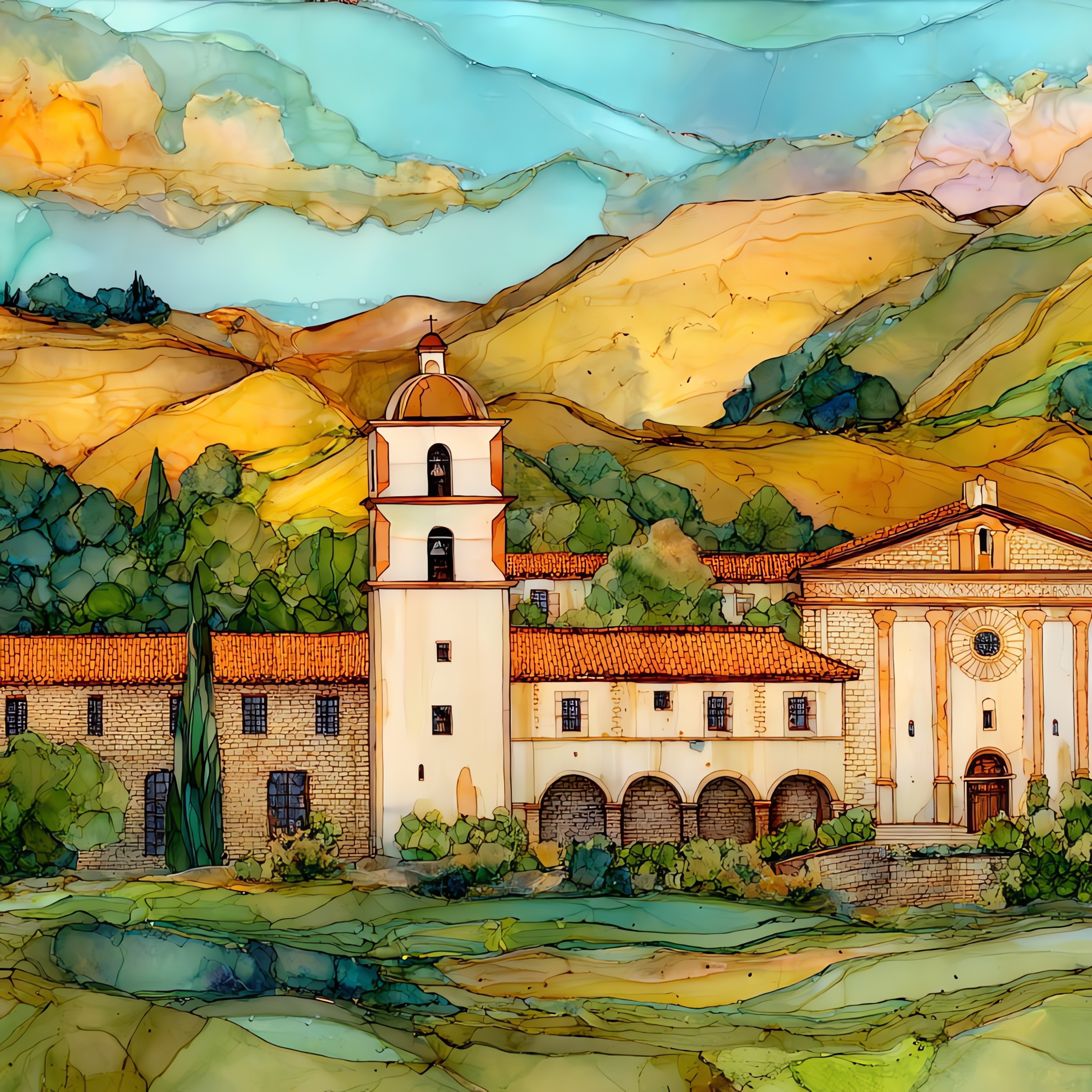
Mission Santa Ines
— — the wall the morning warms first.
Not only on a wall.
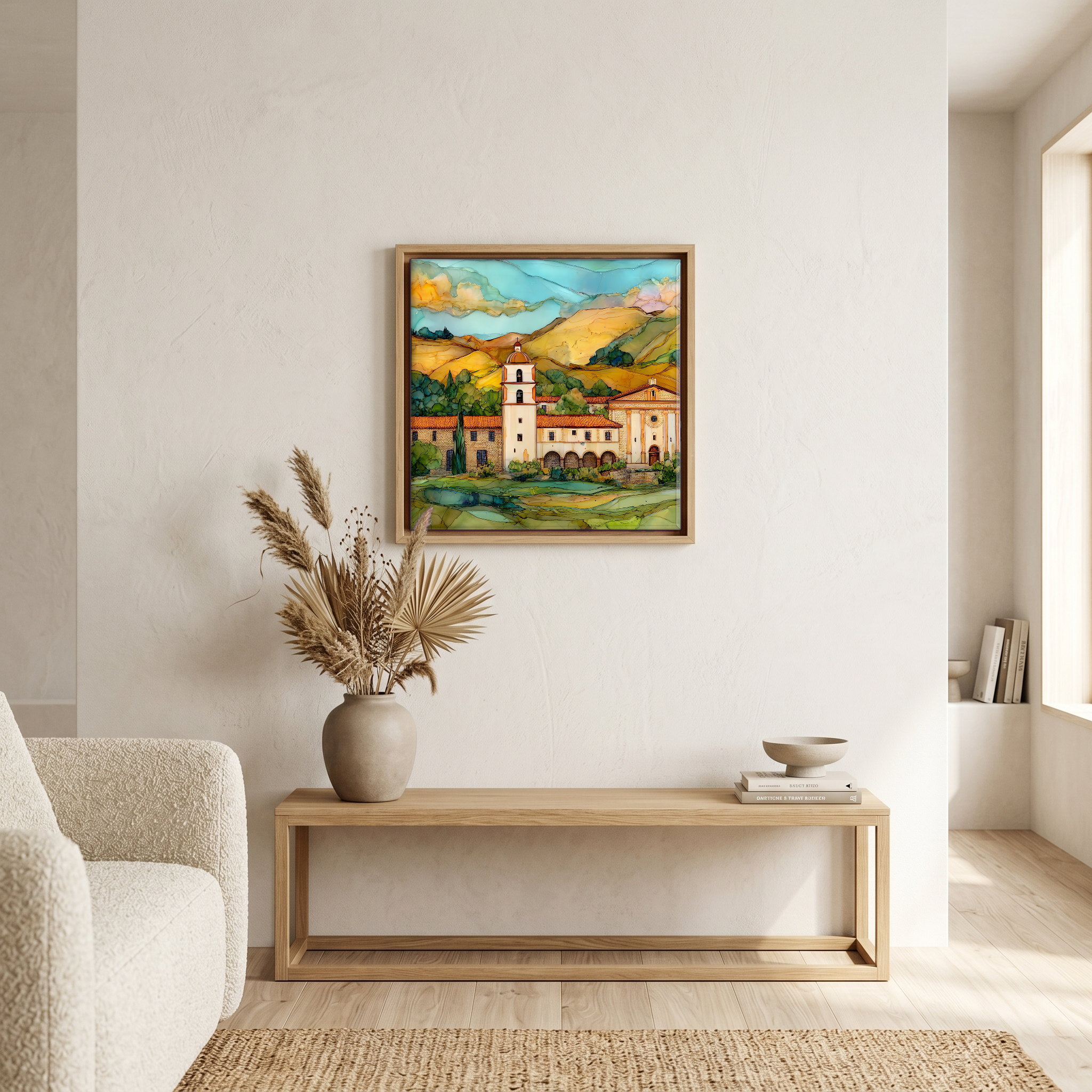
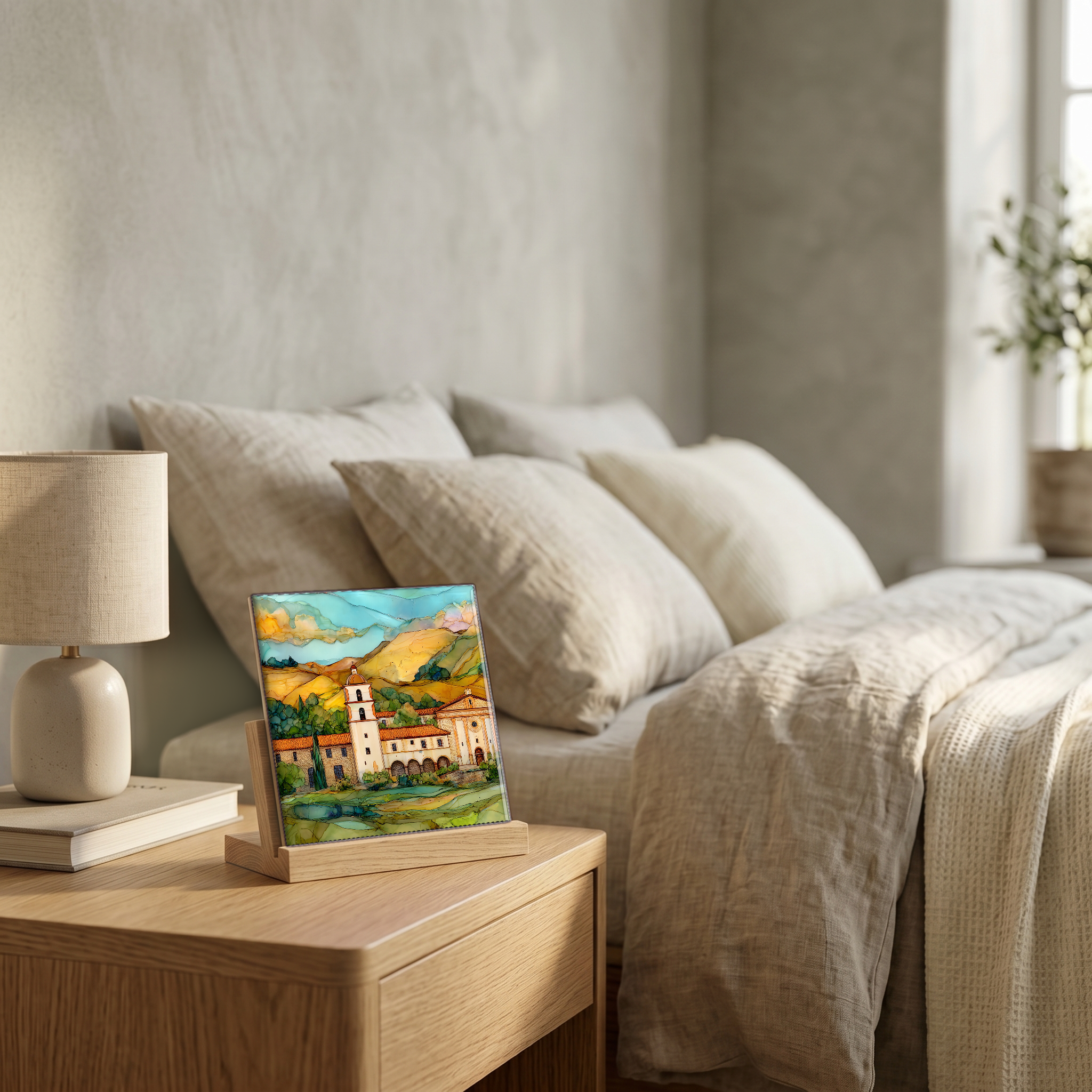
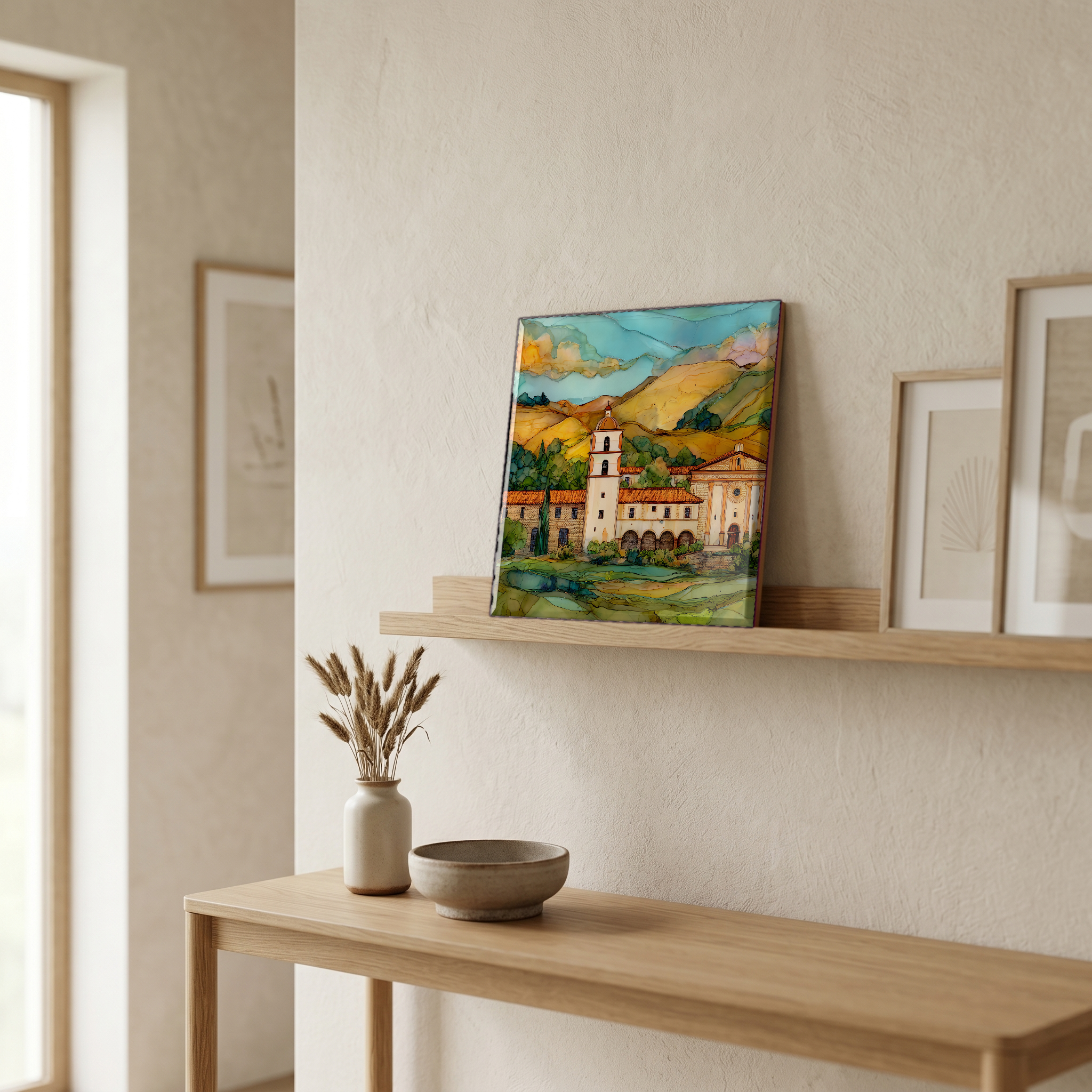
“The nineteenth of the twenty-one California missions. The one Padre Tapis sited above the river to fill the long gap between Santa Bárbara and La Purísima. The Chumash worked the fields here for two decades before the revolt of 1824. The church is long and low, whitewashed adobe with a thin red tile roof; a campanile of three bells stands at the south end. The colonnade catches the morning. Inside, the original painted decoration still holds: red ochre stencils above, marbled wainscoting below. The garden is small, walked through quietly by visitors who came up from the wine valley and didn't expect to stay this long.
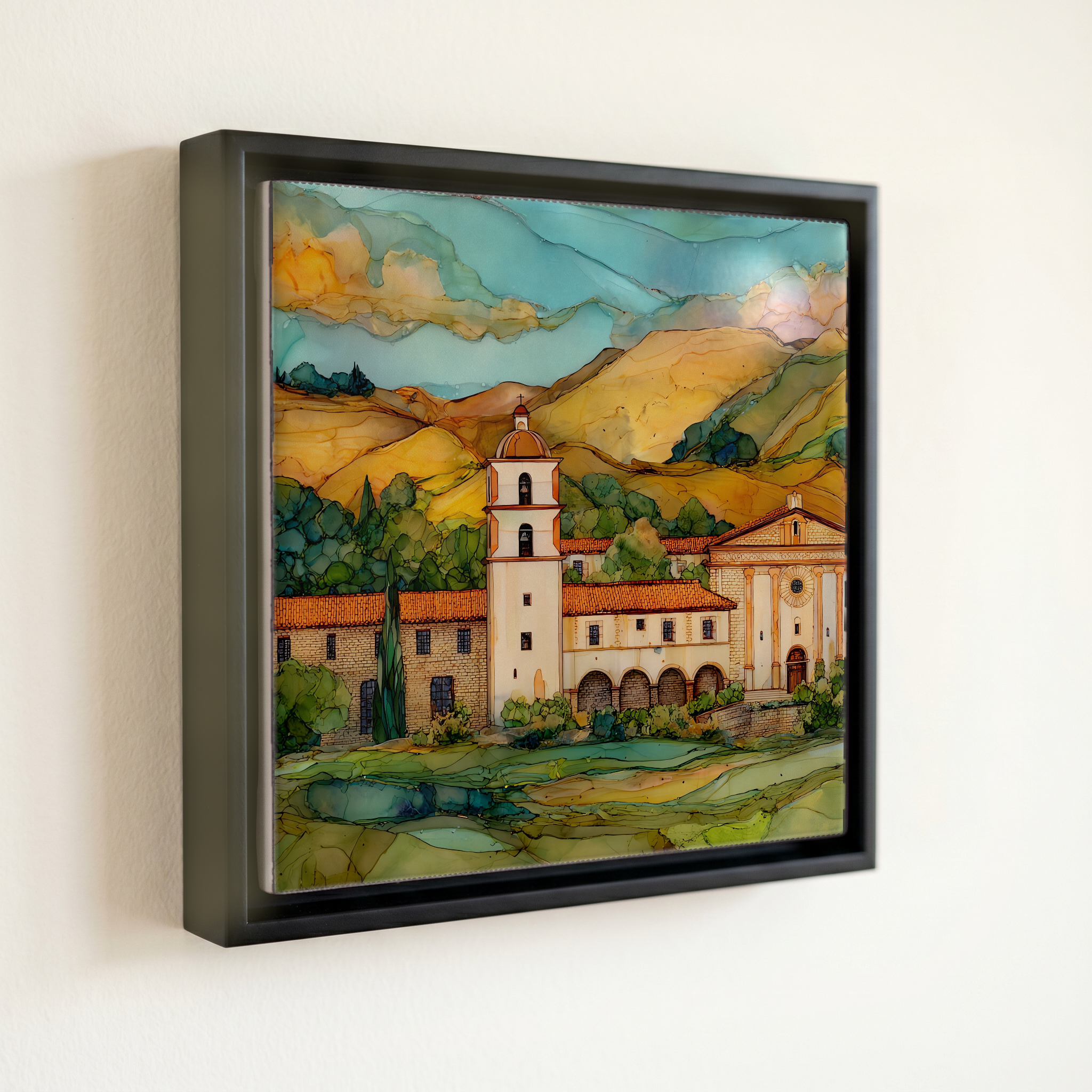
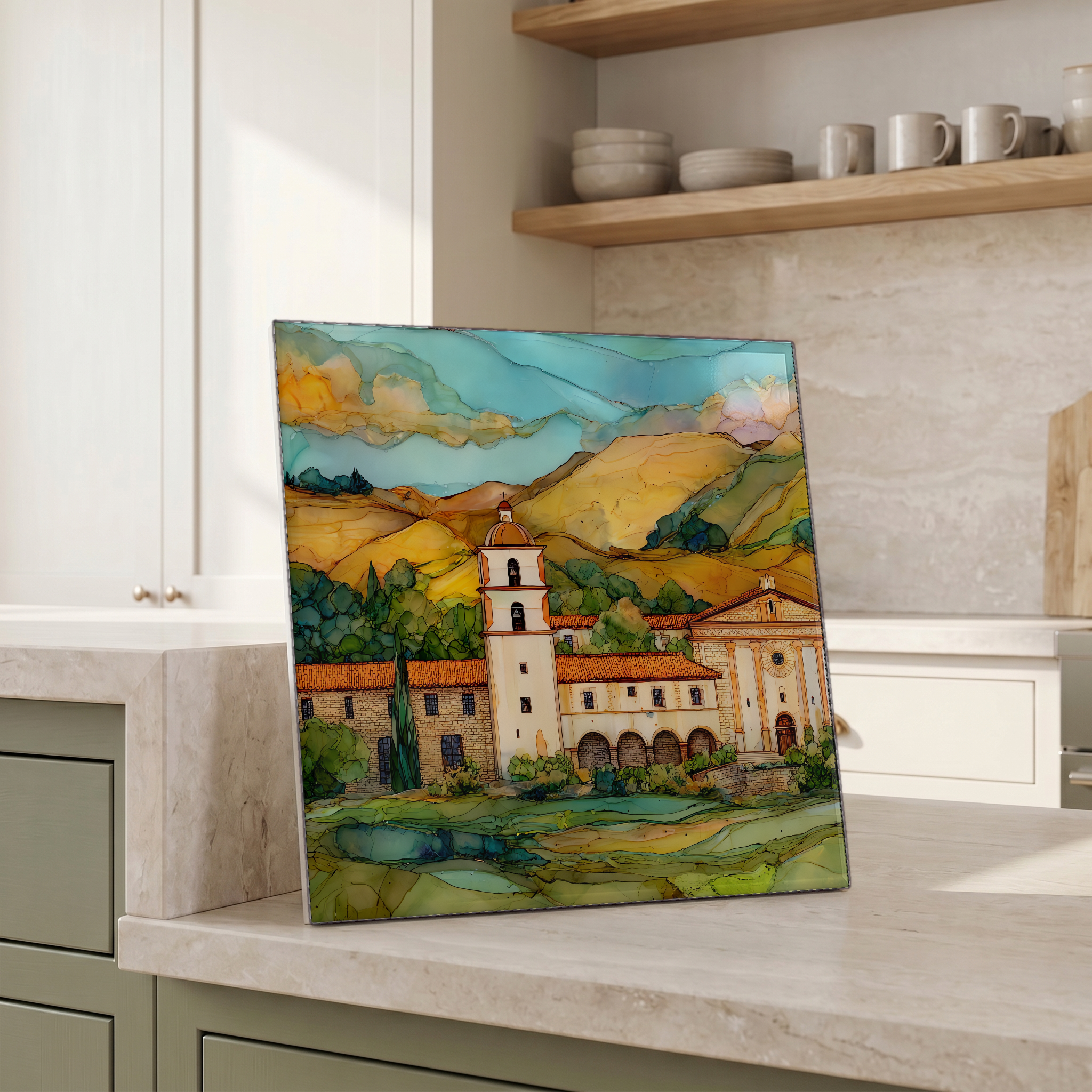
Mission Santa Ines, on ceramic.
Each tile is finished by hand in our Knoxville studio. Artwork is slowly infused into the ceramic surface under high heat and pressure, and rests beneath a thin glossy finish. The colour lives in the surface, not on top of it.
Pick any four 4-inch tiles — National Parks you've been to, a Smokies set, the four seasons of one place. $ for a set of , cork-backed, ready to live on the table.
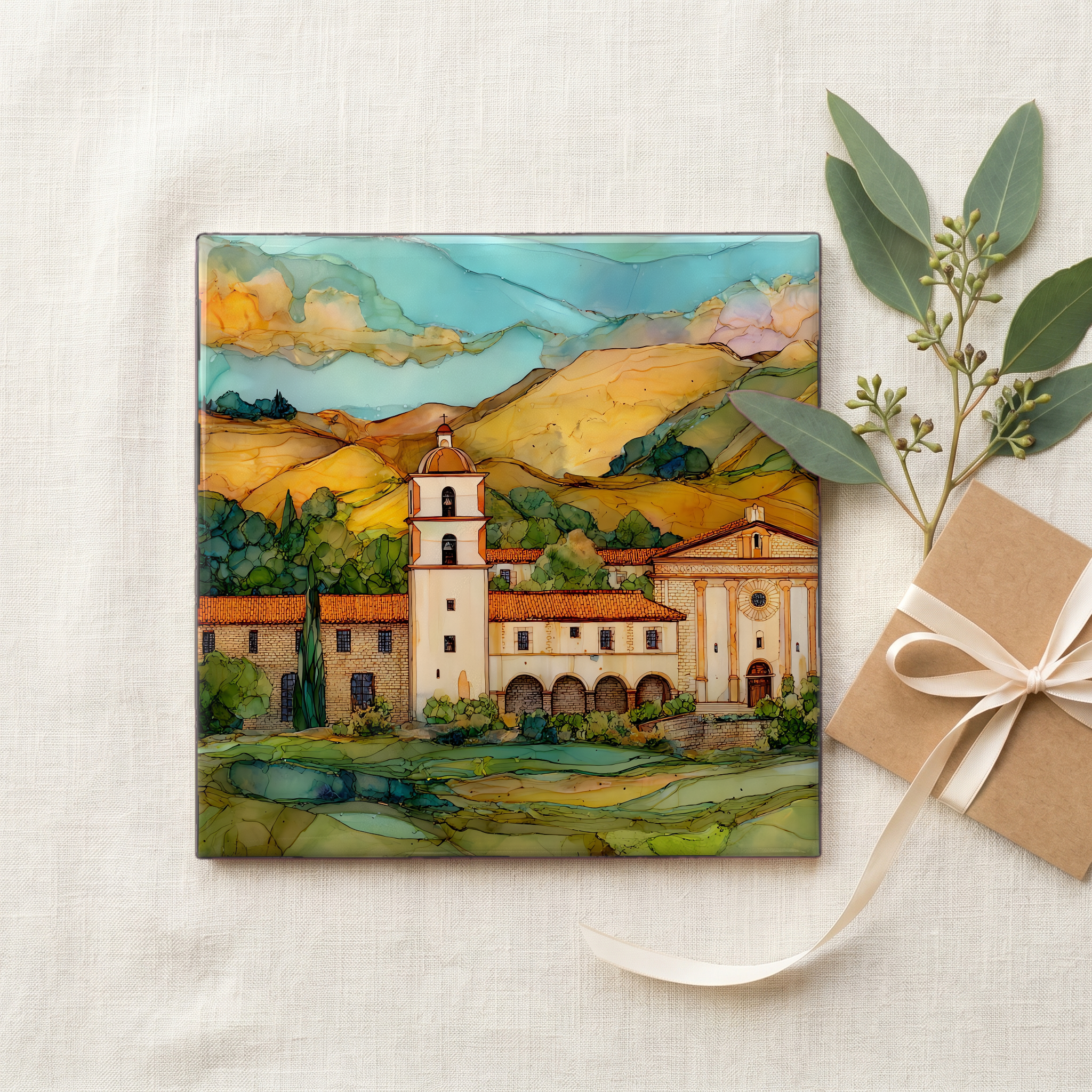
Each tile ships in a kraft box, tied with cream ribbon, with a handwritten note from the studio if you'd like to add one.
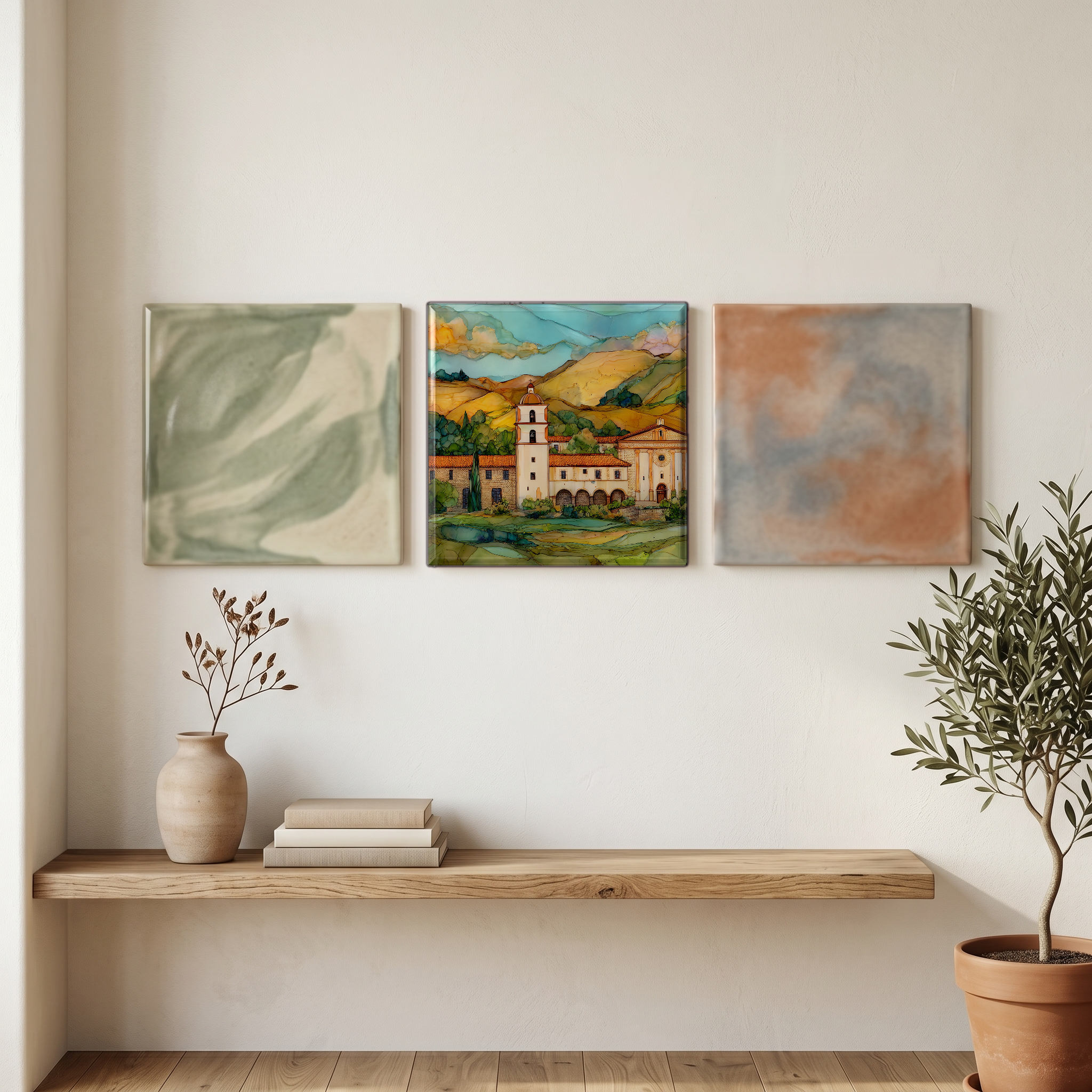
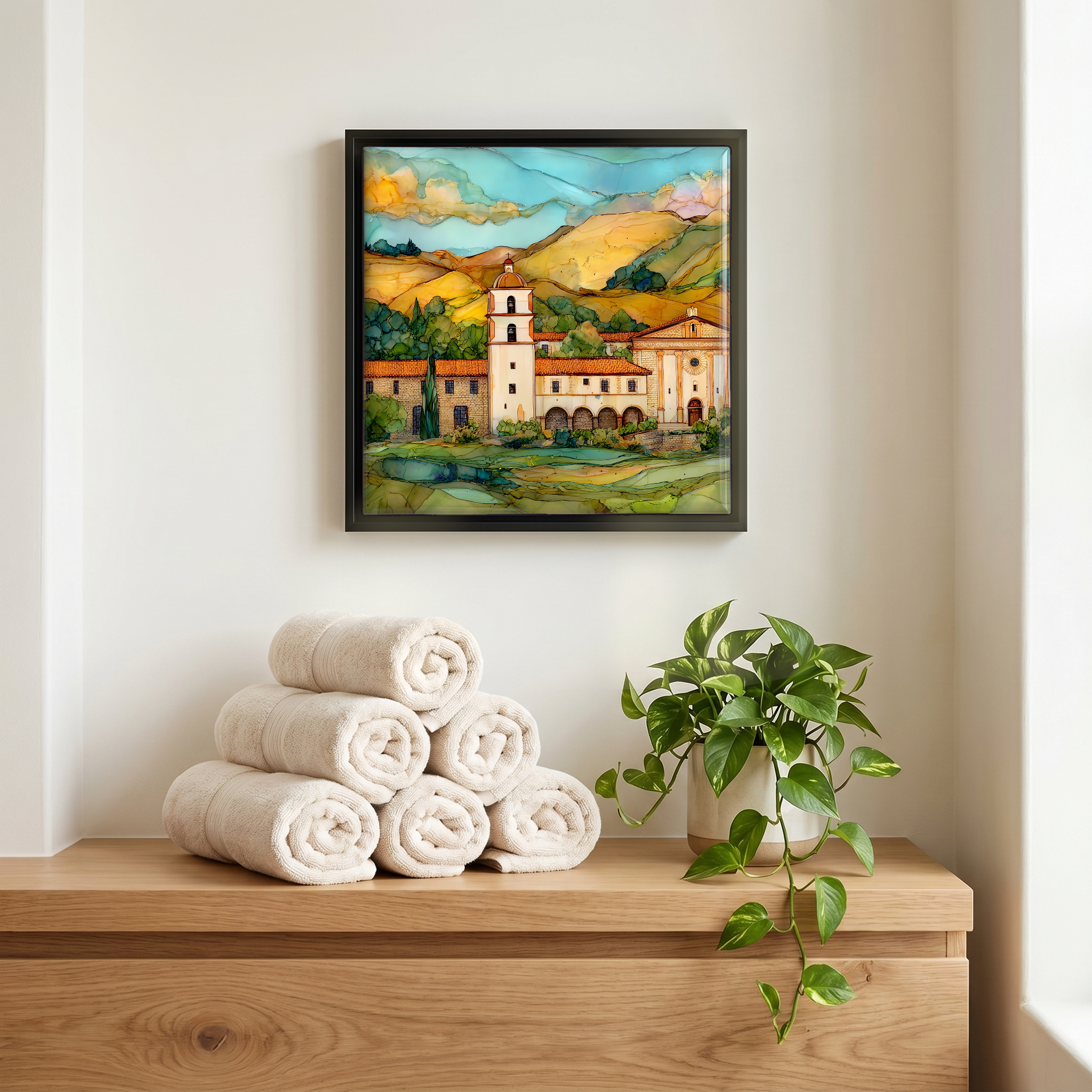
Three or five different vistas, hung together — a chapter of places you've been, or want to go.
The place, in three passes.
Mission Santa Inés sits above the Santa Ynez River in present-day Solvang, in Santa Barbara County, California. It is the nineteenth of the twenty-one Franciscan missions of Alta California, founded on September 17, 1804, by Padre Estévan Tapis to fill the day-and-a-half gap between Mission Santa Bárbara on the coast and Mission La Purísima Concepción inland. The site was chosen for its access to the river, its arable terrace above the floodplain, and the existing Chumash settlement of Alajulapu. The mission stands at about 500 feet of elevation, on the southern edge of the Santa Ynez Valley, the wine country north of Santa Barbara.
The church is long and low, built of adobe brick on a sandstone foundation, with thick walls and a thin red tile roof. The original campanile collapsed in the December 1812 earthquake that shook the whole chain of Alta California missions; the present three-bell tower came out of a twentieth-century restoration by the Capuchin Franciscans, who have stewarded Santa Inés since 1924. The interior keeps a great deal of its original painted decoration: red ochre stencils, faux-marbled dado work along the lower walls, and a hand-painted reredos behind the altar. The arched colonnade along the south front is the building's most photographed feature, especially in the first hour of morning light.
Santa Inés is one of the last missions in the Alta California chain. It was founded in 1804, secularized by the Mexican government in 1834, and returned to the Catholic Church by federal patent in the 1860s. In February 1824, a Chumash neophyte was flogged by a Mexican soldier, and the resulting Chumash Revolt began at Santa Inés before spreading to La Purísima and Santa Bárbara: the largest indigenous uprising of the mission era. The Madonna Chapel, the museum collection of vestments and illuminated antiphonals, and the mission garden were added over the long parish life that followed. The Capuchin Franciscan friars have run the parish continuously since 1924.