Wender·Vista
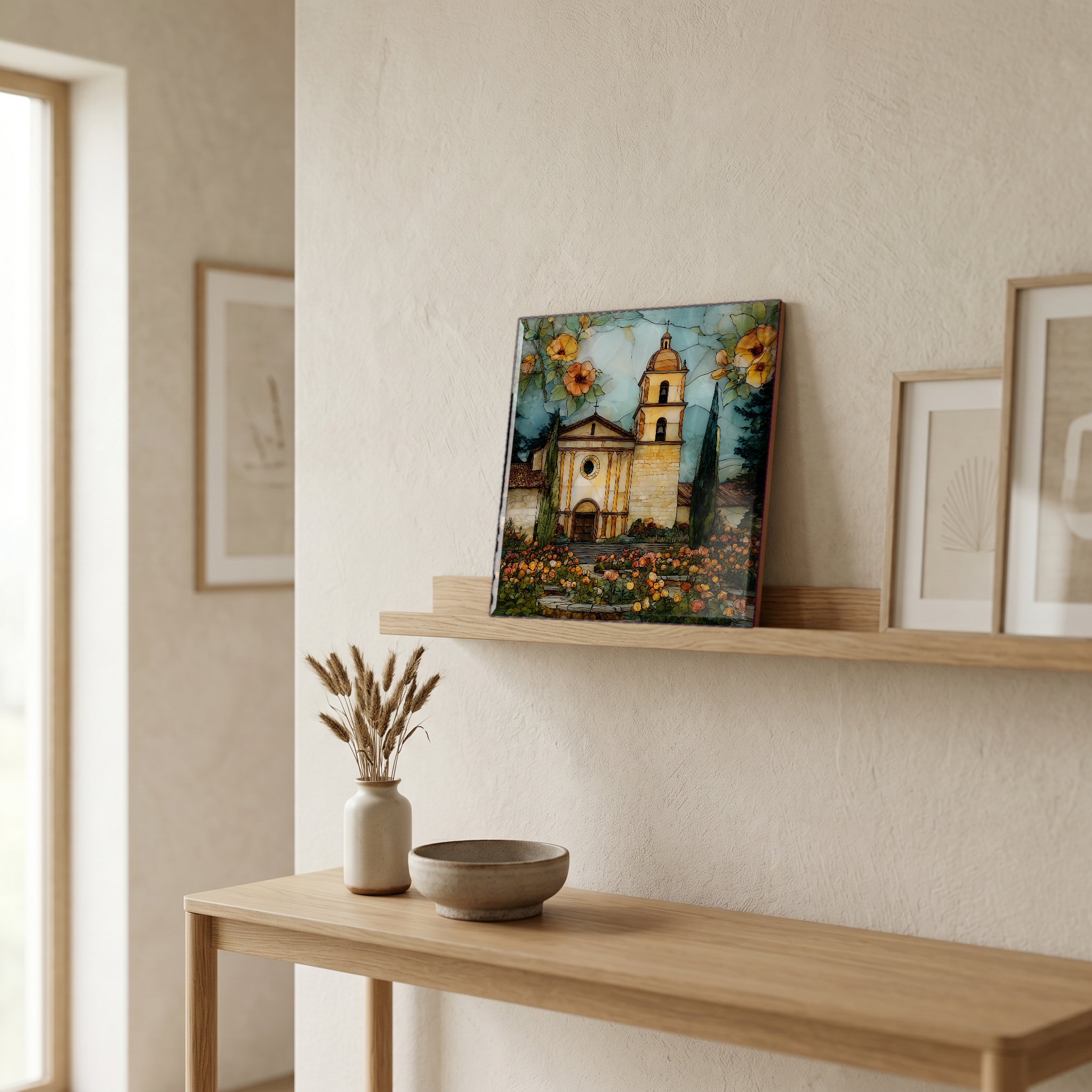
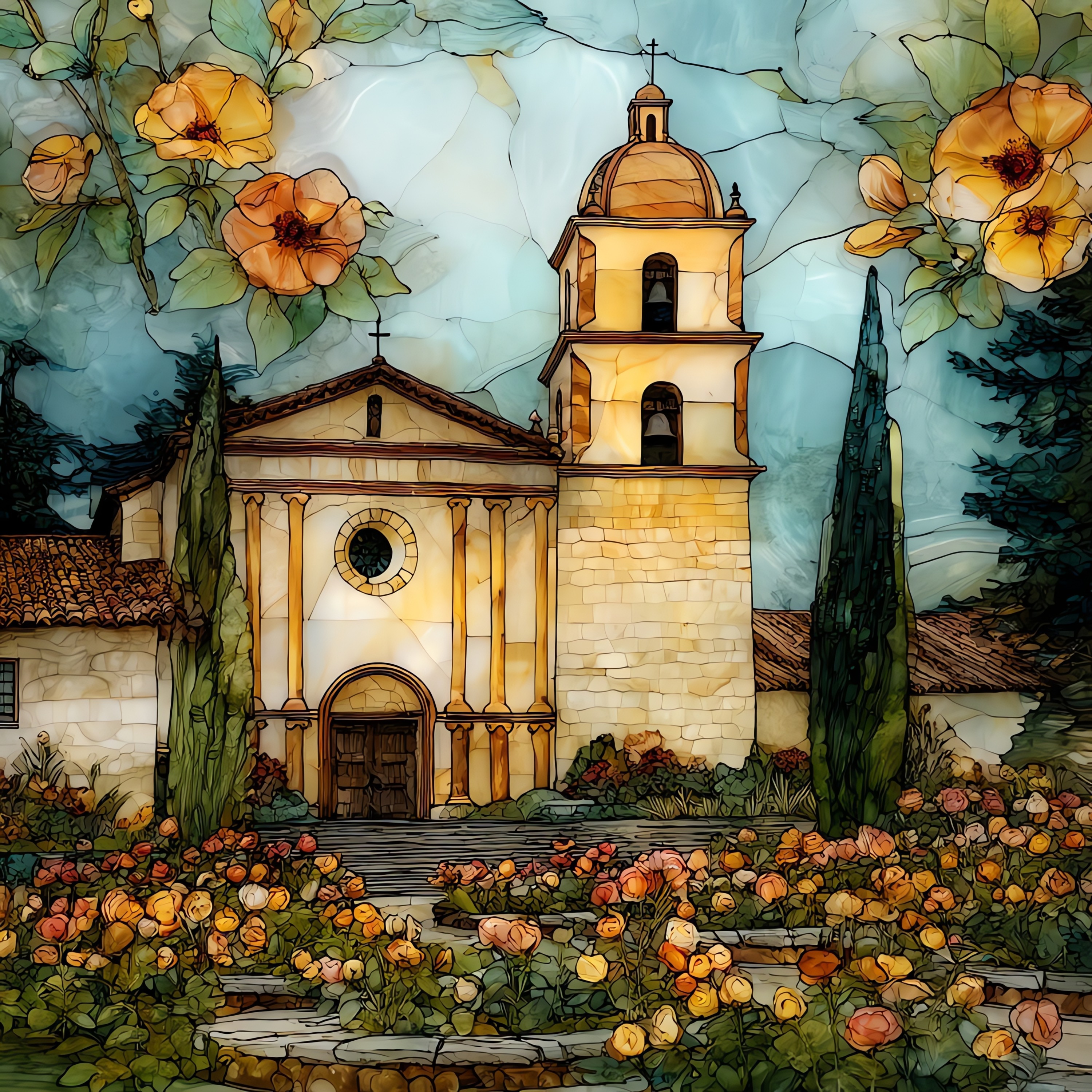
Mission Santa Clara de Asís
shown on ceramic, 12-inch tileCalifornia · United States
in the valley south of San Francisco Bay

Mission Santa Clara de Asís

what stayed when everything else burned.

Where it lives

Not only on a wall.

A small tile on the nightstand catching the morning. A larger one above the fire. Yours, wherever you spend the slow hours.
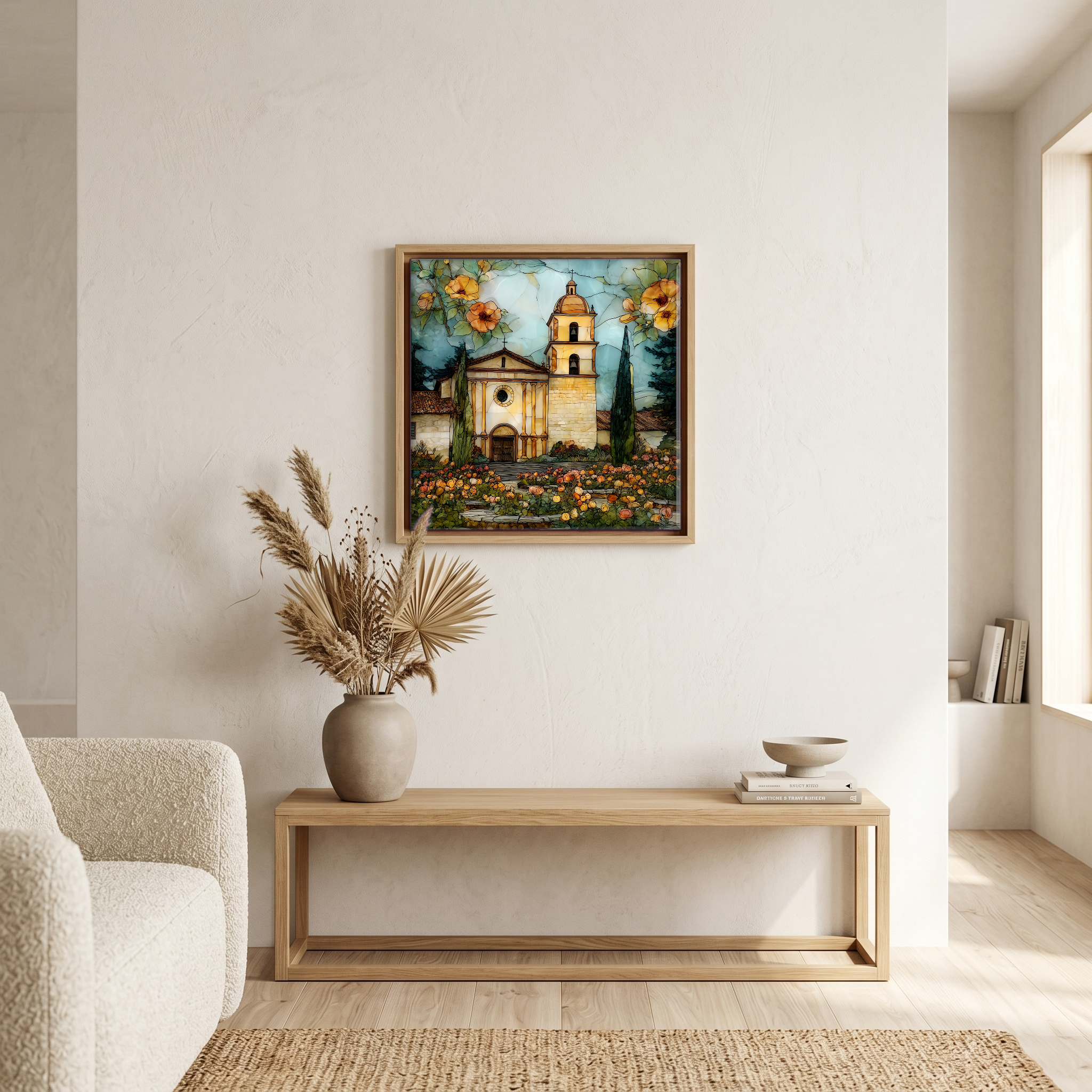
Above the bench, in a warm oak surround.
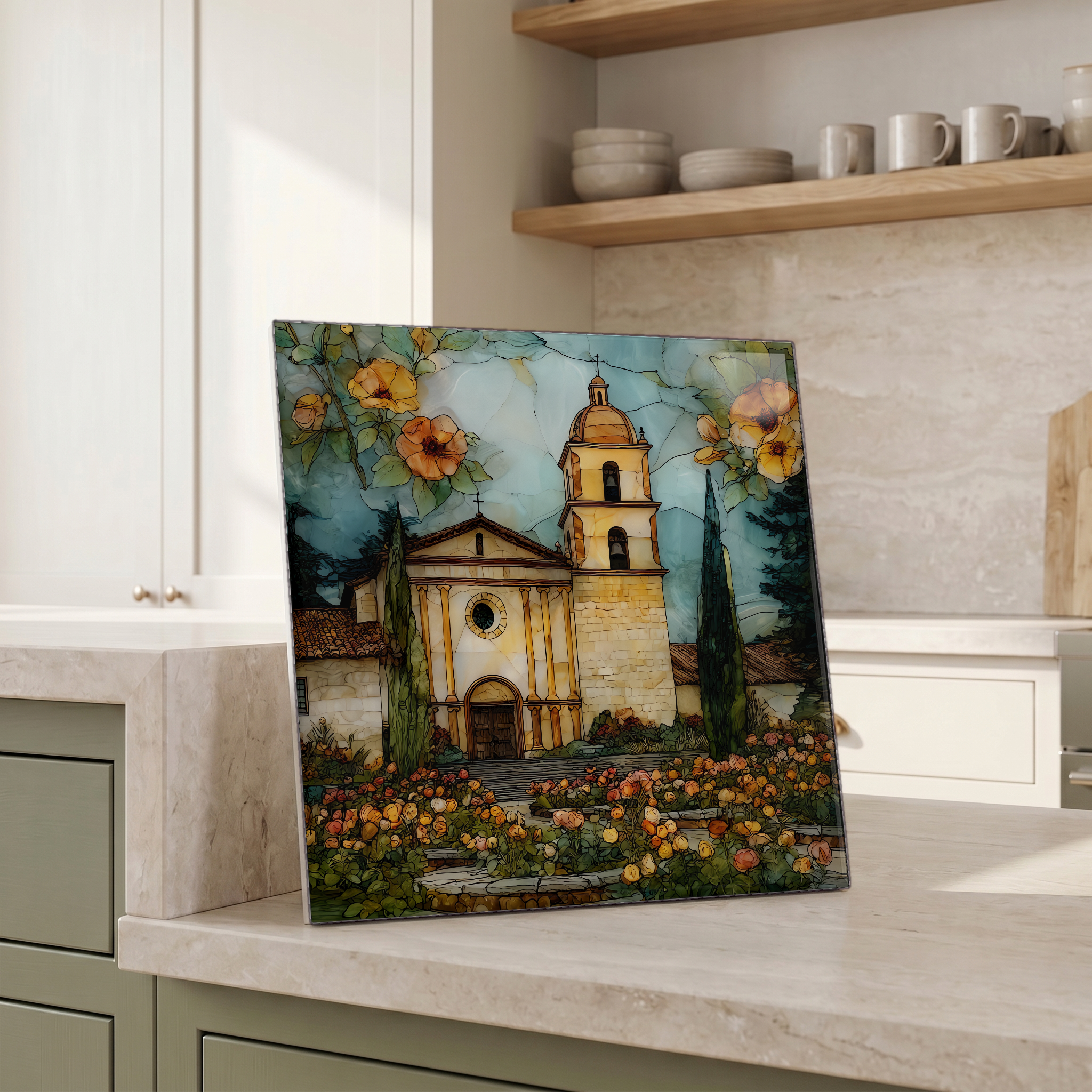
Beside the kettle, propped on the counter.
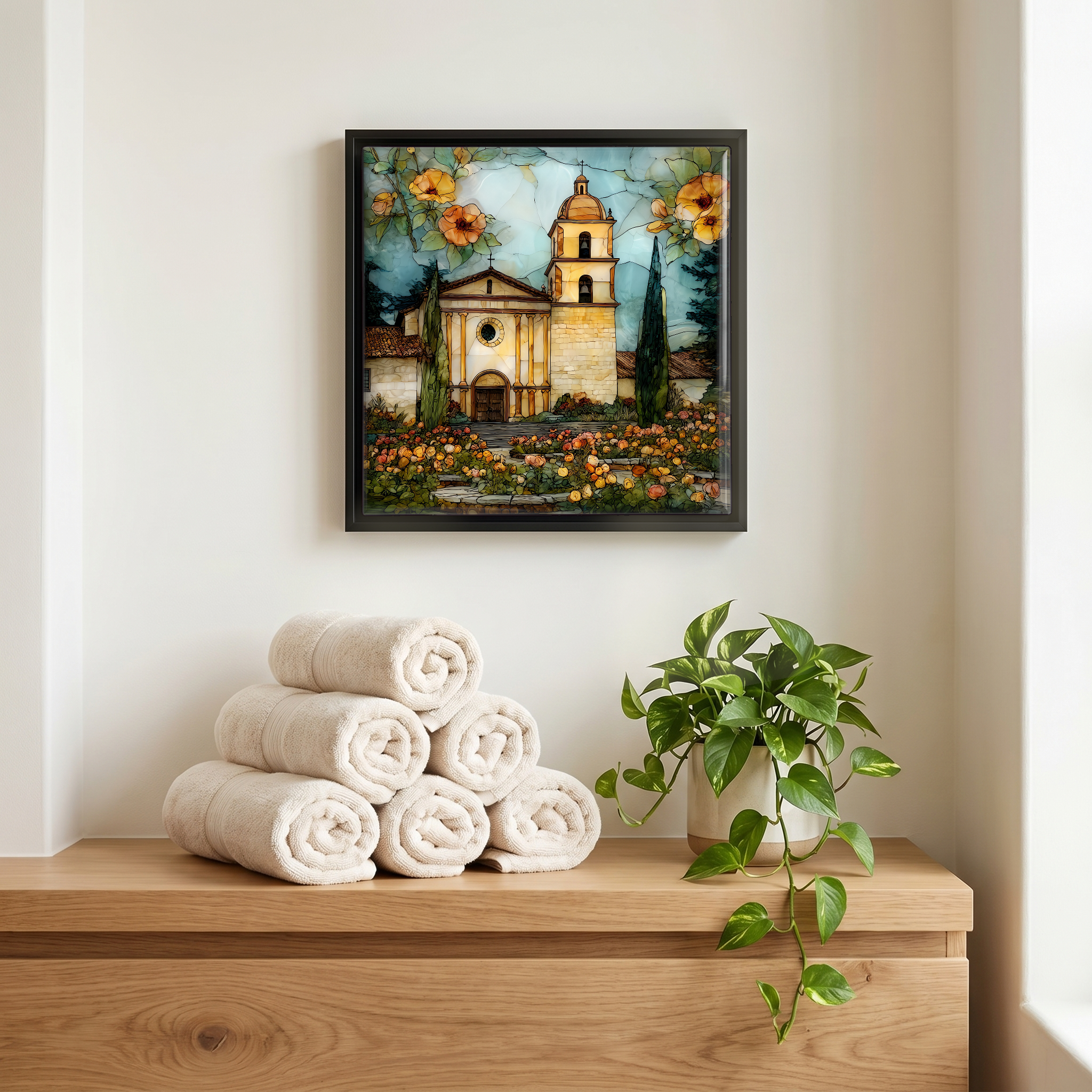
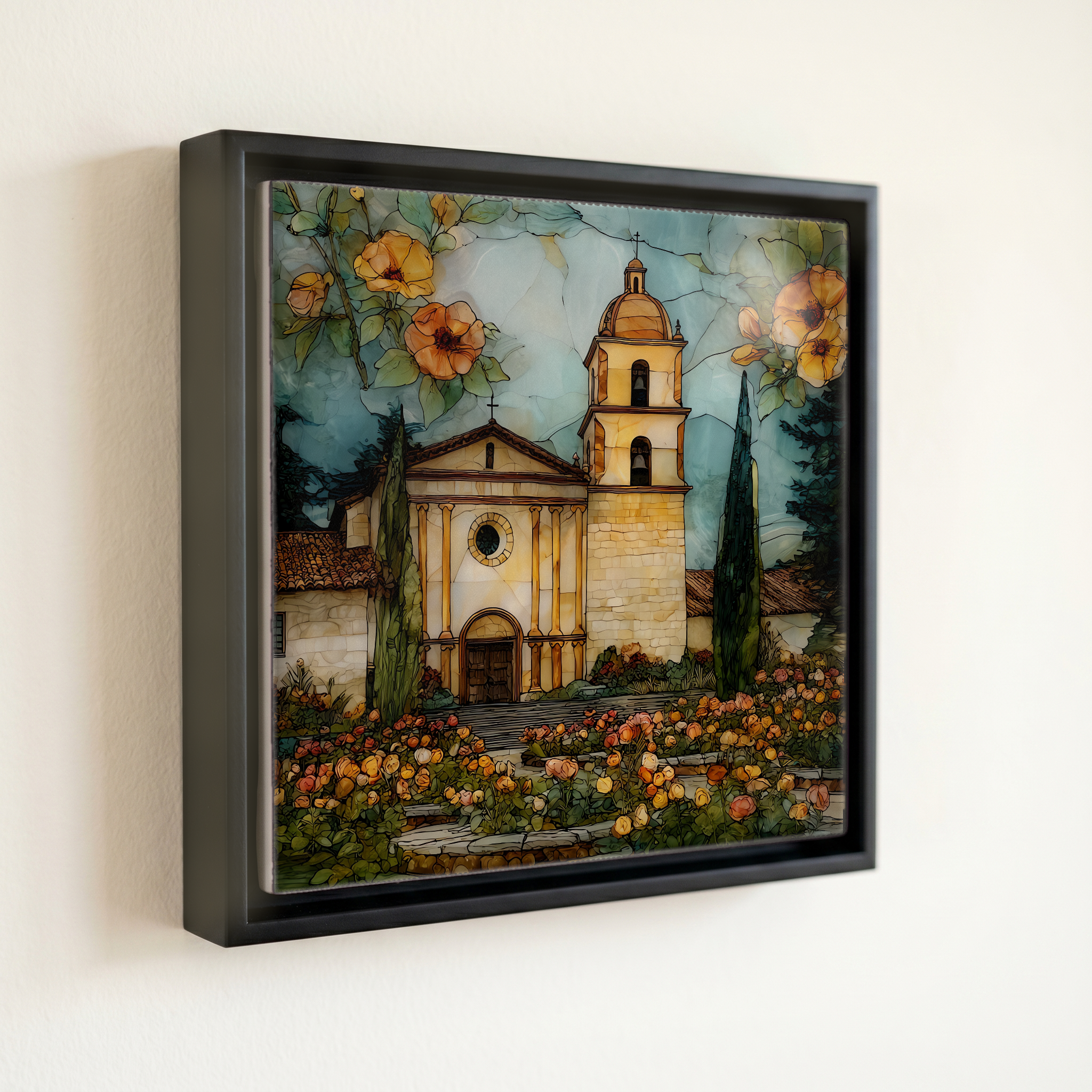
Above the linens, in a slim black surround.
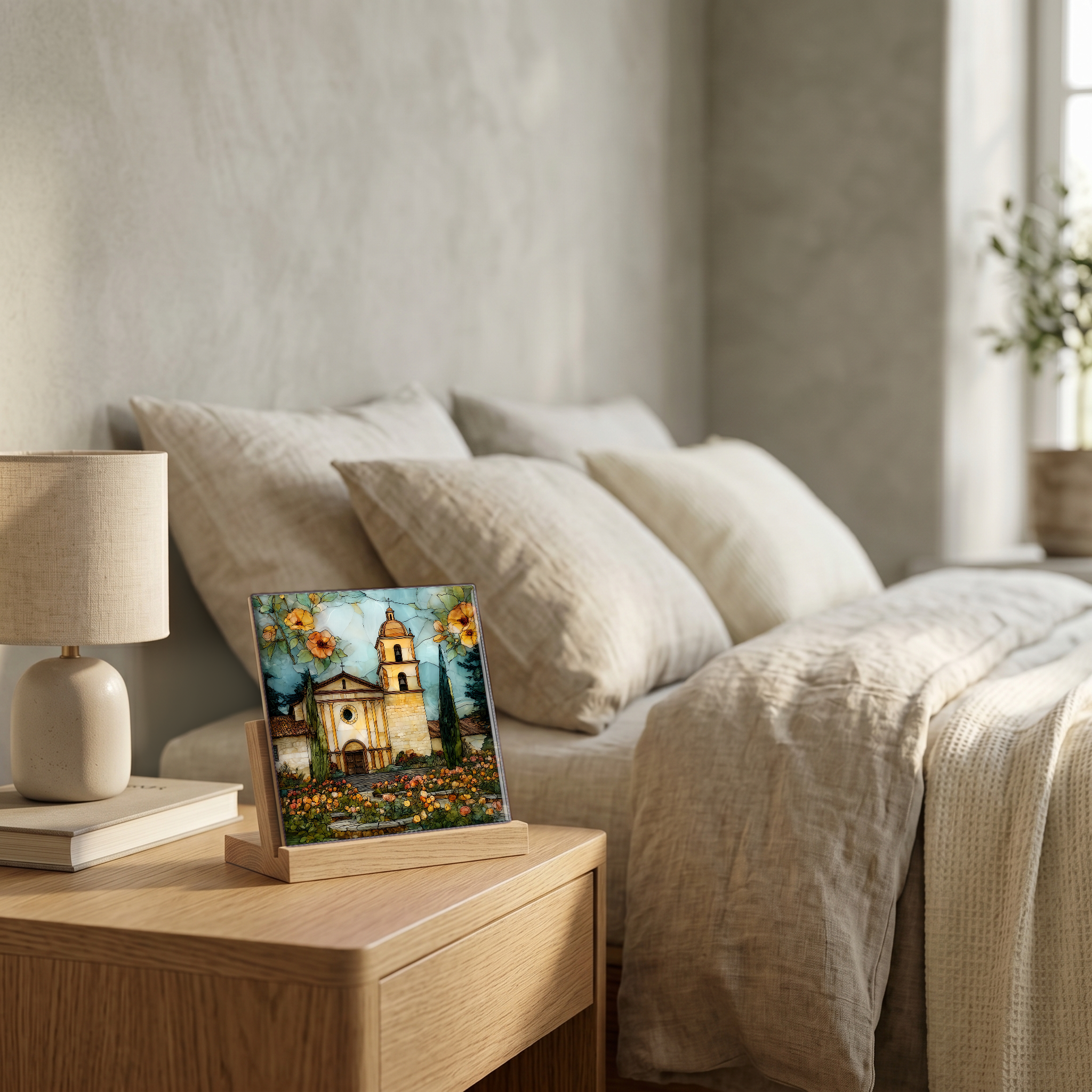
On the nightstand, on a light oak stand.
On a picture ledge, where the light comes in.
a note from the studio

The eighth Spanish mission in California, founded by Franciscan friars in 1777 in the valley south of San Francisco Bay. The current church is the sixth on or near this ground, after the earlier ones fell to floods, earthquakes, and a fire in 1926. The bronze bell at the entrance was cast in 1798 in Mexico City and shipped north to California; it has survived every rebuild. The grounds belong to Santa Clara University now, the oldest operating institution of higher learning in California. The rose garden behind the church is open most afternoons.
from the studio
shown in a slim black floating frame · 6 × 6 in
— bring it home

Mission Santa Clara de Asís, on ceramic.

Each tile is finished by hand in our Knoxville studio. Artwork is slowly infused into the ceramic surface under high heat and pressure, and rests beneath a thin glossy finish. The colour lives in the surface, not on top of it.

What kind of piece?
One tile — square or rectangle.
How big?
the popular one — counter, shelf, nightstand
6 × 6 in · 15 cm · 1.6 lb
Surface finish
A clear glossy finish — the artwork reads as if under resin. Ideal for show-pieces and framed wall art.
How it sits
A hidden cleat — sits ¼″ proud of the wall.
$58
Hand-finished and shipped from our studio at the foot of the Smokies. On your wall in about ten days.
size
6 × 6 in
15 cm
weighs
1.6 lb
solid in the hand
surface
ceramic, hand-finished
art rests beneath a thin glossy finish
from
Knoxville, TN
our family studio, at the foot of the Smokies
— start a Coaster Set

Pick any four 4-inch tiles — National Parks you've been to, a Smokies set, the four seasons of one place. $ for a set of , cork-backed, ready to live on the table.
comes gift-ready
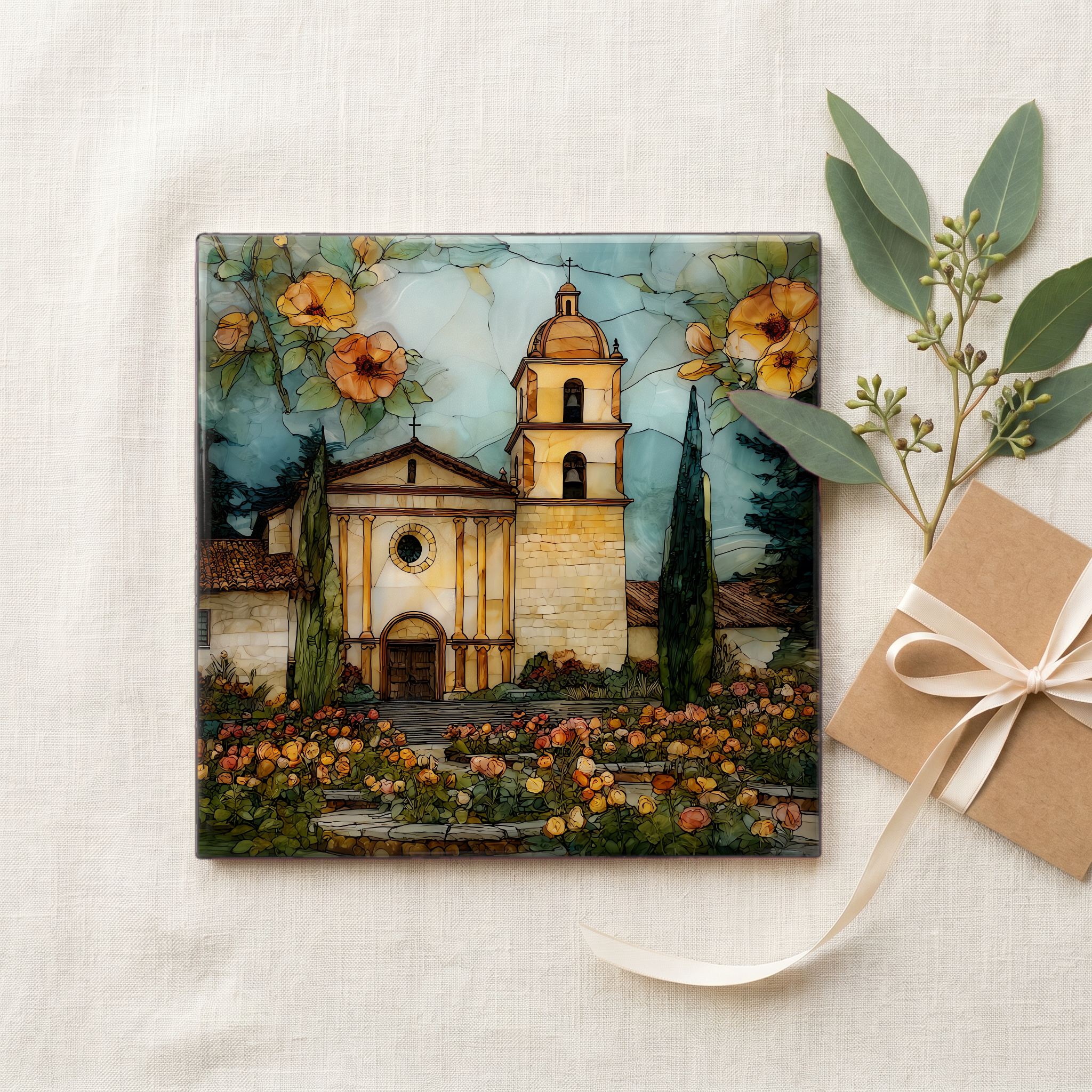
comes gift-ready

Each tile ships in a kraft box, tied with cream ribbon, with a handwritten note from the studio if you'd like to add one.
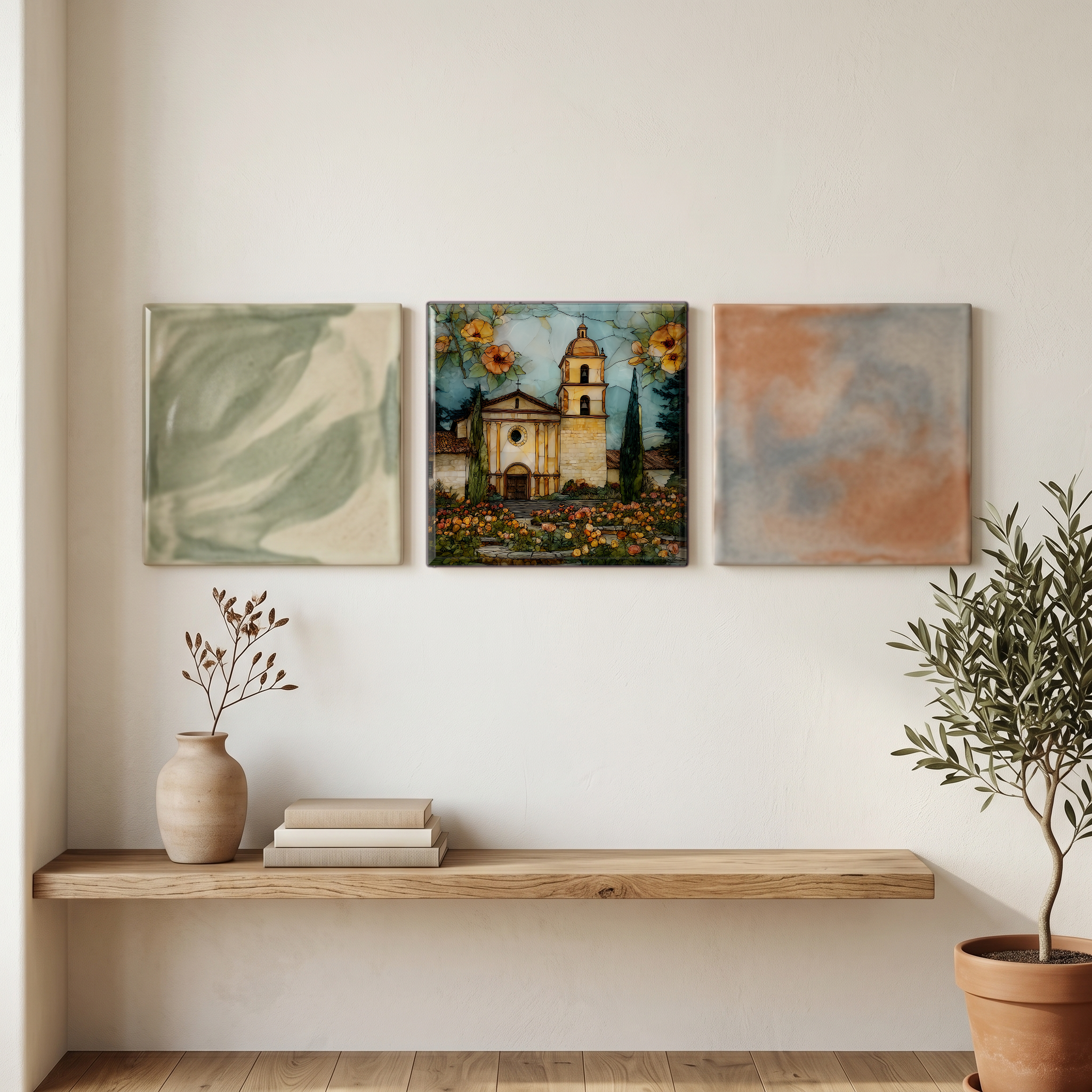
or build a grouping
or build a grouping

Three or five different vistas, hung together — a chapter of places you've been, or want to go.

about Mission Santa Clara de Asís

The place, in three passes.

A little of what's known, in case you fall down the rabbit hole — or want to go see it yourself.
the place

The mission stands on the campus of Santa Clara University in the city of Santa Clara, at the south end of San Francisco Bay, about 75 kilometres south of San Francisco and 65 kilometres north of Monterey. Founded on January 12, 1777, by Father Junípero Serra's Franciscan order, it was the eighth of the twenty-one Spanish missions of Alta California, and the only one later absorbed into a university. The valley floor sits roughly 23 metres above sea level. A long section of the original adobe wall still runs along Palm Drive on the present campus, marking the line of the 1822 quadrangle.

the stone

Six churches have stood on or near this ground. Floods from the Guadalupe River drove the friars off the first site in 1779; earthquakes in 1818 brought down a later one. The 1825 adobe, the fifth church, was lost to fire on the night of October 25, 1926. The bronze bell hanging at the entrance was cast in Mexico City in 1798, a gift of King Carlos IV of Spain, and survived every rebuild. The current church, completed in 1929 in Mission Revival style, is a steel-and-concrete copy of the lost adobe. The wooden cross before the door is a 1976 reproduction; the 1777 original rests in a glass case inside.

the visit

The church functions as both a Catholic parish and the campus chapel of Santa Clara University, which has held classes since 1851. It is open to visitors most days from morning Mass through early evening, outside of liturgies and weddings. There is no admission fee. The historic adobe wall, the rose gardens beside the de Saisset Museum, and the original 1777 wooden cross sheltered inside the church are accessible without a guide. The campus is reached from US-101 or via the Santa Clara Caltrain station, about a ten-minute walk from the front doors. Mass is celebrated daily; the Sunday schedule is posted on the parish website.

where
United States · Santa Clara, California
elevation
23 m · 75 ft
position
37.3494° N · 121.9421° W
the neighborhood

What's nearby.

A handful of named places within an hour's walk or short drive. Some we've already painted; some we will.
at the lake
de Saisset Museum
campus museum
4 km S
Winchester Mystery House
historic house
6 km SE
Cathedral Basilica of St. Joseph
cathedral
20 km NE
Mission San José
Spanish mission
N
Mission Santa Clara de Asís
de Saisset Museum
Winchester Mystery House
Cathedral Basilica of St. Joseph
Mission San José
common questions

What people ask.

A few questions we get about Mission Santa Clara de Asís — and about bringing the piece home.
about the place

The mission stands on the campus of Santa Clara University in Santa Clara, California, at the south end of San Francisco Bay, about 75 kilometres south of San Francisco. It was founded on January 12, 1777, the eighth of twenty-one Spanish missions in Alta California.

The mission was founded by Franciscan friars of Father Junípero Serra's order on January 12, 1777, and named for Saint Clare of Assisi, an early follower of Saint Francis. The first Mass was celebrated by Father Tomás de la Peña.

Six churches have stood on or near this ground. The earliest sites were lost to flooding from the Guadalupe River in 1779 and to earthquakes in 1818 and 1822. The 1825 adobe church burned in a 1926 fire. The current church was completed in 1929.

The bronze bell at the entrance, cast in Mexico City in 1798, is the oldest. It was a gift from King Carlos IV of Spain and has survived every rebuilding of the church. The original 1777 wooden cross from the founding day is preserved inside.

Yes. The mission church sits on the Santa Clara University campus and serves as both a Catholic parish and the university chapel. Santa Clara University, founded in 1851, is the oldest operating institution of higher learning in California.

The church is open to visitors most days, outside of liturgies and weddings, with no admission fee. The historic adobe wall along Palm Drive, the rose gardens beside the de Saisset Museum, and the church interior are all accessible to walk-up visitors.

Mission Revival is a Californian architectural style of the late 1800s and early 1900s that borrowed from Spanish Colonial mission buildings: white plaster walls, red tile roofs, arched arcades, and a low bell wall. The 1929 reconstruction at Santa Clara is built in this style over a steel-and-concrete frame.

about the piece in your home

It has been a meaningful gift for alumni and parents with ties to SCU. The mission church is the visual anchor of the campus, present in countless graduation photos, weddings, and Christmas Masses. A Coaster Set or Small with a handwritten note from the studio carries well.

Yes. The series will eventually cover all twenty-one Alta California missions in the same visual language. Pairing the Santa Clara tile with Mission Carmel, San Juan Bautista, or San Diego de Alcalá makes a small wall set; the Medium size suits a grouping.

The colour reads warm earth and stained-glass jewel tones, so it sits well with California Mediterranean, Spanish Revival, Mission, and Craftsman interiors. It also holds against quieter modern rooms when paired with terracotta, wrought iron, or aged oak.

Above a standard sofa or console, the Large reads as a single statement piece, the 4-tile Mural fills the wall above a longer sofa, and the 9-tile Mural covers the full width above a sectional. We can advise sizing if you send dimensions.

Yes, with the Dura Satin or Matte finish. Both are scratch-resistant and humidity-tolerant for backsplashes, shower walls, and powder rooms. The Glossy finish is intended for framed wall art and dry-room display.

A microfibre cloth and water are enough. The colour is slowly infused into the ceramic surface under high heat and pressure and lives beneath a thin glossy finish, so it will not lift with normal household cleaning. Avoid abrasive pads.

Yes. Every tile in the WenderVista atlas is hand-curated and produced in our Knoxville studio. We do not license images in or out. The Santa Clara piece was chosen and finished by Reid Wender, the studio's curator.

if this one stayed with you

A few you might also love.

Hand-picked by the eye that found Sorapis. Same air, same kind of quiet.