Wender·Vista
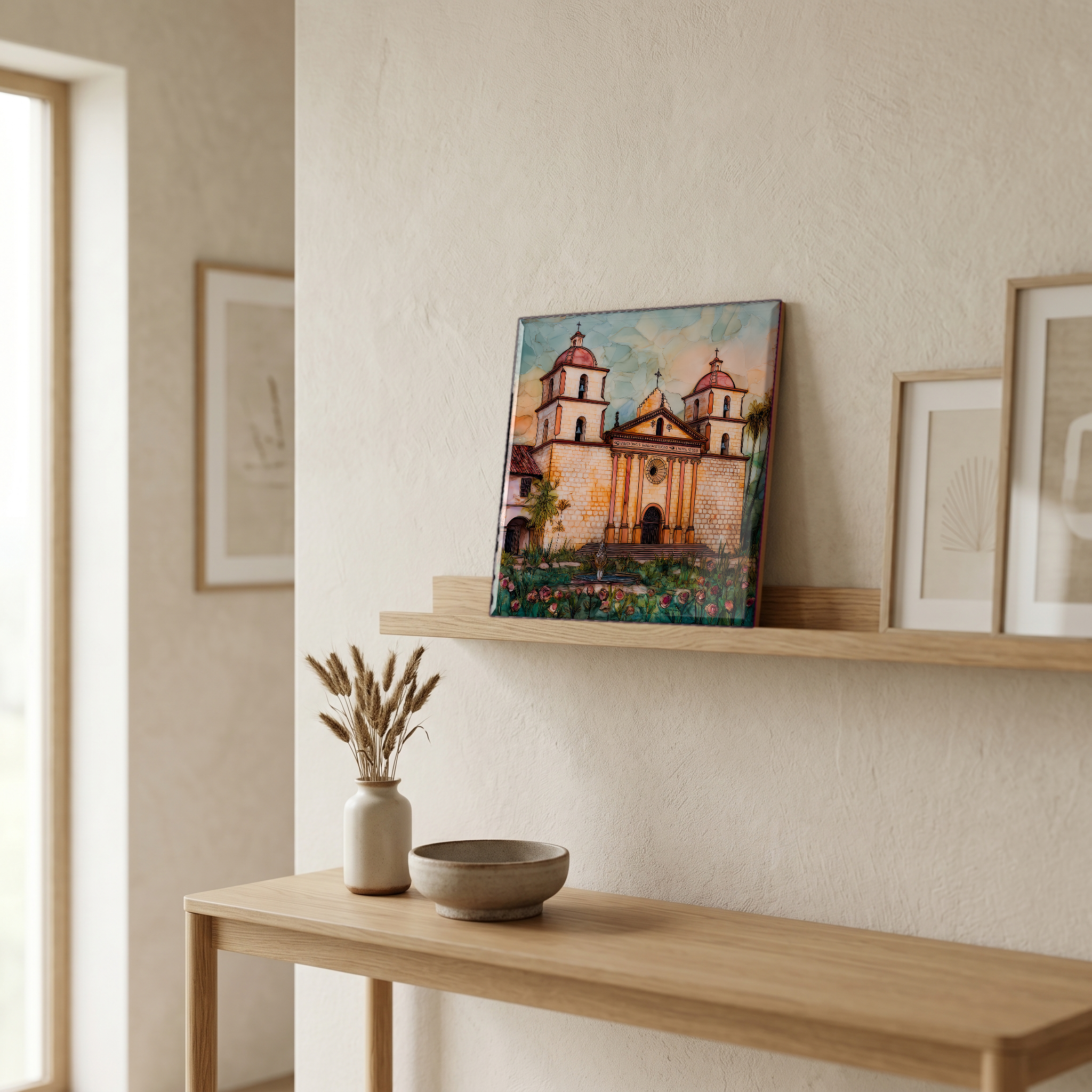
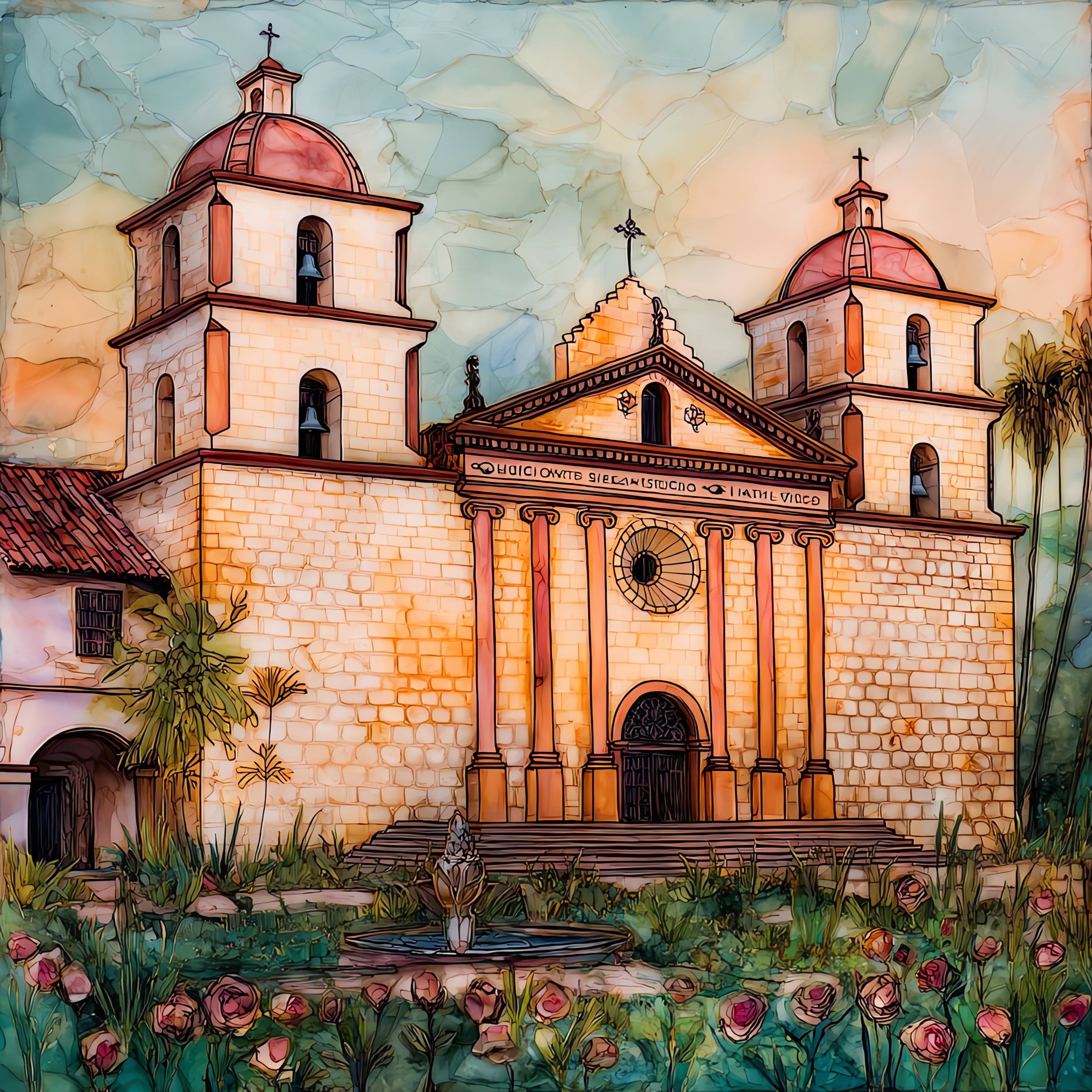
Mission Santa Barbara
shown on ceramic, 12-inch tileCalifornia · United States
above the city, in the foothills

Mission Santa Barbara

the late light on both towers at once.

Where it lives

Not only on a wall.

A small tile on the nightstand catching the morning. A larger one above the fire. Yours, wherever you spend the slow hours.
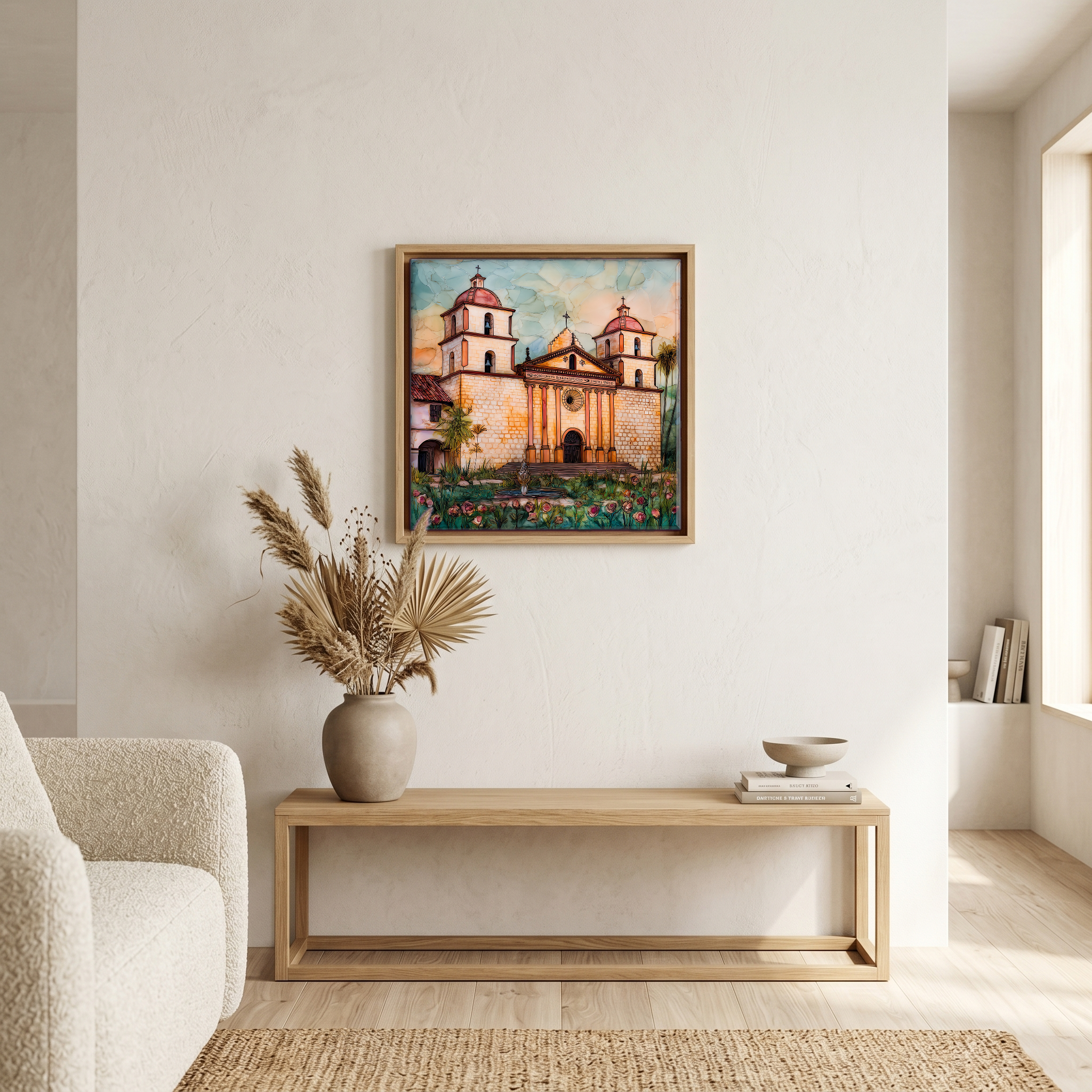
Above the bench, in a warm oak surround.
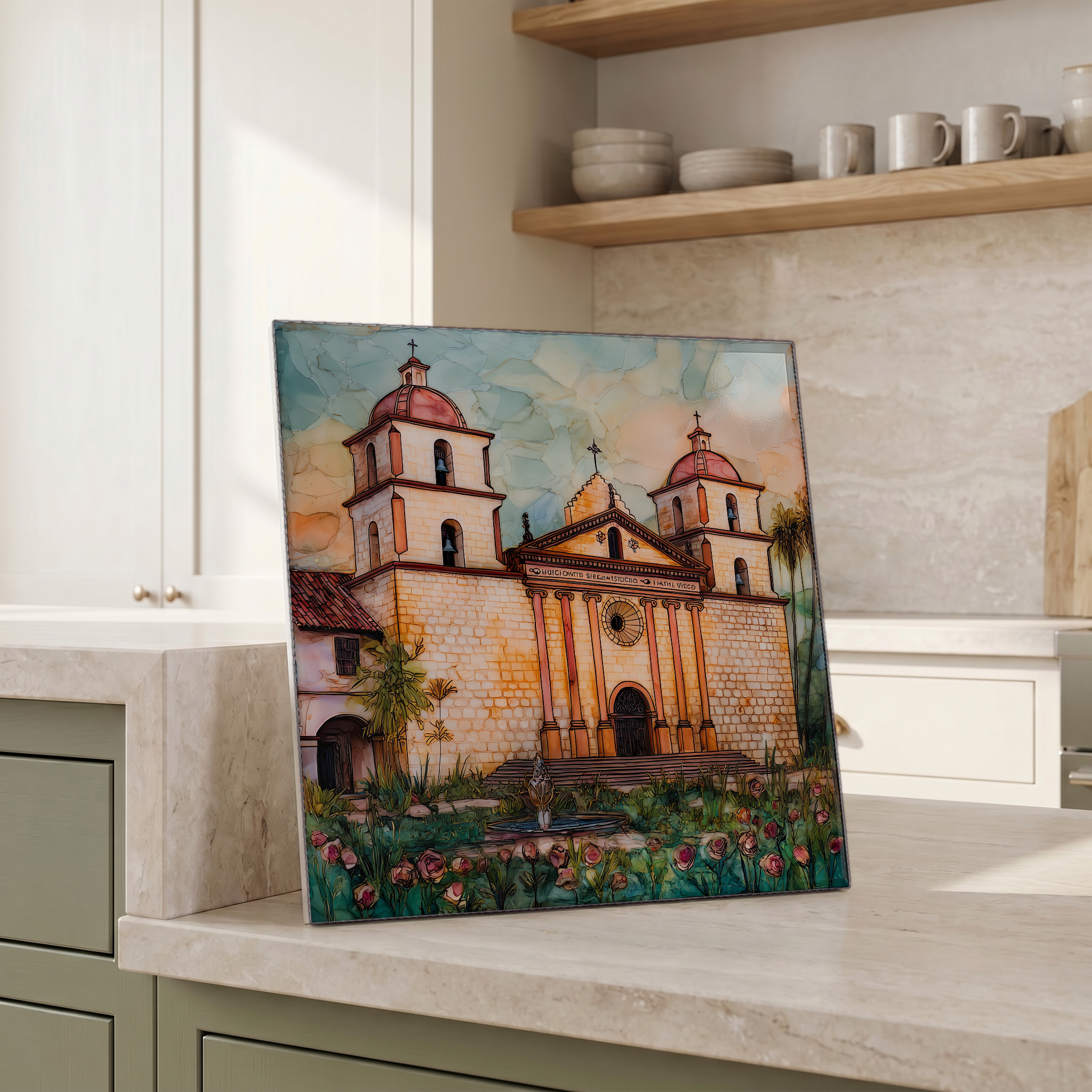
Beside the kettle, propped on the counter.
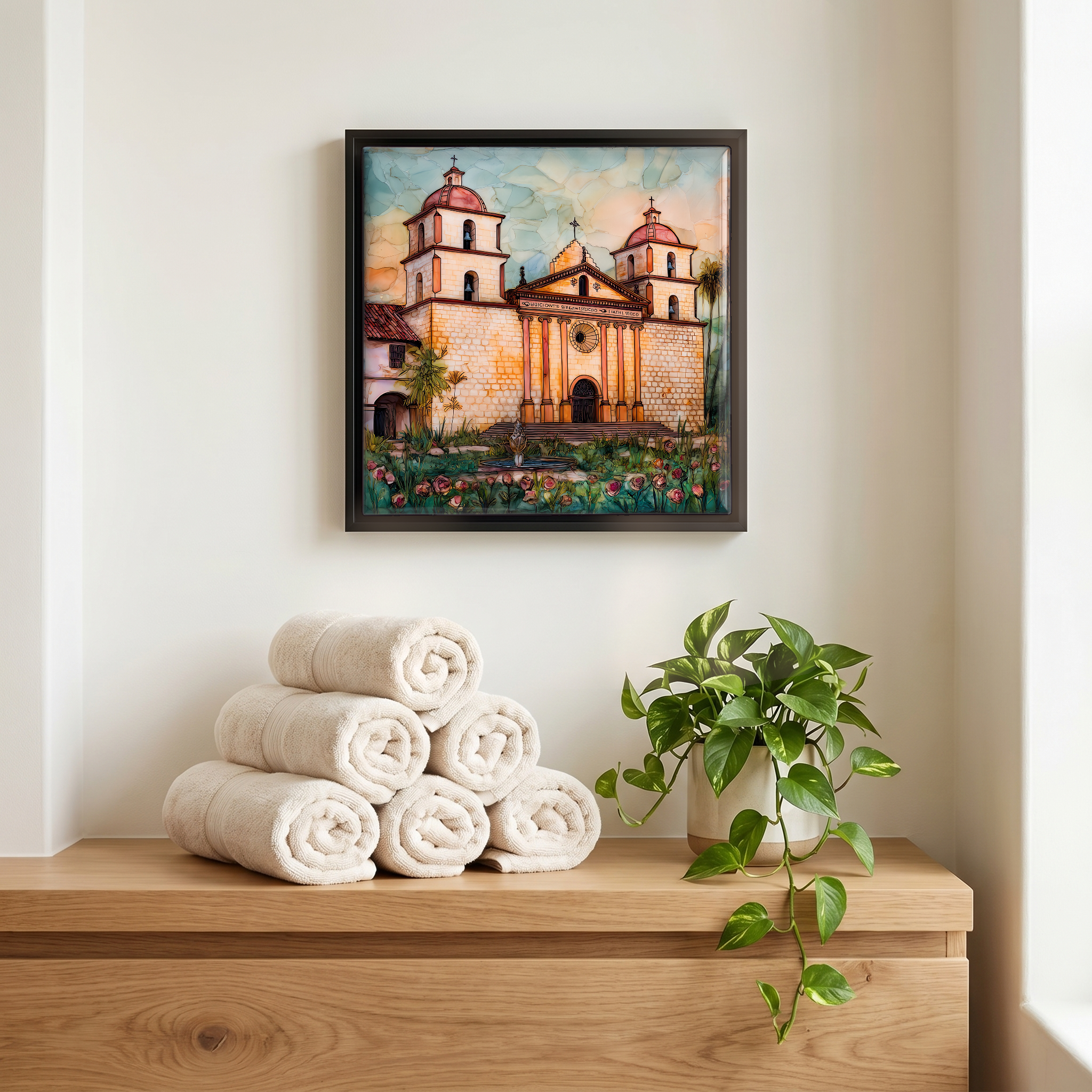
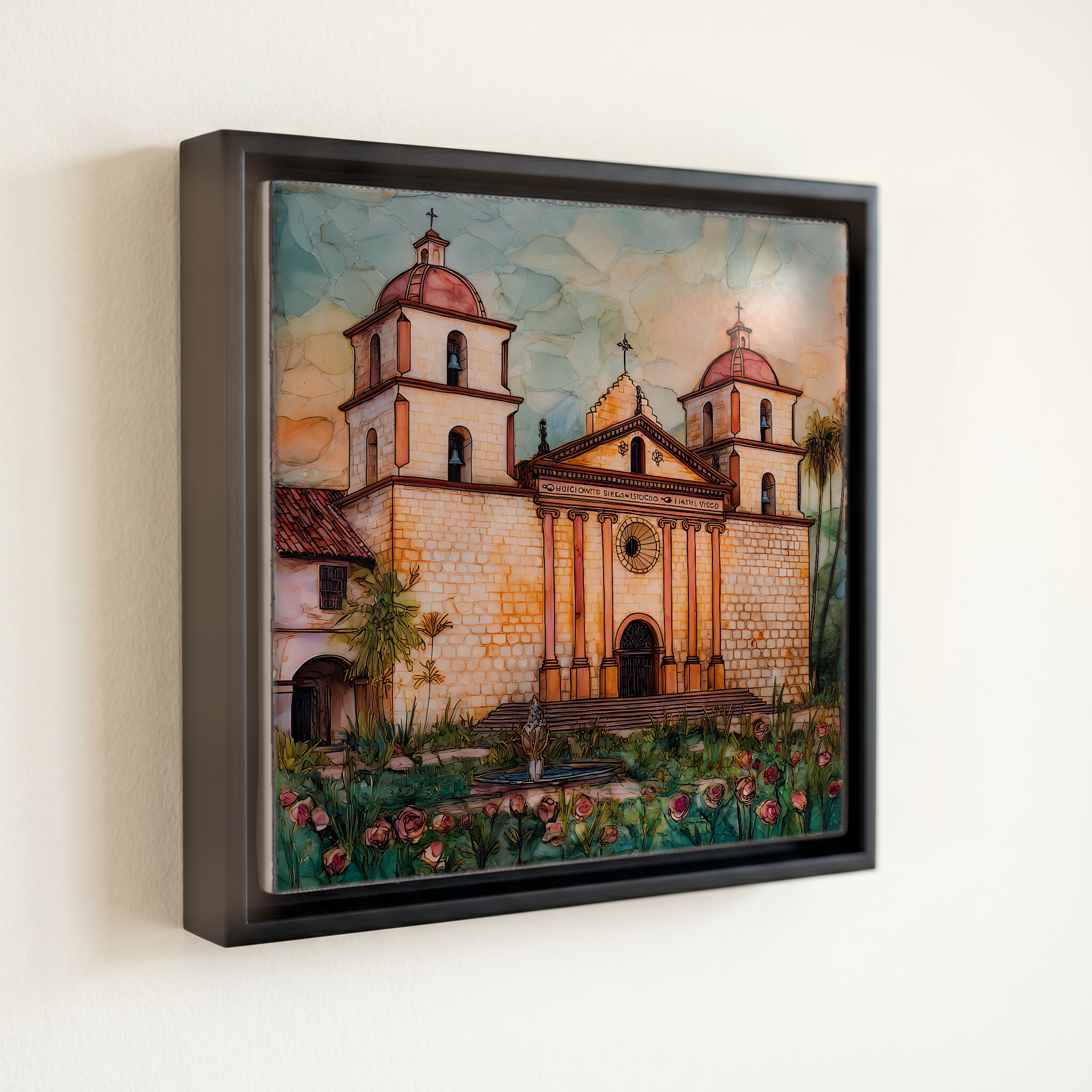
Above the linens, in a slim black surround.
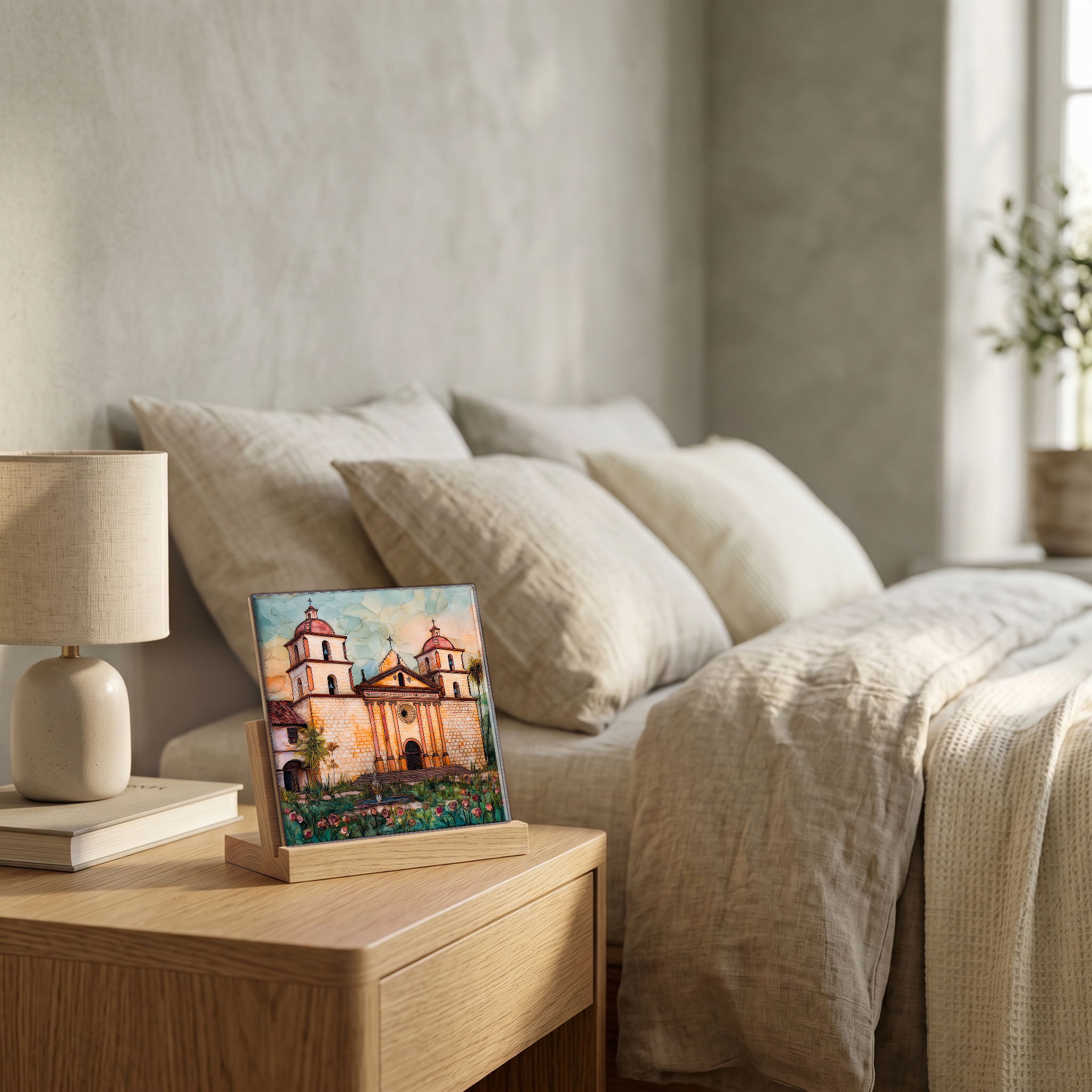
On the nightstand, on a light oak stand.
On a picture ledge, where the light comes in.
a note from the studio

The tenth of California's twenty-one Franciscan missions, and the only one with two bell towers. The sandstone facade, quarried from a canyon behind the church, turns rose in the late afternoon. Founded in 1786, the mission has been in continuous use by the Franciscan order ever since, the longest such tenure in California. Across Laguna Street, an old rose garden. The bells sound across the lawn at the hour. They call it the Queen of the Missions.
from the studio
shown in a slim black floating frame · 6 × 6 in
— bring it home

Mission Santa Barbara, on ceramic.

Each tile is finished by hand in our Knoxville studio. Artwork is slowly infused into the ceramic surface under high heat and pressure, and rests beneath a thin glossy finish. The colour lives in the surface, not on top of it.

What kind of piece?
One tile — square or rectangle.
How big?
the popular one — counter, shelf, nightstand
6 × 6 in · 15 cm · 1.6 lb
Surface finish
A clear glossy finish — the artwork reads as if under resin. Ideal for show-pieces and framed wall art.
How it sits
A hidden cleat — sits ¼″ proud of the wall.
$58
Hand-finished and shipped from our studio at the foot of the Smokies. On your wall in about ten days.
size
6 × 6 in
15 cm
weighs
1.6 lb
solid in the hand
surface
ceramic, hand-finished
art rests beneath a thin glossy finish
from
Knoxville, TN
our family studio, at the foot of the Smokies
— start a Coaster Set

Pick any four 4-inch tiles — National Parks you've been to, a Smokies set, the four seasons of one place. $ for a set of , cork-backed, ready to live on the table.
comes gift-ready
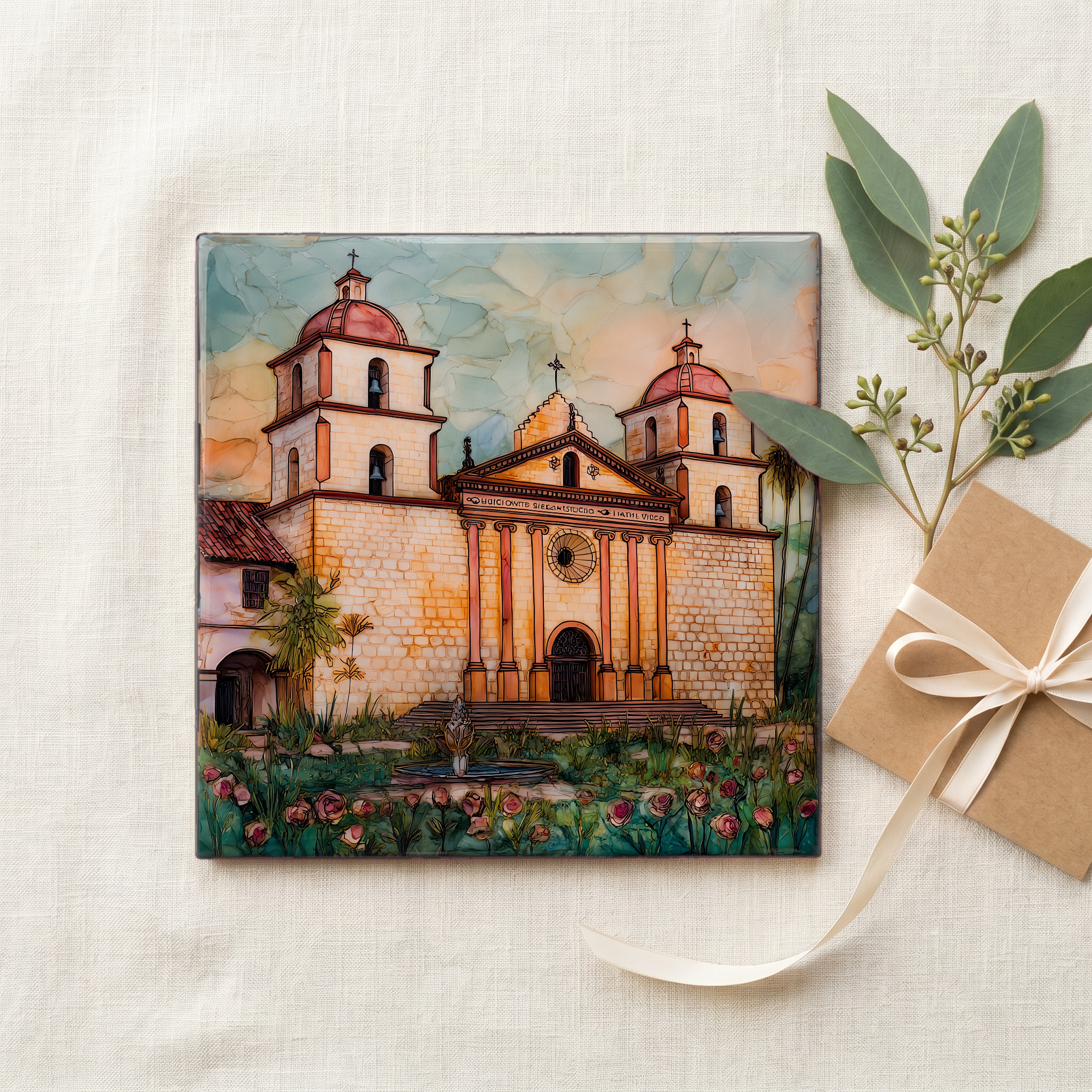
comes gift-ready

Each tile ships in a kraft box, tied with cream ribbon, with a handwritten note from the studio if you'd like to add one.
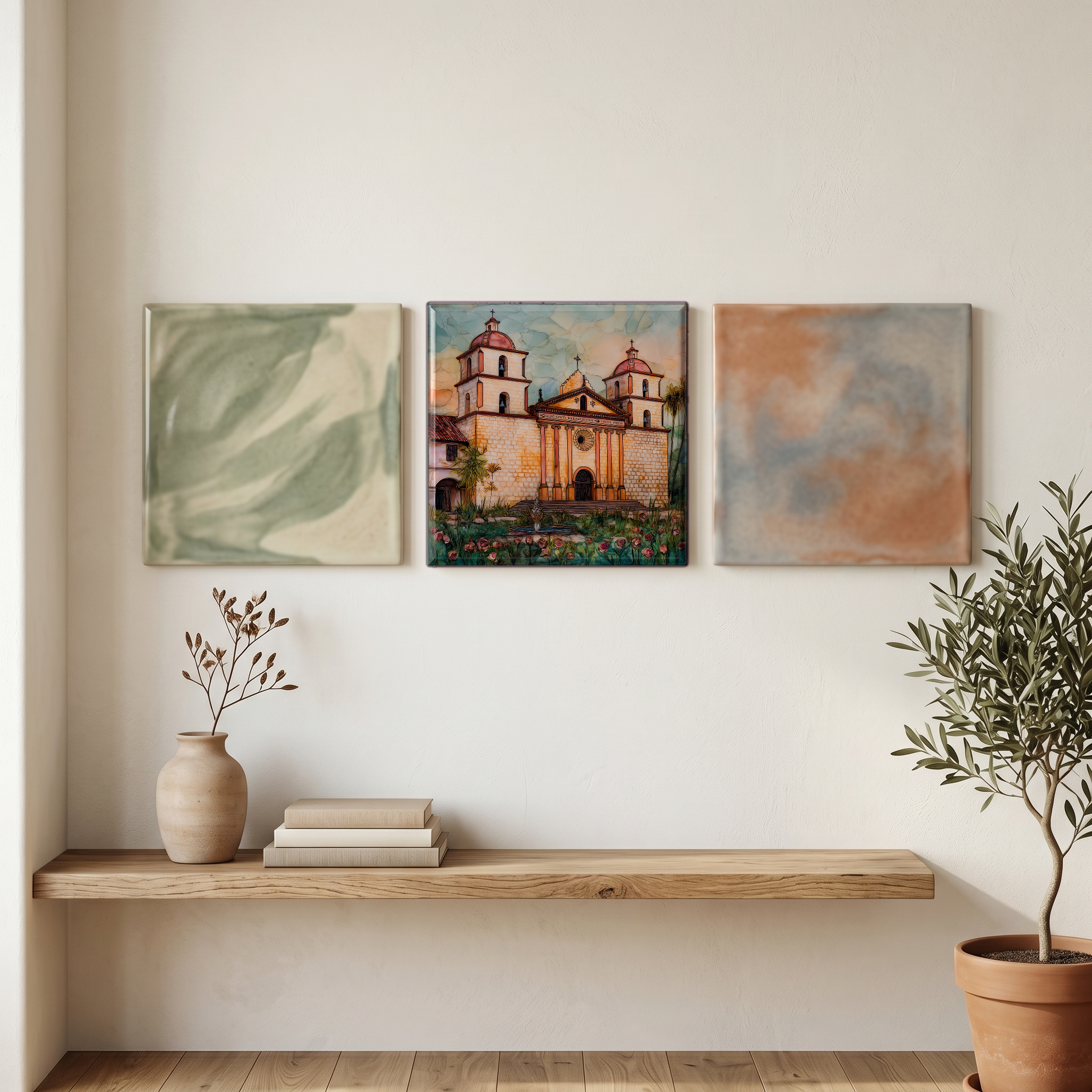
or build a grouping
or build a grouping

Three or five different vistas, hung together — a chapter of places you've been, or want to go.

about Mission Santa Barbara

The place, in three passes.

A little of what's known, in case you fall down the rabbit hole — or want to go see it yourself.
the place

Mission Santa Barbara sits on a low rise in the foothills of the Santa Ynez Mountains, just inland from the Pacific and roughly ninety miles northwest of Los Angeles. It is the tenth of twenty-one Franciscan missions founded along the California coast between 1769 and 1823, established on December 4, 1786 by Father Fermín de Lasuén. The current church, the fourth on the site, was dedicated in 1820 and is the only California mission with two bell towers. The grounds include a working friary, a Chumash cemetery, a museum, and the long colonnaded corridor that fronts the courtyard. The address is 2201 Laguna Street, in the city of Santa Barbara.

the stone

The facade is local sandstone, quarried from the foothills behind the church. The design follows a 1787 Spanish edition of Vitruvius, the Roman treatise on architecture, that the Franciscans kept on the shelf at the friary, a rare instance of Roman pattern-book classicism translating directly into a New World church. The twin bell towers, completed in 1820, set the church apart from the other twenty California missions. The 1925 Santa Barbara earthquake brought both towers down; the Franciscan order rebuilt them by 1927 using salvaged stone and the original plans. The sandstone reads pale in noon light and rose in the long afternoon.

the visit

The mission is open daily as both a museum and an active parish church; self-guided tours pass through the church, the cemetery, the old kitchen, and a small museum of mission-era artefacts. The Franciscan order has held the site continuously since 1786, the longest unbroken religious tenure of any California mission. Mass is held daily; the cemetery holds more than four thousand Chumash and Spanish settlers. Across Laguna Street, the A.C. Postel Memorial Rose Garden, planted in 1955, is part of Mission Historical Park and is free to enter. The light on the facade is best in the hour before sunset, when the pale sandstone goes rose.

where
United States · Santa Barbara, California
position
34.4386° N · 119.7136° W
the neighborhood

What's nearby.

A handful of named places within an hour's walk or short drive. Some we've already painted; some we will.
0.1 km S
A.C. Postel Memorial Rose Garden
rose garden
1 km N
Santa Barbara Museum of Natural History
museum
3 km N
Santa Barbara Botanic Garden
botanical garden
2 km SE
Santa Barbara Courthouse
civic landmark
3 km S
Stearns Wharf
wharf
3 km SW
Santa Barbara Harbor
harbor
N
Mission Santa Barbara
A.C. Postel Memorial Rose Garden
Santa Barbara Museum of Natural History
Santa Barbara Botanic Garden
Santa Barbara Courthouse
Stearns Wharf
Santa Barbara Harbor
common questions

What people ask.

A few questions we get about Mission Santa Barbara — and about bringing the piece home.
about the place

Mission Santa Barbara sits in the foothills of the Santa Ynez Mountains, just inland from the Pacific coast, at 2201 Laguna Street in Santa Barbara, California. The grounds are roughly ninety miles northwest of Los Angeles and a hundred miles southeast of San Luis Obispo.

Mission Santa Barbara is the only one of California's twenty-one Franciscan missions with two bell towers. The symmetry of its sandstone facade, modelled on a 1787 Spanish edition of the Roman architect Vitruvius, earned the church the nickname soon after the current building was dedicated in 1820.

The mission was founded on December 4, 1786 by Father Fermín de Lasuén, the second president of the Alta California mission chain. It is the tenth of twenty-one missions established between 1769 and 1823, and Franciscans have held the site without interruption since.

The facade and walls are local sandstone, quarried from the foothills behind the church. The roof tiles are hand-formed clay. Most of the original labour was Chumash, working under the Franciscan order through the late eighteenth and early nineteenth centuries.

Yes. Mission Santa Barbara is both a working Franciscan friary and an active parish church, and has been continuously occupied by the Franciscan order since 1786, the longest such tenure of any California mission. The museum, church, and cemetery are open daily for visitors.

The grounds are open daily; the light on the sandstone facade is best in the hour before sunset, when the pale stone goes rose. The A.C. Postel Memorial Rose Garden across Laguna Street is at peak bloom from April through October.

The Santa Barbara earthquake on June 29, 1925 brought down both bell towers and damaged the facade. The Franciscan order rebuilt them by 1927 using salvaged sandstone and the original 1820 plans. The rebuilt design is what visitors see today.

about the piece in your home

It has been a favourite gift for our customers with Santa Barbara roots. The mission is one of the city's most loved landmarks, and the twin-tower silhouette reads instantly to anyone who has lived there. A Keepsake or Small with a handwritten note from the studio carries well.

The piece reads warm, with rose sandstone and a deep California sky. It sits naturally in Spanish-Colonial-revival, Mission-style, and California-Coastal interiors, and grounds neutral or beige rooms with a strong specific note of place. The deeper jewel tones in the artwork also work alongside Maximalist palettes.

Yes. Spanish-Colonial-revival is in a long cycle of return in California-Coastal and Southwestern interiors, and Mission Santa Barbara is one of the defining buildings of the original style. A Medium or Large above a console or a fireplace pulls the room in that direction without overdoing it.

Above a sofa, a single Large or a four-tile Mural reads from across the room; for a long wall, a nine-tile Mural in a three-by-three layout gives the piece real presence. Above a narrow console, a Medium is the right scale.

Yes. Order the Dura Satin or Matte finish for kitchens, bathrooms, showers, and backsplashes; the colour is slowly infused into the ceramic surface under high heat and pressure and will not lift in steam or water. The Glossy finish is for framed wall pieces.

A microfibre cloth and warm water. The colour lives in the ceramic surface itself, beneath a thin glossy or satin finish, so daily wiping does not affect it. Avoid abrasive scrubs and strong bleach; neither is needed for ordinary cleaning.

Yes. Every WenderVista piece is original to the studio. Reid Wender, the curator, chooses the places and the visual treatment; the work is hand-finished at the Knoxville studio and is not licensed or syndicated from any other source.

if this one stayed with you

A few you might also love.

Hand-picked by the eye that found Sorapis. Same air, same kind of quiet.