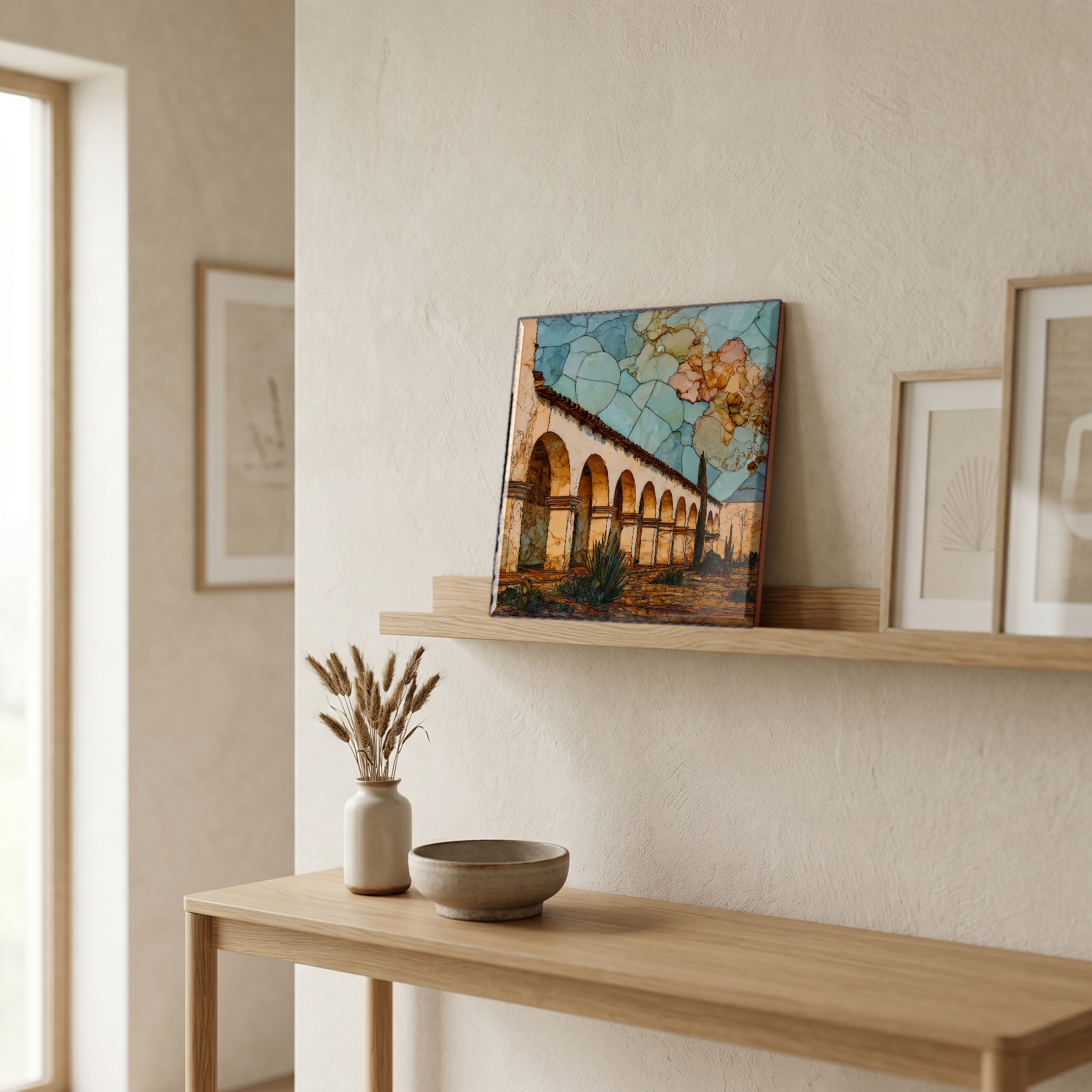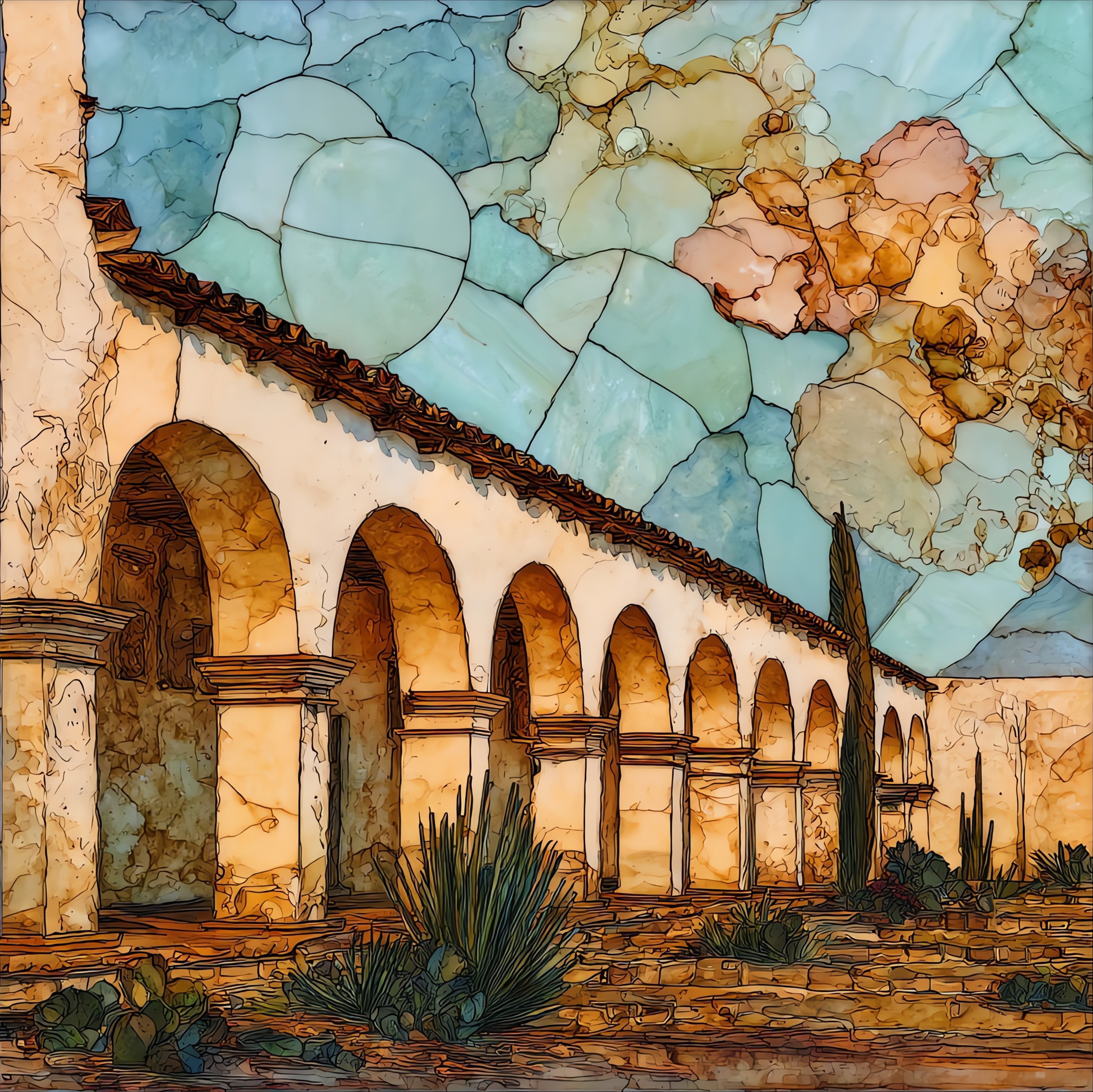
Wender·Vista
Mission San Miguel Arcángel
shown on ceramic, 12-inch tileCalifornia · United States
on the old Camino Real, north of Paso Robles

Mission San Miguel Arcángel

the paint that stayed two hundred years.

Where it lives

Not only on a wall.

A small tile on the nightstand catching the morning. A larger one above the fire. Yours, wherever you spend the slow hours.
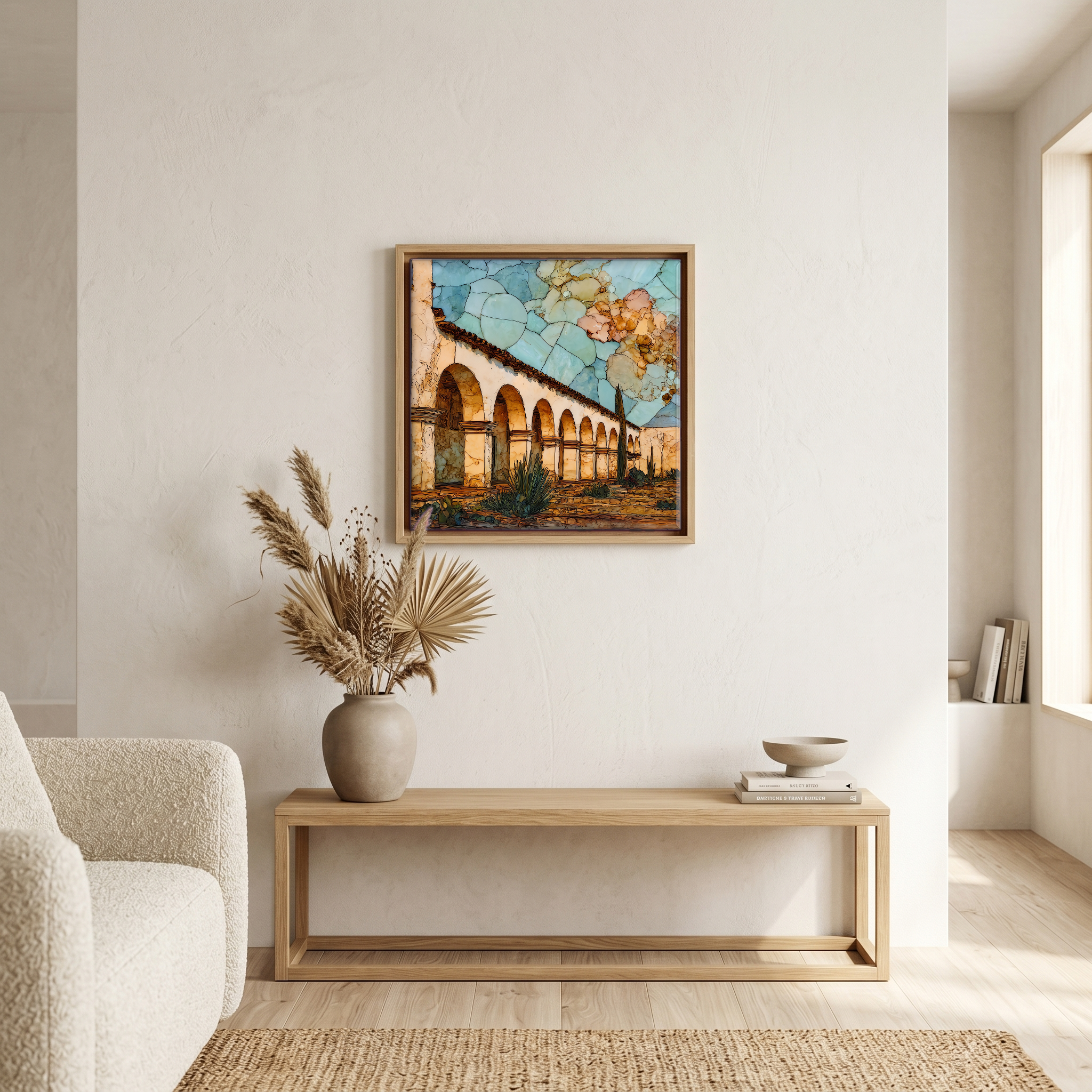
Above the bench, in a warm oak surround.
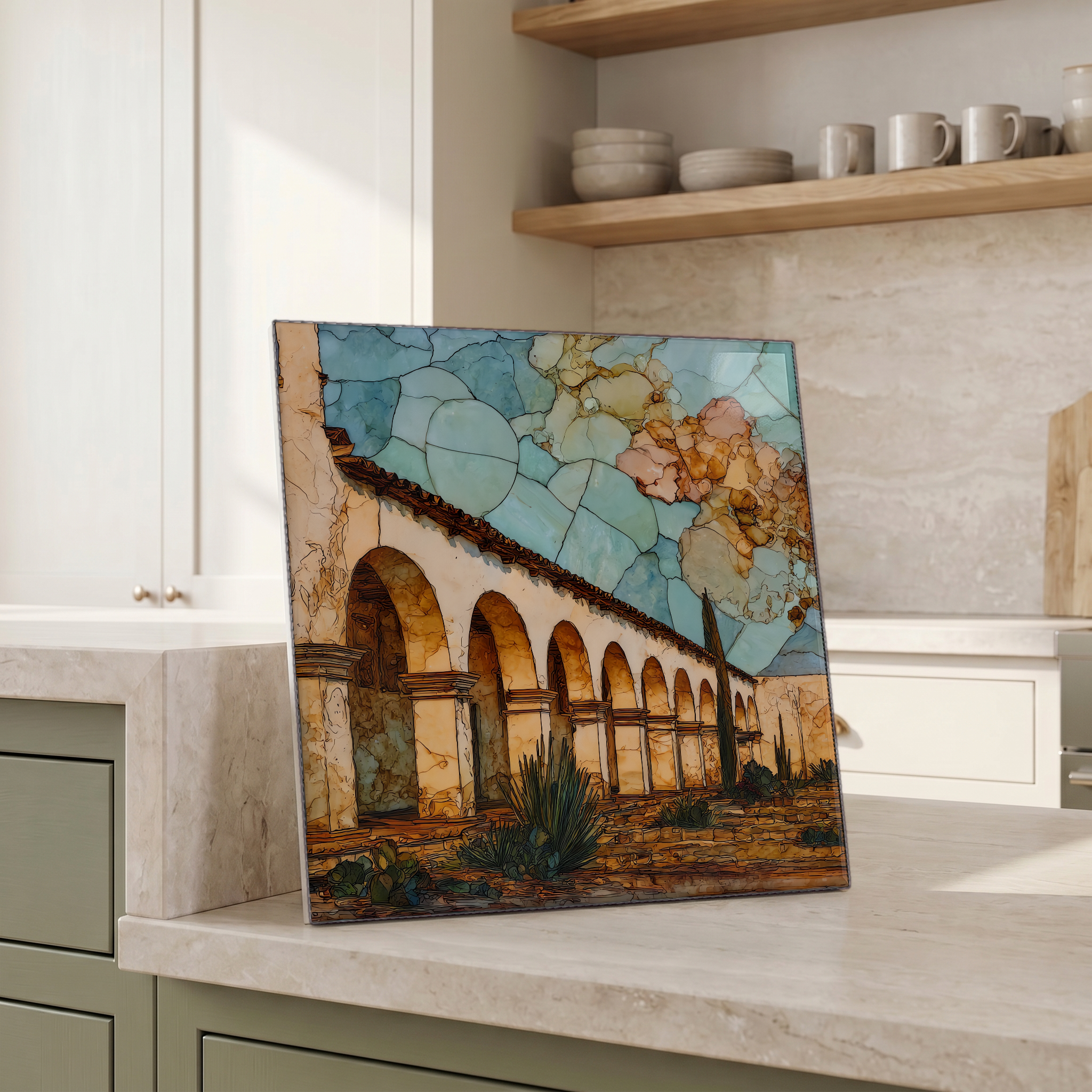
Beside the kettle, propped on the counter.
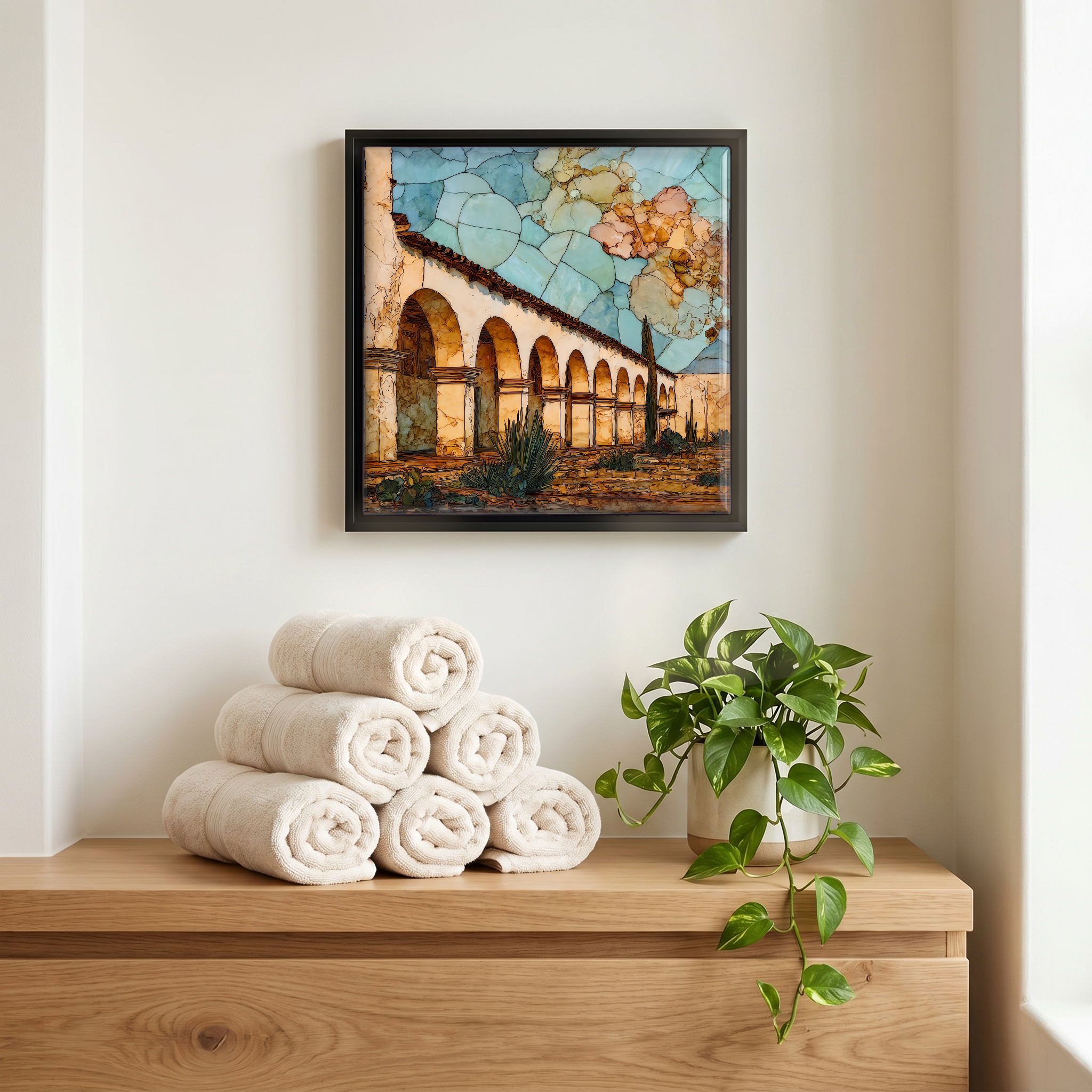
Above the linens, in a slim black surround.
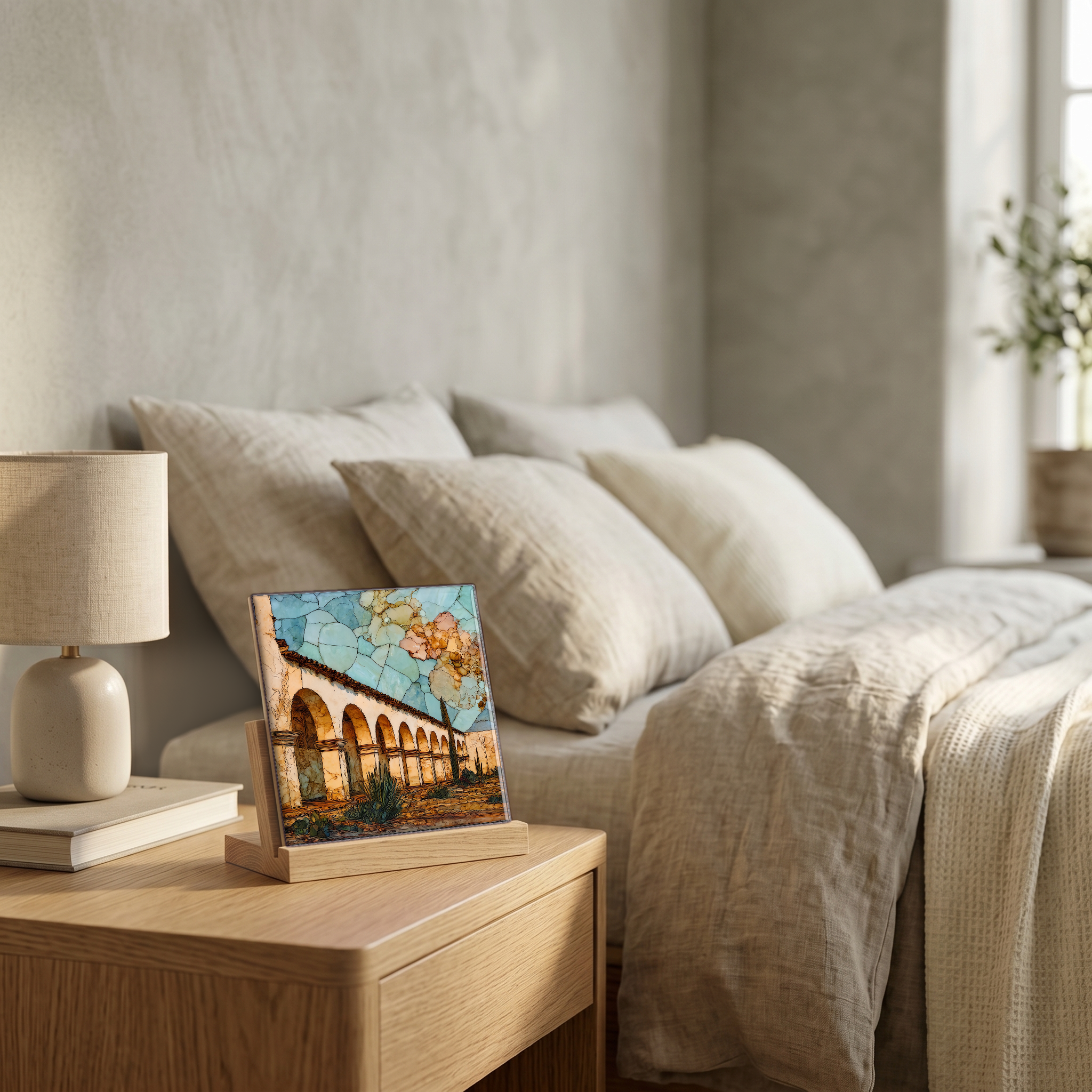
On the nightstand, on a light oak stand.
On a picture ledge, where the light comes in.
a note from the studio

A small adobe church on the old Camino Real, north of Paso Robles, in a town that is mostly the mission and the road. The interior is what people come for. Frescoes painted in 1821 by Esteban Munras and a circle of Salinan craftsmen, the only mission interior in California that was never repainted over its first colour. The friars still live next door. The cemetery holds the men and women who built the place. Outside, the Salinas Valley does what the Salinas Valley does in summer: bleached gold and quiet, with the long arcade of arches throwing shade against the heat.
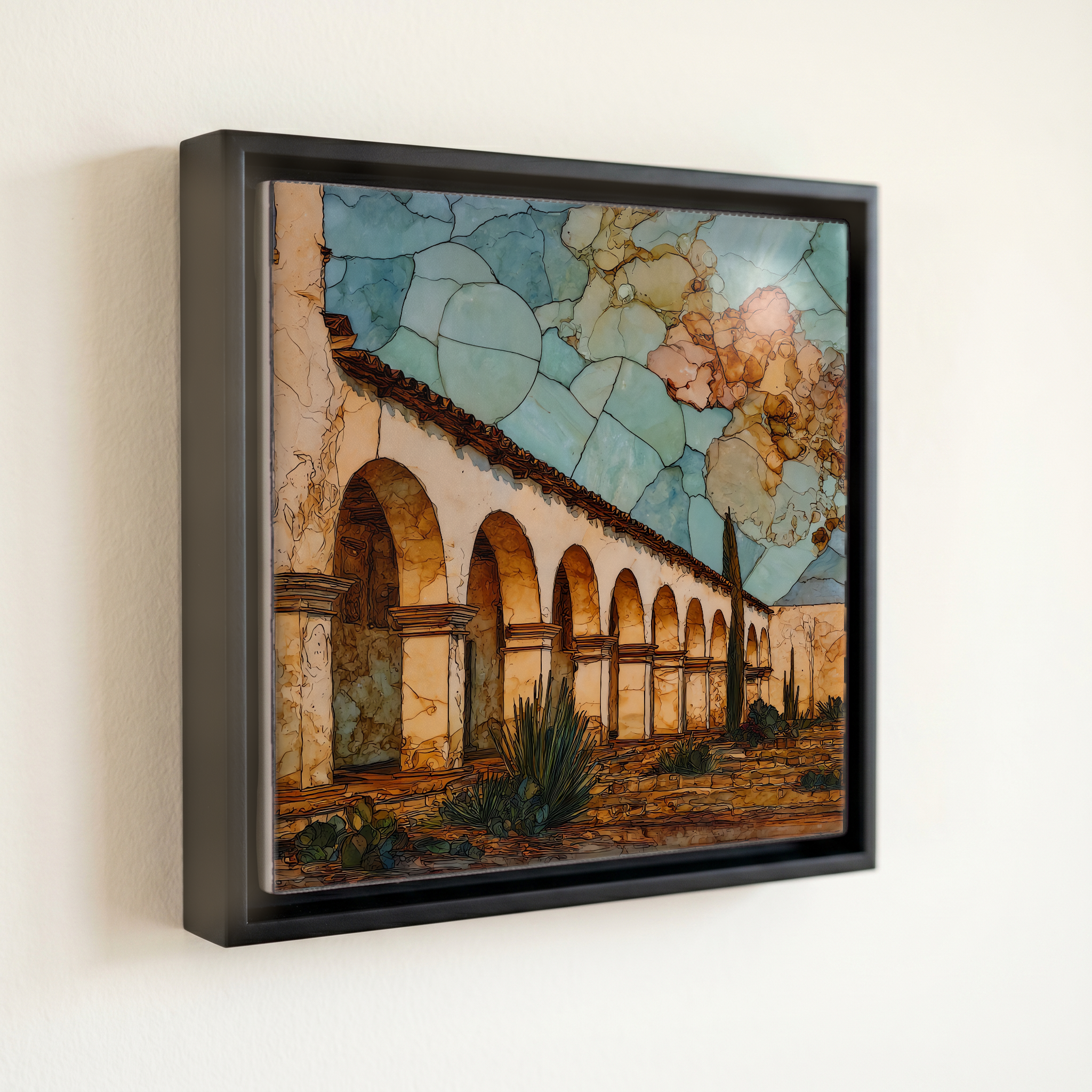
from the studio
shown in a slim black floating frame · 6 × 6 in
— bring it home

Mission San Miguel Arcángel, on ceramic.

Each tile is finished by hand in our Knoxville studio. Artwork is slowly infused into the ceramic surface under high heat and pressure, and rests beneath a thin glossy finish. The colour lives in the surface, not on top of it.

What kind of piece?
One tile — square or rectangle.
How big?
the popular one — counter, shelf, nightstand
6 × 6 in · 15 cm · 1.6 lb
Surface finish
A clear glossy finish — the artwork reads as if under resin. Ideal for show-pieces and framed wall art.
How it sits
A hidden cleat — sits ¼″ proud of the wall.
$58
Hand-finished and shipped from our studio at the foot of the Smokies. On your wall in about ten days.
size
6 × 6 in
15 cm
weighs
1.6 lb
solid in the hand
surface
ceramic, hand-finished
art rests beneath a thin glossy finish
from
Knoxville, TN
our family studio, at the foot of the Smokies
— start a Coaster Set

Pick any four 4-inch tiles — National Parks you've been to, a Smokies set, the four seasons of one place. $ for a set of , cork-backed, ready to live on the table.
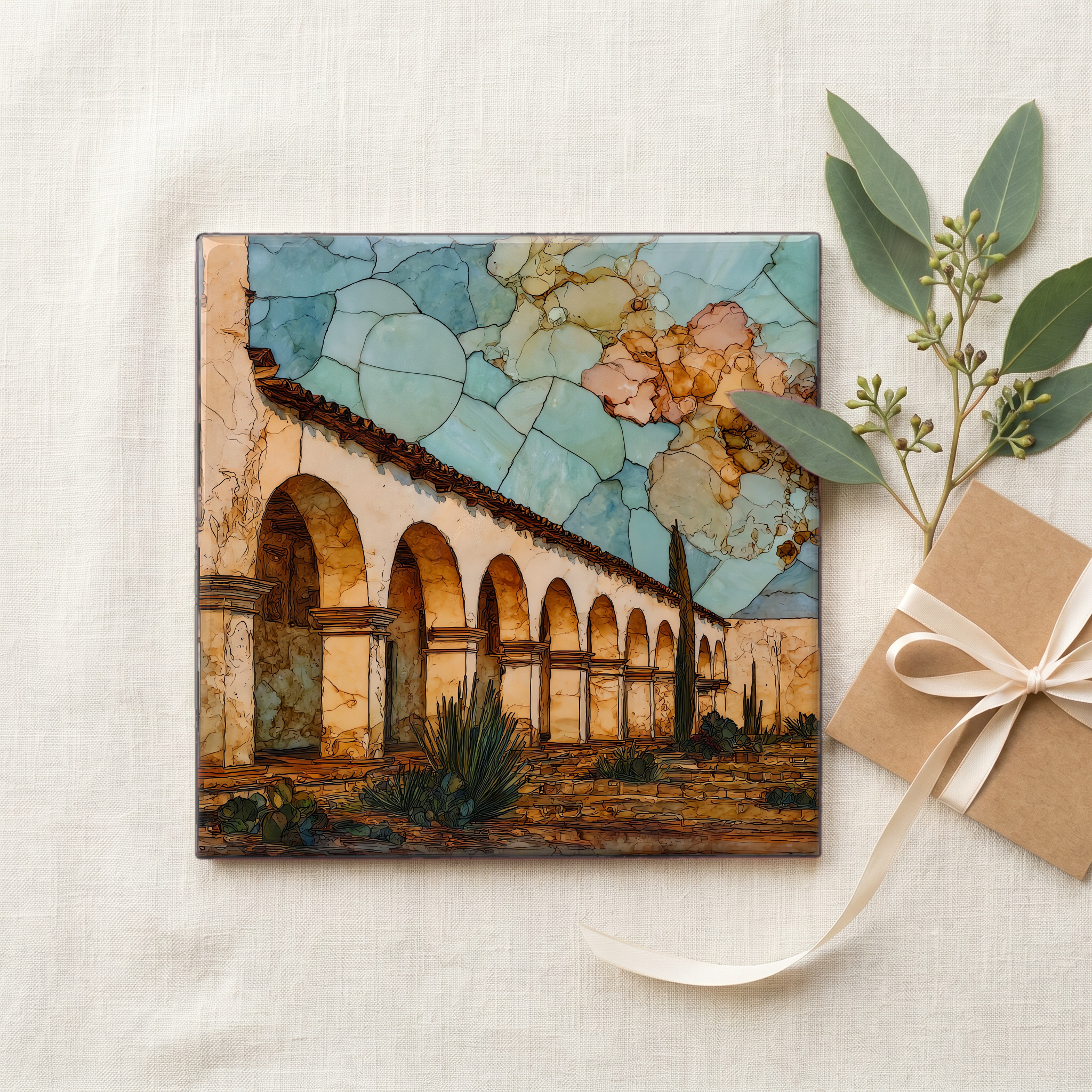
comes gift-ready
comes gift-ready

Each tile ships in a kraft box, tied with cream ribbon, with a handwritten note from the studio if you'd like to add one.
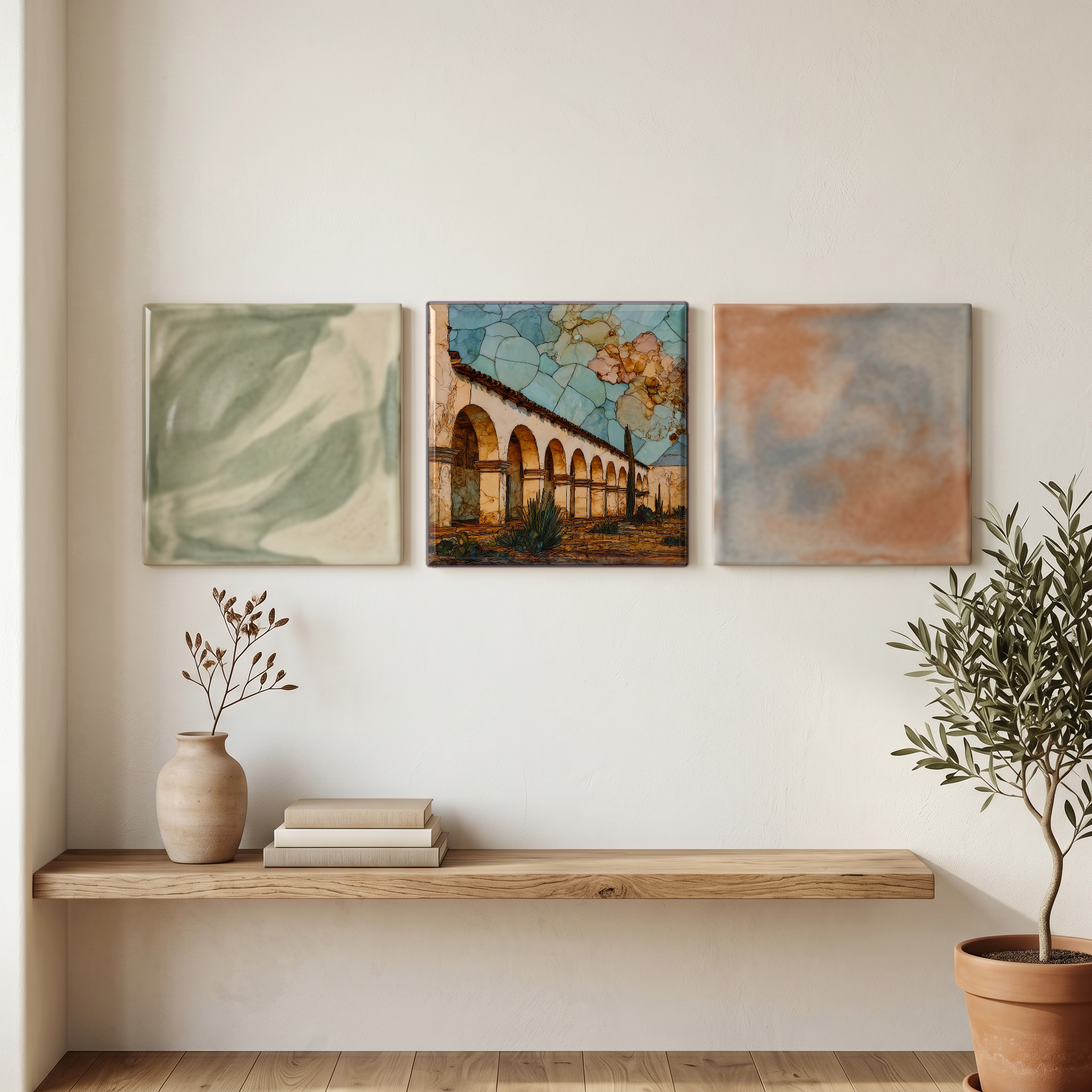
or build a grouping
or build a grouping

Three or five different vistas, hung together — a chapter of places you've been, or want to go.

about Mission San Miguel Arcángel

The place, in three passes.

A little of what's known, in case you fall down the rabbit hole — or want to go see it yourself.
the place

Mission San Miguel Arcángel was founded on July 25, 1797 by Padre Fermín Lasuén, the sixteenth of the twenty-one Alta California missions established along El Camino Real. It sits in the small town of San Miguel in northern San Luis Obispo County, about eight miles north of Paso Robles and roughly two hundred miles up the coast from Los Angeles. The mission church faces east across the Salinas River and was built to serve the Salinan people, who had lived in the surrounding hills for thousands of years before the Franciscans arrived. The current church, completed in 1818, replaced an earlier adobe lost to fire.

— informed by Wikipedia, Mission San Miguel
the colour

The interior murals are the reason San Miguel is famous among the California missions. Painted in 1821 by the Spanish layman artist Esteban Munras and a circle of Salinan apprentices, the frescoes line the nave with a trompe-l'oeil colonnade, an All-Seeing Eye above the altar, and bands of marbled colour that imitate the European cathedrals Munras had seen. They are the only mission interior in California that has never been repainted. The pigments are earth reds, ochres, soot blacks, and copper greens, mixed on site from local minerals. The work was nearly lost to a 2003 earthquake; a long retrofit reopened the church to the public in 2009.

— informed by Wikipedia, Mission San Miguel
the visit

San Miguel remains an active Franciscan friary and a working parish. The friars live in the convento next to the church, as they have since 1797 with a long interruption after secularization in 1834. The mission is open daily to visitors. A self-guided tour passes through the church, the cemetery (where roughly two thousand Salinan and Spanish-Californian neophytes are buried), the convento corridor, and the museum rooms that explain the long arc from founding to restoration. The cemetery holds the Reed family, killed at the mission in 1848 in one of California's first headline murder cases. There is no admission fee; a donation is asked. The grounds close at sunset.

— informed by Mission San Miguel
where
United States · San Luis Obispo County, California
elevation
187 m · 614 ft
position
35.7497° N · 120.6961° W
the neighborhood

What's nearby.

A handful of named places within an hour's walk or short drive. Some we've already painted; some we will.
13 km S
Paso Robles
town
1 km W
Salinas River
river
5 km E
Estrella River
river
5 km N
Camp Roberts
military reservation
25 km W
Lake Nacimiento
reservoir
N
Mission San Miguel Arcángel
Paso Robles
Salinas River
Estrella River
Camp Roberts
Lake Nacimiento
common questions

What people ask.

A few questions we get about Mission San Miguel Arcángel — and about bringing the piece home.
about the place

Mission San Miguel Arcángel sits in the town of San Miguel, California, in northern San Luis Obispo County, about eight miles north of Paso Robles on US-101. It is the sixteenth of California's twenty-one Spanish missions, established along El Camino Real.

Padre Fermín Lasuén founded Mission San Miguel Arcángel on July 25, 1797. Lasuén was the second president of the Alta California missions after Junípero Serra and personally founded nine of the twenty-one. San Miguel was named for Saint Michael the Archangel.

Mission San Miguel is famous for its interior murals, the only mission interior in California that has never been repainted. Spanish artist Esteban Munras and a circle of Salinan craftsmen painted the frescoes in 1821, using pigments mixed on site from local earth and minerals.

The Salinan are the Indigenous people of California's central coast, whose homeland covered the Salinas River drainage and the surrounding foothills for thousands of years before Spanish contact. They were the primary congregation at Mission San Miguel and the craftsmen who painted the church's interior alongside Esteban Munras.

Late autumn through early spring is the most comfortable season. Summers in the Salinas Valley run hot and bleached. The mission is open daily, and morning light through the small high windows is when the interior frescoes show their colour best. Avoid feast days unless you mean to attend Mass.

The 2003 San Simeon earthquake (magnitude 6.5) damaged the adobe walls of the church and required a long structural retrofit. The interior was at risk of losing the original 1821 frescoes. After fundraising and careful conservation work, the church reopened to the public in 2009.

Yes. The mission is an active Franciscan friary and a parish of the Diocese of Monterey. Friars live in the convento corridor and celebrate daily Mass. The grounds, museum, cemetery, and church are open to visitors without a fee, though a donation is requested at the door.

about the piece in your home

Yes. The piece reads as both a place portrait and a quiet history piece, which suits people who grew up walking these grounds, schoolchildren who studied the missions, parishioners, or family members of the Franciscan order. A Small or Medium with a handwritten note from the studio carries well.

The deep reds, ochres, and soot blacks of the mural palette pair well with Mission-revival interiors, southwestern modern, and warm minimalist rooms with leather and oak. It also reads as a tonal anchor in jewel-tone maximalist arrangements where the stained-glass colours echo other layered pieces.

The mission-revival aesthetic is in a sustained revival in California design. Warm terracotta, hand-finished plaster, ironwork, and historic mission imagery have all moved back into specifier interiors in the last several years. A Medium of San Miguel reads as a credible anchor piece for that direction.

Above a standard three-seat sofa or a wide console, the single Large reads as a focal piece. For a stronger statement on a wall over six feet wide, a four-tile Mural is the right scale, and a nine-tile Mural carries a full feature wall.

Yes. For wet or high-traffic rooms like bathrooms, showers, and kitchen backsplashes, order the Dura Satin or Matte finish. Both are scratch-resistant and stand up to steam and grease. The Glossy finish is reserved for framed wall art in dry interior rooms.

A soft microfibre cloth and warm water are all the tile needs. Skip abrasive scrubbers and household solvents; the colour lives in the surface beneath a thin glossy finish, and harsh chemicals can dull the sheen over time. For tougher kitchen marks, a drop of dish soap is fine.

Yes. Every WenderVista piece is original to our studio in Knoxville, Tennessee. We do not license outside artwork, and the visual language of stained glass, alcohol ink, and oil is consistent across the atlas. Reid Wender curates the place list and signs off on every release.

if this one stayed with you

A few you might also love.

Hand-picked by the eye that found Sorapis. Same air, same kind of quiet.