Wender·Vista
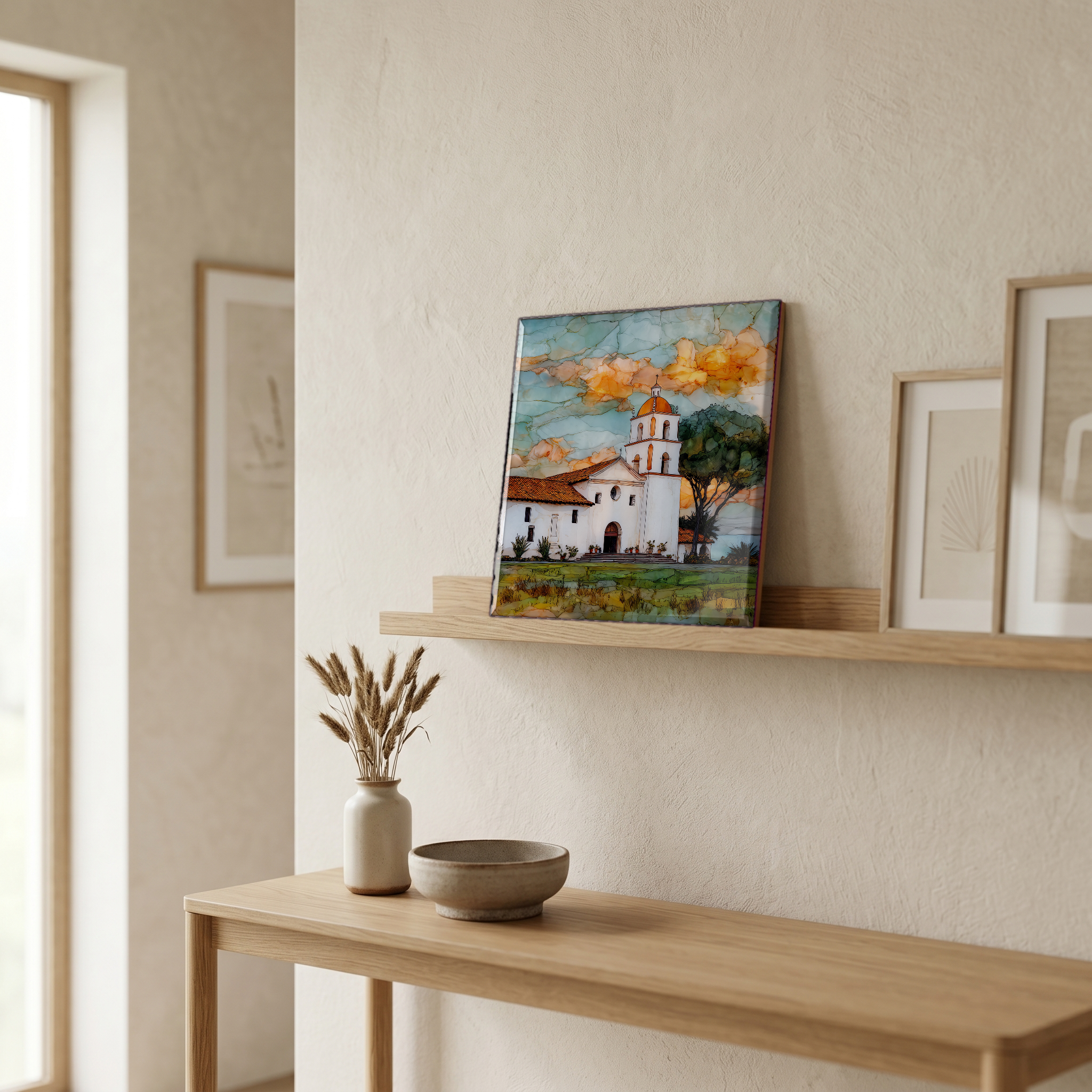
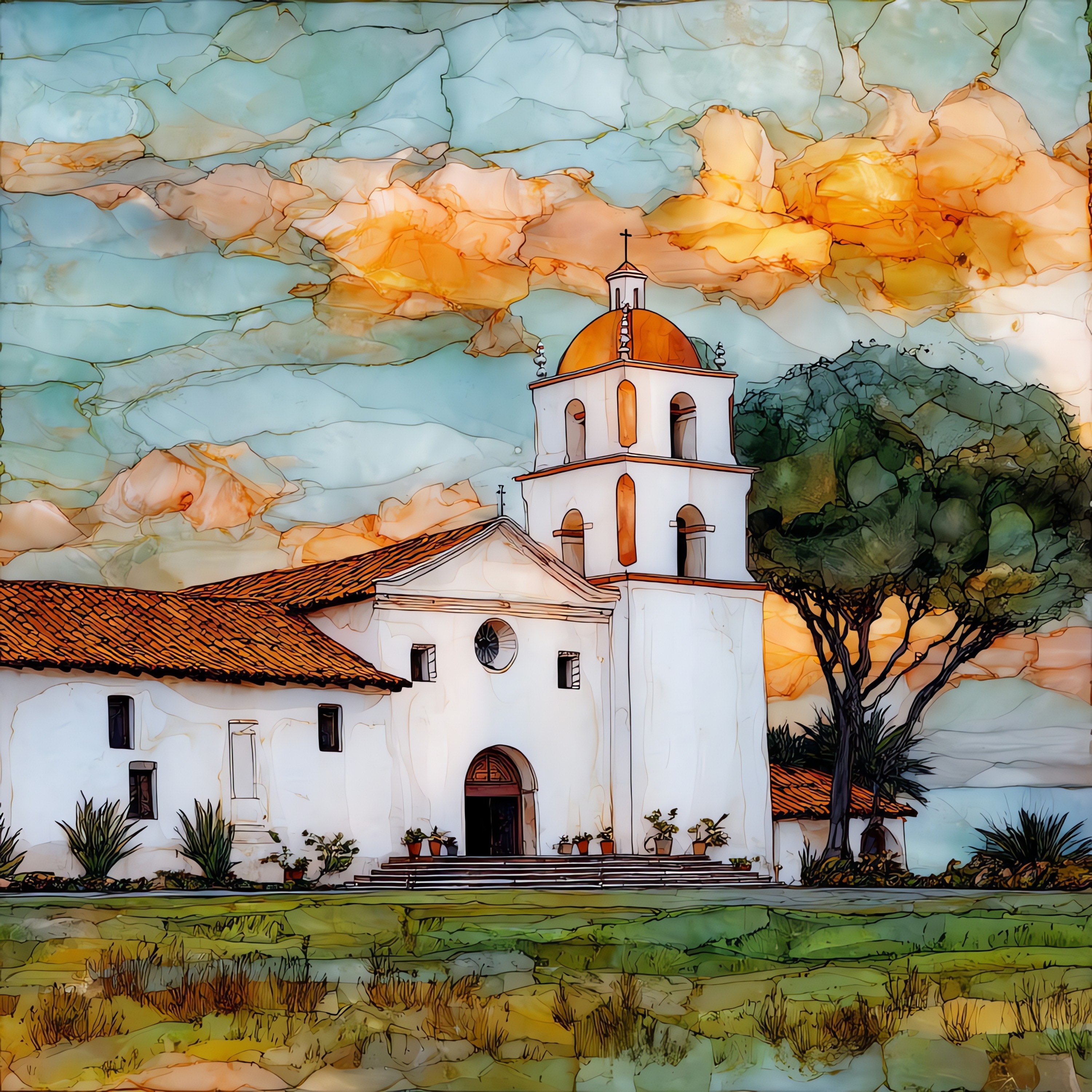
Mission San Luis Rey Tile
shown on ceramic, 12-inch tileCalifornia · United States
in Oceanside, four miles in from the Pacific

Mission San Luis Rey Tile

— the white wall the late sun keeps warming.

Where it lives

Not only on a wall.

A small tile on the nightstand catching the morning. A larger one above the fire. Yours, wherever you spend the slow hours.
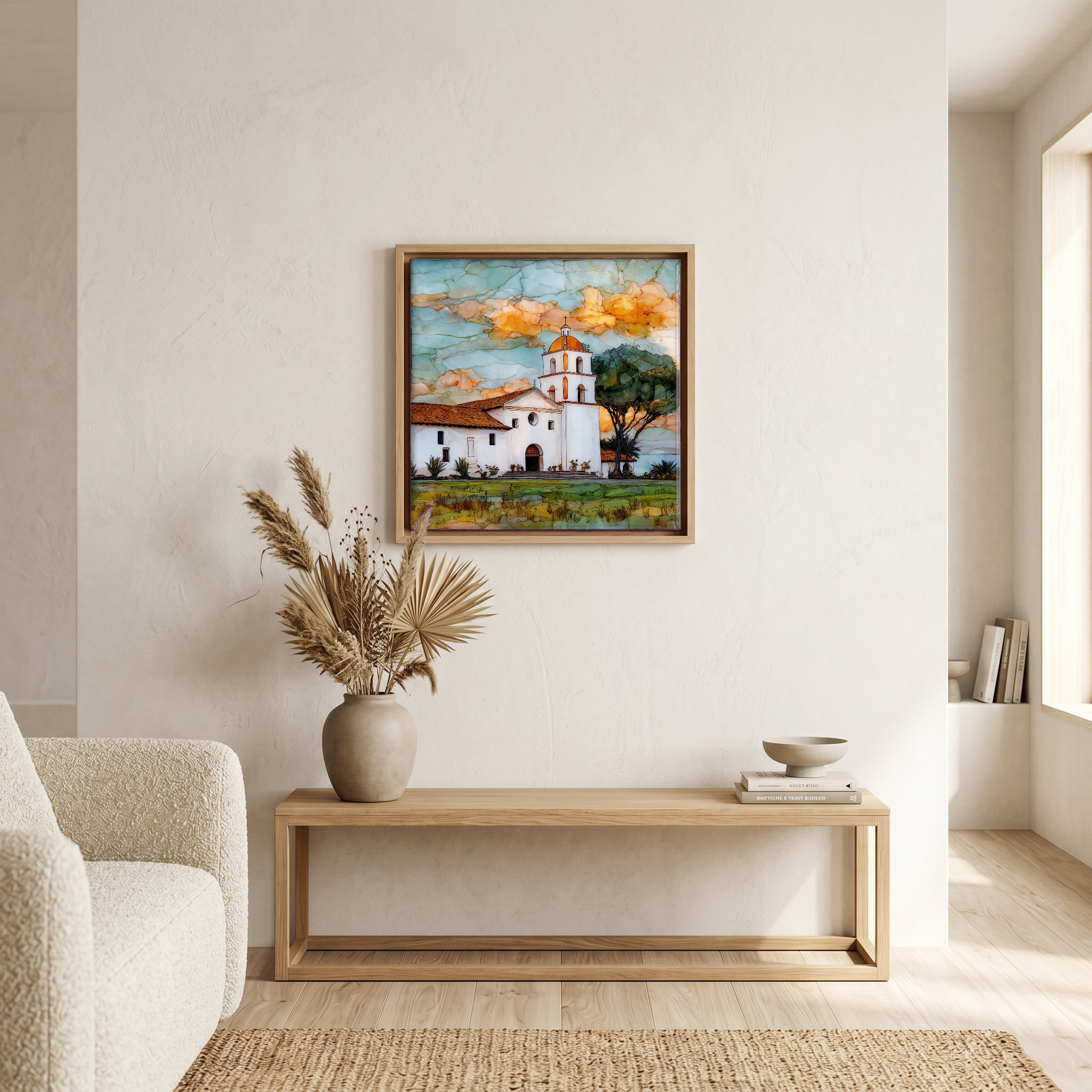
Above the bench, in a warm oak surround.
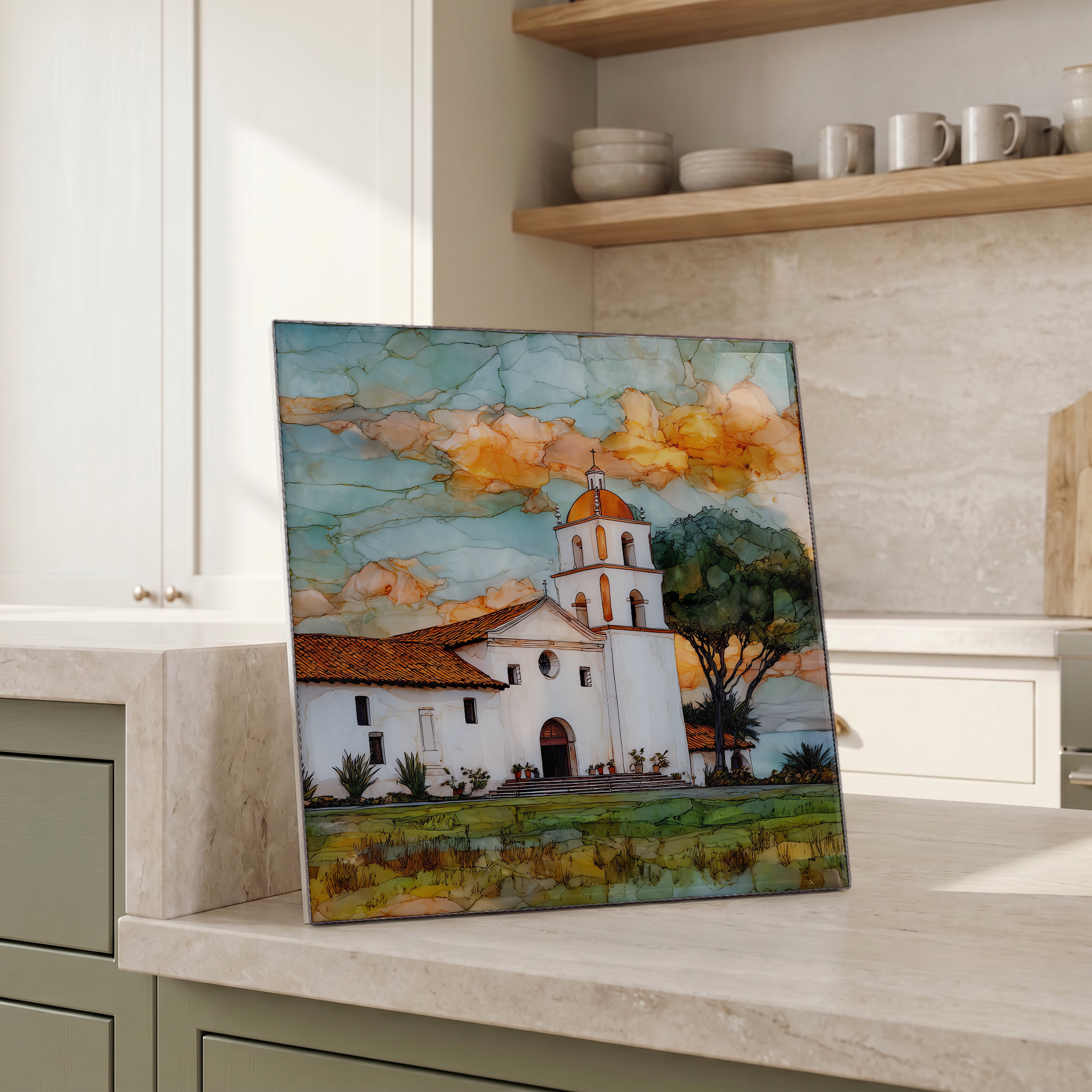
Beside the kettle, propped on the counter.
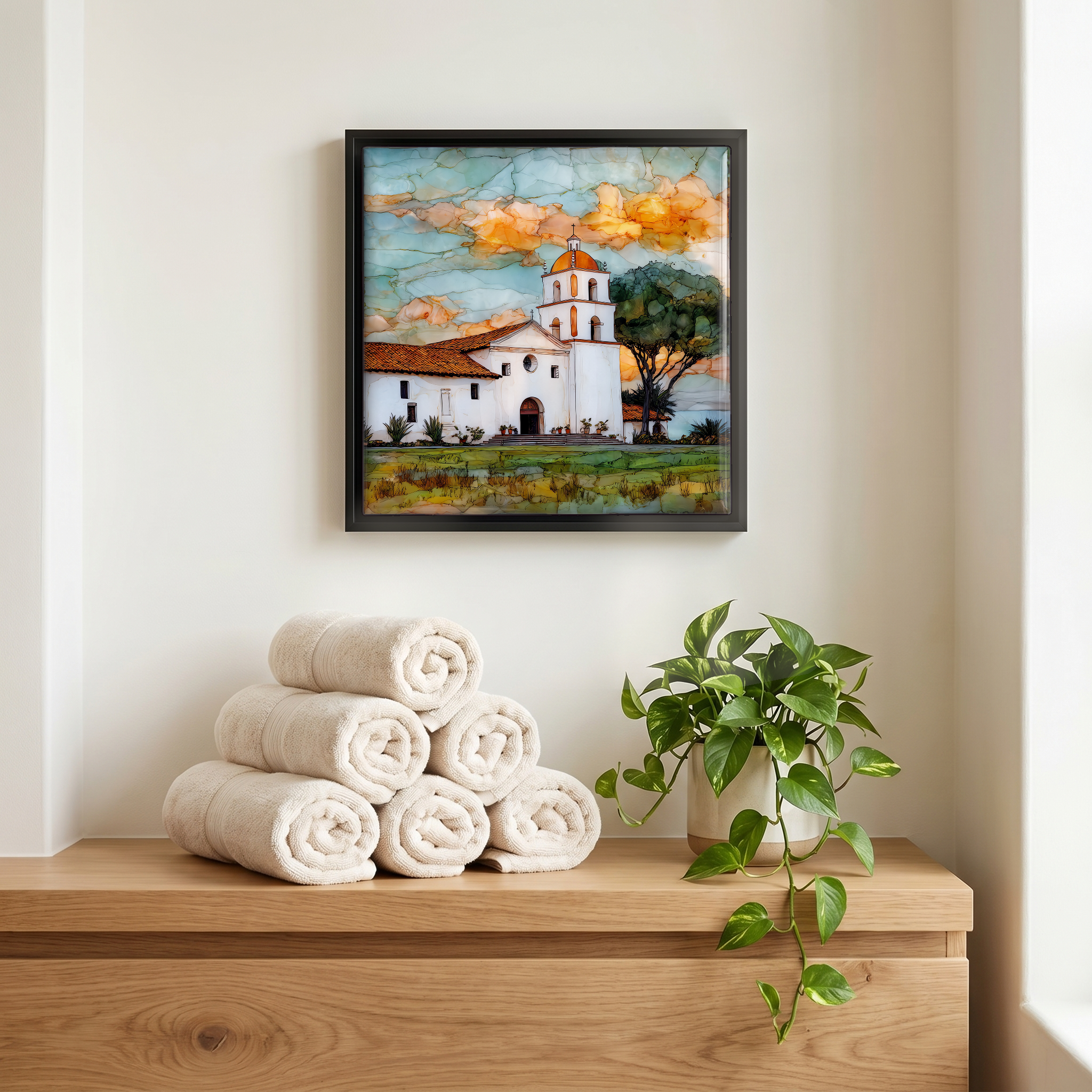
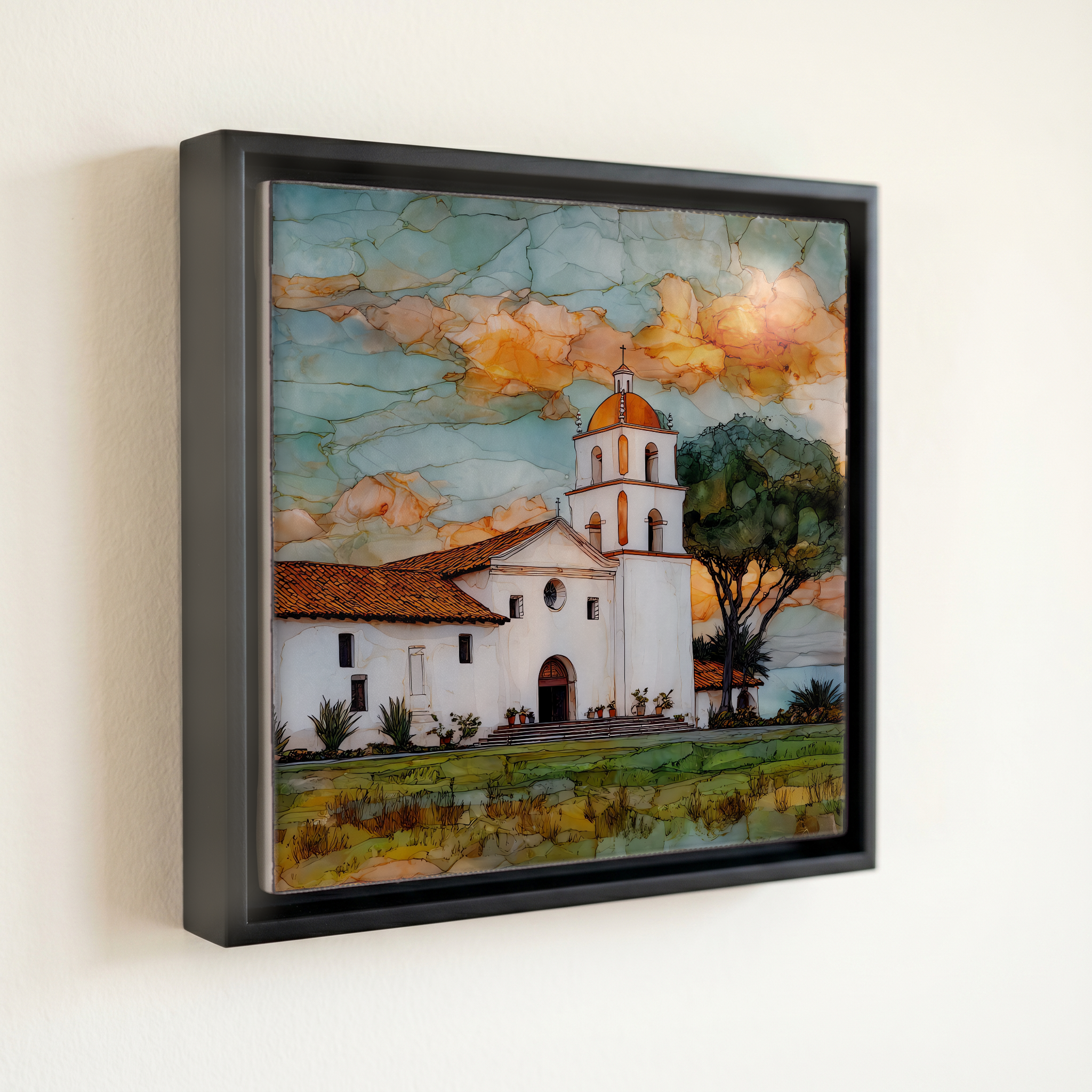
Above the linens, in a slim black surround.
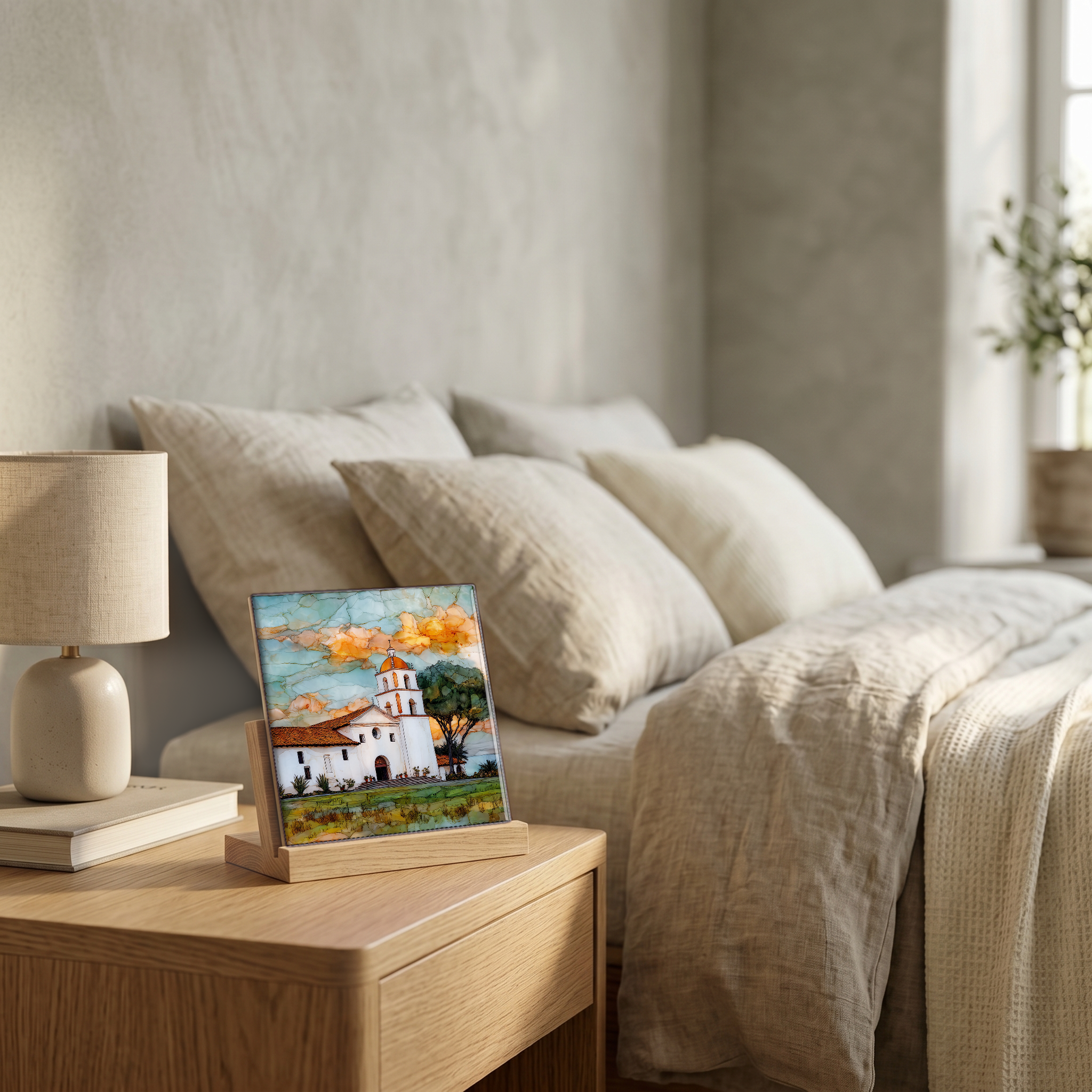
On the nightstand, on a light oak stand.
On a picture ledge, where the light comes in.
a note from the studio

The largest of the twenty-one California missions, four miles in from the coast at Oceanside. Whitewashed adobe walls, a single domed bell tower, the longest arched corridor in the chain. In the small garden behind the church stands the first pepper tree planted in California, brought as seed from Peru in 1830 and still in leaf. The Franciscans still keep the friary. Most afternoons the light comes off the white wall the way it does in old Spanish photographs, and people walk the colonnade and nobody hurries.
from the studio
shown in a slim black floating frame · 6 × 6 in
— bring it home

Mission San Luis Rey Tile, on ceramic.

Each tile is finished by hand in our Knoxville studio. Artwork is slowly infused into the ceramic surface under high heat and pressure, and rests beneath a thin glossy finish. The colour lives in the surface, not on top of it.

What kind of piece?
One tile — square or rectangle.
How big?
the popular one — counter, shelf, nightstand
6 × 6 in · 15 cm · 1.6 lb
Surface finish
A clear glossy finish — the artwork reads as if under resin. Ideal for show-pieces and framed wall art.
How it sits
A hidden cleat — sits ¼″ proud of the wall.
$58
Hand-finished and shipped from our studio at the foot of the Smokies. On your wall in about ten days.
size
6 × 6 in
15 cm
weighs
1.6 lb
solid in the hand
surface
ceramic, hand-finished
art rests beneath a thin glossy finish
from
Knoxville, TN
our family studio, at the foot of the Smokies
— start a Coaster Set

Pick any four 4-inch tiles — National Parks you've been to, a Smokies set, the four seasons of one place. $ for a set of , cork-backed, ready to live on the table.
comes gift-ready
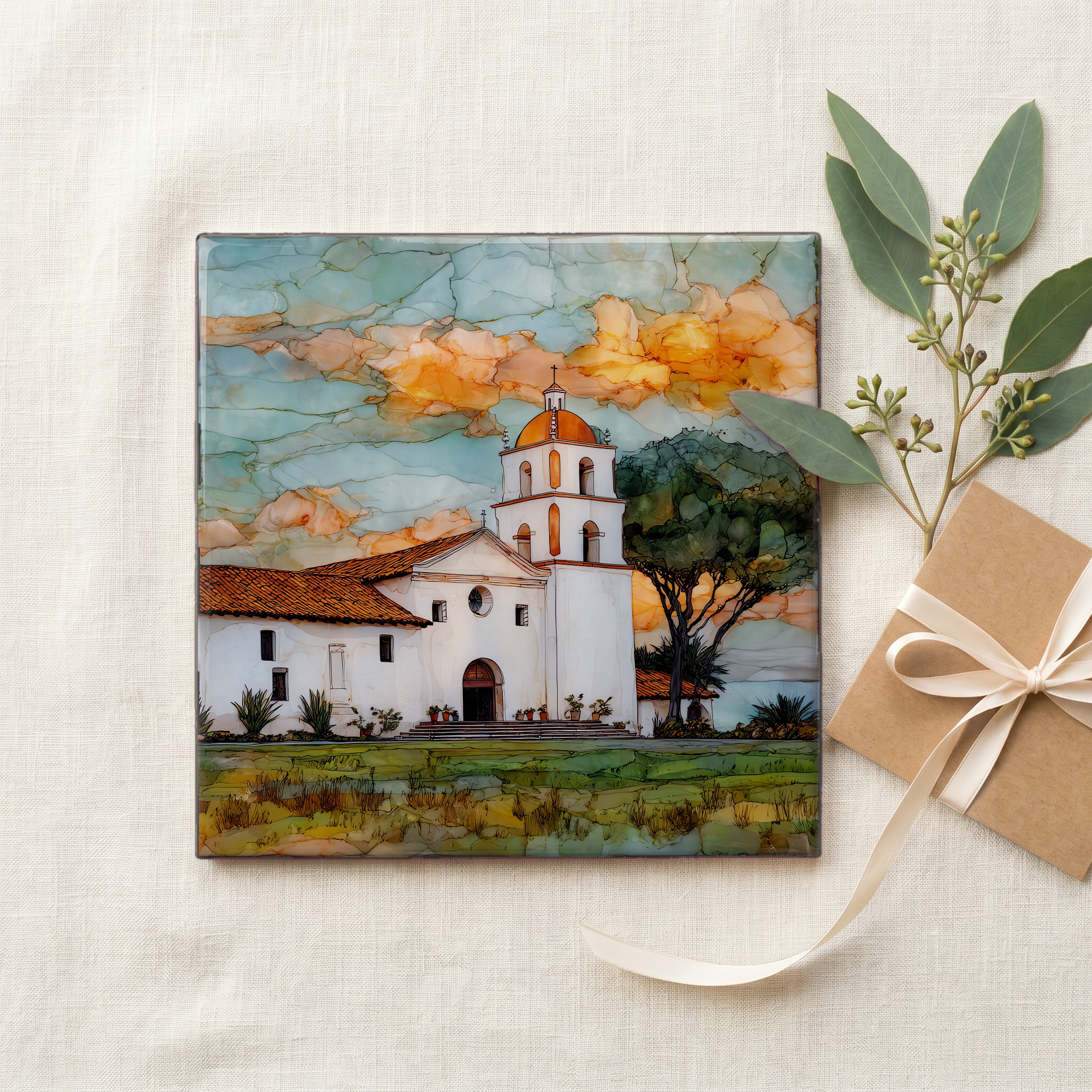
comes gift-ready

Each tile ships in a kraft box, tied with cream ribbon, with a handwritten note from the studio if you'd like to add one.
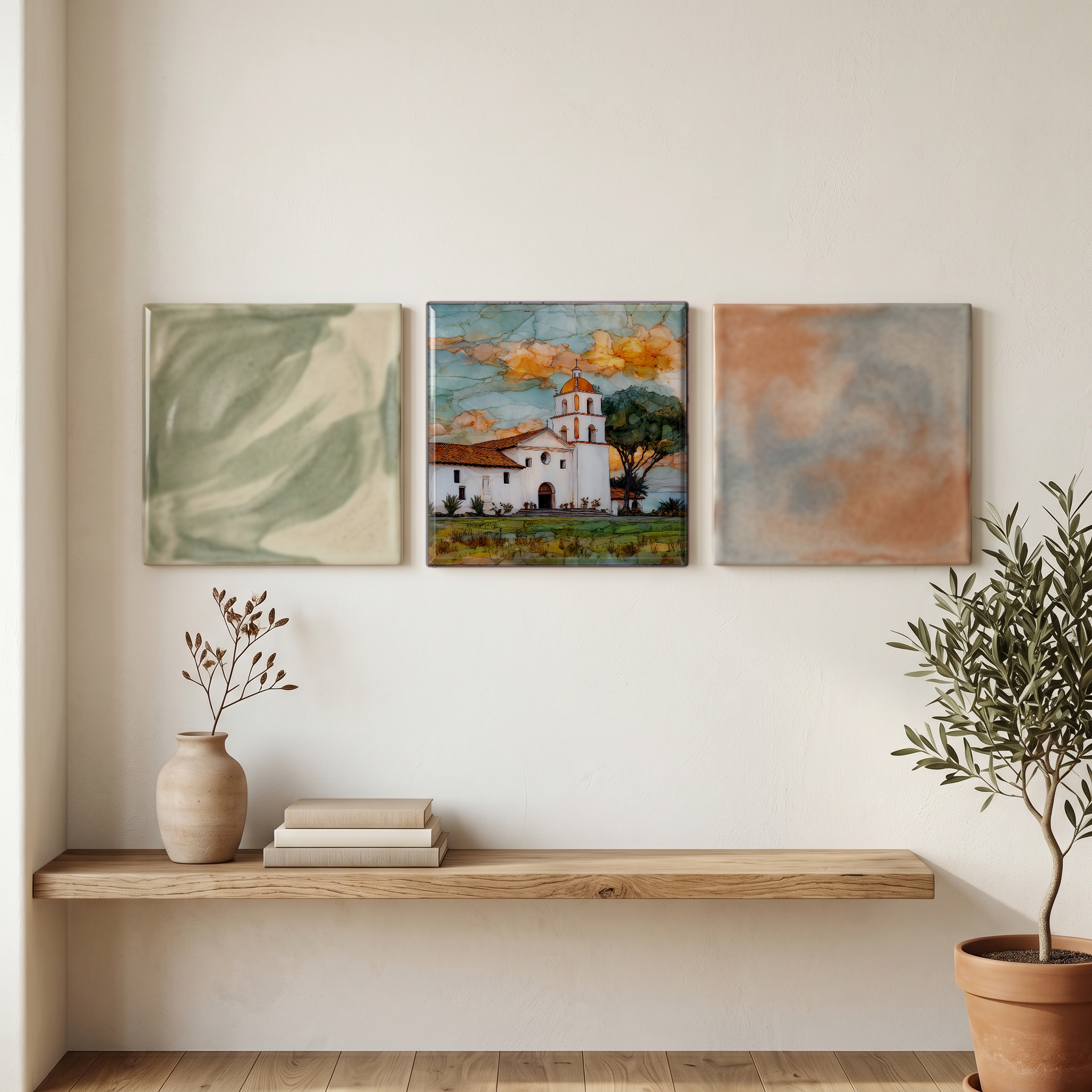
or build a grouping
or build a grouping

Three or five different vistas, hung together — a chapter of places you've been, or want to go.

about Mission San Luis Rey Tile

The place, in three passes.

A little of what's known, in case you fall down the rabbit hole — or want to go see it yourself.
the place

Mission San Luis Rey de Francia stands four miles inland from the Pacific at Oceanside, in northern San Diego County, on the slope above the San Luis Rey River. It was founded on 13 June 1798 by Father Fermín Francisco de Lasuén, the eighteenth of the twenty-one Spanish missions established in Alta California between 1769 and 1823. The mission takes its name from the thirteenth-century French king Louis IX, canonised as Saint Louis. Reached today by US Route 76 east from Interstate 5, it is the largest mission complex in the chain, a National Historic Landmark, and an active Franciscan friary roughly six acres across of church, quadrangle, garden and cemetery.

the stone

The mission church is the only one of the twenty-one with a cruciform floor plan, the others all rectangular. Construction of the present church began in 1811 under Father Antonio Peyrí, the long-serving Catalan friar who shaped the complex for more than thirty years, and was completed in 1815. Adobe brick faced with white lime plaster, a low Moorish-influenced dome above the single bell tower, and a long arched colonnade fronting the quadrangle (the longest in the chain) give the place its distinctive silhouette. The wooden mortuary chapel inside the sanctuary is the only octagonal mortuary chapel in the California missions, an eight-sided room off the south transept.

the visit

The mission opens daily for self-guided tours of the church, museum, cemetery and the Sacred Garden, which holds the first pepper tree planted in California, a Schinus molle brought as seed from Peru and set in the ground in 1830. The friary alongside the church is a working Franciscan house and not part of the visitor route. Mass is celebrated in the historic church on Saturday vigil and Sunday mornings. Admission to the museum is modest and supports the ongoing restoration of the adobe walls, which have weathered two centuries of coastal San Diego County winters. The lavanderia, the largest of any California mission washing complex, lies down the slope toward the river.

where
United States · Oceanside, San Diego County, California
position
33.2327° N · 117.3203° W
the neighborhood

What's nearby.

A handful of named places within an hour's walk or short drive. Some we've already painted; some we will.
7 km W
Oceanside Pier
pier
1 km S
San Luis Rey River
river
5 km S
Buena Vista Lagoon
coastal lagoon
10 km S
Carlsbad
coastal town
N
Mission San Luis Rey Tile
Oceanside Pier
San Luis Rey River
Buena Vista Lagoon
Carlsbad
common questions

What people ask.

A few questions we get about Mission San Luis Rey Tile — and about bringing the piece home.
about the place

Mission San Luis Rey de Francia stands in Oceanside, in northern San Diego County, four miles inland from the Pacific on the slope above the San Luis Rey River. It is reached by US Route 76 east from Interstate 5, about forty minutes north of downtown San Diego.

It is the largest of the twenty-one Spanish missions established in Alta California between 1769 and 1823. At its peak around 1832, the San Luis Rey community held more than two thousand Indigenous converts and grazed tens of thousands of cattle, sheep and horses across roughly 950,000 acres of inland holdings.

Father Fermín Francisco de Lasuén founded the mission on 13 June 1798, the eighteenth in the chain. The complex was shaped by his successor, the Catalan friar Antonio Peyrí, who served as resident priest for more than three decades and oversaw construction of the present church between 1811 and 1815.

Yes. Franciscan friars have lived at the mission for most of its history and still maintain the friary alongside the church. Mass is celebrated in the historic sanctuary on Saturday vigil and Sunday mornings, and the parish runs a retreat centre on the grounds. The site is also a National Historic Landmark.

The pepper tree (Schinus molle) in the Sacred Garden is widely recognised as the first of its species planted in California. The seed was brought from Peru and set in the ground in 1830. Cuttings from it have since produced thousands of pepper trees across the American Southwest.

It is the only one of the twenty-one California missions built on a cruciform floor plan, the others all rectangular. The church also carries the longest arched colonnade in the chain, a low Moorish-influenced dome above the single bell tower, and an octagonal mortuary chapel off the south transept, found nowhere else among the missions.

The mission is open daily and the San Diego coast is mild in every season, so any month works. Spring brings the Sacred Garden into bloom; late afternoon light suits the white facade best; and the lavanderia below the church is easiest to walk in dry months from May through October.

about the piece in your home

It has been a meaningful gift for many of our customers with mission-trail roots: graduates of mission-trail schools, Catholic families in Southern California, parishioners who married in the historic sanctuary. The Small or Medium with a handwritten note from the studio carries well, and a 4-tile Mural reads as a family heirloom.

The whitewashed adobe and bell-tower silhouette sit well in Spanish Colonial, California Mission Revival and Mediterranean rooms. The cream and terracotta palette also reads cleanly in Coastal-modern interiors and warm Minimalist Asian schemes where a single piece of architecture is the focal point of the wall.

Yes. Mission Revival and Spanish Colonial have held a place on Southern California's design boards for a century and are seeing a fresh wave through 2026 in adobe-look kitchens, plastered walls and clay-tile floors. A ceramic tile of the mission itself anchors the room without competing with the architecture.

Above a standard three-seat sofa, a single Large reads at the right scale, a 4-tile Mural anchors a longer wall, and a 9-tile Mural fills a feature wall above a low console. Above a narrow console table, a Medium with a small lamp beside it is enough.

Yes. For wet rooms and backsplashes we recommend the Dura Satin or Matte finish; both are scratch-resistant and shed steam and splash without clouding the colour. The Glossy finish is best kept to framed wall pieces in living rooms, bedrooms and entryways.

A soft microfibre cloth and plain water is all the tile needs. Avoid abrasive sponges and ammonia-based cleaners; the colour is slowly infused into the ceramic surface and lives beneath a thin glossy finish, so the surface itself is what you are cleaning.

Yes. Reid Wender is the curator and eye behind every WenderVista piece, and every tile is hand-finished in our Knoxville studio. We do not license third-party art and we do not reproduce other studios' work; the piece in your hands was made for this atlas.

if this one stayed with you

A few you might also love.

Hand-picked by the eye that found Sorapis. Same air, same kind of quiet.