Wender·Vista
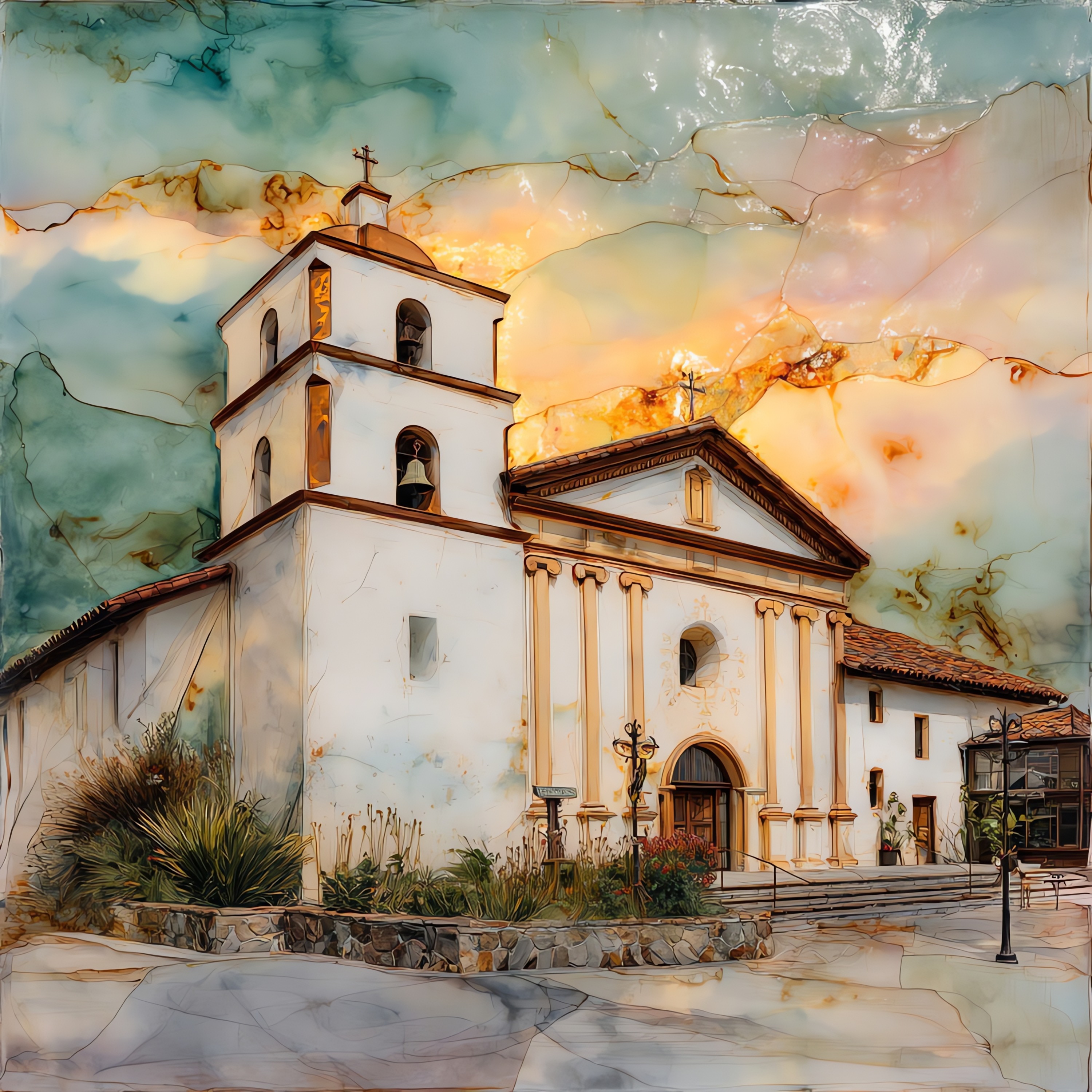
Mission San Luis Obispo
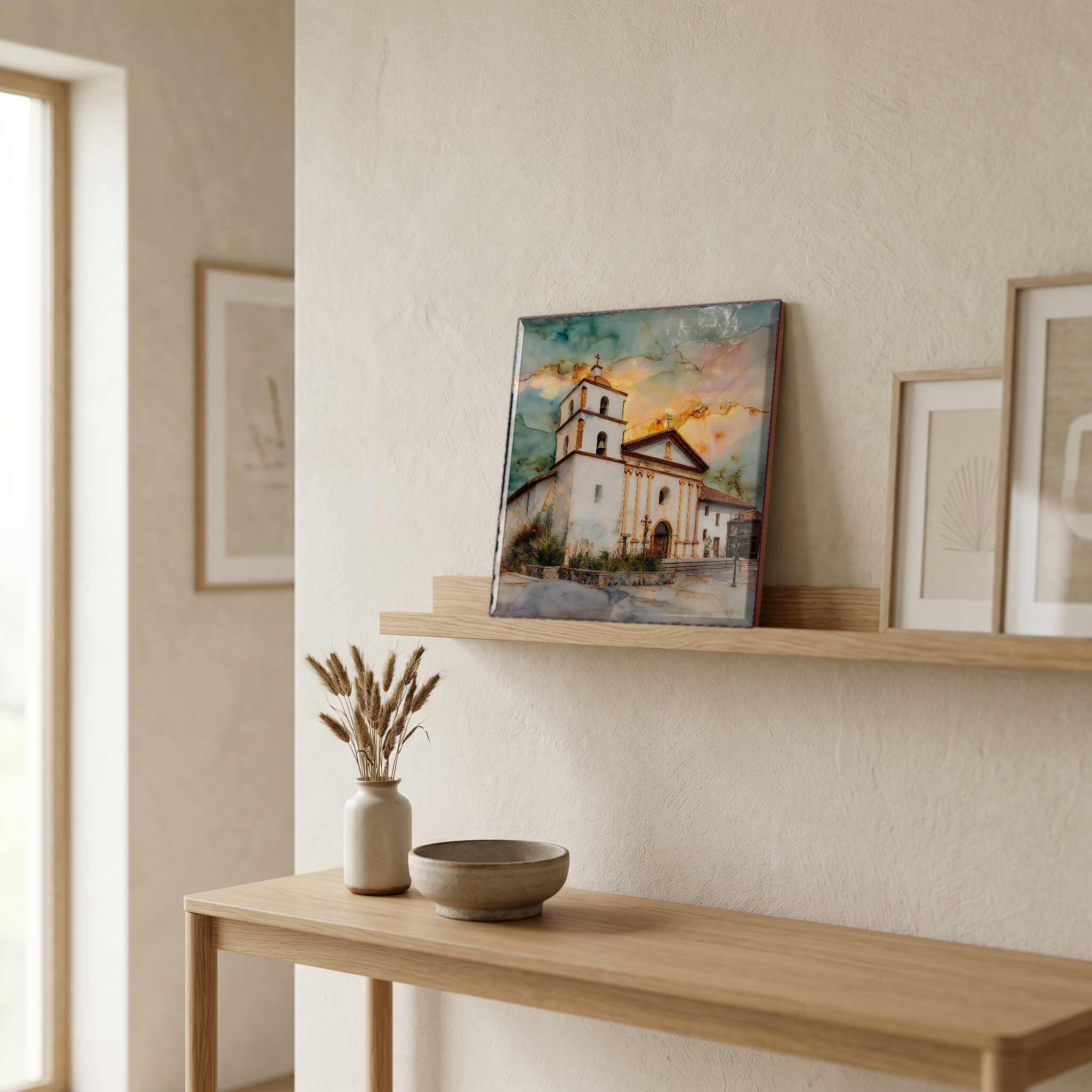
shown on ceramic, 12-inch tileCalifornia · United States
on California's Central Coast, between San Francisco and Los Angeles

Mission San Luis Obispo

— the first red roof in the chain.

Where it lives

Not only on a wall.

A small tile on the nightstand catching the morning. A larger one above the fire. Yours, wherever you spend the slow hours.
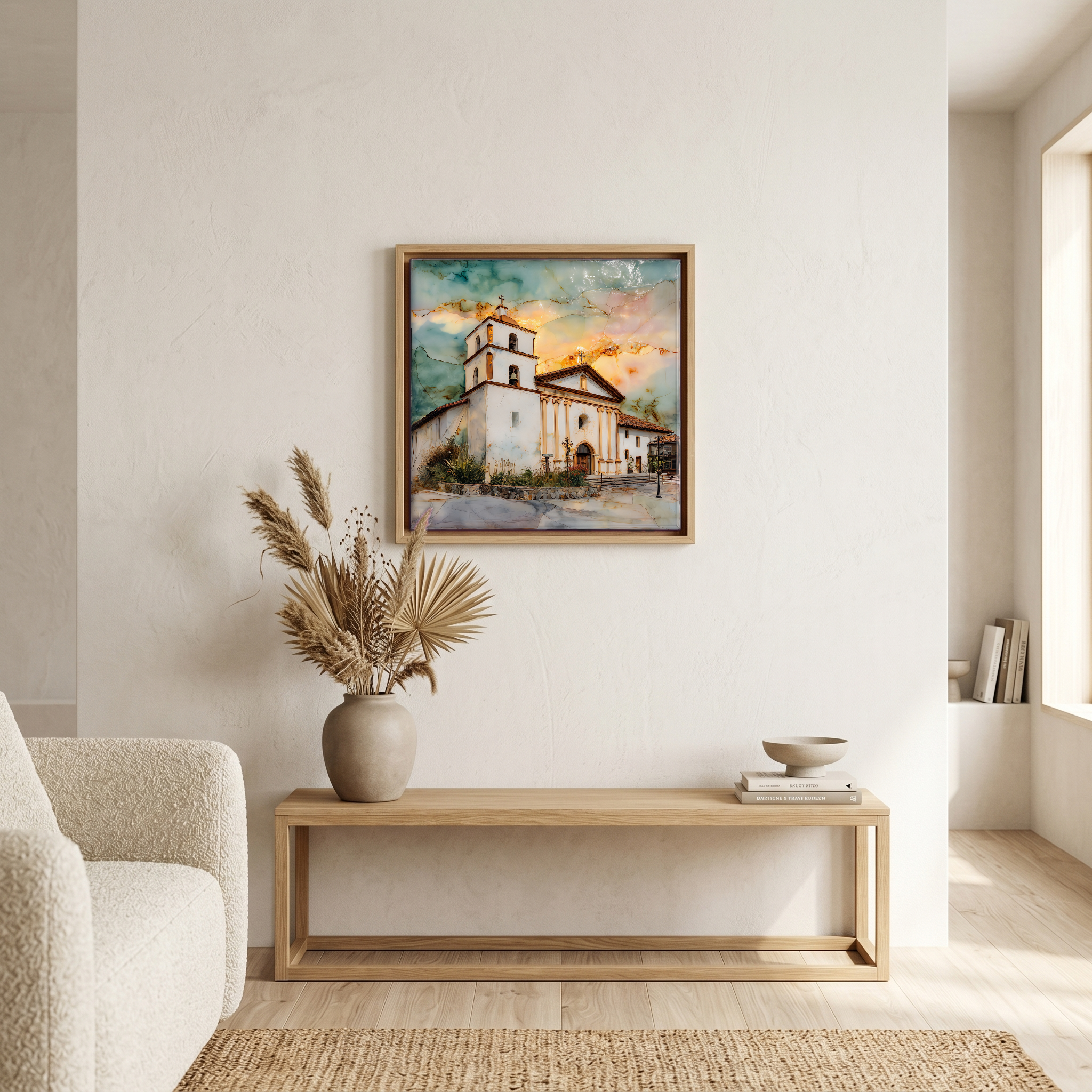
Above the bench, in a warm oak surround.
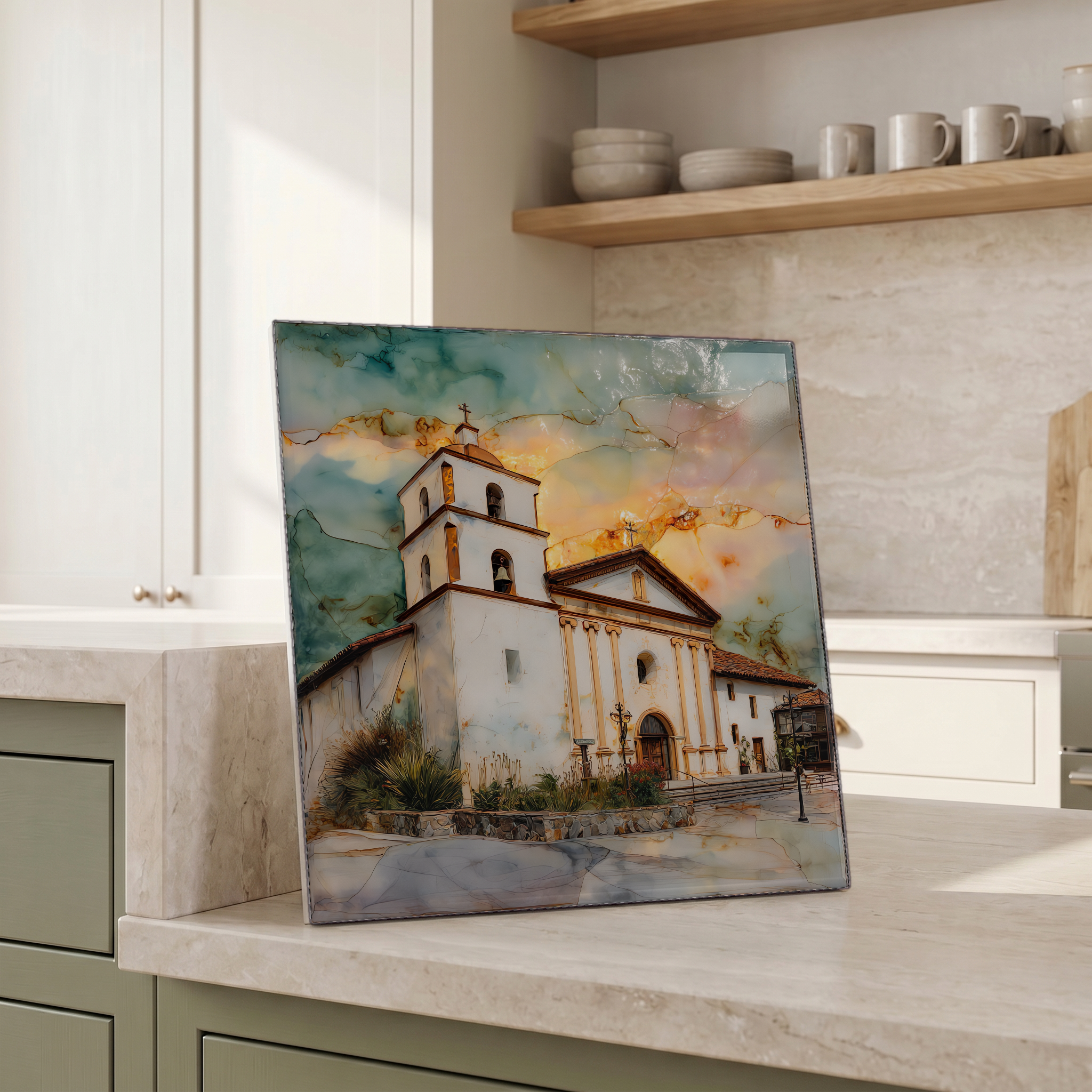
Beside the kettle, propped on the counter.
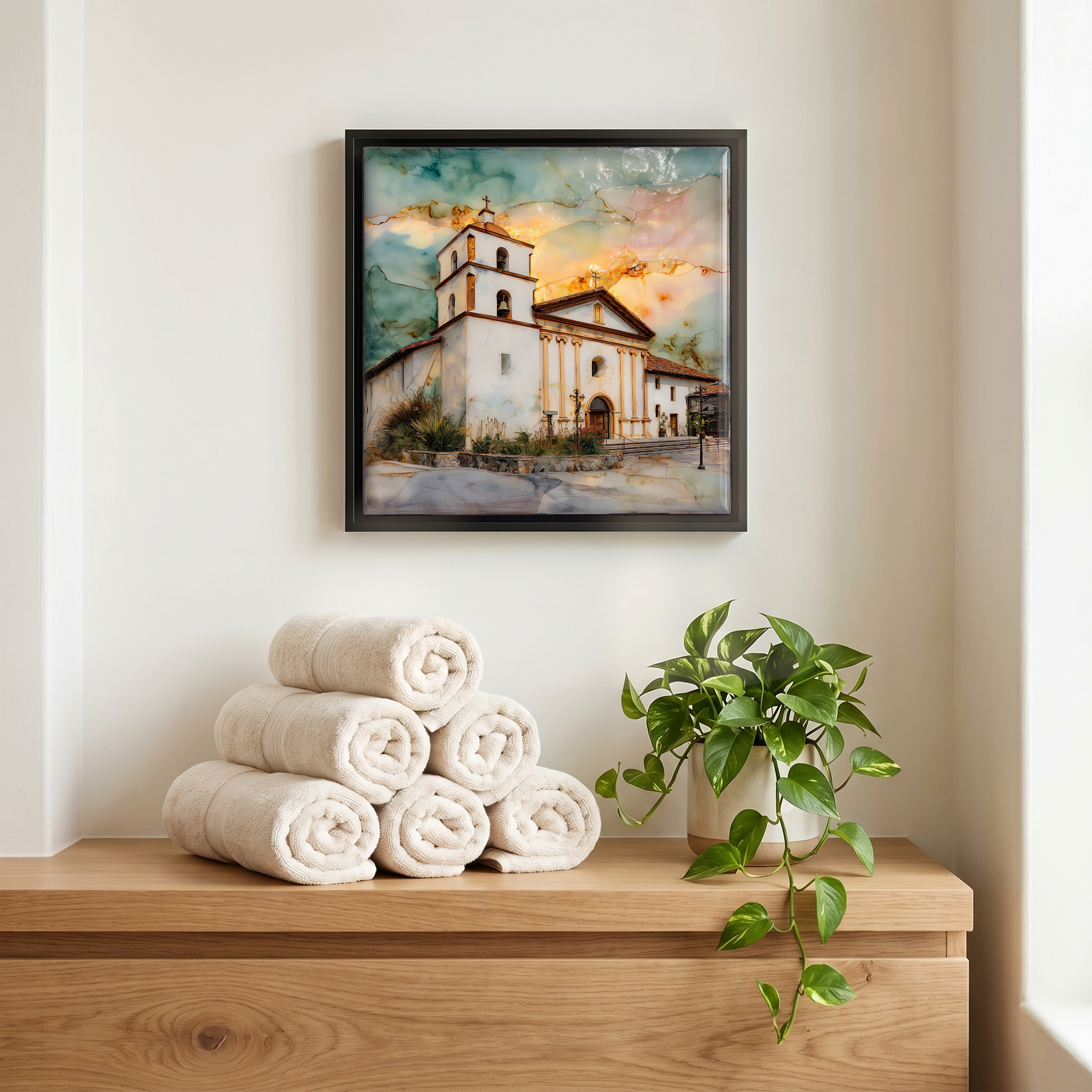
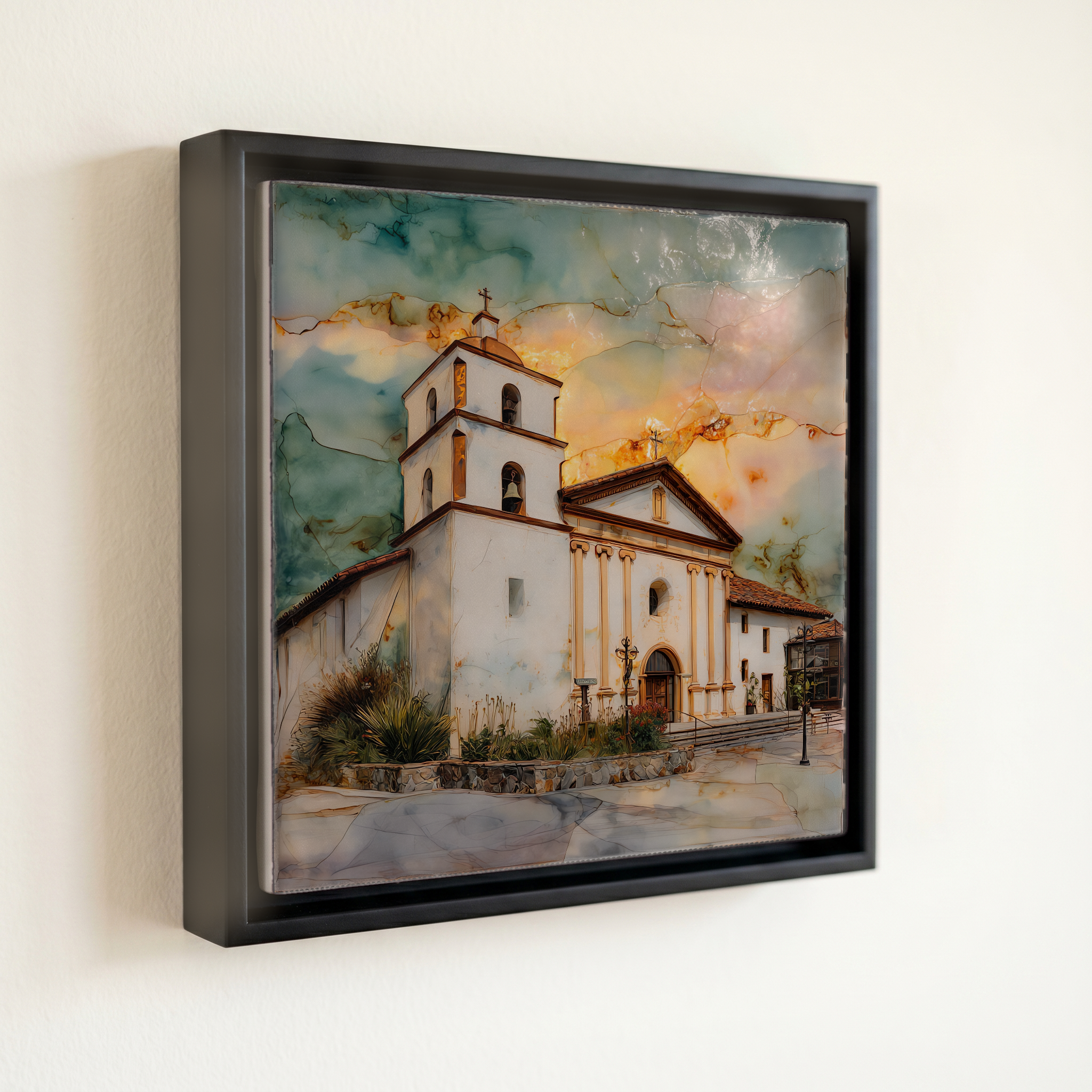
Above the linens, in a slim black surround.
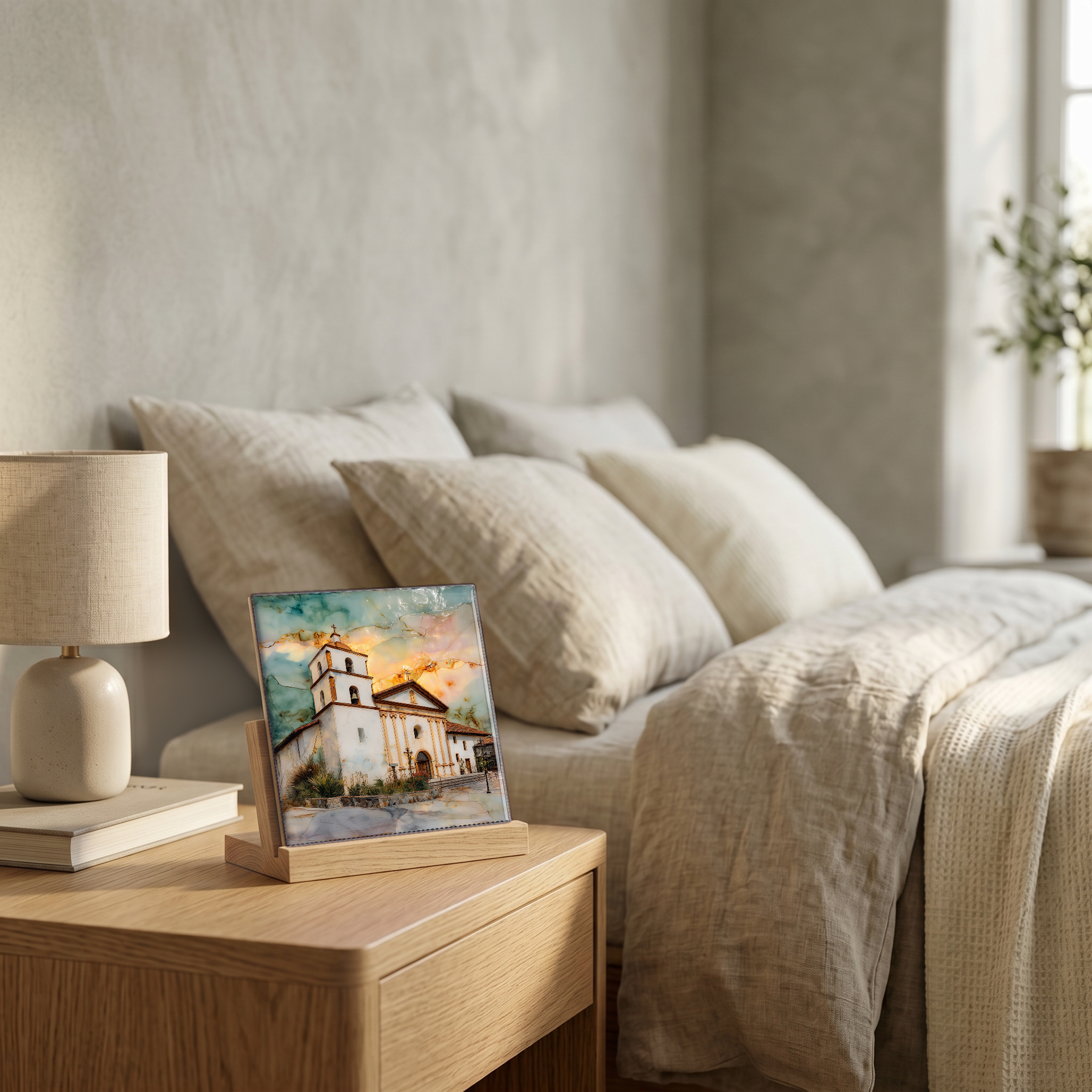
On the nightstand, on a light oak stand.
On a picture ledge, where the light comes in.
a note from the studio

The fifth of California's 21 missions, founded by Junípero Serra in 1772 and named for a thirteenth-century French bishop from Toulouse. The L-shaped adobe sits along a creek in downtown San Luis Obispo, with Mission Plaza opening off its south side. After Chumash arrows set the thatched roof on fire in the 1770s, the padres developed red clay roof tiles that would not burn. The shape went on to define every mission in the chain. The bells still ring on the hour. People still cross themselves on the way past.
from the studio
shown in a slim black floating frame · 6 × 6 in
— bring it home

Mission San Luis Obispo, on ceramic.

Each tile is finished by hand in our Knoxville studio. Artwork is slowly infused into the ceramic surface under high heat and pressure, and rests beneath a thin glossy finish. The colour lives in the surface, not on top of it.

What kind of piece?
One tile — square or rectangle.
How big?
the popular one — counter, shelf, nightstand
6 × 6 in · 15 cm · 1.6 lb
Surface finish
A clear glossy finish — the artwork reads as if under resin. Ideal for show-pieces and framed wall art.
How it sits
A hidden cleat — sits ¼″ proud of the wall.
$58
Hand-finished and shipped from our studio at the foot of the Smokies. On your wall in about ten days.
size
6 × 6 in
15 cm
weighs
1.6 lb
solid in the hand
surface
ceramic, hand-finished
art rests beneath a thin glossy finish
from
Knoxville, TN
our family studio, at the foot of the Smokies
— start a Coaster Set

Pick any four 4-inch tiles — National Parks you've been to, a Smokies set, the four seasons of one place. $ for a set of , cork-backed, ready to live on the table.
comes gift-ready
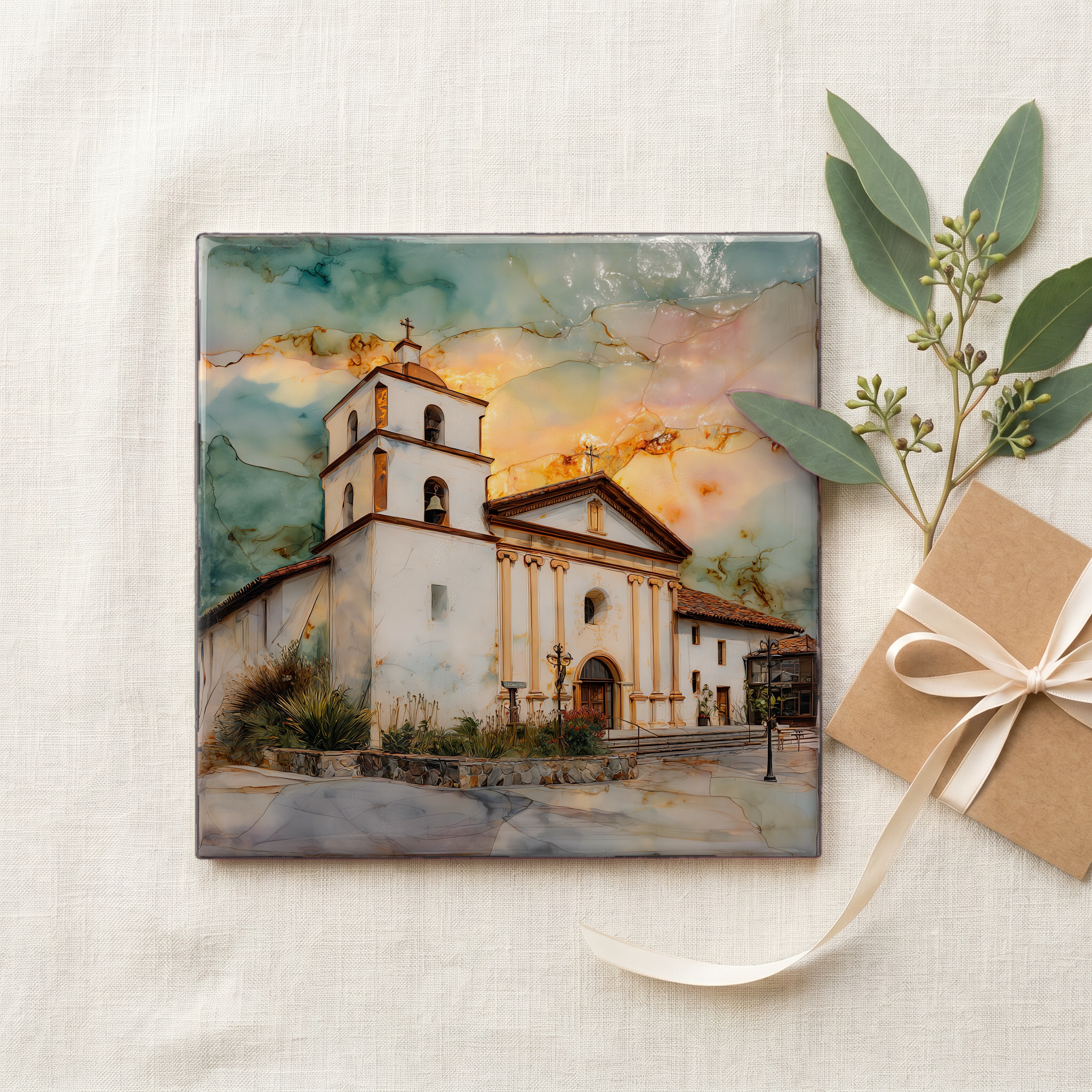
comes gift-ready

Each tile ships in a kraft box, tied with cream ribbon, with a handwritten note from the studio if you'd like to add one.
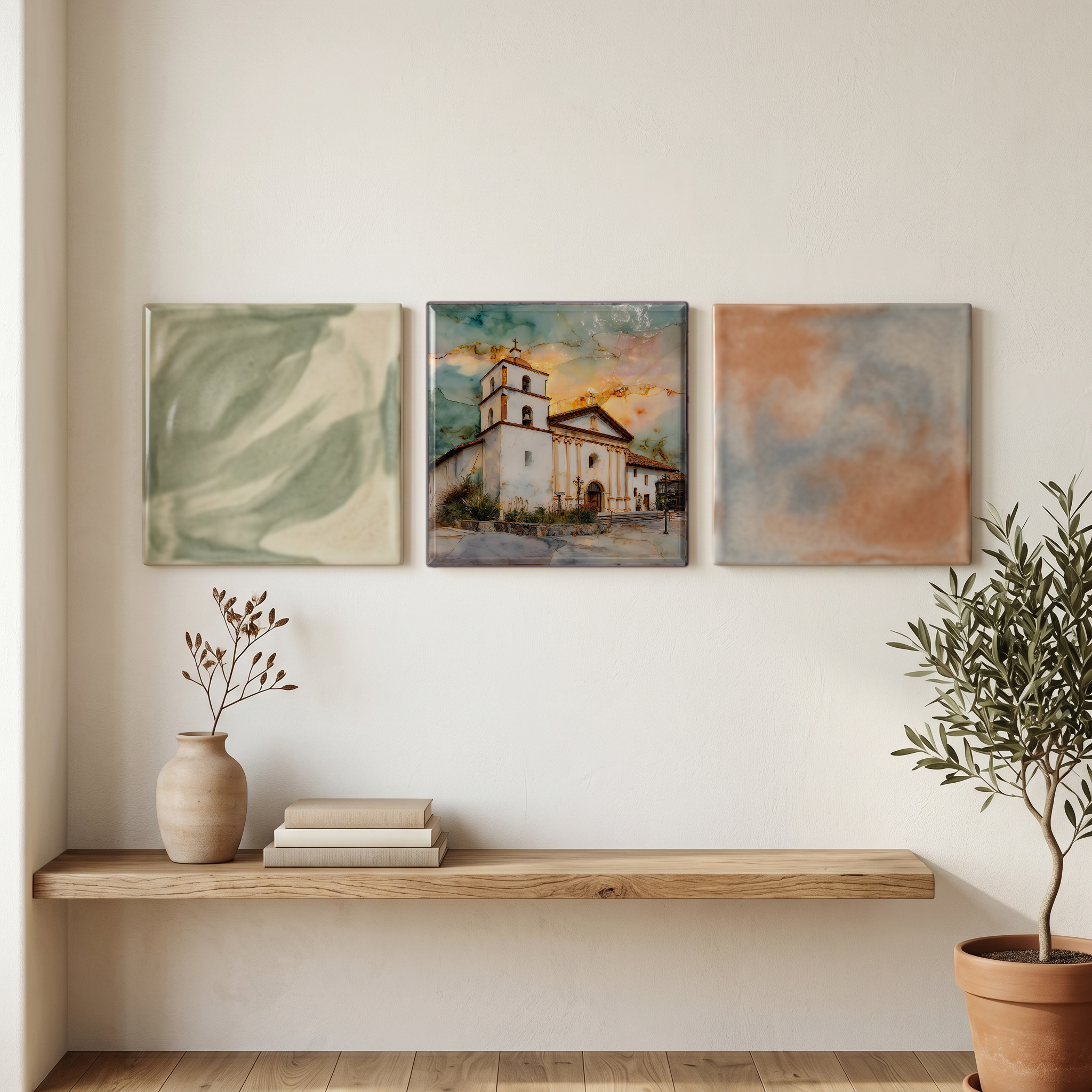
or build a grouping
or build a grouping

Three or five different vistas, hung together — a chapter of places you've been, or want to go.

about Mission San Luis Obispo

The place, in three passes.

A little of what's known, in case you fall down the rabbit hole — or want to go see it yourself.
the place

Mission San Luis Obispo de Tolosa is the fifth of California's 21 Franciscan missions, founded on September 1, 1772 by Junípero Serra and named for Saint Louis of Anjou, a thirteenth-century French prince who renounced his claim to the throne of Naples and was appointed Bishop of Toulouse [Wikipedia]. It stands at 751 Palm Street in downtown San Luis Obispo, along the creek that gives the city its name, roughly halfway between Monterey and Santa Barbara on the historic El Camino Real corridor [California Missions Foundation]. The site sits at about 234 feet of elevation, between the Santa Lucia Range and the Pacific. The Northern Chumash, the Obispeño, lived in this valley before contact and built the adobe walls and the L-shaped plan that survives largely intact today [Diocese of Monterey].

the stone

The mission's defining contribution to California is the red clay roof tile. The original chapel, completed in 1772, was thatched with tule reeds; in 1776 hostile arrows wrapped in burning tule set the roof alight twice within a year [Wikipedia]. Father José Cavaller and the resident community responded with curved red clay tiles that would not burn. The technique spread quickly along the chain, and every California mission roof built after 1790 carries this lineage [California Missions Foundation]. The walls beneath are adobe, mixed from local clay and straw and laid in a distinctive L-shape, unusual among California missions where most chapels stand as straight rectangles. Two and a half centuries later, both the roof and the walls remain largely original.

the visit

The mission is a working parish of the Diocese of Monterey, with daily Mass, weddings, baptisms, and funerals, and a museum on the grounds. Standard visitor hours run roughly 9 a.m. to 5 p.m., with admission by donation; the church itself is free to enter outside of services [Mission San Luis Obispo de Tolosa]. Mission Plaza, the brick-paved square that opens off the south side, anchors downtown San Luis Obispo and hosts Concerts in the Plaza on Friday evenings in summer. The bells still ring the hour. Parking is easiest in the public garages off Palm Street, two blocks from the door. The Thursday-night farmer's market sets up on Higuera Street, three blocks south, every week of the year.

where
United States · San Luis Obispo, California
elevation
71 m · 234 ft
position
35.2802° N · 120.6647° W
the neighborhood

What's nearby.

A handful of named places within an hour's walk or short drive. Some we've already painted; some we will.
at the lake
Mission Plaza
public plaza
at the lake
San Luis Obispo Creek
creek
2 km W
Cerro San Luis
peak
2 km NE
Cal Poly San Luis Obispo
university
3 km NW
Bishop Peak
peak
17 km SW
Avila Beach
beach town
20 km S
Pismo Beach
beach town
N
Mission San Luis Obispo
Mission Plaza
San Luis Obispo Creek
Cerro San Luis
Cal Poly San Luis Obispo
Bishop Peak
Avila Beach
Pismo Beach
common questions

What people ask.

A few questions we get about Mission San Luis Obispo — and about bringing the piece home.
about the place

The mission stands at 751 Palm Street in downtown San Luis Obispo, California, on the creek that gives the city its name. It sits on California's Central Coast roughly halfway between Monterey and Santa Barbara, about 232 miles south of San Francisco along the original El Camino Real.

The mission was founded on September 1, 1772 by Father Junípero Serra, the Franciscan friar who established the first nine of California's 21 missions. It is the fifth in the chain. Father José Cavaller served as its first resident missionary.

The mission is named for Saint Louis of Anjou, a thirteenth-century French prince who renounced his claim to the throne of Naples, joined the Franciscan order, and was appointed Bishop of Toulouse before his death at twenty-three in 1297.

After Chumash arrows wrapped in burning tule set the original thatched roof alight twice in 1776, the padres at San Luis Obispo developed curved red clay roof tiles that would not burn. The technique spread to every California mission built after 1790.

Yes. The mission is a working Catholic parish of the Diocese of Monterey, with daily Mass, weddings, baptisms, and funerals. It also operates a museum on the grounds. The bells still ring the hour above downtown.

The L-shape is unusual among California missions, which are typically straight rectangular chapels. A second wing was added in the late eighteenth century to accommodate the growing congregation. The original 1772 nave forms the long arm; the added wing forms the short.

The mission and its museum are open daily, roughly 9 a.m. to 5 p.m., with admission by donation. The church itself is free to enter outside of services. Public parking sits two blocks east on Palm Street; Mission Plaza opens off the south wall.

about the piece in your home

It has been a meaningful gift for many of our customers from California's Central Coast and for graduates of Cal Poly San Luis Obispo. The mission is the founding landmark of the city and the heart of the downtown that Cal Poly families know well. A Small or Medium with a handwritten note from the studio carries well.

Yes. The 21 missions form a pilgrimage route from San Diego to Sonoma, and San Luis Obispo is the fifth station. A Medium reads well as a confirmation gift, an ordination gift, or a Camino-style keepsake; a Keepsake works for a desk or a chapel shelf.

The piece reads strongest in Spanish-revival, California-modern, and Mission-style interiors, where the red tile roof and warm adobe palette echo terracotta, oak, and wrought iron. It also grounds Mountain-modern and Coastal-modern rooms that need a single warm-toned focal point.

Yes. Spanish-revival and Mission-style decorating cycles back into California design every few years, often paired with terracotta floors, white-washed plaster, and dark beamed ceilings. The tile's red roof and adobe walls fit that palette without leaning kitsch.

Above a standard sofa, a single Large or a four-tile Mural reads at the right scale. Above a console table or a fireplace, a Medium centred works well; for a long hallway or a double-height entry, a nine-tile Mural arrangement carries the room.

Yes. For wet or steam-exposed spaces like showers, backsplashes, or laundry rooms, choose the Dura Satin or Matte finish. The Glossy finish is for dry walls and framed display. The colour lives in the surface and does not fade with cleaning or sunlight.

A soft microfibre cloth and water are enough for daily care. For kitchen splatter or bathroom soap film, a drop of mild dish detergent on a damp cloth lifts it without harming the surface. Avoid abrasive pads and any solvent-based cleaner.

Yes. Every WenderVista tile begins as an original painting by Reid Wender, the studio's curator, slowly infused into the ceramic surface under high heat and pressure and hand-finished in our Knoxville studio. The work is not licensed and does not appear anywhere else.

if this one stayed with you

A few you might also love.

Hand-picked by the eye that found Sorapis. Same air, same kind of quiet.