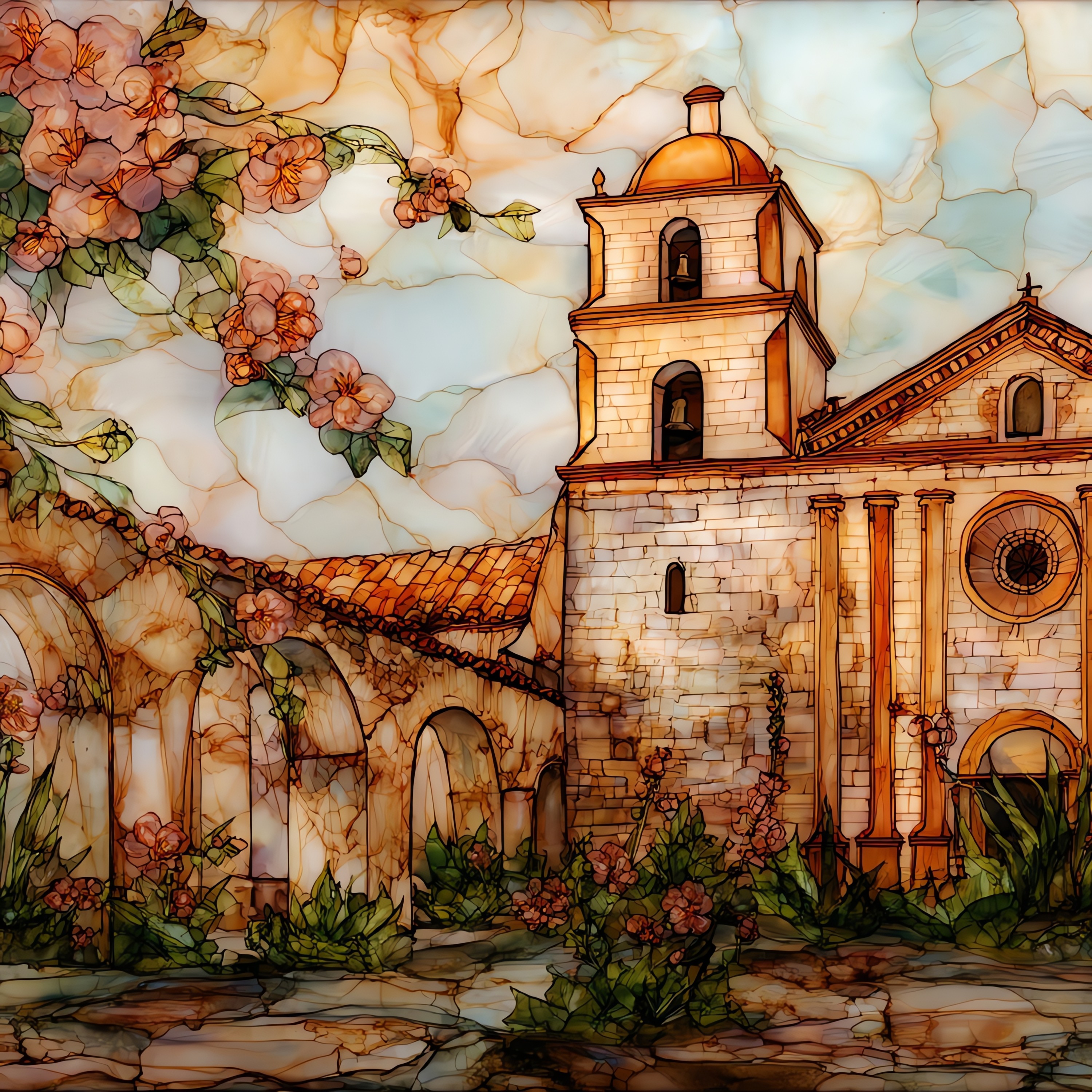
Mission San Juan Capistrano
— the arches the earthquake left for the light.
Not only on a wall.




“The seventh of the California missions, set down in 1776 between the Pacific and the Santa Ana foothills. The Great Stone Church stood for six years before the December morning in 1812 when the earth shook it apart during Mass; the four bells survived, the arches survived, and Father Serra's small adobe chapel of 1782 survived. The chapel still holds a candle. Each March, by tradition, the cliff swallows that wintered in Argentina come back to nest in the broken walls. Fewer of them now than there used to be, but the bells still ring for them on Saint Joseph's Day.
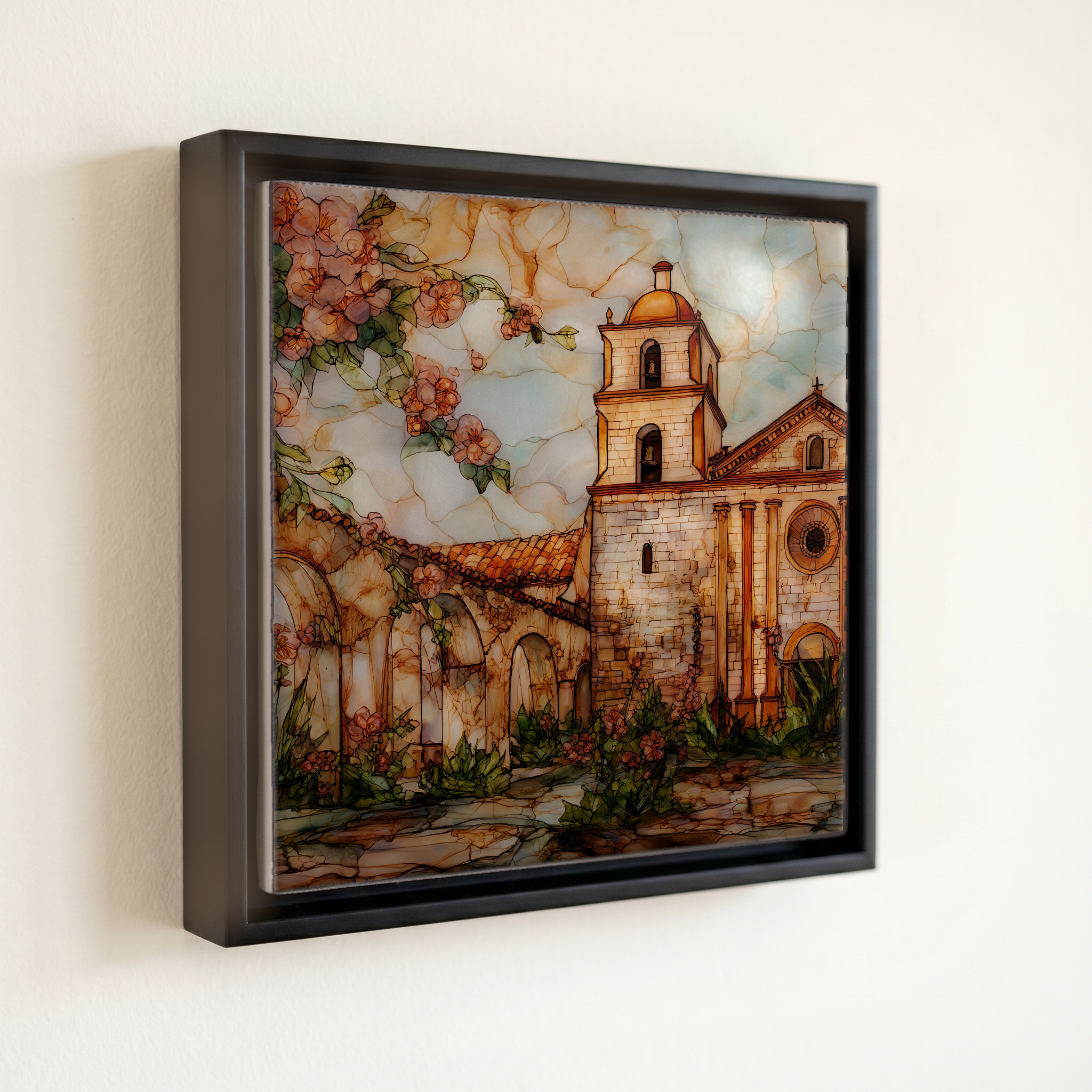
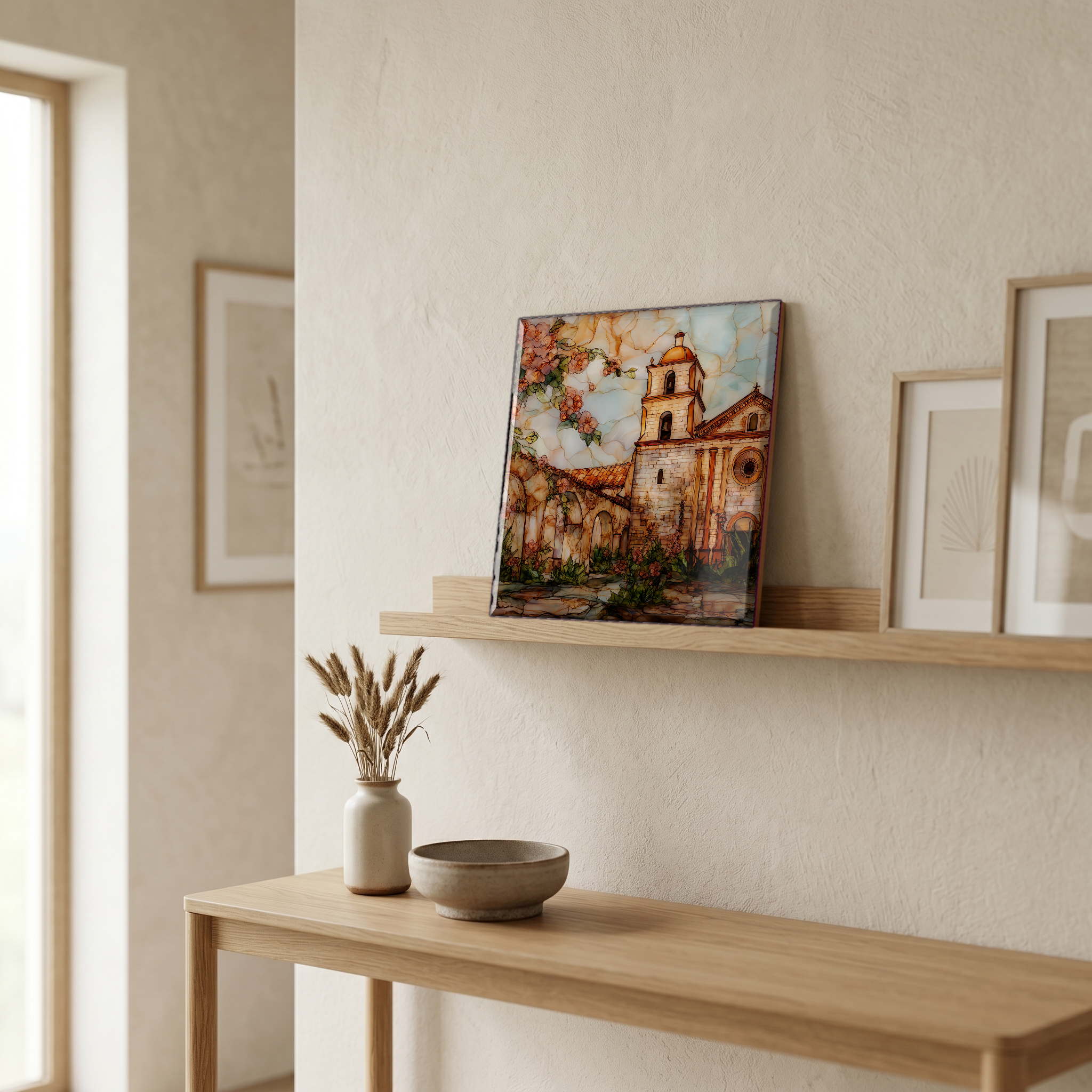
Mission San Juan Capistrano, on ceramic.
Each tile is finished by hand in our Knoxville studio. Artwork is slowly infused into the ceramic surface under high heat and pressure, and rests beneath a thin glossy finish. The colour lives in the surface, not on top of it.
Pick any four 4-inch tiles — National Parks you've been to, a Smokies set, the four seasons of one place. $ for a set of , cork-backed, ready to live on the table.

Each tile ships in a kraft box, tied with cream ribbon, with a handwritten note from the studio if you'd like to add one.

Three or five different vistas, hung together — a chapter of places you've been, or want to go.
The place, in three passes.
The seventh of California's twenty-one Spanish missions, founded by Father Junípero Serra on November 1, 1776, between the Santa Ana foothills and the Pacific. Today the grounds sit in the city of San Juan Capistrano, Orange County, about sixty miles southeast of Los Angeles and forty miles north of San Diego. Ten acres of adobe walls, central fountain, sacred garden, and the ruins of the Great Stone Church surround the small chapel where Serra himself said Mass, the oldest building still in use in California. The mission is a registered California Historical Landmark and a National Register property, owned and operated by the Diocese of Orange.
The Great Stone Church was finished in 1806 after nine years of construction by Acjachemen labour under the direction of stonemason Isidoro Aguilar of Culiacán, Mexico. It stood roughly 180 feet long with seven domes of cut sandstone, the most ambitious mission church ever built in Alta California. On the morning of December 8, 1812, an earthquake collapsed the nave during the Feast of the Immaculate Conception Mass; forty worshippers were killed, the bell tower fell, and only the sanctuary and parts of the side walls were left standing. The ruins have stood as they fell for more than two centuries, the stone still holding the marks of the chisel.
By tradition the cliff swallows return on the Feast of Saint Joseph, March 19, after wintering six thousand miles south in Goya, Argentina; the mission marks the return with the Fiesta de las Golondrinas. The birds leave on the Day of San Juan Capistrano, October 23, after raising young in mud nests pressed against the broken arches. The pattern was made famous by Leon René's 1939 song When the Swallows Come Back to Capistrano. In recent decades the colony has thinned; the swallows now favour the eaves of nearby suburban houses, and the mission has hung false nests and broadcast recorded calls to coax them back.