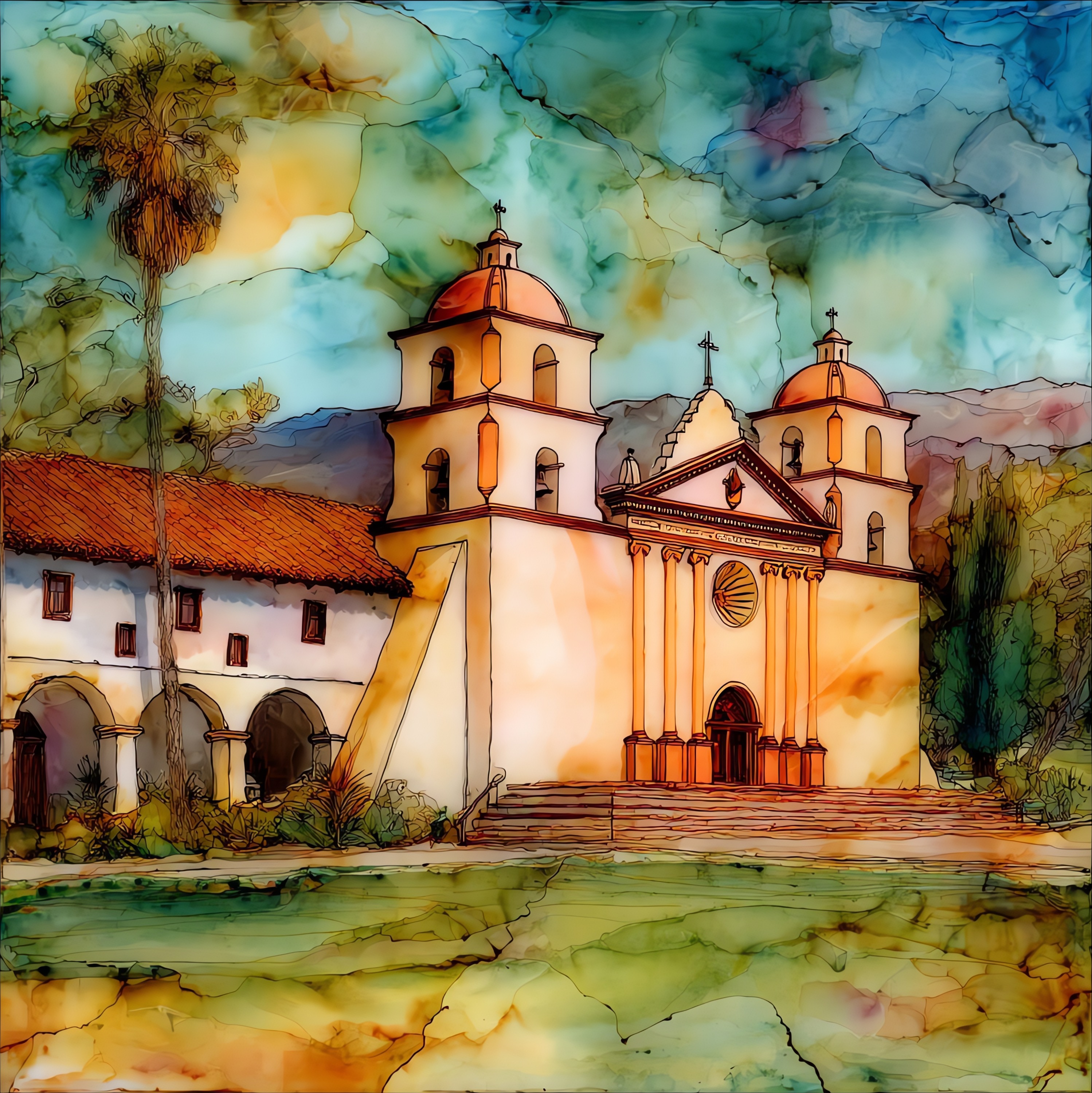
Mission San Juan Bautista
— — the long arcade the afternoon never quite leaves.
Not only on a wall.
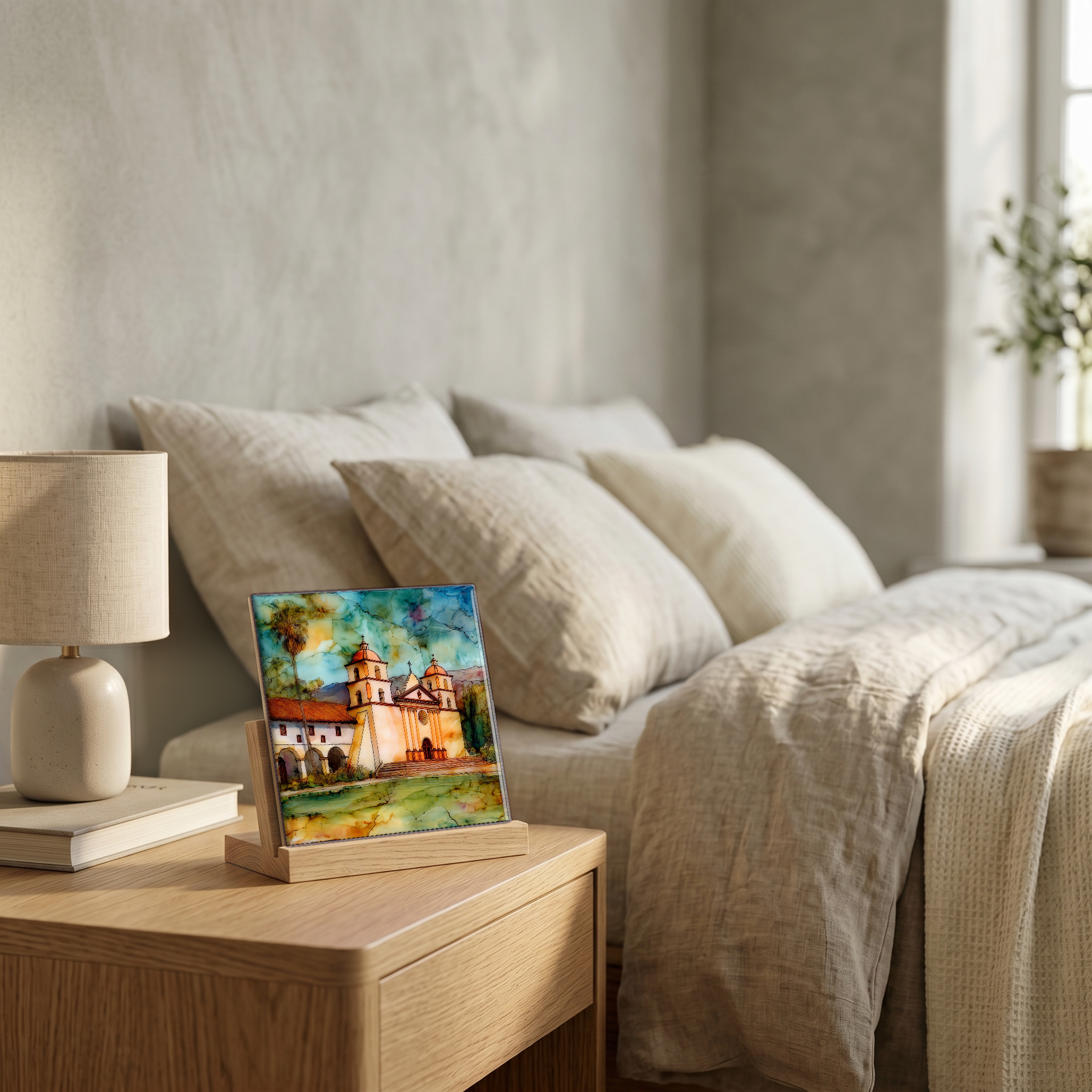
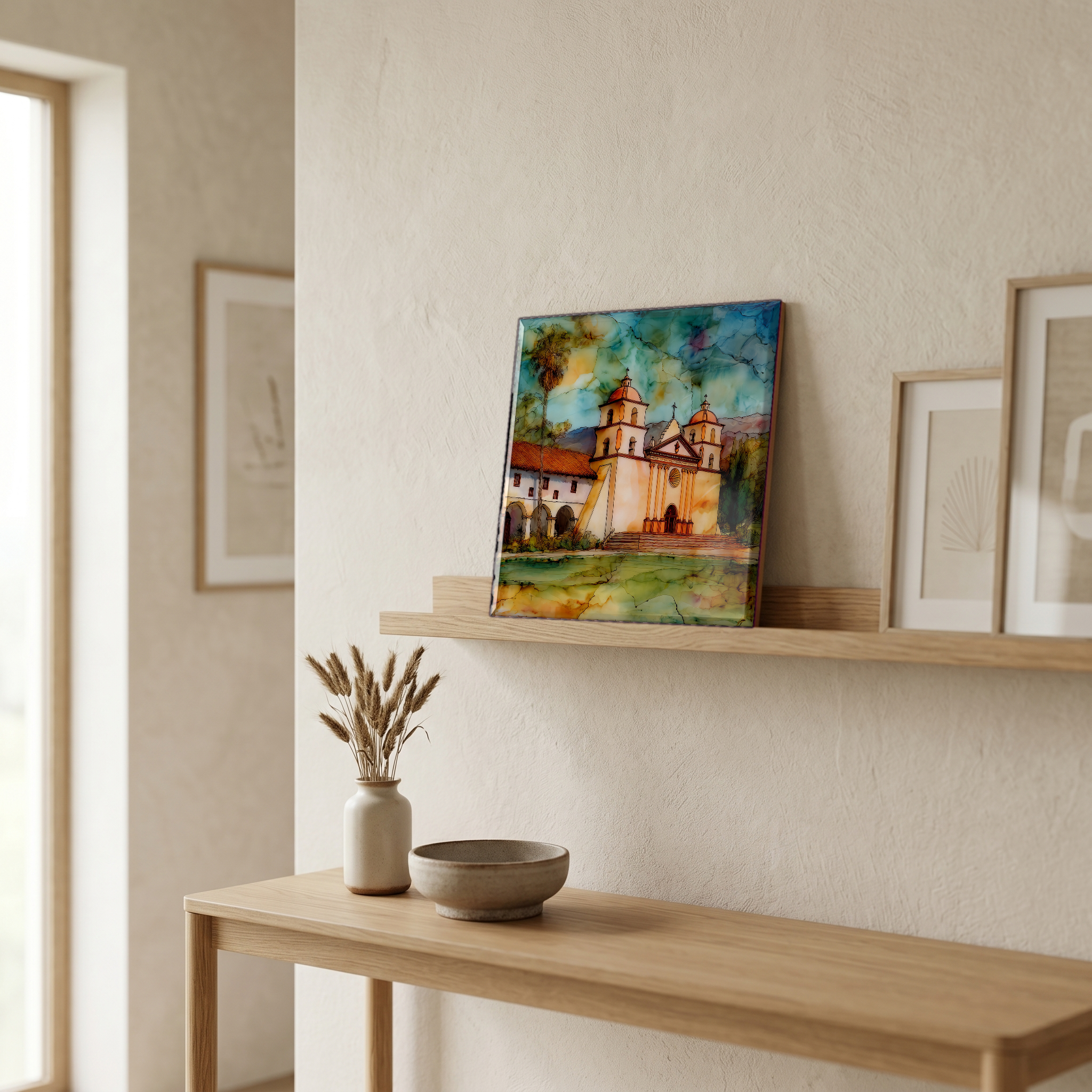
“The fifteenth California mission, founded by Fermín Lasuén in 1797 on a flat bench above the Salinas Valley. The longest church of the chain. Three aisles, a thing none of the others has. The plaza out front is still the original packed earth. The San Andreas fault runs along the edge of the orchard; on a quiet day the El Camino Real disappears into the hills behind it. Hitchcock filmed the bell-tower scene here in 1958, though the tower itself was a matte painting. The bells he heard are real, and ring on the hour.
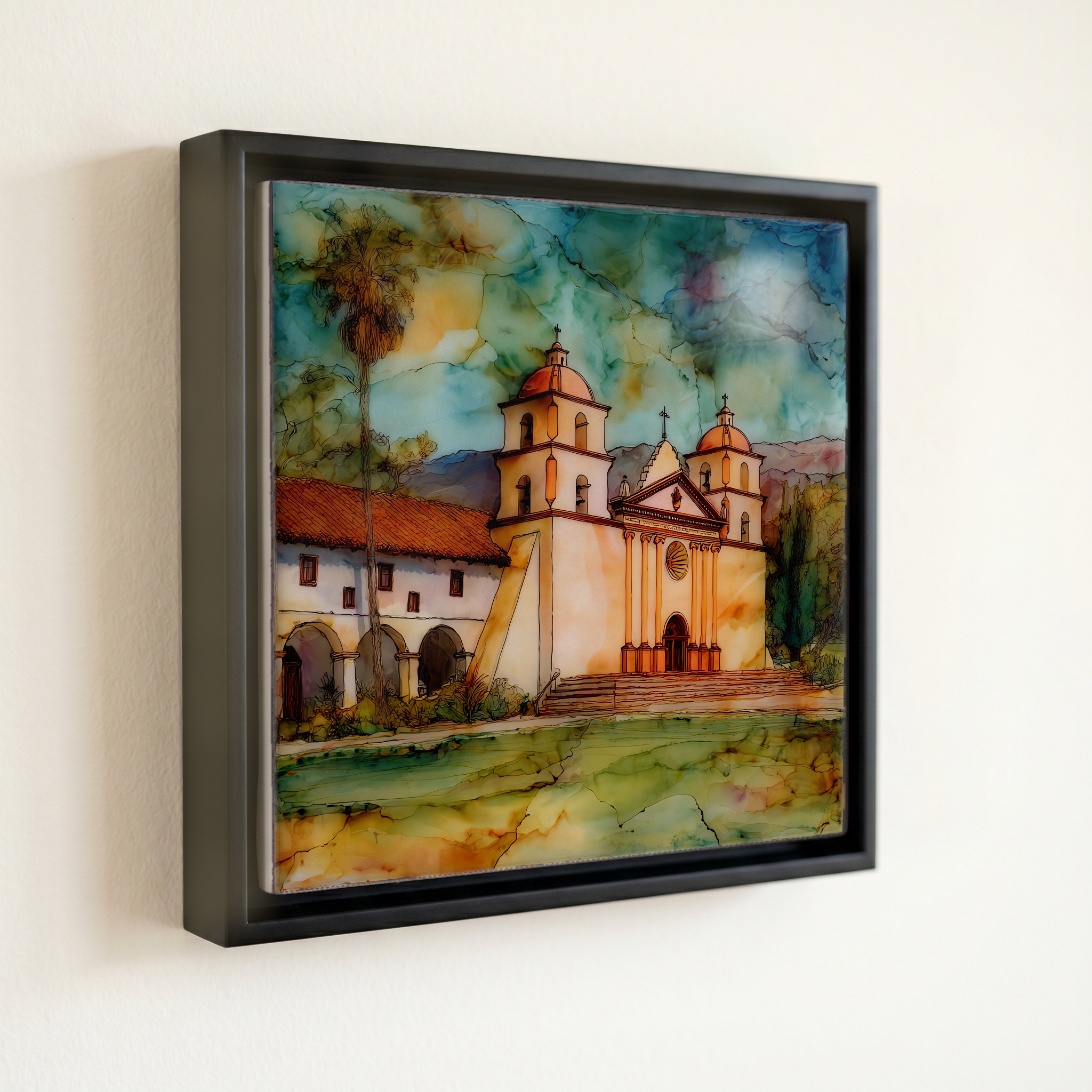
Mission San Juan Bautista, on ceramic.
Each tile is finished by hand in our Knoxville studio. Artwork is slowly infused into the ceramic surface under high heat and pressure, and rests beneath a thin glossy finish. The colour lives in the surface, not on top of it.
Pick any four 4-inch tiles — National Parks you've been to, a Smokies set, the four seasons of one place. $ for a set of , cork-backed, ready to live on the table.

Each tile ships in a kraft box, tied with cream ribbon, with a handwritten note from the studio if you'd like to add one.
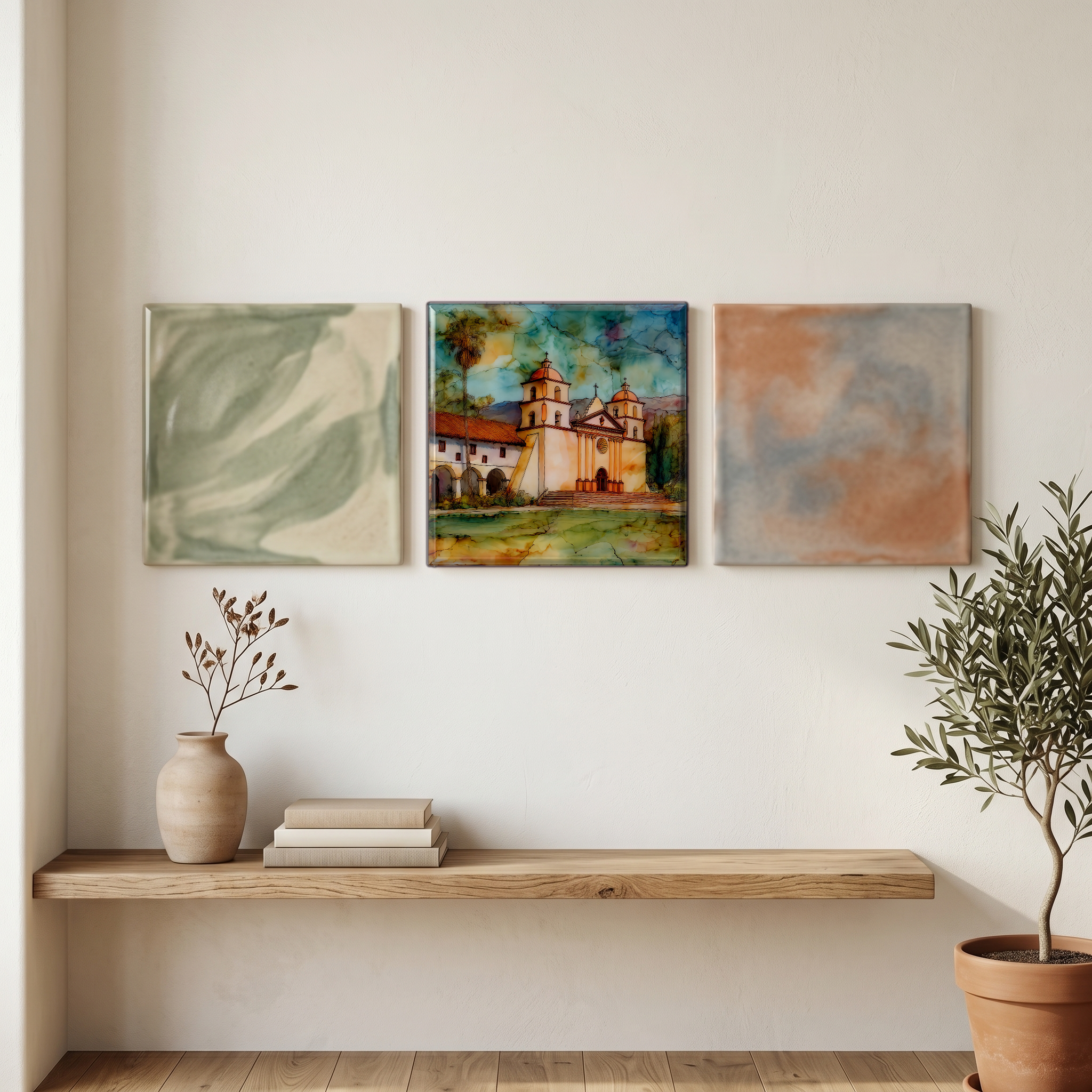
Three or five different vistas, hung together — a chapter of places you've been, or want to go.
The place, in three passes.
Mission San Juan Bautista sits on a flat, oak-studded bench above the Salinas Valley in San Benito County, California, about thirty miles inland from Monterey Bay. It was founded on June 24, 1797 by Father Fermín Francisco de Lasuén, the second president of the Alta California mission chain. It is the fifteenth of twenty-one missions built between San Diego and Sonoma along the original El Camino Real. The town of San Juan Bautista, with a population near two thousand, grew up directly in front of the mission's open plaza. The Diocese of Monterey still operates the church as an active parish, and the bells in the espadaña still ring the hour.
The completed church, dedicated in 1812, is the largest of the California missions and the only one built with three aisles. A central nave is flanked by two side aisles separated by piers of brick and adobe. The walls are three feet thick in places, faced with whitewashed adobe and roofed in red clay tile. The 1906 San Francisco earthquake damaged the church and forced the side aisles to be closed off for decades; they were reopened in the 1970s under California's mission preservation programme. The bell wall, the espadaña, still carries the bells that mark the hour. Inside, several floor tiles preserve animal paw prints pressed into the wet clay before they hardened.
The mission church and museum are open seven days a week as a working parish; Mass is still celebrated on Sundays in the nave dedicated in 1812. The plaza outside is part of San Juan Bautista State Historic Park, which preserves the Plaza Hotel, the Castro-Breen Adobe, the Plaza Stable, and the Zanetta House along the original town square. Behind the cemetery, a marked path follows a low scarp where the San Andreas Fault crosses the mission grounds. It is the only California mission built directly on the fault. The bell-tower scene in Alfred Hitchcock's Vertigo (1958) was filmed here, though the tower itself was a matte painting. From the plaza, the original El Camino Real drops away down the fault scarp.