Wender·Vista
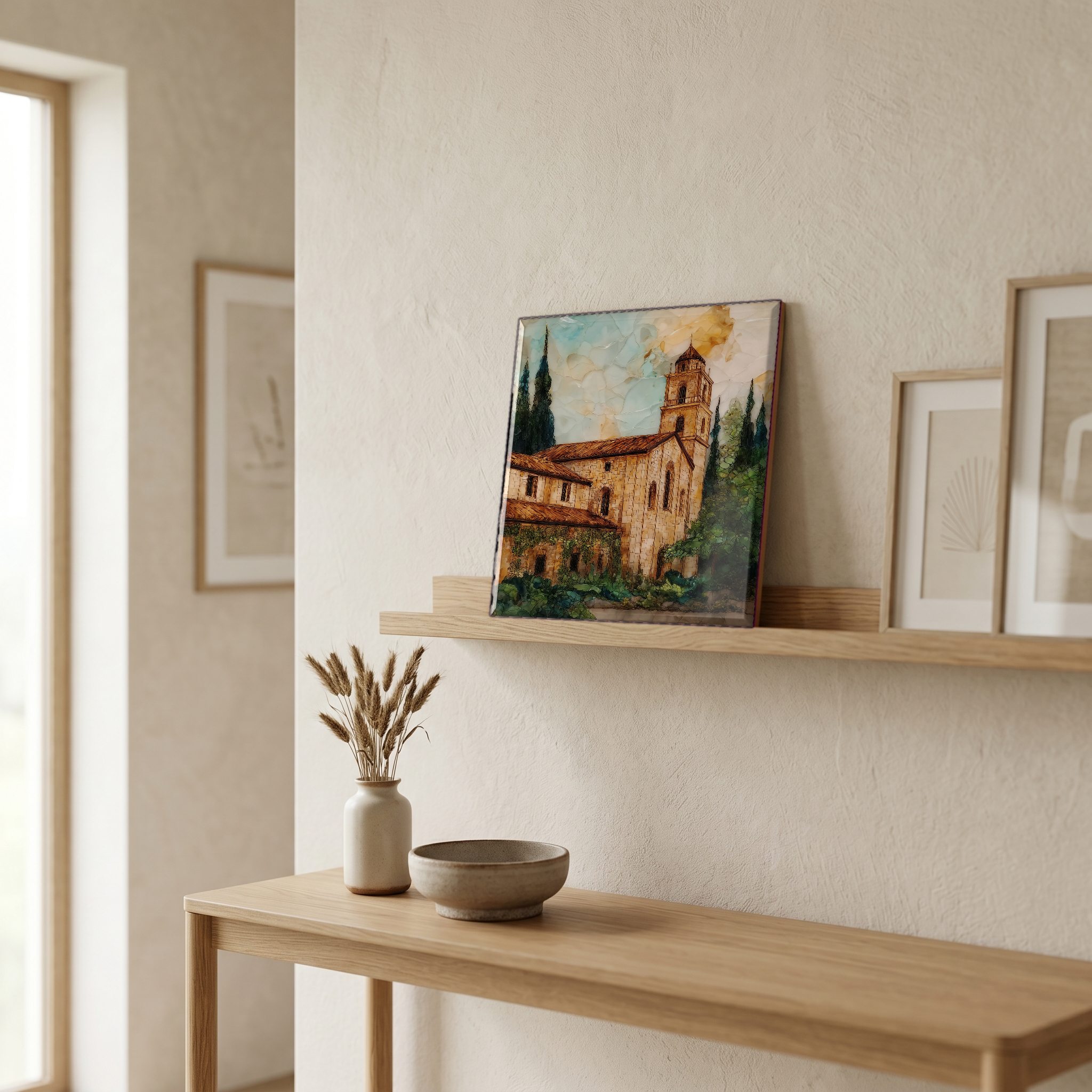
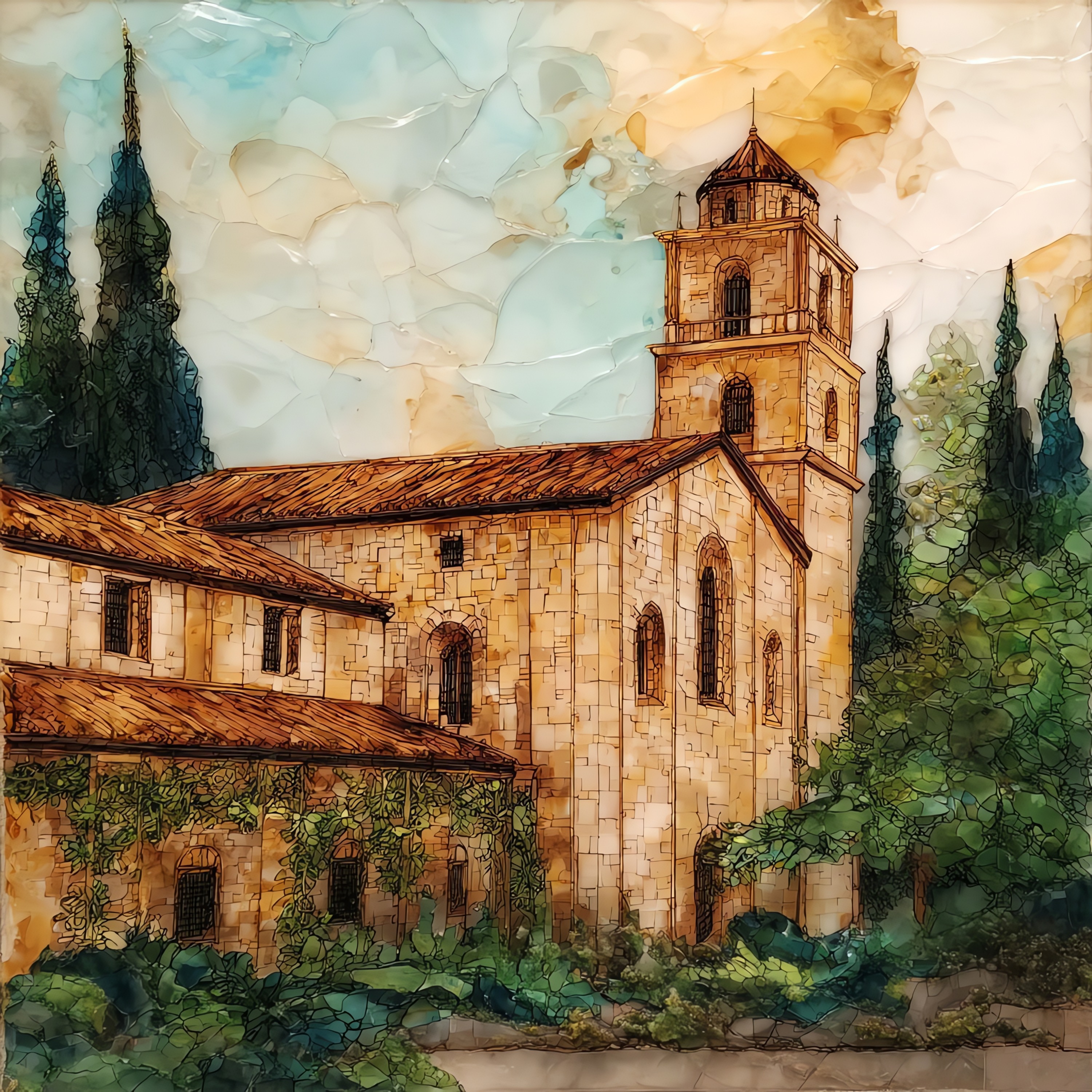
Mission San Gabriel Arcangel
shown on ceramic, 12-inch tileCalifornia · United States
in the San Gabriel Valley, east of downtown Los Angeles

Mission San Gabriel Arcangel

bells in their wall, again.

Where it lives

Not only on a wall.

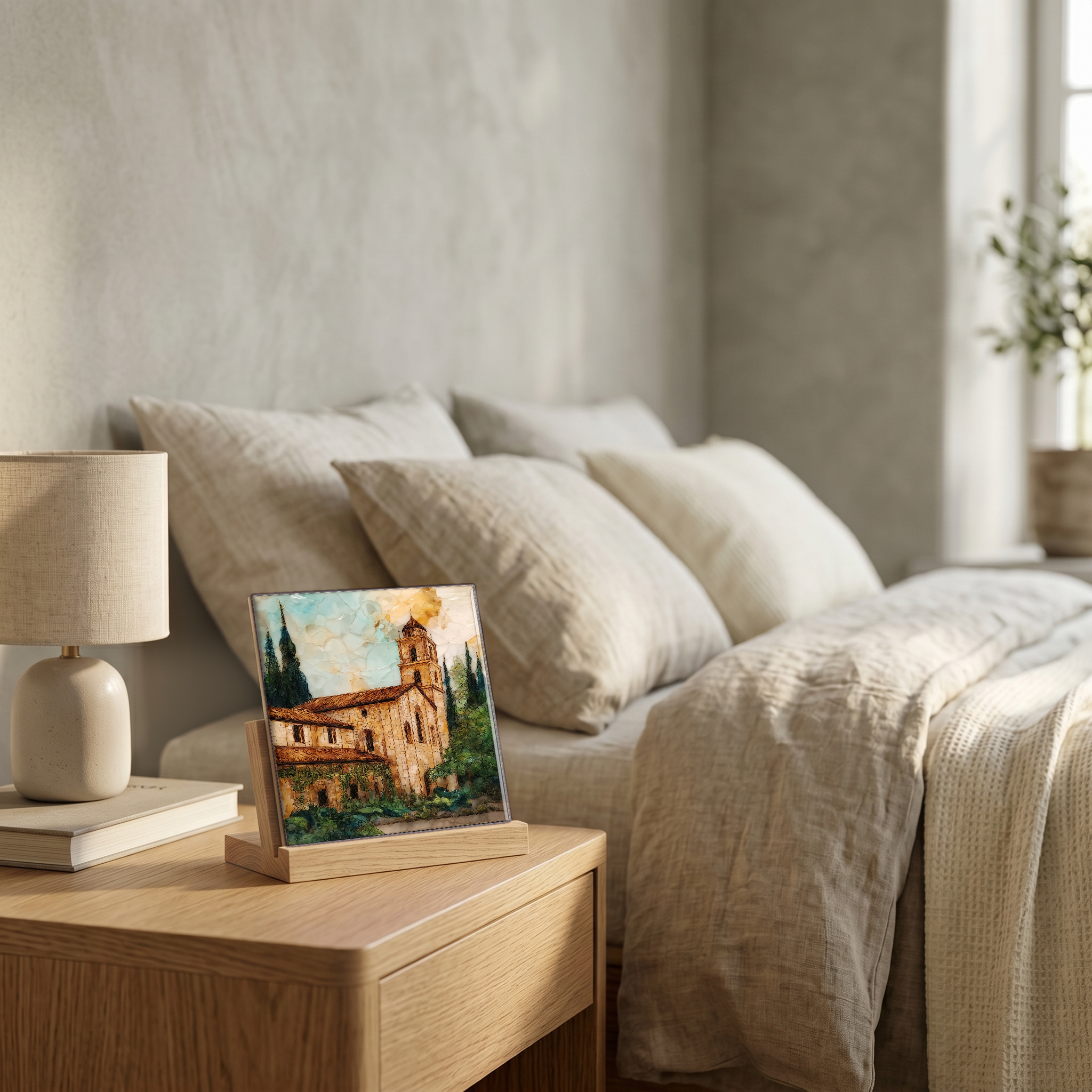
A small tile on the nightstand catching the morning. A larger one above the fire. Yours, wherever you spend the slow hours.
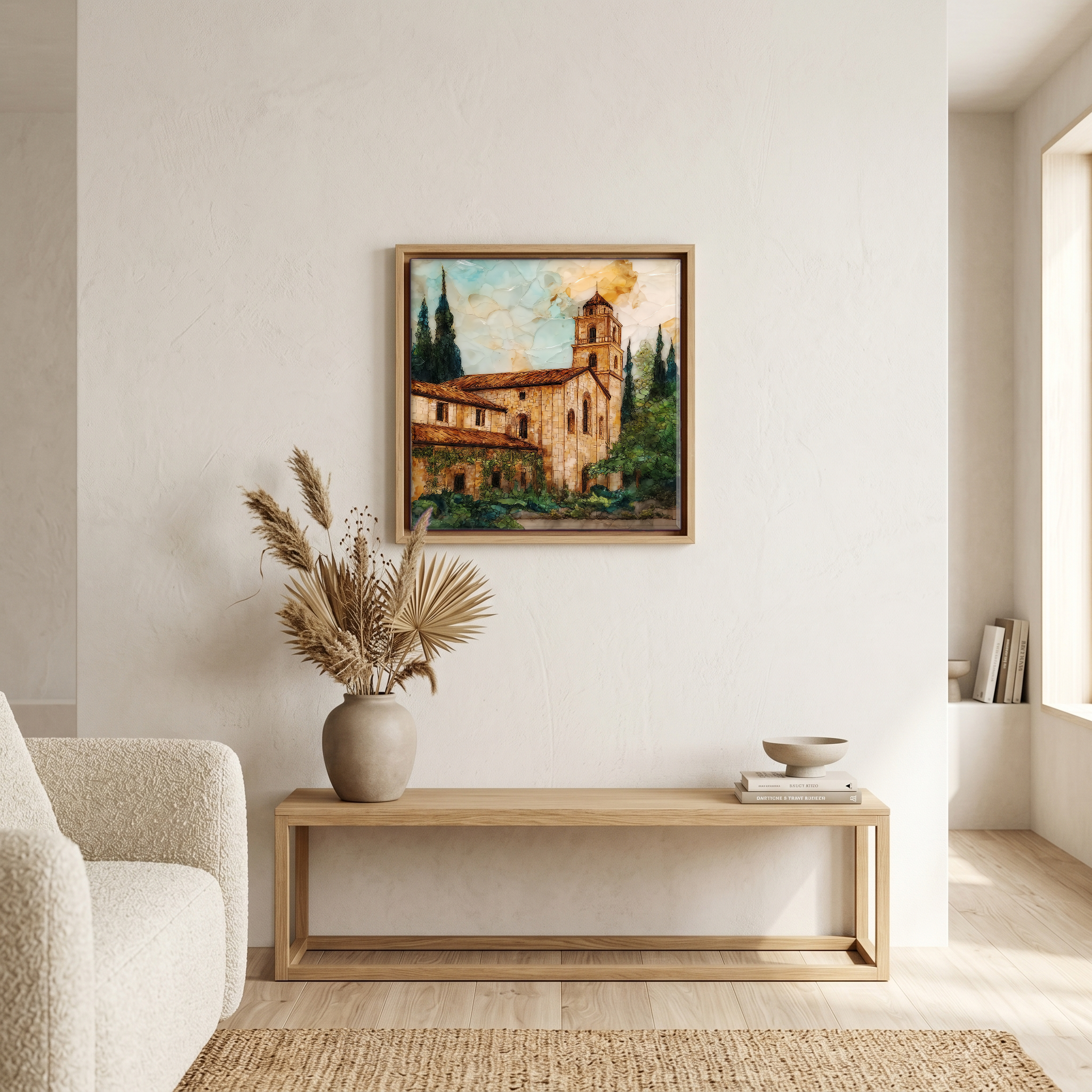
Above the bench, in a warm oak surround.
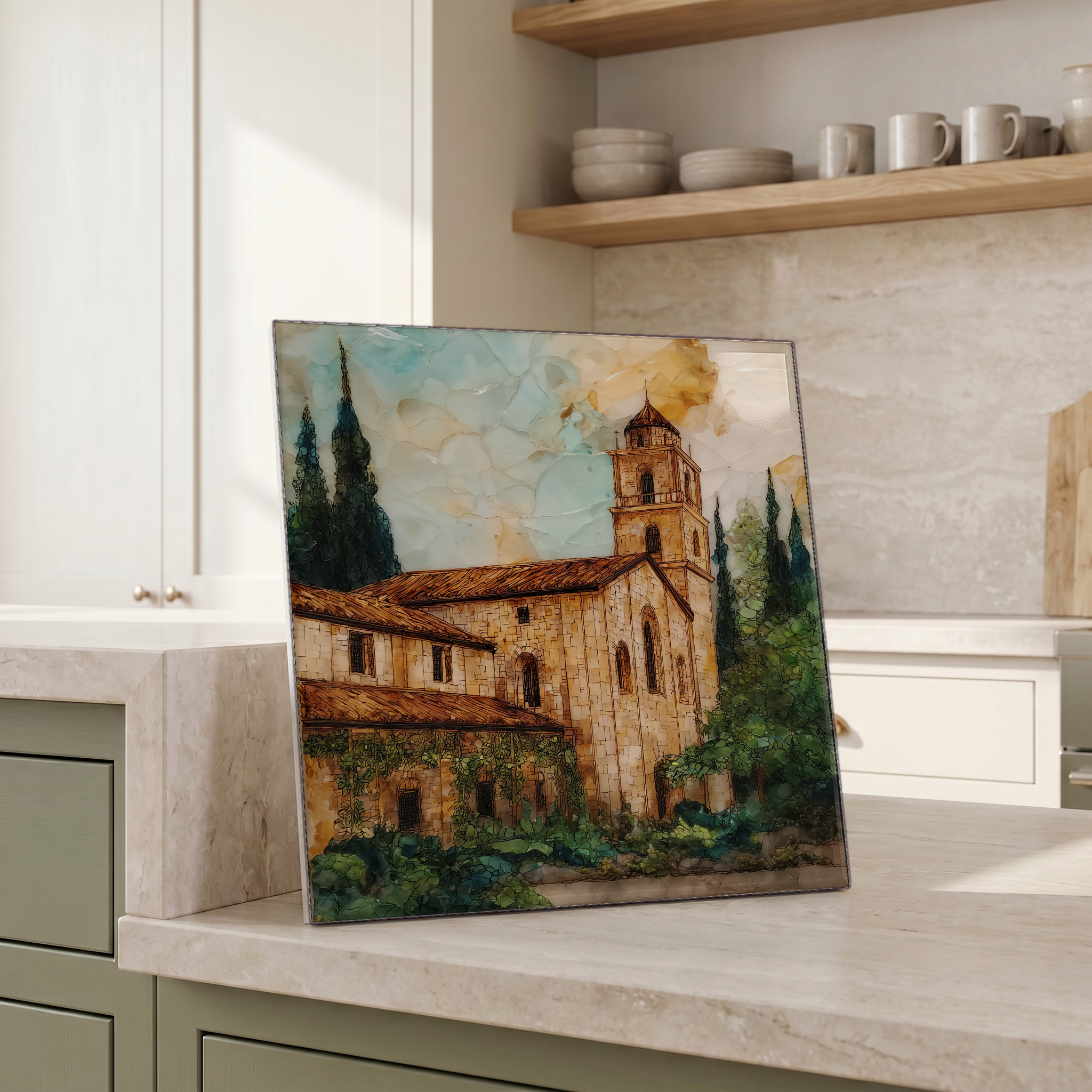
Beside the kettle, propped on the counter.
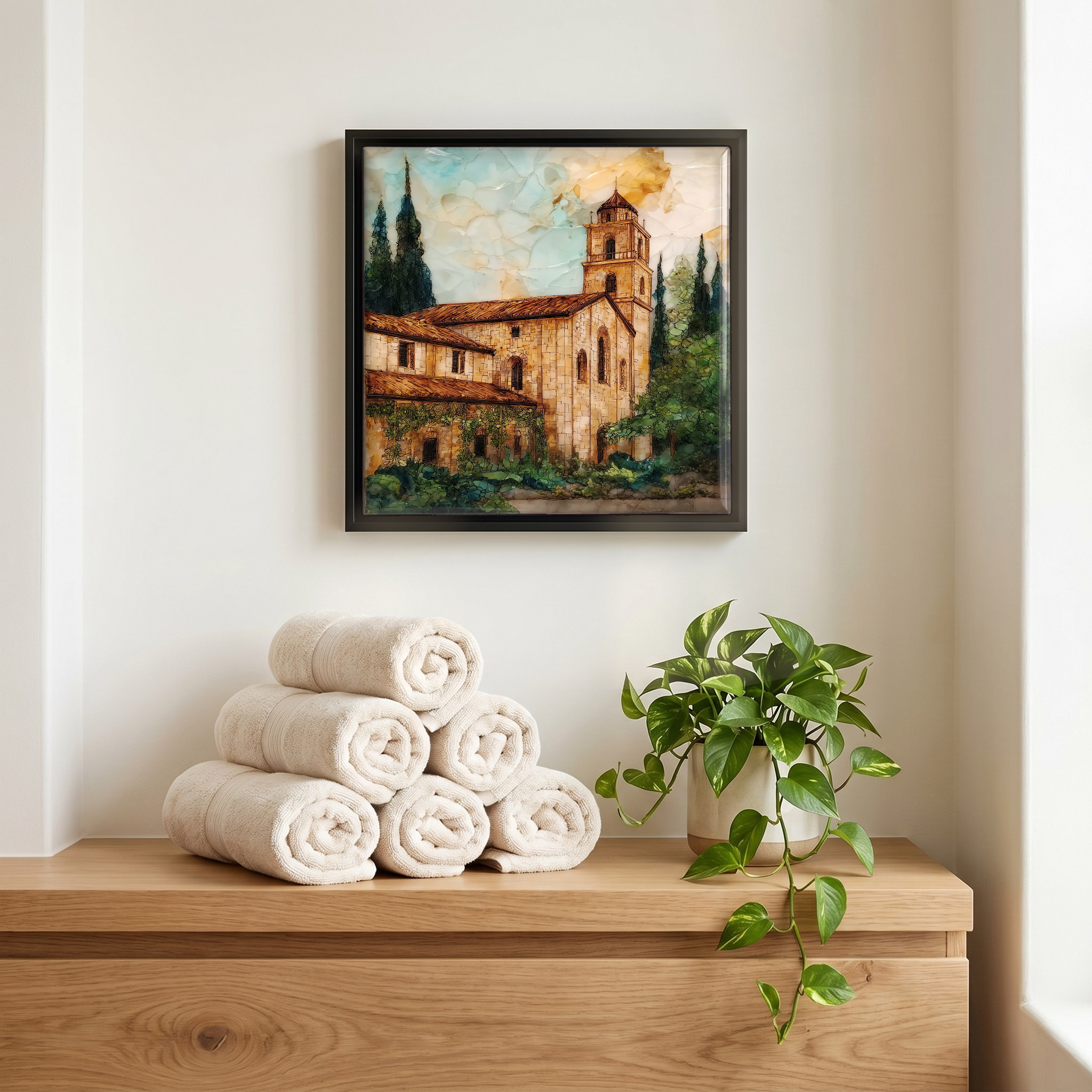
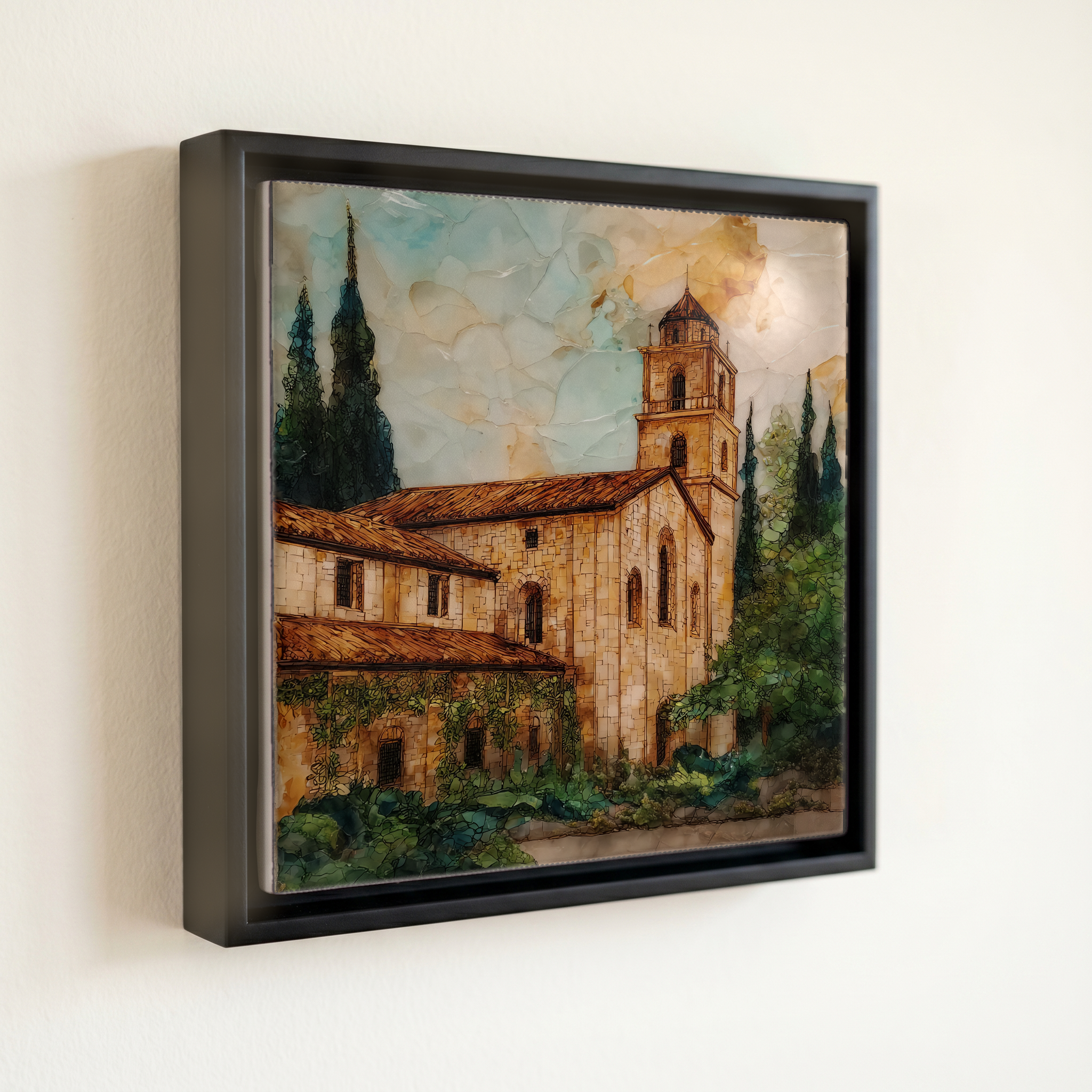
Above the linens, in a slim black surround.
On the nightstand, on a light oak stand.
On a picture ledge, where the light comes in.
a note from the studio

The fourth of California's twenty-one missions, and the only one whose architect trained in Córdoba. Father Antonio Cruzado gave it capped buttresses and narrow windows. A fortress for prayer, on the plain east of what is now downtown Los Angeles. Six bells hang in the campanario, the oldest cast in 1795. A fire took the wooden roof in the summer of 2020. The community rebuilt, and the church reopened on the 252nd anniversary of its founding, to the day. The Tongva have lived in this valley far longer than any of it.
from the studio
shown in a slim black floating frame · 6 × 6 in
— bring it home

Mission San Gabriel Arcangel, on ceramic.

Each tile is finished by hand in our Knoxville studio. Artwork is slowly infused into the ceramic surface under high heat and pressure, and rests beneath a thin glossy finish. The colour lives in the surface, not on top of it.

What kind of piece?
One tile — square or rectangle.
How big?
the popular one — counter, shelf, nightstand
6 × 6 in · 15 cm · 1.6 lb
Surface finish
A clear glossy finish — the artwork reads as if under resin. Ideal for show-pieces and framed wall art.
How it sits
A hidden cleat — sits ¼″ proud of the wall.
$58
Hand-finished and shipped from our studio at the foot of the Smokies. On your wall in about ten days.
size
6 × 6 in
15 cm
weighs
1.6 lb
solid in the hand
surface
ceramic, hand-finished
art rests beneath a thin glossy finish
from
Knoxville, TN
our family studio, at the foot of the Smokies
— start a Coaster Set

Pick any four 4-inch tiles — National Parks you've been to, a Smokies set, the four seasons of one place. $ for a set of , cork-backed, ready to live on the table.
comes gift-ready
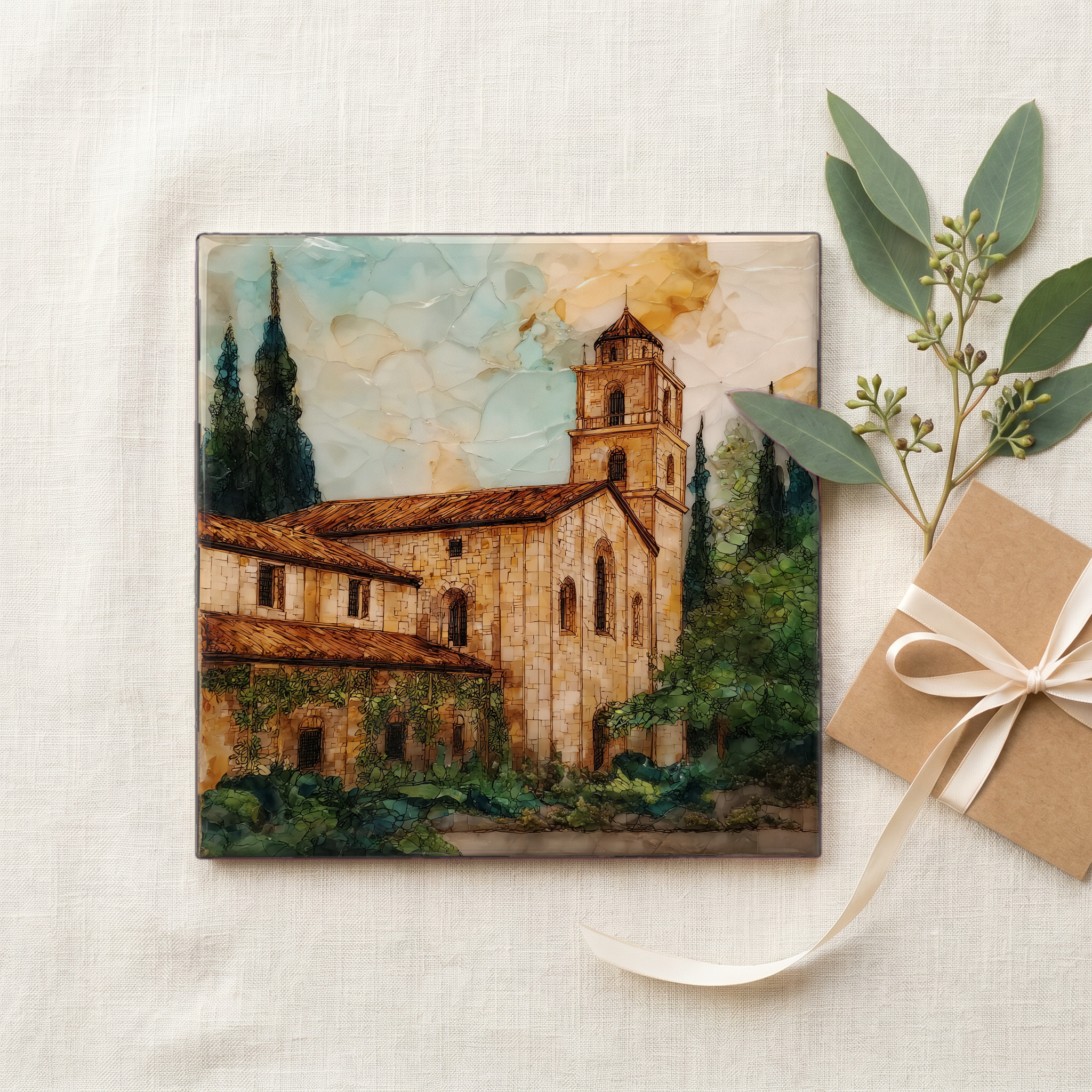
comes gift-ready

Each tile ships in a kraft box, tied with cream ribbon, with a handwritten note from the studio if you'd like to add one.
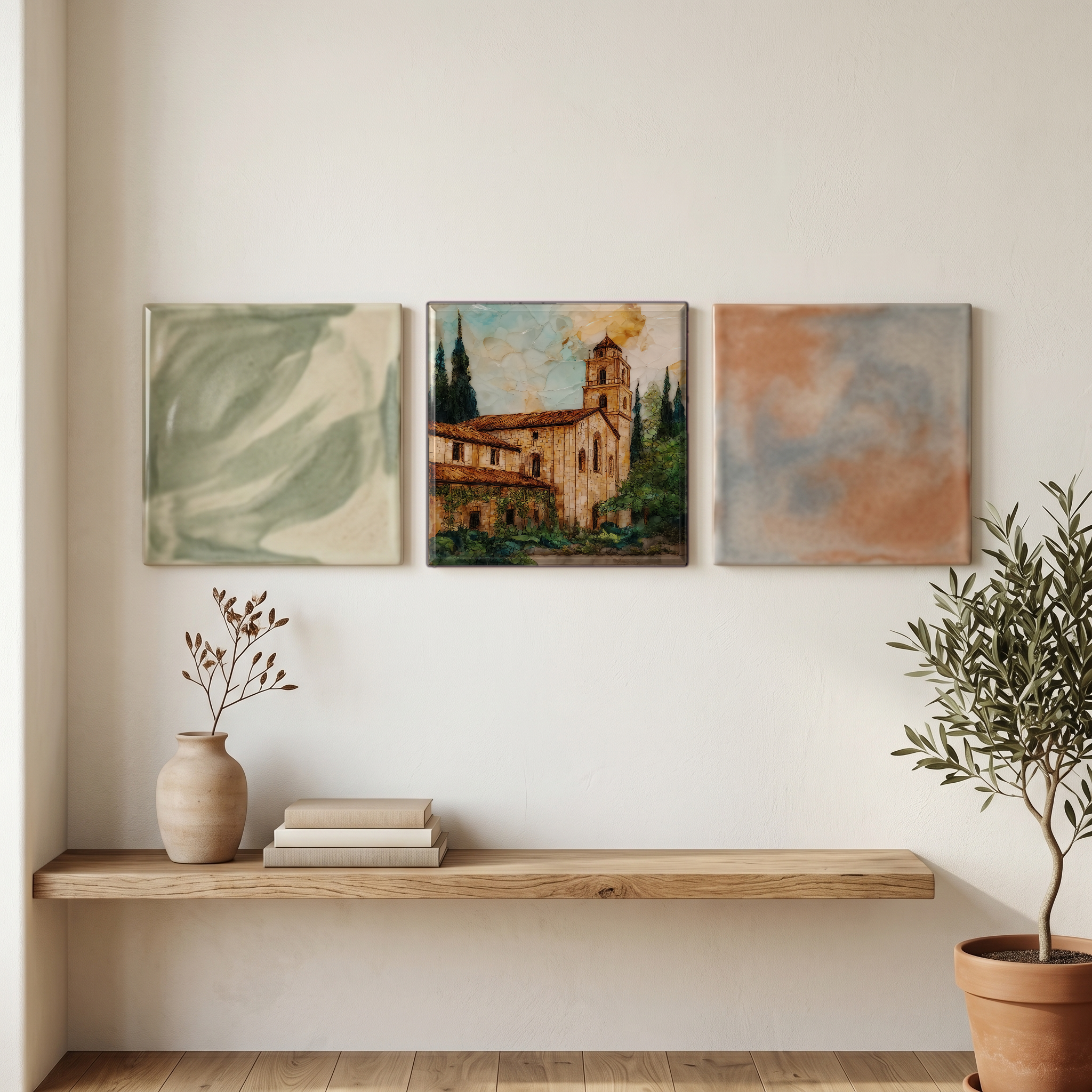
or build a grouping
or build a grouping

Three or five different vistas, hung together — a chapter of places you've been, or want to go.

about Mission San Gabriel Arcangel

The place, in three passes.

A little of what's known, in case you fall down the rabbit hole — or want to go see it yourself.
the place

Mission San Gabriel Arcángel was founded on September 8, 1771, the fourth of twenty-one Spanish Franciscan missions established along El Camino Real in Alta California. Padres Pedro Cambón and Ángel Somera set the first chapel near the confluence of the San Gabriel and Río Hondo rivers, then moved the site roughly five miles north in 1775 after repeated flooding. The current location at 428 South Mission Drive sits in the San Gabriel Valley, about nine miles east of downtown Los Angeles. The mission served as the seed of the Pueblo de Los Ángeles, founded a decade later in 1781 by settlers led north from San Gabriel. It is California Historical Landmark No. 158 and a National Historic Landmark.

the stone

The current stone-and-mortar church was built between 1791 and 1805 to the designs of Father Antonio Cruzado, a Franciscan from Córdoba in Andalusia. He gave San Gabriel a profile that does not appear anywhere else on the mission chain: tall capped buttresses, narrow elongated windows, and a vaulted roof, echoes of the Great Mosque of his home city. The original bell tower collapsed in the 1812 San Juan Capistrano earthquake and was replaced by the campanario, a free-standing facade pierced with six bells in graduated arches. The oldest bell was cast in 1795. On July 11, 2020, a fire destroyed the wooden roof and most of the interior; restoration was completed and the church reopened on September 8, 2023, the founding anniversary.

— informed by Wikipedia
the visit

The mission is an active Catholic parish and a working museum, open to visitors most days of the week. Self-guided tours of the church, the campanario, the soldiers' quarters, the original olive press, and the small cemetery typically take about an hour. Mass is celebrated daily in the restored church, with multiple Sunday Masses in English and Spanish. The grounds are about a thirty-minute drive from downtown Los Angeles in light traffic. A modest admission supports ongoing preservation; current hours and fees are posted on the mission's official site.

— informed by Wikipedia
where
United States · San Gabriel, Los Angeles County, California
elevation
121 m · 397 ft
position
34.0972° N · 118.1056° W
the neighborhood

What's nearby.

A handful of named places within an hour's walk or short drive. Some we've already painted; some we will.
4 km NW
Huntington Library
library and botanical gardens
9 km ENE
Los Angeles County Arboretum
botanical garden
12 km W
El Pueblo de Los Ángeles
historic plaza
8 km NW
Rose Bowl
stadium
10 km N
San Gabriel Mountains
mountain range
N
Mission San Gabriel Arcangel
Huntington Library
Los Angeles County Arboretum
El Pueblo de Los Ángeles
Rose Bowl
San Gabriel Mountains
common questions

What people ask.

A few questions we get about Mission San Gabriel Arcangel — and about bringing the piece home.
about the place

Mission San Gabriel was founded on September 8, 1771, by Franciscan padres Pedro Cambón and Ángel Somera, the fourth of the twenty-one Spanish missions of Alta California. It was originally sited near the Río Hondo and moved to its current location in San Gabriel in 1775 after recurring floods.

The architect, Father Antonio Cruzado, came from Córdoba in Andalusia and brought a Moorish-influenced fortress profile with him. The capped buttresses, narrow elongated windows, and vaulted roof give San Gabriel a silhouette unlike any of the other twenty missions. It is often called the Pride of the California Missions.

On July 11, 2020, a fire destroyed the wooden roof and most of the interior of the historic church. Restoration took just over three years. The church reopened with a Mass on September 8, 2023, the 252nd anniversary of the mission's founding, to the day.

Six bells hang in the campanario, the free-standing bell wall beside the church. The oldest was cast in 1795 and has rung over the San Gabriel Valley ever since. The campanario replaced an earlier bell tower that fell in the 1812 San Juan Capistrano earthquake.

The Tongva, also known by the mission-era name Gabrieleño, are the Indigenous people of the Los Angeles basin and the San Gabriel Valley. They lived in the region for thousands of years before the mission was founded and remain a culturally active community in and around San Gabriel today.

The mission is at 428 South Mission Drive in San Gabriel, California, about nine miles east of downtown Los Angeles. By car it is roughly a thirty-minute drive from downtown in light traffic, and about forty minutes from LAX. Street parking is generally available on adjacent blocks.

Arcángel is Spanish for Archangel. The mission is named for the Archangel Gabriel, the messenger of the Annunciation in Christian tradition. The Spanish Franciscans dedicated each of the twenty-one Alta California missions to a saint or feast, and San Gabriel was the fourth in that founding sequence under Father Junípero Serra.

about the piece in your home

It has been a meaningful gift for many of our customers from the San Gabriel Valley and greater Los Angeles. The mission anchors the city's founding story and is the parish church for many local families. A Coaster or Small with a handwritten note carries well; a Medium suits a hallway or entryway.

The jewel-toned stained-glass palette pairs well with three style families: Spanish Colonial Revival and Mission-style interiors, warm-toned Mediterranean rooms, and contemporary Maximalist spaces that welcome saturated colour. The capped-buttress silhouette also reads well against simple white walls in a Modern California setting.

Spanish Colonial Revival has been steadily returning in California and Southwest design over the past several years. The mission imagery sits at the source of that lineage, which gives the piece a stronger story than a generic decorative print. It works in restored 1920s bungalows as well as in newer Mission-revival homes.

Above a standard sofa a single Large reads beautifully, especially the eighteen-inch. For a console or a long entry wall a four-tile Mural extends the architecture across the wall; a nine-tile Mural becomes the focal piece of the room. Above a console a Medium often holds the space without crowding it.

Yes. Specify the Dura Satin or Matte finish at checkout and the tile becomes a working surface, scratch-resistant and steady in humidity. The Glossy finish is intended for wall-only display. Coasters and Coaster Sets ship in the kitchen-ready finish.

A soft microfibre cloth with water is enough for routine dust and fingerprints. For a deeper clean on the Dura Satin or Matte finish, a little mild dish soap with warm water is fine. Avoid abrasive pads and household solvents; the colour lives in the ceramic surface and does not need polishing.

Yes. Every WenderVista piece is made in our Knoxville studio, painted in Reid Wender's stained-glass and alcohol-ink visual language, then hand-finished and slowly infused into the ceramic surface under high heat and pressure. We do not license images or sell prints of other artists' work.

if this one stayed with you

A few you might also love.

Hand-picked by the eye that found Sorapis. Same air, same kind of quiet.