Wender·Vista
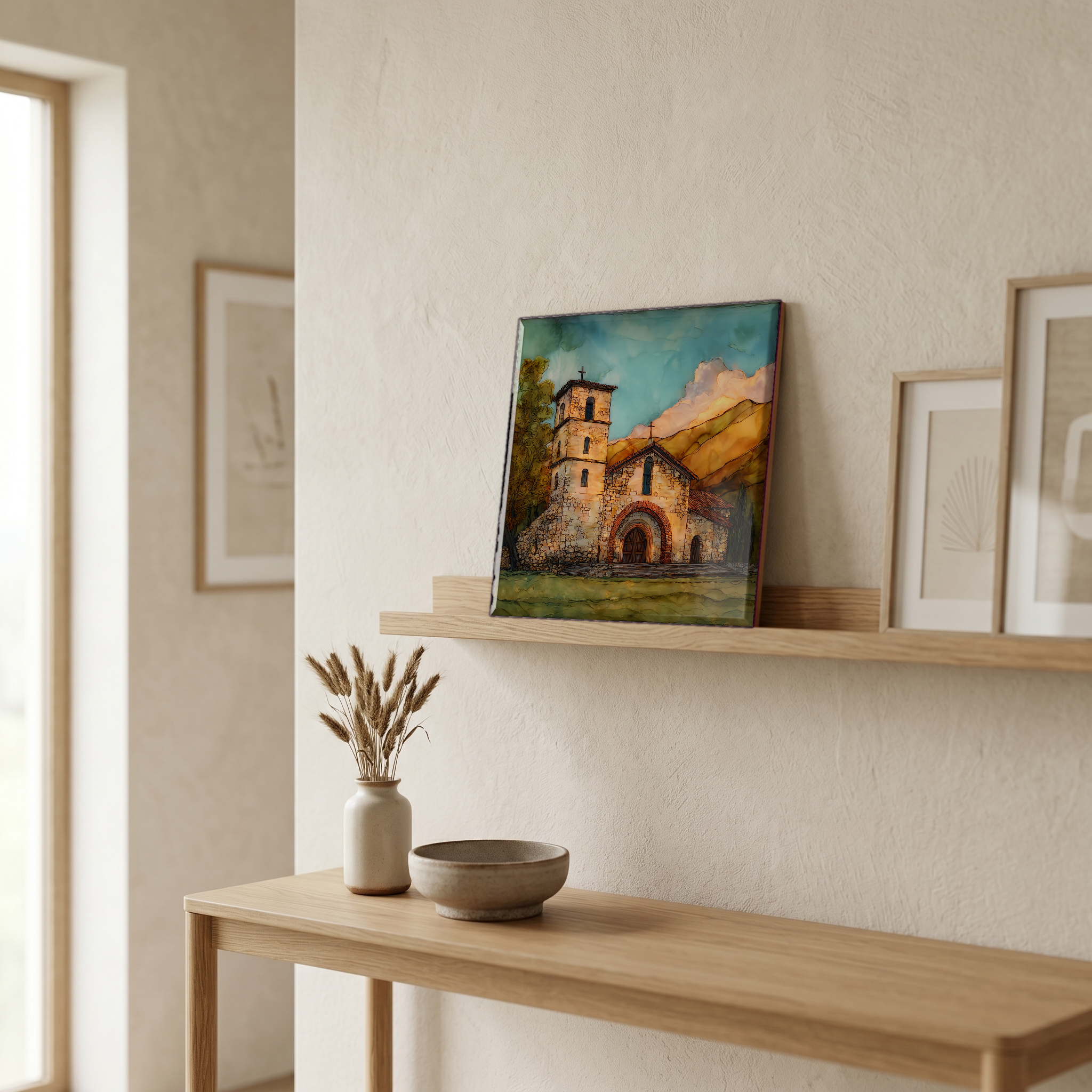
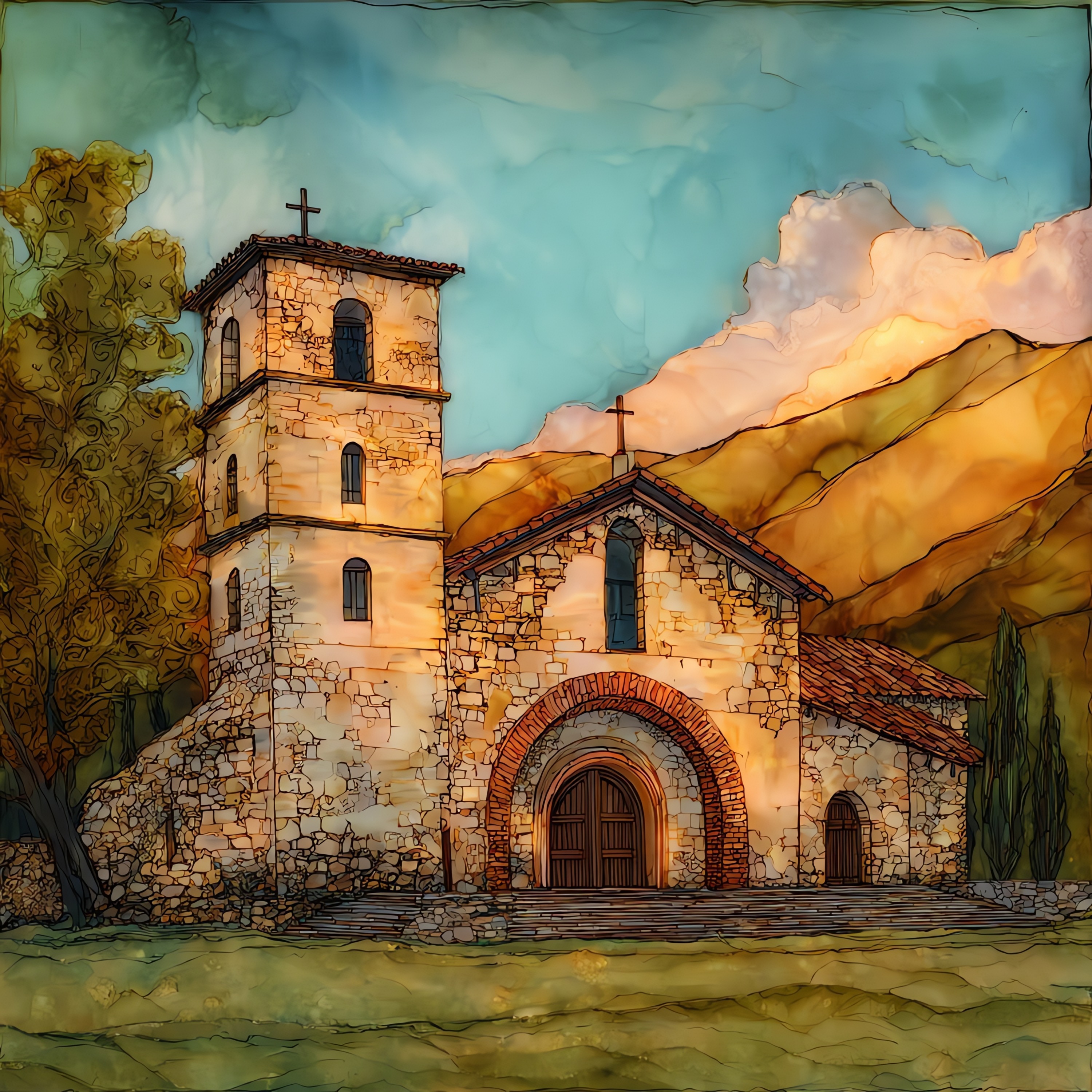
Mission San Antonio de Padua
shown on ceramic, 12-inch tileCalifornia · United States
in the Valley of the Oaks, southwest of King City

Mission San Antonio de Padua

the bells the oaks still keep.

Where it lives

Not only on a wall.

A small tile on the nightstand catching the morning. A larger one above the fire. Yours, wherever you spend the slow hours.
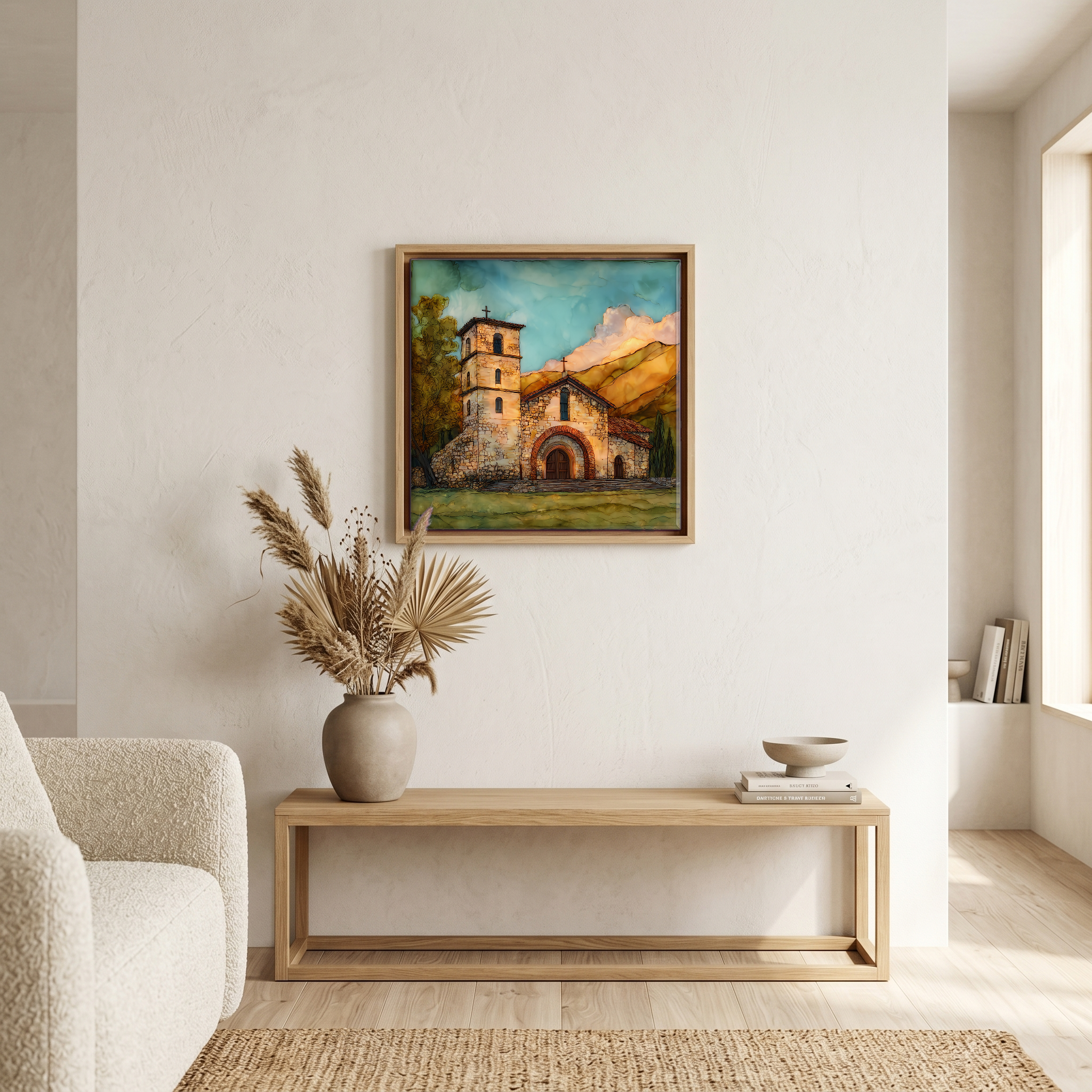
Above the bench, in a warm oak surround.
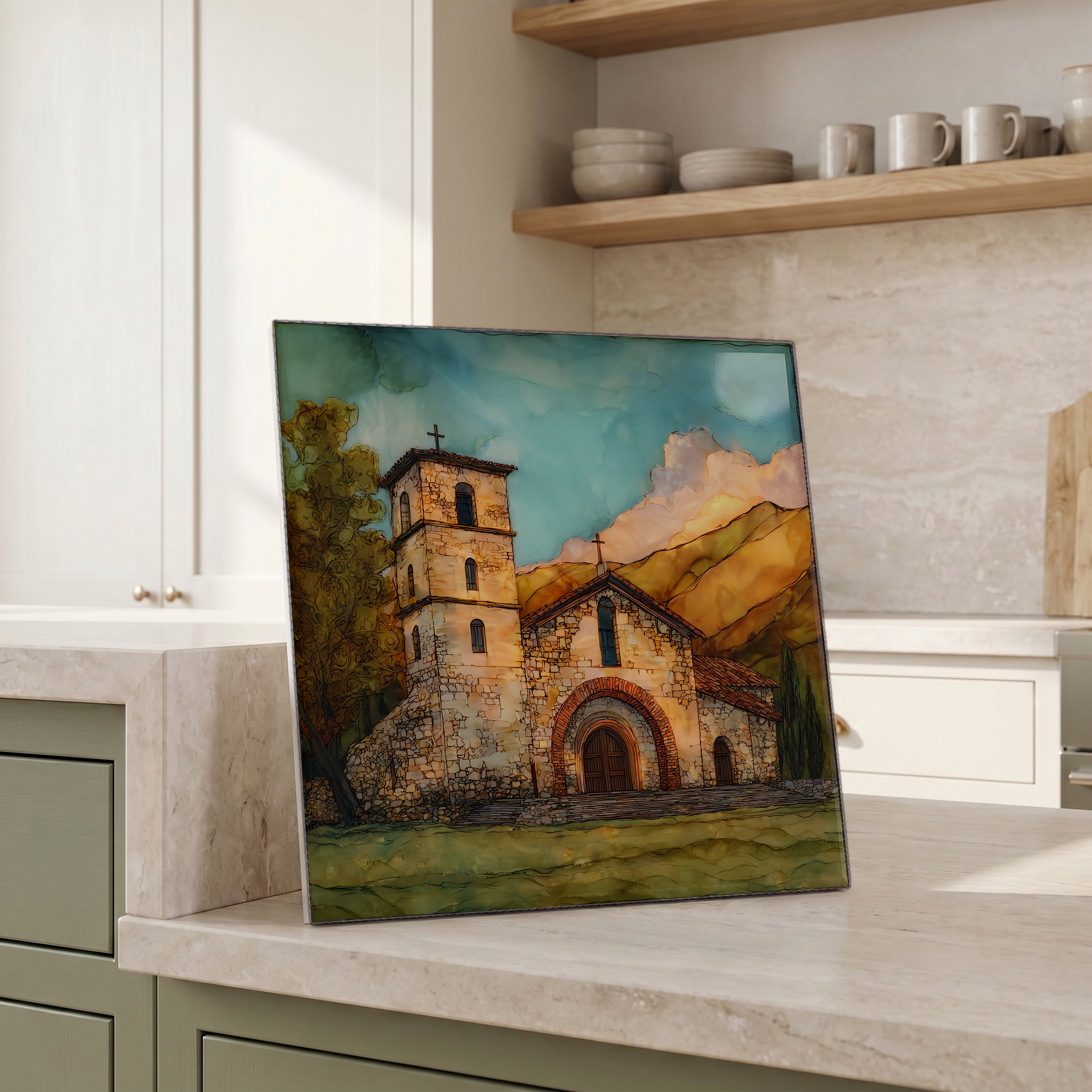
Beside the kettle, propped on the counter.
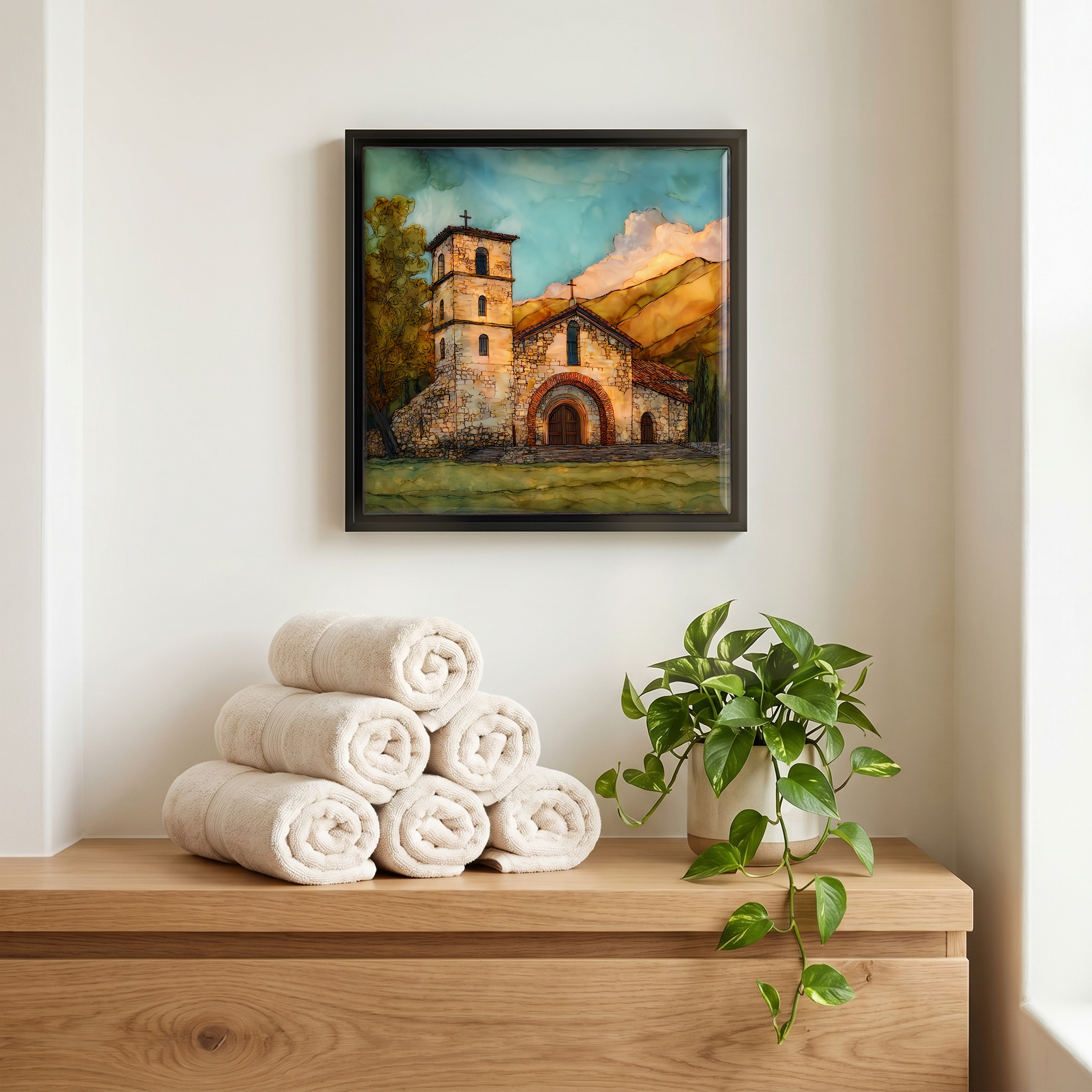
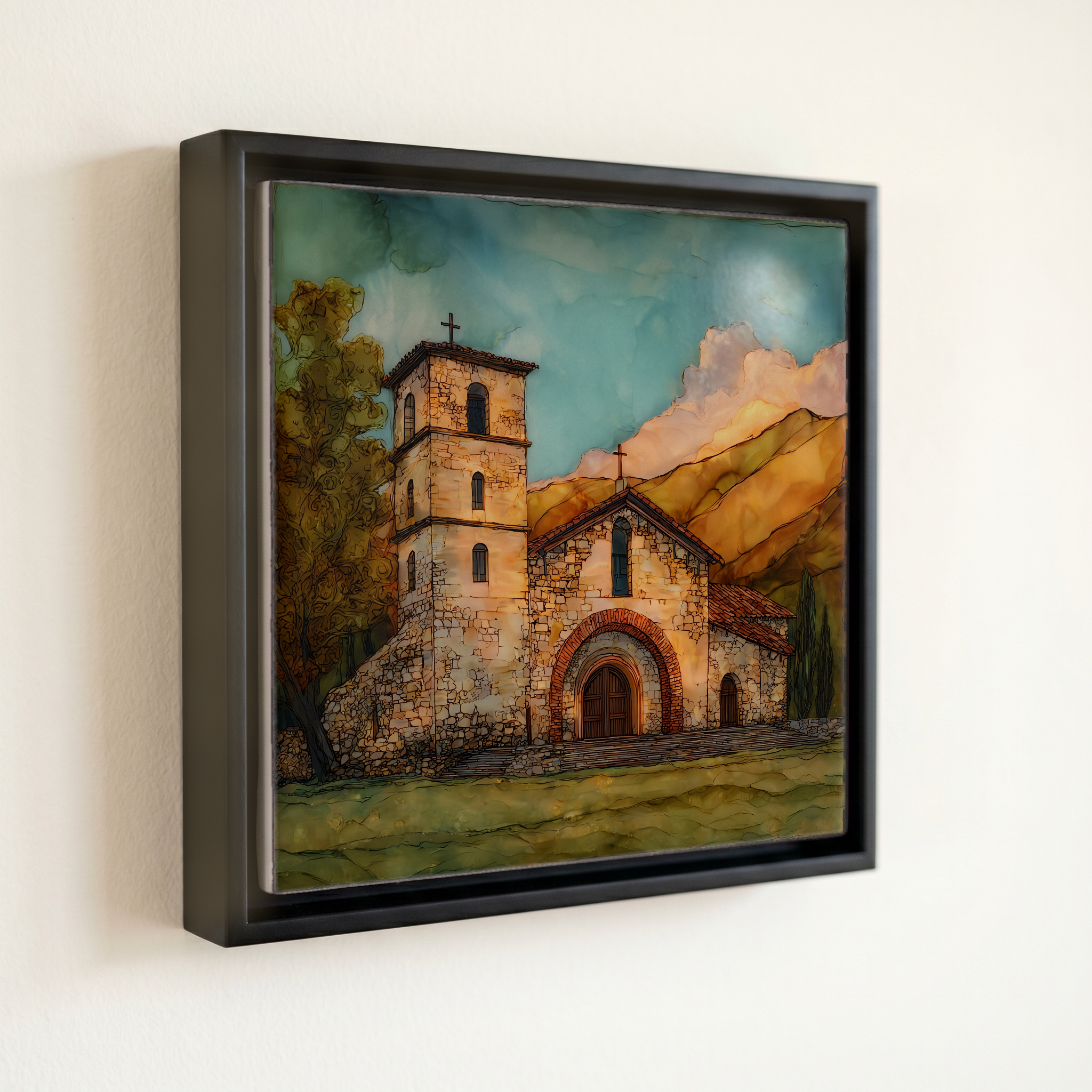
Above the linens, in a slim black surround.
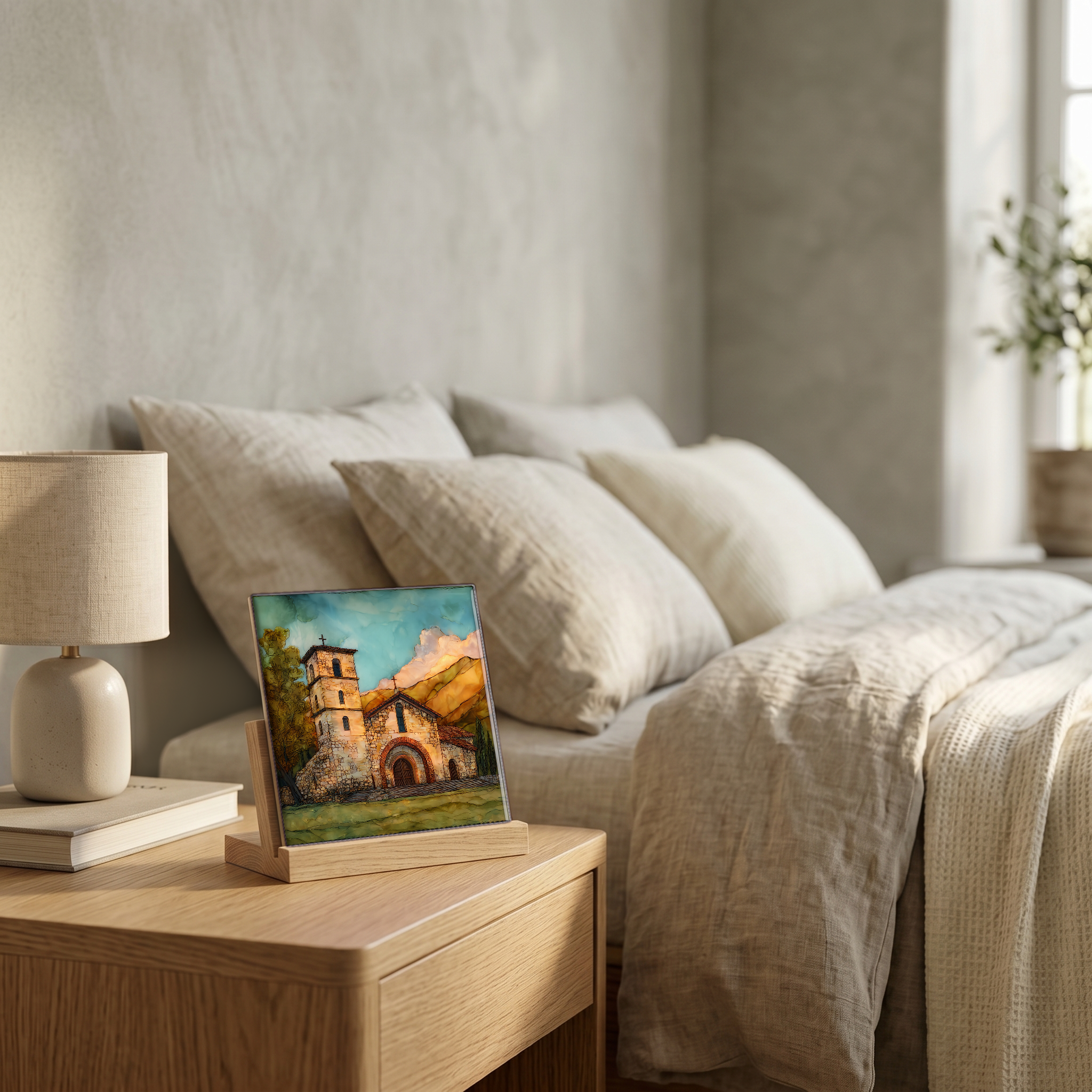
On the nightstand, on a light oak stand.
On a picture ledge, where the light comes in.
a note from the studio

Third in the chain of twenty-one. Founded by Junípero Serra in the Valle de los Robles on July 14, 1771 and now held inside Fort Hunter Liggett, an active Army garrison. Visitors check in at the gate before driving the last few miles through coast live oaks and dry grass to reach a long white facade with three arched bell openings cut into the brick. The Salinan whose land this was helped raise the walls. The place is still a working Franciscan parish, and the valley around it is mostly the valley it was.
from the studio
shown in a slim black floating frame · 6 × 6 in
— bring it home

Mission San Antonio de Padua, on ceramic.

Each tile is finished by hand in our Knoxville studio. Artwork is slowly infused into the ceramic surface under high heat and pressure, and rests beneath a thin glossy finish. The colour lives in the surface, not on top of it.

What kind of piece?
One tile — square or rectangle.
How big?
the popular one — counter, shelf, nightstand
6 × 6 in · 15 cm · 1.6 lb
Surface finish
A clear glossy finish — the artwork reads as if under resin. Ideal for show-pieces and framed wall art.
How it sits
A hidden cleat — sits ¼″ proud of the wall.
$58
Hand-finished and shipped from our studio at the foot of the Smokies. On your wall in about ten days.
size
6 × 6 in
15 cm
weighs
1.6 lb
solid in the hand
surface
ceramic, hand-finished
art rests beneath a thin glossy finish
from
Knoxville, TN
our family studio, at the foot of the Smokies
— start a Coaster Set

Pick any four 4-inch tiles — National Parks you've been to, a Smokies set, the four seasons of one place. $ for a set of , cork-backed, ready to live on the table.
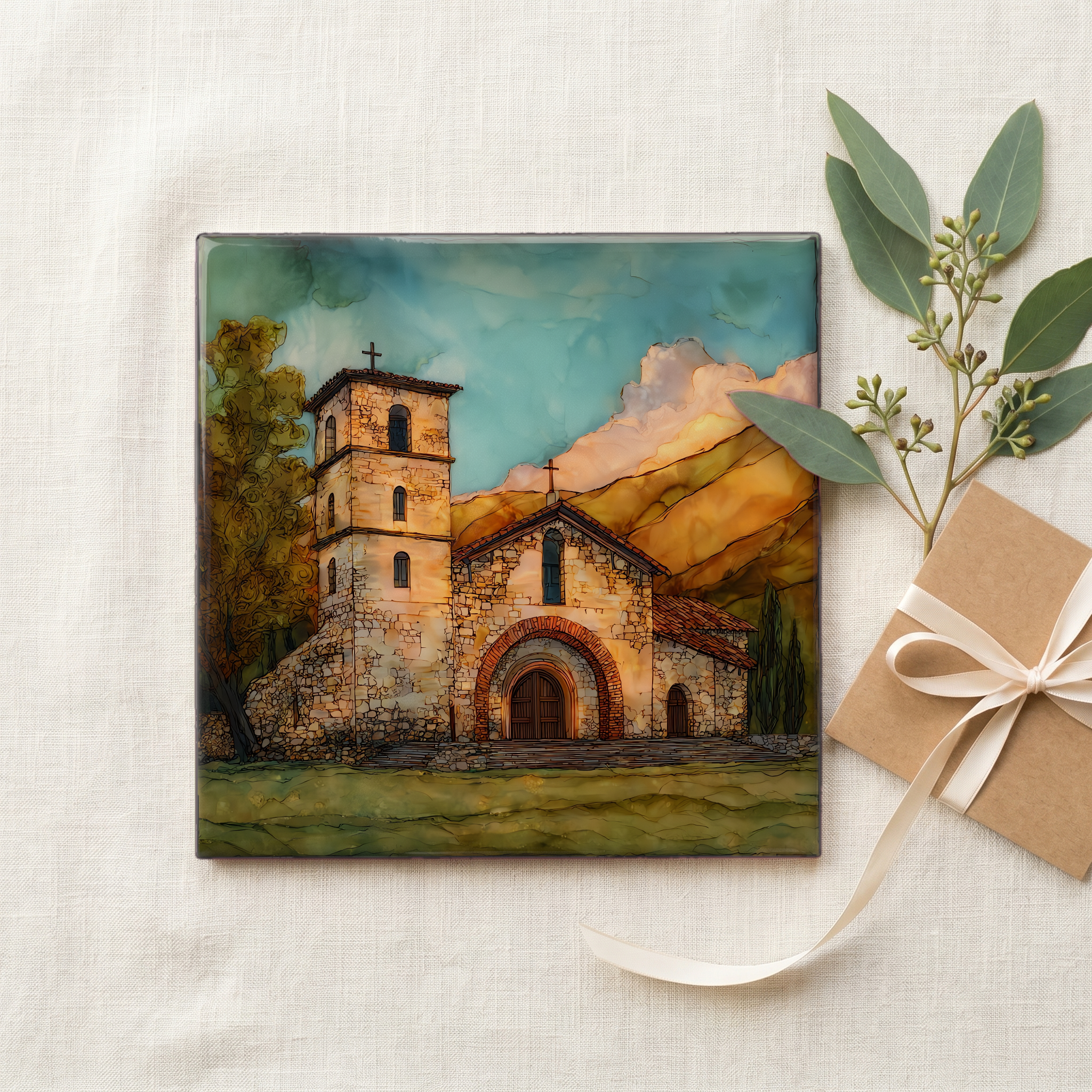
comes gift-ready
comes gift-ready

Each tile ships in a kraft box, tied with cream ribbon, with a handwritten note from the studio if you'd like to add one.
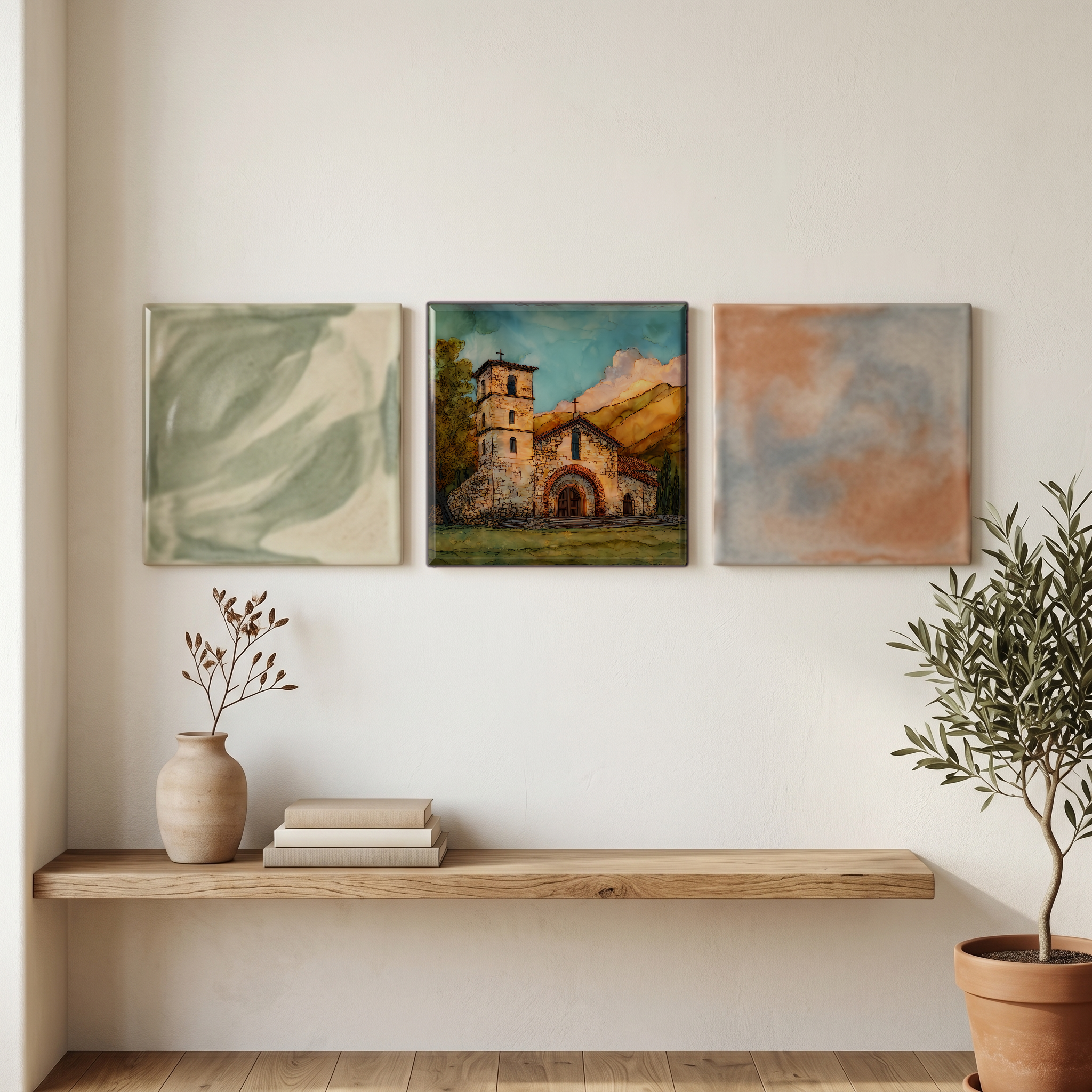
or build a grouping
or build a grouping

Three or five different vistas, hung together — a chapter of places you've been, or want to go.

about Mission San Antonio de Padua

The place, in three passes.

A little of what's known, in case you fall down the rabbit hole — or want to go see it yourself.
the place

Mission San Antonio de Padua is the third of the twenty-one Spanish missions of Alta California, founded by Franciscan padre Junípero Serra on July 14, 1771 in what he called the Valle de los Robles. The site sits in southern Monterey County, roughly twenty miles southwest of King City, in the foothills of the Santa Lucia Range. The land was Salinan country before the mission was raised, and the church and its campanario now stand inside Fort Hunter Liggett, an active United States Army training base. Address: 1 Mission Road, Jolon. The valley is one of the only mission settings in California that the twentieth century did not develop around.

the stone

The white facade rising over the quadrangle is the campanario, a long brick belfry with three round-arched openings cut into the upper wall, above a single arched entry. The current church was built 1810 to 1813, then rebuilt after the 1906 earthquake brought much of it down. The walls are local adobe; the bell arches and door trim are baked brick. The Hearst Foundation funded a careful restoration through the 1940s and 1950s that returned the church and the quadrangle to working order. Three bells still hang in the campanario. The result is one of the most architecturally legible missions along the California chain.

— informed by Wikipedia
the visit

Access is unusual for a California mission. Mission San Antonio sits inside Fort Hunter Liggett, an active U.S. Army training installation, so visitors stop at the main gate off Jolon Road and present a driver's license and vehicle registration before continuing the four miles to the mission. The grounds are usually open daily, with hours roughly 10 a.m. to 4 p.m. There is no admission fee; the parish takes donations and runs a small gift shop. The drive in passes the Hacienda, William Randolph Hearst's old ranch lodge designed by Julia Morgan, now a small inn run by the Army. The church itself is still a working Franciscan parish, with Sunday Mass held in the historic sanctuary.

where
United States · Monterey County, California
the neighborhood

What's nearby.

A handful of named places within an hour's walk or short drive. Some we've already painted; some we will.
5 km E
Jolon
village
3 km N
The Hacienda
Hearst ranch lodge
25 km N
Lake San Antonio
reservoir
32 km NE
King City
town
5 km W
Santa Lucia Range
mountain range
N
Mission San Antonio de Padua
Jolon
The Hacienda
Lake San Antonio
King City
Santa Lucia Range
common questions

What people ask.

A few questions we get about Mission San Antonio de Padua — and about bringing the piece home.
about the place

Mission San Antonio de Padua sits in the Valley of the Oaks in southern Monterey County, California, roughly twenty miles southwest of King City and a few miles from the village of Jolon. The site is inside Fort Hunter Liggett, an active U.S. Army training installation.

Father Junípero Serra founded the mission on July 14, 1771, making it the third of the twenty-one Spanish missions of Alta California, after San Diego de Alcalá and San Carlos Borromeo. Serra named the surrounding valley the Valle de los Robles for its oaks.

The mission was secularized in 1834 and the surrounding ranchland passed through several private owners. In 1940 the U.S. Army acquired the land for what became Fort Hunter Liggett, keeping the mission church and grounds intact within the new training installation.

Franciscan padres directed the work, with the labor done by Salinan people of the Valle de los Robles. The current adobe-and-brick church dates to 1810 to 1813, replacing earlier wooden and adobe structures. William Randolph Hearst's foundation funded a major restoration in the late 1940s.

Yes. Visitors stop at the Fort Hunter Liggett main gate off Jolon Road with a driver's license and vehicle registration, then drive about four miles to the mission. The grounds are usually open daily, roughly 10 a.m. to 4 p.m., and admission is free.

The campanario is the long brick belfry that fronts the church, with three round-arched openings holding the bells. It is the mission's most recognizable feature and one of the most architecturally distinctive bell walls in the twenty-one-mission California chain.

After Mexican secularization in 1834, the mission lands were broken up and sold off. The church fell into ruin through the late nineteenth century. The Franciscans returned in 1928, and a major Hearst-funded restoration in the late 1940s rebuilt the church and quadrangle to the form visitors see today.

about the piece in your home

It's been a meaningful gift for many of our customers. Mission San Antonio is one of the quieter stops on the chain, less-trafficked than Carmel or Santa Barbara but well-loved by anyone who has driven the full mission trail. A Small or Medium with a handwritten note from the studio travels well.

The stained-glass and alcohol-ink palette of this piece works well in a few specific style families: California ranch, Mission Revival interiors, Spanish-Colonial revival, and warm earth-tone Maximalist rooms. The mineral whites of the adobe and the deep reds of the tile roof carry warmth without crowding a wall.

It fits the current renewed interest in Mission Revival and warm earth-tone palettes. Designers working in Spanish-Colonial revival, California ranch, and warm-modern rooms have moved back toward terracotta, ochre, and adobe whites, the same range this piece carries through the campanario and tile roof.

Above a standard sofa, a single Large reads well as a focal point. For a longer wall or a larger room, a four-tile or nine-tile Mural opens the scene out, with the campanario and bell wall reading at full presence across the arrangement.

Yes, in either of the matte finishes. The Dura Satin holds a soft sheen and resists scratching in a bathroom or shower install. The Matte finish has no sheen at all, which can be the right read for the dry, earthen feel of the mission palette.

A microfibre cloth and water is all the tile needs. The colour lives in the ceramic surface beneath a thin protective finish, so it does not fade with cleaning. Avoid abrasive pads and harsh solvents; they aren't needed and can dull the surface over time.

Yes. Every WenderVista piece is original to Wender Studios in Knoxville, Tennessee, with no licensing or stock imagery. Reid Wender curates the atlas and chooses every place. The pieces are hand-finished in-house and the colour is slowly infused into the ceramic surface under high heat and pressure.

if this one stayed with you

A few you might also love.

Hand-picked by the eye that found Sorapis. Same air, same kind of quiet.