Wender·Vista
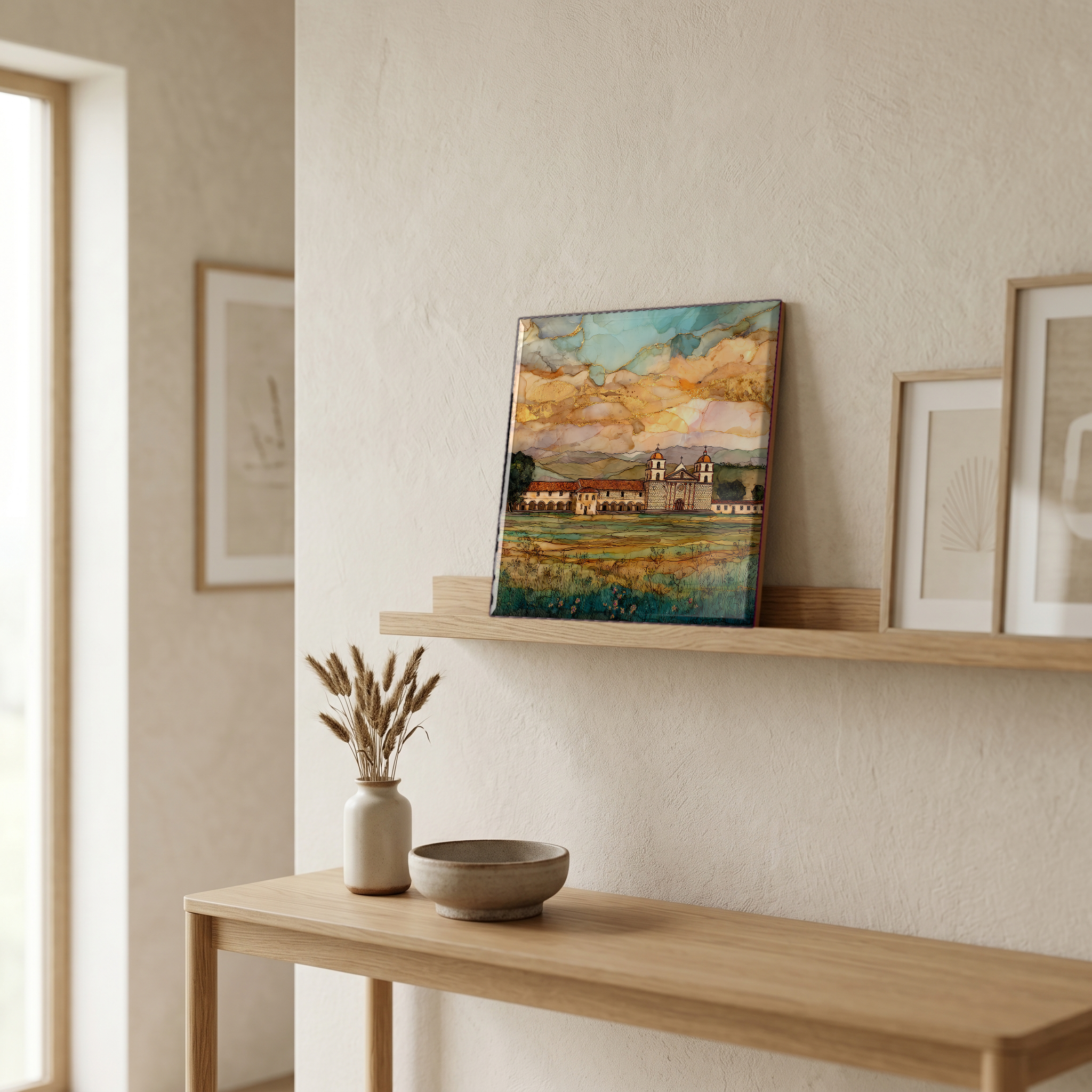
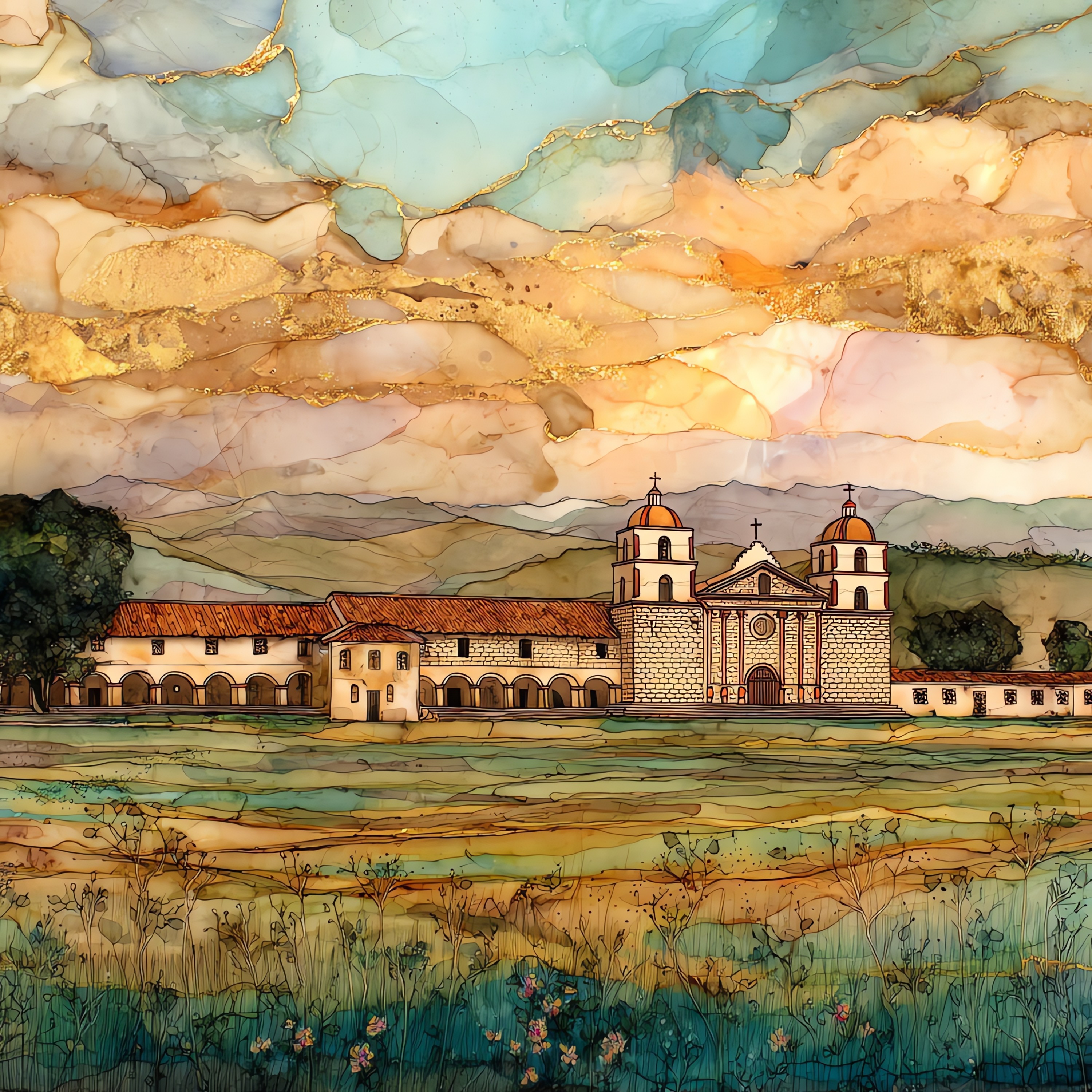
Mission La Purísima
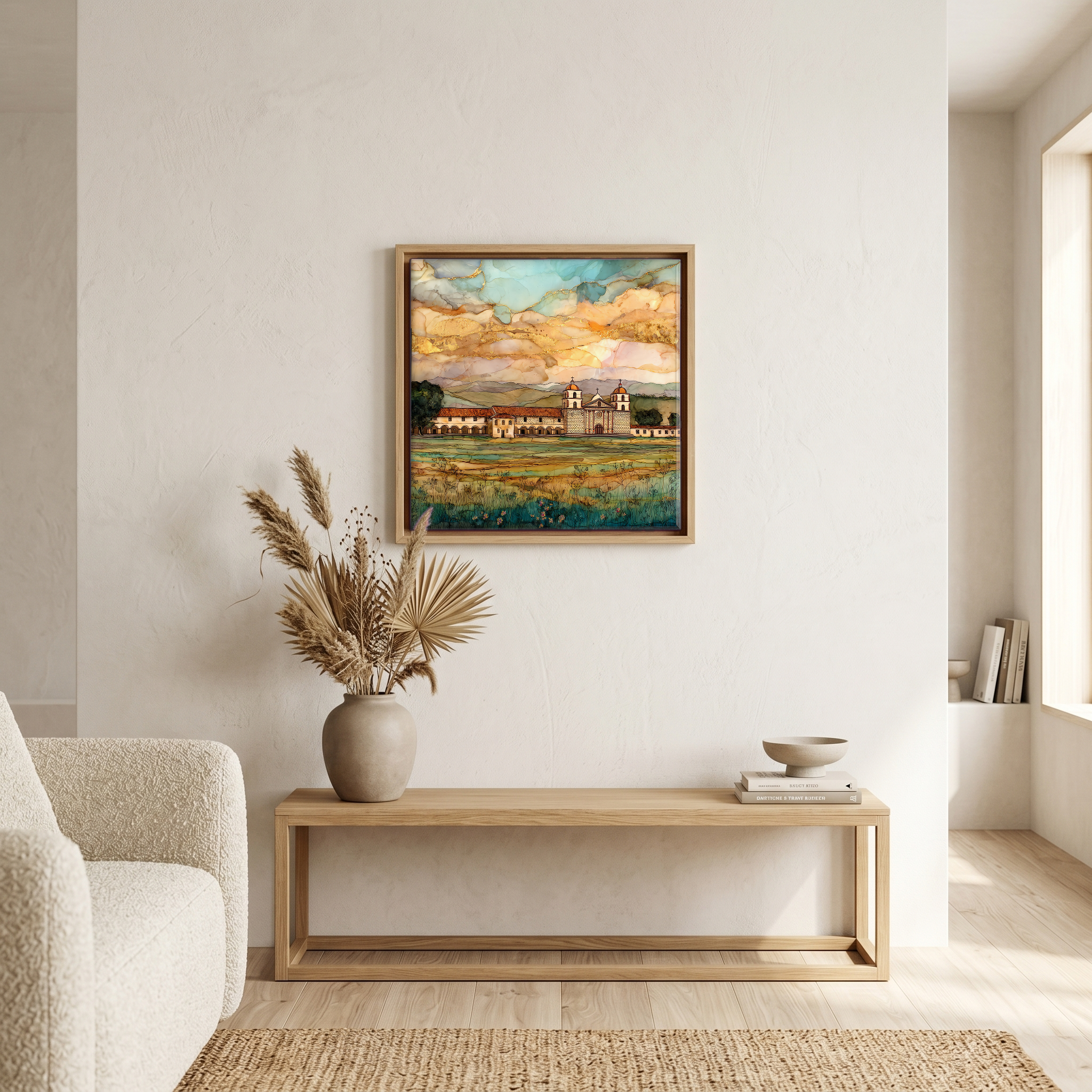
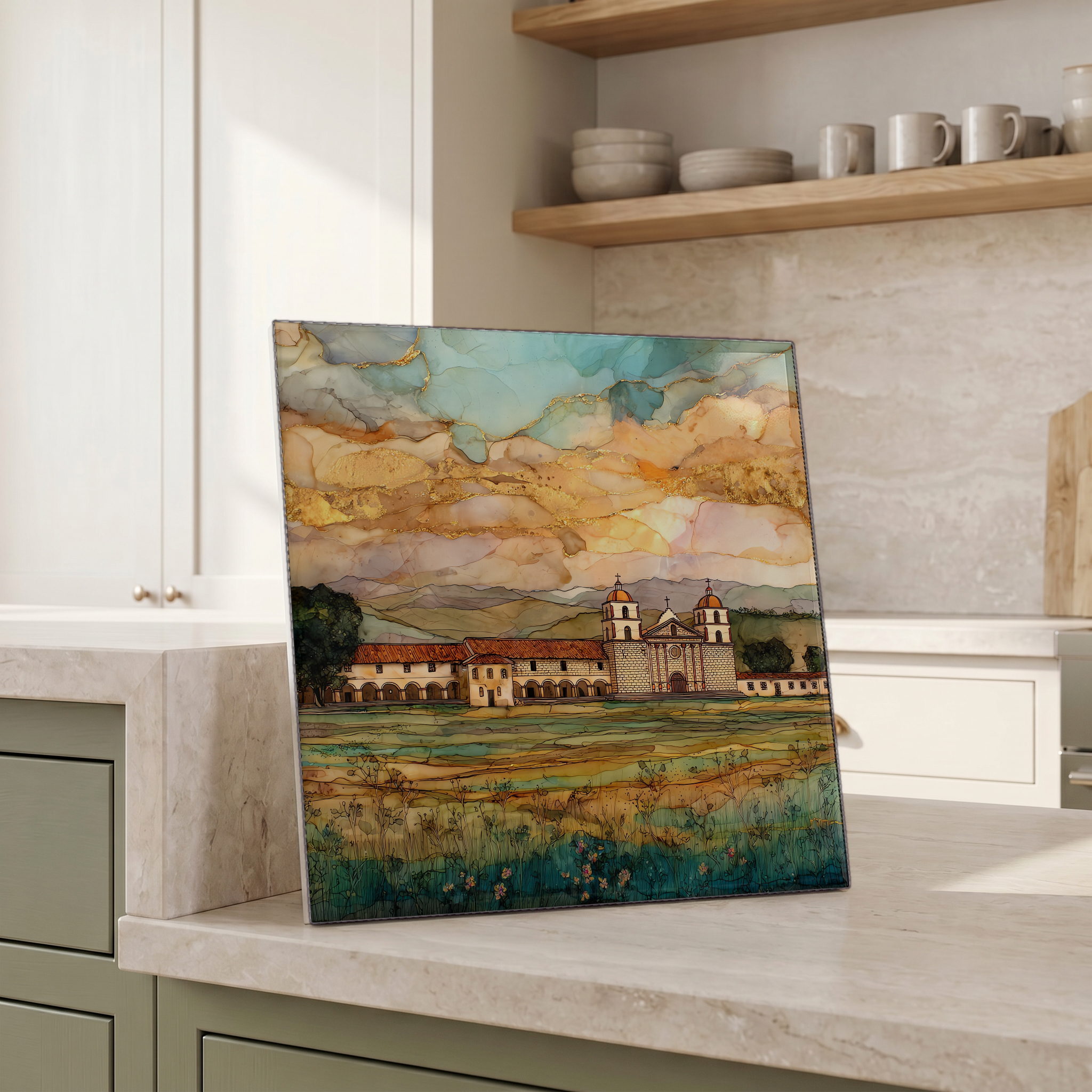
shown on ceramic, 12-inch tileCalifornia · United States
above the Santa Ynez Valley, four miles northeast of Lompoc

Mission La Purísima

the long colonnade the late sun walks through.

Where it lives

Not only on a wall.

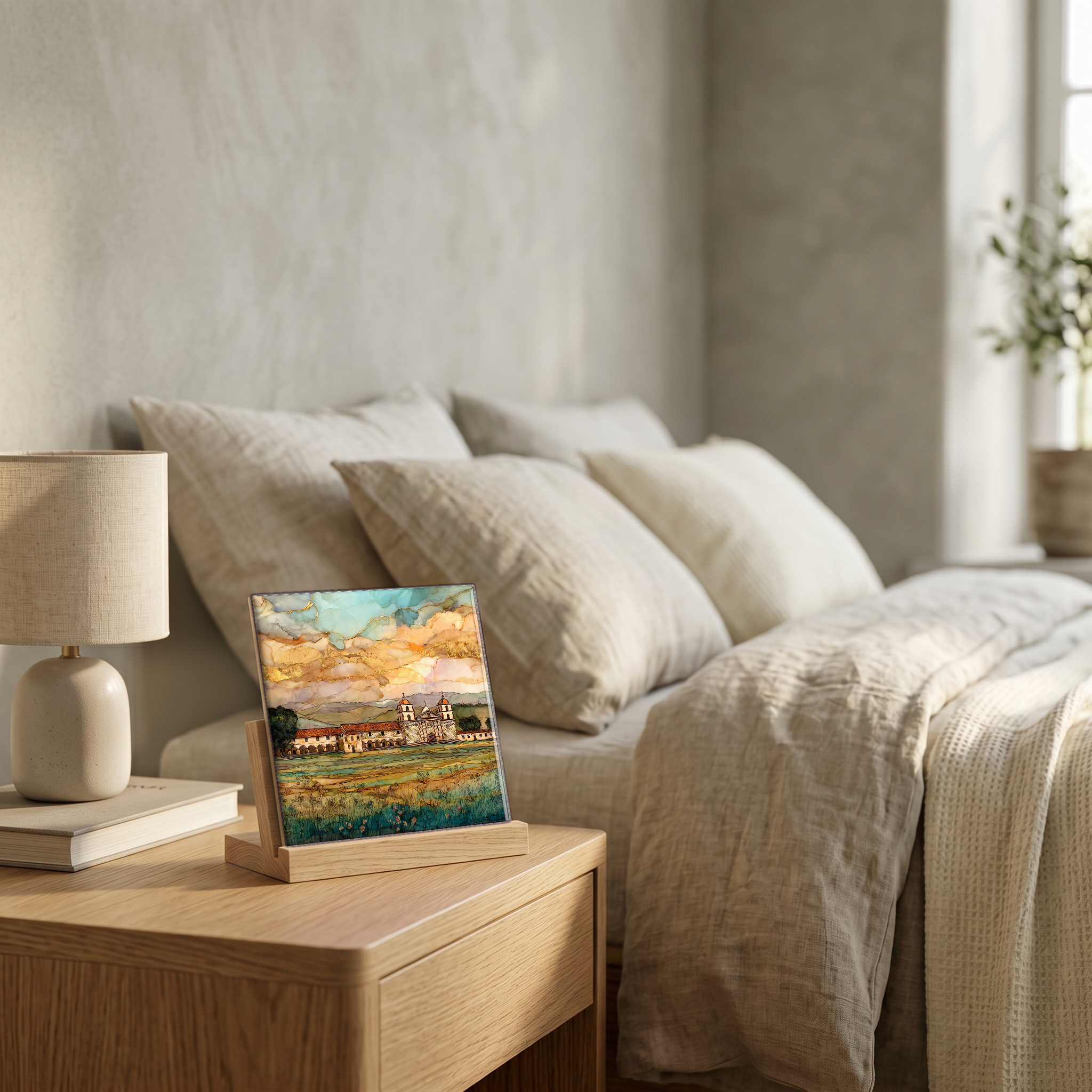
A small tile on the nightstand catching the morning. A larger one above the fire. Yours, wherever you spend the slow hours.
Above the bench, in a warm oak surround.
Beside the kettle, propped on the counter.
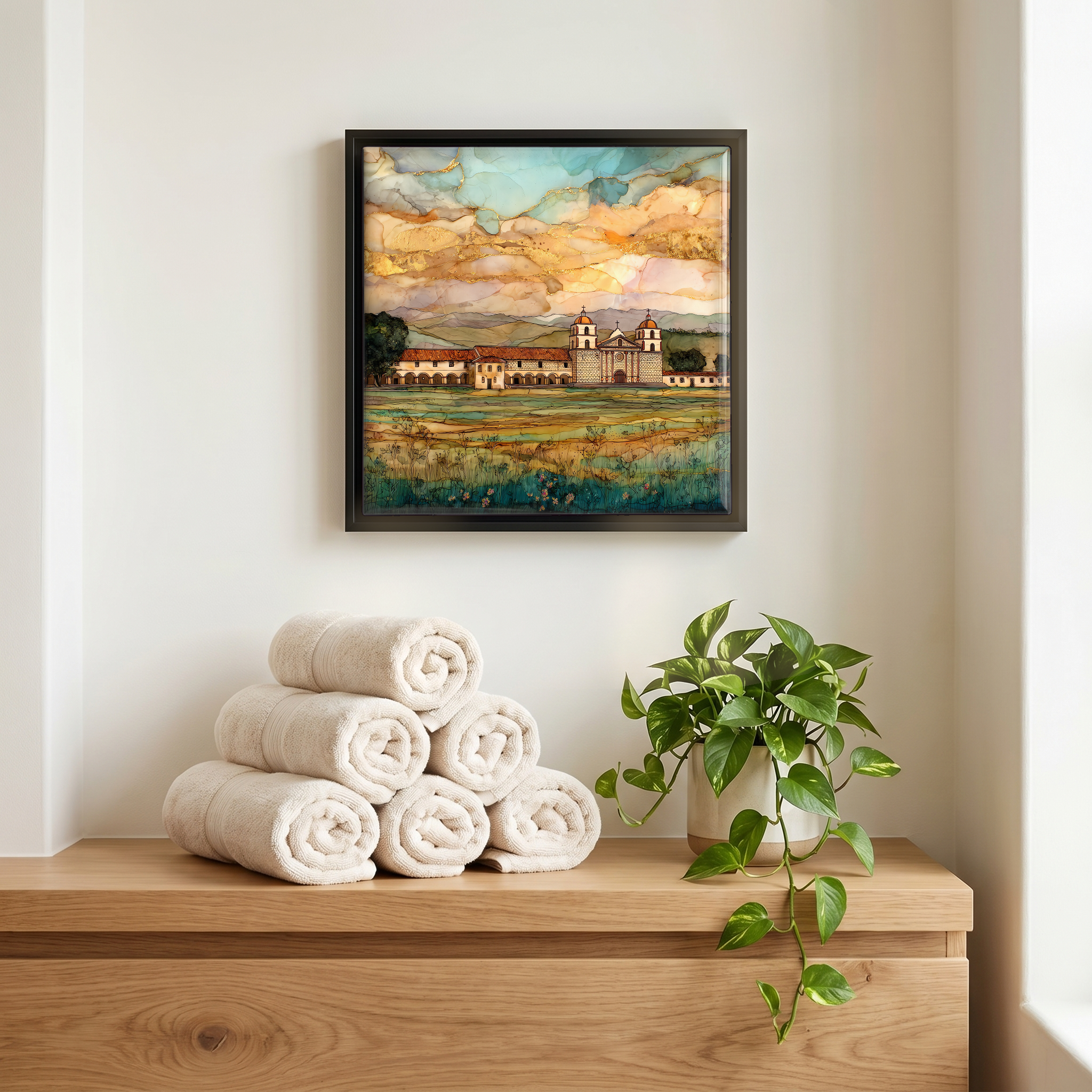
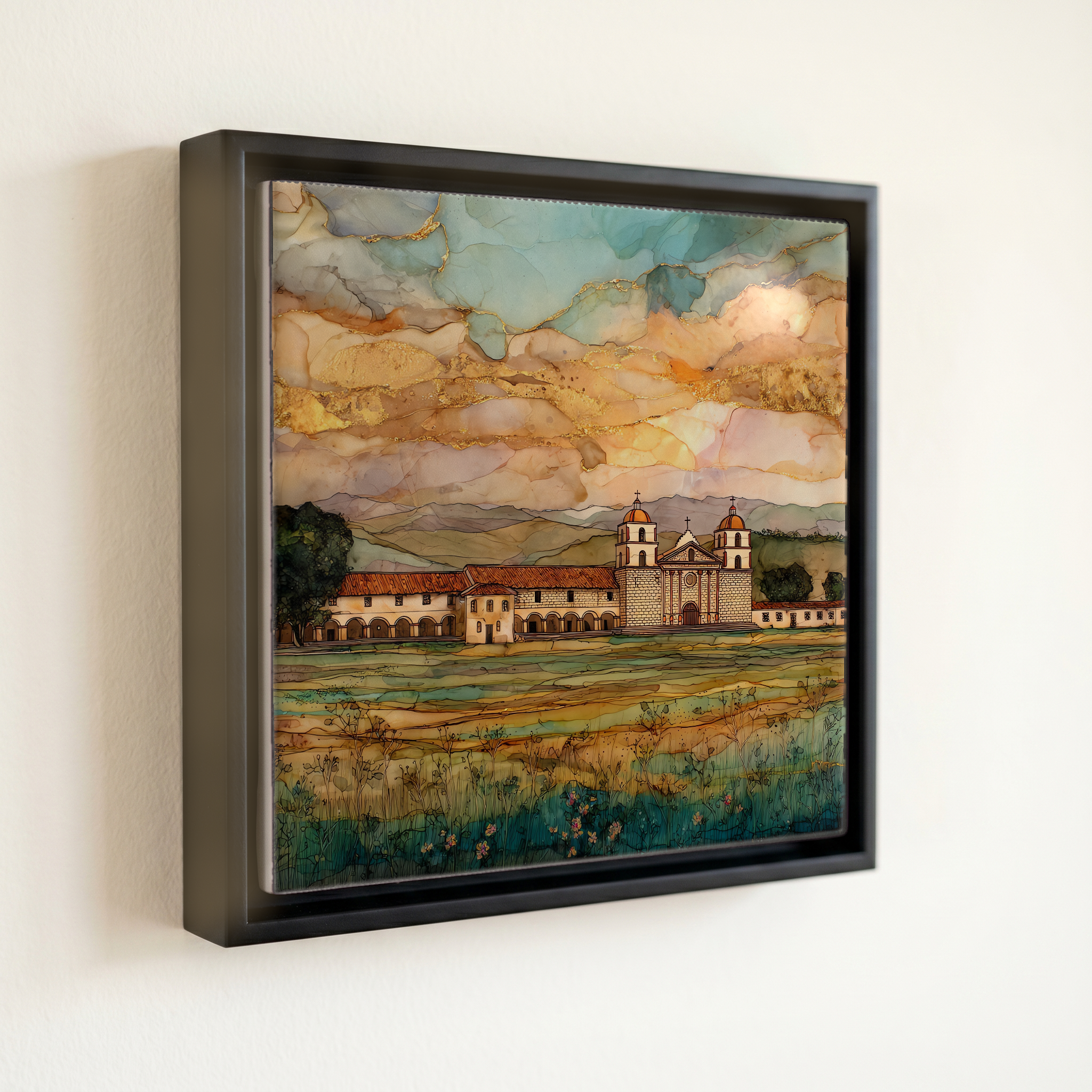
Above the linens, in a slim black surround.
On the nightstand, on a light oak stand.
On a picture ledge, where the light comes in.
a note from the studio

The eleventh of California's twenty-one Spanish missions, the only one laid out in a long single line instead of a quadrangle. The 1812 earthquake took the first site; the padres rebuilt here, a few miles northeast, on a slope above the Santa Ynez River. Most of what stands now was raised from rubble by the Civilian Conservation Corps in the 1930s, adobe by adobe. The colonnade catches the afternoon light end to end. Sheep still graze the field below the long building. Nobody hurries through it.
from the studio
shown in a slim black floating frame · 6 × 6 in
— bring it home

Mission La Purísima, on ceramic.

Each tile is finished by hand in our Knoxville studio. Artwork is slowly infused into the ceramic surface under high heat and pressure, and rests beneath a thin glossy finish. The colour lives in the surface, not on top of it.

What kind of piece?
One tile — square or rectangle.
How big?
the popular one — counter, shelf, nightstand
6 × 6 in · 15 cm · 1.6 lb
Surface finish
A clear glossy finish — the artwork reads as if under resin. Ideal for show-pieces and framed wall art.
How it sits
A hidden cleat — sits ¼″ proud of the wall.
$58
Hand-finished and shipped from our studio at the foot of the Smokies. On your wall in about ten days.
size
6 × 6 in
15 cm
weighs
1.6 lb
solid in the hand
surface
ceramic, hand-finished
art rests beneath a thin glossy finish
from
Knoxville, TN
our family studio, at the foot of the Smokies
— start a Coaster Set

Pick any four 4-inch tiles — National Parks you've been to, a Smokies set, the four seasons of one place. $ for a set of , cork-backed, ready to live on the table.
comes gift-ready
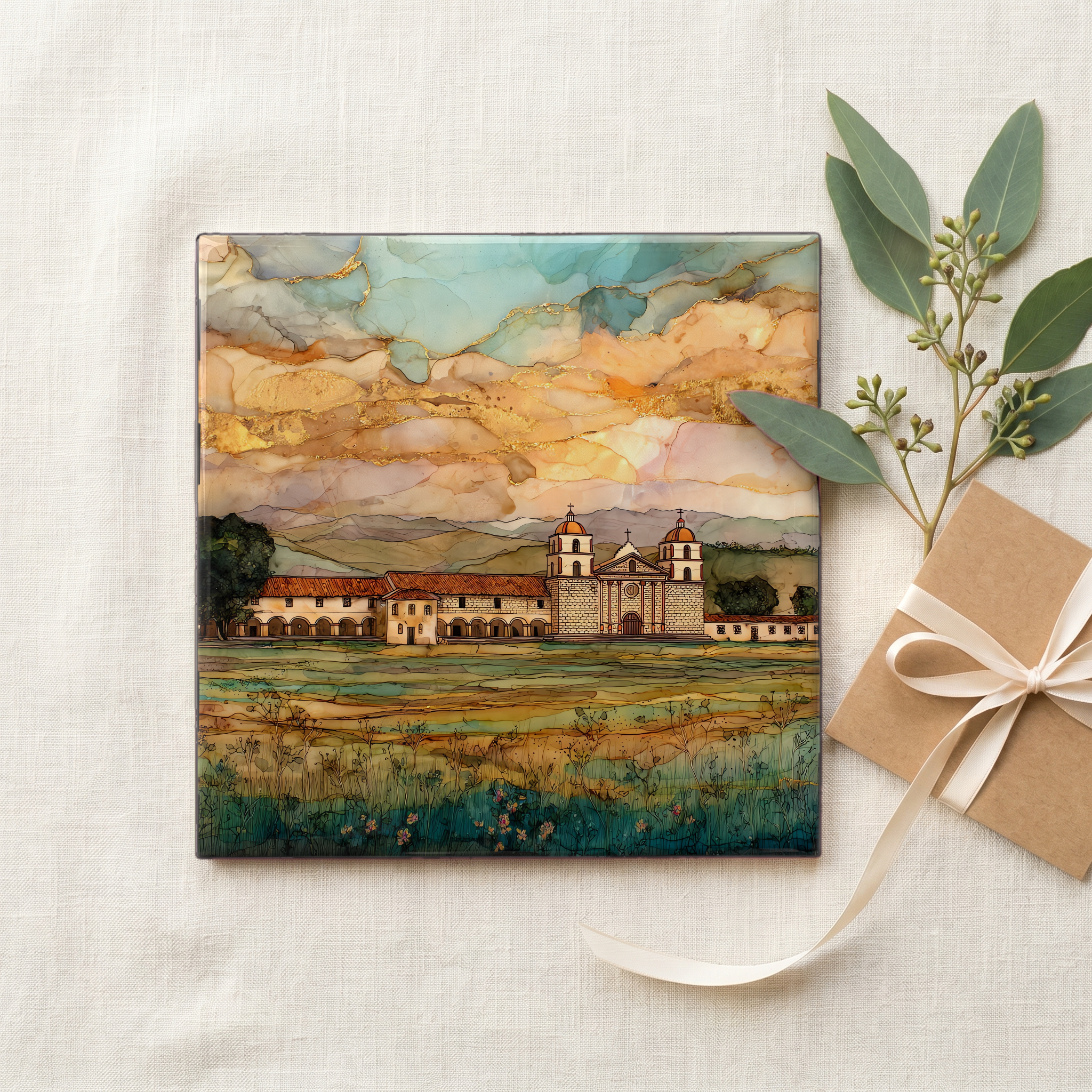
comes gift-ready

Each tile ships in a kraft box, tied with cream ribbon, with a handwritten note from the studio if you'd like to add one.
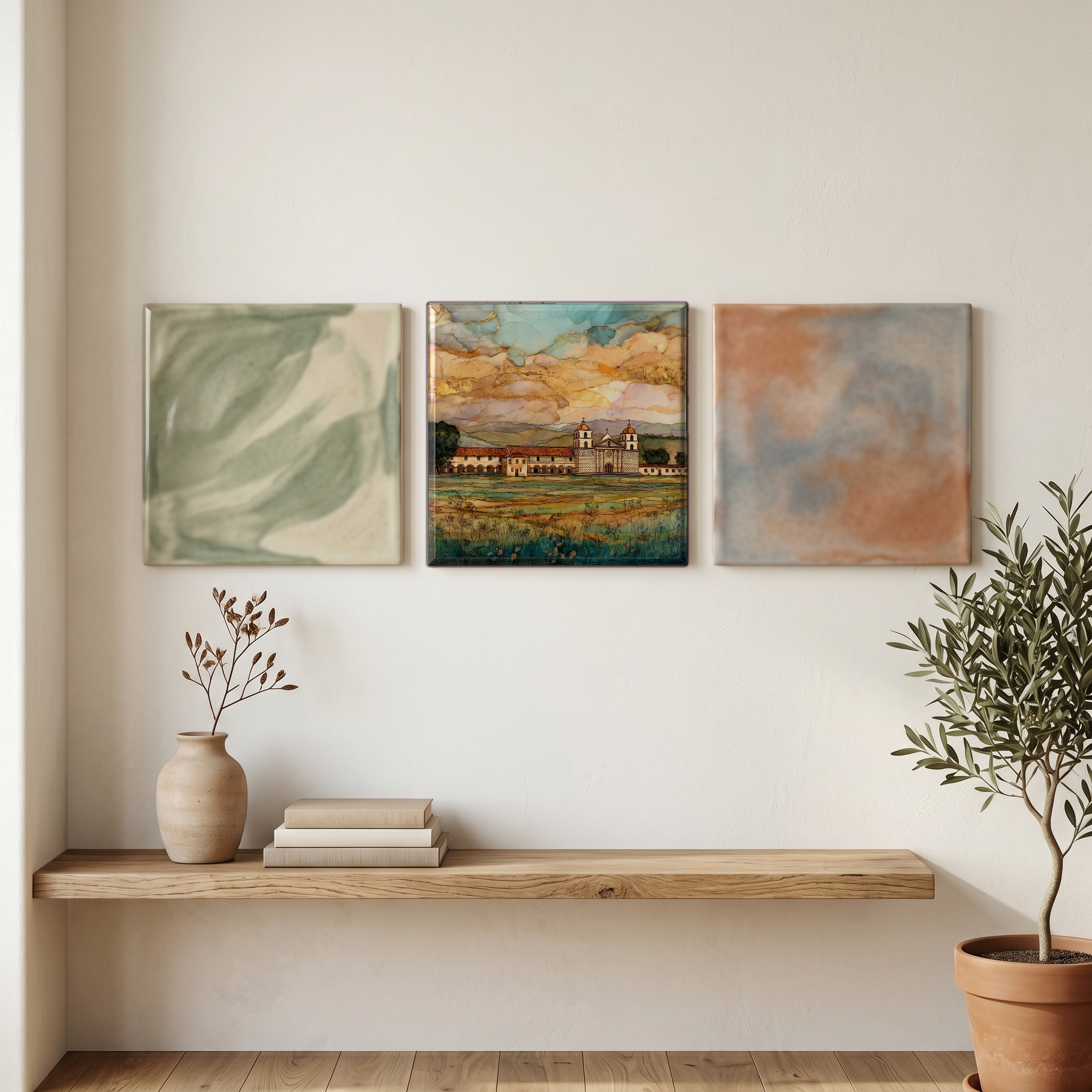
or build a grouping
or build a grouping

Three or five different vistas, hung together — a chapter of places you've been, or want to go.

about Mission La Purísima

The place, in three passes.

A little of what's known, in case you fall down the rabbit hole — or want to go see it yourself.
the place

Mission La Purísima Concepción sits four miles northeast of Lompoc, on a slope above the Santa Ynez River in Santa Barbara County, California. It was the eleventh of twenty-one Spanish missions founded along Alta California, established on the Feast of the Immaculate Conception in December 1787 by Padre Fermín Francisco de Lasuén. The original mission, southwest of the present site, was destroyed by the December 1812 earthquake; reconstruction began the following year on this protected mesa above the river. The grounds are now La Purisima Mission State Historic Park, covering roughly 2,000 acres of coastal grassland, oak savanna, and chaparral between the Burton Mesa Ecological Reserve and Highway 246.

the stone

The mission was built from adobe: sun-dried mud and straw bricks laid in courses up to four feet thick, on stone foundations quarried locally. After the Mexican secularization of 1834 the buildings fell to ruin, and by the early twentieth century only fragments of wall remained above the grass. Between 1934 and 1941 the Civilian Conservation Corps and the National Park Service rebuilt the mission from the rubble outward, hand-making roughly 110,000 adobe bricks on site, milling clay tiles for the roofs, and reconstructing the colonnade arch by arch. It is now considered the most fully restored of California's twenty-one mission complexes.

the visit

La Purisima Mission State Historic Park sits at 2295 Purisima Road, four miles east of central Lompoc and about a fifty-minute drive north of Santa Barbara. The park is open daily, with a day-use vehicle fee charged at the entrance. Most of the original mission complex has been reconstructed on its original footprints: the long building with its colonnade, the church, the workshops, and the lavandería and aqueduct that fed the gardens. Living-history events, held periodically and at the annual Mission Fiesta, fill the grounds with volunteers in period dress, working looms, and a blacksmith forge. The orchards still bear fruit each summer.

— informed by California State Parks
where
United States · Lompoc, Santa Barbara County, California
within
La Purisima Mission State Historic Park
elevation
60 m · 200 ft
position
34.6716° N · 120.4194° W
the neighborhood

What's nearby.

A handful of named places within an hour's walk or short drive. Some we've already painted; some we will.
2 km N
Burton Mesa Ecological Reserve
chaparral reserve
6 km SW
Lompoc
town
8 km SW
Lompoc Valley Flower Fields
cut-flower fields
22 km W
Surf Beach
Pacific beach
30 km E
Mission Santa Inés
Spanish mission
N
Mission La Purísima
Burton Mesa Ecological Reserve
Lompoc
Lompoc Valley Flower Fields
Surf Beach
Mission Santa Inés
common questions

What people ask.

A few questions we get about Mission La Purísima — and about bringing the piece home.
about the place

Mission La Purísima Concepción sits four miles northeast of Lompoc, in Santa Barbara County on California's central coast. The mission grounds are now La Purisima Mission State Historic Park, on Purisima Road off Highway 246, about an hour north of Santa Barbara.

La Purísima is the only California mission built on a linear plan. After the 1812 earthquake destroyed the original quadrangle site near Lompoc, the padres rebuilt at this location in 1813 along a single axis, partly to ease escape in future tremors and partly to fit the slope above the Santa Ynez River.

Mission La Purísima Concepción was founded on December 8, 1787, the Feast of the Immaculate Conception, by Padre Fermín Francisco de Lasuén. It was the eleventh of twenty-one Spanish missions established in Alta California between 1769 and 1823.

After secularization in 1834 the mission fell to ruin. The Civilian Conservation Corps rebuilt it between 1934 and 1941, hand-making roughly 110,000 adobe bricks on site and reconstructing the long building, church, and colonnade arch by arch. It is the most fully restored of California's twenty-one missions.

No. La Purísima was secularized by the Mexican government in 1834 and is no longer a working parish. It is operated by California State Parks as a historic site. Catholic Mass is celebrated at the mission church a handful of times each year, including the annual Mission Fiesta.

Yes. La Purisima Mission State Historic Park is open daily for self-guided tours of the church, residence, workshops, gardens, and the surrounding 2,000 acres of trails through coastal grassland and oak. A day-use vehicle fee is charged at the gate at 2295 Purisima Road.

Late winter through early summer is the strongest window: cooler temperatures, green hills, and the gardens in bloom. The annual Mission Fiesta fills the grounds with living-history demonstrations. Mid-afternoon light is best for the long colonnade and the white bell wall.

about the piece in your home

It carries well as a gift for travelers, history readers, and anyone who has driven the old El Camino Real with the bell markers in mind. La Purísima is the most fully restored of the twenty-one California missions, which makes it a recognizable image of the chain. A Small or Medium with a handwritten studio note suits the subject.

The piece sits well in Spanish Colonial Revival, California-coastal, and Mission-style interiors. The warm adobe ochres and whitewashed walls in the artwork carry the same palette as terracotta, sun-bleached oak, wrought iron, and natural linen. It also reads well against a deep navy or sage-green wall in a more modern setting.

Spanish Colonial and Mission Revival are in a sustained moment again, especially through Santa Barbara, San Diego, and Texas Hill Country renovations. The tile reads as period-honest without being literal. Paired with terracotta floors, dark beams, or a single wrought-iron sconce, it anchors a hallway, an entry, or a study wall.

Above a console table, a single Large fills the wall at roughly twenty-four inches across. Above a sofa, step up to a four-tile Mural or a nine-tile Mural; the long-axis composition of La Purísima reads especially well across a horizontal grid, with the colonnade running tile to tile.

Yes. The Dura Satin and Matte finishes are scratch-resistant and built for vertical installation in showers, backsplashes, and powder rooms. The Glossy finish is meant for framed wall art and shelf display rather than wet zones. For a Spanish-style kitchen backsplash, ask the studio about Dura Satin in the Mural sizes.

A soft microfibre cloth and water is all the surface needs. The colour is slowly infused into the ceramic surface under high heat and pressure, so it does not sit on top and cannot be rubbed off. Avoid abrasive pads, and skip ammonia-based cleaners on the Glossy finish.

Yes. Every WenderVista piece is drawn from the studio's own painting program, by the same eye. Nothing is licensed and nothing is reused from a third-party library. The Mission La Purísima painting was made for this catalogue and exists nowhere else. Each tile is hand-finished in the Knoxville studio.

if this one stayed with you

A few you might also love.

Hand-picked by the eye that found Sorapis. Same air, same kind of quiet.