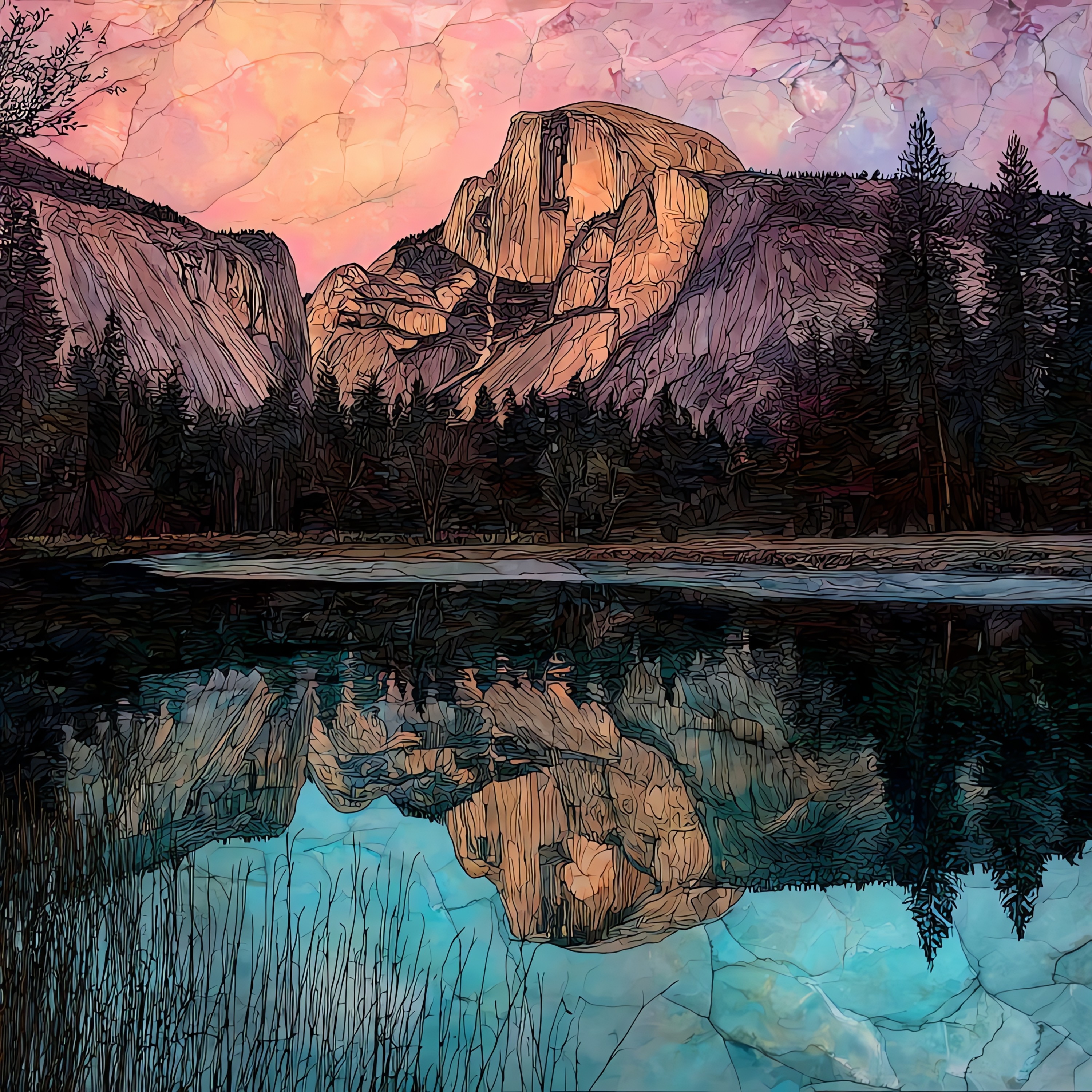
Mirror Lake
— half the mountain, again, on the water.
Not only on a wall.

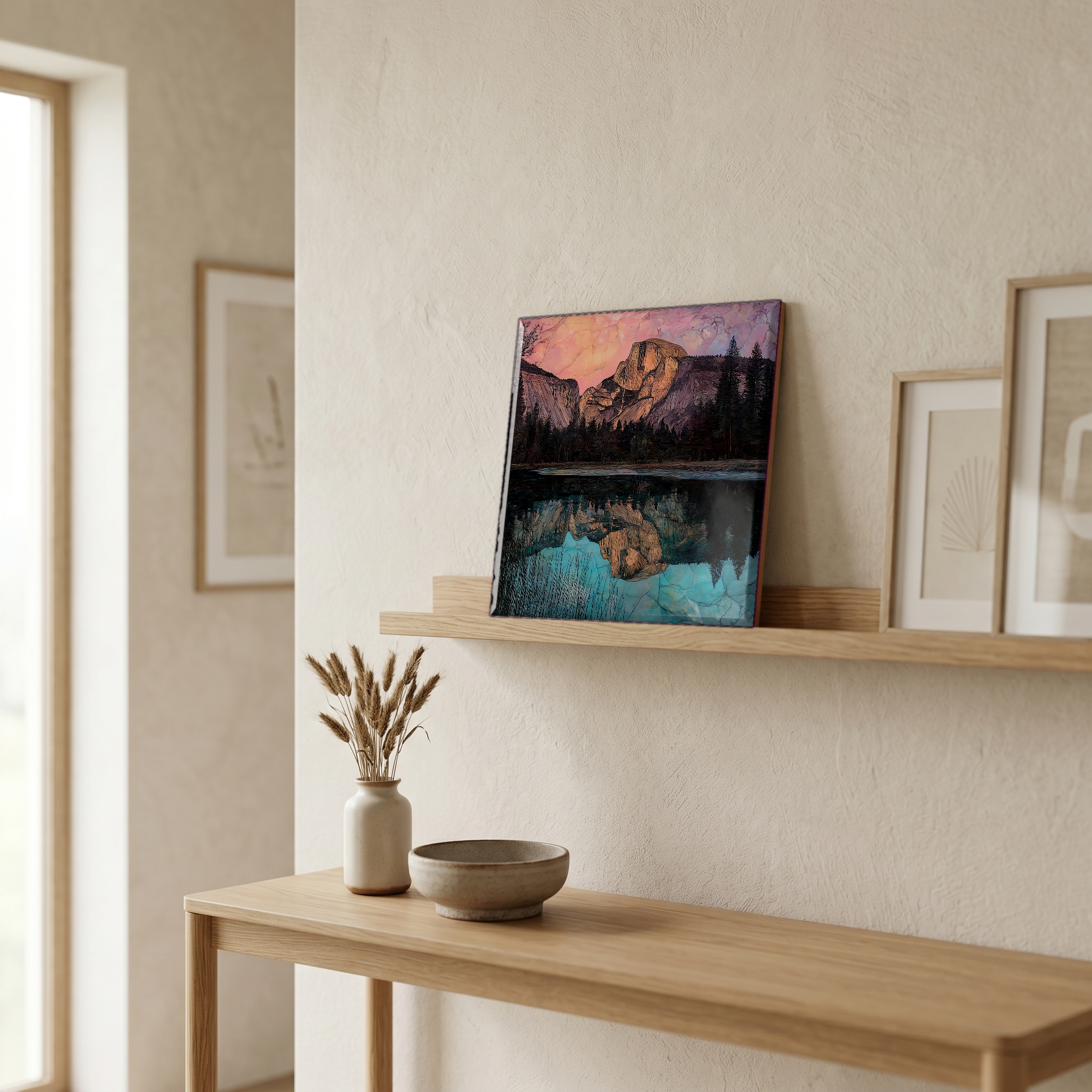
“A shallow pool at the foot of Half Dome, fed by Tenaya Creek. In late spring, when the snowmelt is full and the canyon wind has not yet come up, the water lies still enough to hold the whole granite face upside down. Mount Watkins folds in green beside it. By August the pool has gone to sand and willow; by autumn there is only a meadow and the trail back. John Muir used to ride out from the valley floor to see it. The shuttle still stops here. People walk the loop slowly and stand at the far bank without talking.
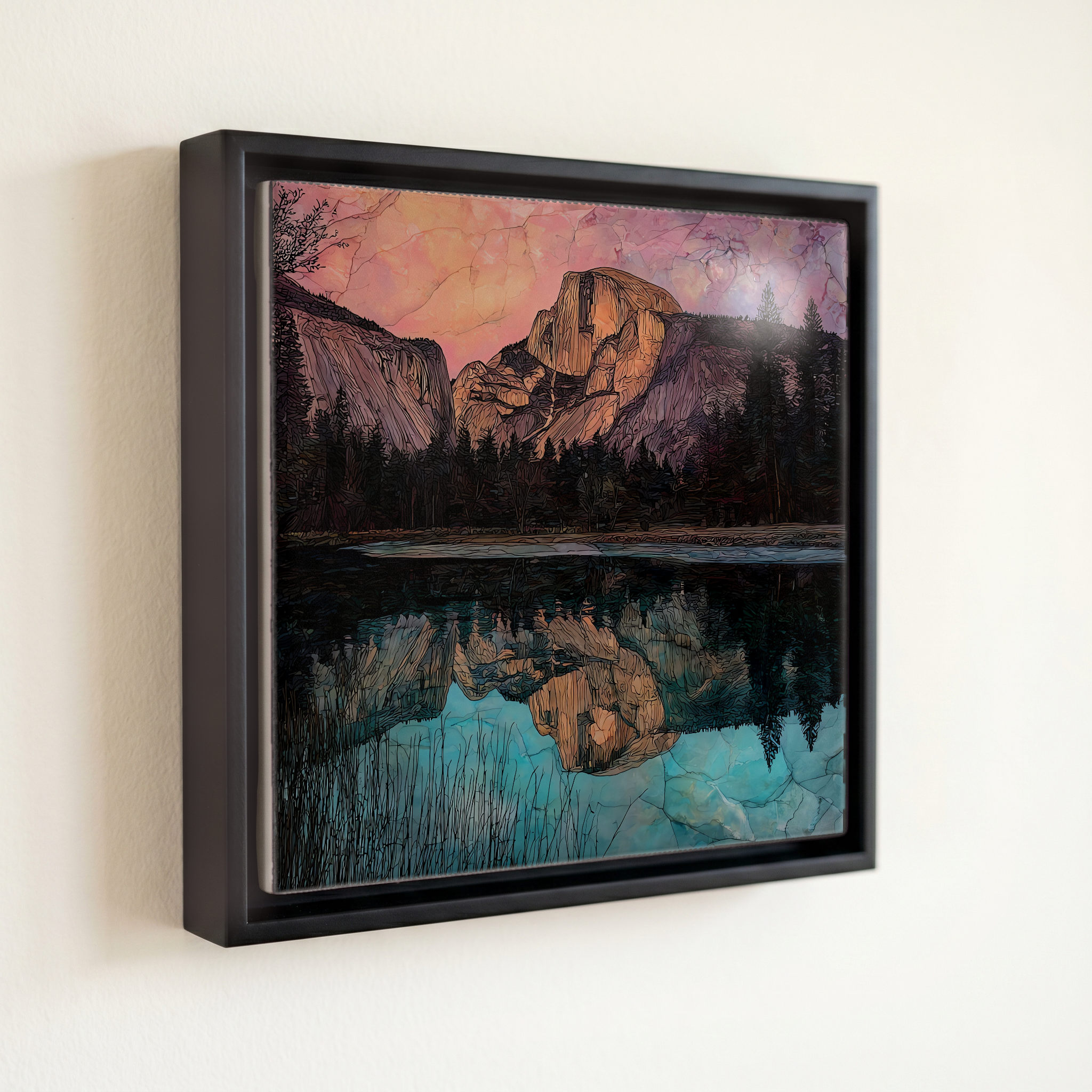
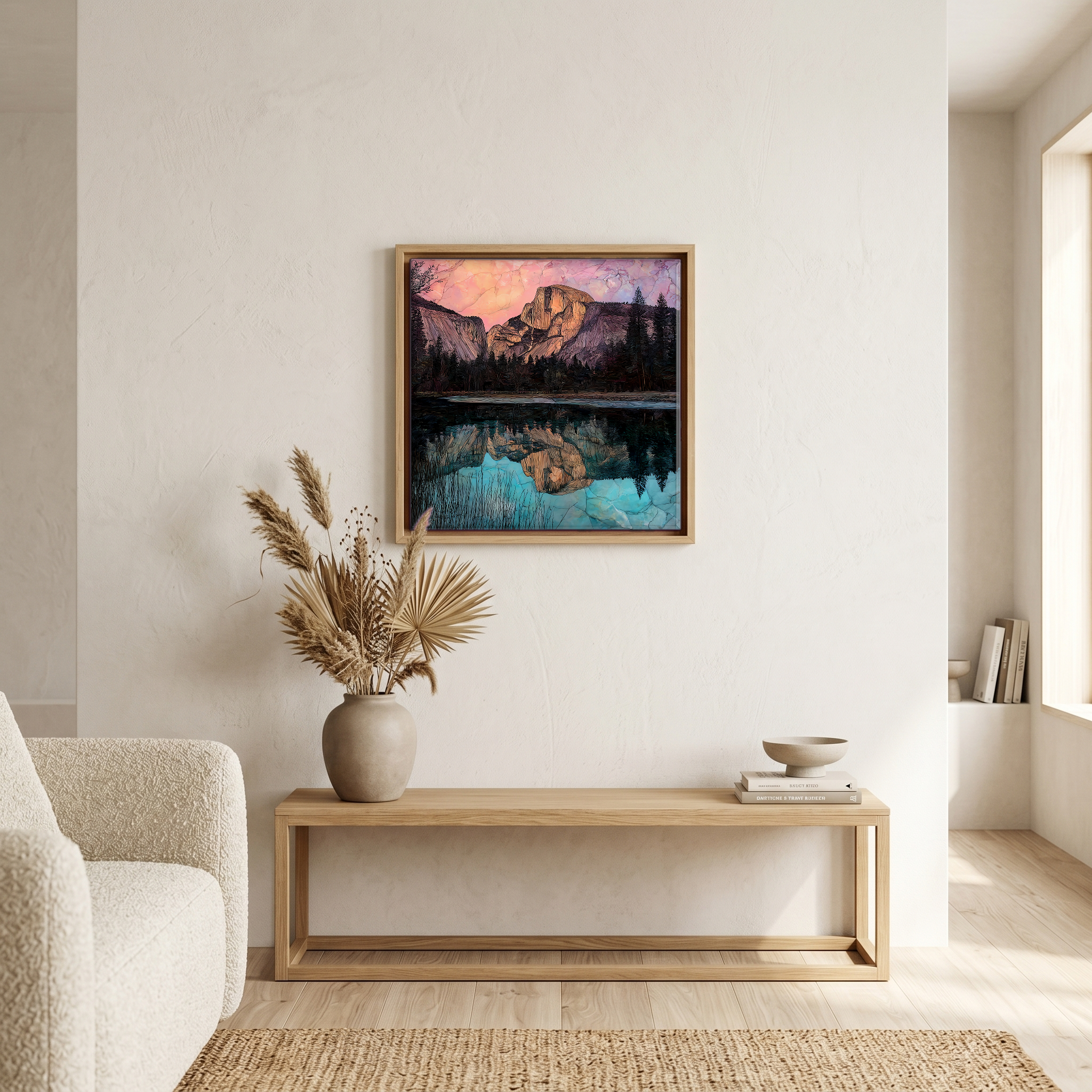
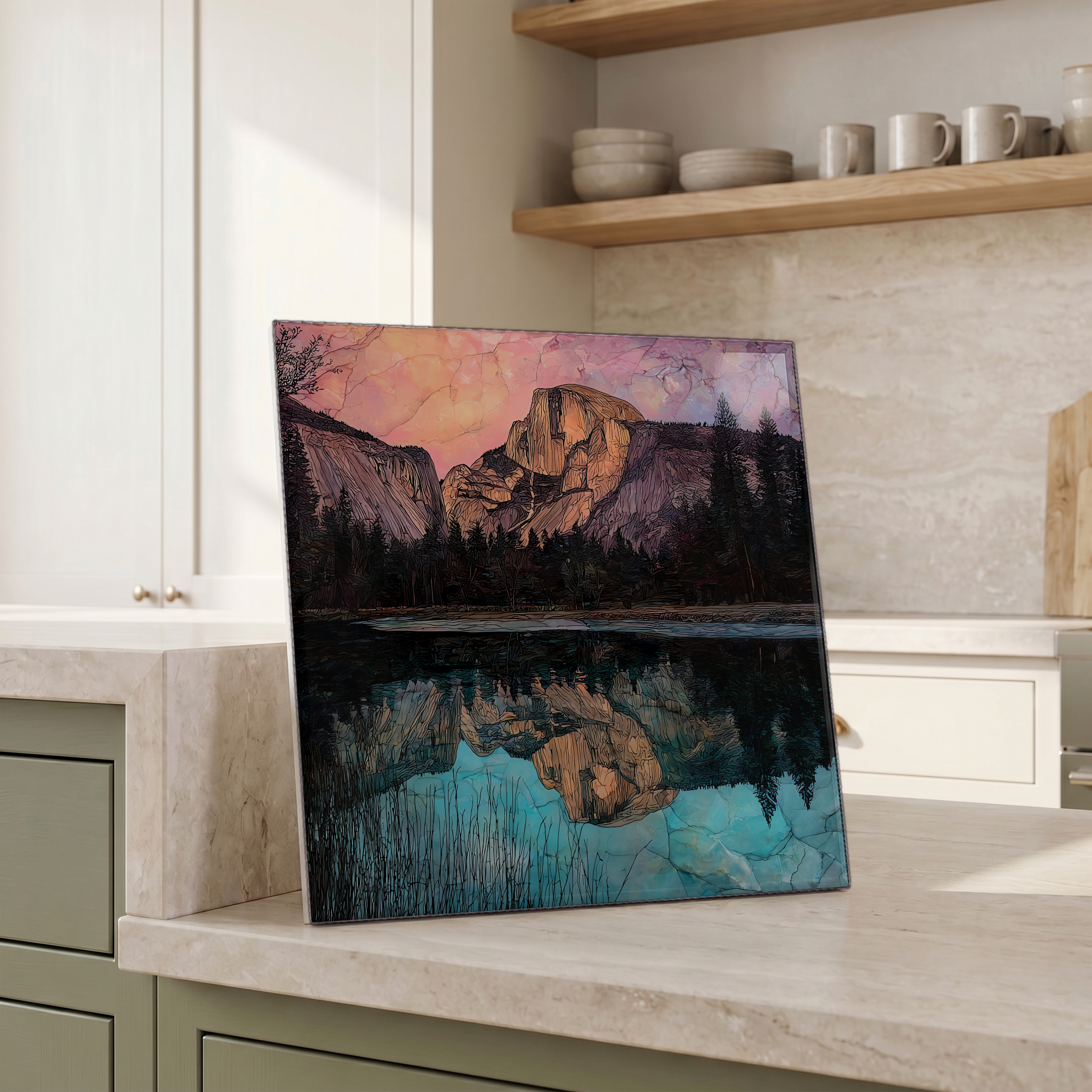
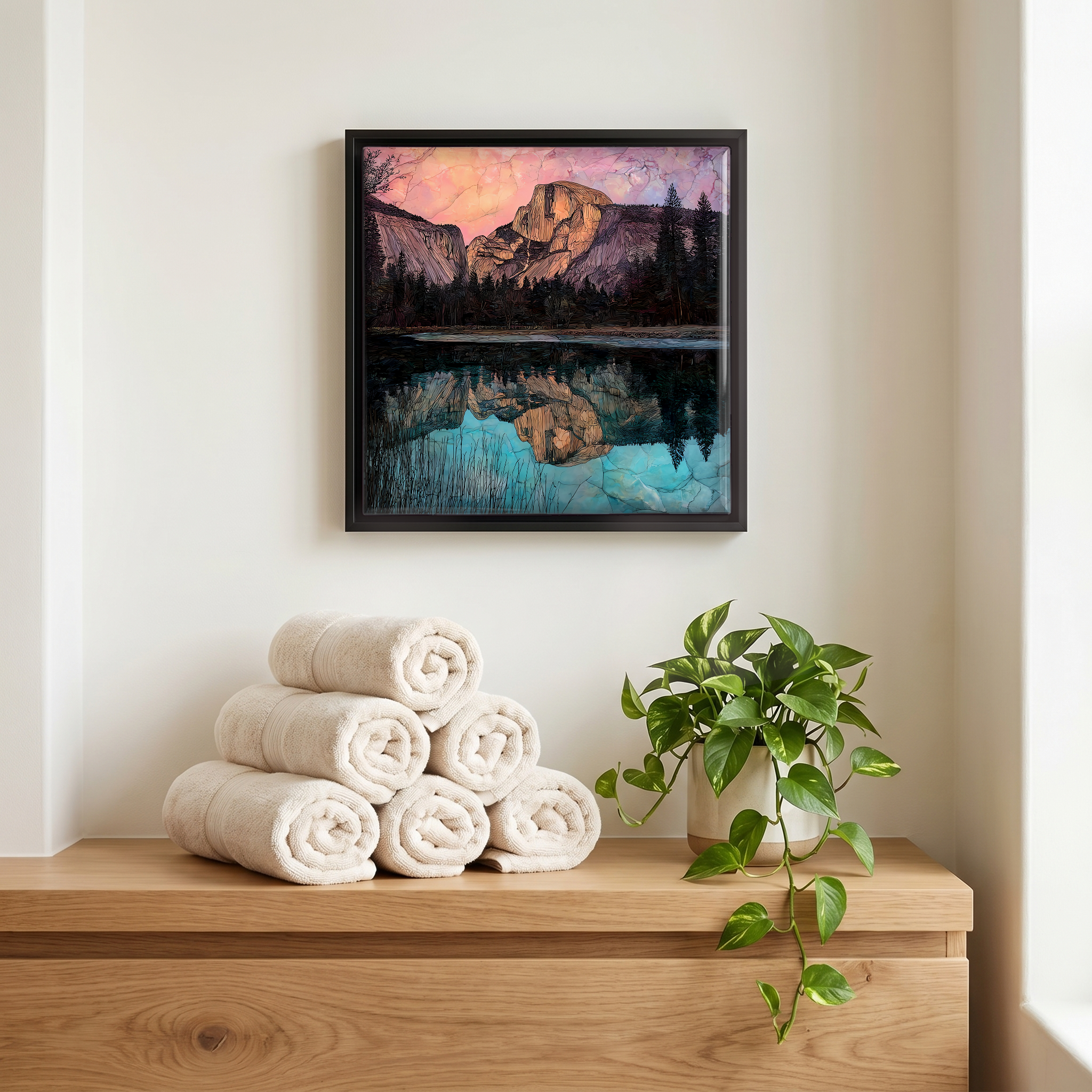
Mirror Lake, on ceramic.
Each tile is finished by hand in our Knoxville studio. Artwork is slowly infused into the ceramic surface under high heat and pressure, and rests beneath a thin glossy finish. The colour lives in the surface, not on top of it.
Pick any four 4-inch tiles — National Parks you've been to, a Smokies set, the four seasons of one place. $ for a set of , cork-backed, ready to live on the table.
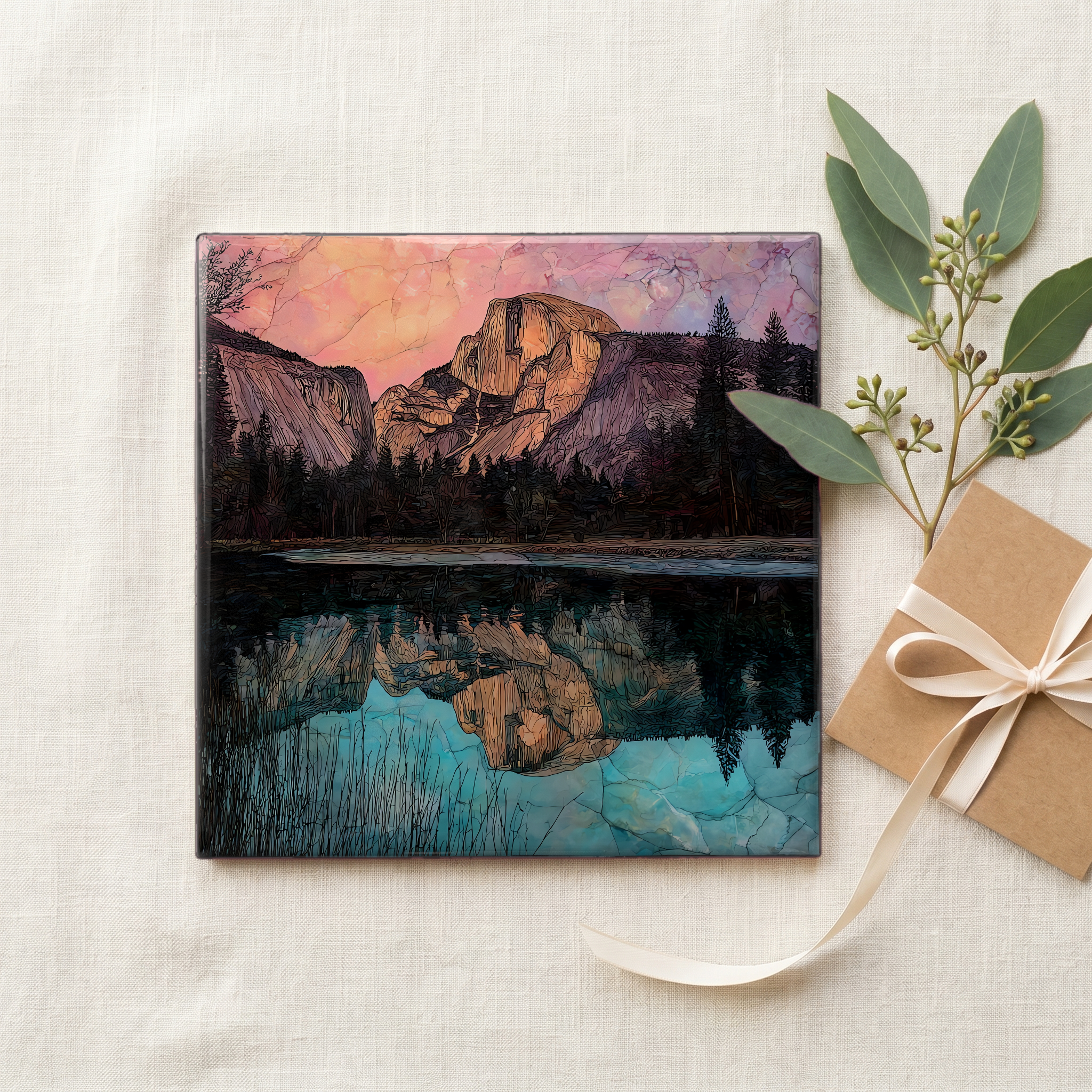
Each tile ships in a kraft box, tied with cream ribbon, with a handwritten note from the studio if you'd like to add one.
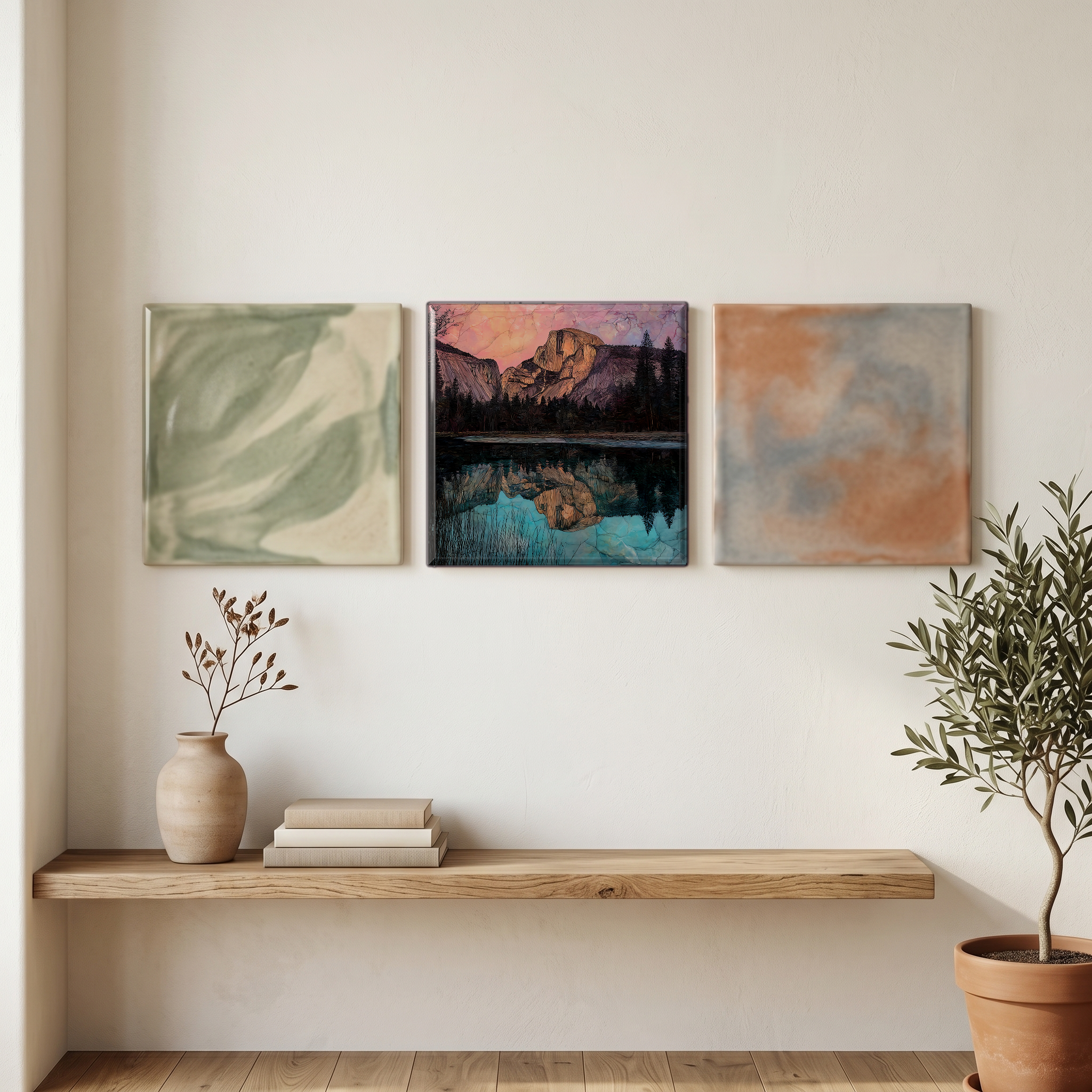
Three or five different vistas, hung together — a chapter of places you've been, or want to go.
The place, in three passes.
Mirror Lake sits in Tenaya Canyon at the eastern end of Yosemite Valley, about one mile by paved trail from the Mirror Lake shuttle stop on Northside Drive. The pool is fed by Tenaya Creek, which drains the high country above Tenaya Lake and the Cathedral Range. At roughly 4,094 feet, it is the closest vantage from which to see Half Dome rise the full 4,737 feet directly above. The lake has been slowly filling with sediment since the late 1800s and is now better described as a seasonal pool: a stage in the succession from glacial lake to meadow that Yosemite Valley itself completed long ago.
The reflection is the whole point. When Tenaya Creek runs full in late spring and the wind drops at dusk, the pool acts as a near mirror: Half Dome doubled in granite and sky, Mount Watkins to the north, the conifers along both banks. The water itself is shallow, rarely more than a few feet, and clear enough to read pebbles on the bottom. As summer advances, evaporation and sedimentation strip away both depth and area, until by August much of the bed is a dry sand bar veined with willow shoots. The reflection that gives the lake its name is, in most years, a six-week event.
Mirror Lake's water levels follow snowmelt timing. The pool is widest and deepest from late April through mid-June, when runoff from the Cathedral Range and Tenaya Lake feeds Tenaya Creek at full volume. By July the surface area shrinks; by late August or September, the lake is most often dry, with only a thread of creek and a broad sand bed. The doubled-mountain reflection typically appears for a six-to-eight week window in spring, and only on mornings before the canyon wind picks up. Park rangers update Tenaya Creek conditions on the Yosemite News & Conditions page.