Wender·Vista
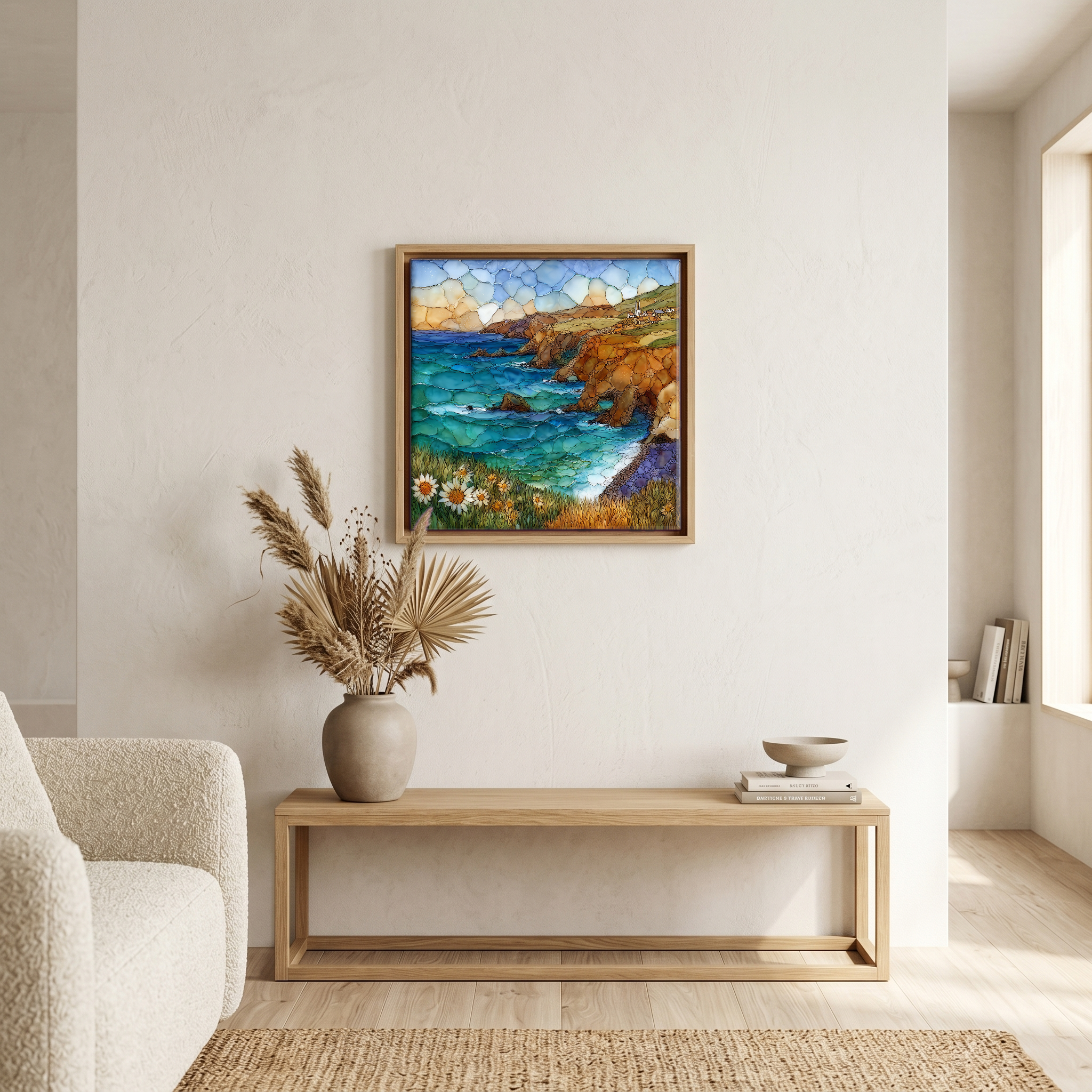
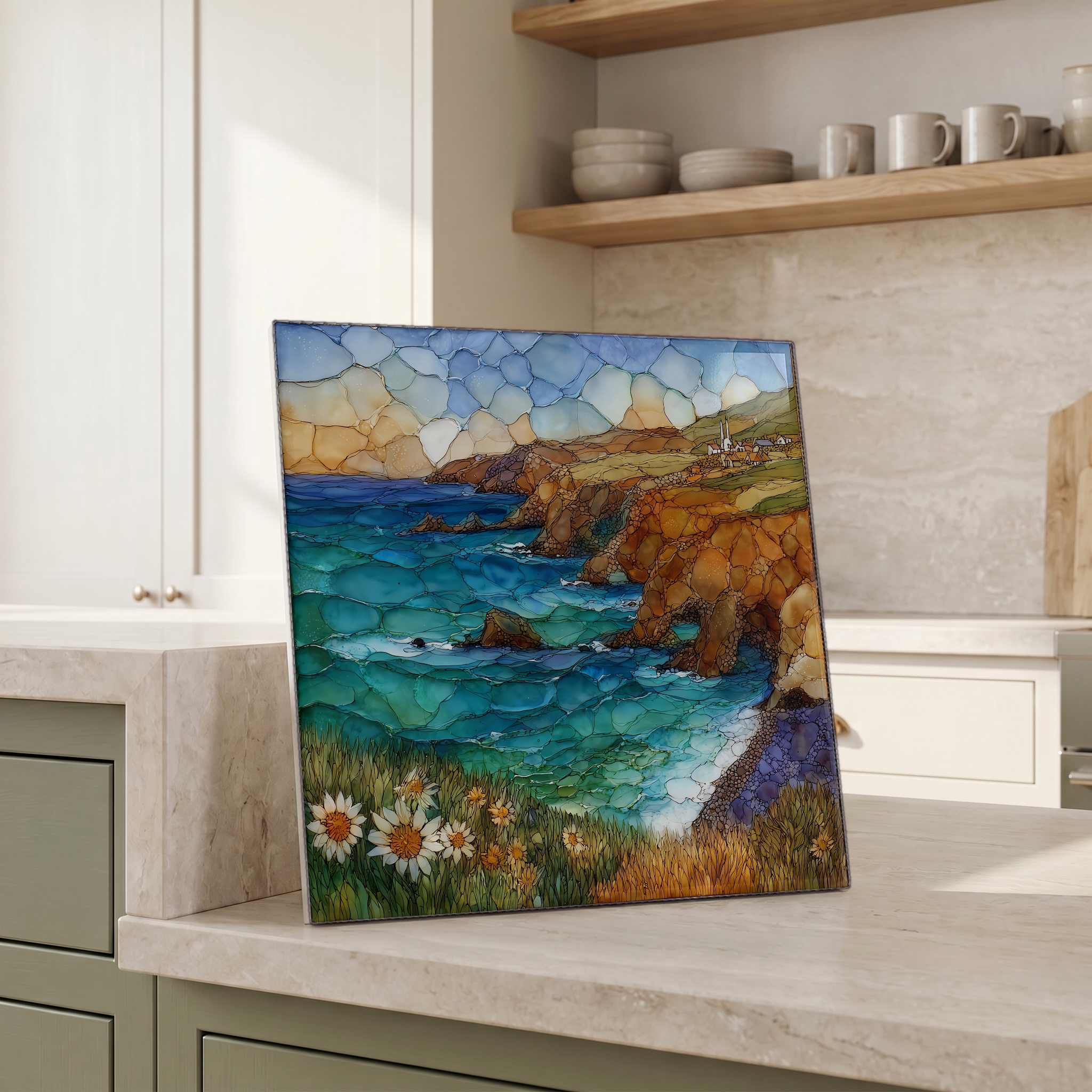
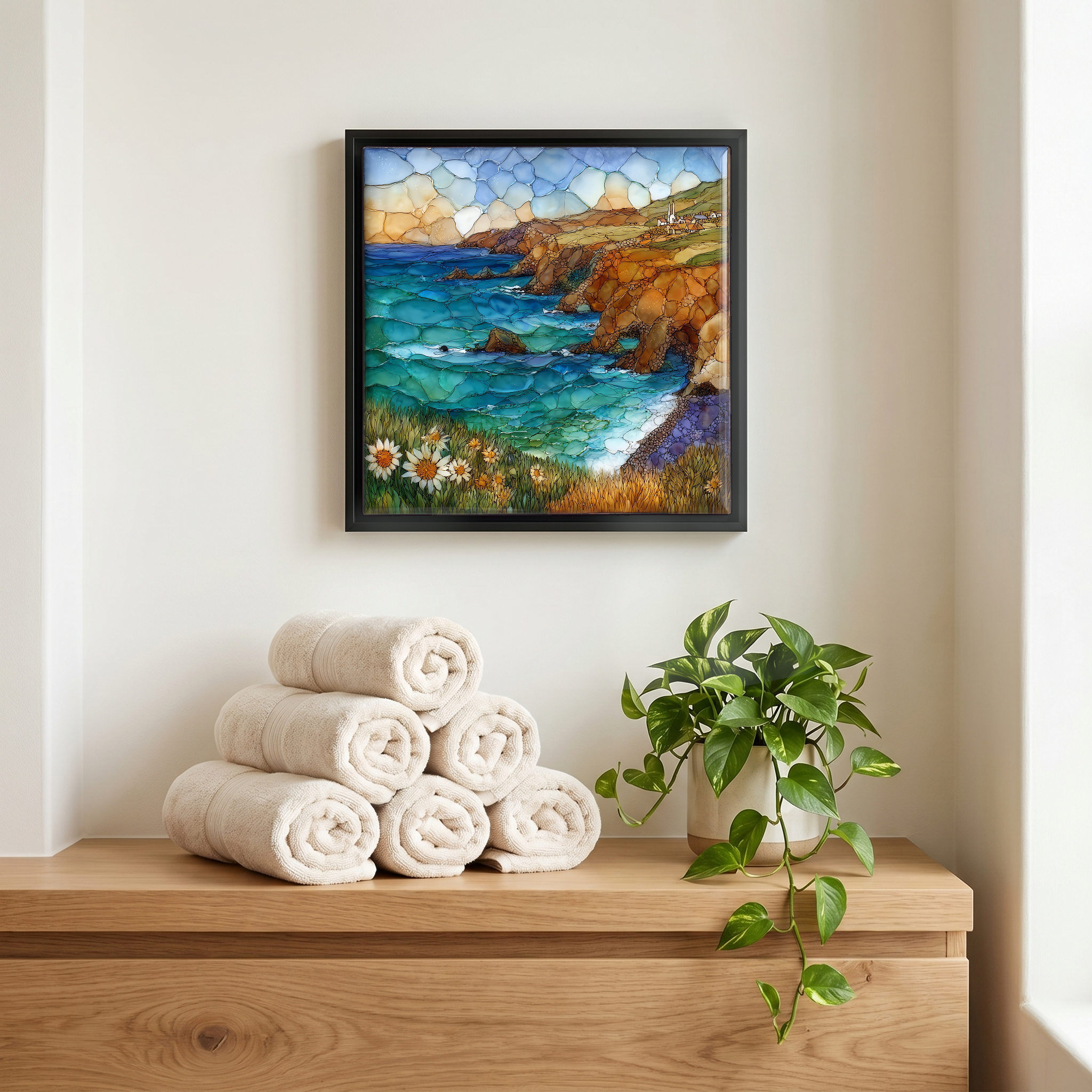
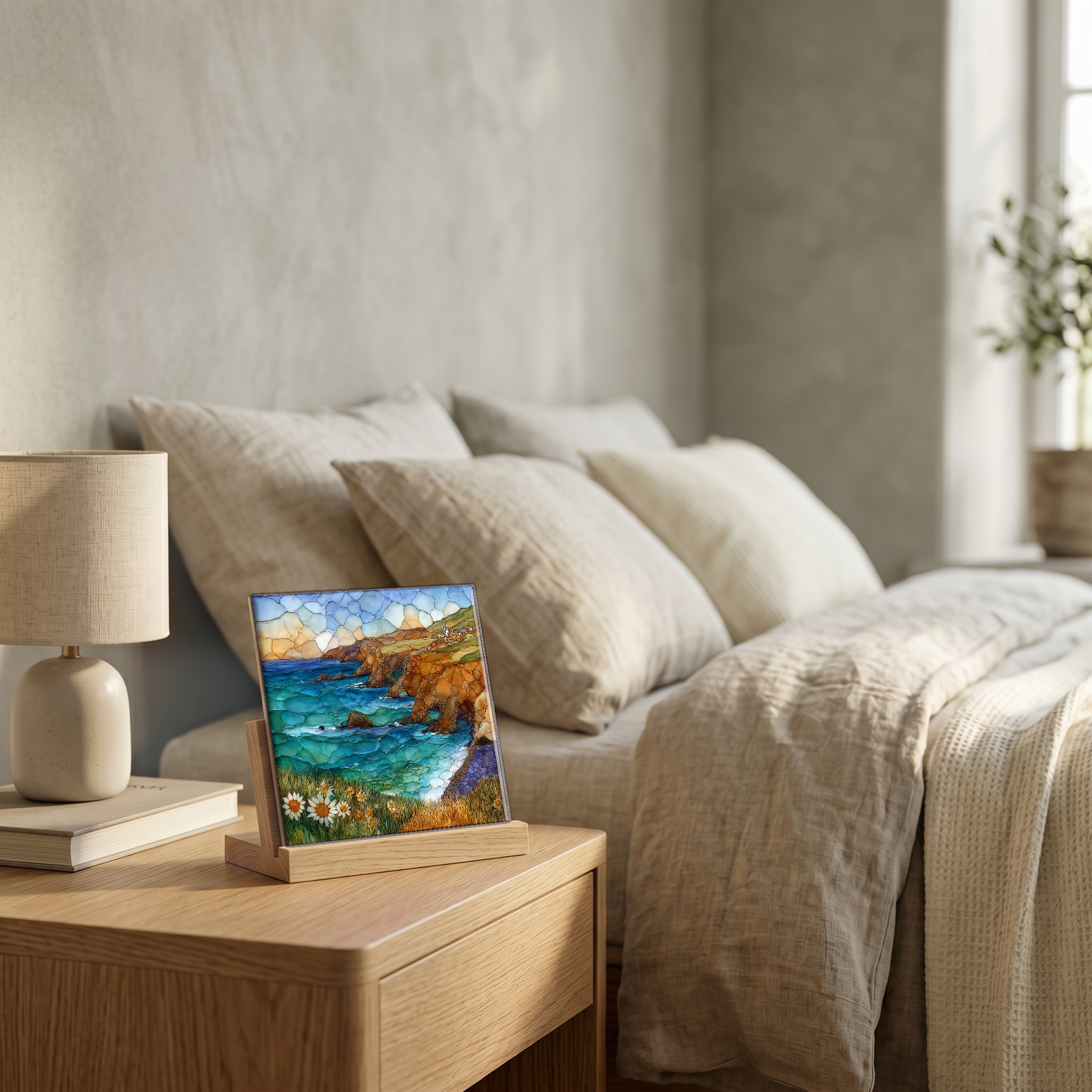
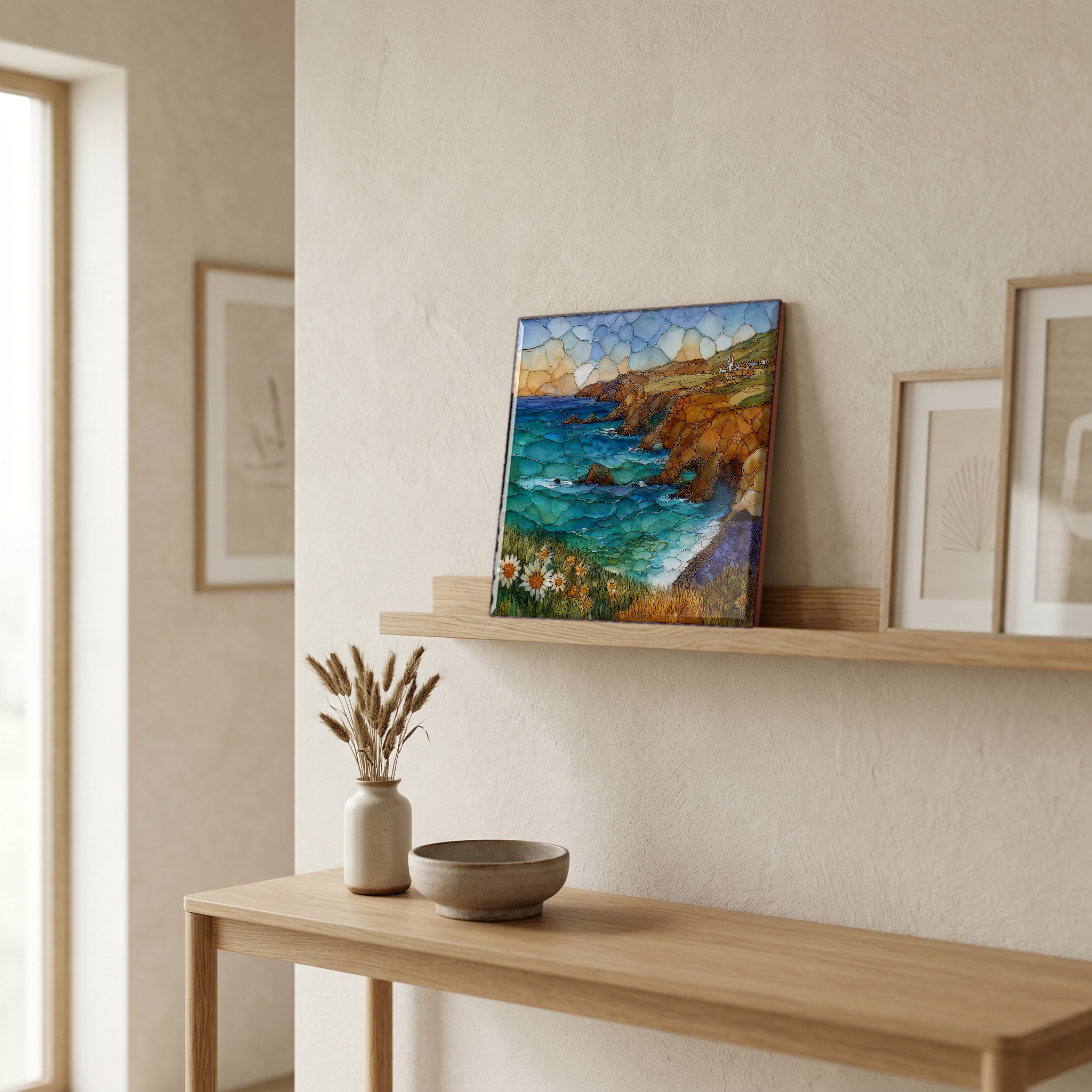
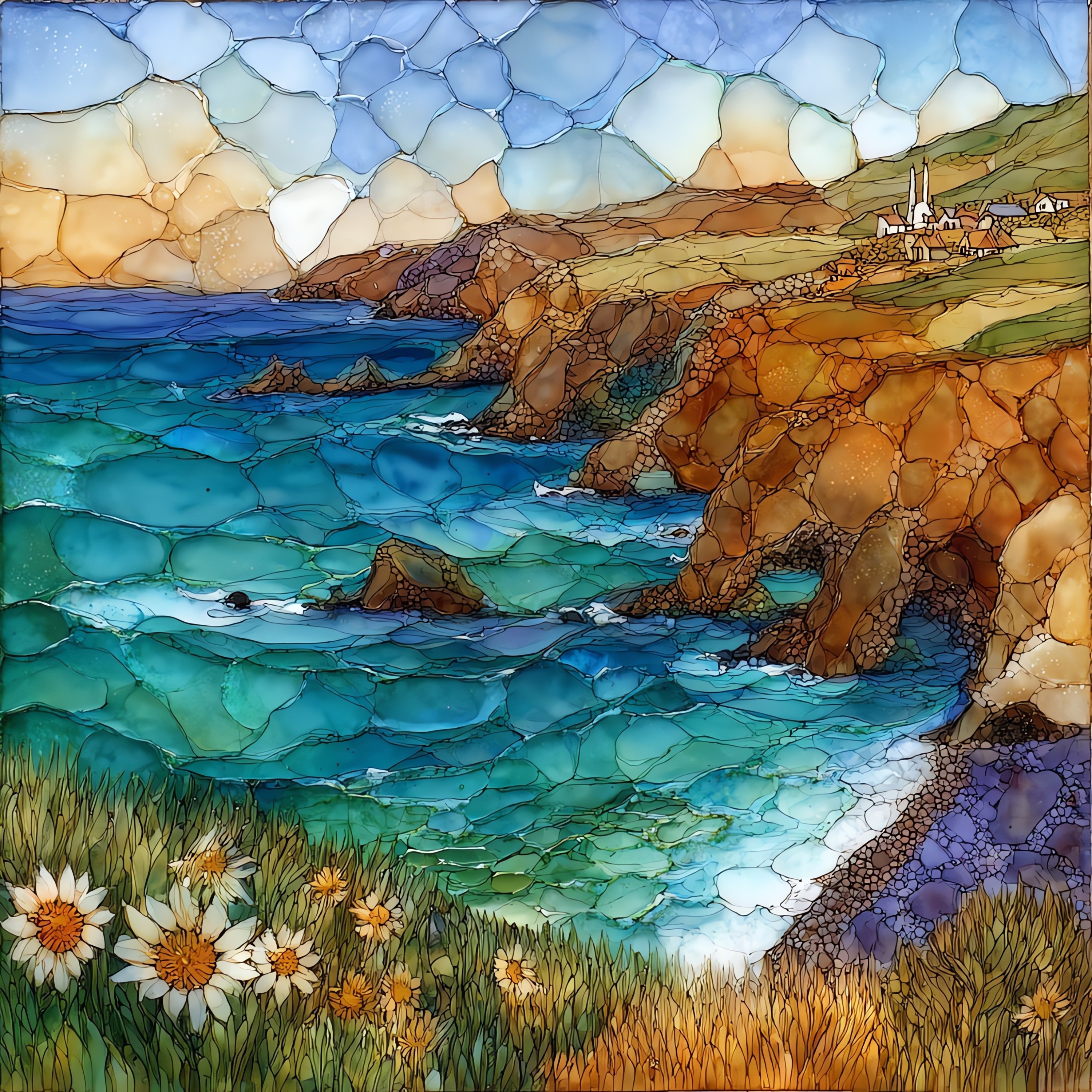
Mendocino Headlands
shown on ceramic, 12-inch tileCalifornia · United States
north of San Francisco, where Highway 1 meets the sea

Mendocino Headlands

a meadow that ends in sea arches.

Where it lives

Not only on a wall.

A small tile on the nightstand catching the morning. A larger one above the fire. Yours, wherever you spend the slow hours.
Above the bench, in a warm oak surround.
Beside the kettle, propped on the counter.
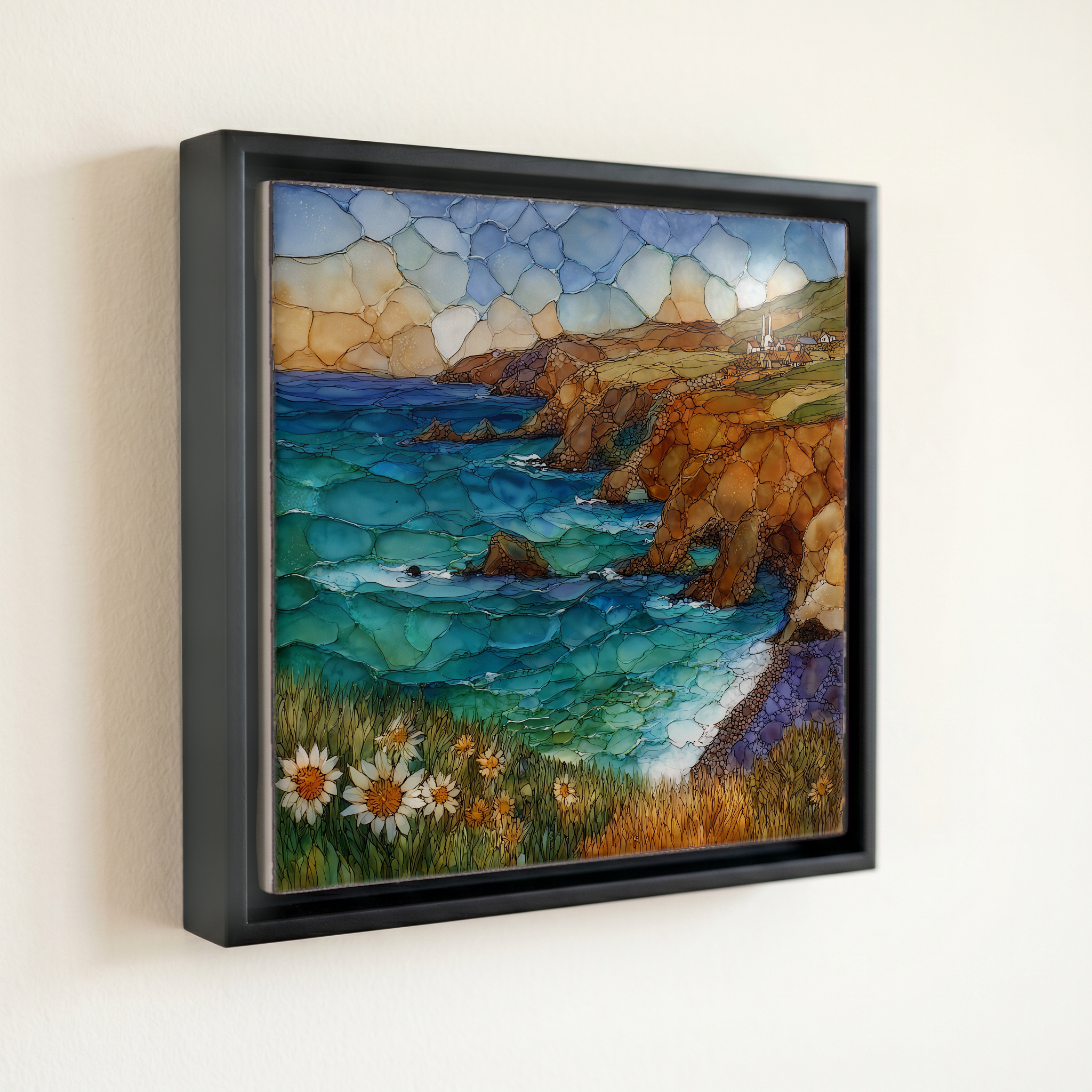
Above the linens, in a slim black surround.
On the nightstand, on a light oak stand.
On a picture ledge, where the light comes in.
a note from the studio

The headlands wrap three sides of Mendocino village, a former lumber town built in New England style on the Northern California coast. Bluff-top trails cross a wildflower meadow and end at sea arches and blowholes. Most of the year a marine fog sits offshore and moves in by afternoon. Gray whales pass close in winter and spring. The Big River empties to the south, and the village's redwood water towers hold the skyline. The light is the kind that turns silver before it turns blue. Nobody hurries here.
from the studio
shown in a slim black floating frame · 6 × 6 in
— bring it home

Mendocino Headlands, on ceramic.

Each tile is finished by hand in our Knoxville studio. Artwork is slowly infused into the ceramic surface under high heat and pressure, and rests beneath a thin glossy finish. The colour lives in the surface, not on top of it.

What kind of piece?
One tile — square or rectangle.
How big?
the popular one — counter, shelf, nightstand
6 × 6 in · 15 cm · 1.6 lb
Surface finish
A clear glossy finish — the artwork reads as if under resin. Ideal for show-pieces and framed wall art.
How it sits
A hidden cleat — sits ¼″ proud of the wall.
$58
Hand-finished and shipped from our studio at the foot of the Smokies. On your wall in about ten days.
size
6 × 6 in
15 cm
weighs
1.6 lb
solid in the hand
surface
ceramic, hand-finished
art rests beneath a thin glossy finish
from
Knoxville, TN
our family studio, at the foot of the Smokies
— start a Coaster Set

Pick any four 4-inch tiles — National Parks you've been to, a Smokies set, the four seasons of one place. $ for a set of , cork-backed, ready to live on the table.
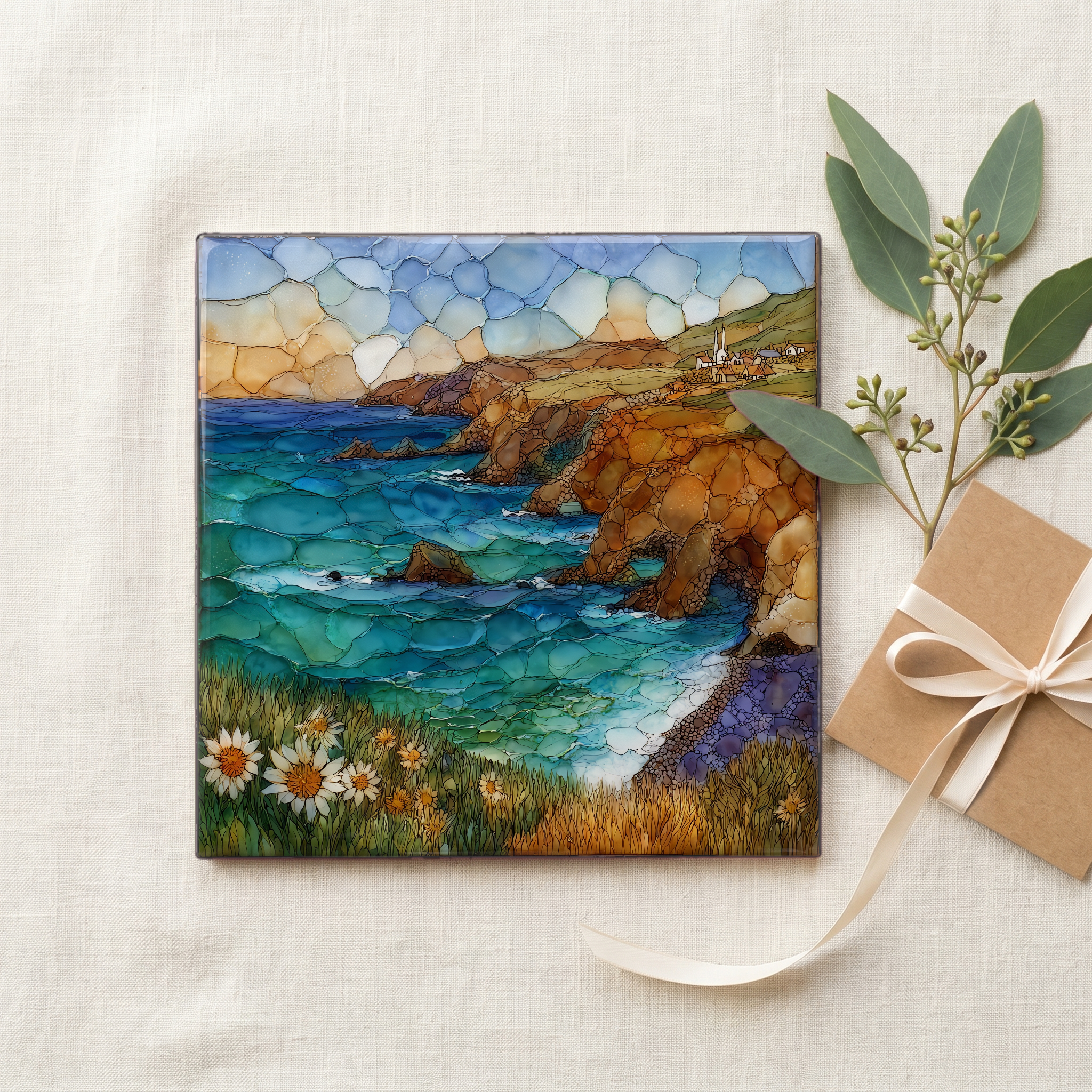
comes gift-ready
comes gift-ready

Each tile ships in a kraft box, tied with cream ribbon, with a handwritten note from the studio if you'd like to add one.
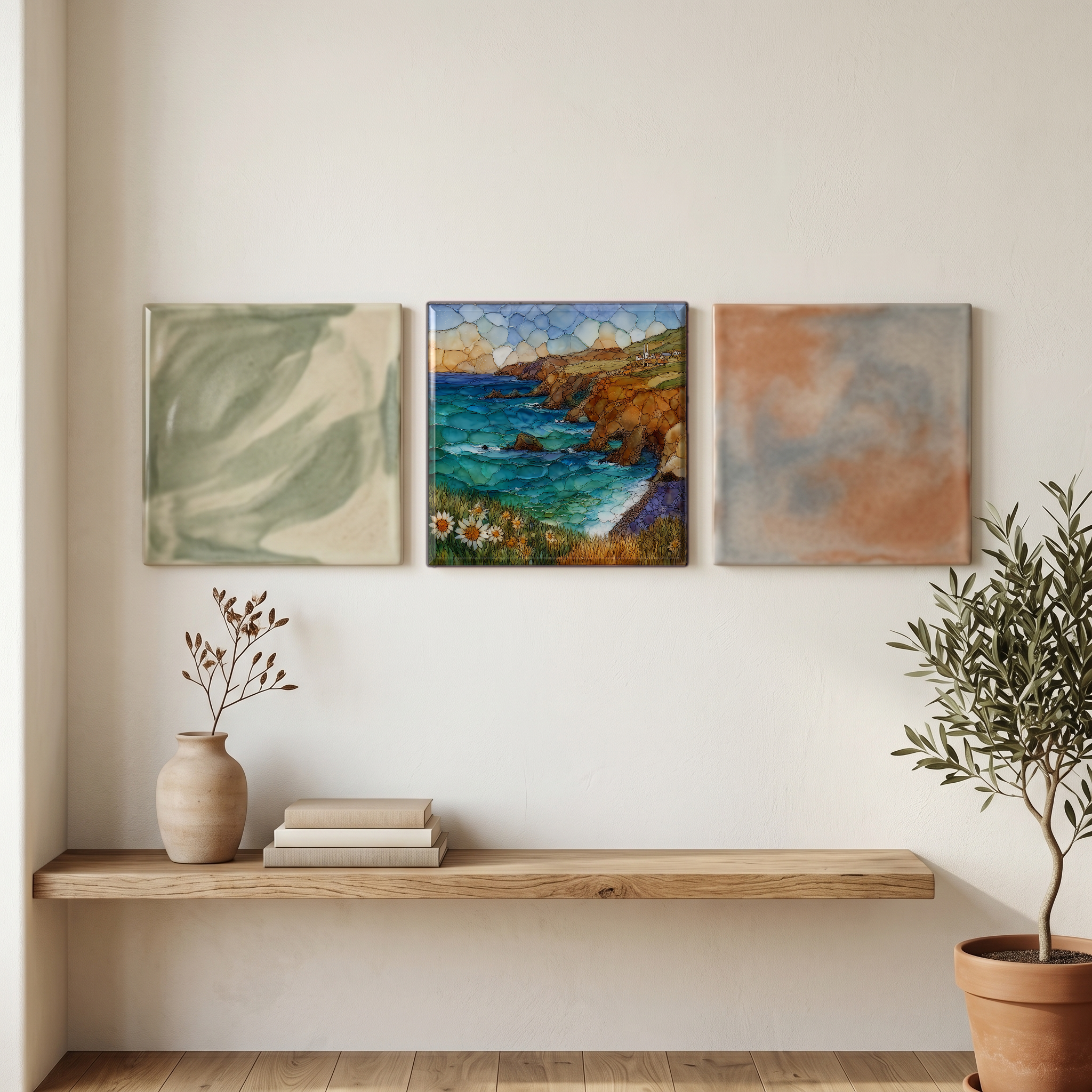
or build a grouping
or build a grouping

Three or five different vistas, hung together — a chapter of places you've been, or want to go.

about Mendocino Headlands

The place, in three passes.

A little of what's known, in case you fall down the rabbit hole — or want to go see it yourself.
the place

Mendocino Headlands State Park covers roughly 347 acres on the Pacific coast in Mendocino County, about 155 miles north of San Francisco along Highway 1. The park surrounds the village of Mendocino on three sides, with bluff-top trails that lead to sea arches, sea caves, and a string of small coves. To the south, the Big River empties into the Pacific at Big River Beach; to the north, the trails skirt the village and join the coastal path past the Ford House Visitor Center, an 1854 redwood building that anchors the park's history. Mendocino itself, founded in 1852 as a lumber port, is designated a National Historic Landmark District for its preserved 19th-century redwood architecture.

the water

The headland cliffs face the Pacific with sandstone the ocean has been carving for thousands of years into a long inventory of arches, blowholes, sea stacks, caves, and small coves along the bluff edge. Some arches collapse and re-form within a single human lifetime; the Northern California coast is geologically active enough that the map changes generation to generation. South of the village the Big River meets the ocean at Big River Beach, the entrance to a long estuary added to the park system in 2002. North of town a flat trail follows the cliff above Portuguese Beach toward Russian Gulch State Park. The surf is constant and loud, and the air carries salt in a way the inland visitor notices first.

the season

Two cycles shape the year on the headlands. The first is the wildflower bloom, which runs roughly March through May across the bluff-top meadows: wild iris, sea thrift, and coastal lupine along the trail edges, with paintbrush and yellow bush lupine in the longer grass. The second is the gray whale migration. Pacific gray whales pass close to the Mendocino coast on their southern run in December and January and again northbound from March into May, often within sight of the cliffs. Mendocino's annual Whale Festival, run by the village since the 1980s, marks the spring half of that passage. The headland trails stay open through the year, but the wind on the bluffs picks up sharply from November to February.

where
United States · Mendocino County, California
within
Mendocino Headlands State Park
position
39.3055° N · 123.7995° W
the neighborhood

What's nearby.

A handful of named places within an hour's walk or short drive. Some we've already painted; some we will.
1 km S
Big River
river and estuary
3 km N
Russian Gulch State Park
state park
4 km NW
Point Cabrillo Light Station
lighthouse
5 km S
Van Damme State Park
state park
7 km N
Jug Handle State Natural Reserve
ecological reserve
16 km N
Fort Bragg
coastal town
N
Mendocino Headlands
Big River
Russian Gulch State Park
Point Cabrillo Light Station
Van Damme State Park
Jug Handle State Natural Reserve
Fort Bragg
common questions

What people ask.

A few questions we get about Mendocino Headlands — and about bringing the piece home.
about the place

The park is on the Pacific coast in Mendocino County, Northern California, about 155 miles north of San Francisco along Highway 1. It surrounds the village of Mendocino on three sides and adjoins the Big River estuary to the south.

The headlands are known for sea arches, blowholes, and bluff-top trails that wrap around the historic village of Mendocino. The park preserves a stretch of coastal meadow that ends in active sandstone cliffs, with views north toward Russian Gulch and south to the Big River.

California acquired the headlands in the 1970s after community campaigning to prevent subdivision and development around the village. The Ford House, an 1854 redwood building on the bluff, serves as the park's visitor center and is one of Mendocino's oldest standing structures.

Mendocino was founded in 1852 as a lumber port, and many of its early settlers came from New England. The redwood Victorian buildings, the white church spires, and the wooden water towers reflect that heritage. The village is now a National Historic Landmark District.

Pacific gray whales pass close to the Mendocino coast on their southbound migration in December and January and again northbound from March into May. The bluff-top trails are well placed for sightings, particularly on calm mornings. The village hosts a Whale Festival each March.

A marine fog sits offshore much of the year and rolls in across the headlands by afternoon, especially from May through August. Cold upwelling along the California Current keeps surface temperatures around 50°F and condenses warmer inland air into a low ceiling above the cliffs.

Bluff-top trails of roughly two to three miles wrap the headlands, with shorter spur paths to overlooks above the sea arches and blowholes. The terrain is flat and the surface is mostly grass and packed earth. Dogs are allowed on leash.

about the piece in your home

It's been a meaningful gift for many of our customers with ties to Mendocino or the Northern California coast. The headlands carry a particular meaning for people who grew up walking the bluffs or staying in the village. A Small or Medium with a handwritten note from the studio carries well.

The headlands tile reads well in Coastal-modern, California-craftsman, and quiet Maximalist interiors. The blue-green ocean palette and the soft fog tones pair with warm woods, linen, and weathered metals. It also sits beside redwood furniture and Mission-era pieces.

Coastal-modern continues as a strong category in 2026, with a clear shift away from beachy-bright palettes toward the cooler, foggier Pacific Northwest range. The Mendocino Headlands tile sits in that range and works in shoreline homes and inland houses with a coastal accent wall.

For a sofa or long console, a single Large or a four-tile Mural reads well from across the room. A nine-tile Mural is for a wide wall above a low piece of furniture. A Medium suits a narrower console or a stair landing.

Yes, with the Dura Satin or Matte finish. Both are scratch-resistant and handle humidity without dulling. The Glossy finish is meant for framed wall art and dry rooms. A Coaster Set works as a small introduction to the piece for kitchen counters.

Microfibre and water. The colour is slowly infused into the ceramic surface under high heat and pressure and lives beneath a thin glossy finish, so it does not lift or fade with ordinary cleaning. Avoid abrasive pads and harsh solvents.

Yes. Every WenderVista piece comes out of a single studio in Knoxville, Tennessee, under Reid Wender's eye. We do not license, sub-contract, or resell. The Mendocino Headlands tile was painted in our visual language for this catalog.

if this one stayed with you

A few you might also love.

Hand-picked by the eye that found Sorapis. Same air, same kind of quiet.