Wender·Vista
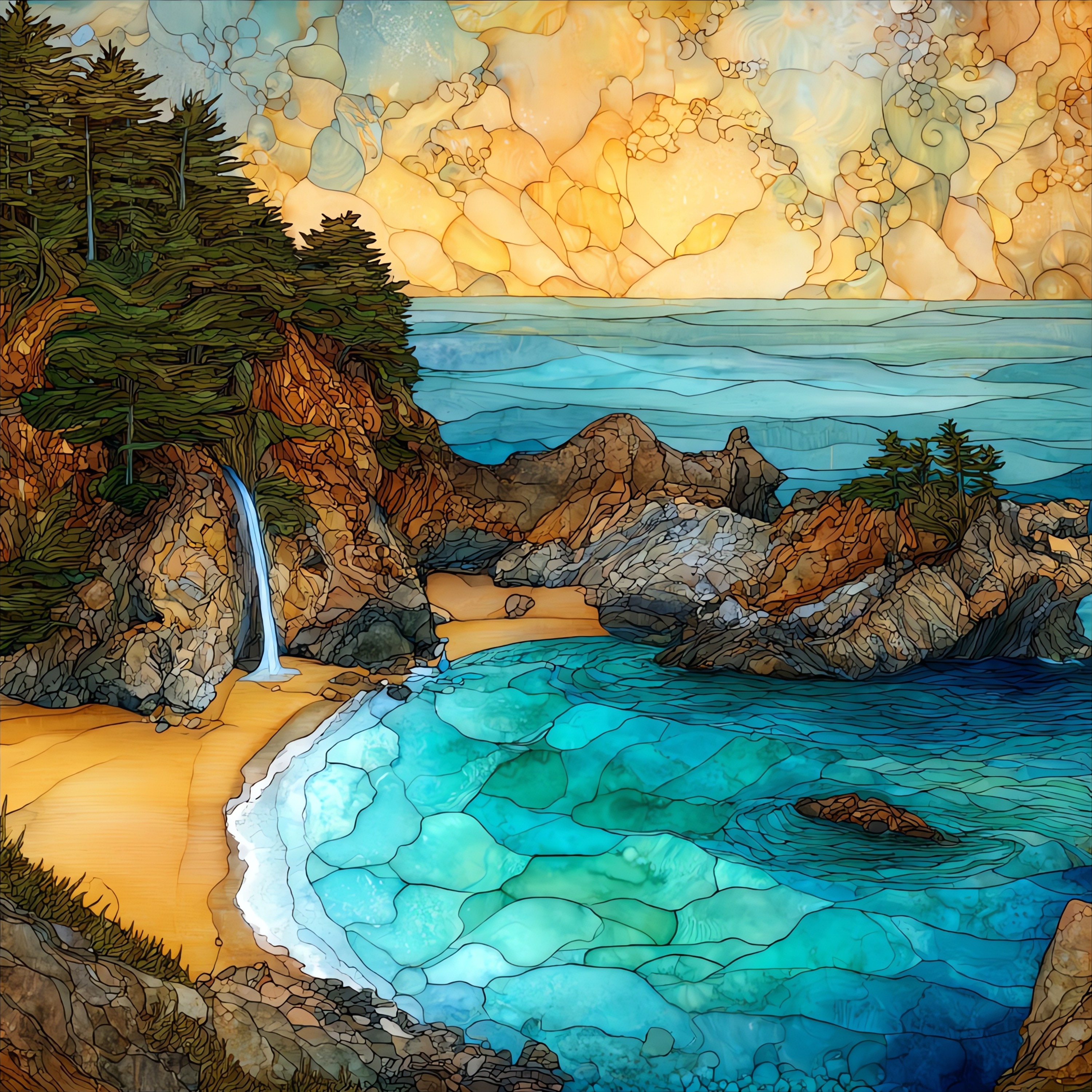
McWay Falls
shown on ceramic, 12-inch tileCalifornia · United States
on the Big Sur coast, thirty-seven miles south of Carmel

McWay Falls

— a thread of water into a turquoise cove.

Where it lives

Not only on a wall.

A small tile on the nightstand catching the morning. A larger one above the fire. Yours, wherever you spend the slow hours.
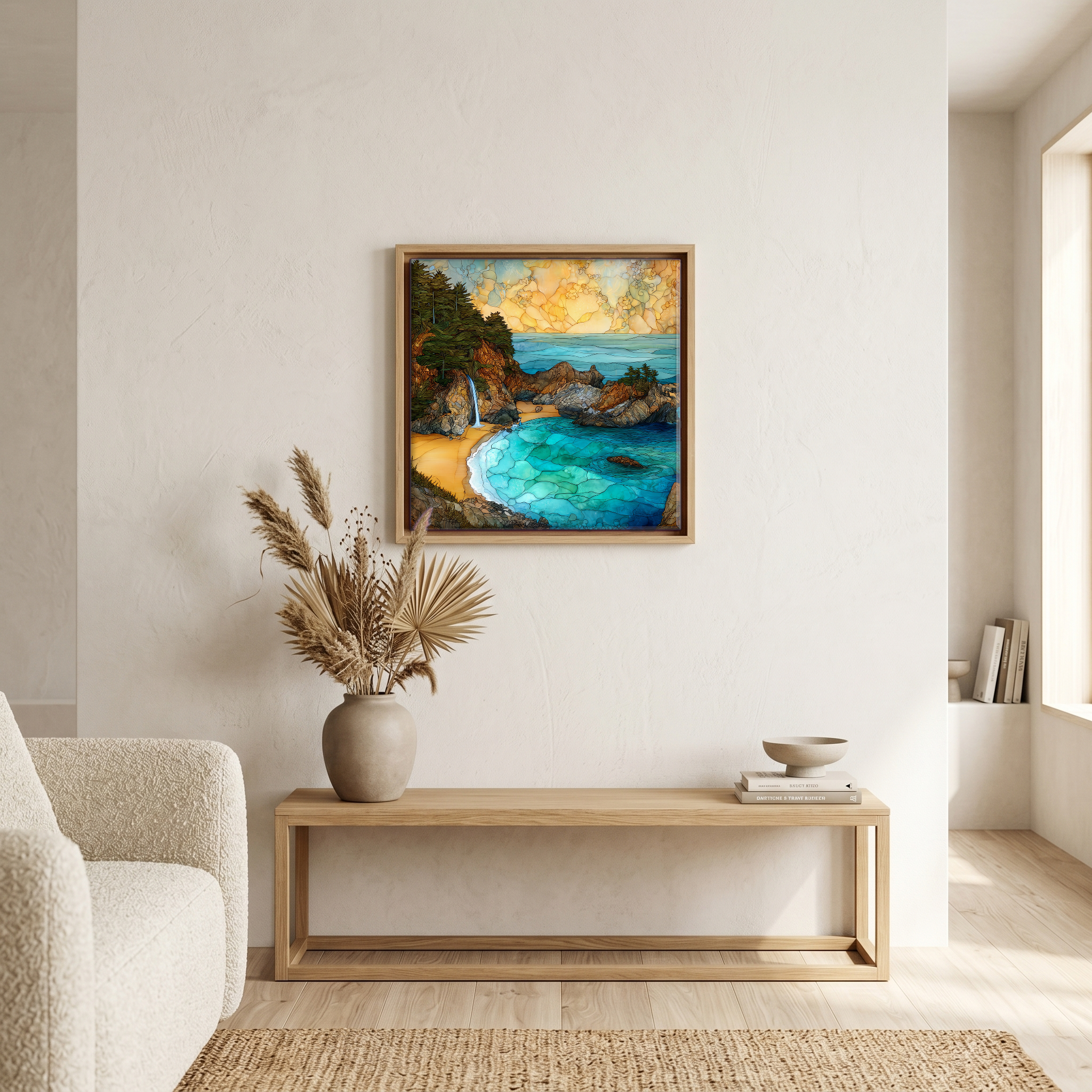
Above the bench, in a warm oak surround.
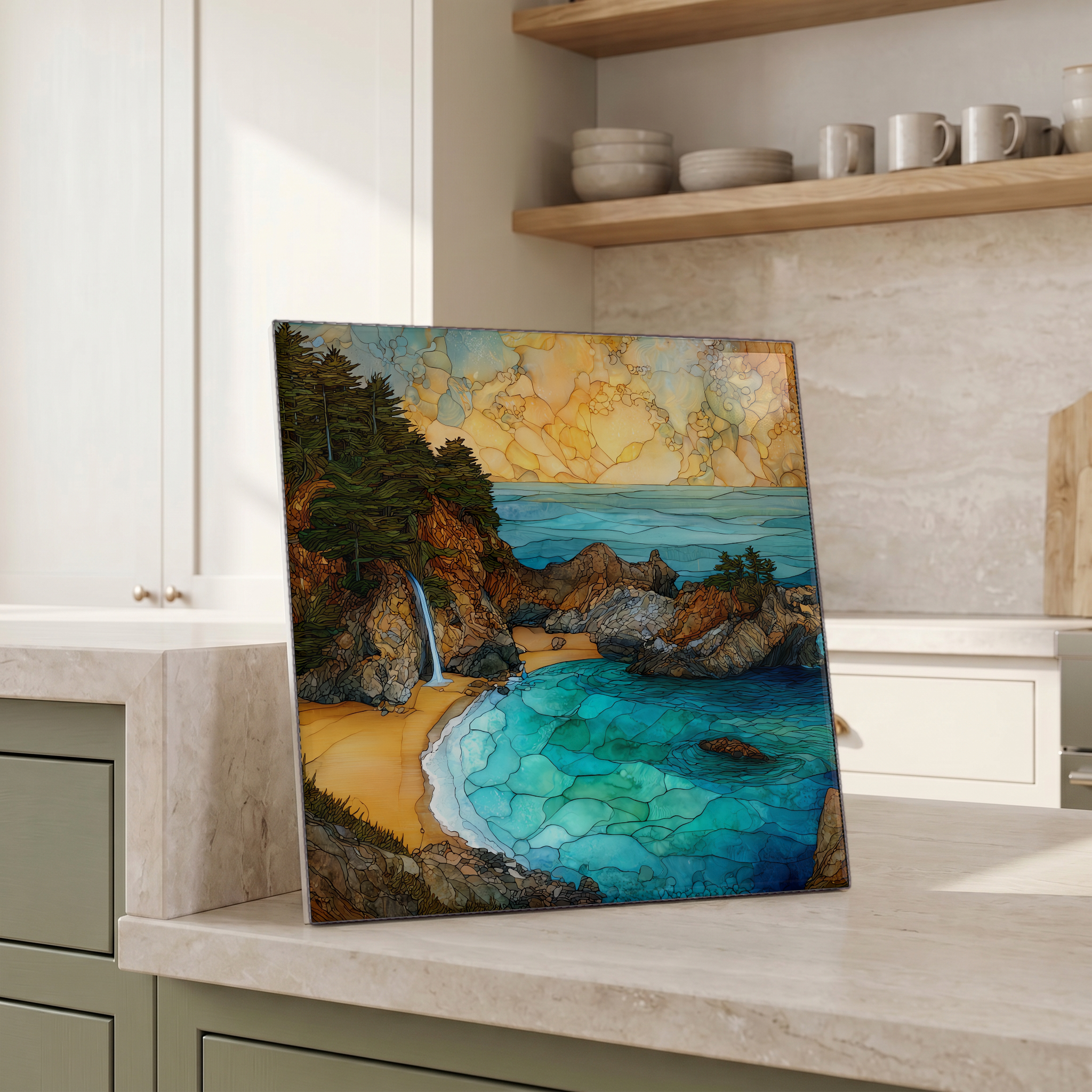
Beside the kettle, propped on the counter.
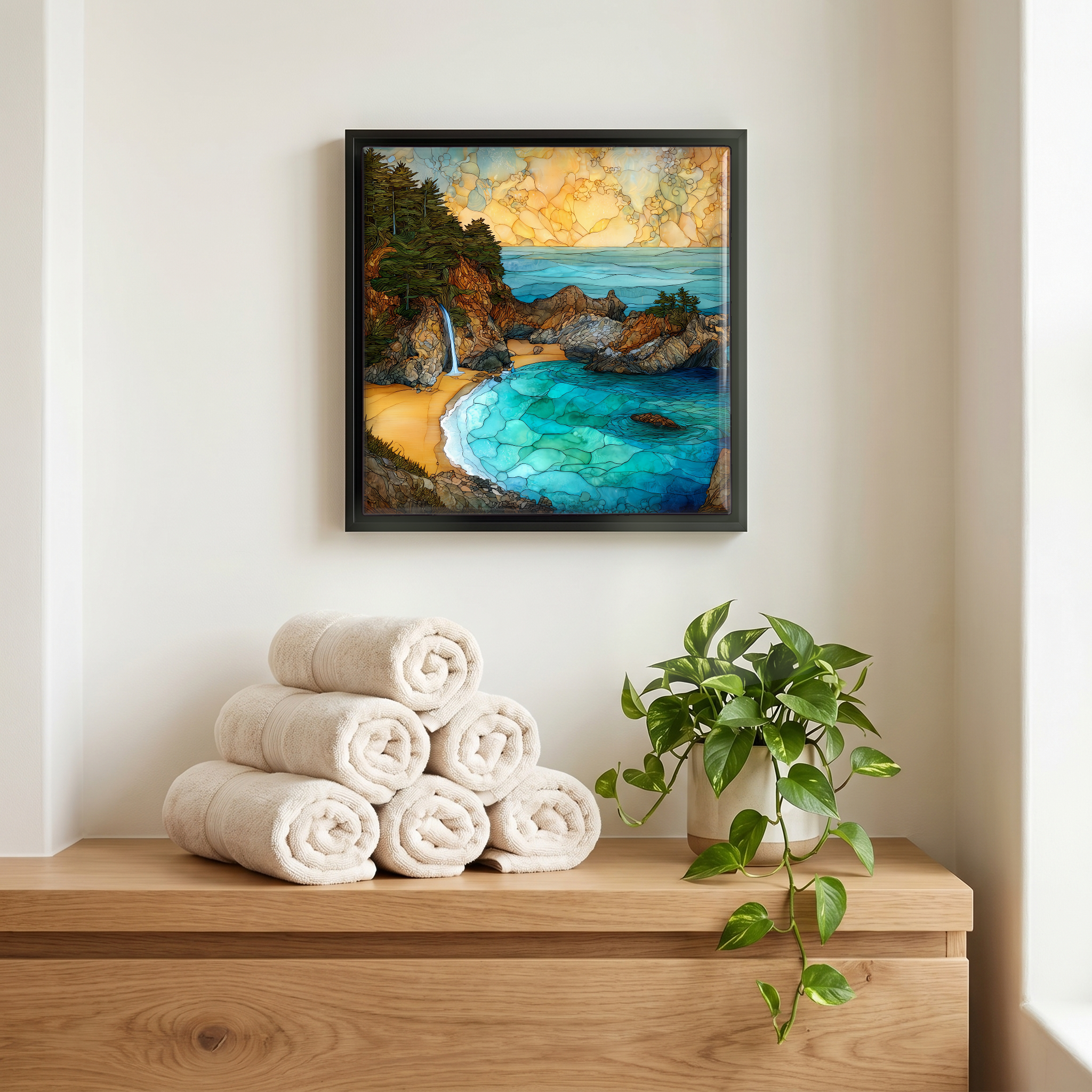
Above the linens, in a slim black surround.
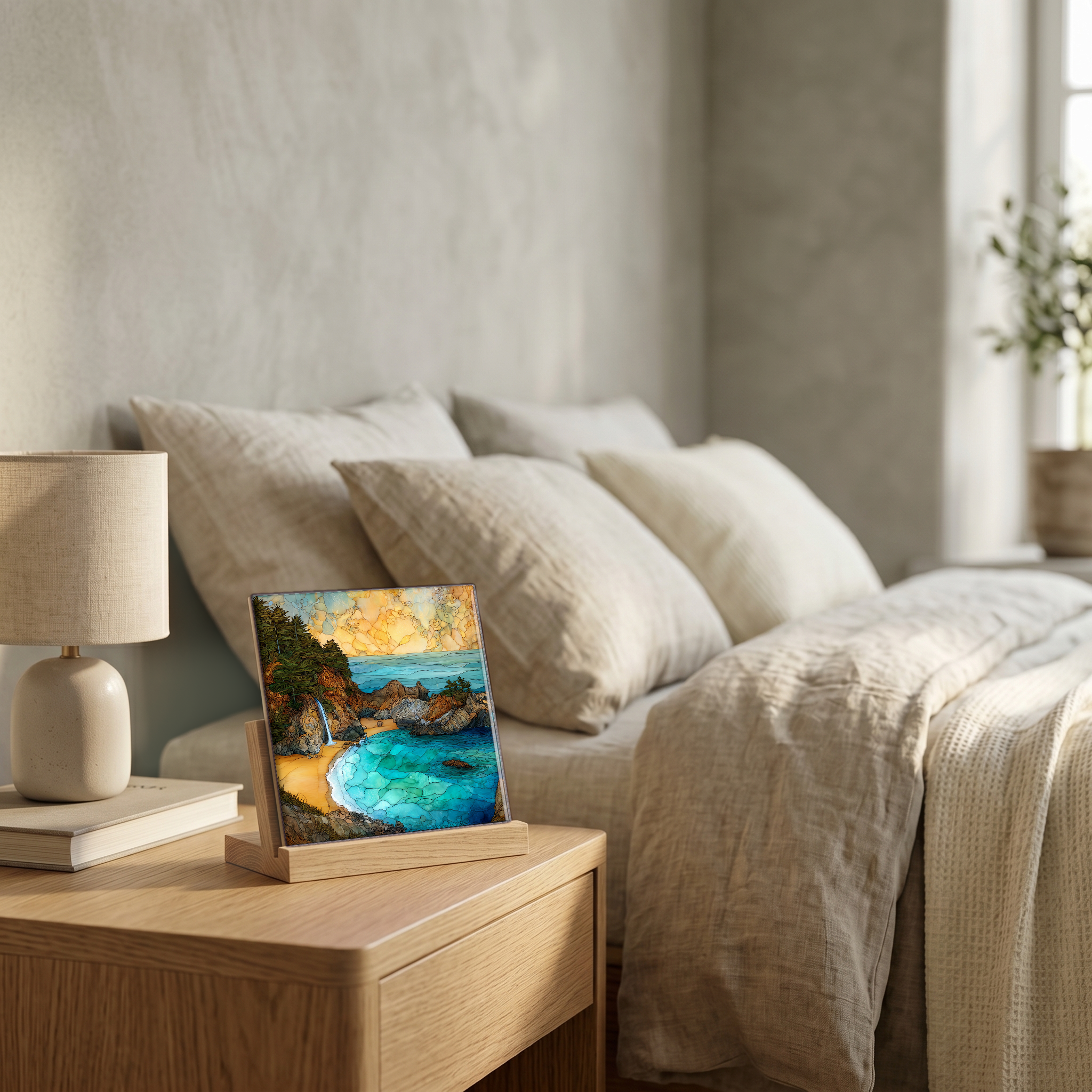
On the nightstand, on a light oak stand.
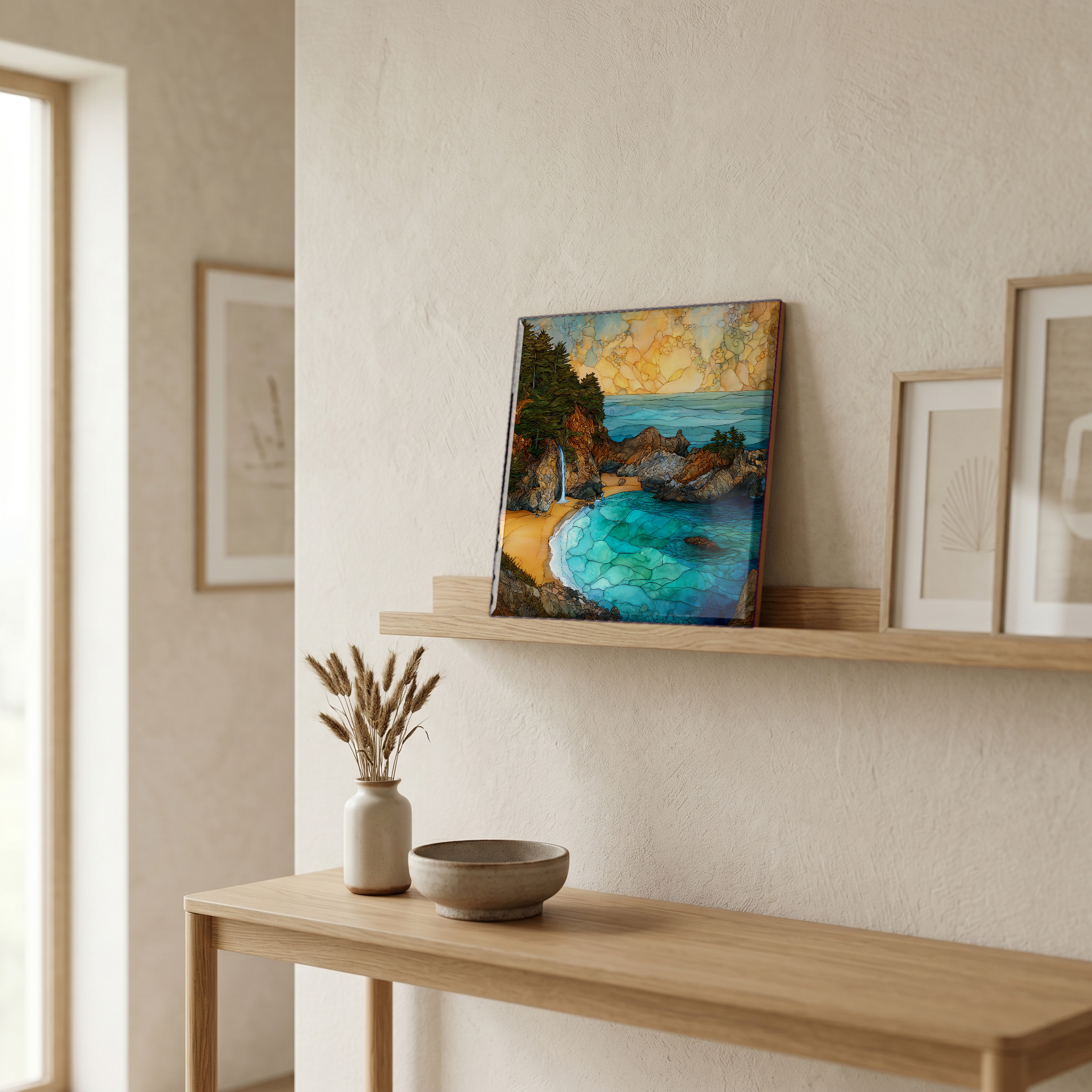
On a picture ledge, where the light comes in.
a note from the studio

Eighty feet of fresh water dropping off a cliff onto a sand cove on the Big Sur coast. The beach itself is closed and has been for decades; the only way to see McWay is from a short overlook trail above the cove, through a pedestrian tunnel under Highway 1. People stop, lean on the rail, and stay longer than they planned. Lathrop and Helen Brown lived in a small white house on the bluff for a quarter of a century. The house came down in 1965, but the cove still looks the way it did from their kitchen window.
from the studio
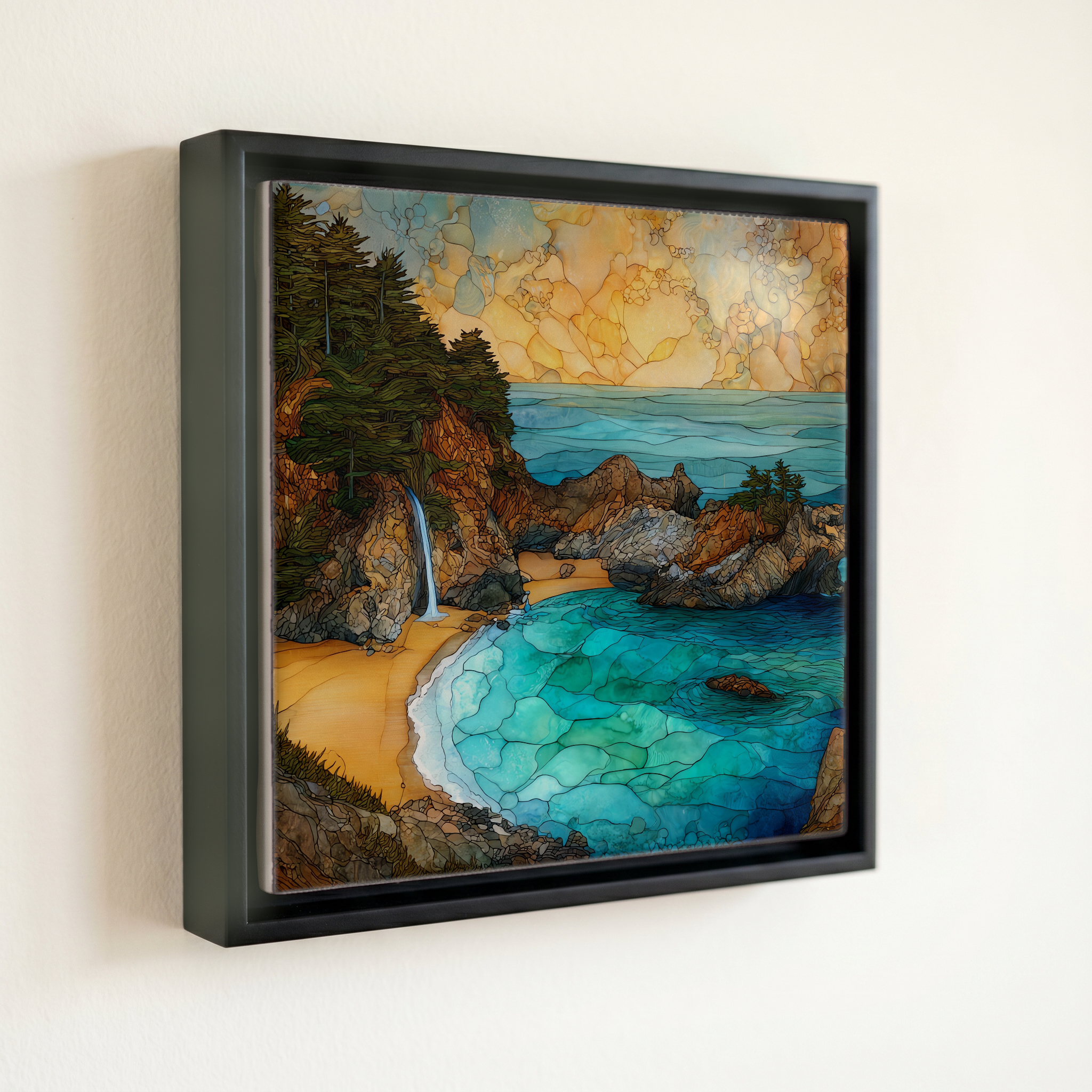
shown in a slim black floating frame · 6 × 6 in
— bring it home

McWay Falls, on ceramic.

Each tile is finished by hand in our Knoxville studio. Artwork is slowly infused into the ceramic surface under high heat and pressure, and rests beneath a thin glossy finish. The colour lives in the surface, not on top of it.

What kind of piece?
One tile — square or rectangle.
How big?
the popular one — counter, shelf, nightstand
6 × 6 in · 15 cm · 1.6 lb
Surface finish
A clear glossy finish — the artwork reads as if under resin. Ideal for show-pieces and framed wall art.
How it sits
A hidden cleat — sits ¼″ proud of the wall.
$58
Hand-finished and shipped from our studio at the foot of the Smokies. On your wall in about ten days.
size
6 × 6 in
15 cm
weighs
1.6 lb
solid in the hand
surface
ceramic, hand-finished
art rests beneath a thin glossy finish
from
Knoxville, TN
our family studio, at the foot of the Smokies
— start a Coaster Set

Pick any four 4-inch tiles — National Parks you've been to, a Smokies set, the four seasons of one place. $ for a set of , cork-backed, ready to live on the table.
comes gift-ready
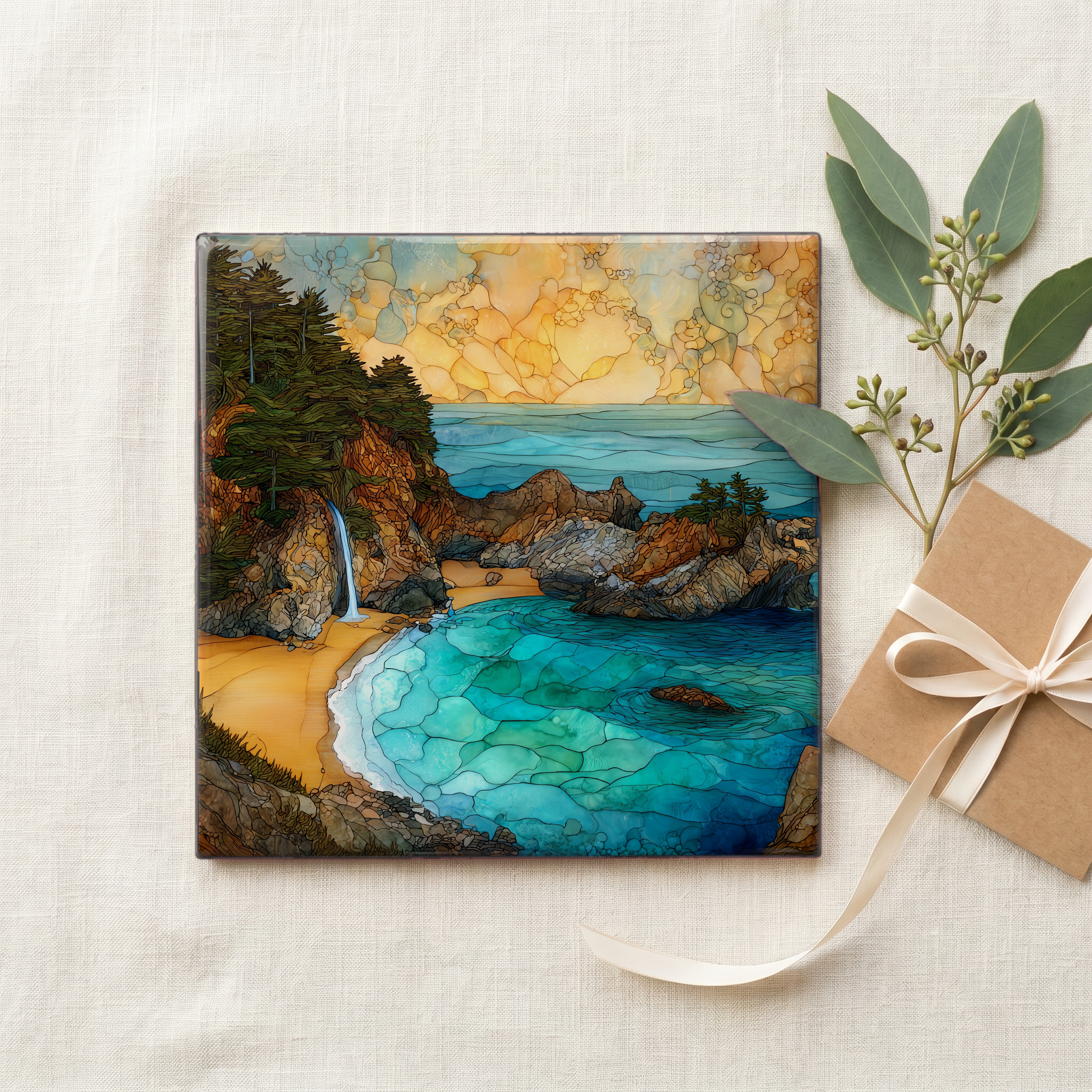
comes gift-ready

Each tile ships in a kraft box, tied with cream ribbon, with a handwritten note from the studio if you'd like to add one.
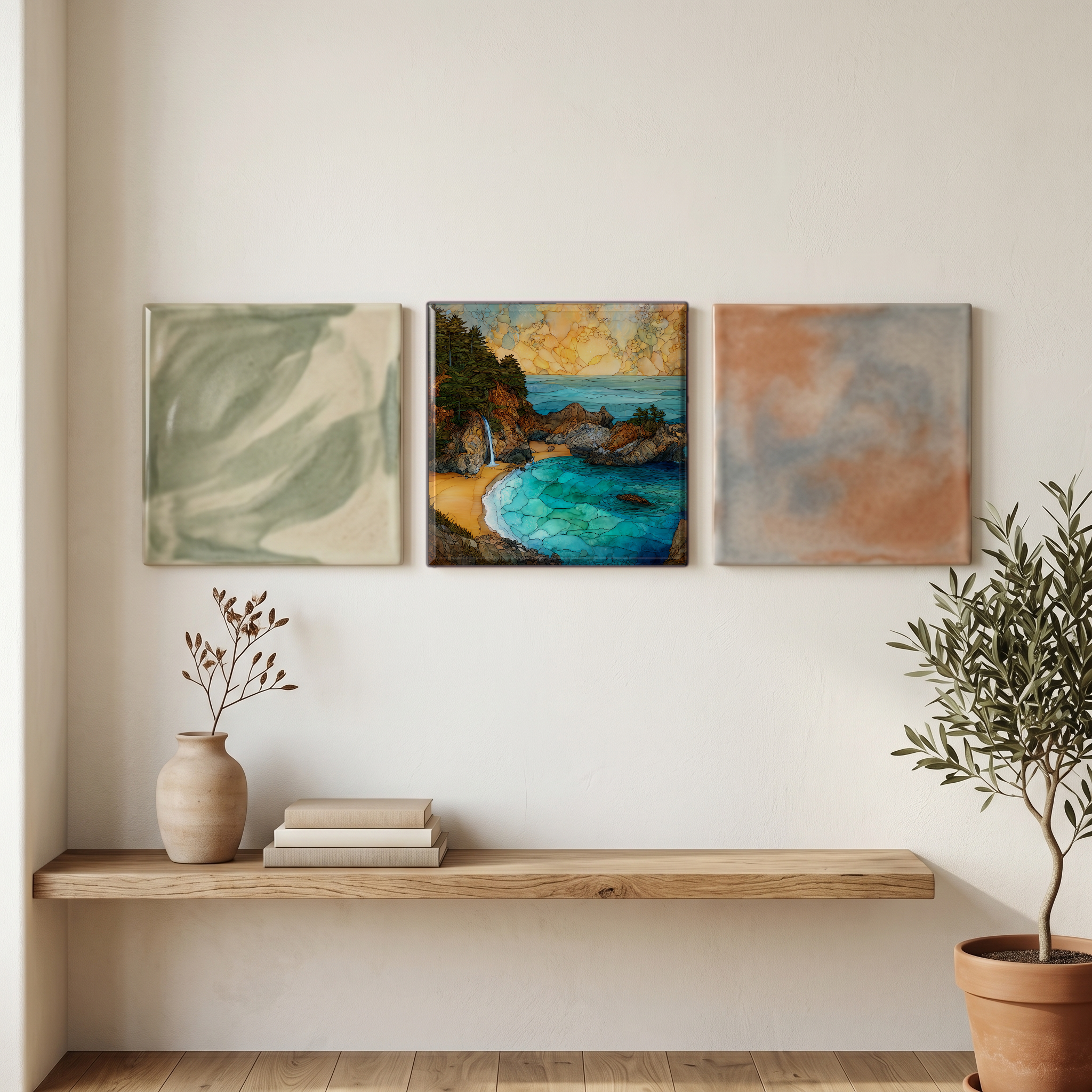
or build a grouping
or build a grouping

Three or five different vistas, hung together — a chapter of places you've been, or want to go.

about McWay Falls

The place, in three passes.

A little of what's known, in case you fall down the rabbit hole — or want to go see it yourself.
the place

McWay Falls drops about eighty feet from McWay Creek over a cliff and onto a small cove inside Julia Pfeiffer Burns State Park, on the Big Sur coast of California's Highway 1. The park sits roughly thirty-seven miles south of Carmel-by-the-Sea, in Monterey County, on land added to the state system in 1962 by Helen Hooper Brown in memory of her husband Lathrop. The cove the falls land in is sometimes called Saddle Rock Cove, after the offshore rock that shelters it. The viewing point is on the Overlook Trail, a short paved path reached through a pedestrian tunnel beneath Highway 1 from the day-use parking area.

the water

McWay is a tidefall, fresh water dropping straight toward the Pacific. It is one of only two waterfalls in California that meet the ocean, the other being Alamere Falls in Point Reyes National Seashore north of San Francisco. Until early 1983, the falls dropped directly into the sea. That winter a major landslide along the Big Sur coast deposited enough sediment in the cove that the beach built out into a small crescent of sand, and the falls now usually land on the beach, reaching salt water only at the highest tides. The colour of the cove, pale turquoise over white sand, is what most people remember.

the visit

The beach beneath the falls is closed to the public and reached only by a long unmaintained cliff descent; the closure has been the rule since the cove became part of Julia Pfeiffer Burns State Park. Visitors view McWay from the Overlook Trail, a half-mile round-trip path that crosses beneath Highway 1 through a short pedestrian tunnel and runs along the bluff to a railing above the cove. The state park charges a day-use vehicle fee at the trailhead lot; small pull-offs along Highway 1 north and south of the entrance hold a handful of cars. Early morning and the last hour before sunset are the quietest on the rail, and the cove holds its colour best in flat afternoon light.

where
United States · Monterey County, California
within
Julia Pfeiffer Burns State Park
position
36.1577° N · 121.6713° W
the neighborhood

What's nearby.

A handful of named places within an hour's walk or short drive. Some we've already painted; some we will.
3 km N
Partington Cove
coastal cove
5 km S
Esalen Institute
retreat center
17 km S
Limekiln State Park
state park
18 km N
Henry Miller Memorial Library
literary archive
19 km N
Nepenthe
clifftop restaurant
N
McWay Falls
Partington Cove
Esalen Institute
Limekiln State Park
Henry Miller Memorial Library
Nepenthe
common questions

What people ask.

A few questions we get about McWay Falls — and about bringing the piece home.
about the place

McWay Falls is on the central California coast in Julia Pfeiffer Burns State Park, about thirty-seven miles south of Carmel-by-the-Sea along Highway 1. It is in Big Sur, Monterey County, roughly halfway between Monterey and San Simeon.

McWay Falls is about eighty feet tall, around twenty-four metres. McWay Creek drops in a single thread over a cliff into a small cove on the Pacific, with no intermediate pool or step between the lip of the falls and the sand below.

A tidefall is a waterfall that empties directly into the ocean. McWay is one of only two in California (the other is Alamere Falls in Point Reyes). At the highest tides the surf reaches the base; the rest of the time it lands on the sand cove.

No. The cove below the falls is closed to the public and has been since it became part of Julia Pfeiffer Burns State Park in the early 1960s. The official viewing point is the Overlook Trail from the day-use lot; there is no legal route to the sand.

The Waterfall House, built in 1940 by Lathrop and Helen Hooper Brown, was demolished after Helen donated the land to the state in 1962 in memory of her husband. Only the foundation and a few stone steps remain on the bluff above the cove.

McWay Creek runs in every season, so the falls are reliable in any month. Late spring brings the strongest flow. Late afternoon light tends to deepen the turquoise in the cove, and early morning is the quietest stretch on the Overlook Trail.

Park at the Julia Pfeiffer Burns State Park day-use lot off Highway 1, thirty-seven miles south of Carmel. The Overlook Trail is a short paved half-mile round trip that passes beneath the highway through a pedestrian tunnel and ends at the cove railing.

about the piece in your home

The McWay overlook is one of the most-remembered stops on the Highway 1 drive between Carmel and San Simeon. For someone who has driven that road, a Small or Medium for a hallway wall, or a Keepsake on a desk, carries the cove well as a gift.

The turquoise cove and warm cliff colour sit naturally with Coastal-modern and California mid-century rooms, and the stained-glass treatment also reads in Jewel-tone Maximalist settings. The piece holds against off-white walls or against deeper sea-blues and clay tones.

It fits the current coastal-modern direction without leaning into the seashell-and-driftwood version of the look. The painterly surface and Pacific palette read more architectural than nautical, which is where the better coastal-modern rooms have moved over the past few years.

A single Large reads cleanly centered above a console or a standard three-seat sofa. Over a longer sofa or a wide entry wall, a four-tile Mural fills the space in proportion; a nine-tile Mural is the right choice for a tall feature wall.

Yes, in either the Dura Satin or Matte finish. The Glossy finish is built for framed wall pieces and dry rooms; for a backsplash, a shower wall, or a vanity surround, Dura Satin handles moisture and routine cleaning without changing how the colour reads.

A soft microfibre cloth with water handles routine dust and fingerprints. In a bathroom or kitchen install, an occasional pass with a mild non-abrasive cleaner is fine. Avoid scouring pads and acidic cleaners; the colour lives in the ceramic surface and stays put under normal household use.

Yes. Every WenderVista piece is made in a single family studio in Knoxville, Tennessee, with no licensing in or out. The artwork is Reid Wender's, the surface is hand-finished in-house, and each tile is signed on the back.

if this one stayed with you

A few you might also love.

Hand-picked by the eye that found Sorapis. Same air, same kind of quiet.