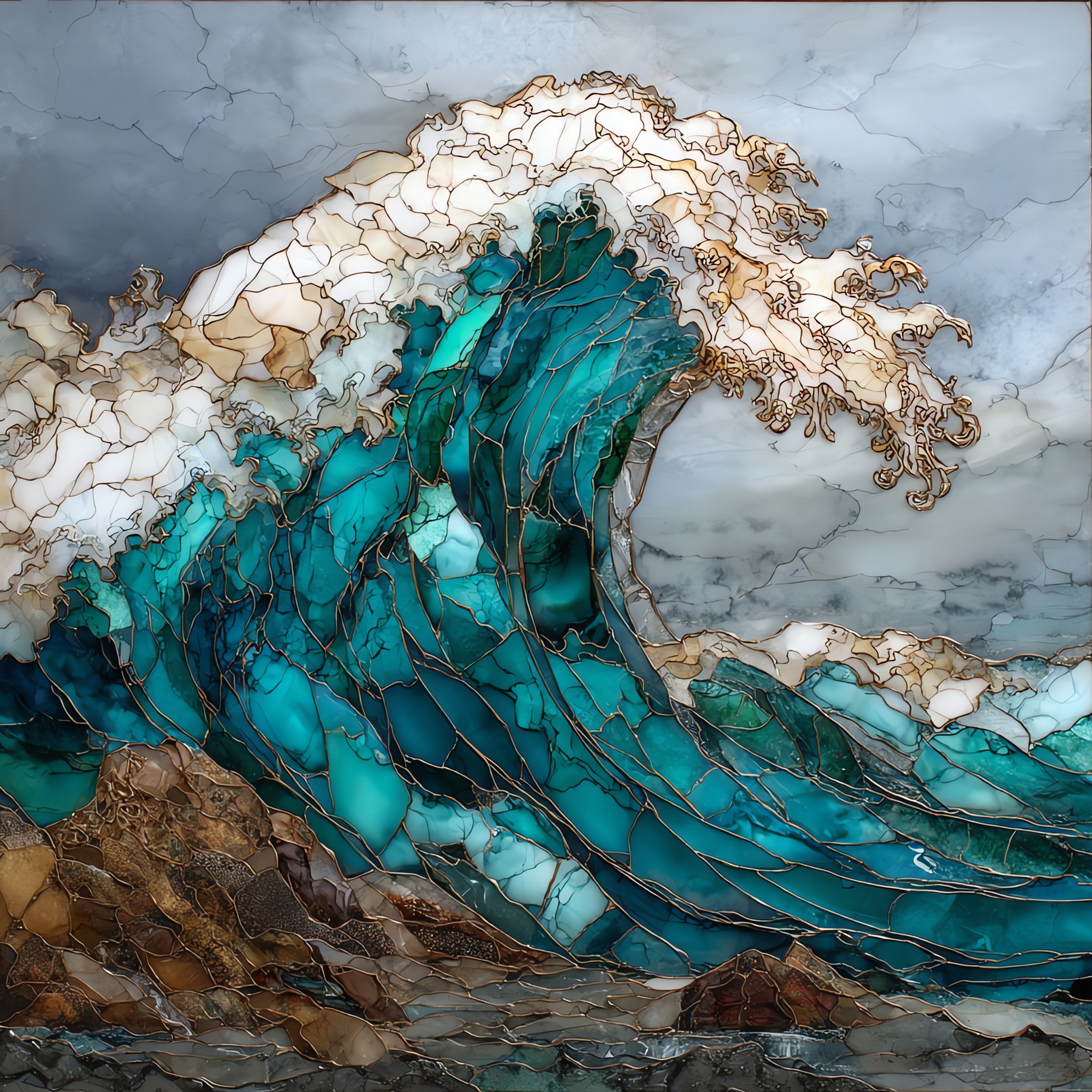
Mavericks Half Moon Bay
— the cold blue wall the winter Pacific builds.
Not only on a wall.
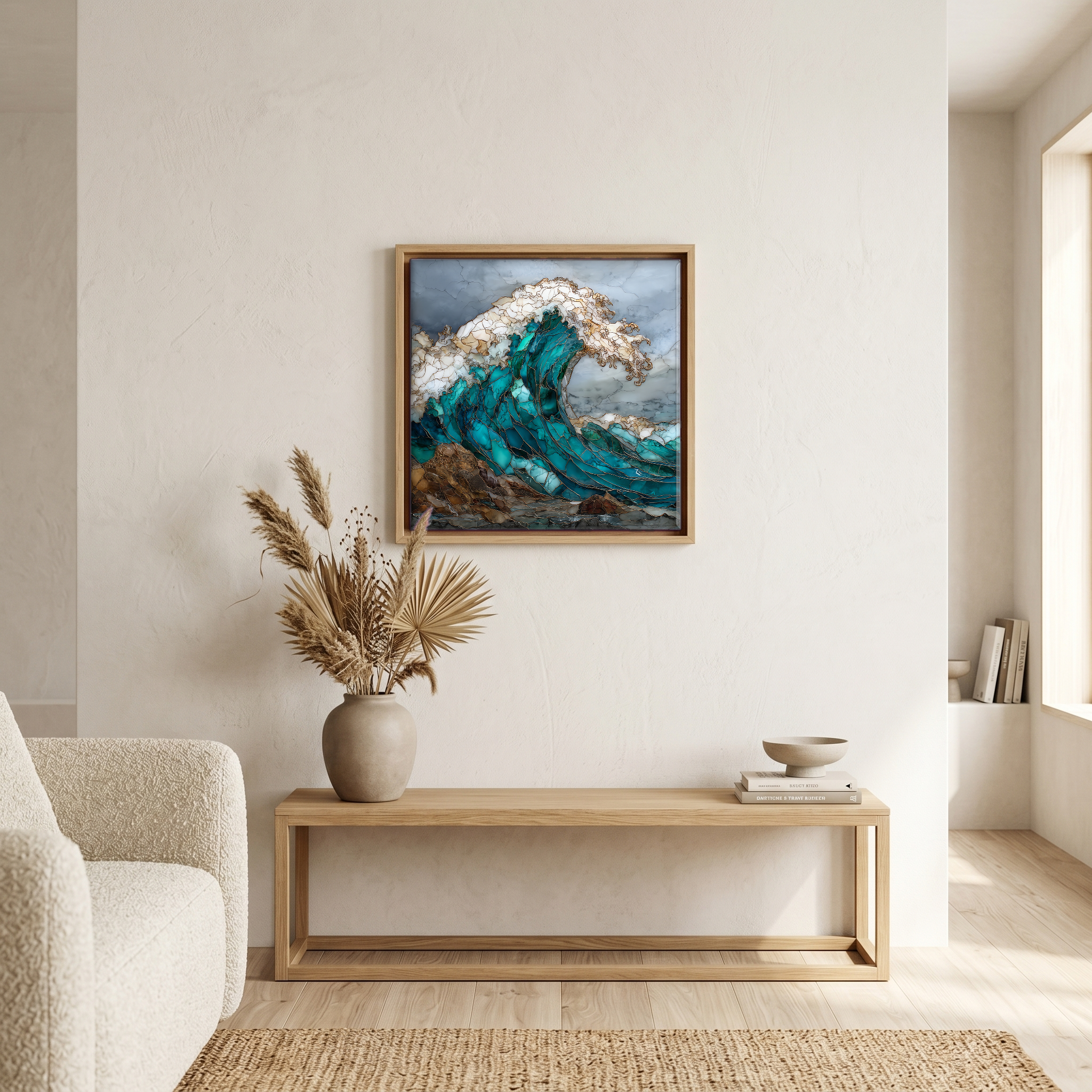
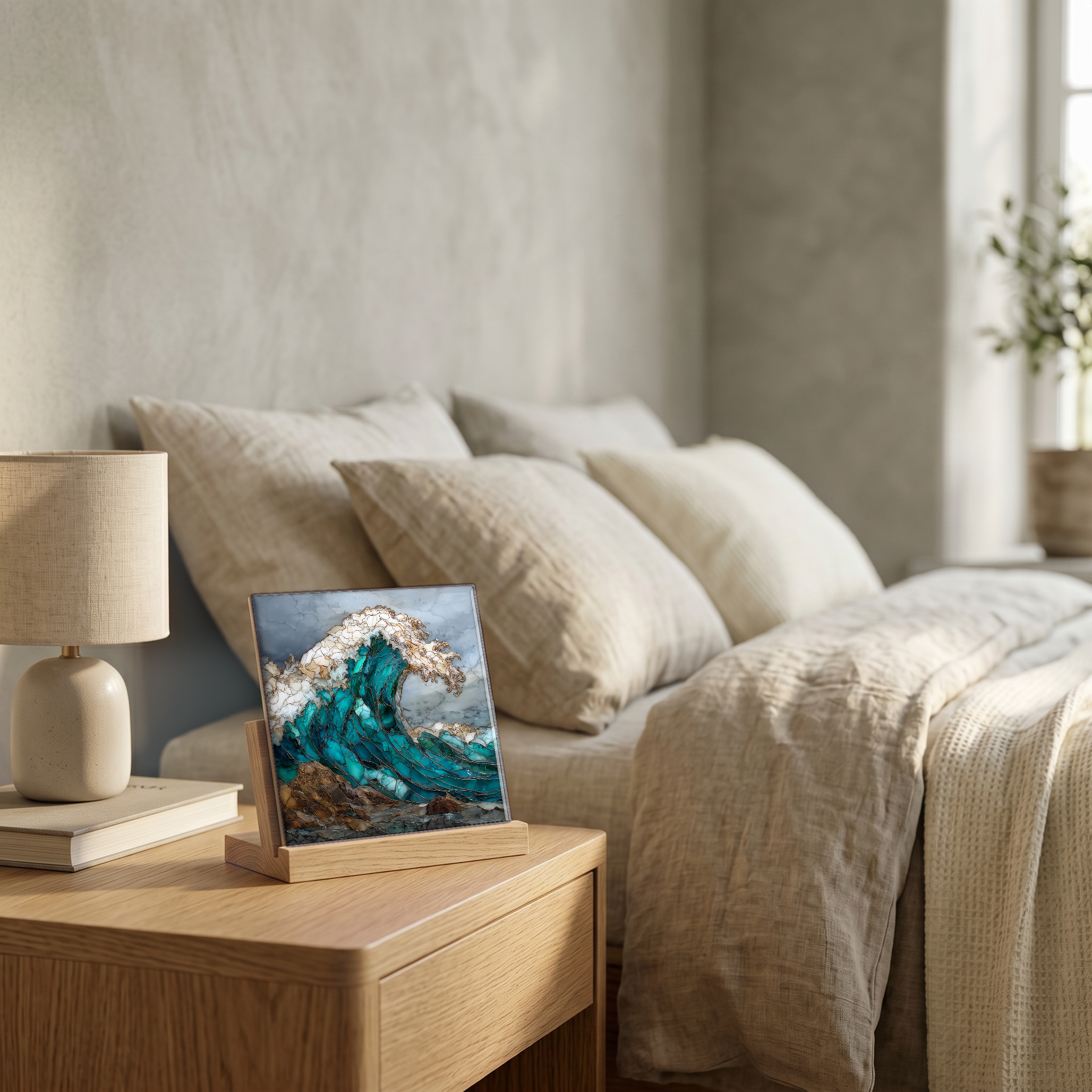
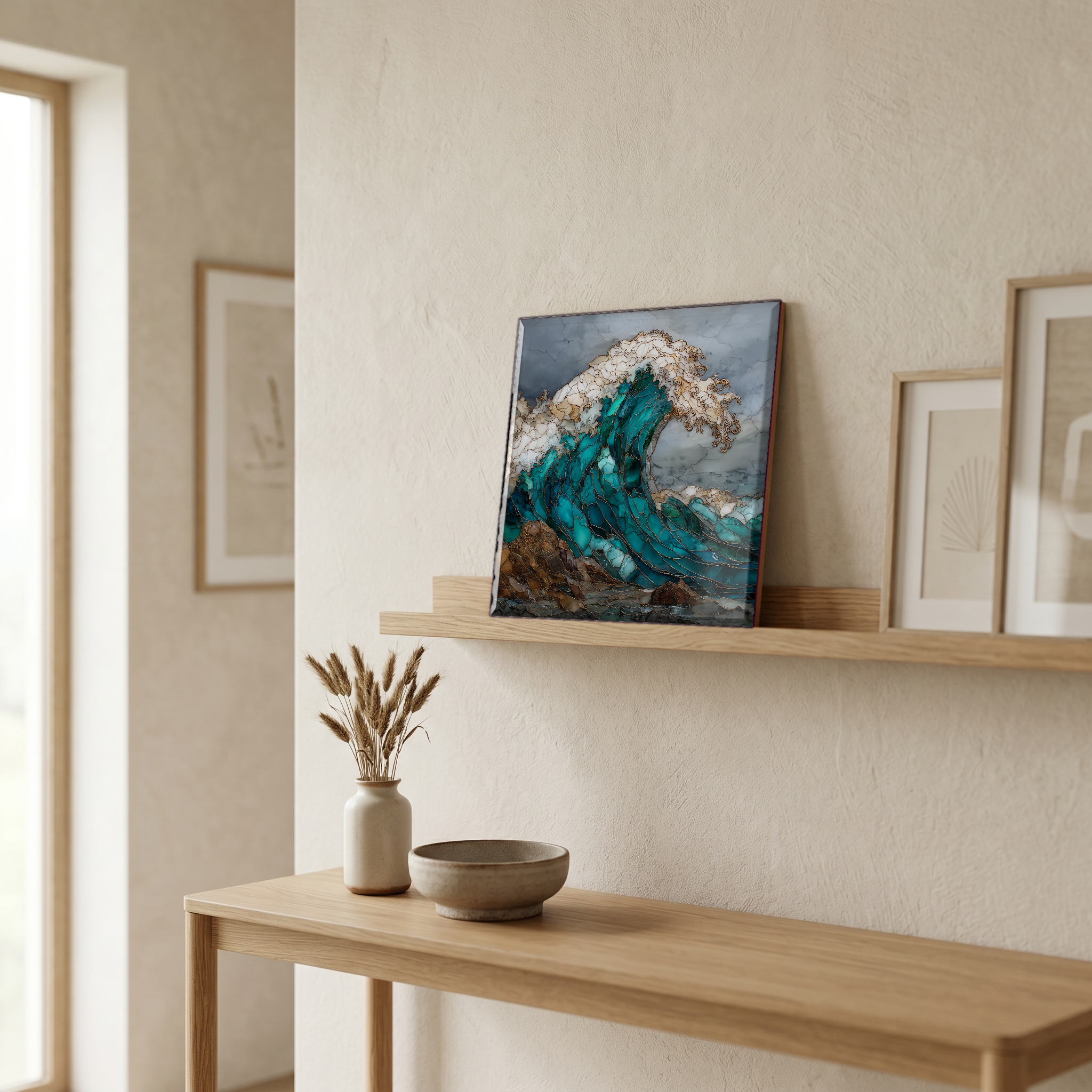
“A break a half mile offshore from Pillar Point. When a winter swell arrives from a North Pacific storm, the underwater reef refracts and focuses it into a wave that can stand sixty feet tall. The water is cold. The California current keeps this coast cold all year, and the offshore wind on a clear winter morning holds the wave faces open. The bluff above the harbor at Princeton-by-the-Sea is where most people watch from. Most days it does not break; on the days that it does, surfers come from everywhere.
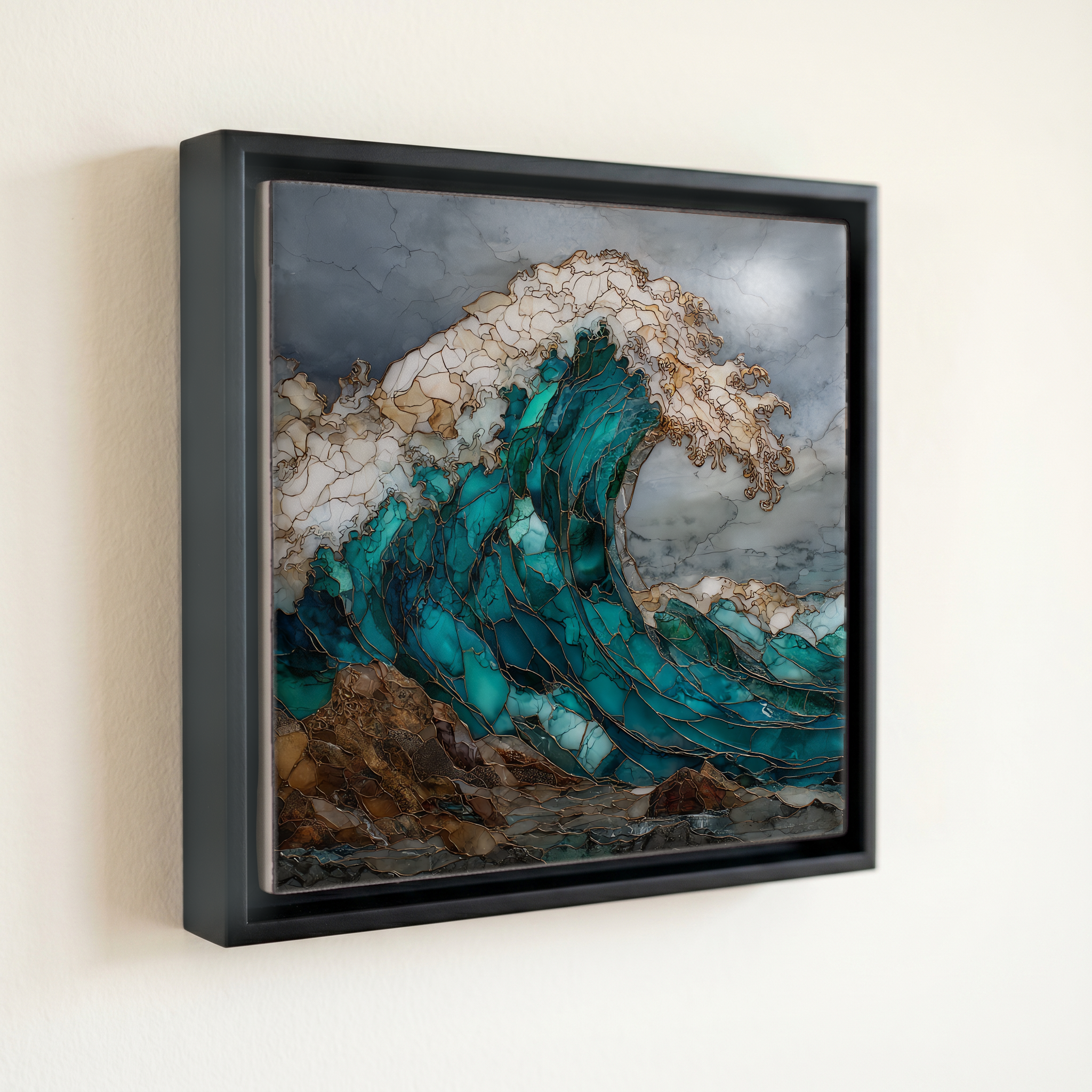
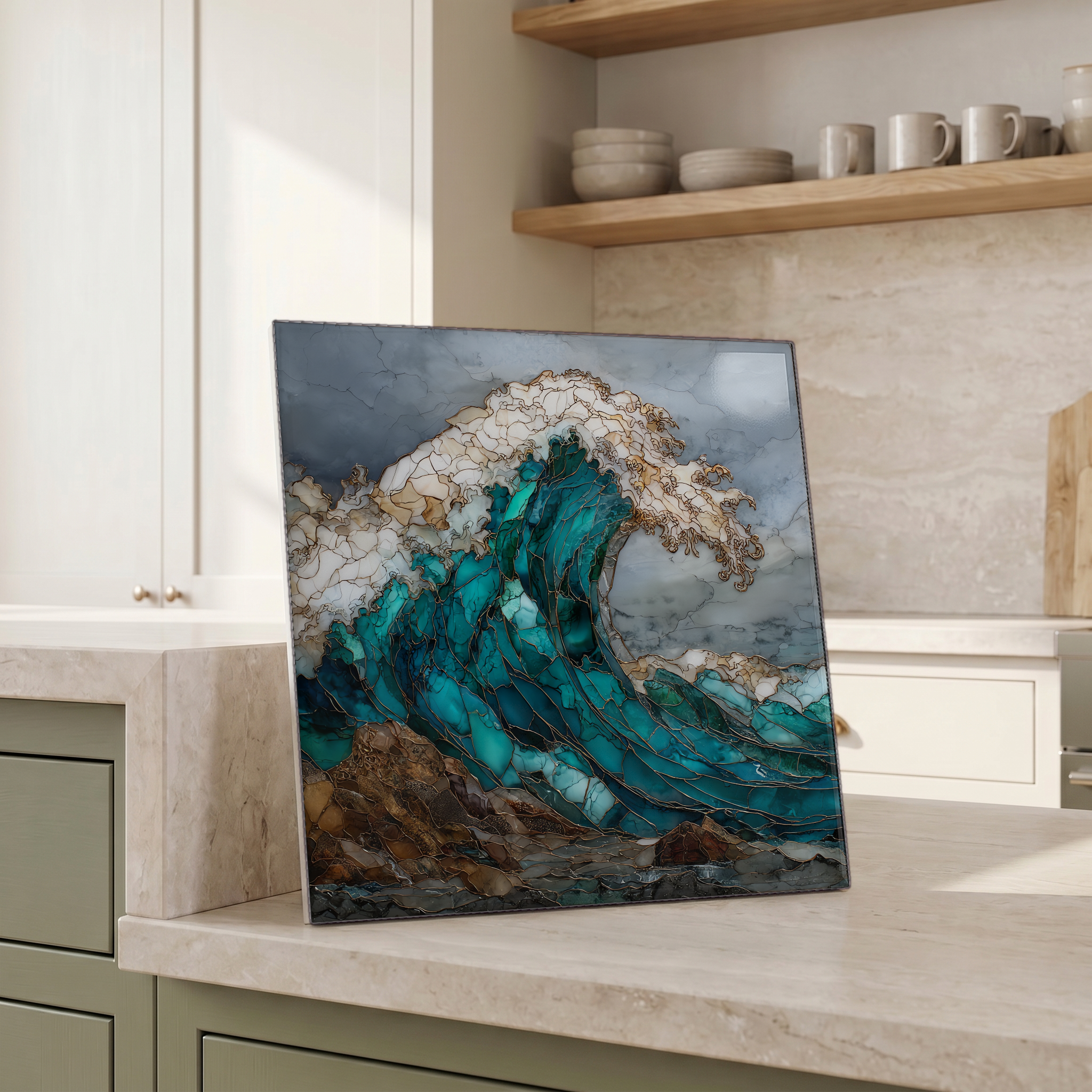
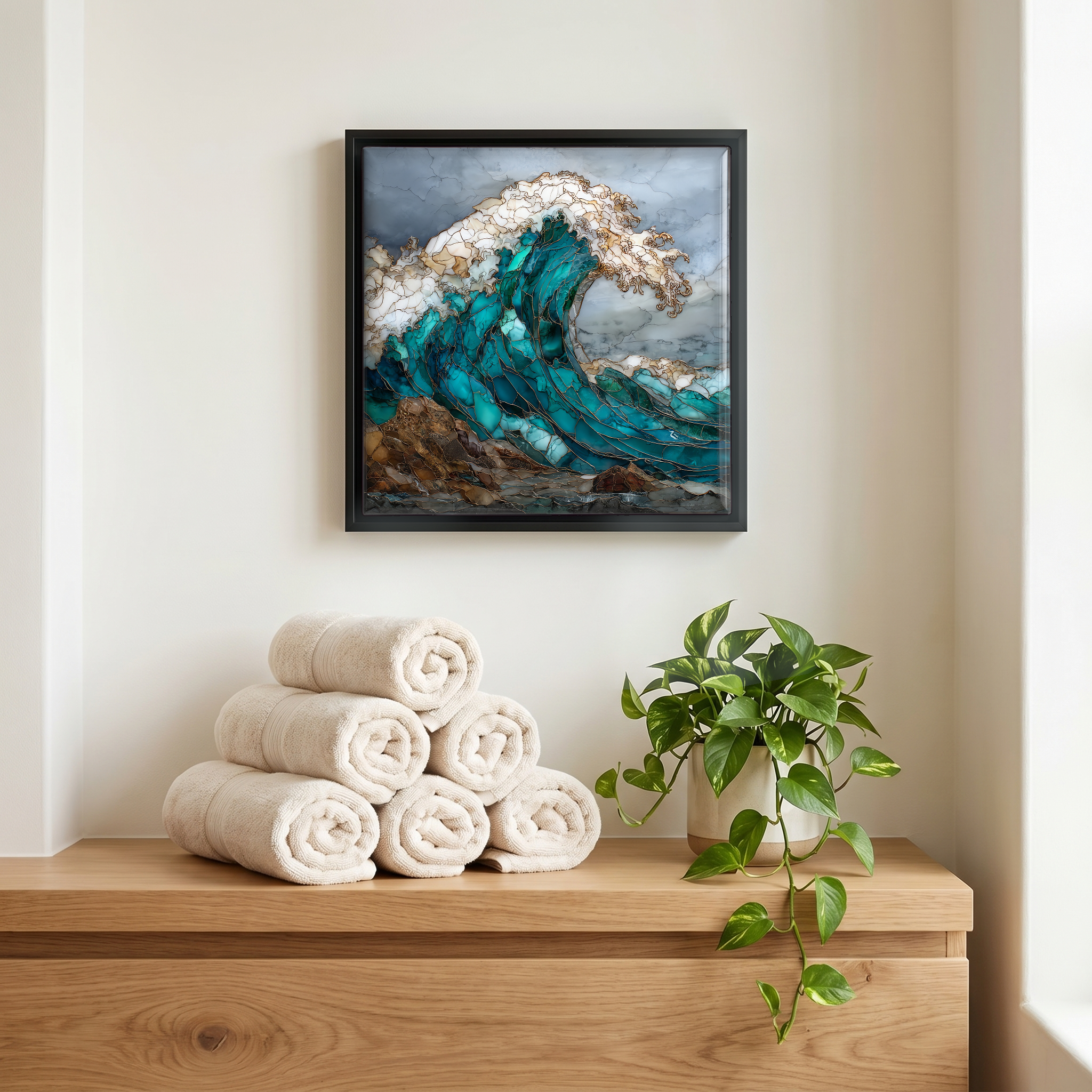
Mavericks Half Moon Bay, on ceramic.
Each tile is finished by hand in our Knoxville studio. Artwork is slowly infused into the ceramic surface under high heat and pressure, and rests beneath a thin glossy finish. The colour lives in the surface, not on top of it.
Pick any four 4-inch tiles — National Parks you've been to, a Smokies set, the four seasons of one place. $ for a set of , cork-backed, ready to live on the table.
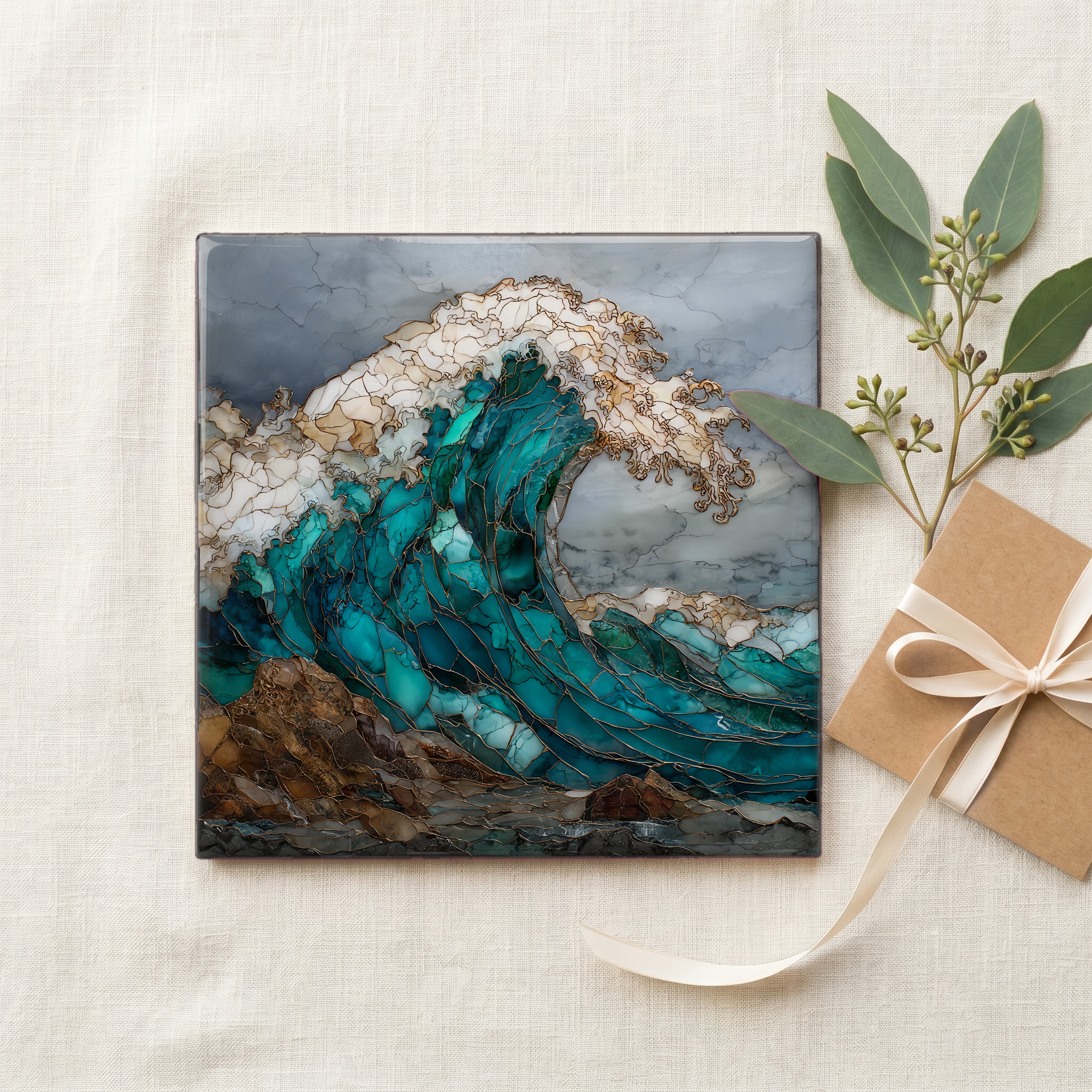
Each tile ships in a kraft box, tied with cream ribbon, with a handwritten note from the studio if you'd like to add one.
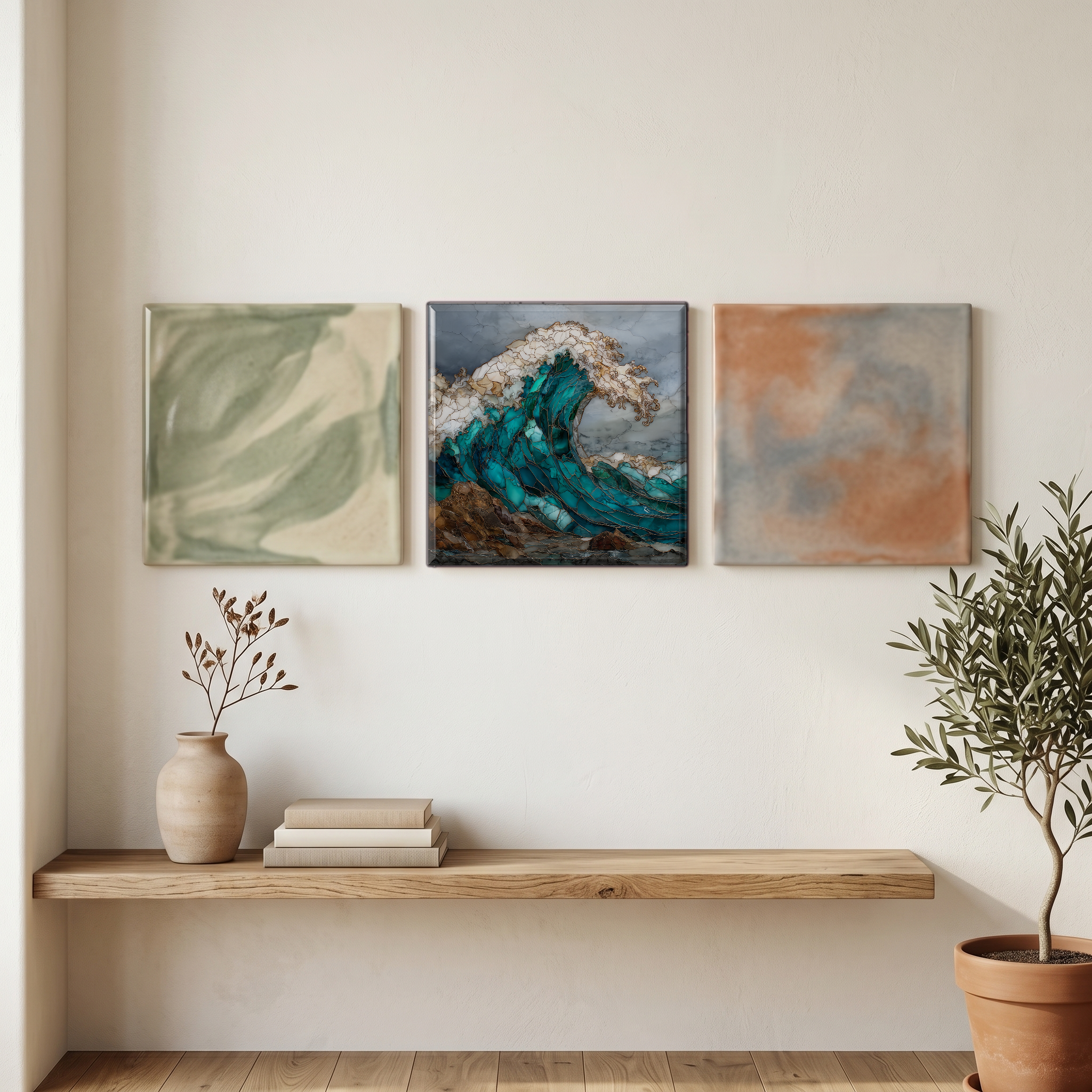
Three or five different vistas, hung together — a chapter of places you've been, or want to go.
The place, in three passes.
Mavericks is a deep-water surf break a half mile off Pillar Point, on the San Mateo coast of California, roughly twenty-five miles south of San Francisco. The break sits at the seaward edge of Pillar Point Harbor, near the village of Princeton-by-the-Sea in unincorporated San Mateo County. The waves form over a submerged rock reef that runs west from the headland into the Pacific. The closest viewing point is the bluff trail on Pillar Point itself, reached from the harbor parking area. The waters around the break lie within the Greater Farallones National Marine Sanctuary. The break was largely unknown outside a small group of local surfers until the mid-1990s.
The wave forms by bathymetric focusing. A long-period swell, often generated by a North Pacific storm thousands of miles away, runs up onto the reef and the underwater contour bends the swell lines so the energy converges on one narrow piece of water. The result is a wave that can stand twenty-five to sixty feet on the face on the largest winter days. The water itself is part of the California Current, a cold southward-flowing arm of the Pacific that keeps the surface temperature in the low fifties Fahrenheit through the months when the wave breaks. The surrounding waters lie within the Red Triangle, a region known for white shark activity. Surfers ride Mavericks in thick winter wetsuits and rarely alone.
Mavericks works in winter. The largest North Pacific swells run between November and March, and the wave needs a long-period swell from a specific north-westerly direction, combined with light offshore wind, to break cleanly. The competitive window the surf community watches runs roughly December through February. The Mavericks Surf Contest, when it has been held, has typically been called on twenty-four hours' notice when the forecast lines up. Outside of winter, the reef is quiet and the harbor at Pillar Point shifts back to fishing and tide-pooling at low tide. Most days at Mavericks, even in winter, the wave is small or does not form at all.