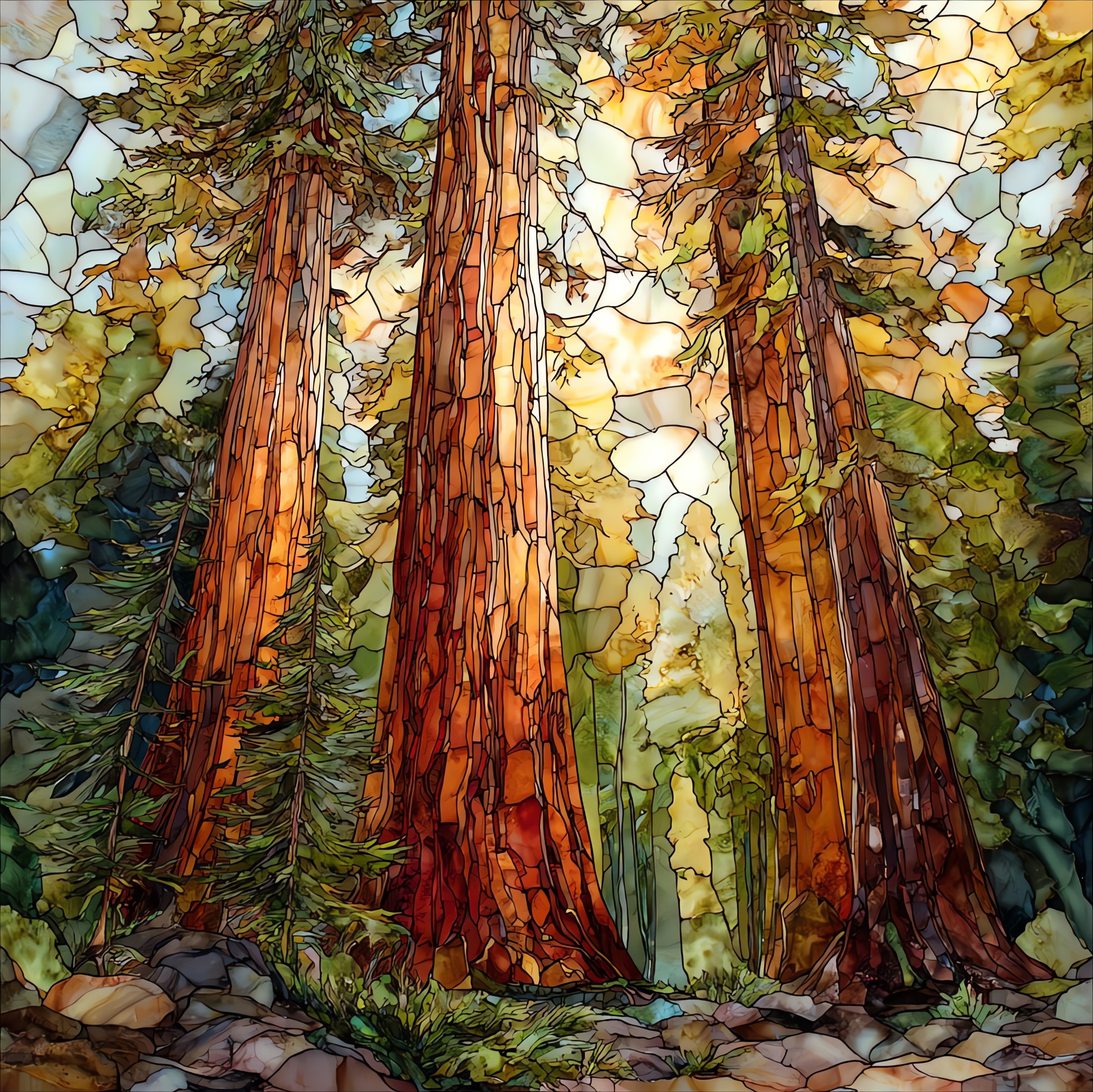
Mariposa Grove Giant Sequoias Tile
— — red bark, two thousand years deep.
Not only on a wall.
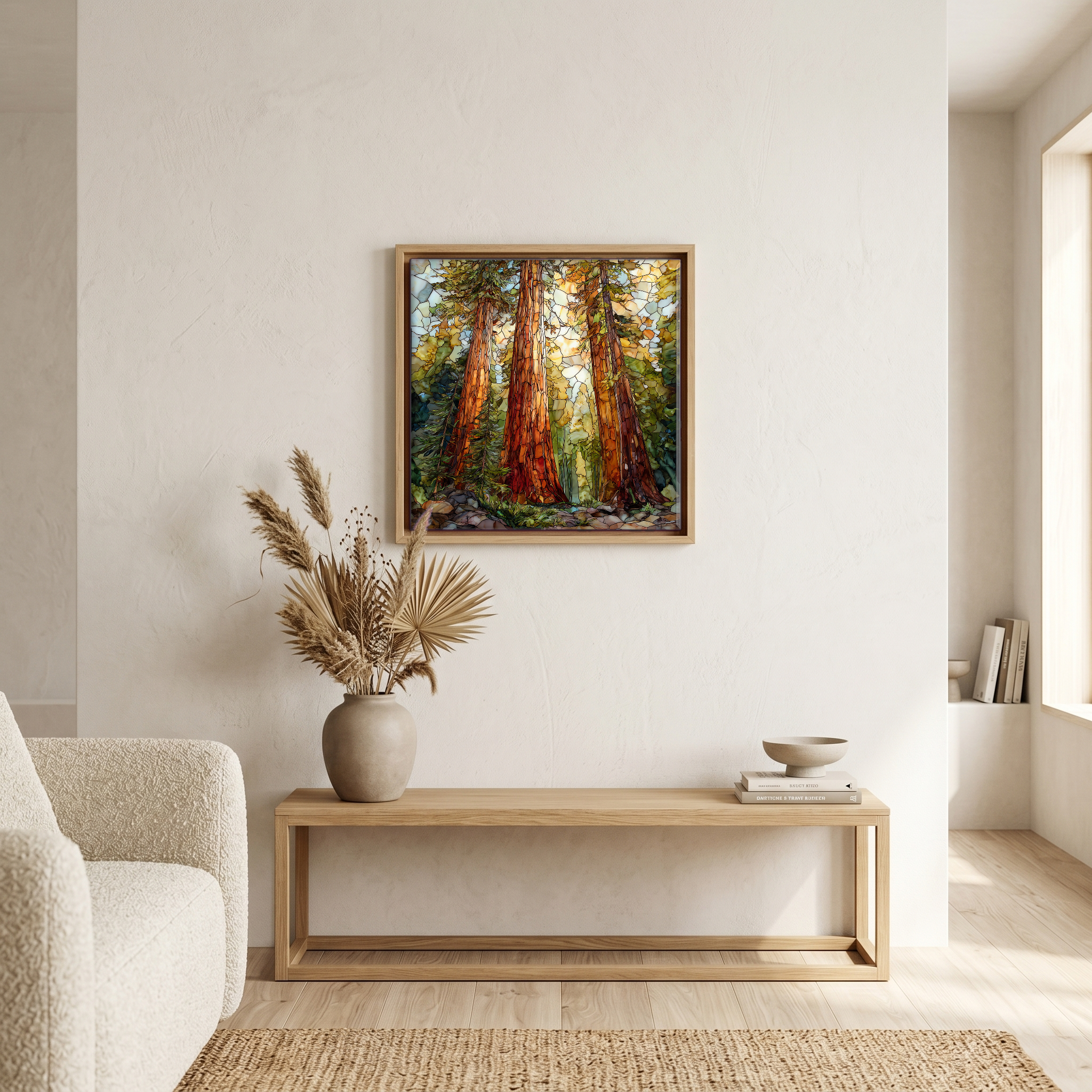
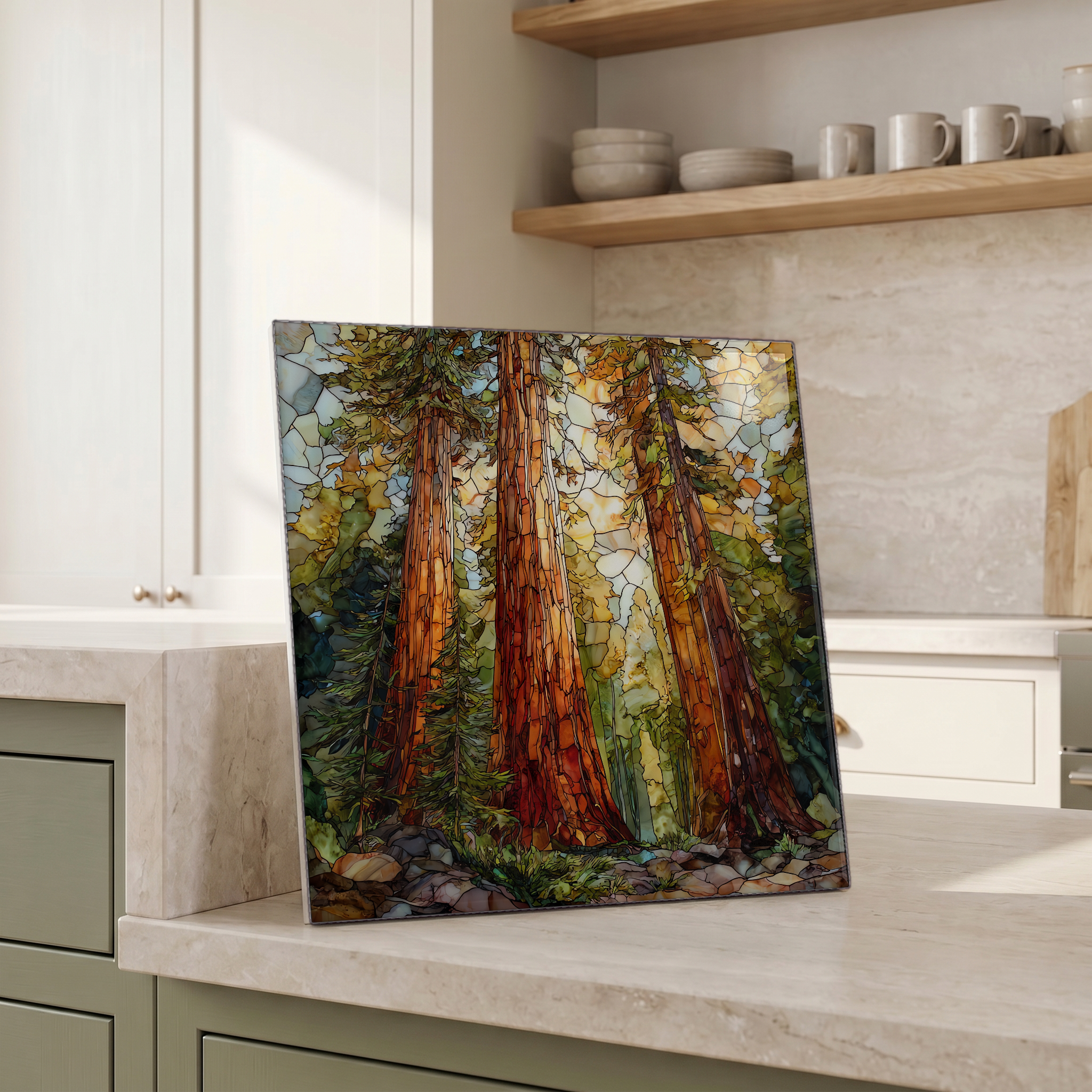
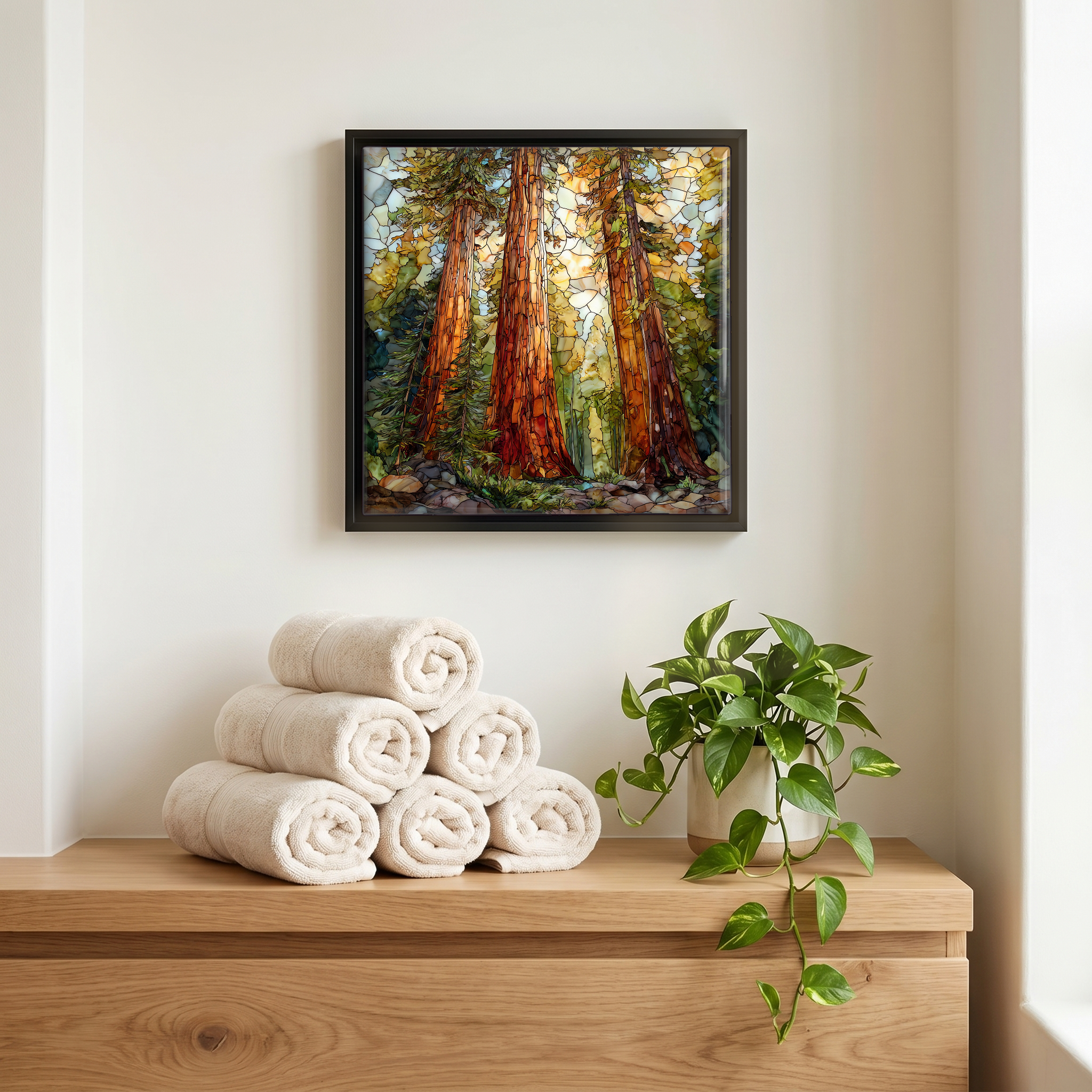
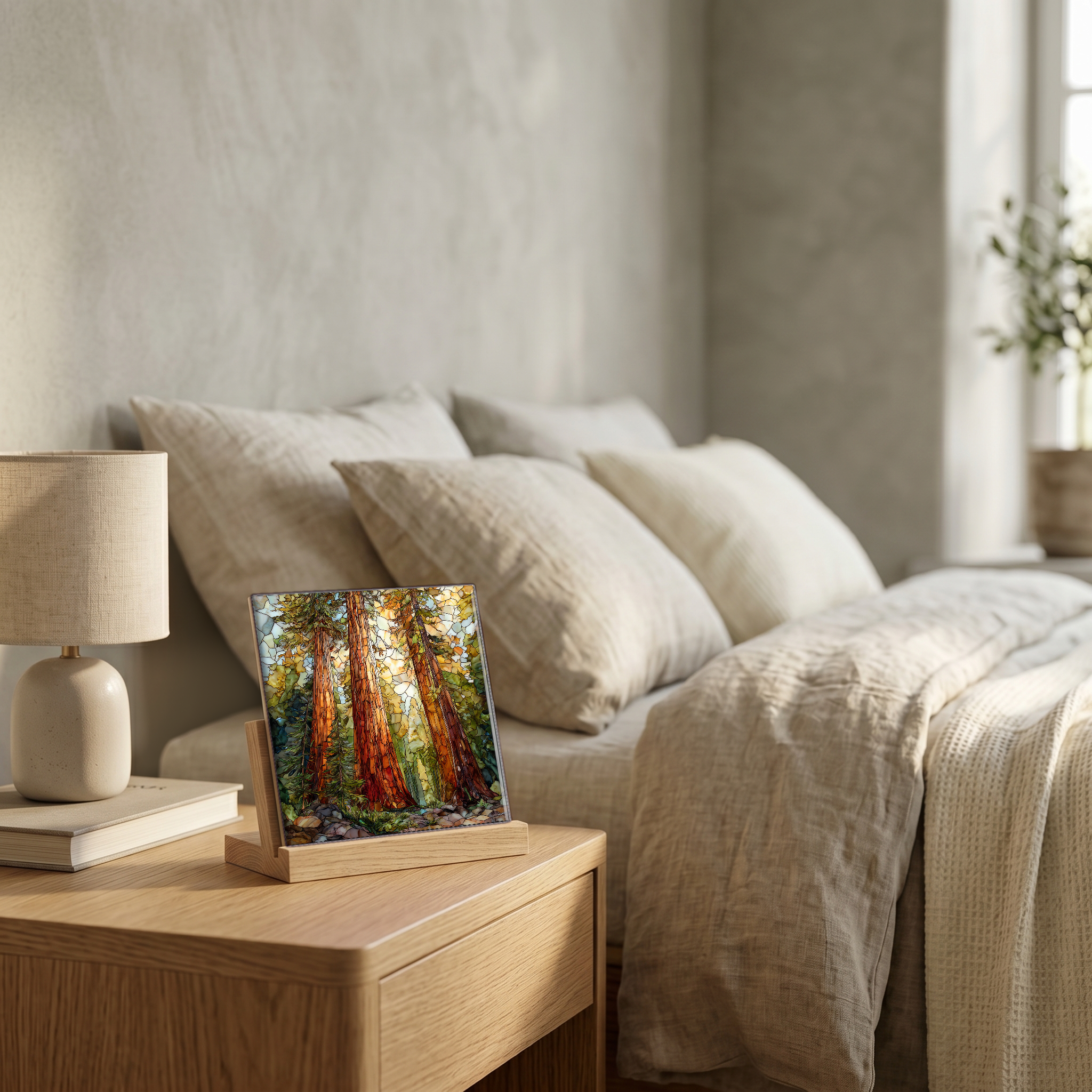
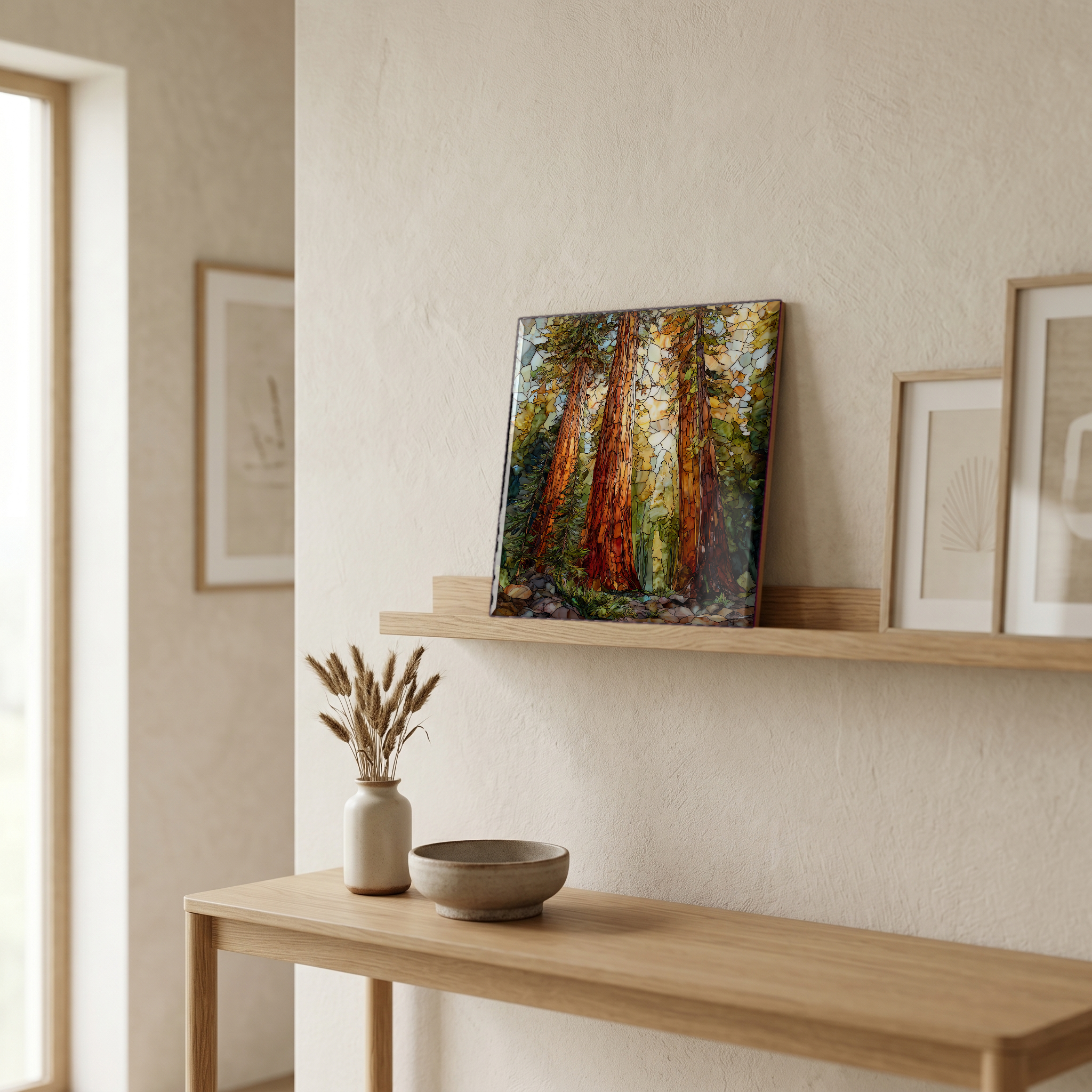
“Five hundred giant sequoias on a south-facing slope in lower Yosemite, off the Wawona road. The Grizzly Giant is the tree most people come to find. Twenty-eight feet across at the base, somewhere between eighteen hundred and twenty-four hundred years old. The grove is what Lincoln signed away from logging in 1864, before there was a National Park Service. The shuttle runs from late March to November; in winter the road closes and people walk in on snowshoes. Walk far enough into the upper grove and the bark goes the colour of rust, the underbrush thins, and the people around you stop talking.
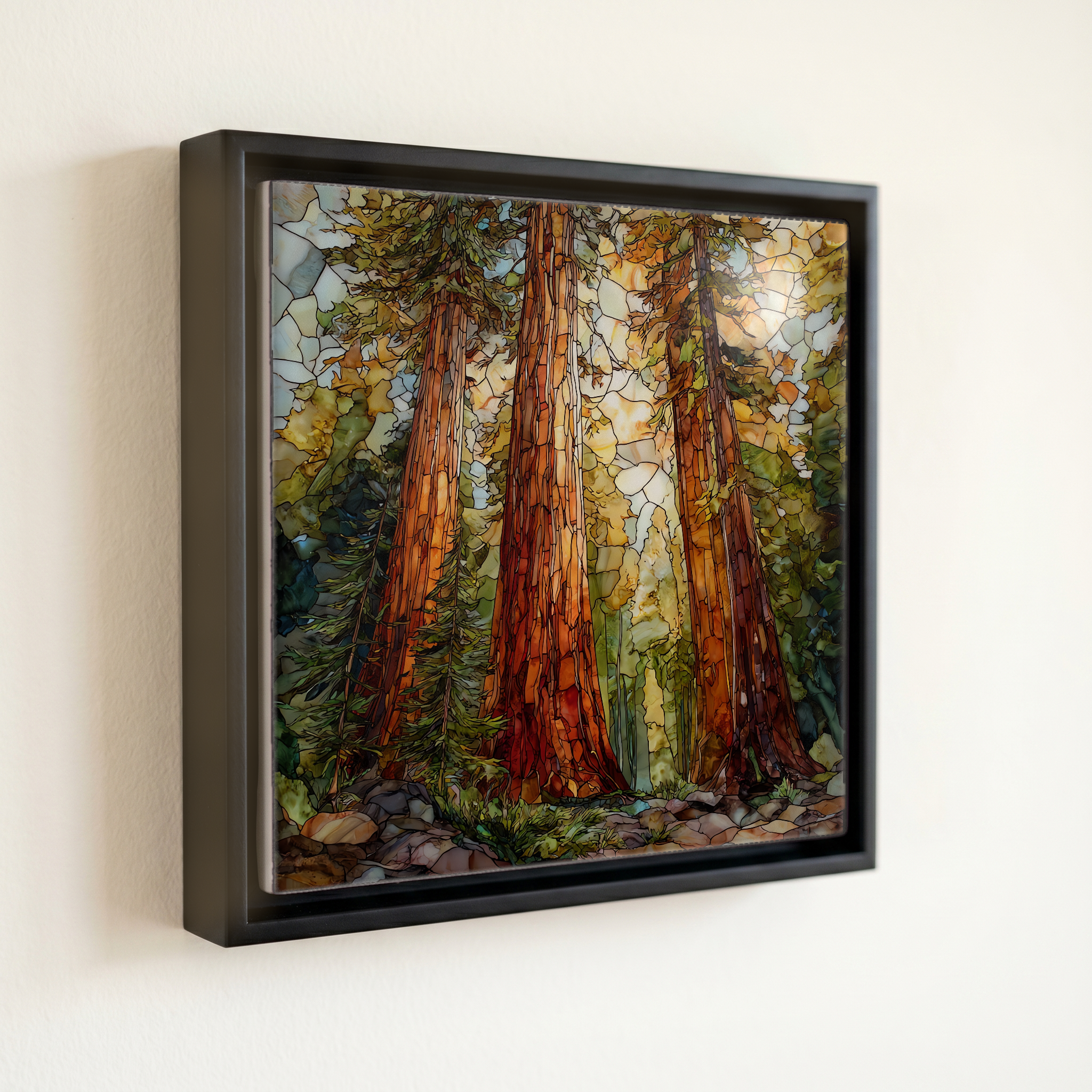
Mariposa Grove Giant Sequoias Tile, on ceramic.
Each tile is finished by hand in our Knoxville studio. Artwork is slowly infused into the ceramic surface under high heat and pressure, and rests beneath a thin glossy finish. The colour lives in the surface, not on top of it.
Pick any four 4-inch tiles — National Parks you've been to, a Smokies set, the four seasons of one place. $ for a set of , cork-backed, ready to live on the table.
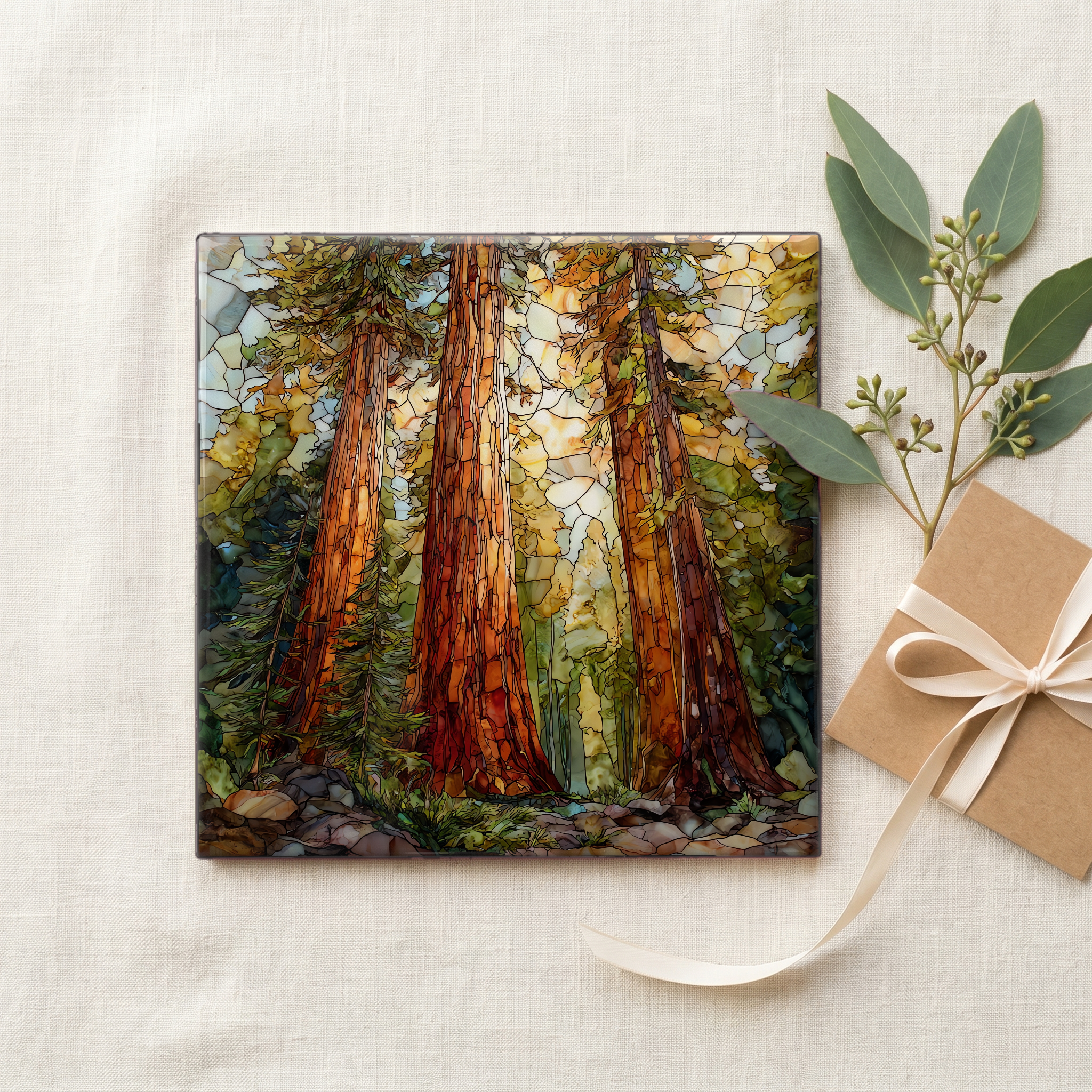
Each tile ships in a kraft box, tied with cream ribbon, with a handwritten note from the studio if you'd like to add one.
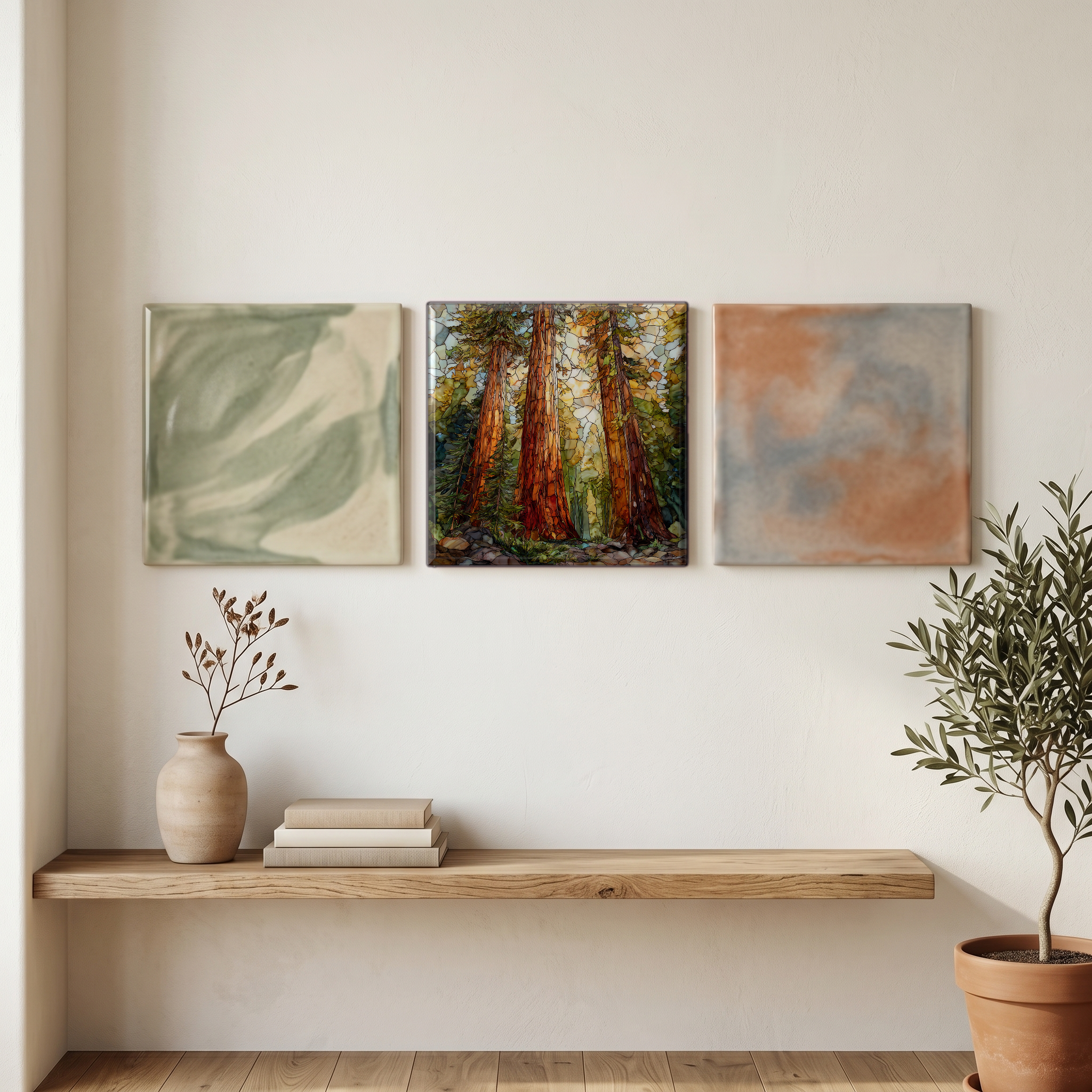
Three or five different vistas, hung together — a chapter of places you've been, or want to go.
The place, in three passes.
Mariposa Grove sits in the southern reach of Yosemite National Park, two miles inside the South Entrance on Highway 41, near the historic Wawona Hotel. The grove covers about 250 acres on slopes between 5,600 and 7,000 feet of elevation, and contains over five hundred mature giant sequoias (Sequoiadendron giganteum), the largest stand of the species inside the park. The land was first set aside for public use by Congress in the Yosemite Grant Act of 1864, signed by Abraham Lincoln in the middle of the Civil War, decades before the National Park Service existed. Today access is by free shuttle from the Mariposa Grove Welcome Plaza near the South Entrance.
The grove holds the sound the way old-growth forests do. The duff underfoot is thick, the wind dies below the canopy, and footsteps are absorbed. The largest sequoias here are between eighteen hundred and twenty-four hundred years old, and the Grizzly Giant alone is roughly twenty-seven feet in diameter at its base and about 209 feet tall, with limbs as thick as mature trees. Visitors walking past the Bachelor and Three Graces into the upper grove tend to go quiet without meaning to. Giant sequoias (Sequoiadendron giganteum) grow naturally only on the western slope of the Sierra Nevada, in about seventy groves between roughly 4,500 and 8,000 feet.
Access is by a free shuttle that runs from the Mariposa Grove Welcome Plaza at the South Entrance to the lower grove, typically from late March through November. The road to the welcome plaza closes when winter snow accumulates, and the grove is then reached only on skis or snowshoes from the closed gate, a two-mile approach to the trees. The grove reopened in June 2018 after a three-year restoration that removed asphalt parking, a gift shop, and tram roads from inside the trees, and restored natural hydrology to the wetland meadows that sustain the sequoias. The Big Trees Loop is a half-mile paved walk; the Grizzly Giant Loop is about two miles round-trip.