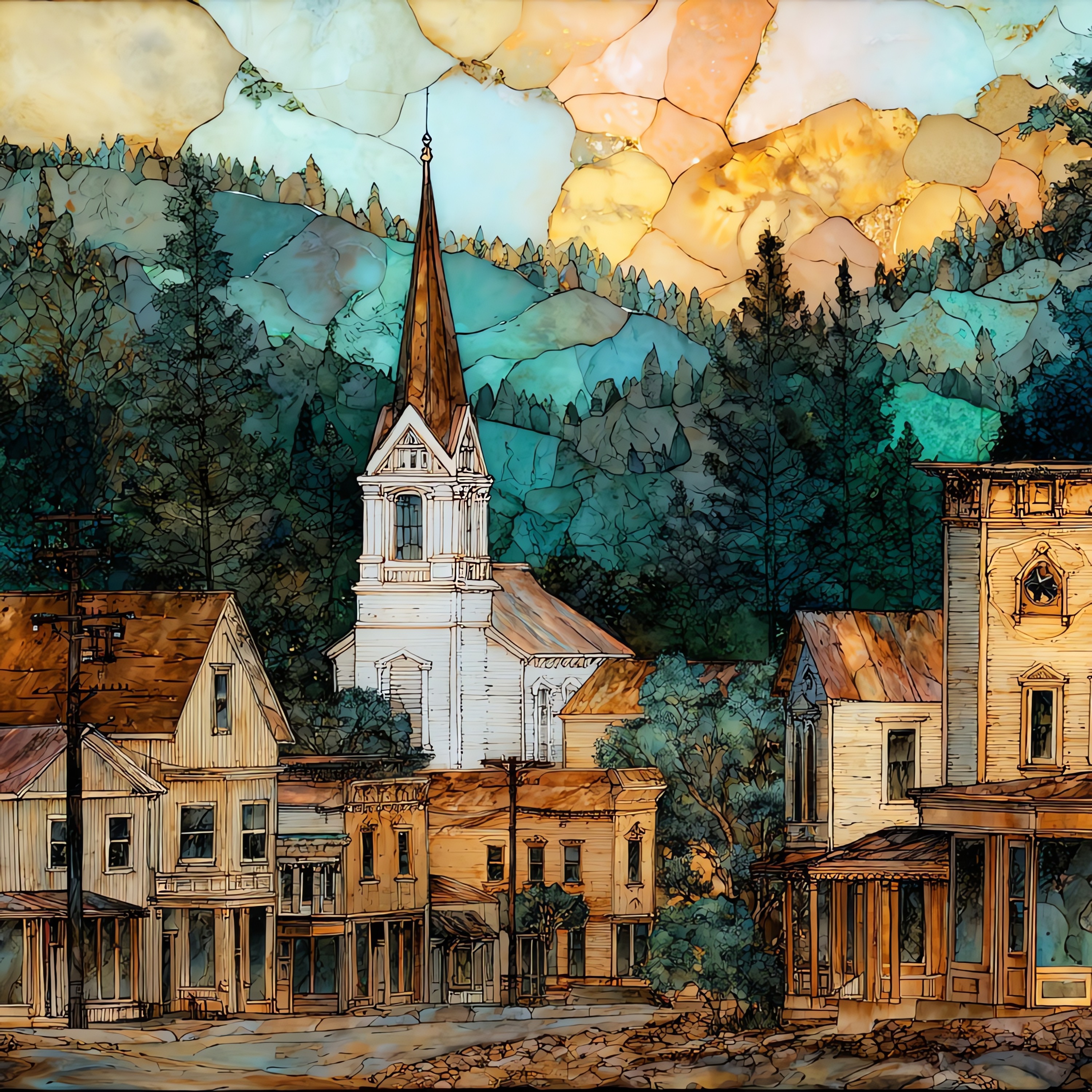
Mariposa California
— foothill yellow, with a courthouse still keeping time.
Not only on a wall.
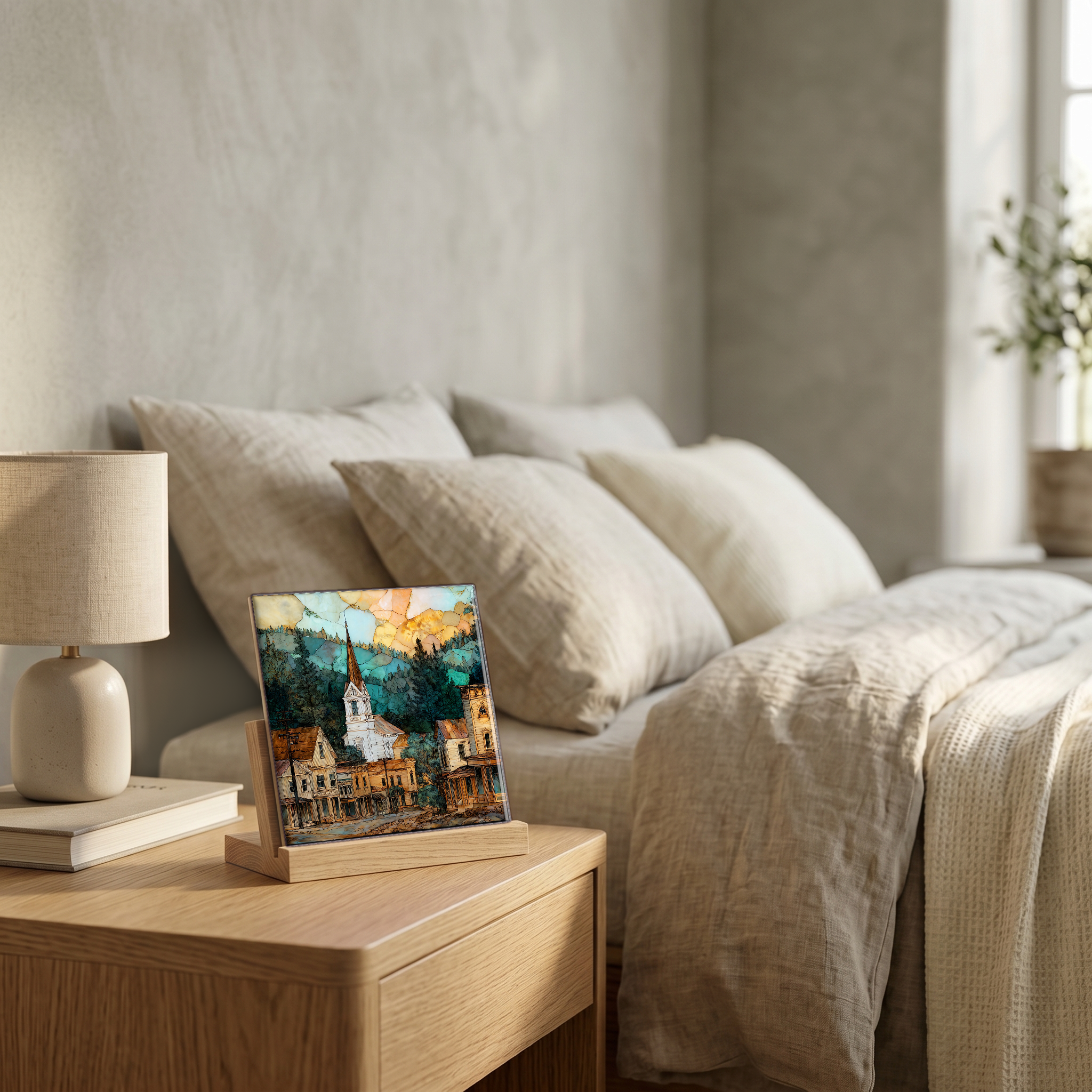
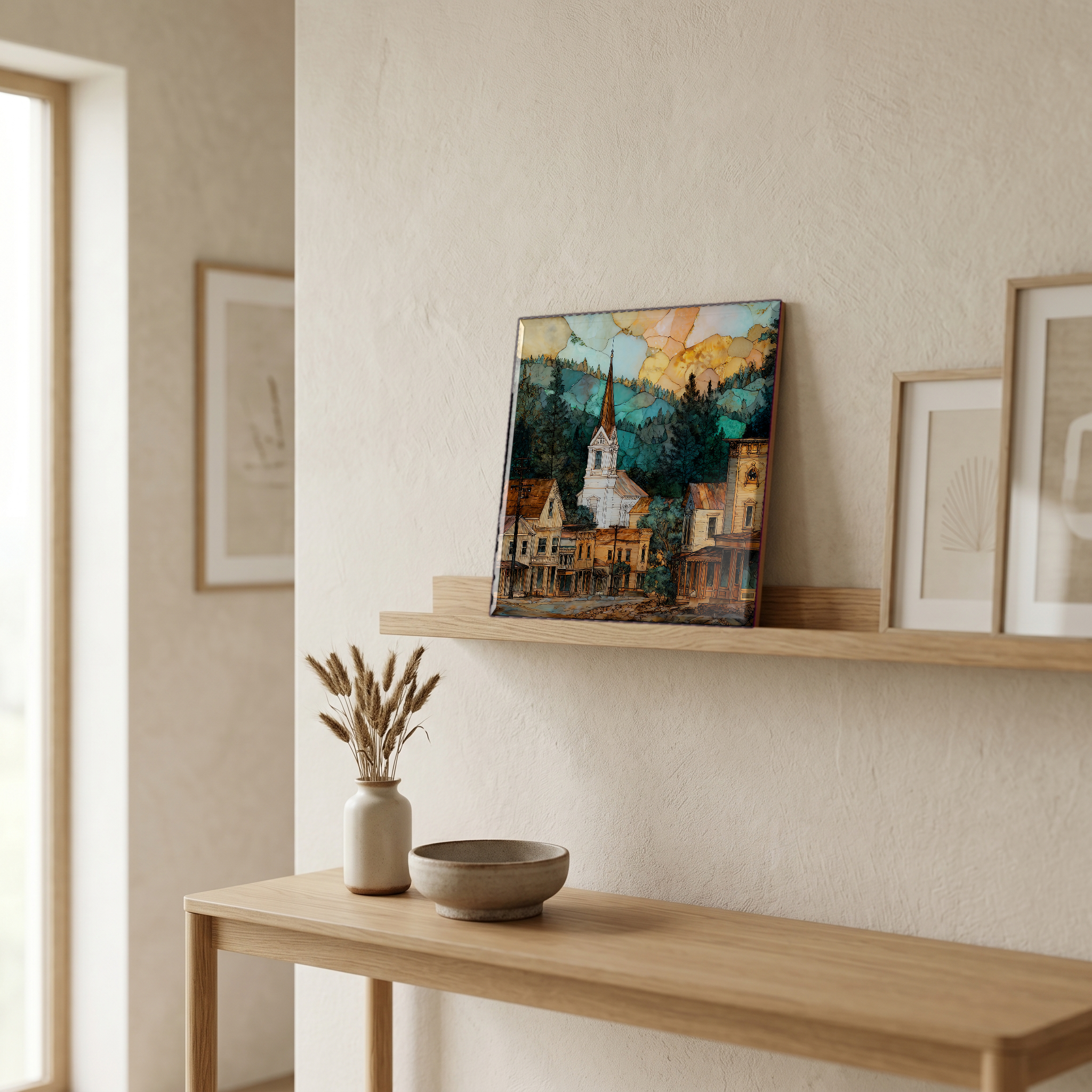
“A gold-rush town in the Sierra Nevada foothills, on State Route 140, the western road into Yosemite. The county courthouse has been holding court since 1854 and is the oldest one still in use west of the Mississippi. The name is Spanish for butterfly. An 1806 Spanish expedition came through and found the air thick with them. The grass turns gold in July and holds that colour until the rains. East of town the road climbs through the Merced River canyon and the granite begins.
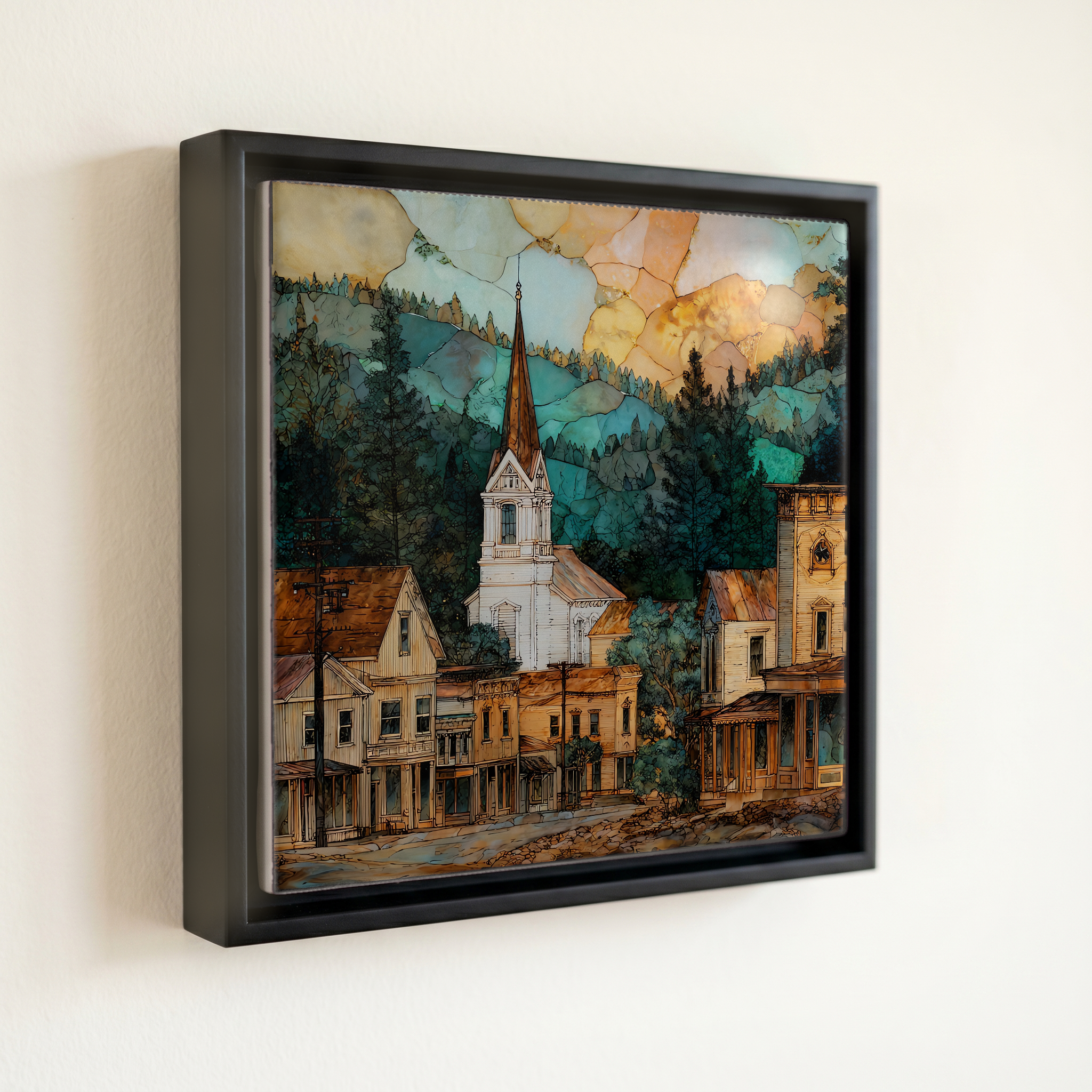
Mariposa California, on ceramic.
Each tile is finished by hand in our Knoxville studio. Artwork is slowly infused into the ceramic surface under high heat and pressure, and rests beneath a thin glossy finish. The colour lives in the surface, not on top of it.
Pick any four 4-inch tiles — National Parks you've been to, a Smokies set, the four seasons of one place. $ for a set of , cork-backed, ready to live on the table.
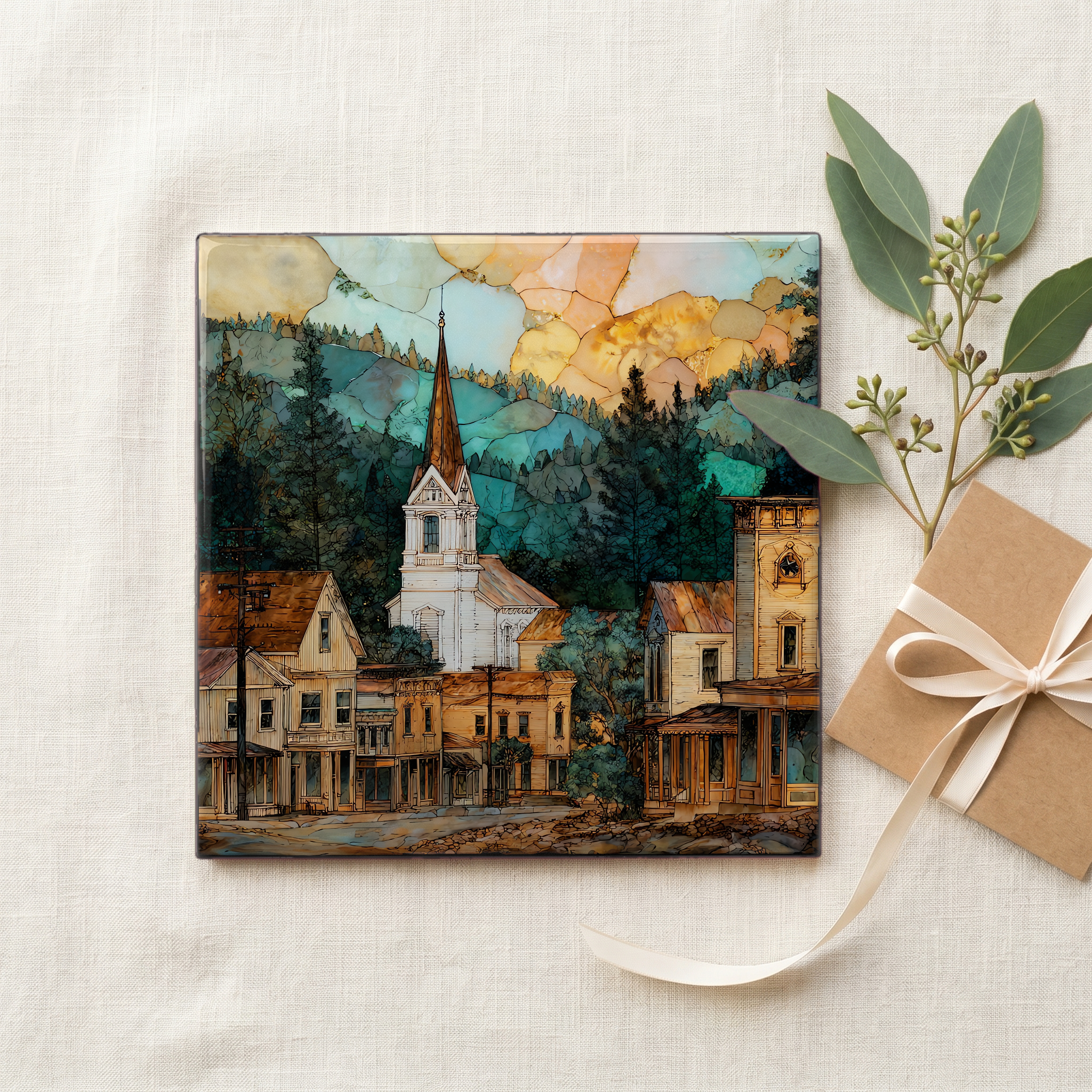
Each tile ships in a kraft box, tied with cream ribbon, with a handwritten note from the studio if you'd like to add one.
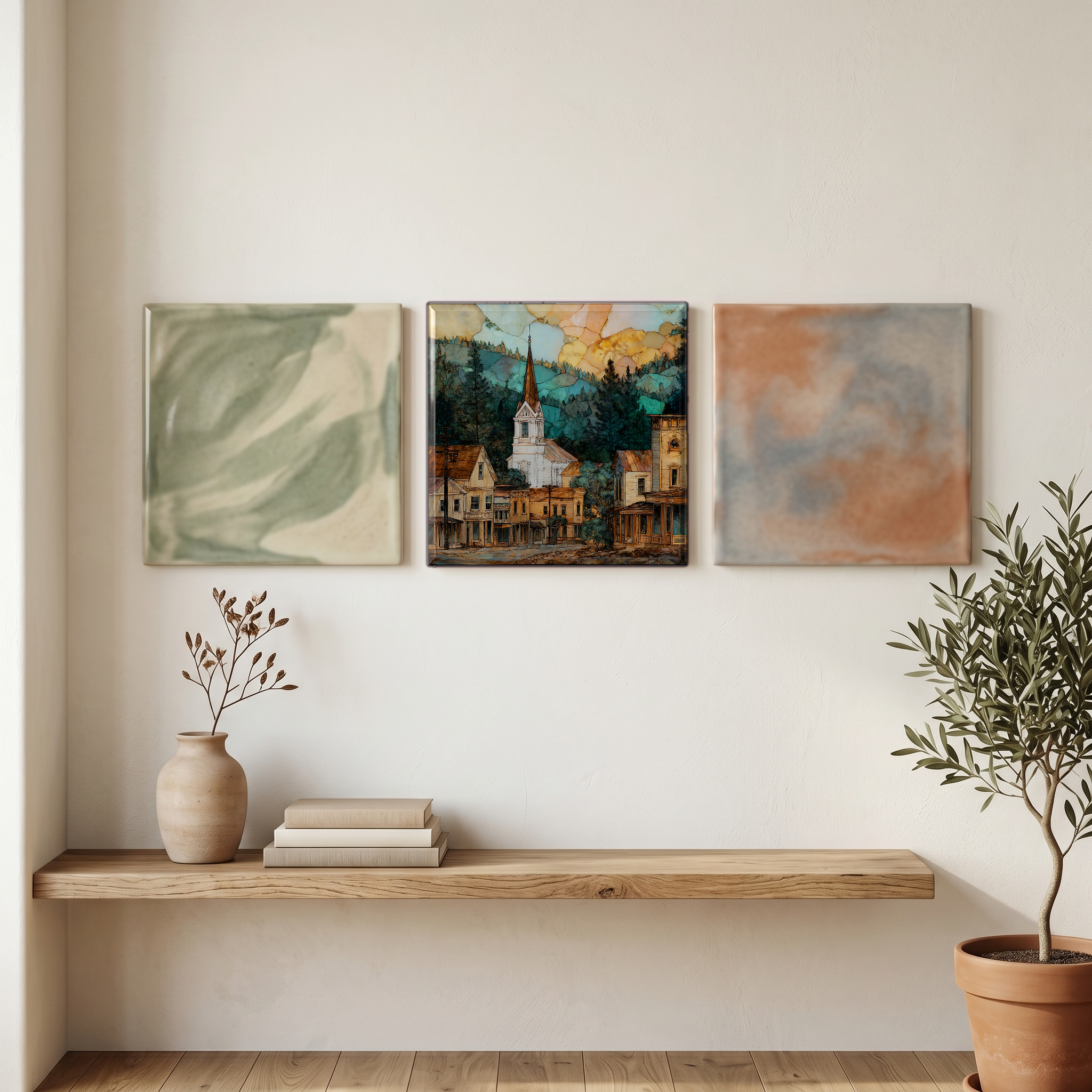
Three or five different vistas, hung together — a chapter of places you've been, or want to go.
The place, in three passes.
Mariposa sits at about 1,949 feet (594 m) in the Sierra Nevada foothills of central California, the seat of Mariposa County and the western gateway to Yosemite National Park along State Route 140. The town was established around 1850 during the California Gold Rush on John C. Frémont's Las Mariposas land grant. Today its population is roughly 2,000, with the broader county home to about 17,000. The Merced River runs through the canyon east of town and is the same river that carved Yosemite Valley some 30 miles upstream. Mariposa lies roughly 75 miles east of Merced and 150 miles southeast of Sacramento.
The Mariposa County Courthouse, completed in 1854, is the oldest courthouse in continuous use west of the Mississippi River. It was built of white pine cut from nearby slopes, assembled with mortise-and-tenon joinery and wooden pegs, and a Seth Thomas tower clock added in 1866 still keeps time above Bullion Street. The building stands two stories tall in the centre of the town's historic district, which retains several other Gold Rush-era storefronts. A few blocks away the California State Mining and Mineral Museum holds the Fricot Nugget, a 13.8-pound specimen of crystallised gold pulled from a tributary of the American River in 1864.
Mariposa sits about 30 miles west of the Arch Rock Entrance to Yosemite National Park along State Route 140, the lowest of the three western approaches and the one most reliably kept open through the winter months. The drive from town climbs gradually beside the Merced River, a federally designated Wild and Scenic River. Mariposa-Yosemite Airport handles general aviation; commercial flights route through Fresno (about 90 miles south) or Merced (about 75 miles west). Inside the park's southern reach, the Mariposa Grove of Giant Sequoias carries the same Spanish word and is home to roughly 500 mature trees.