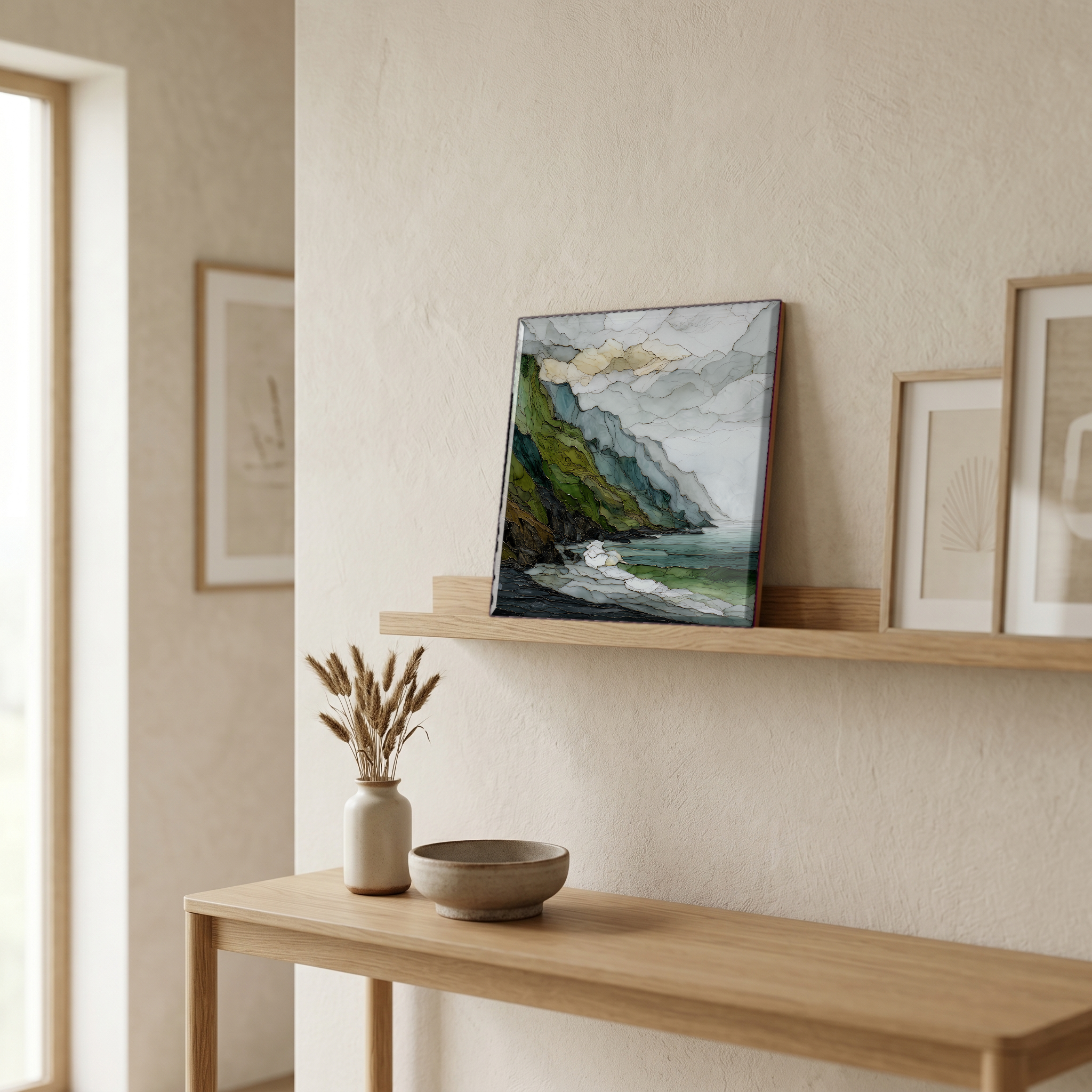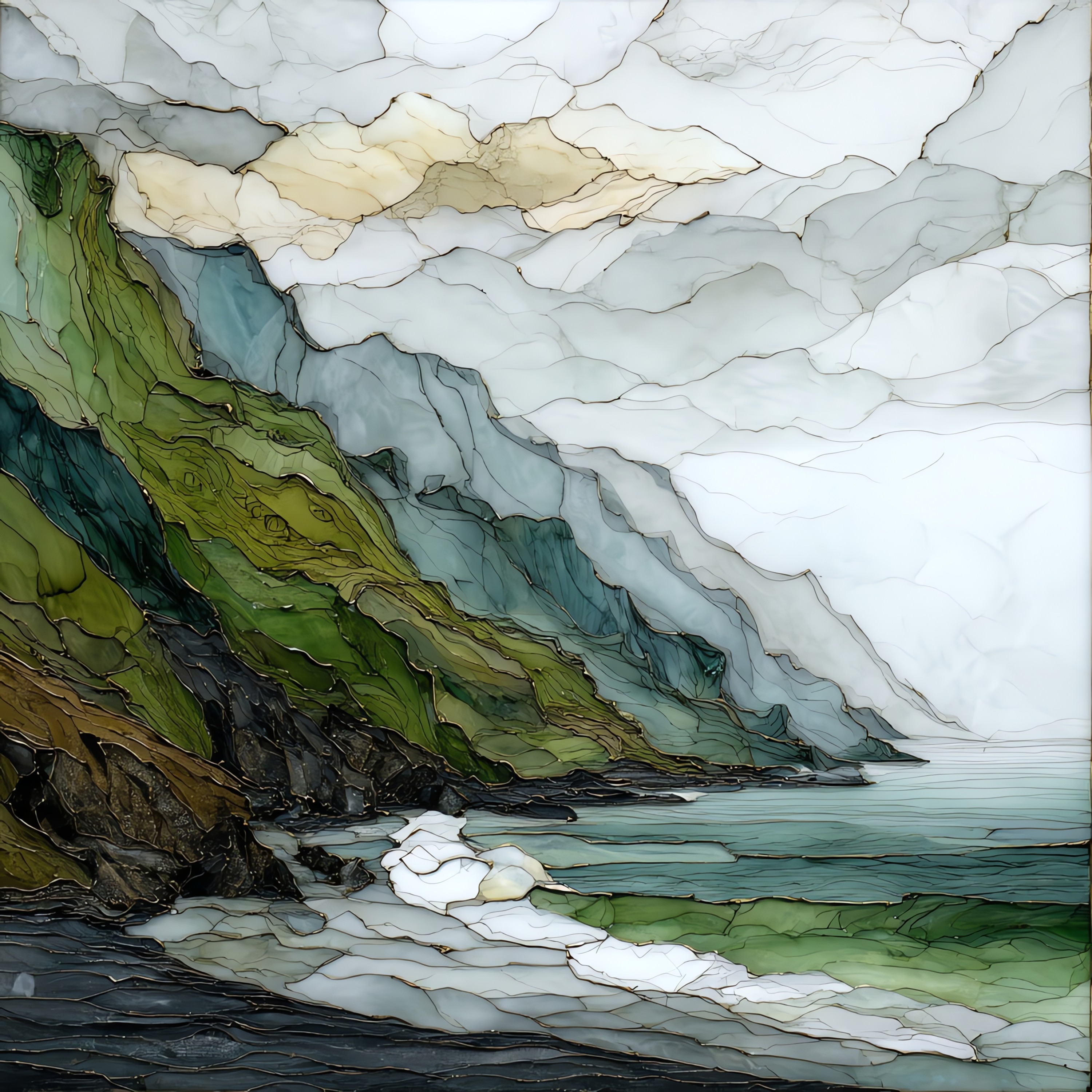
Wender·Vista
Lost Coast
shown on ceramic, 12-inch tileCalifornia · United States
north of Mendocino, where Highway 1 turns inland

Lost Coast

the coast the highway let go.

Where it lives

Not only on a wall.

A small tile on the nightstand catching the morning. A larger one above the fire. Yours, wherever you spend the slow hours.
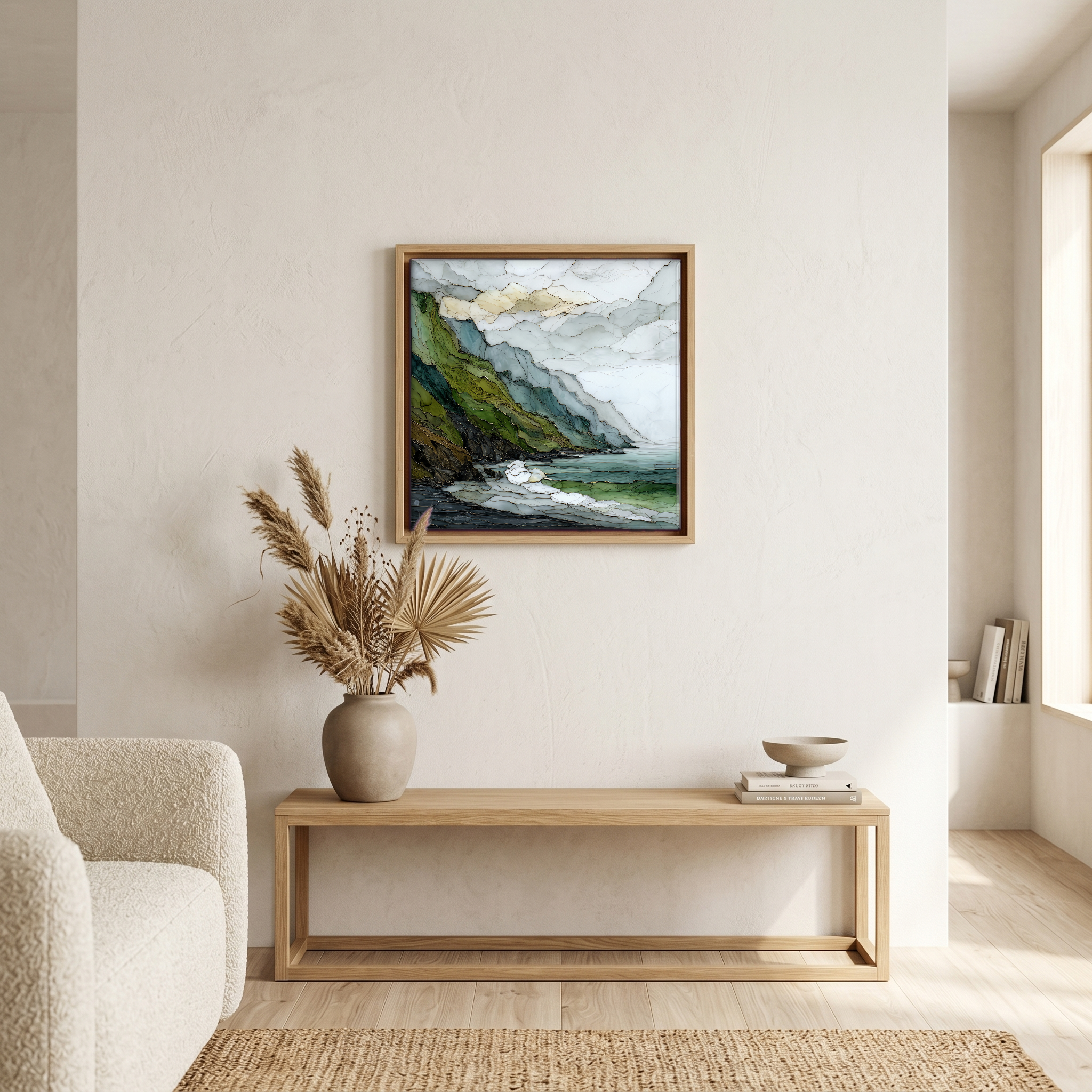
Above the bench, in a warm oak surround.
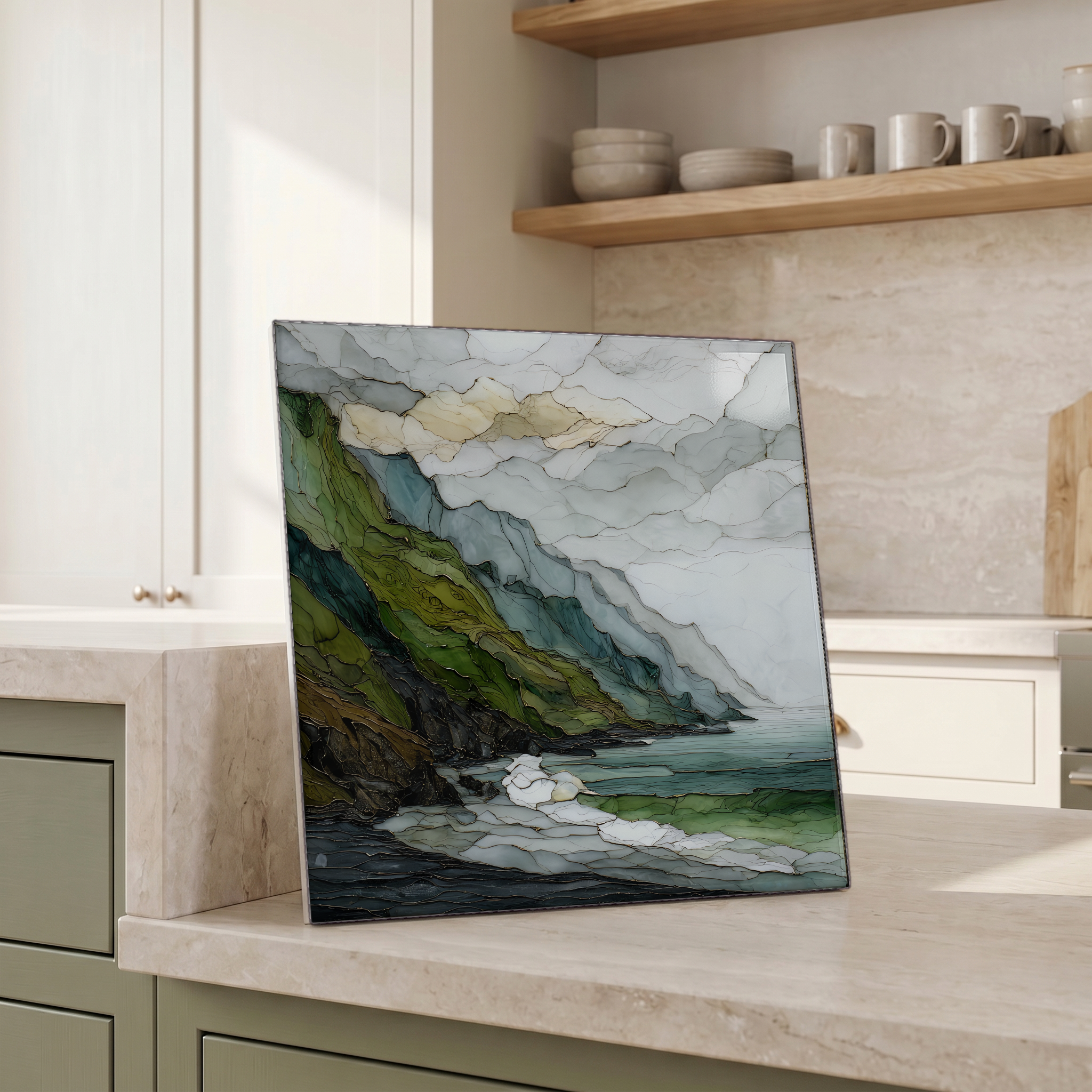
Beside the kettle, propped on the counter.
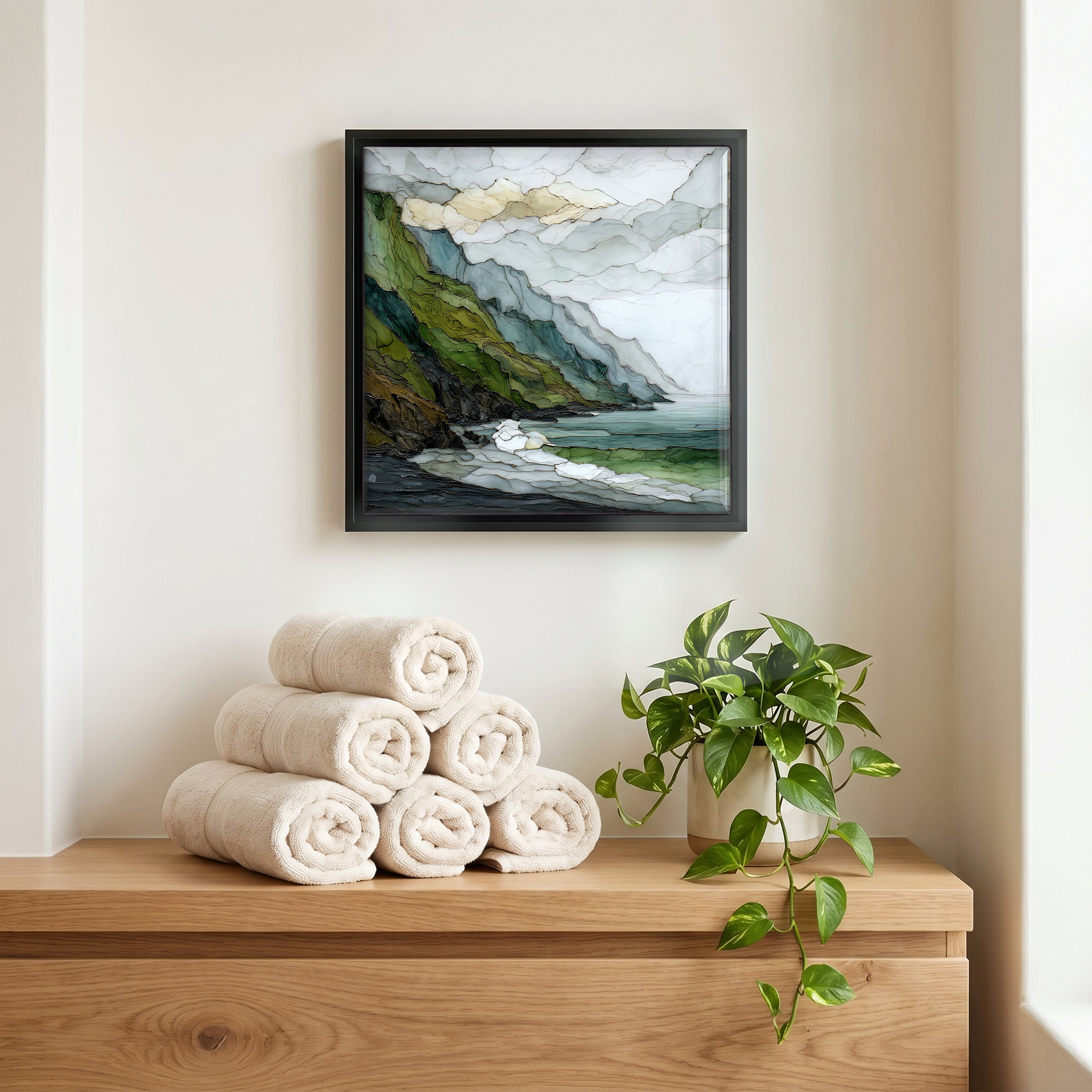
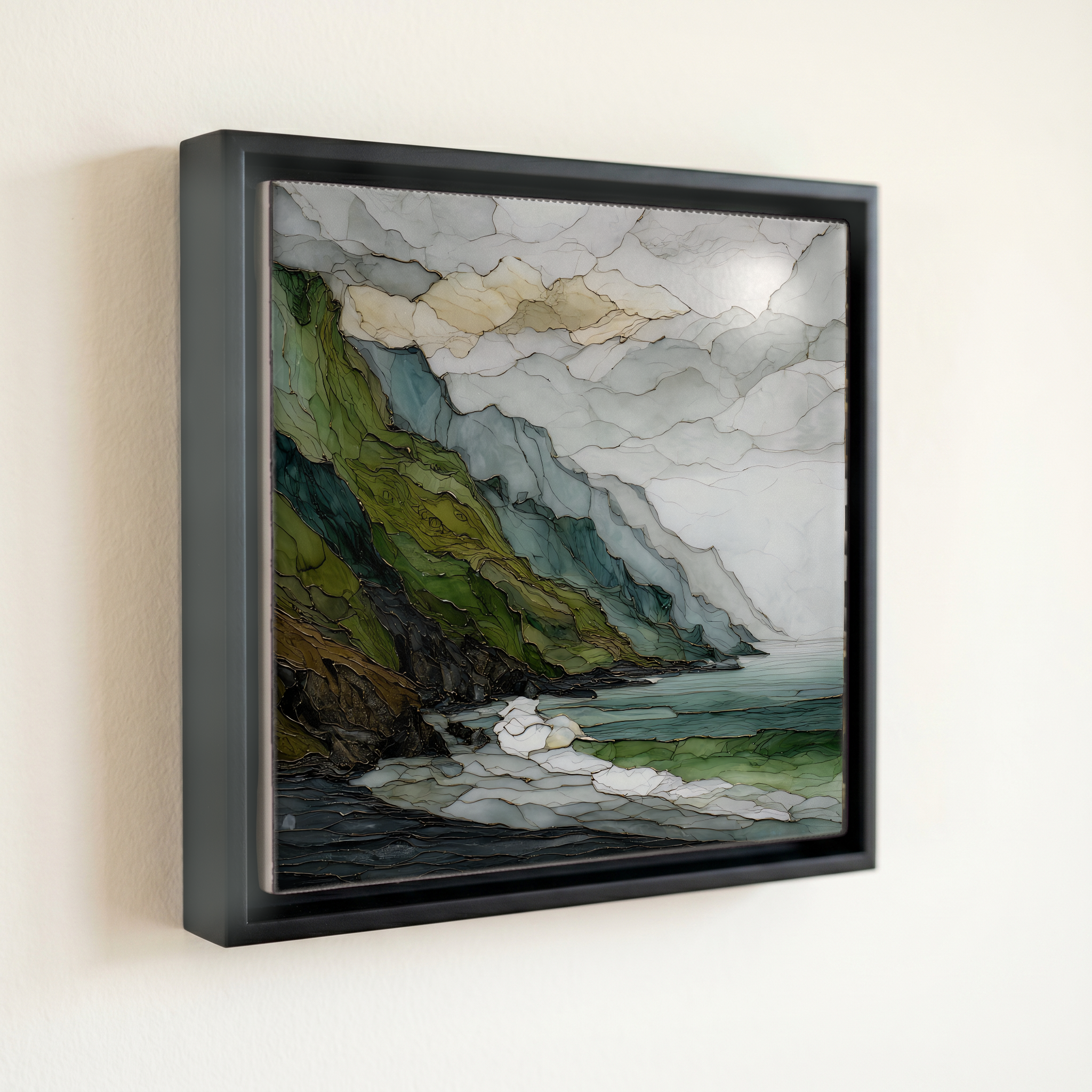
Above the linens, in a slim black surround.
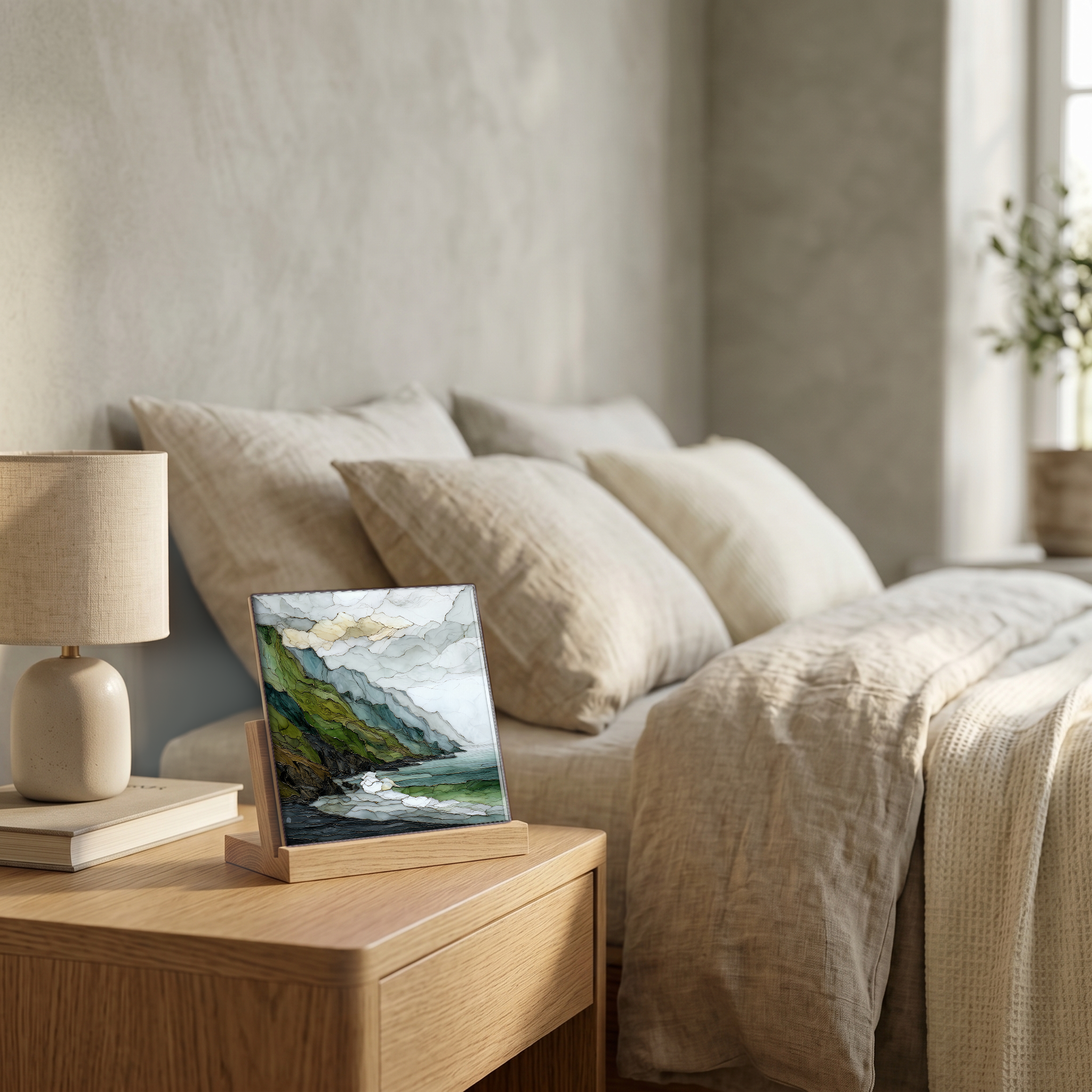
On the nightstand, on a light oak stand.
On a picture ledge, where the light comes in.
a note from the studio

Twenty-five miles of black-sand beach on California's far north coast, where the Pacific meets the King Range so steeply that Highway 1 couldn't be built and had to turn inland. The Lost Coast Trail runs from the Mattole River mouth south to Shelter Cove. Three sections are passable only at low tide; backpackers carry tide tables the way they carry water. Roosevelt elk wander down to the sand at dawn. The fog comes in by afternoon. Punta Gorda Lighthouse has been dark since 1951, its concrete shell still standing above a beach of seal haul-outs. Nobody hurries on this coast. The Pacific does what the Pacific does, and the road stays inland.
from the studio
shown in a slim black floating frame · 6 × 6 in
— bring it home

Lost Coast, on ceramic.

Each tile is finished by hand in our Knoxville studio. Artwork is slowly infused into the ceramic surface under high heat and pressure, and rests beneath a thin glossy finish. The colour lives in the surface, not on top of it.

What kind of piece?
One tile — square or rectangle.
How big?
the popular one — counter, shelf, nightstand
6 × 6 in · 15 cm · 1.6 lb
Surface finish
A clear glossy finish — the artwork reads as if under resin. Ideal for show-pieces and framed wall art.
How it sits
A hidden cleat — sits ¼″ proud of the wall.
$58
Hand-finished and shipped from our studio at the foot of the Smokies. On your wall in about ten days.
size
6 × 6 in
15 cm
weighs
1.6 lb
solid in the hand
surface
ceramic, hand-finished
art rests beneath a thin glossy finish
from
Knoxville, TN
our family studio, at the foot of the Smokies
— start a Coaster Set

Pick any four 4-inch tiles — National Parks you've been to, a Smokies set, the four seasons of one place. $ for a set of , cork-backed, ready to live on the table.
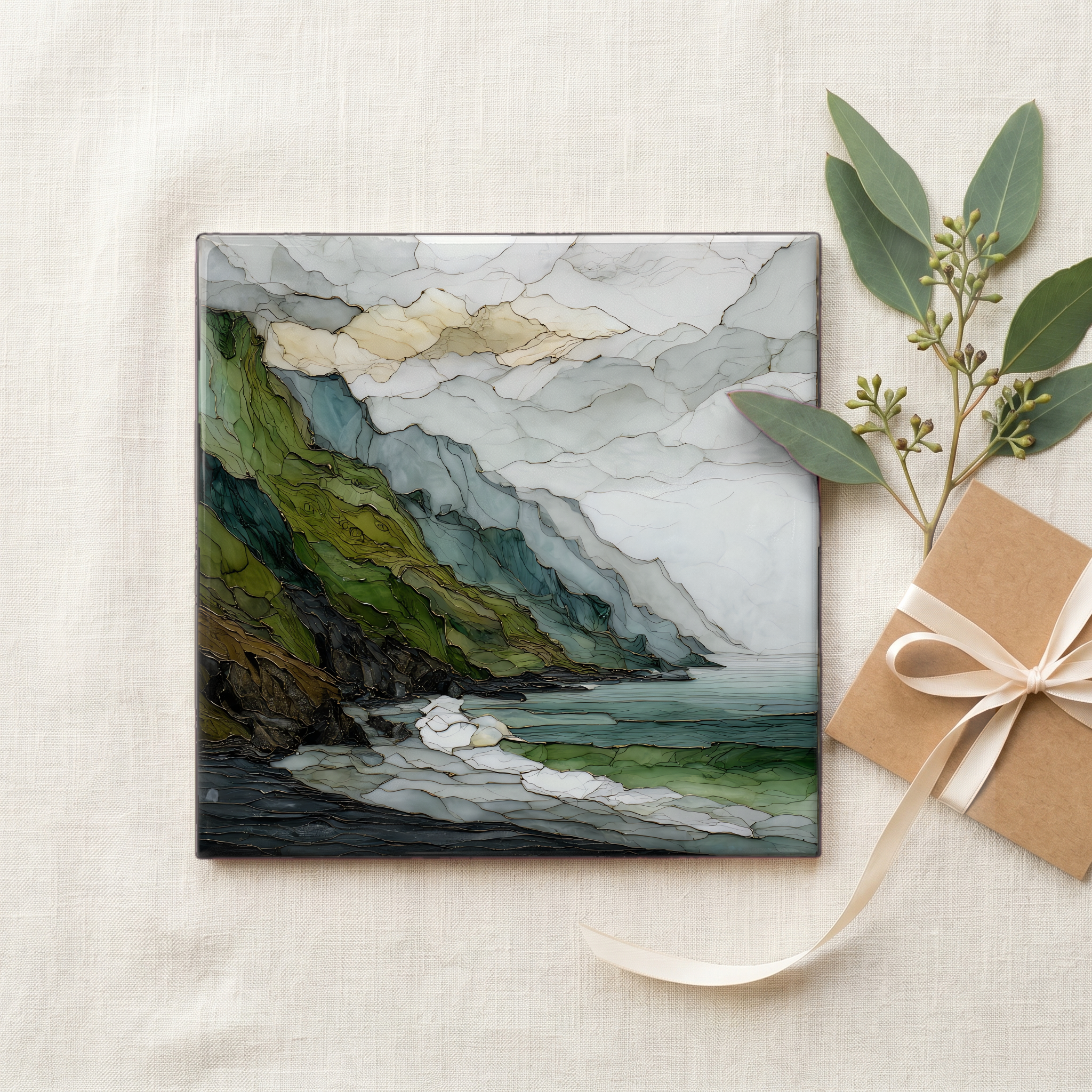
comes gift-ready
comes gift-ready

Each tile ships in a kraft box, tied with cream ribbon, with a handwritten note from the studio if you'd like to add one.
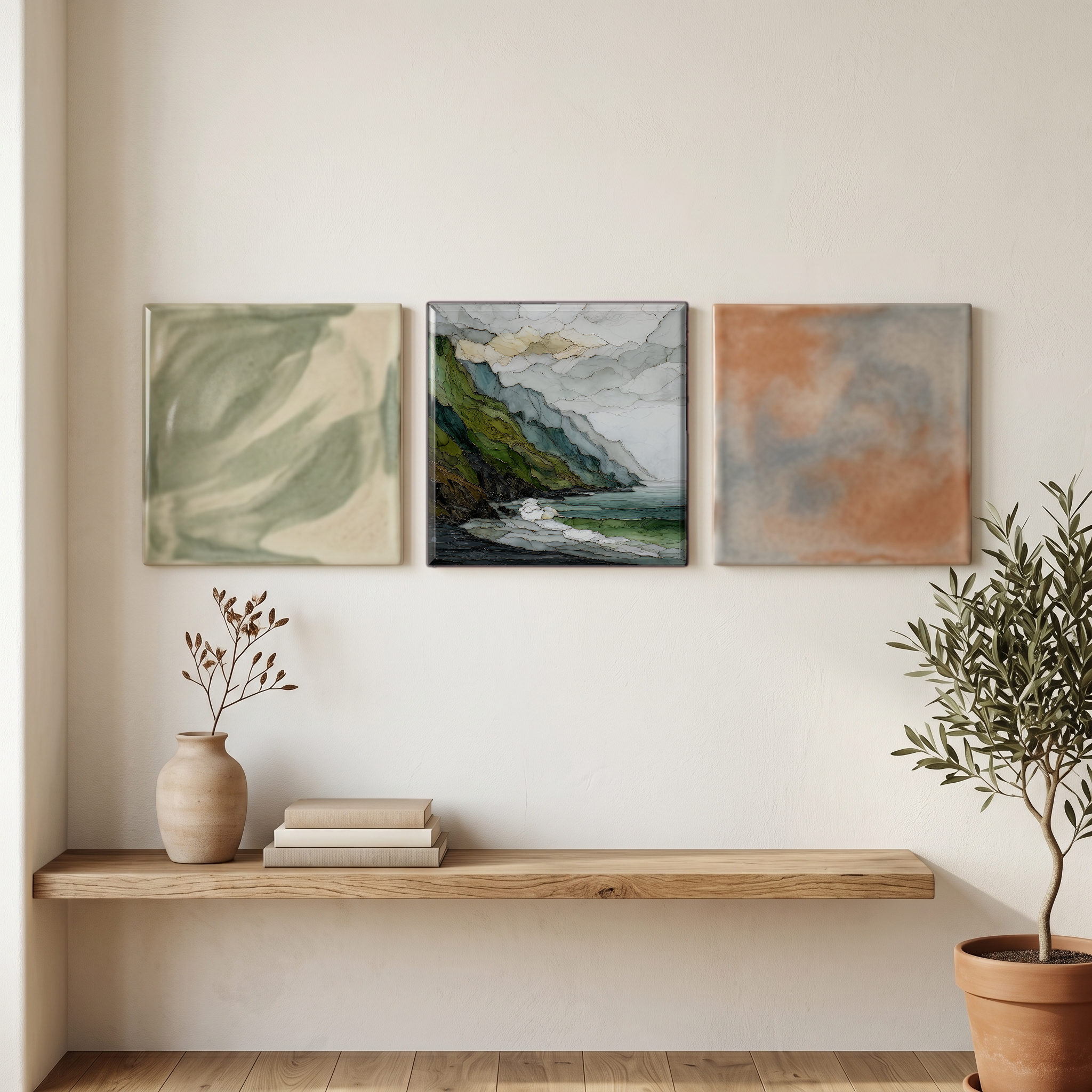
or build a grouping
or build a grouping

Three or five different vistas, hung together — a chapter of places you've been, or want to go.

about Lost Coast

The place, in three passes.

A little of what's known, in case you fall down the rabbit hole — or want to go see it yourself.
the place

The Lost Coast covers about twenty-five miles of California's North Coast in Humboldt and Mendocino counties, between the mouth of the Mattole River and Usal Beach. The King Range rises behind it, with King Peak reaching 4,088 feet within three miles of the Pacific, among the steepest coast-to-summit gradients in the contiguous United States. Federal protection began on October 21, 1970, when the Bureau of Land Management established the King Range National Conservation Area, the first NCA in the country. Sinkyone Wilderness State Park covers the southern portion, named for the Sinkyone band who lived along these creeks before contact. The name 'Lost Coast' dates to the 1930s, when California State Route 1 was routed inland through Leggett and the population on the coast collapsed.

— informed by Wikipedia, BLM
the silence

The Lost Coast is the largest stretch of undeveloped coastline in the contiguous United States. There is no through-road, no cell signal across most of the King Range, and the only town along its length is Shelter Cove, with about seven hundred residents at the southern end. Between Shelter Cove and the Mattole trailhead, the sounds belong to the surf, the elk, and the wind running up the bluffs. Backpackers passing each other on the Lost Coast Trail tend to nod and keep walking. The Sinkyone, displaced from this coast in the mid-1800s, described a country thick with bear and elk. The bears have come back, in numbers.

the visit

The Lost Coast Trail runs about twenty-five miles from the Mattole River mouth south to Black Sands Beach at Shelter Cove. Three sections, totaling roughly four miles, are impassable at high tide and must be timed against a tide chart. Overnight travel in the King Range requires a BLM permit, booked through Recreation.gov, plus an approved bear-resistant food canister. Most backpackers take three to four days, hiking north to south to keep the prevailing wind at their back. The Mattole trailhead is reached by paved road from Petrolia; Shelter Cove by Briceland-Thorn Road from Garberville. There is no resupply along the trail. Punta Gorda Lighthouse, dark since 1951, sits at roughly mile six and makes a natural midday stop.

— informed by BLM, Recreation.gov
where
United States · Humboldt and Mendocino Counties, California
within
King Range National Conservation Area
position
40.2500° N · 124.3330° W
the neighborhood

What's nearby.

A handful of named places within an hour's walk or short drive. Some we've already painted; some we will.
15 km NW
Cape Mendocino
westernmost point of the contiguous US
40 km E
Avenue of the Giants
redwood scenic byway
45 km E
Humboldt Redwoods State Park
redwood state park
55 km NE
Ferndale
Victorian village
120 km S
Mendocino
coastal town
N
Lost Coast
Cape Mendocino
Avenue of the Giants
Humboldt Redwoods State Park
Ferndale
Mendocino
common questions

What people ask.

A few questions we get about Lost Coast — and about bringing the piece home.
about the place

The Lost Coast is a roughly twenty-five-mile stretch of undeveloped coastline in Humboldt and Mendocino counties, Northern California, between the mouth of the Mattole River and Usal Beach. Much of it sits within the King Range National Conservation Area and Sinkyone Wilderness State Park.

The name dates to the 1930s, when California State Route 1 was routed inland through Leggett because the King Range was too steep and geologically unstable to build along. The coastal population collapsed afterward, and the stretch was lost from the highway network.

The main Lost Coast Trail runs about twenty-five miles from the Mattole River mouth south to Black Sands Beach at Shelter Cove. A southern extension through Sinkyone Wilderness adds roughly twenty more miles for those continuing toward Usal Beach.

Yes, for overnight trips. The King Range National Conservation Area requires a BLM permit booked through Recreation.gov, plus an approved bear-resistant food canister. Day hikes do not require a permit. Sinkyone Wilderness uses separate permits through California State Parks.

Late spring through early autumn, typically May to October. Winter brings heavy rain and dangerous surf, and the tide-impassable sections become unsafe. May offers wildflowers and elk calves; September and October offer the clearest skies between fog cycles.

Roosevelt elk graze the river terraces, harbor seals haul out on the beaches, and black bears move through the King Range. Gray whales pass offshore during their winter and spring migrations. Tide pools hold sea stars, anemones, and gooseneck barnacles.

The northern Mattole trailhead is reached by paved road through Petrolia, Humboldt County. The southern end at Shelter Cove is reached by Briceland-Thorn Road from Garberville, off Highway 101. Both approaches are slow, narrow, and add time to any itinerary.

about the piece in your home

It's been a meaningful piece for customers who have walked the trail. The Lost Coast leaves a mark on the people who finish it: the tide windows, the elk at dawn, the fog rolling in past Punta Gorda. A Small or Medium with a handwritten note from the studio carries the place well.

The piece sits naturally with Coastal-modern, Mountain-modern, and Pacific Northwest interiors. The colour signature, fog-blue and kelp-green against the black of basalt sand, works alongside weathered cedar, raw linen, and unpainted concrete. Less at home in formal or jewel-tone rooms.

It reads cleanly in the Coastal-modern direction, particularly the recent move away from white-and-rope nautical toward darker, fog-led palettes drawn from the Pacific Northwest. The piece anchors that palette without leaning on driftwood or shells.

A single Large, roughly 18 by 24 inches, holds a small console. Above a sofa, a 4-tile Mural or 9-tile Mural reads better; the larger composition gives the coastline room to breathe. The Medium suits a hallway, a stairwell, or above a writing desk.

Yes. Order the Dura Satin or Matte finish for any room with steam or splashes; both are scratch-resistant and hold up to repeated cleaning. The Glossy finish is best in living rooms and bedrooms where the high-shine surface won't catch water spots.

A microfibre cloth and clean water. The colour is slowly infused into the ceramic surface under high heat and pressure, beneath a thin glossy finish, so it doesn't lift, fade, or scratch under normal handling. Avoid abrasive sponges and household solvents.

Yes. Every Wender Studios piece is painted in-house by Reid Wender, in our family studio in Knoxville, Tennessee. We don't license artwork. The Lost Coast piece was painted in our distinctive stained-glass and alcohol-ink visual language.

if this one stayed with you

A few you might also love.

Hand-picked by the eye that found Sorapis. Same air, same kind of quiet.