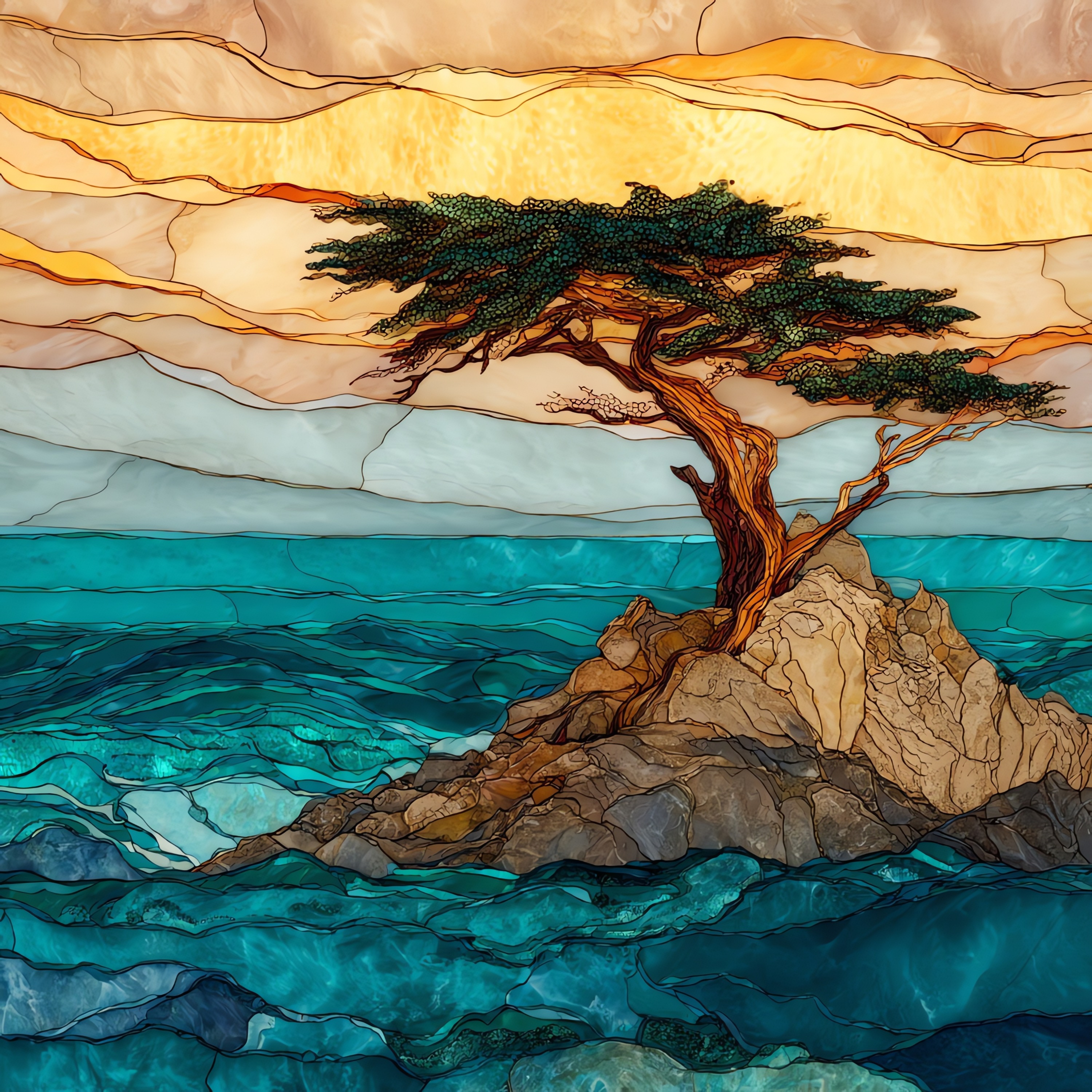
Lone Cypress
— — the tree the wind taught how to lean.
Not only on a wall.
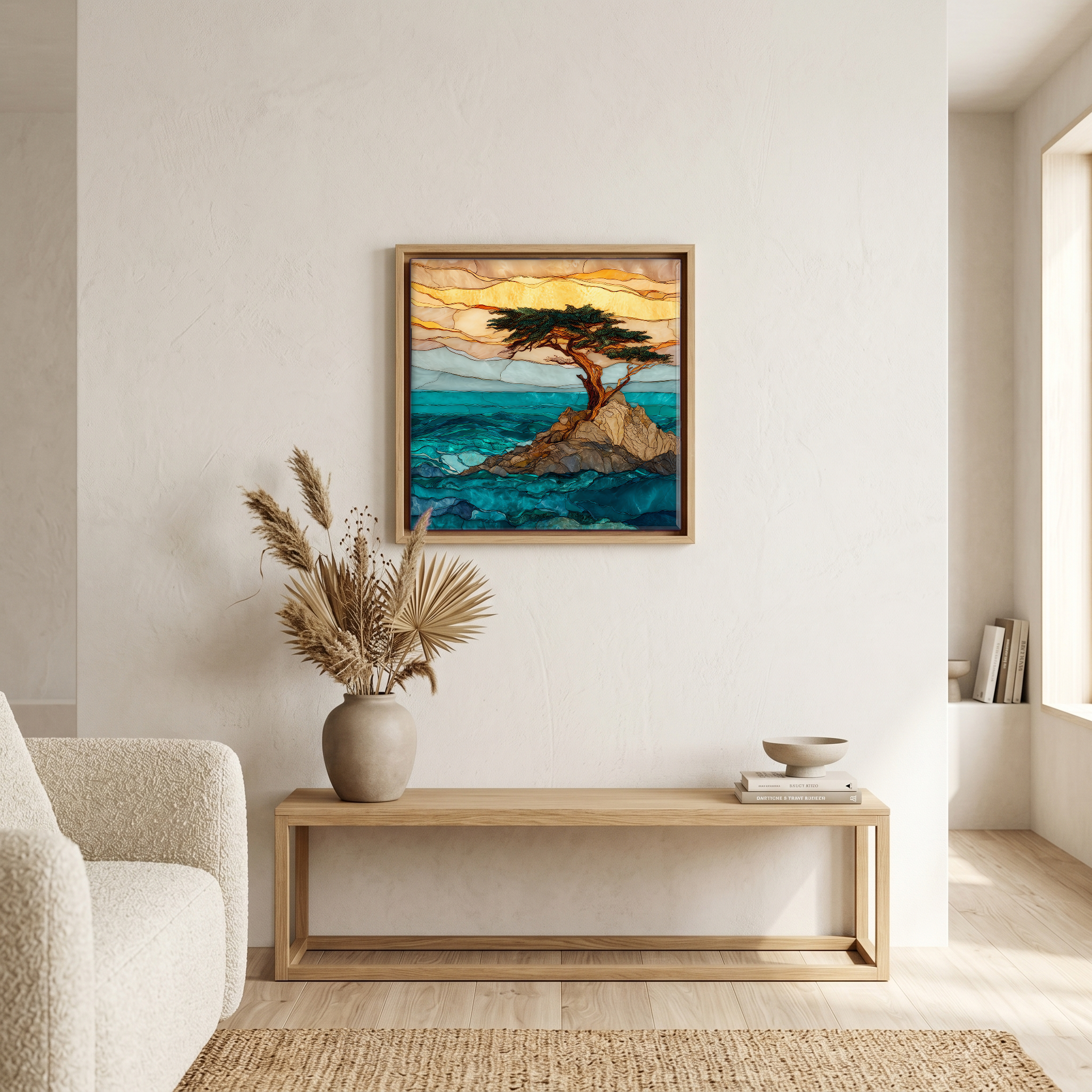
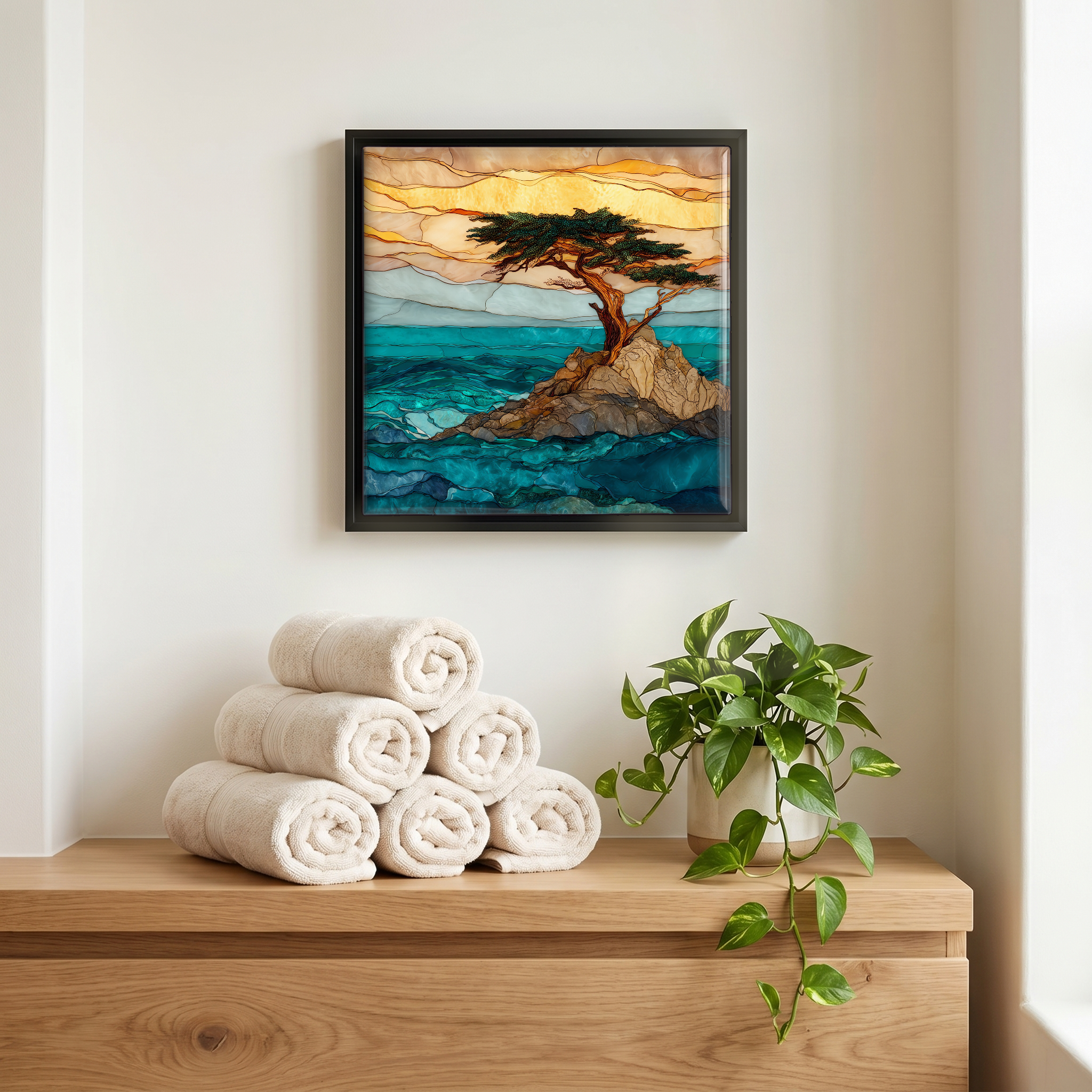
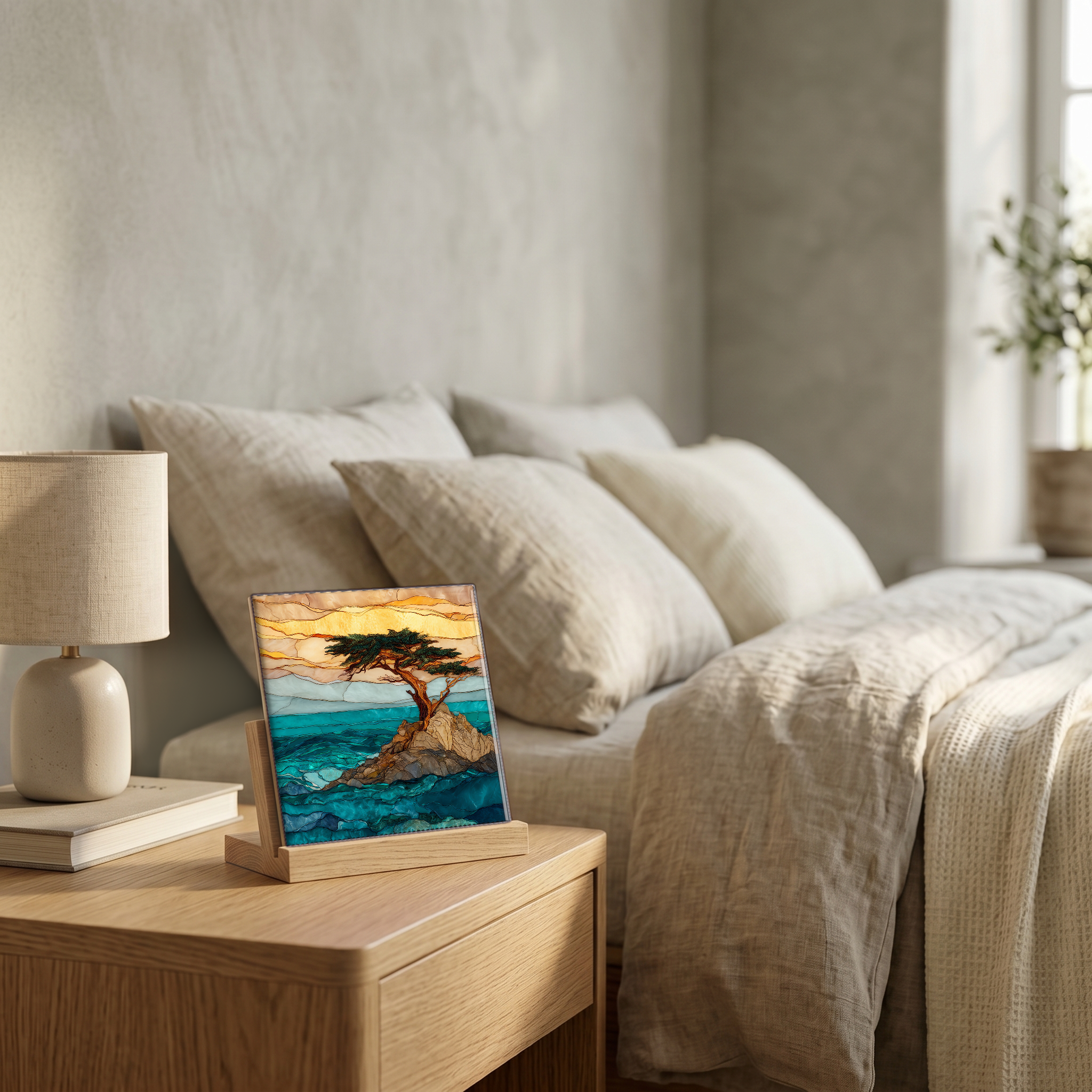
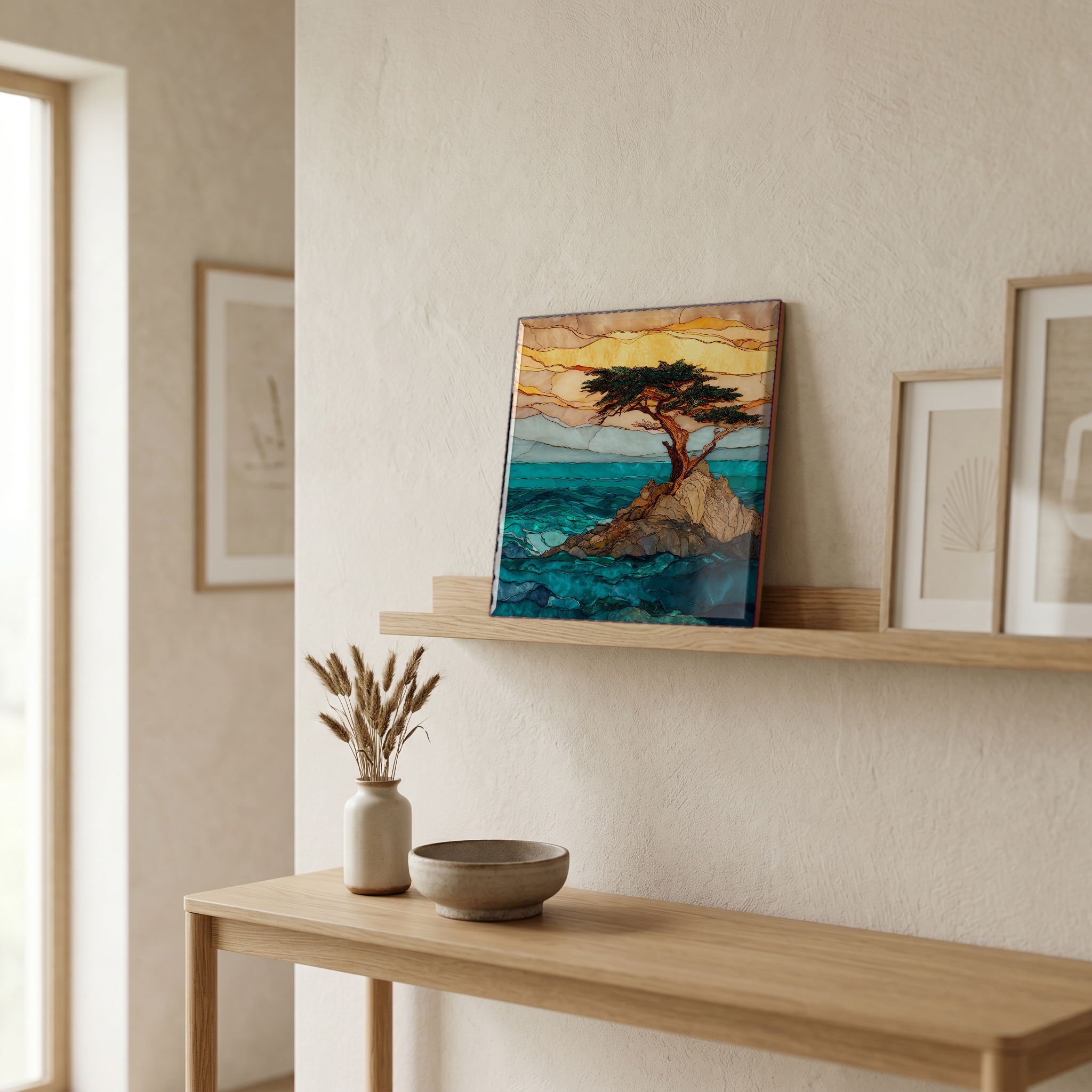
“A single Monterey cypress on a granite shelf above the Pacific, along 17-Mile Drive on the western edge of the Monterey Peninsula. The species is endemic to a few miles of this coast; these trees grow naturally almost nowhere else on earth. Cables have held the trunk through the winter storms since the late 1940s. The pull-out is busy in the middle of the day. The long light at the end of the afternoon, when the coaches have moved on, is what photographers wait for. The Pebble Beach Company has used the silhouette as its mark for decades. The tree itself does not seem to mind.
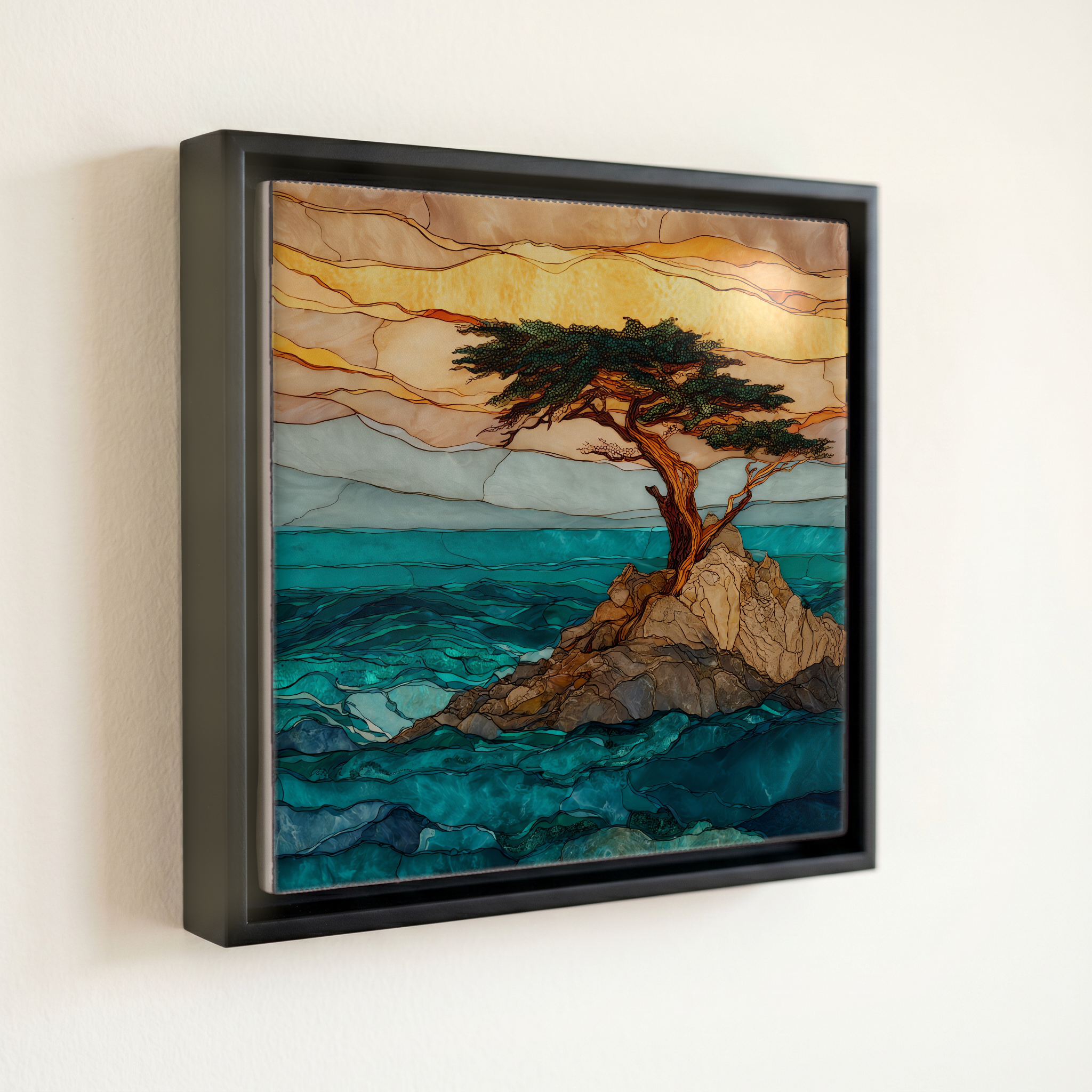
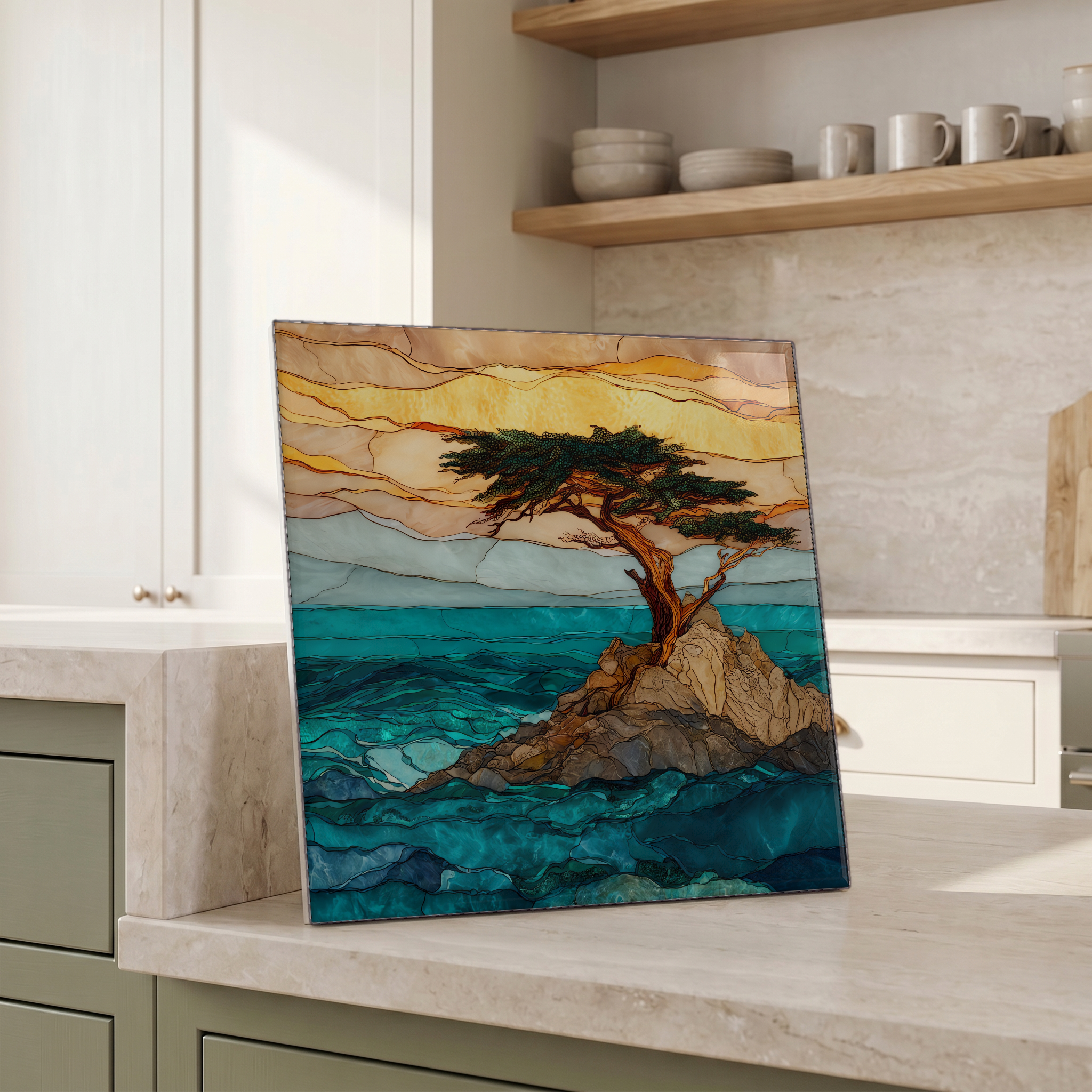
Lone Cypress, on ceramic.
Each tile is finished by hand in our Knoxville studio. Artwork is slowly infused into the ceramic surface under high heat and pressure, and rests beneath a thin glossy finish. The colour lives in the surface, not on top of it.
Pick any four 4-inch tiles — National Parks you've been to, a Smokies set, the four seasons of one place. $ for a set of , cork-backed, ready to live on the table.
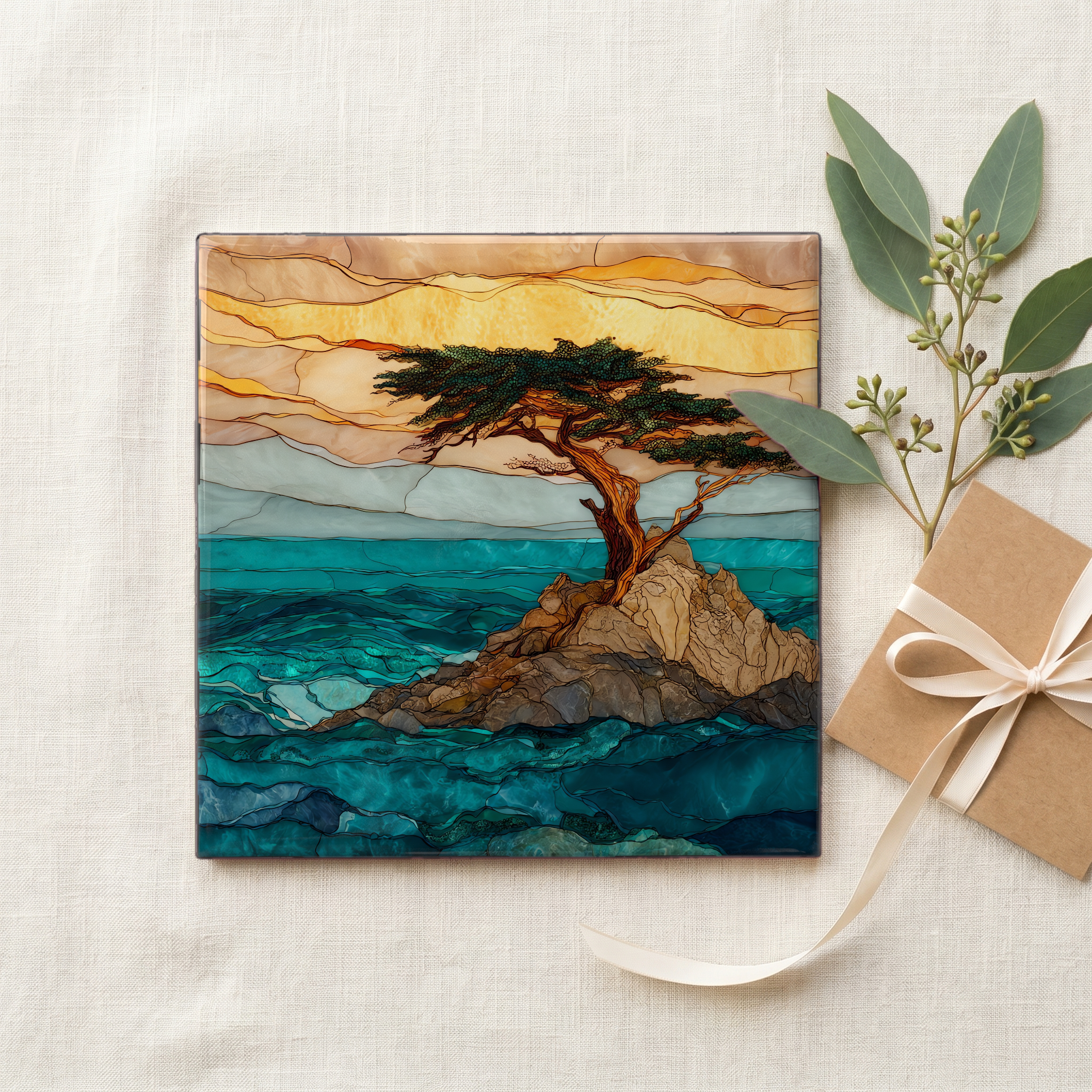
Each tile ships in a kraft box, tied with cream ribbon, with a handwritten note from the studio if you'd like to add one.
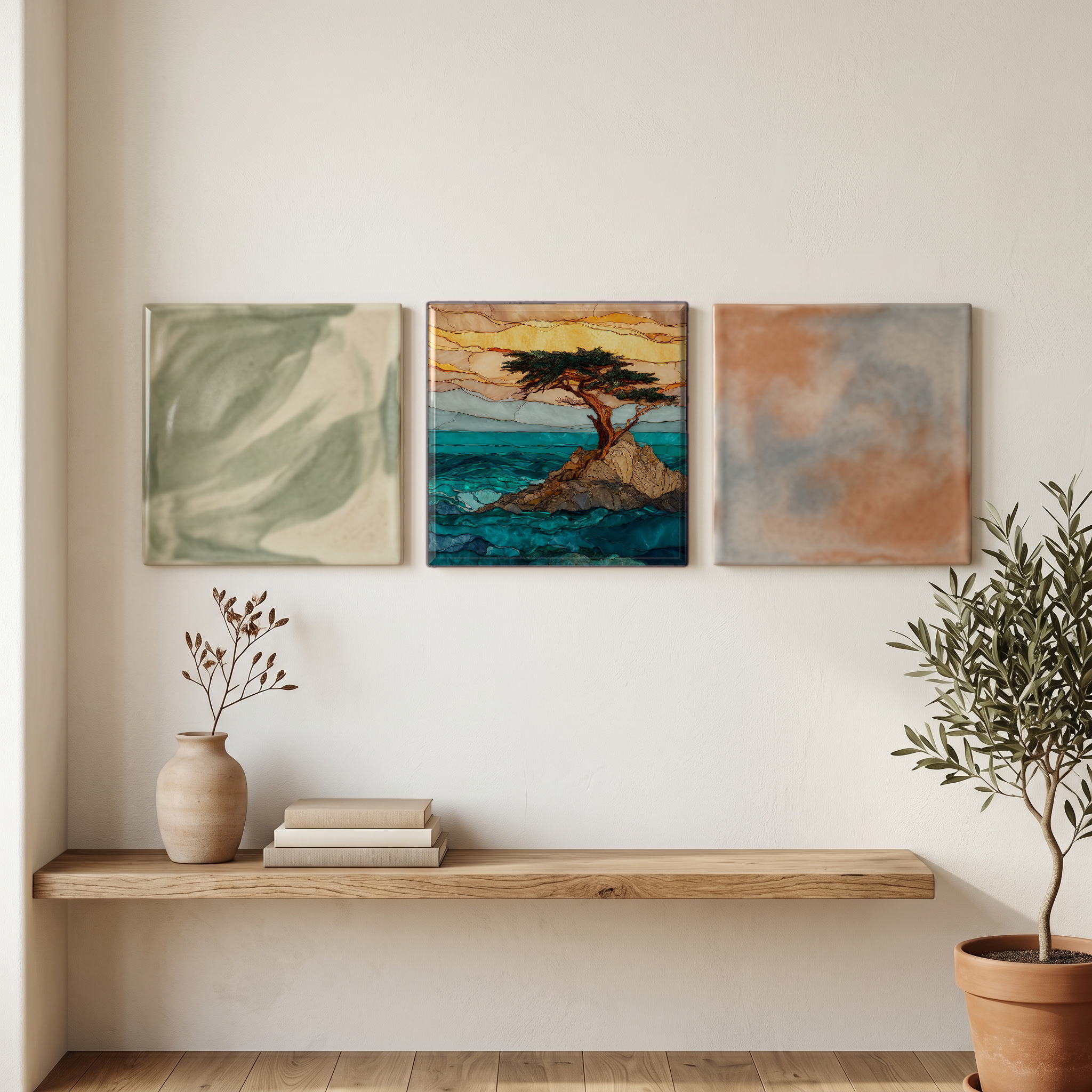
Three or five different vistas, hung together — a chapter of places you've been, or want to go.
The place, in three passes.
The Lone Cypress stands on a granite outcrop on the western edge of California's Monterey Peninsula, midway along the 17-Mile Drive that loops through Pebble Beach. The viewpoint sits between Cypress Point and Pescadero Point, about three miles north of the village of Carmel-by-the-Sea and roughly five miles south of the city of Monterey. Access to the drive is by a per-vehicle fee paid at the gatehouses of the Pebble Beach Company; the gates open at sunrise and close at sunset. The tree is a Monterey cypress (Hesperocyparis macrocarpa). The species is endemic to two small native groves on this coast: the Cypress Point grove and Point Lobos, a few miles south.
The tree grows directly from a small headland of granite, an outcrop of the same intrusive rock that forms much of the western Monterey Peninsula. The headland projects only a short distance into the surf, with the cypress holding the seaward edge by its root system. Steel cables anchored to the granite have braced the trunk since the late 1940s, after winter storms loosened the canopy. The Pebble Beach Company, which has stewarded the surrounding land since the early twentieth century, registered the tree's silhouette as a trademark in 1919. The bedrock itself is part of the Salinian Block, a sliver of California crust carried north along the San Andreas Fault.
The viewpoint is one of the numbered stops on 17-Mile Drive, a private scenic road run by the Pebble Beach Company since the 1920s. The drive can be entered through five gatehouses around the perimeter of the resort; a per-vehicle fee is collected at each gate and is refundable against a meal at one of the Pebble Beach restaurants. The road is open from sunrise to sunset every day. The pull-out at the tree holds about a dozen cars at a time, and tends to fill between mid-morning and the early afternoon. The Pebble Beach Company has trademarked the silhouette of the tree; personal photography is welcomed, commercial use is not.