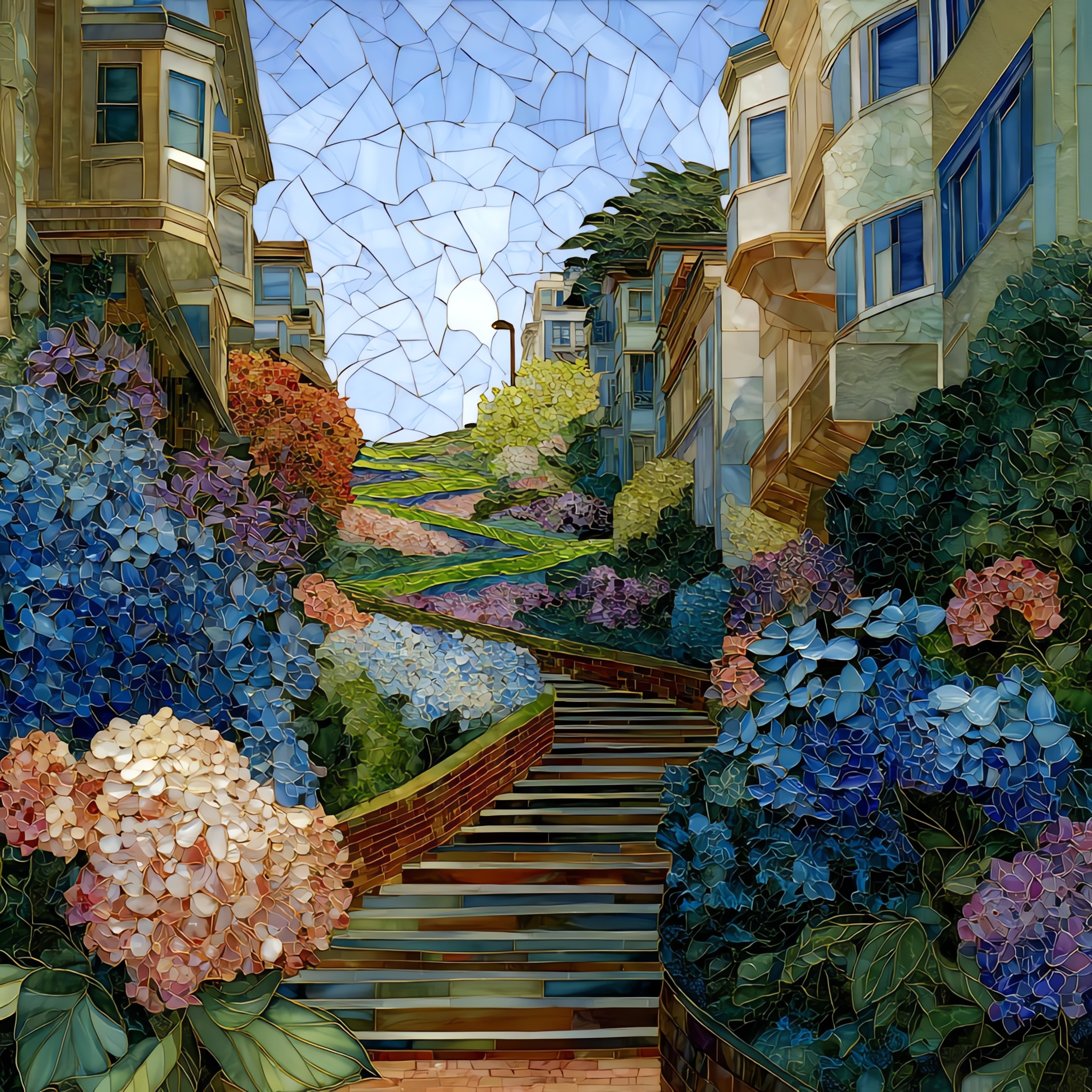
Lombard Street
— a hill that bent the street.
Not only on a wall.
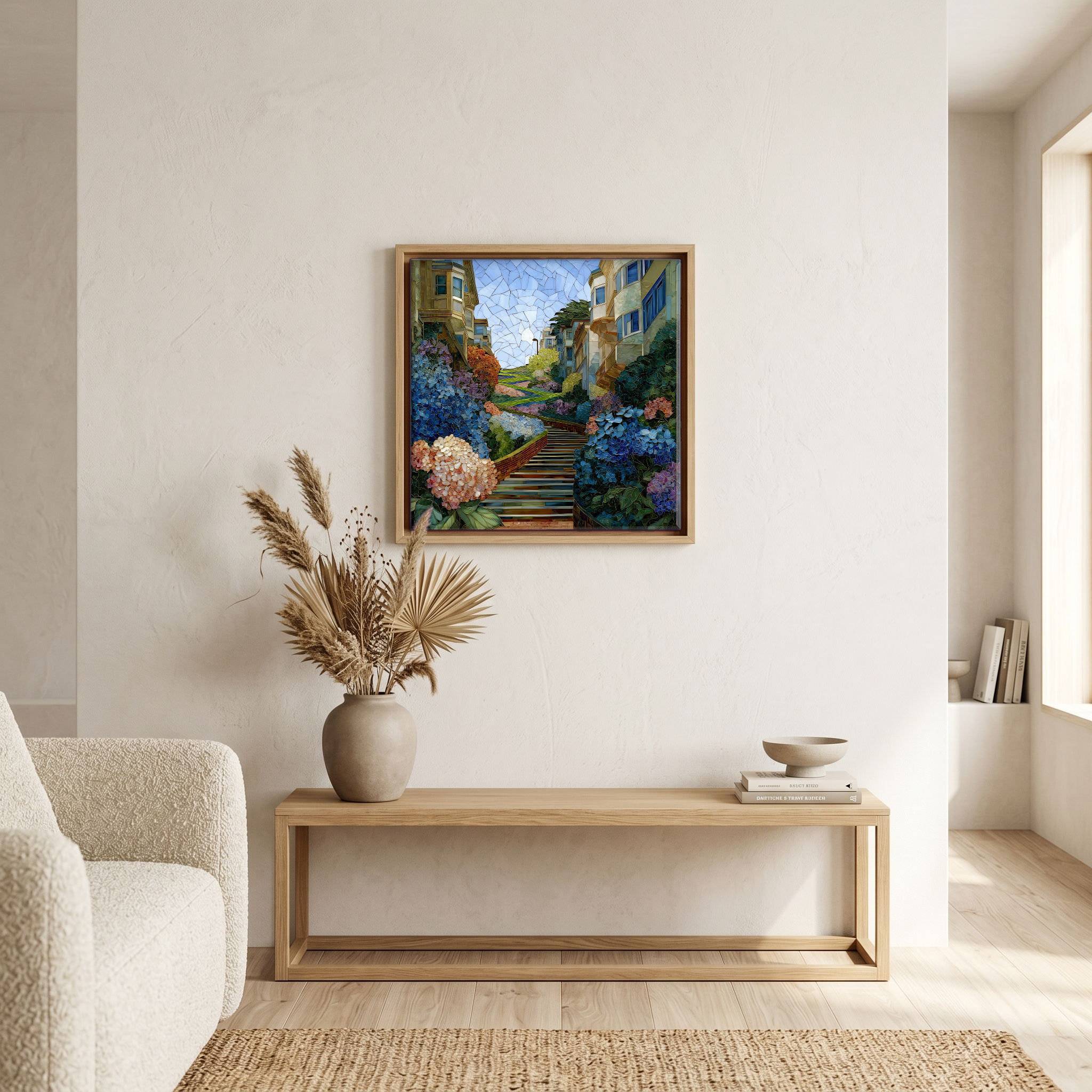
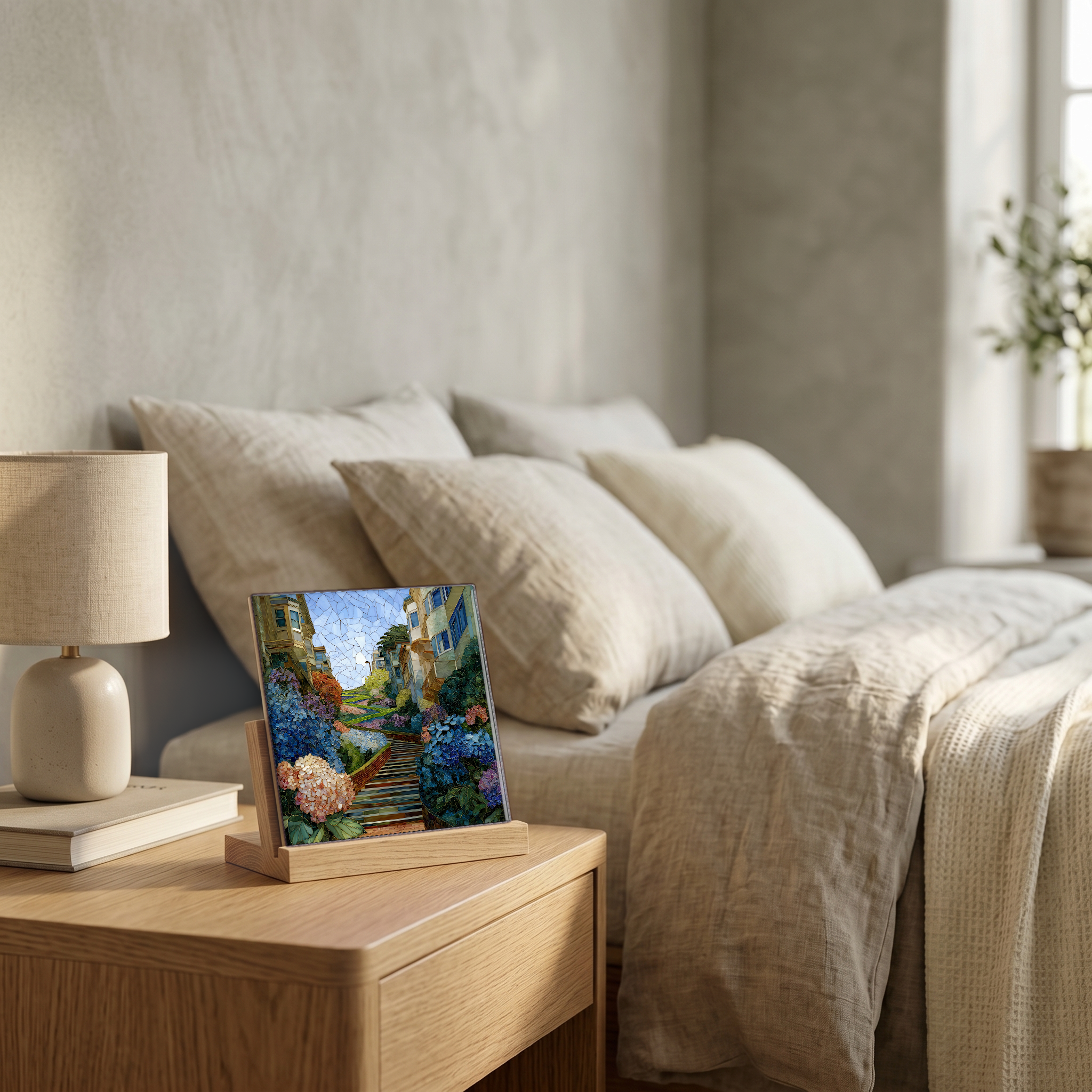
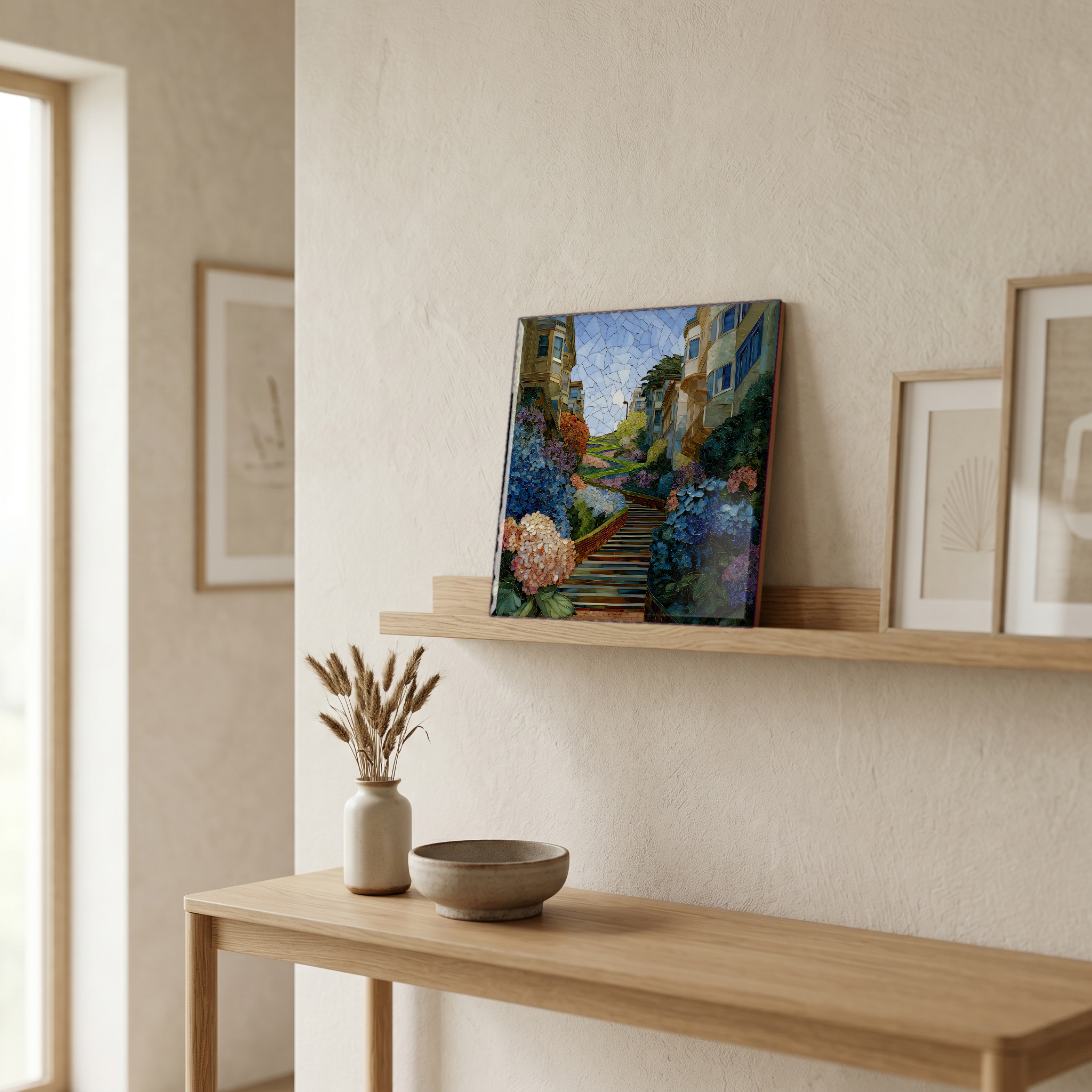
“One block in San Francisco that gave up going straight. Eight switchbacks down Russian Hill, planted with hydrangeas that bloom blue through summer. Rebuilt in 1922 because the natural grade, twenty-seven percent, was too steep for the cars of that decade. The flowers came later, and the line of headlights after dark, and the people who come from everywhere to stand at the top of Hyde Street and watch traffic descend at five miles an hour. The Bay sits flat at the bottom of the view. Coit Tower stands across the rooftops. Most photographs are taken from the foot of the block, looking up.
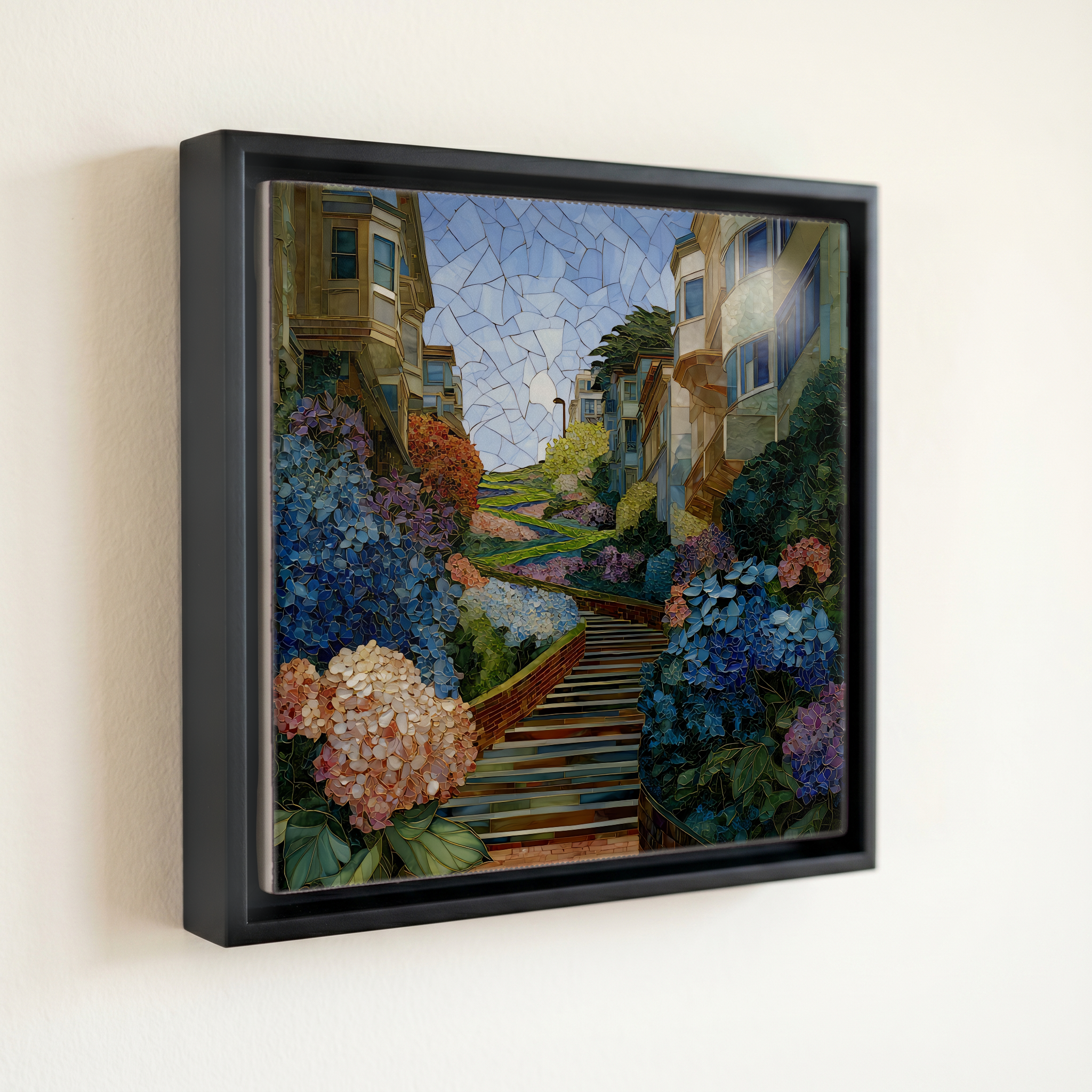
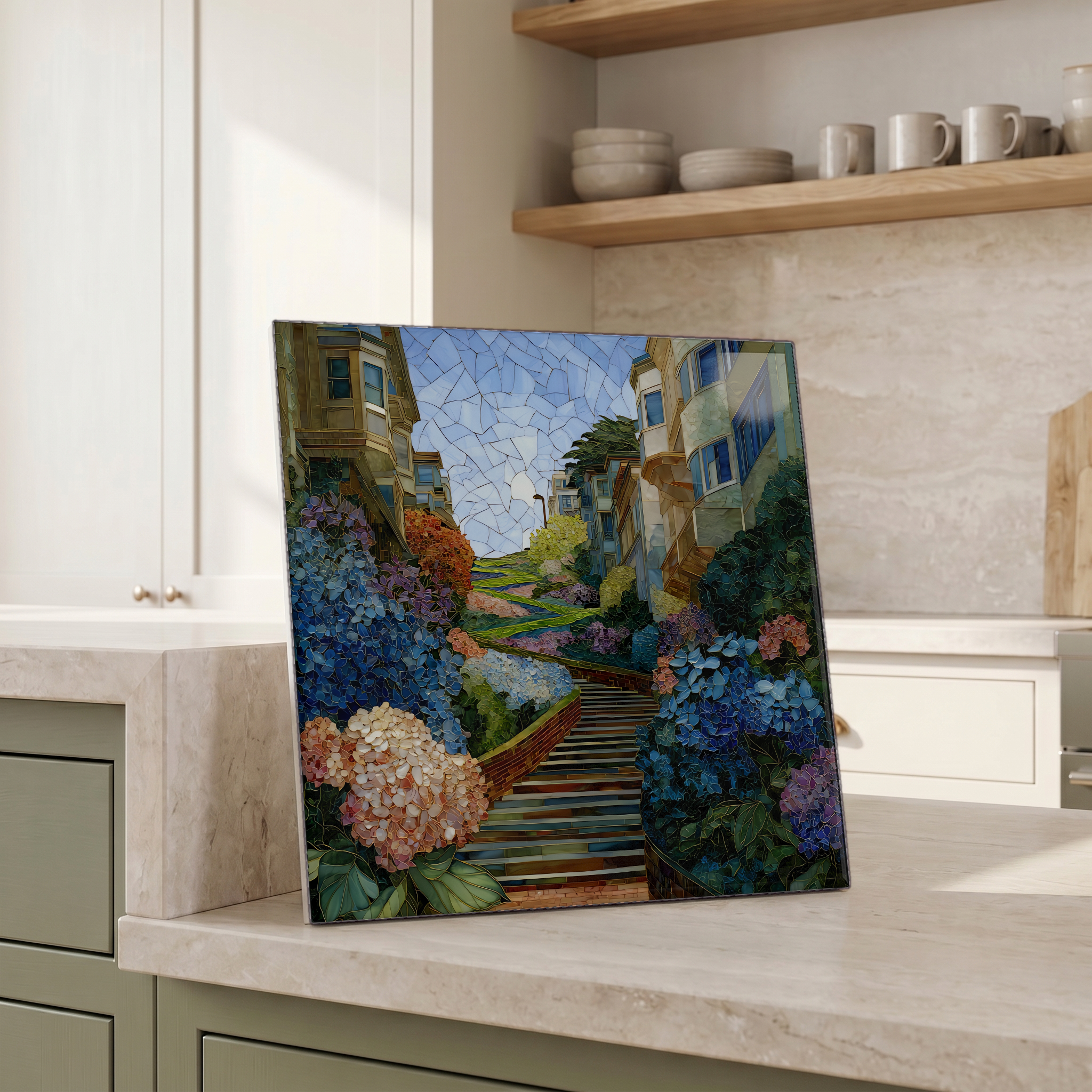
Lombard Street, on ceramic.
Each tile is finished by hand in our Knoxville studio. Artwork is slowly infused into the ceramic surface under high heat and pressure, and rests beneath a thin glossy finish. The colour lives in the surface, not on top of it.
Pick any four 4-inch tiles — National Parks you've been to, a Smokies set, the four seasons of one place. $ for a set of , cork-backed, ready to live on the table.
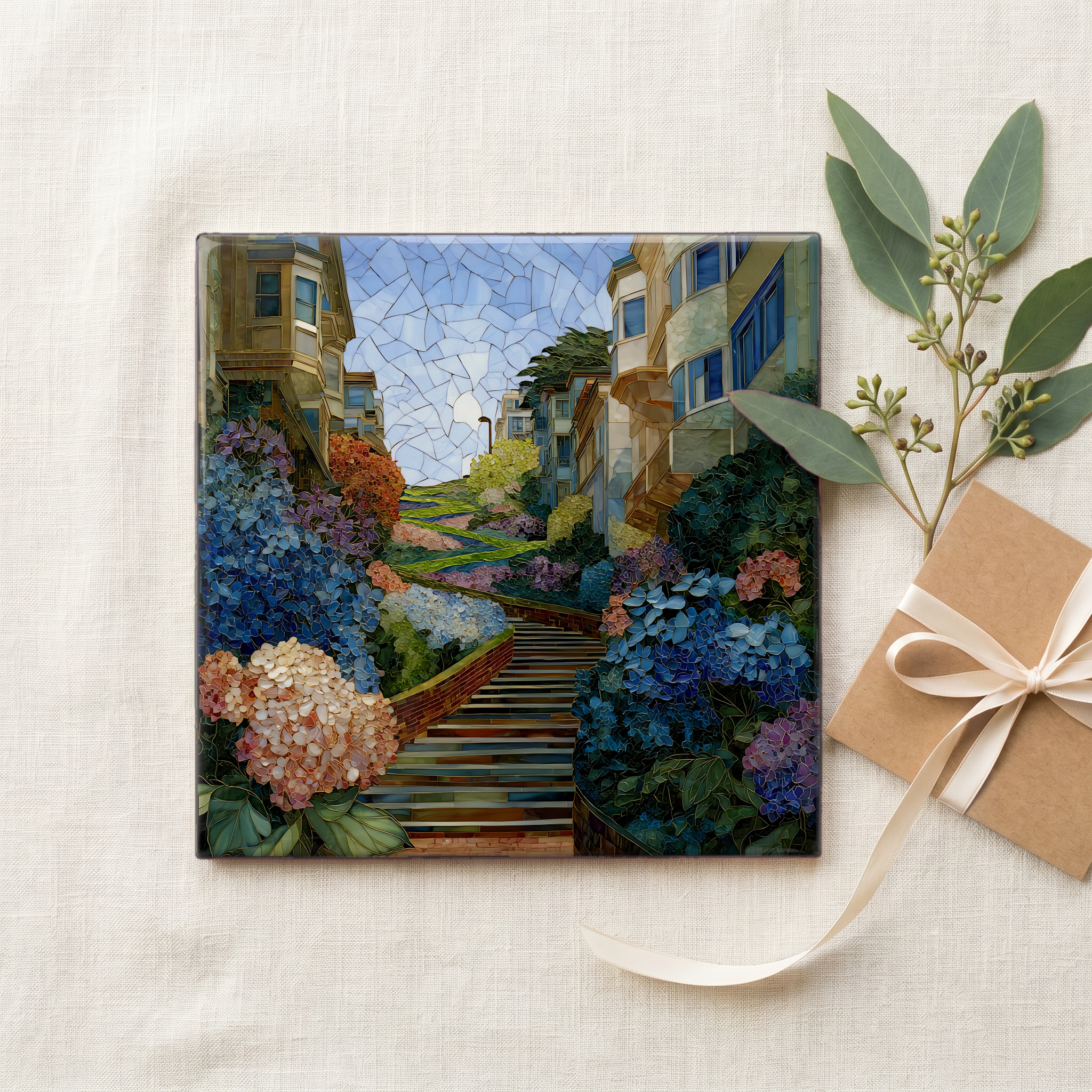
Each tile ships in a kraft box, tied with cream ribbon, with a handwritten note from the studio if you'd like to add one.
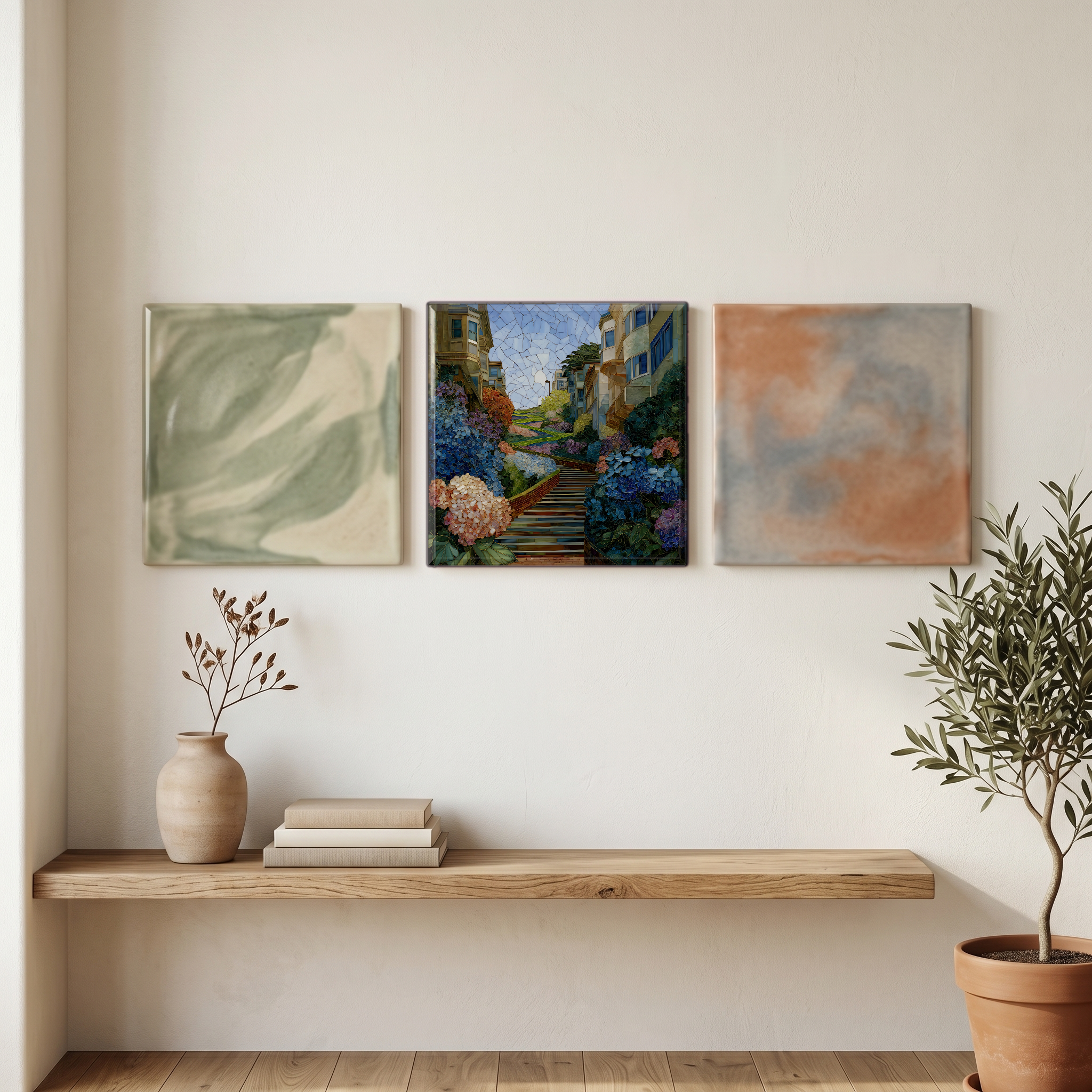
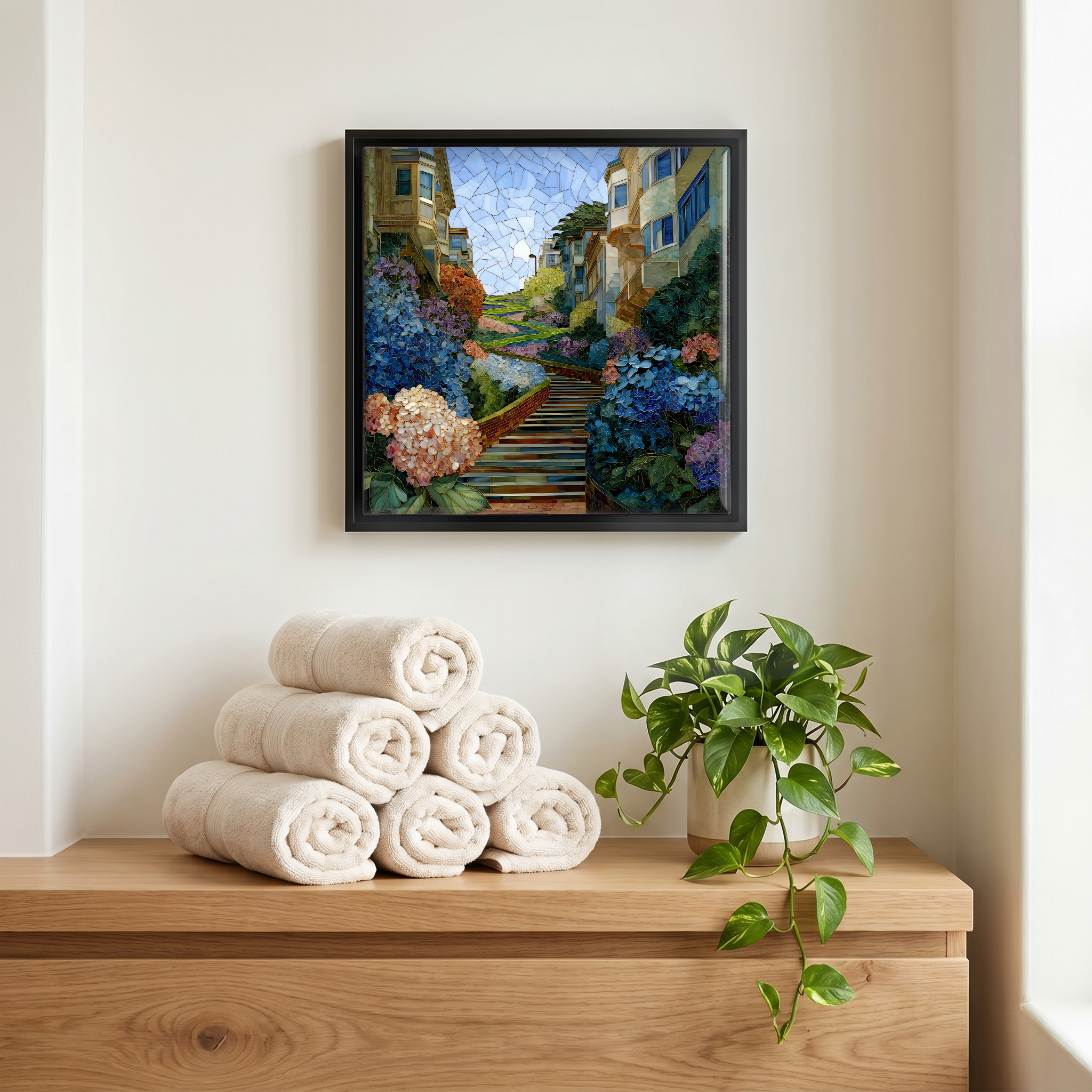
Three or five different vistas, hung together — a chapter of places you've been, or want to go.
The place, in three passes.
Lombard Street runs more than two miles across San Francisco, from the Presidio in the west to the waterfront at the Embarcadero. The block that draws the crowds is a single 600-foot descent on the eastern slope of Russian Hill, between Hyde and Leavenworth Streets, rebuilt in 1922 with eight tight hairpins set into red brick. The switchbacks were the engineering answer to a natural grade of 27 percent, too steep for the Model T's of the day. Russian Hill is one of San Francisco's named hills; the cable car on the Powell-Hyde line stops at the crest. From the top the view drops across North Beach to Coit Tower and the Bay.
The crooked block draws an estimated two million visitors a year, most of whom approach on foot from Hyde Street at the top of the hill. Driving down is free and one-way, east to west, with a posted limit of five miles per hour; the city has considered a paid reservation system on summer weekends but has not adopted one. Pedestrians use the brick stairways along either side rather than the lane itself, which is residential and lined with private homes. The Powell-Hyde cable car climbs to within half a block of the crest. The downhill view sits open across Telegraph Hill to Coit Tower.
The switchbacks are planted with bigleaf hydrangeas whose mophead blooms run pink, blue, and lavender from late June through August. Acidic soil turns the flowers blue; the brick borders along the block show a mix of soil chemistries and a mix of colours. San Francisco's marine climate keeps the planting beds cooler than most of California and extends the bloom. The fog drifts in off the Bay most summer mornings and burns off by midday. Outside of summer the foliage stays green and the architecture of the curves carries the view. The Powell-Hyde cable car runs every day of the year. Photographers who want both flowers and clear light tend to come in the first half of July.