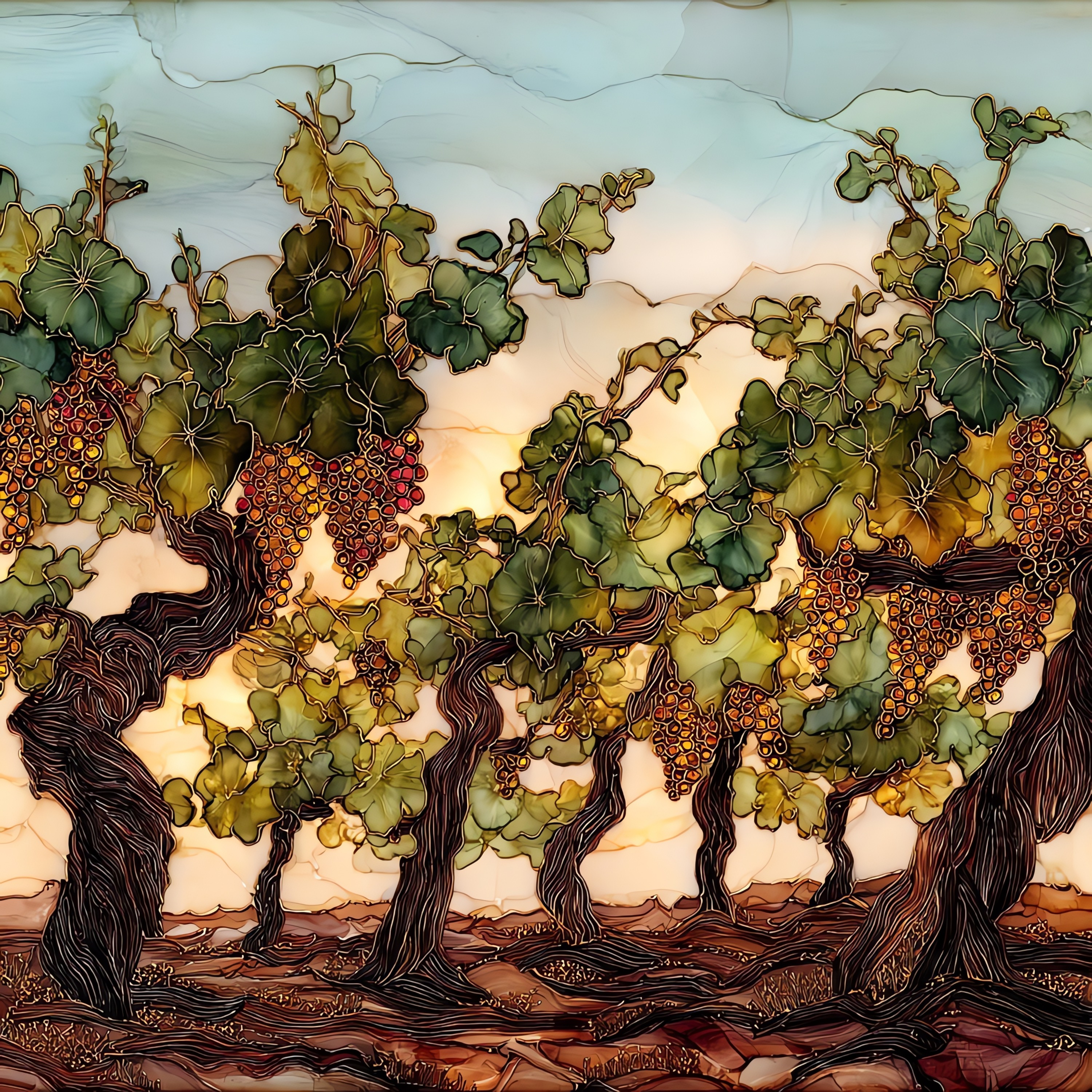
Lodi Old Vine Zinfandel
— a vine that has earned its century.
Not only on a wall.
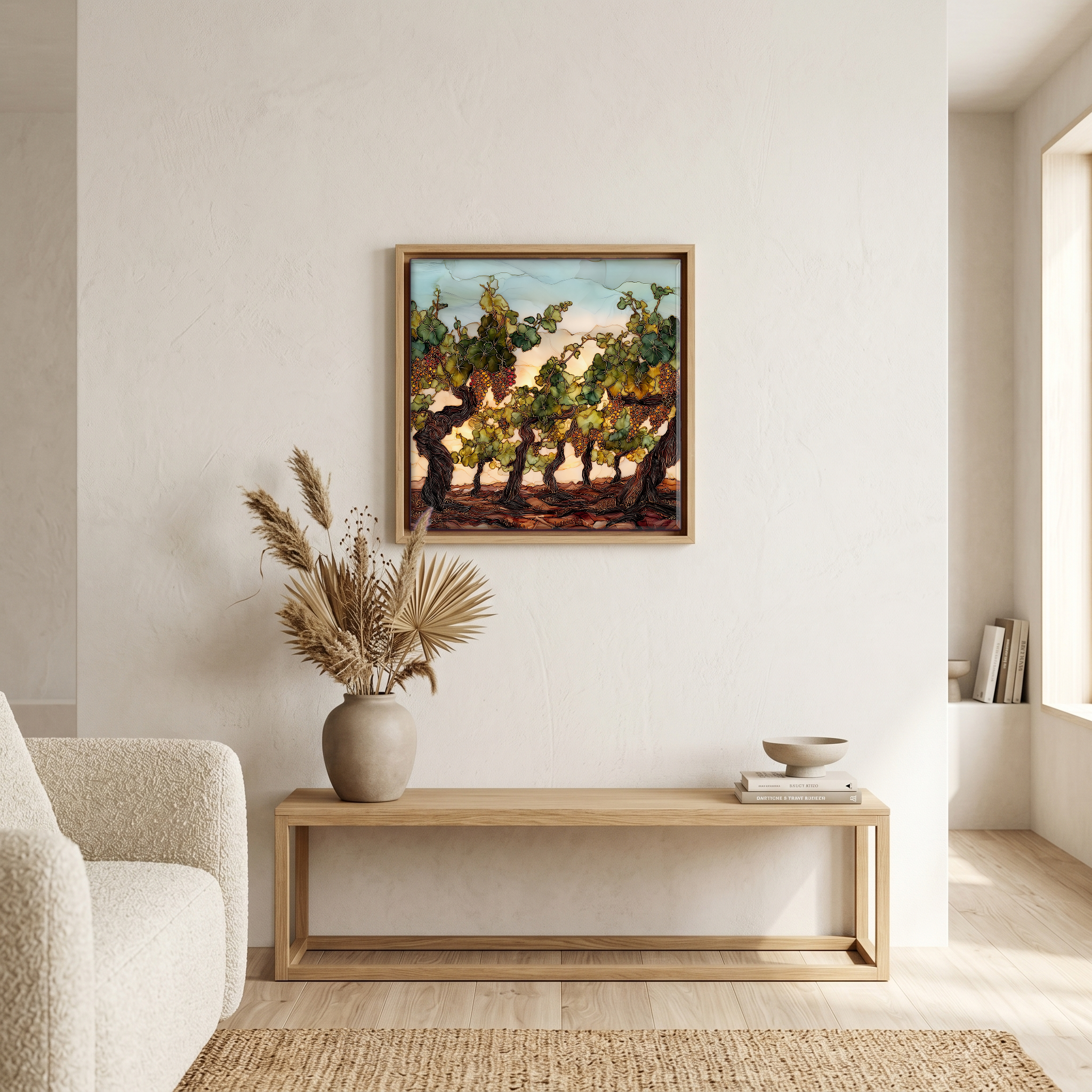

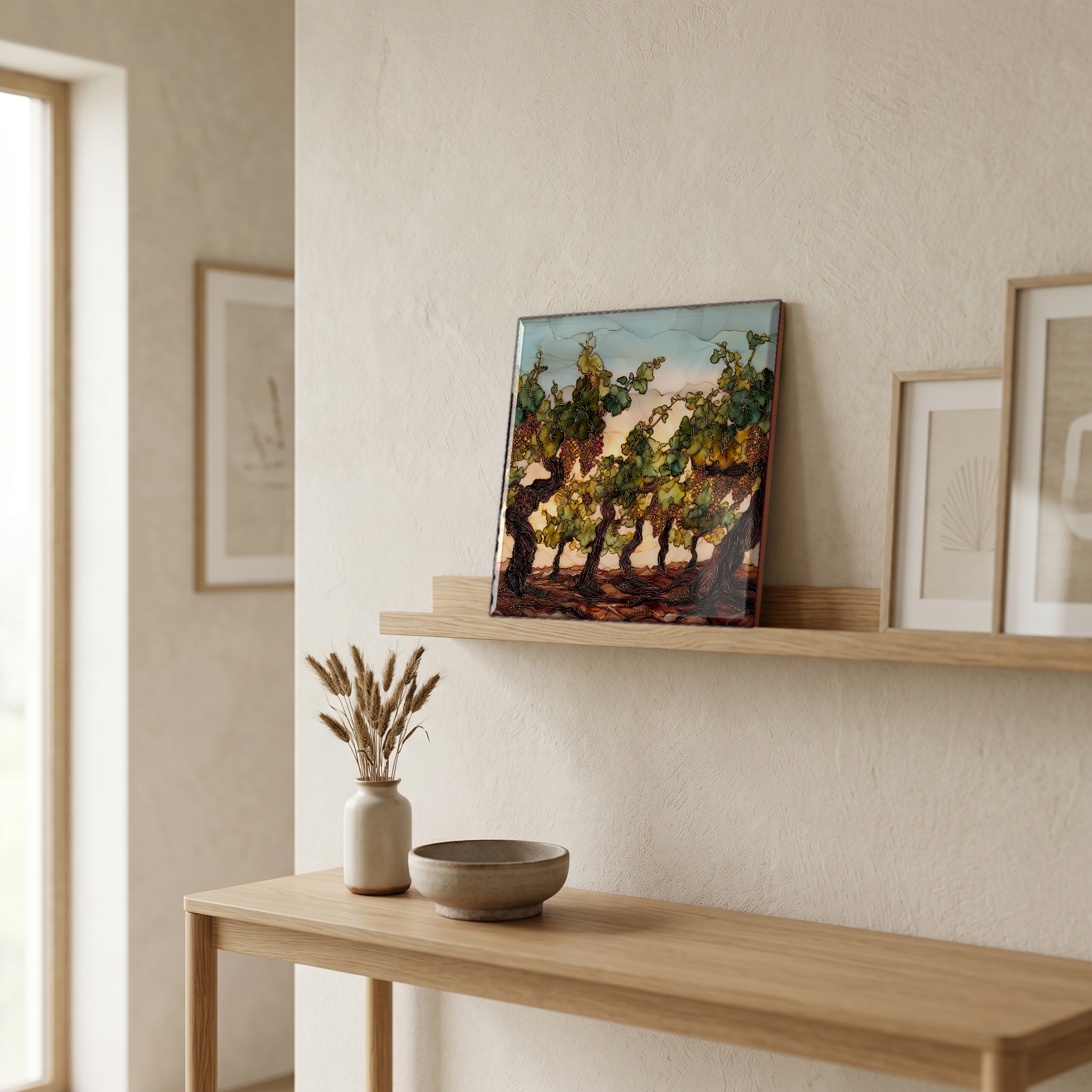
“The oldest vines in California sit in sandy loam outside the town of Lodi, between Sacramento and the Delta. Some were planted before electricity reached the Central Valley. Head-trained, dry-farmed, twisted by a hundred summers of west wind off the Bay. Marian's Vineyard, planted in 1901, still bears fruit. The growers are mostly fifth-generation farming families who measure a vintage in decades, not seasons. You can drive the back roads in late August and see the leaves just starting to colour.
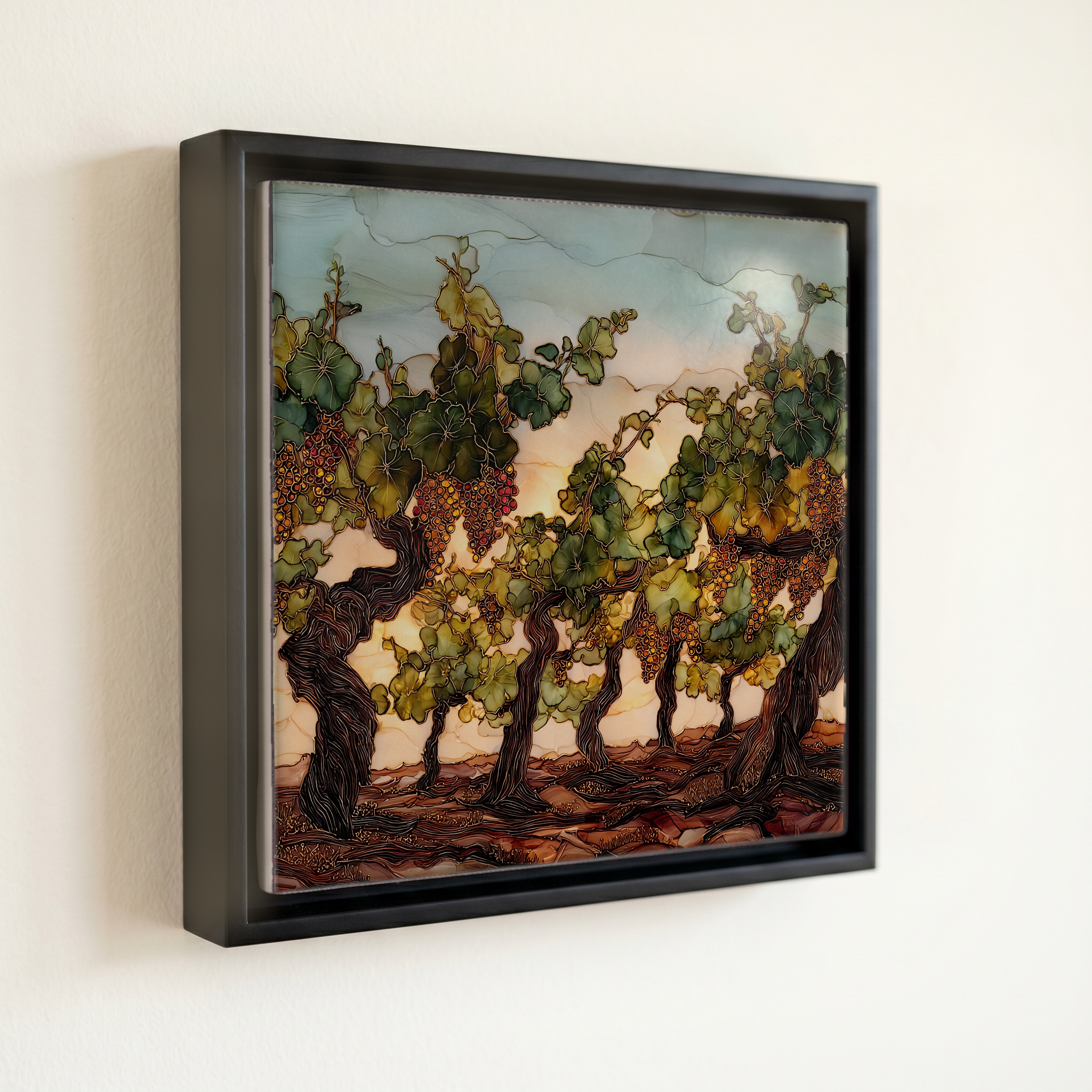
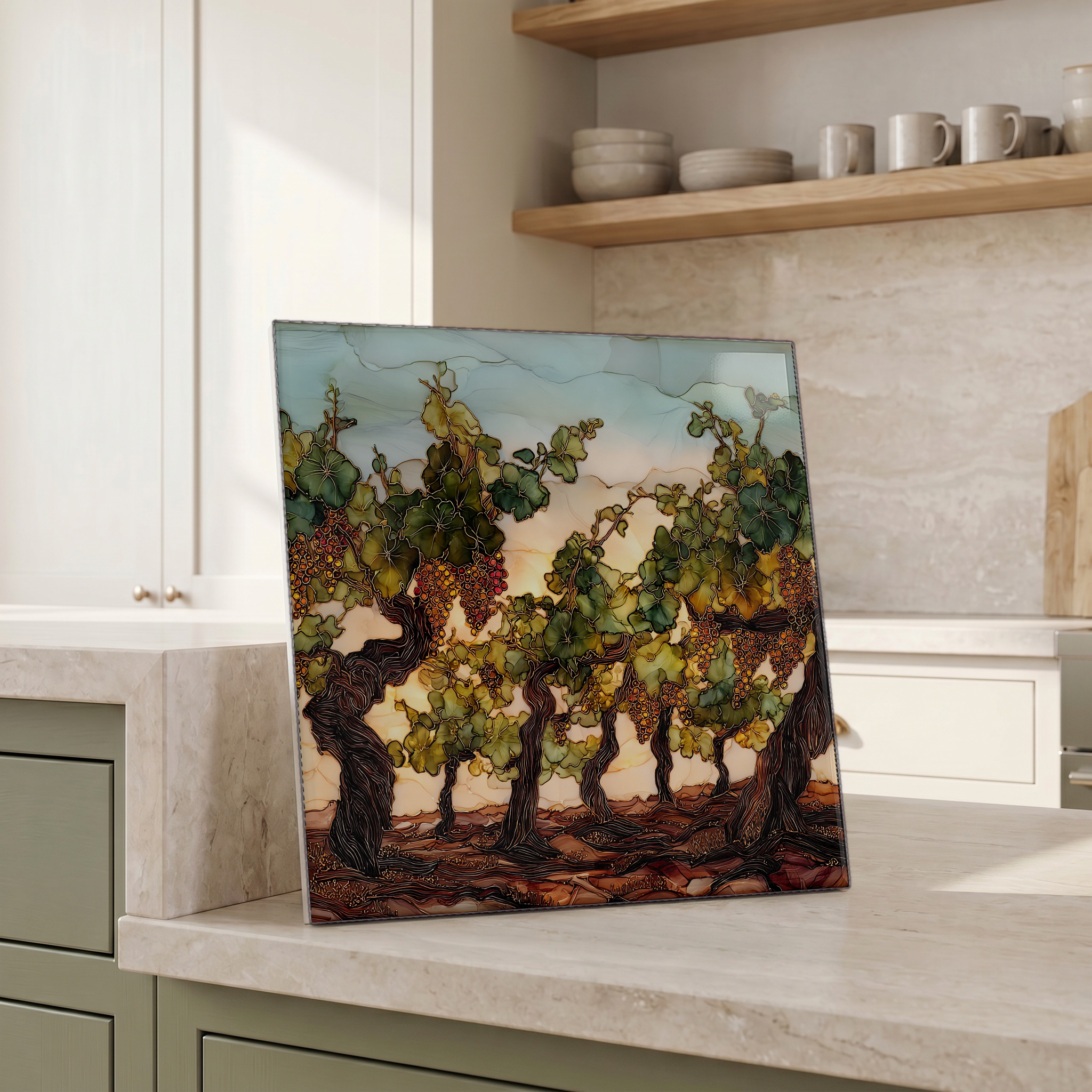
Lodi Old Vine Zinfandel, on ceramic.
Each tile is finished by hand in our Knoxville studio. Artwork is slowly infused into the ceramic surface under high heat and pressure, and rests beneath a thin glossy finish. The colour lives in the surface, not on top of it.
Pick any four 4-inch tiles — National Parks you've been to, a Smokies set, the four seasons of one place. $ for a set of , cork-backed, ready to live on the table.
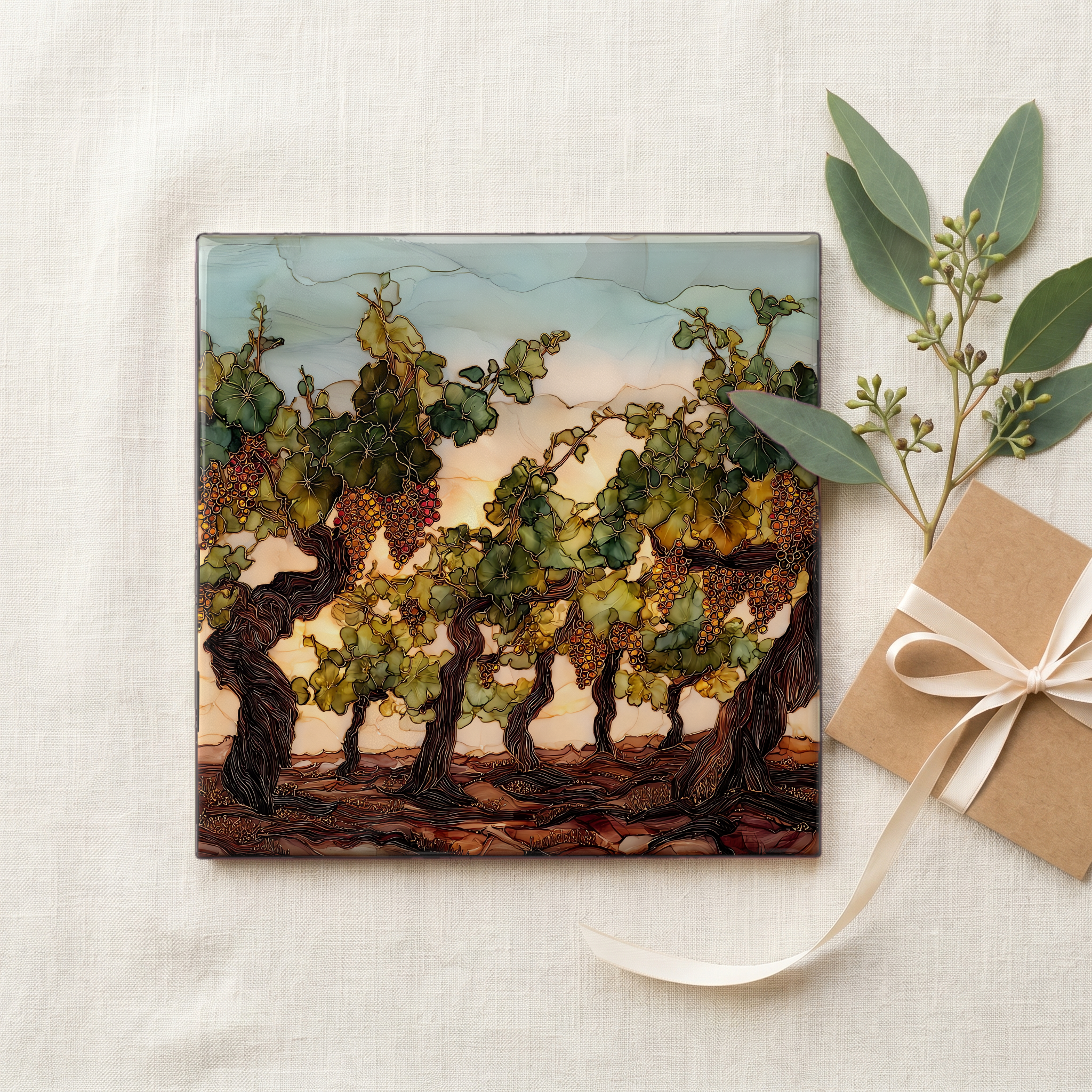
Each tile ships in a kraft box, tied with cream ribbon, with a handwritten note from the studio if you'd like to add one.
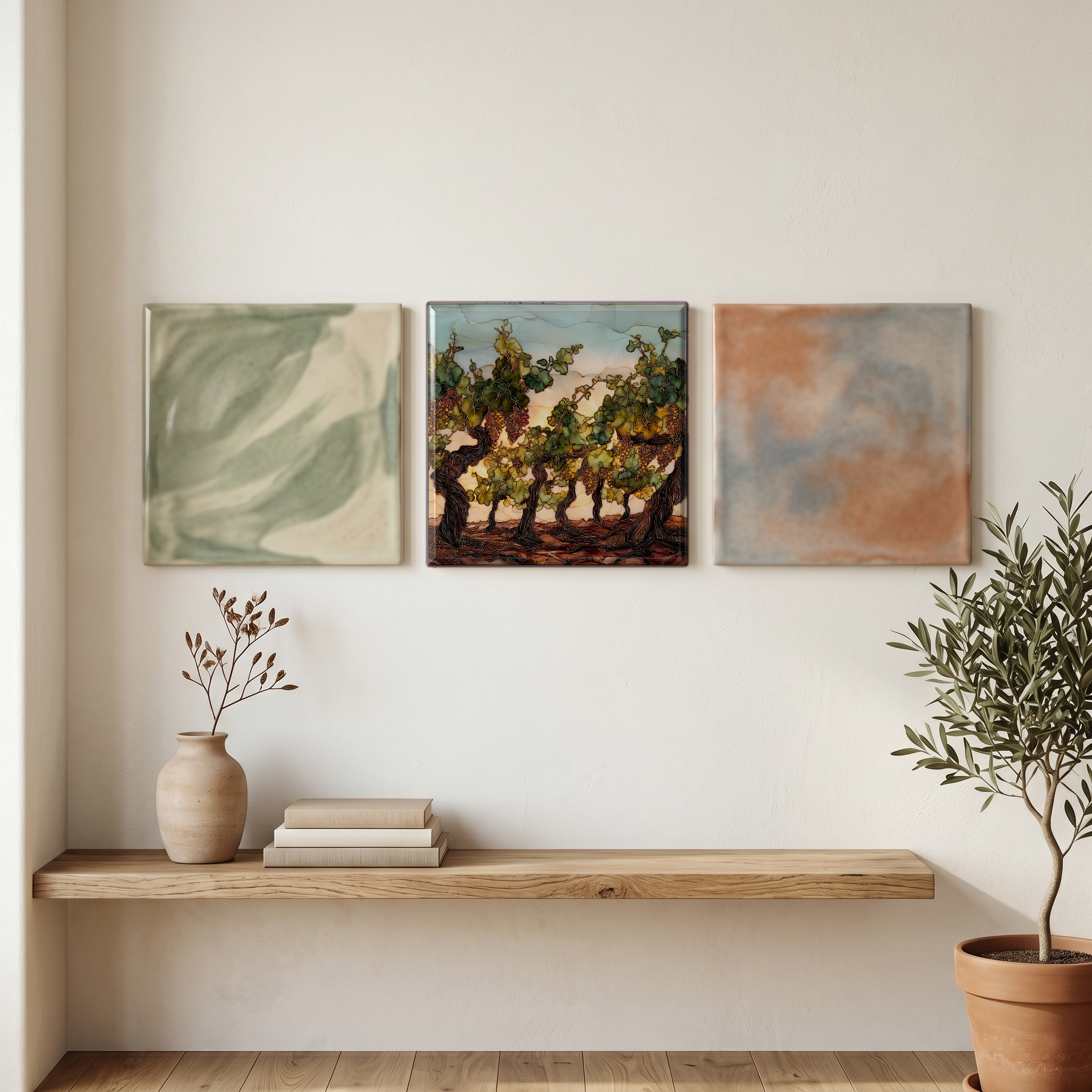
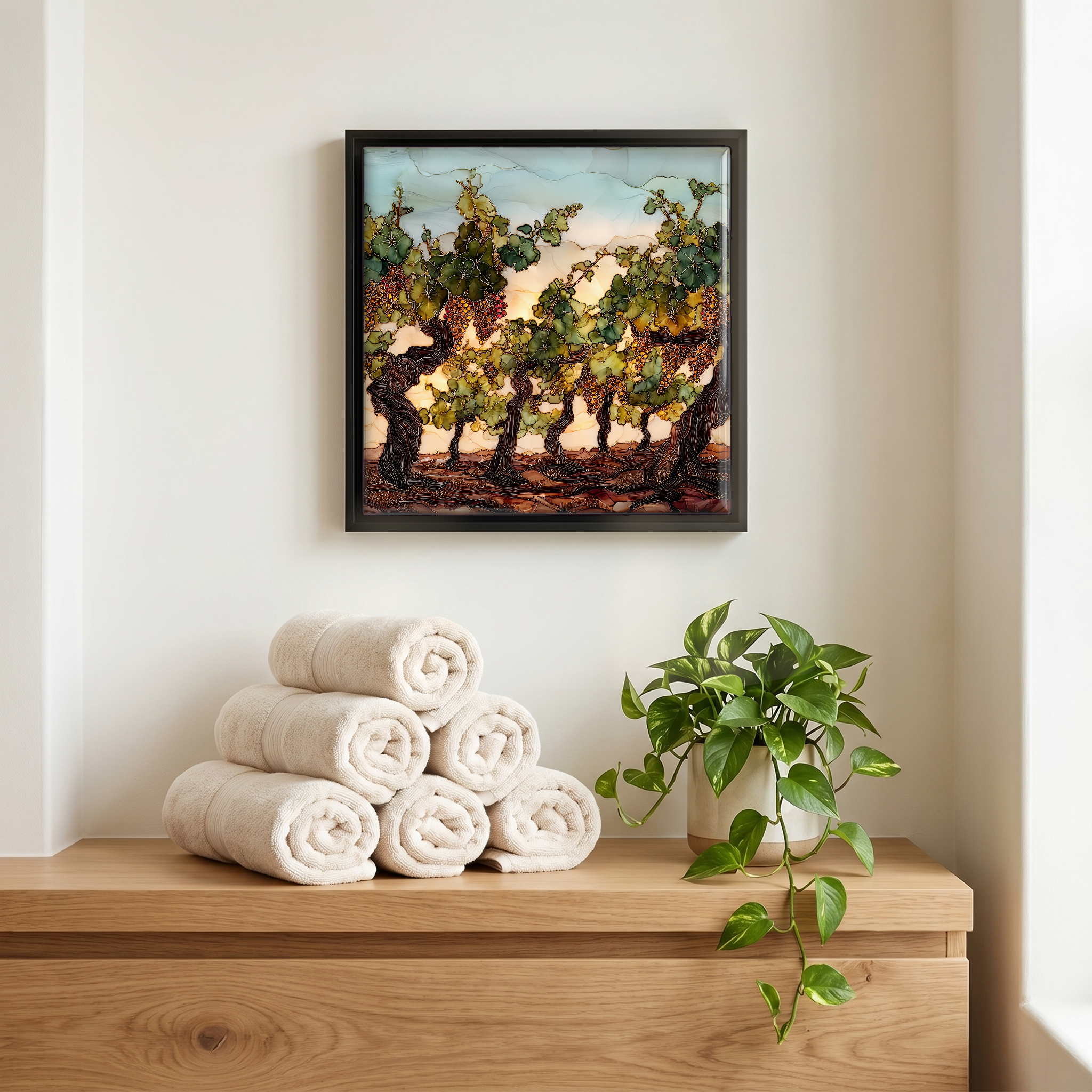
Three or five different vistas, hung together — a chapter of places you've been, or want to go.
The place, in three passes.
Lodi sits in the northern Central Valley of California, about 35 miles south of Sacramento and 90 miles east of San Francisco Bay. The Lodi American Viticultural Area was established in 1986 and covers roughly 458,000 acres across seven sub-appellations in San Joaquin and Sacramento counties; the densest concentration of century-old Zinfandel grows in the Mokelumne River sub-AVA on sandy loam soils washed down from the Sierra Nevada. Afternoon wind off the Sacramento-San Joaquin Delta drops daytime temperatures 30 to 40 degrees by evening, which is why dry-farmed vines survive the valley summer. The town of Lodi was founded in 1869 along the Central Pacific Railroad and remains the commercial centre of the appellation.
The oldest commercial wine grape vines in California grow in Lodi. Bechthold Vineyard, planted in 1886, is 140 years old and still bears Cinsault fruit. The oldest continuously farmed Zinfandel block, Marian's Vineyard, was planted in 1901 in the Mokelumne River sub-AVA and is still worked by Mohr-Fry Ranches at 125 years old. Both survived Prohibition, when most California vineyards were pulled out or grafted to table grapes, because Lodi growers shipped fresh fruit east on the Southern Pacific Railroad to home winemakers exercising the 200-gallons-per-household exemption. Lodi today holds about 100,000 acres of winegrapes and supplies roughly 40 percent of California's premium Zinfandel.
The Zinfandel harvest in Lodi runs from late August into early October, depending on the block and the year. Old vines ripen unevenly and slowly; the gnarled, head-trained trunks shade their own fruit and cluster set is naturally low, which is why a century-old vine yields perhaps two tons per acre against ten or more from a young trellised block. The LODI RULES certification, launched in 2005 by the Lodi Winegrape Commission, was the first sustainable winegrowing program in California and now covers about 60,000 acres. The Lodi ZinFest, held each May at Lodi Lake Park, is the public-facing celebration of the vintage just past.