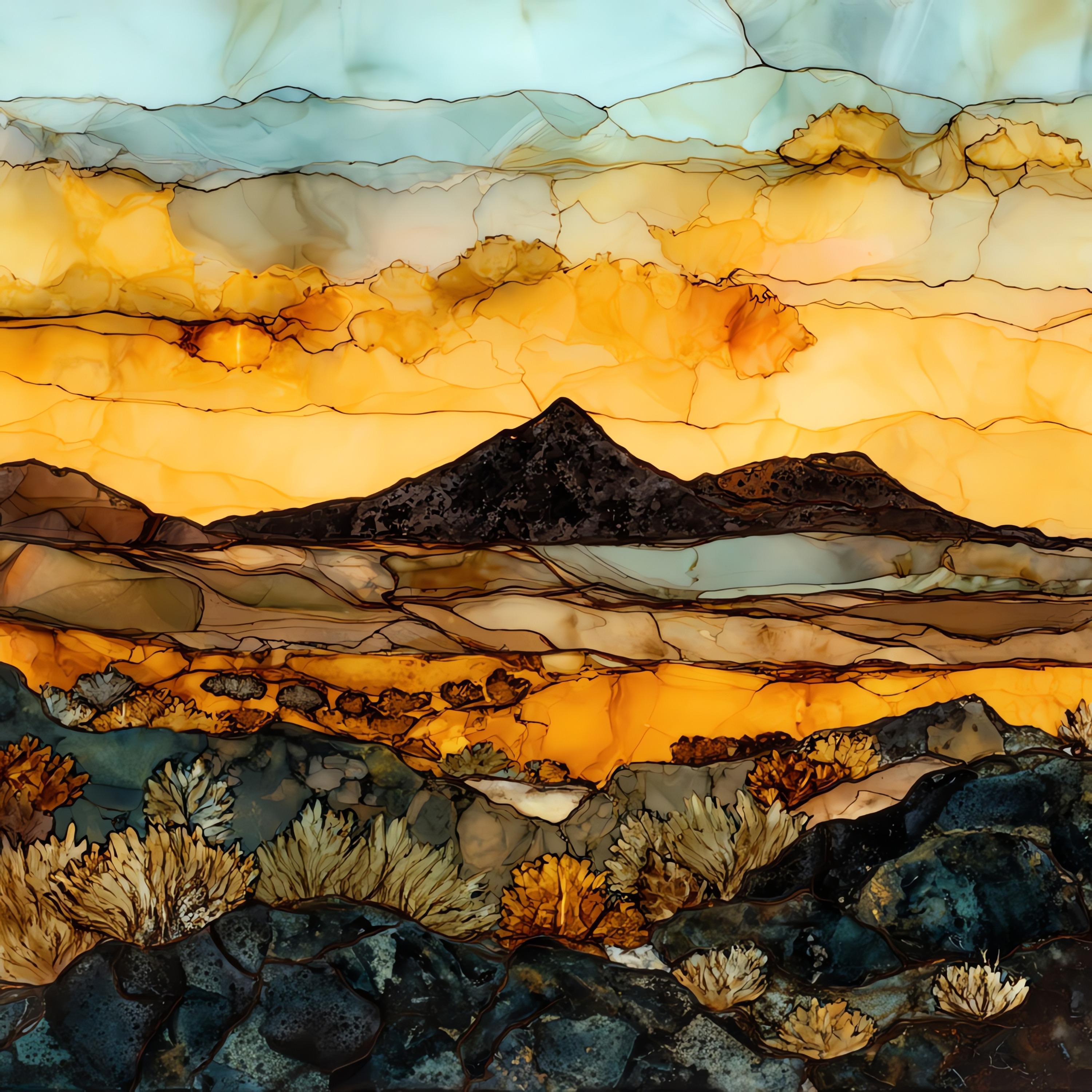
Lava Beds
— — the dark you can walk into.
Not only on a wall.
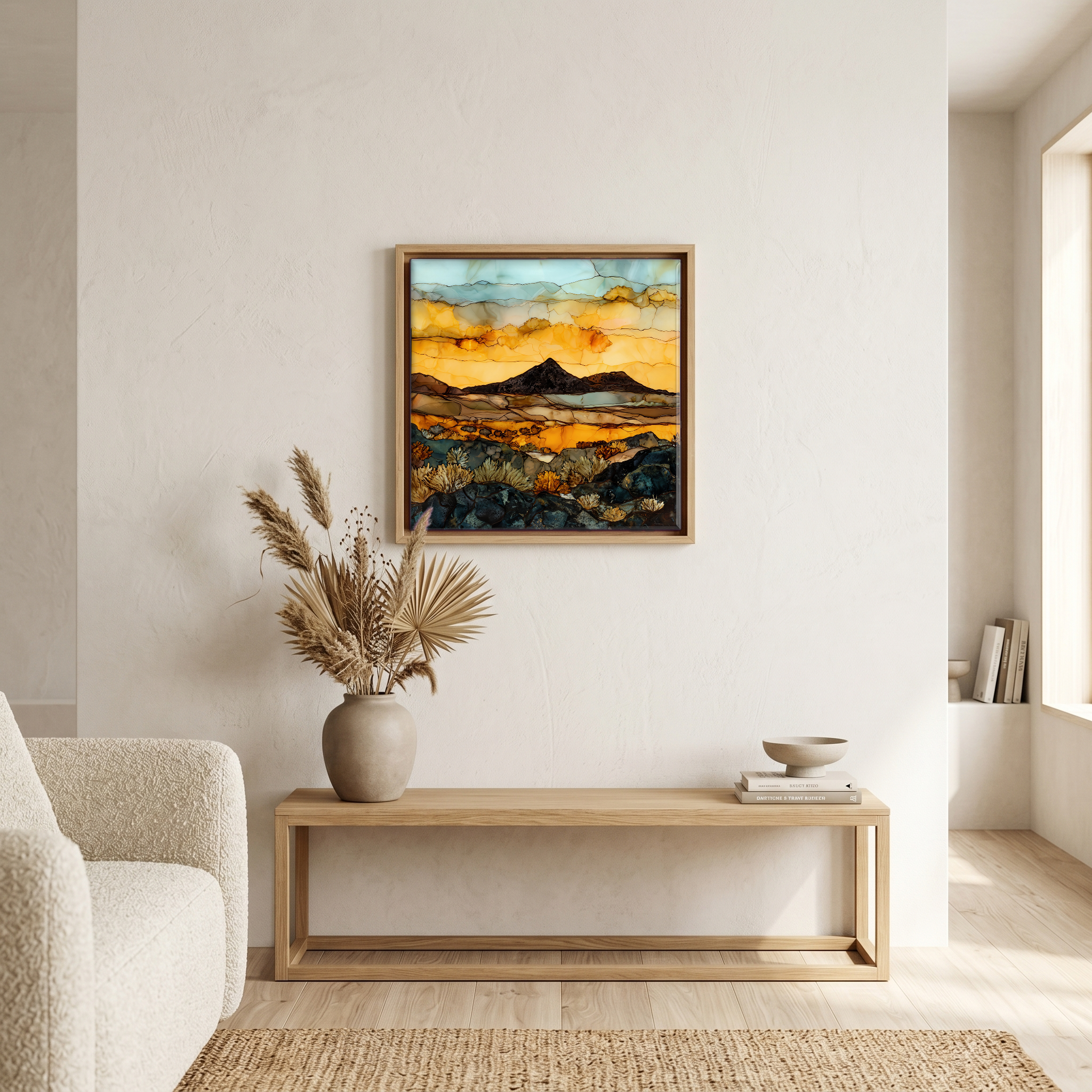
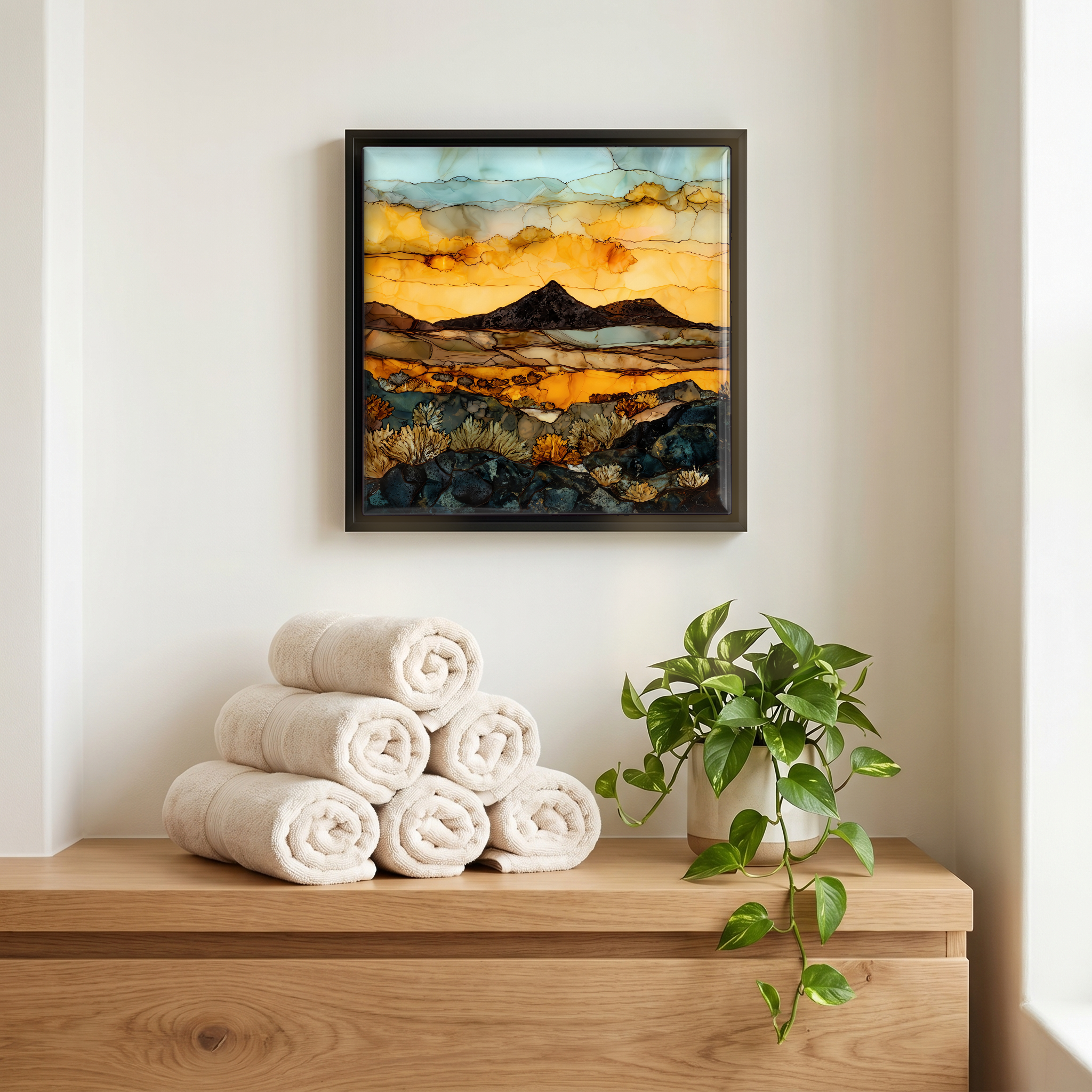

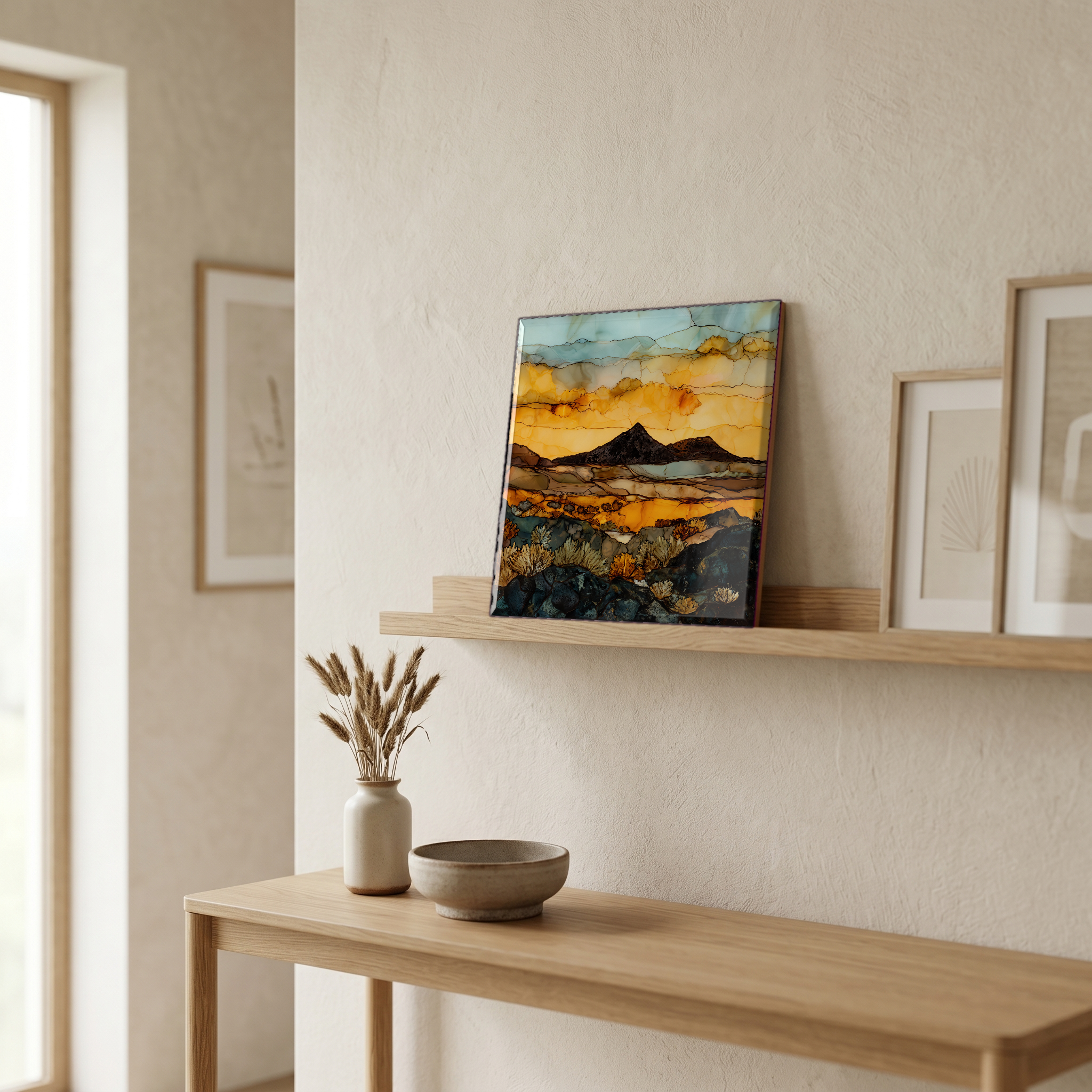
“The high desert plateau on the northern flank of Medicine Lake Volcano, where successive basalt flows laid the land down and then walked away. More than 700 lava tubes run beneath the surface. Corridors a person can walk into with a helmet and a flashlight. Above ground, juniper and sagebrush, ravens, and Captain Jack's Stronghold, where the Modoc held the high ground through the winter of 1872. The country here is the artifact. The cold stays in the rock most of the year.
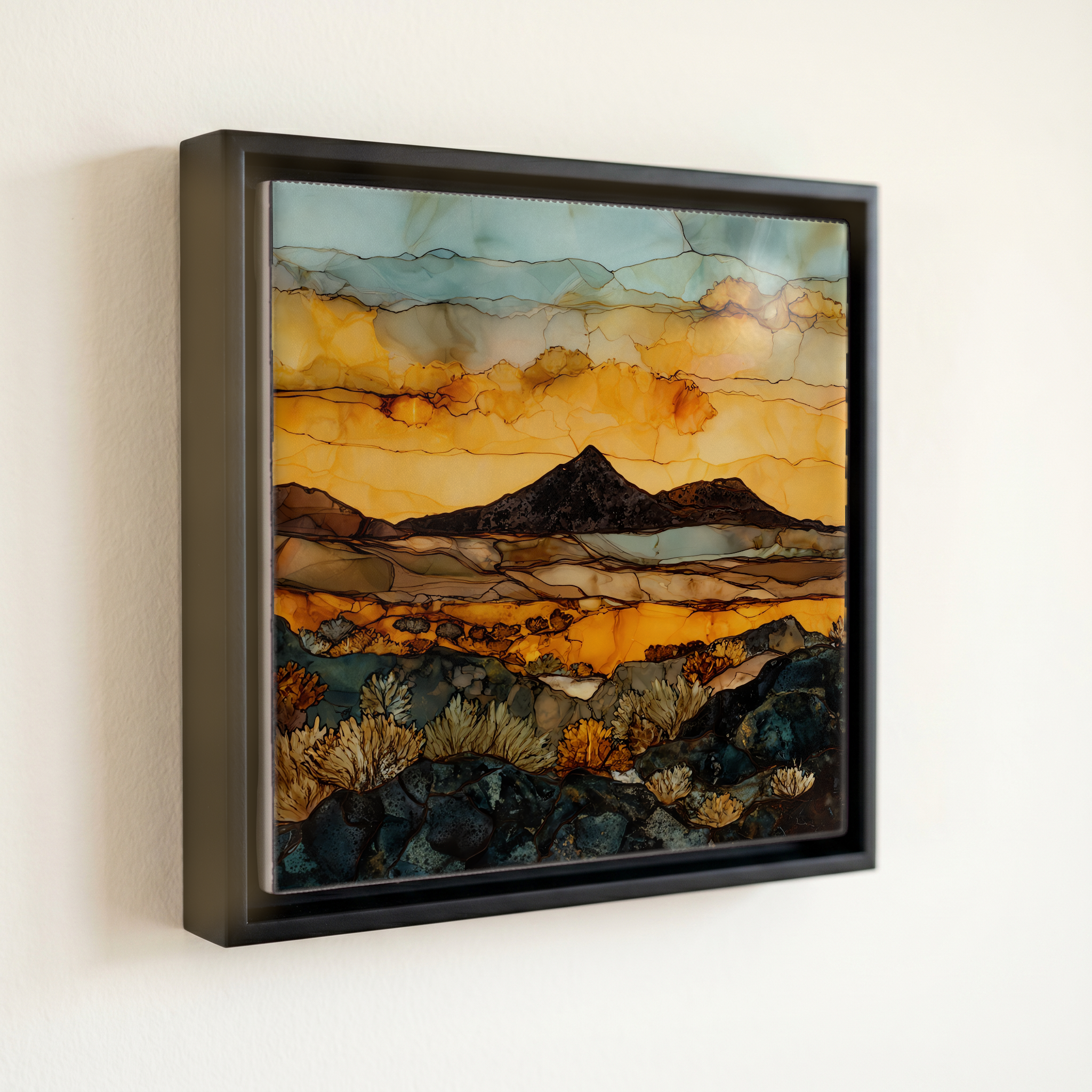
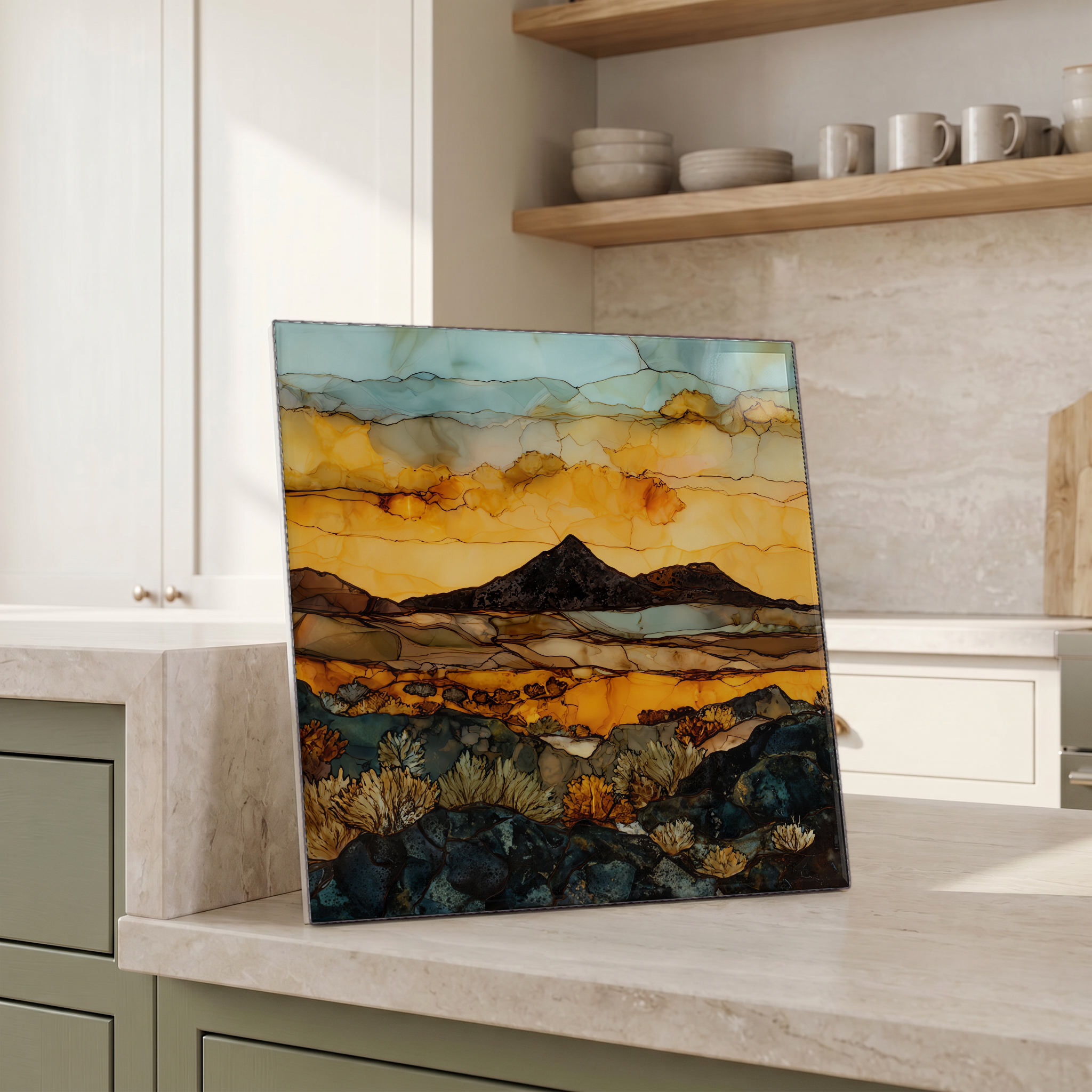
Lava Beds, on ceramic.
Each tile is finished by hand in our Knoxville studio. Artwork is slowly infused into the ceramic surface under high heat and pressure, and rests beneath a thin glossy finish. The colour lives in the surface, not on top of it.
Pick any four 4-inch tiles — National Parks you've been to, a Smokies set, the four seasons of one place. $ for a set of , cork-backed, ready to live on the table.
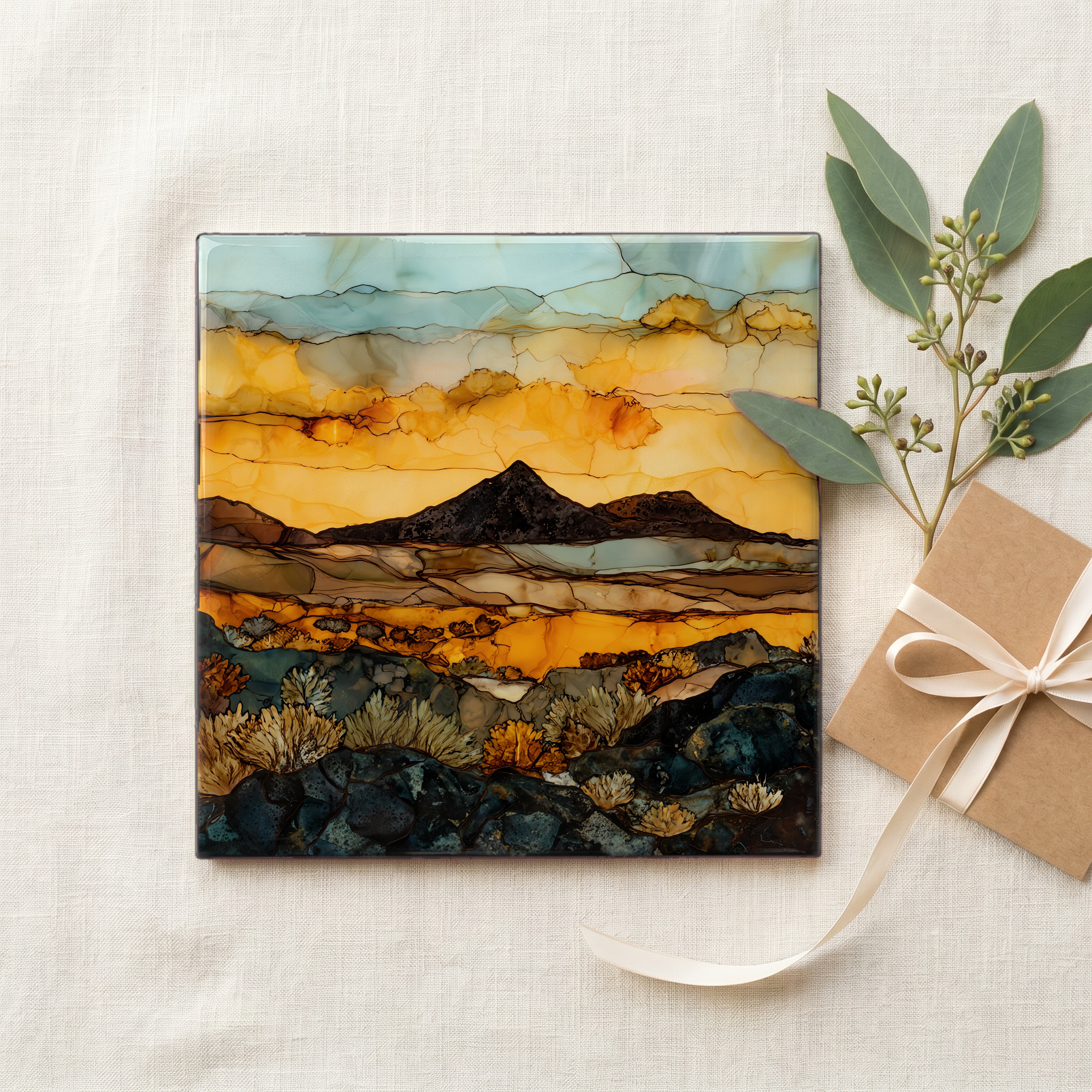
Each tile ships in a kraft box, tied with cream ribbon, with a handwritten note from the studio if you'd like to add one.
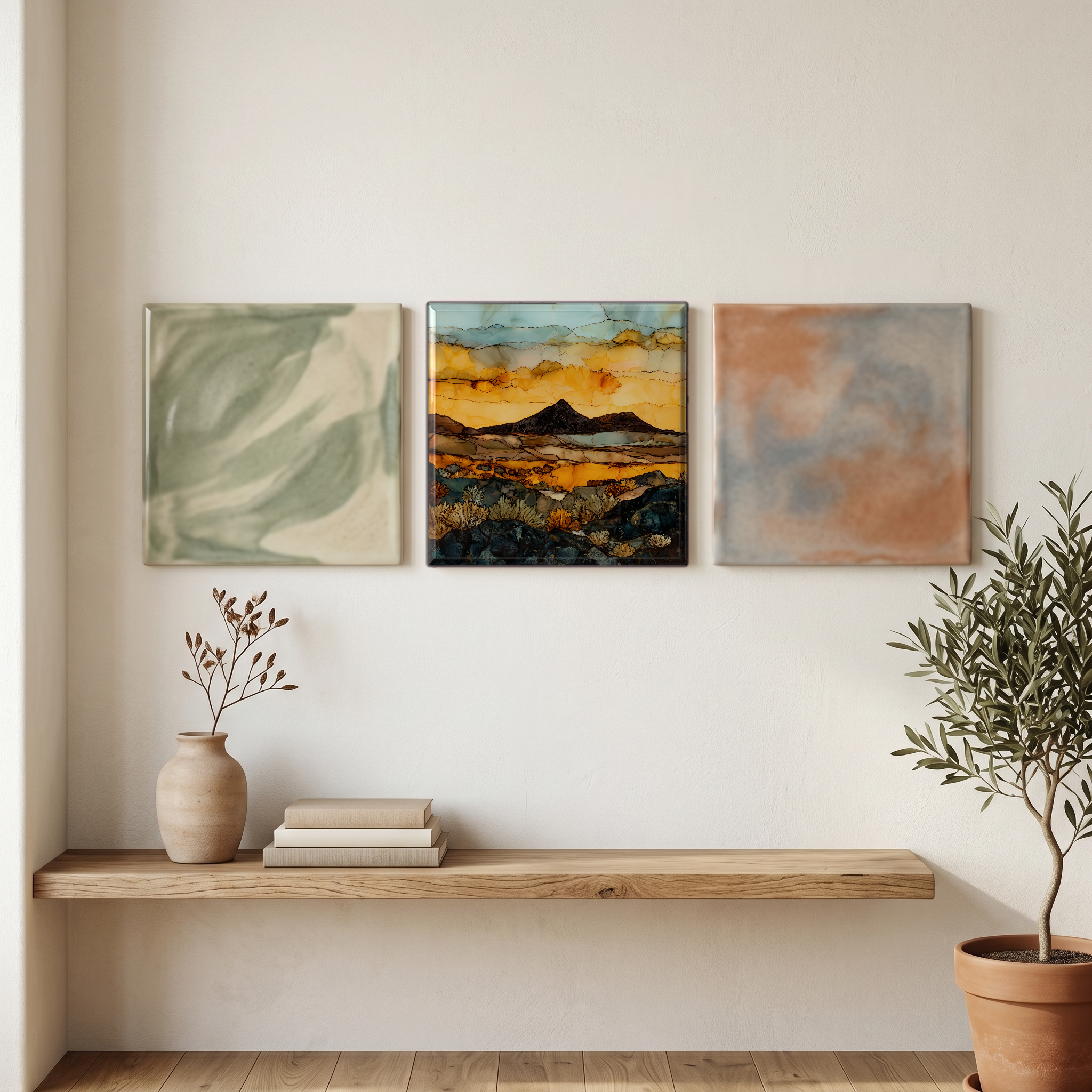
Three or five different vistas, hung together — a chapter of places you've been, or want to go.
The place, in three passes.
Lava Beds National Monument sits on the northern flank of the Medicine Lake Volcano, a shield volcano on the southern edge of the Cascade Range. The monument covers 46,692 acres in Siskiyou and Modoc Counties, in the far northeast corner of California, about 50 km south of the Oregon line and 80 km east of Mount Shasta. The land was set aside as a National Monument in 1925, partly for its lava-tube cave system and partly for the Modoc War battlefields preserved on its northern boundary. The visitor centre and most of the developed caves are reached by California State Route 139 from Tulelake.
The basalt that forms Lava Beds came up through fissures on the north flank of Medicine Lake Volcano. The Mammoth Crater eruption, dated to roughly 30,000 years before present, laid down most of the lava-tube network. More than 700 caves have been mapped beneath the surface. Long basalt corridors that formed when the hot core of a lava flow drained out from under its own cooled crust. Mushpot Cave near the visitor centre is the only one with electric lights. Skull Cave holds ice on its floor most of the year. Visitors entering any cave are screened first to protect hibernating bats from white-nose syndrome.
The monument is open every day of the year. The visitor centre on the southern boundary stocks loaner helmets and flashlights for cave exploration and runs a free bat-screening check on shoes, clothing, and gear before any cave entry. Standard cave permits are issued at the front desk; no reservation is required for the developed caves. Mushpot, Sentinel, Skull, Valentine, and the Catacombs are the routes most often walked. Summers run hot and dry on the surface and cool underground. Winter brings snow on the plateau and roads can close briefly after storms. The nearest town is Tulelake, about 32 km north on Route 139. The closest commercial airport is Klamath Falls, 100 km away.