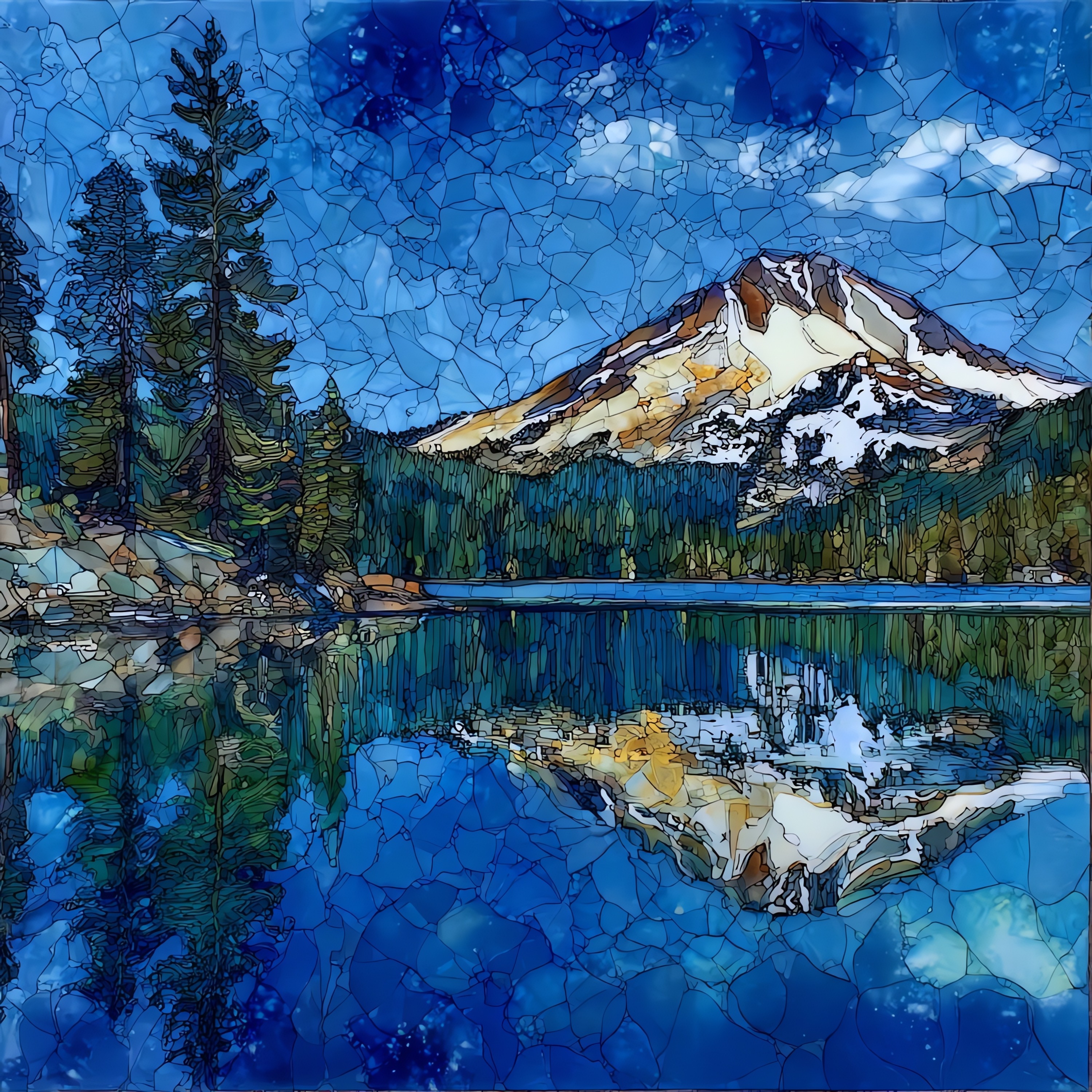
Lassen Peak
— a slow fire, sleeping under snow.
Not only on a wall.

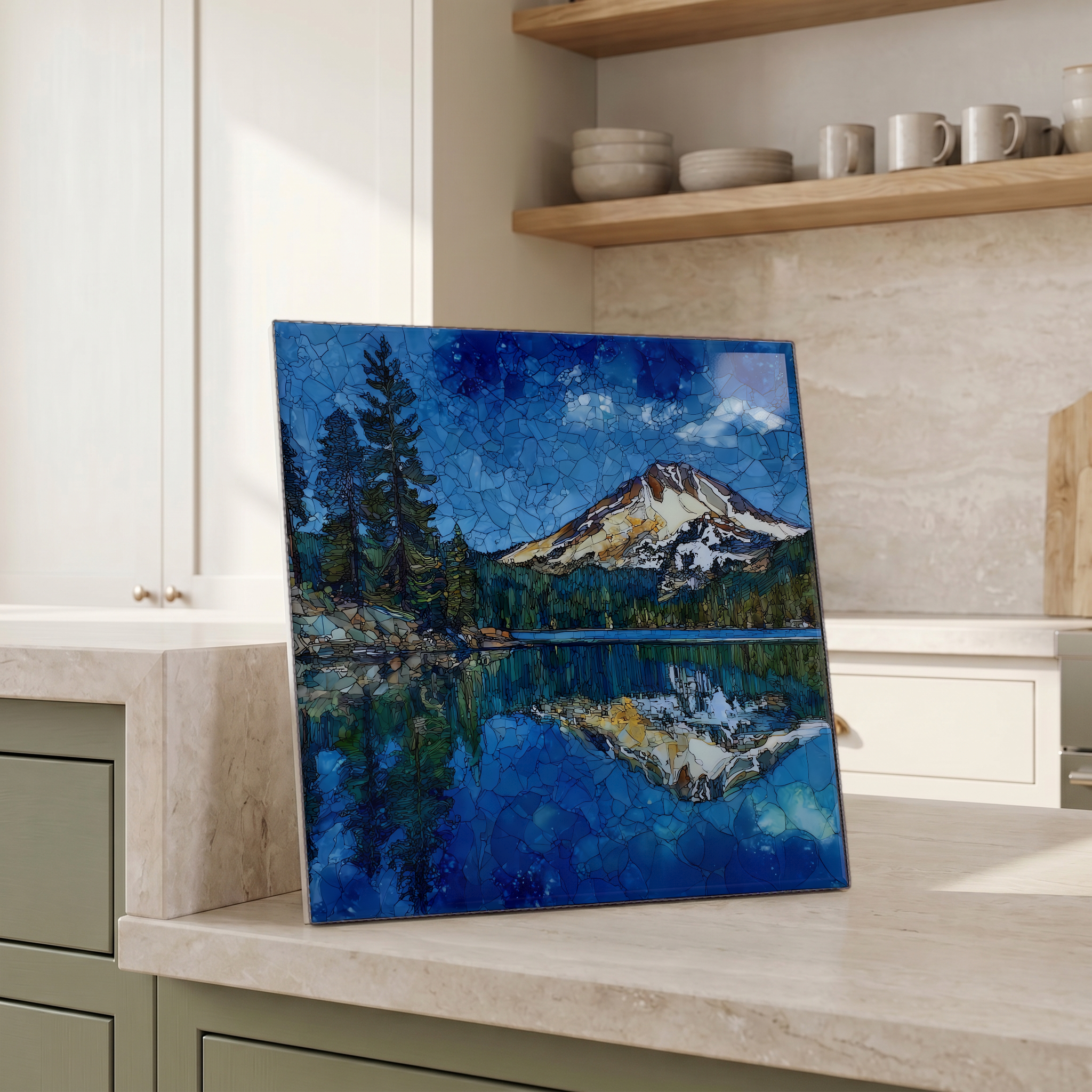


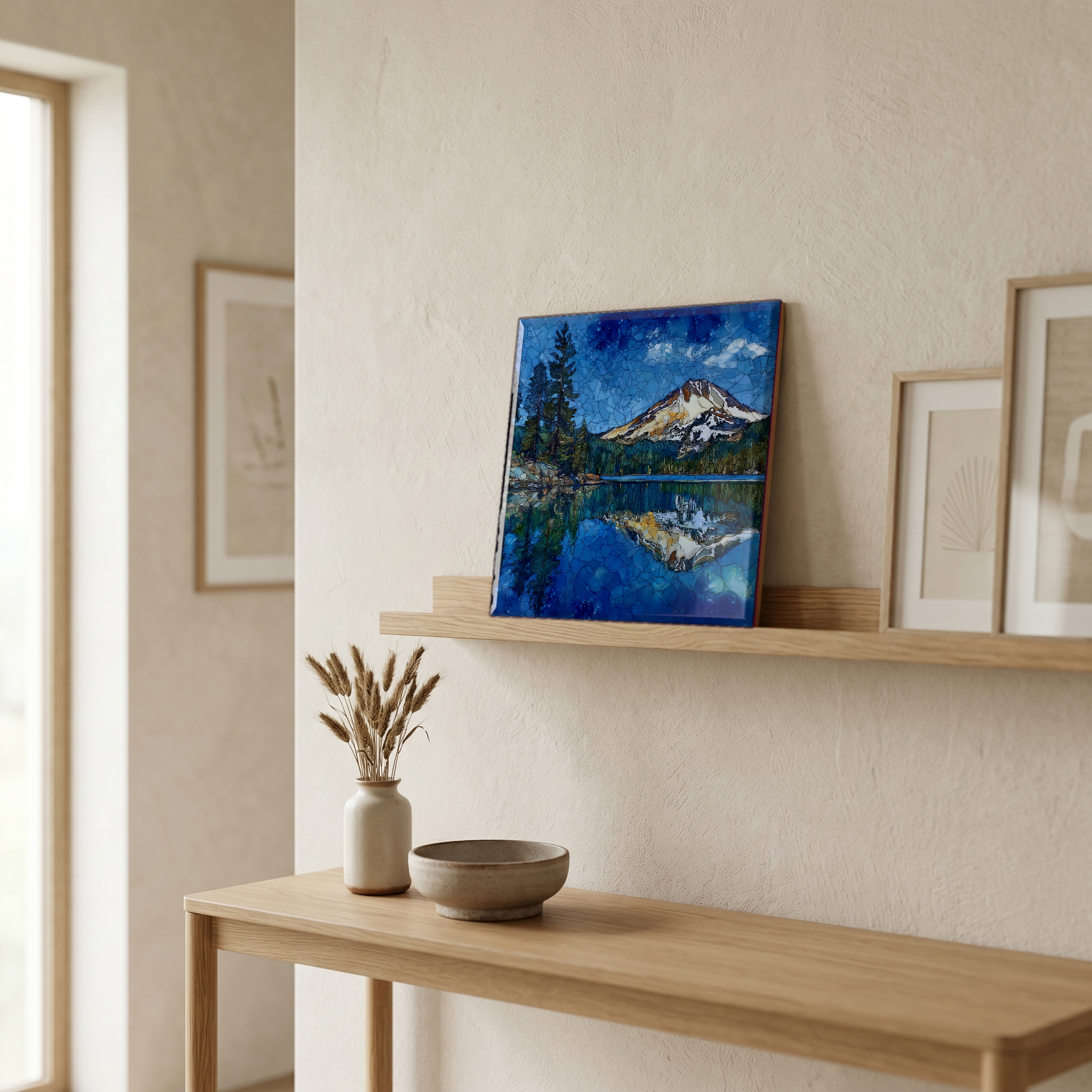
“The Cascade Range ends here, in northern California. A lava dome the size of a small mountain that erupted in 1915, and on a geological clock, is still cooling. Snow holds on the summit into August in most years. The summit trail climbs about two thousand feet through pumice and weathered rhyolite to the rim. Nearby, the basins at Bumpass Hell still steam. The peak shows itself best from Manzanita Lake to the northwest, where the water gives the whole mountain back.
Lassen Peak, on ceramic.
Each tile is finished by hand in our Knoxville studio. Artwork is slowly infused into the ceramic surface under high heat and pressure, and rests beneath a thin glossy finish. The colour lives in the surface, not on top of it.
Pick any four 4-inch tiles — National Parks you've been to, a Smokies set, the four seasons of one place. $ for a set of , cork-backed, ready to live on the table.

Each tile ships in a kraft box, tied with cream ribbon, with a handwritten note from the studio if you'd like to add one.

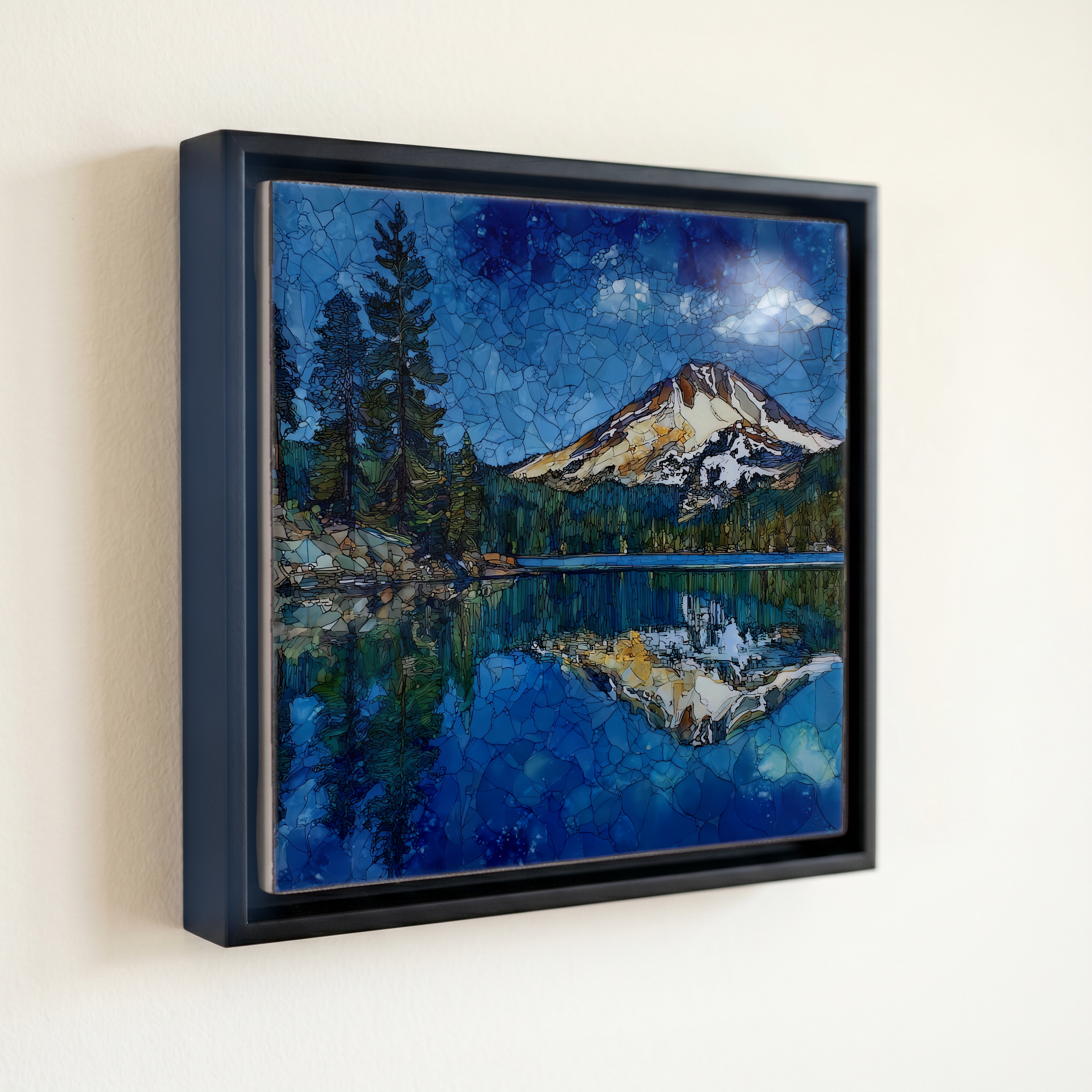
Three or five different vistas, hung together — a chapter of places you've been, or want to go.
The place, in three passes.
Lassen Peak sits in the far north of California, in Shasta County, as the southernmost stratovolcano of the Cascade Range. At 10,457 feet it is among the largest lava dome volcanoes on Earth. It is the centrepiece of Lassen Volcanic National Park, established in 1916 after the eruption series of 1914 to 1917. The peak rises above a mix of forested basins and pumice fields, with Lake Helen at its southern foot and Manzanita Lake to the northwest. The closest town is Mineral, about ten miles south on California State Route 36; Redding sits about an hour west. The park's main road traverses the western flank between the two lakes.
At 10,457 feet the summit pushes well above the tree line, into the thin clear air of the upper Cascades. Atmospheric drama is part of the peak's record: on May 22, 1915, the volcano sent a column of ash and steam more than 30,000 feet into the sky, with fine dust eventually reaching the Atlantic coast as a measurable fall. Lassen is one of only two volcanoes in the contiguous United States to have erupted in the twentieth century, the other being Mount St. Helens. Hydrothermal basins around its base, including Bumpass Hell, Sulphur Works, and Devil's Kitchen, still release sulphur into the air, evidence that the magma below has not yet cooled. The USGS classifies the Lassen Volcanic Center as a high-threat volcano under continuous monitoring.
The summit trail typically opens in July and closes by late October, when the first deep snow shuts the road. Most years see snow holding on the upper flanks well into July. The five-mile round trip from the trailhead at Lake Helen climbs about two thousand feet over loose pumice and weathered rhyolite. It is strenuous, but technical climbing skill is not required. Late summer is the most reliable window: the snow has retreated from most of the trail, the wildflowers in the lower meadows are at peak, and the air at altitude stays clear into October. The park's main road closes for winter from late autumn until snow clearance, usually June. The southwest entrance is the last stretch to clear.