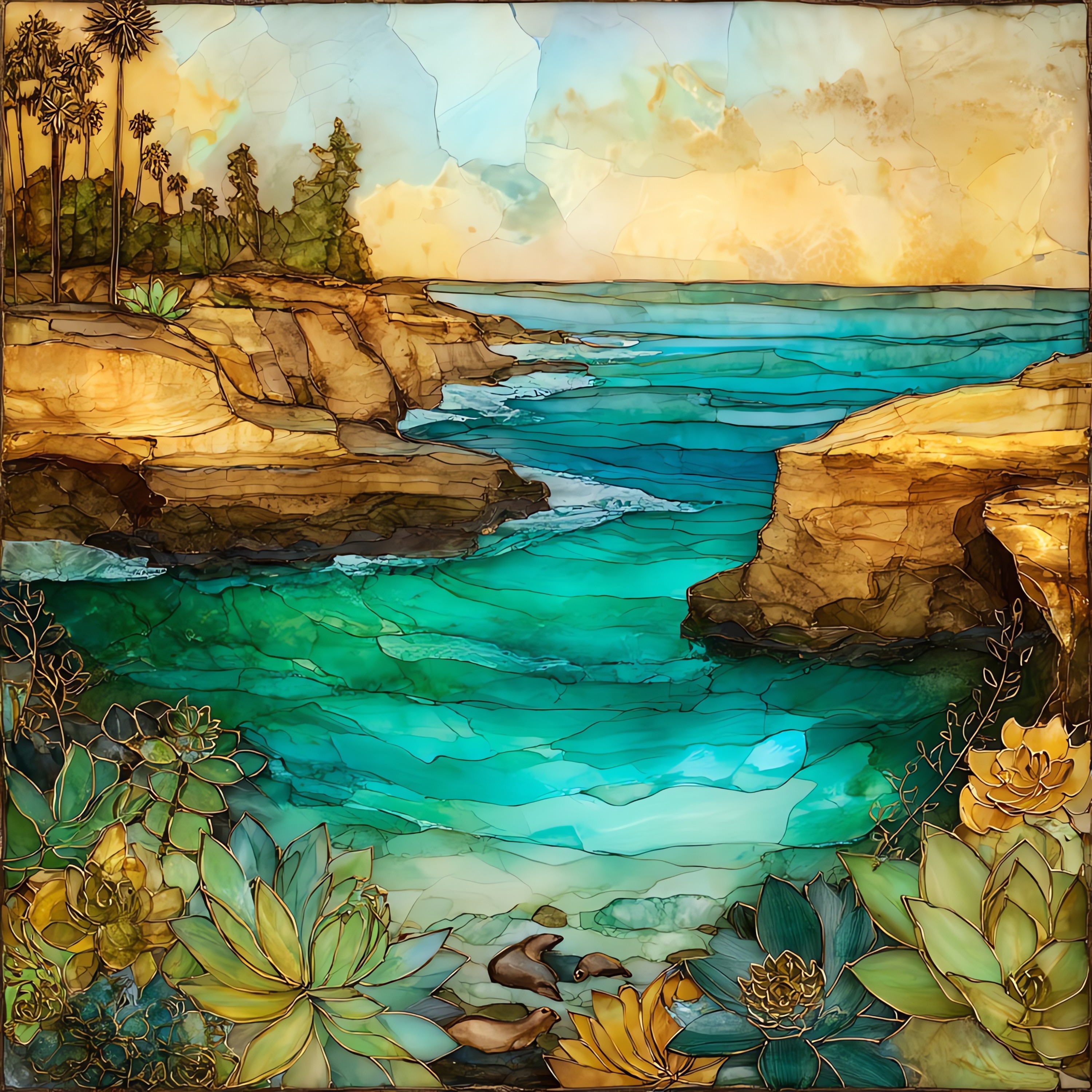
La Jolla Cove
— the green the kelp gives the water.
Not only on a wall.
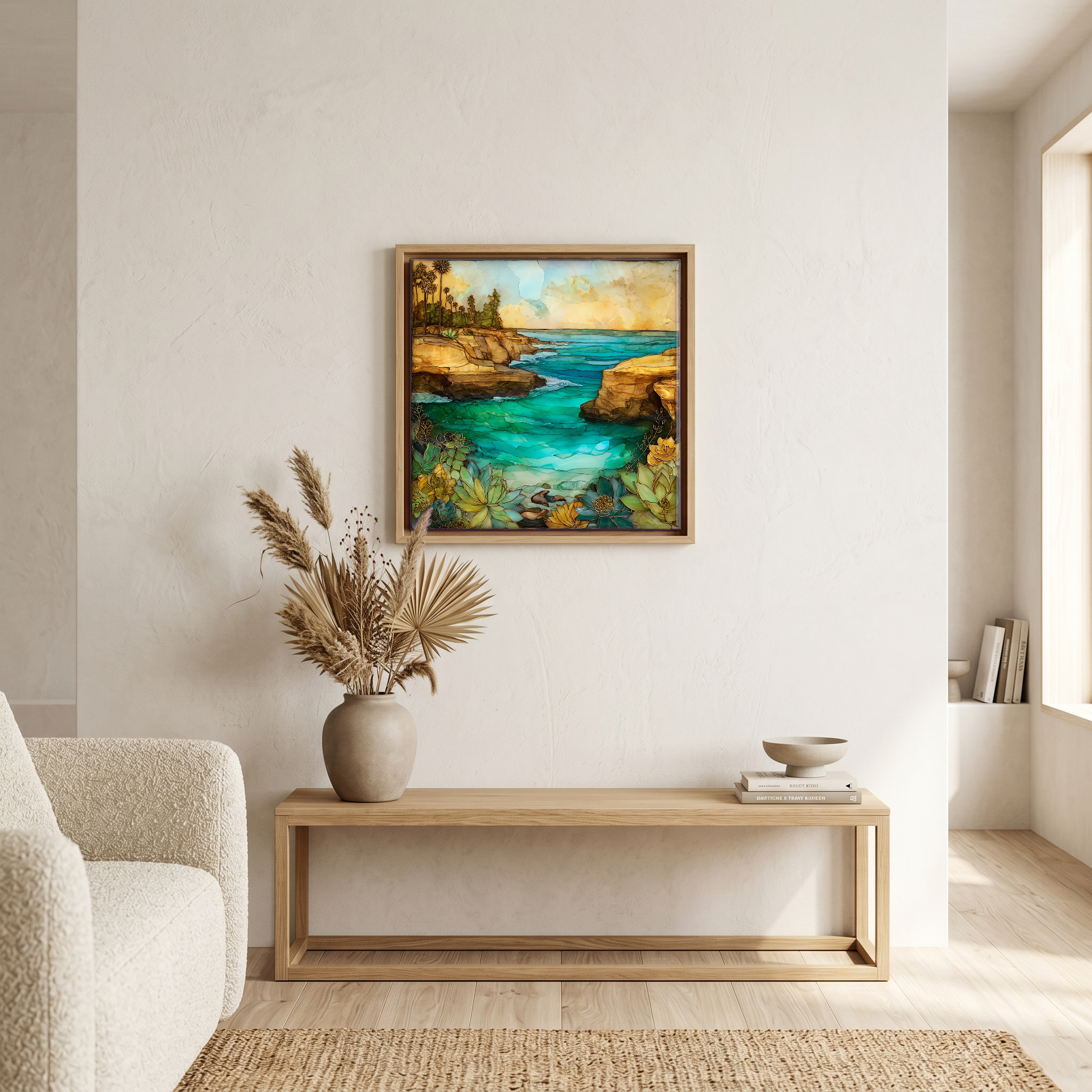
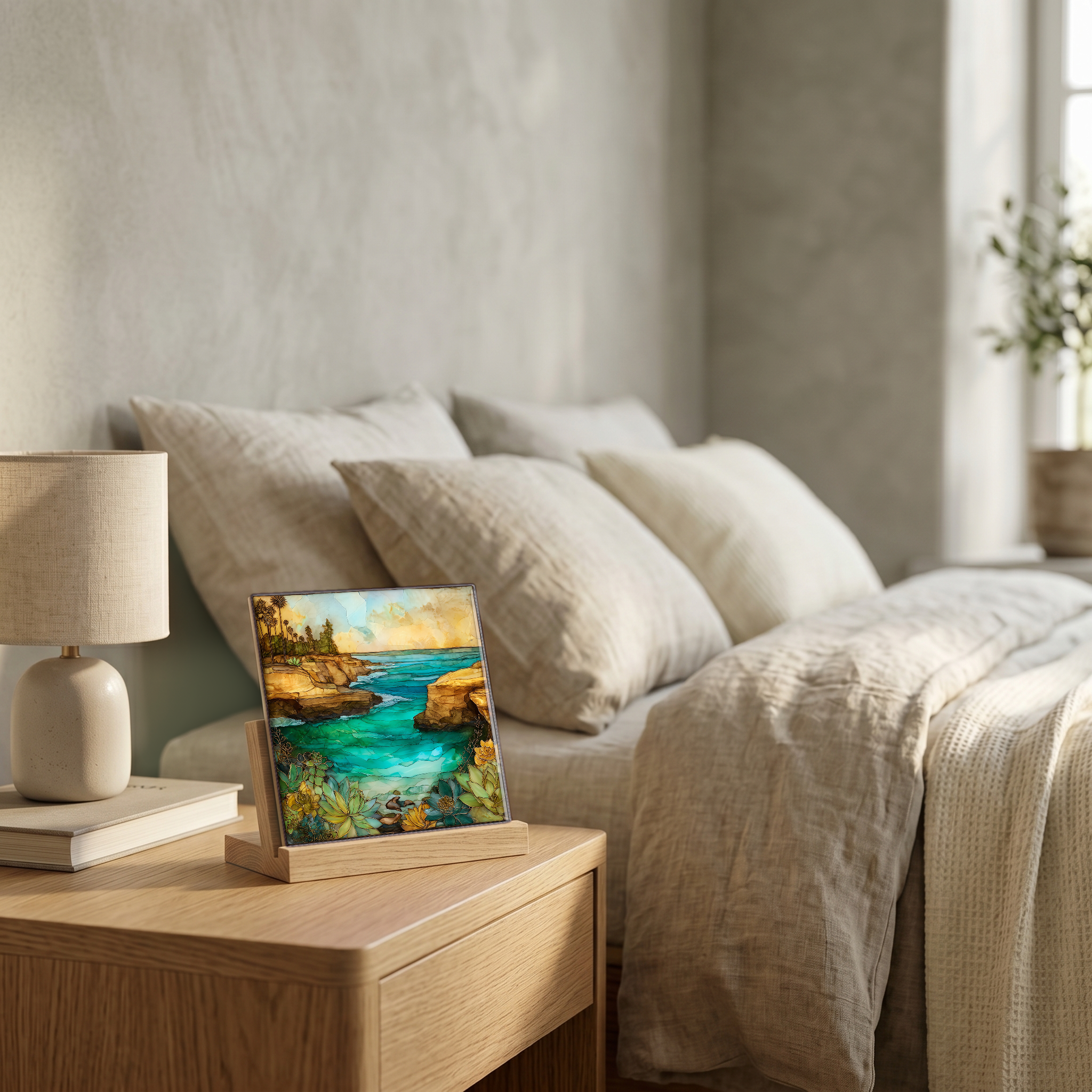
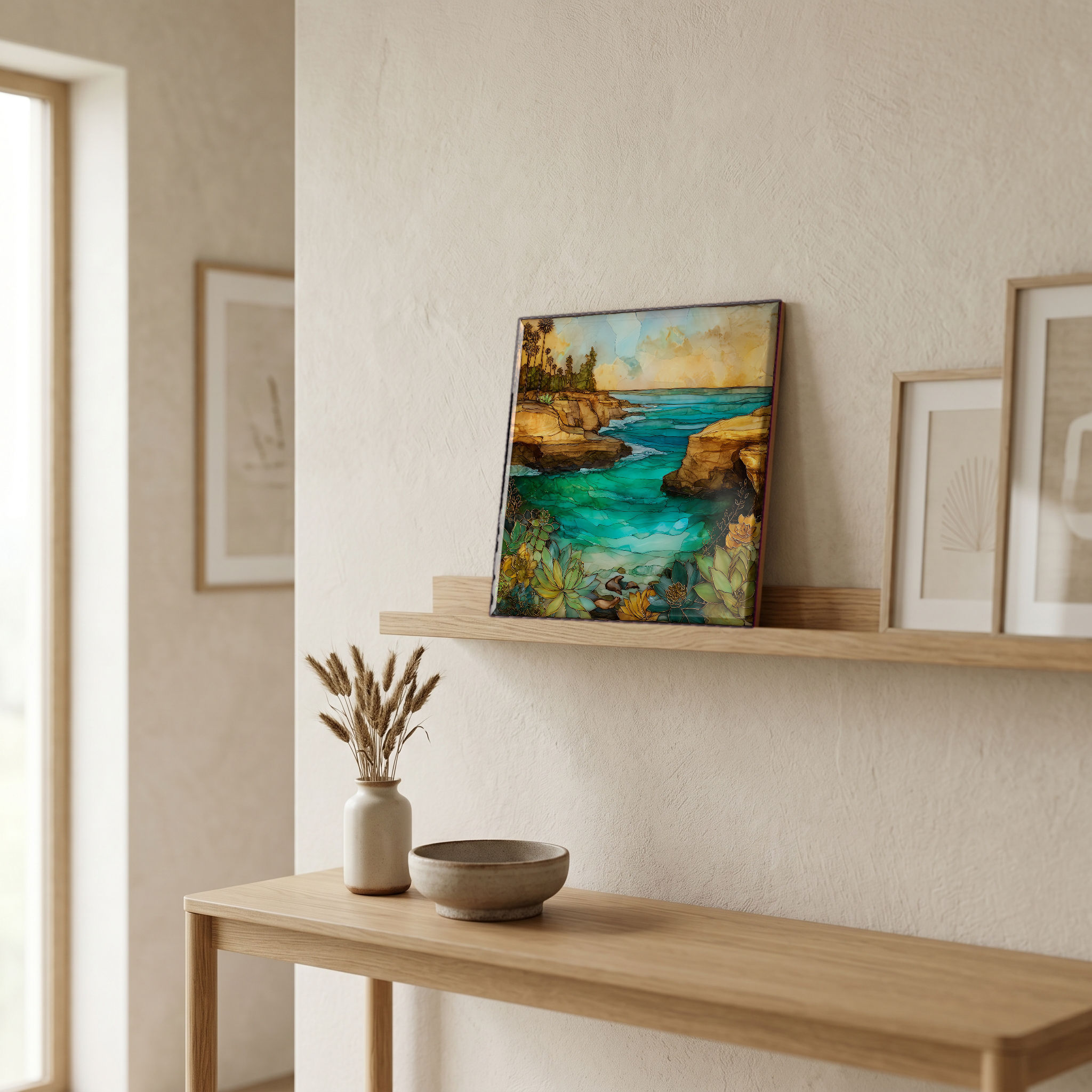
“A small cove on the coast north of San Diego, ringed by sandstone cliffs barely two hundred feet across. The water reads green more than blue, kelp forests just offshore, light filtering down through the canopy. Sea lions sleep on the rocks at the south end and the smell of them carries on the wind. Snorkelers paddle out from the steps; the Garibaldi, California's state marine fish, hangs orange beneath the kelp. Mornings are quiet here. By eleven the steps are full and the parking is gone.
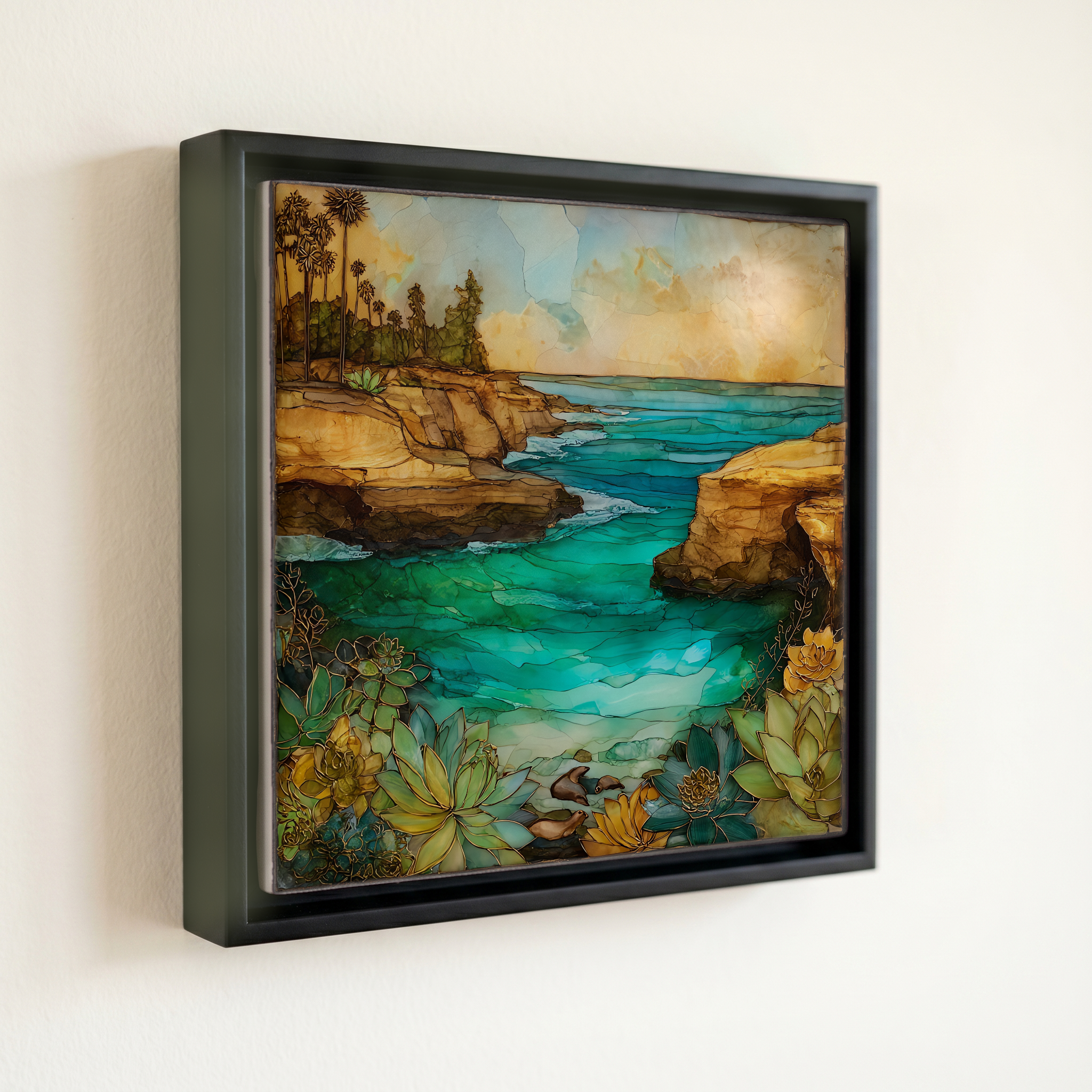
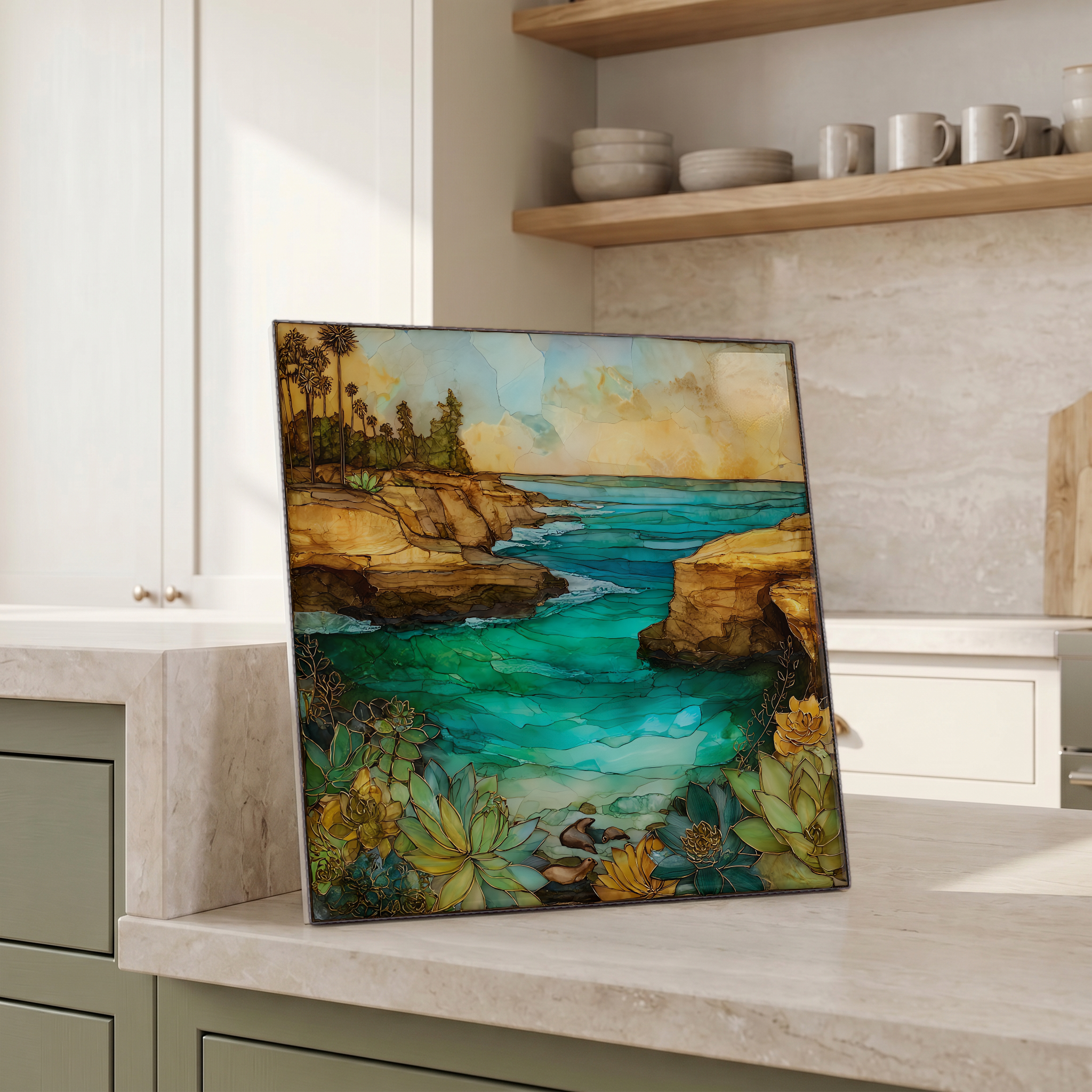
La Jolla Cove, on ceramic.
Each tile is finished by hand in our Knoxville studio. Artwork is slowly infused into the ceramic surface under high heat and pressure, and rests beneath a thin glossy finish. The colour lives in the surface, not on top of it.
Pick any four 4-inch tiles — National Parks you've been to, a Smokies set, the four seasons of one place. $ for a set of , cork-backed, ready to live on the table.
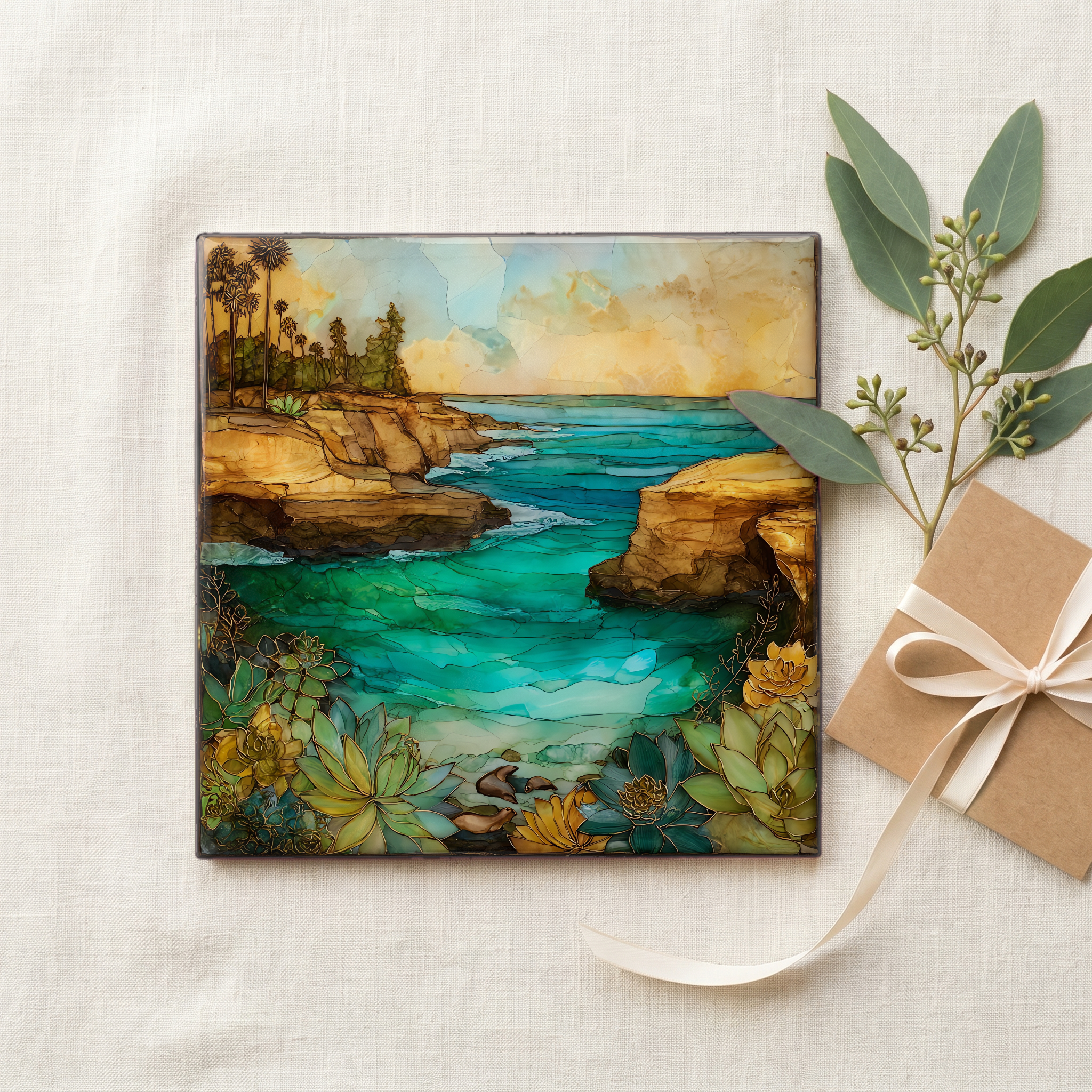
Each tile ships in a kraft box, tied with cream ribbon, with a handwritten note from the studio if you'd like to add one.
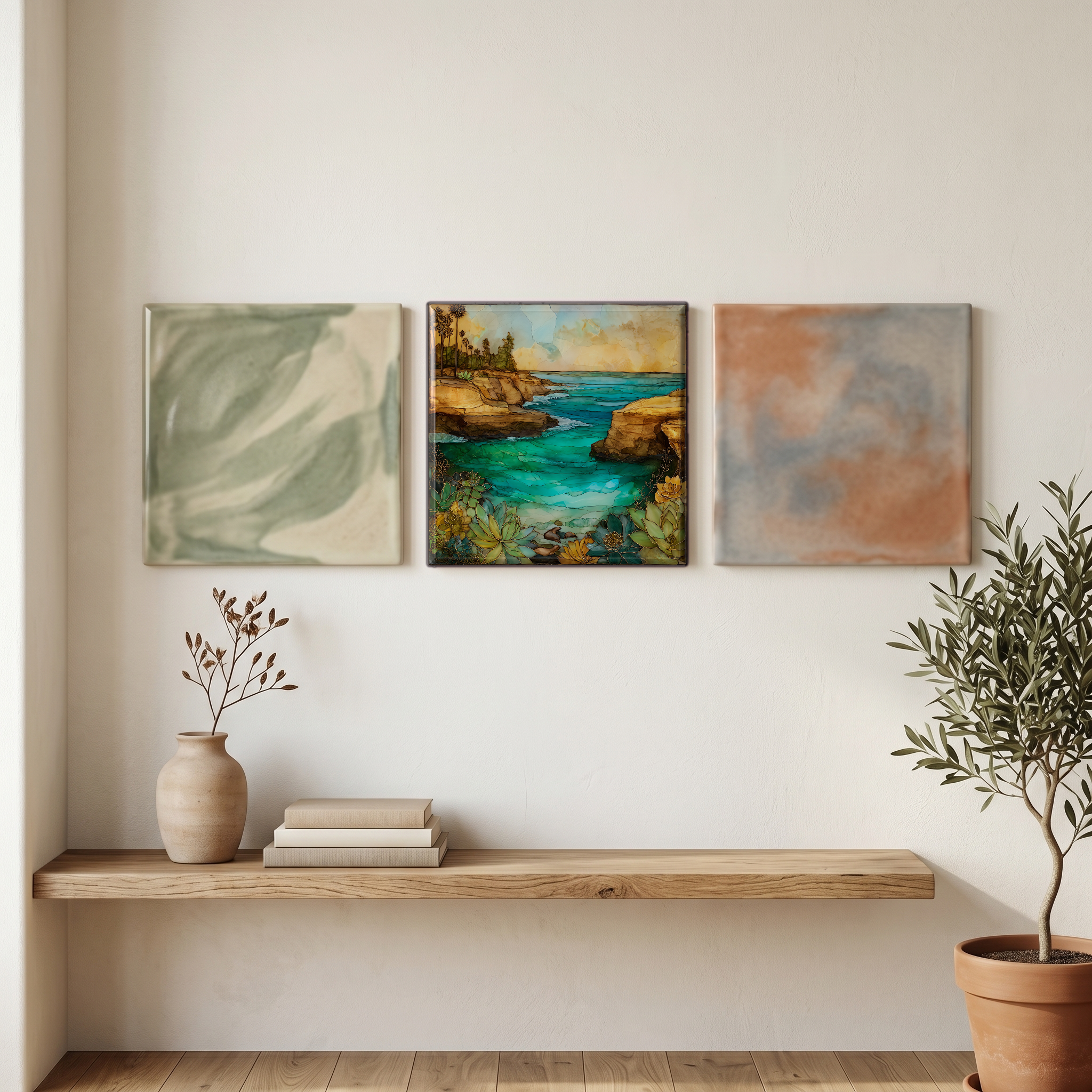
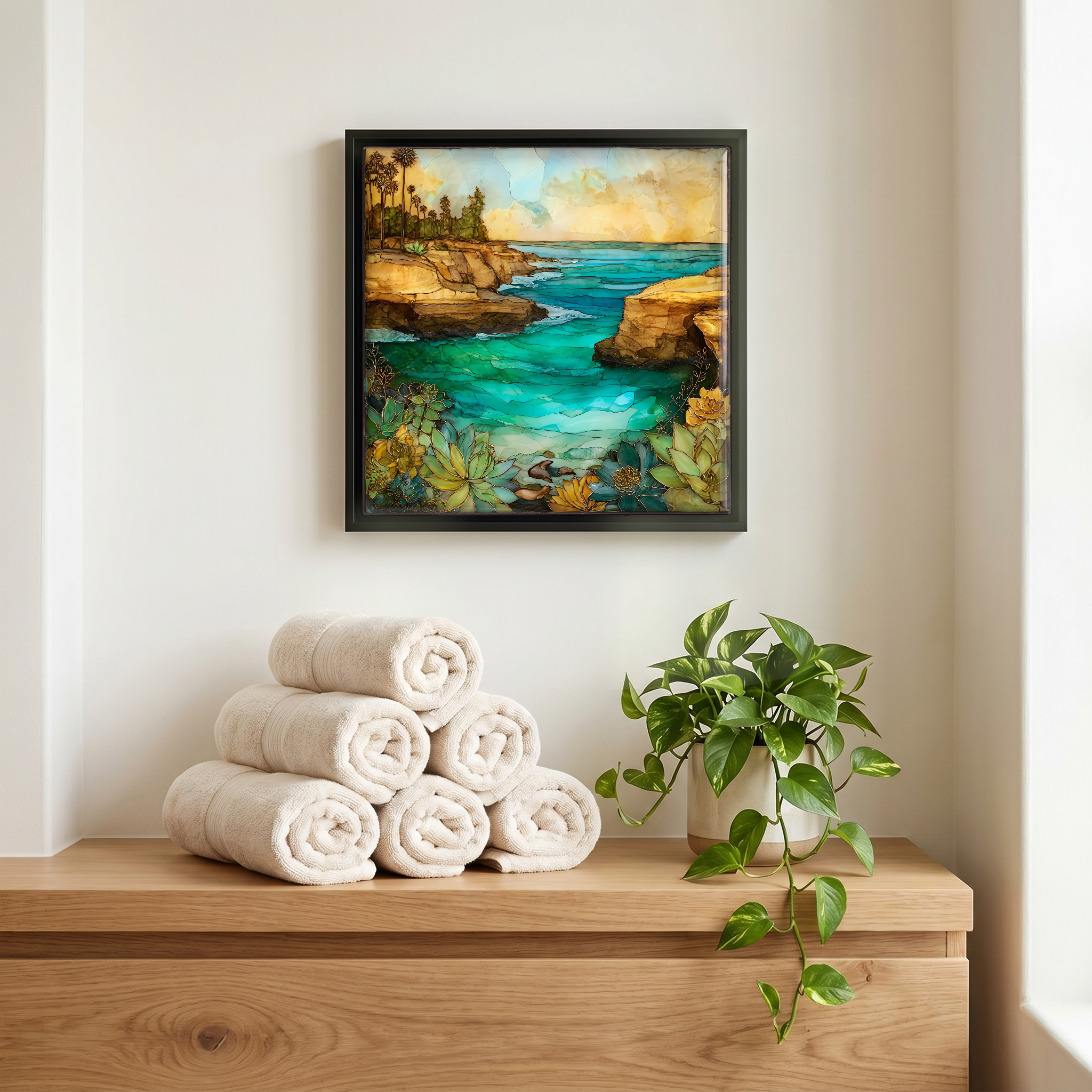
Three or five different vistas, hung together — a chapter of places you've been, or want to go.
The place, in three passes.
La Jolla Cove sits on the Pacific coast about 12 miles north of downtown San Diego, in the neighbourhood of La Jolla. The cove itself is small, a sandstone half-moon barely two hundred feet wide, edged above by Ellen Browning Scripps Park and reached by a steep stair down to the sand. It is the most visible landmark inside the San Diego–La Jolla Underwater Park, a marine reserve established in 1970 that protects one of southern California's last accessible kelp forests. Access is by metered street parking along Coast Boulevard and Prospect Street. Visibility in the water can run past thirty feet on clear days, drawing snorkelers, free-divers, and kayakers from the launch at La Jolla Shores, a mile north.
The water at La Jolla Cove is green more often than blue because of the kelp. Giant kelp (Macrocystis pyrifera) grows just offshore, forming a forest that can reach the surface from depths of around eighty feet. The canopy filters sunlight, throwing the water beneath it a shifting yellow-green. Inside the forest live garibaldi, California's state marine fish, a slow orange damselfish; leopard sharks that aggregate here every summer; and Brandt's cormorants that dive from the cliffs above. Take is prohibited inside the Matlahuayl State Marine Reserve, established in 2012, which is why the wildlife at the cove is unusually close, unusually visible, and unusually slow to move.
The cove has no entry fee, no closing hours, and no reservation. The stair down to the beach drops from Coast Boulevard, just below Ellen Browning Scripps Park; metered parking on Coast Boulevard and Prospect Street fills by 9 a.m. most summer mornings. Sea lions and harbor seals rest on the south rocks, and the smell of them carries; it is part of the place. Water temperature averages 60°F in winter and 70°F in late summer, so a wetsuit is normal for swims longer than half an hour. Children's Pool, the seal colony half a mile south, is closed to people from December 15 to May 15 during pupping season.