Wender·Vista
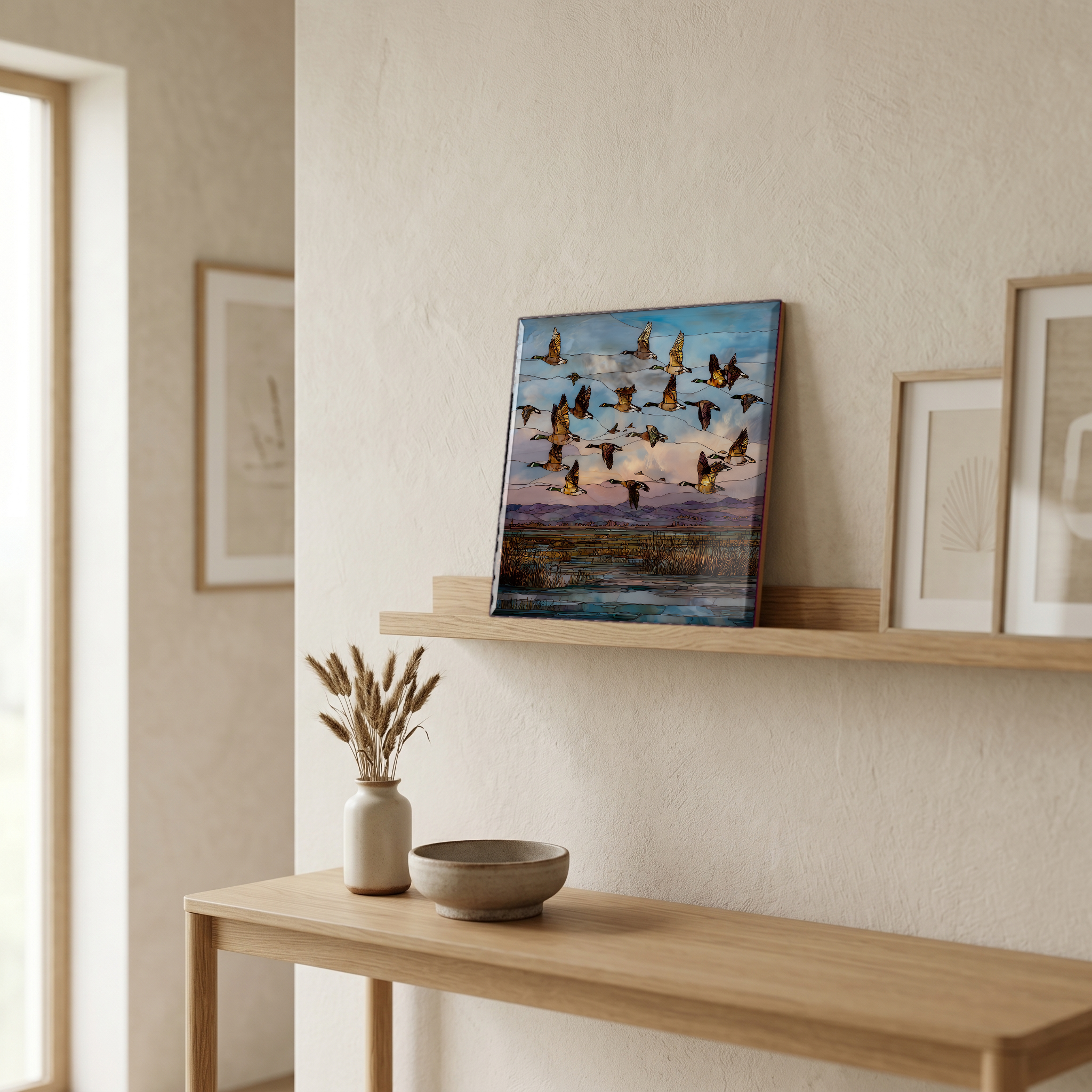
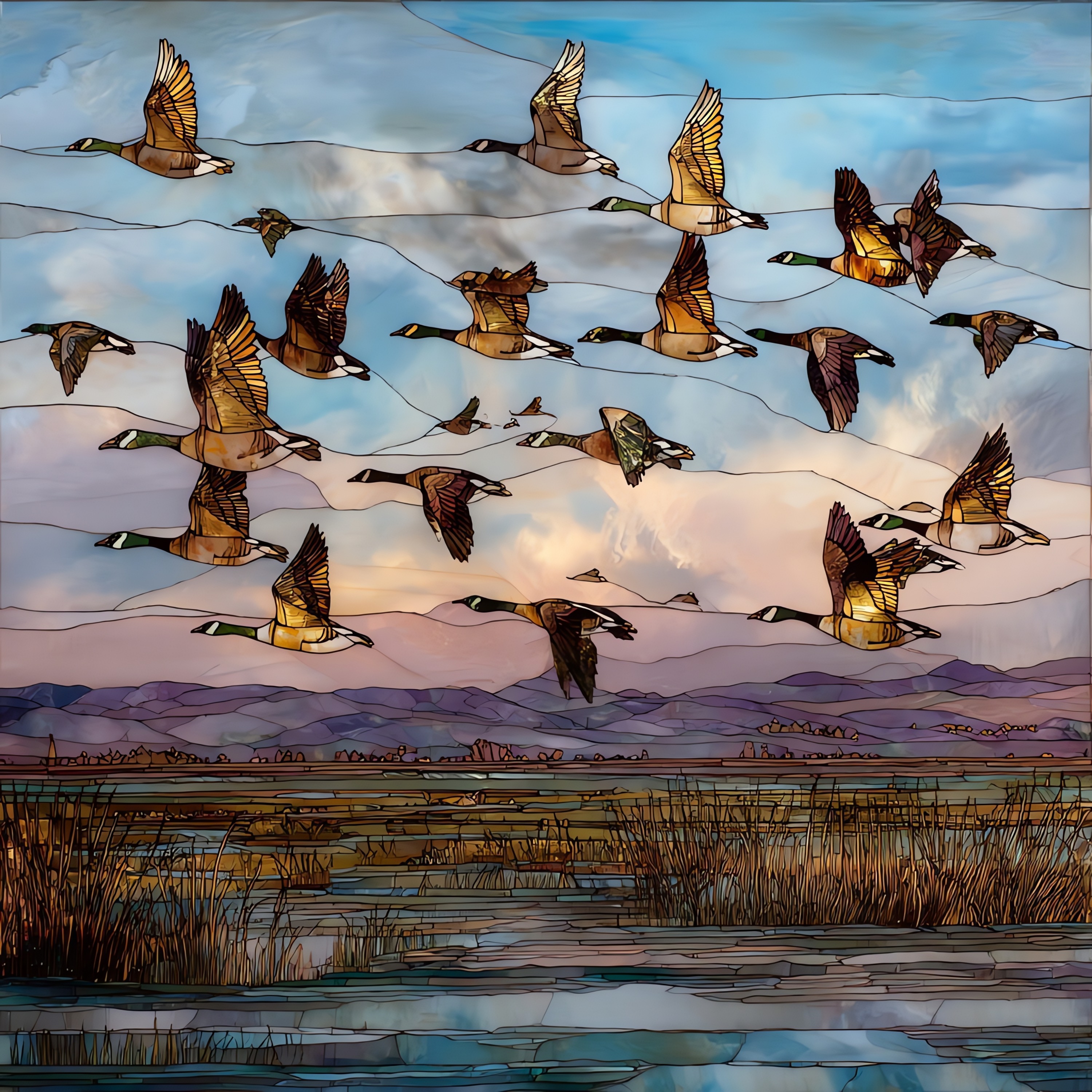
Klamath Basin Waterfowl
shown on ceramic, 12-inch tileCalifornia · United States
near the Oregon line in California's high northeast

Klamath Basin Waterfowl

— the morning the marsh takes flight.

Where it lives

Not only on a wall.

A small tile on the nightstand catching the morning. A larger one above the fire. Yours, wherever you spend the slow hours.
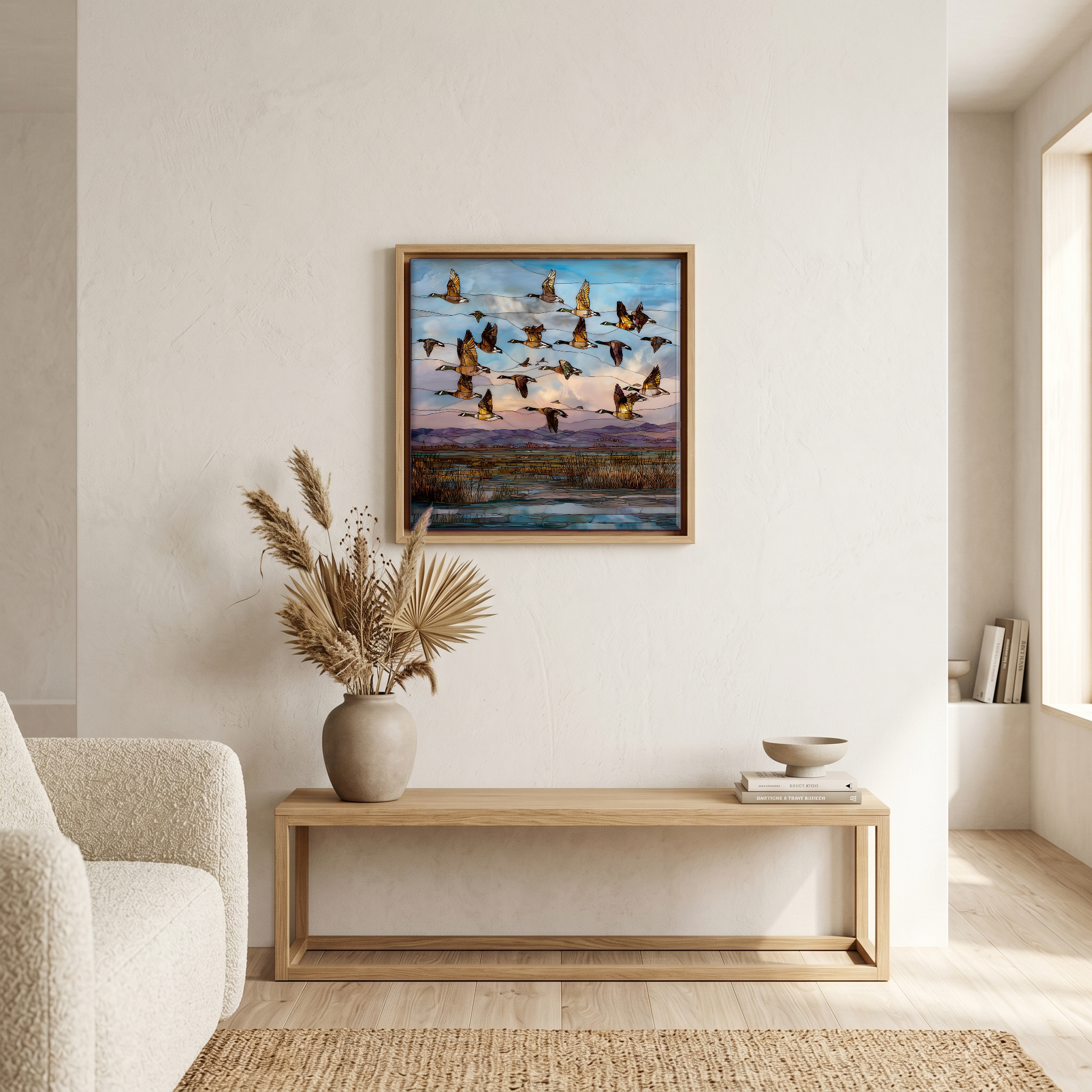
Above the bench, in a warm oak surround.
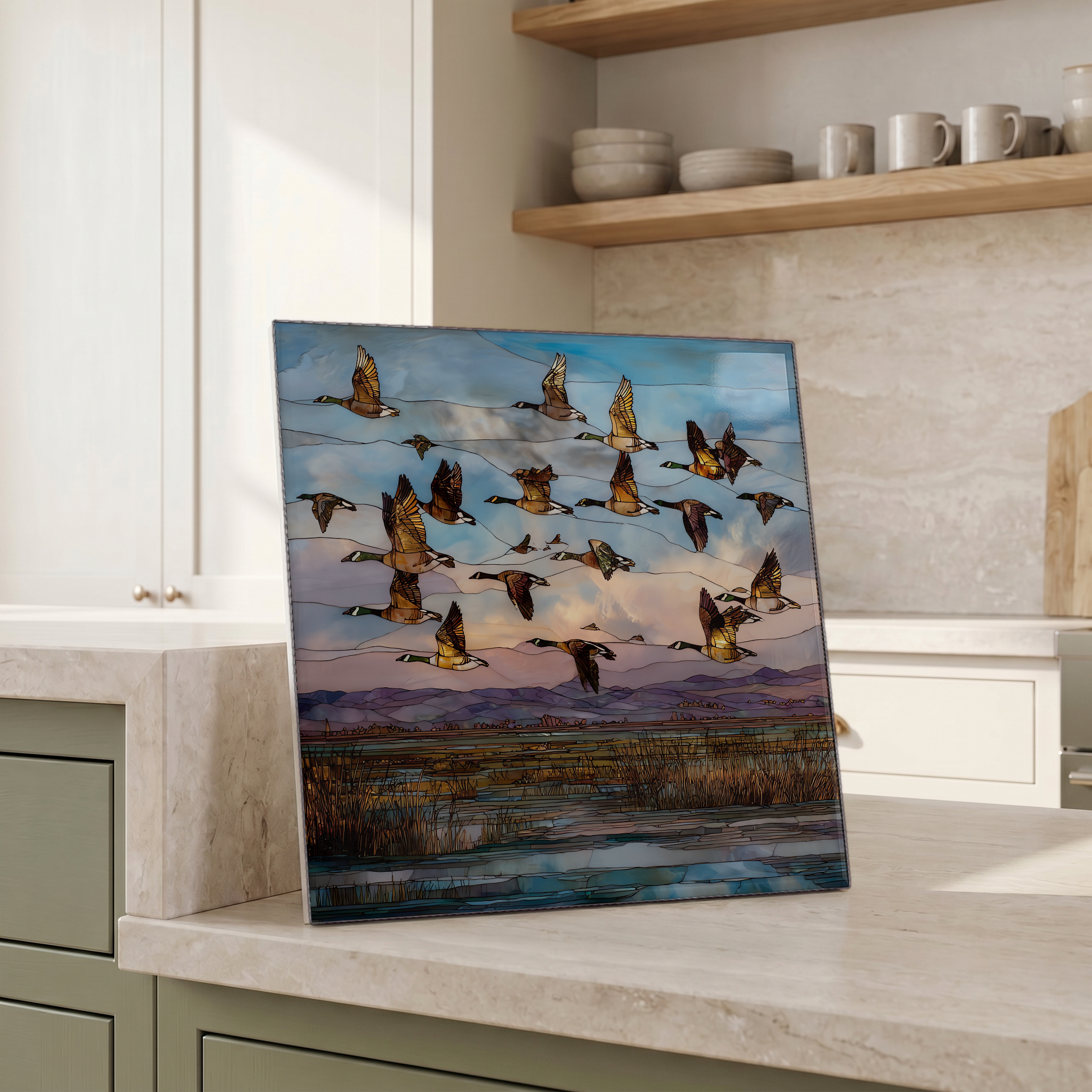
Beside the kettle, propped on the counter.
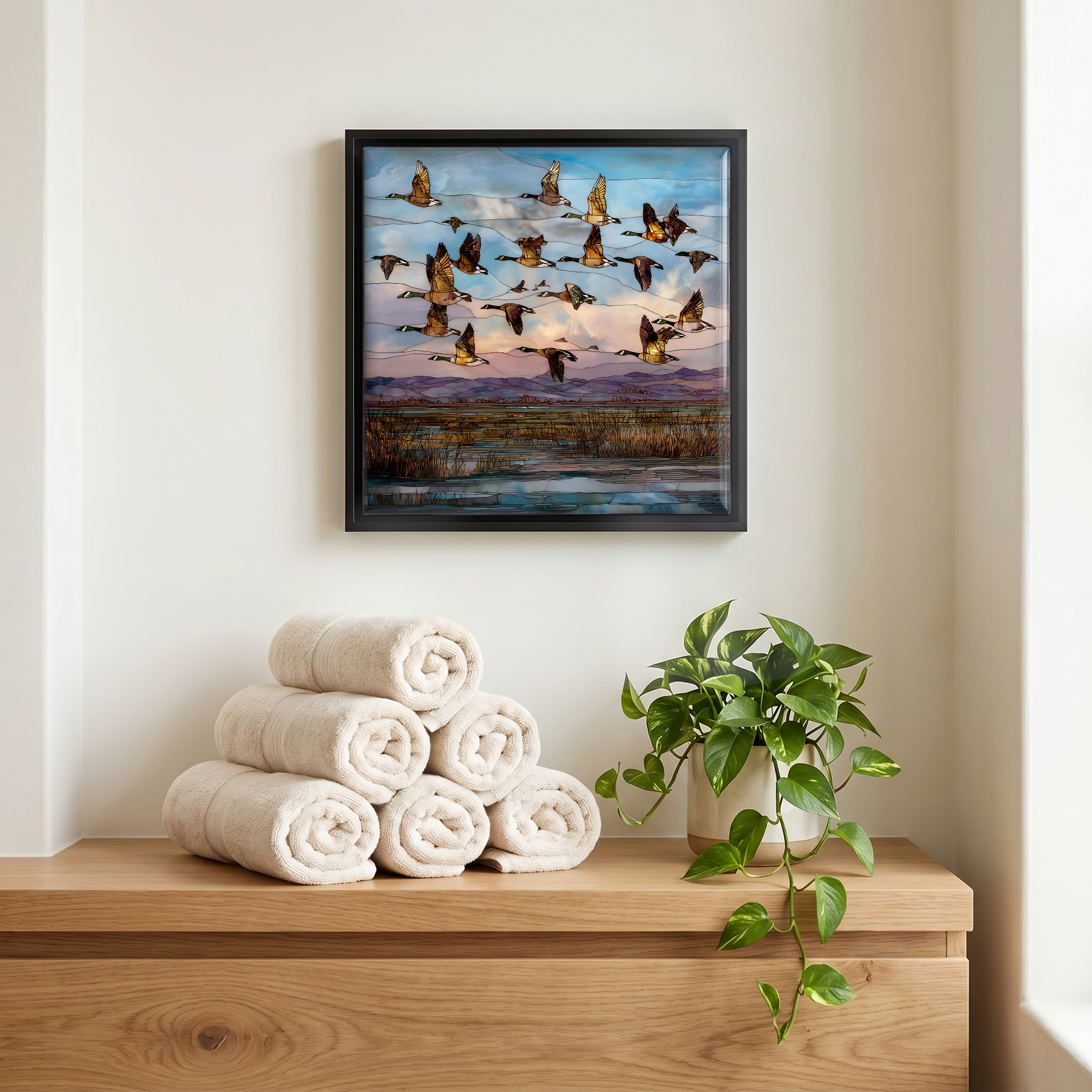
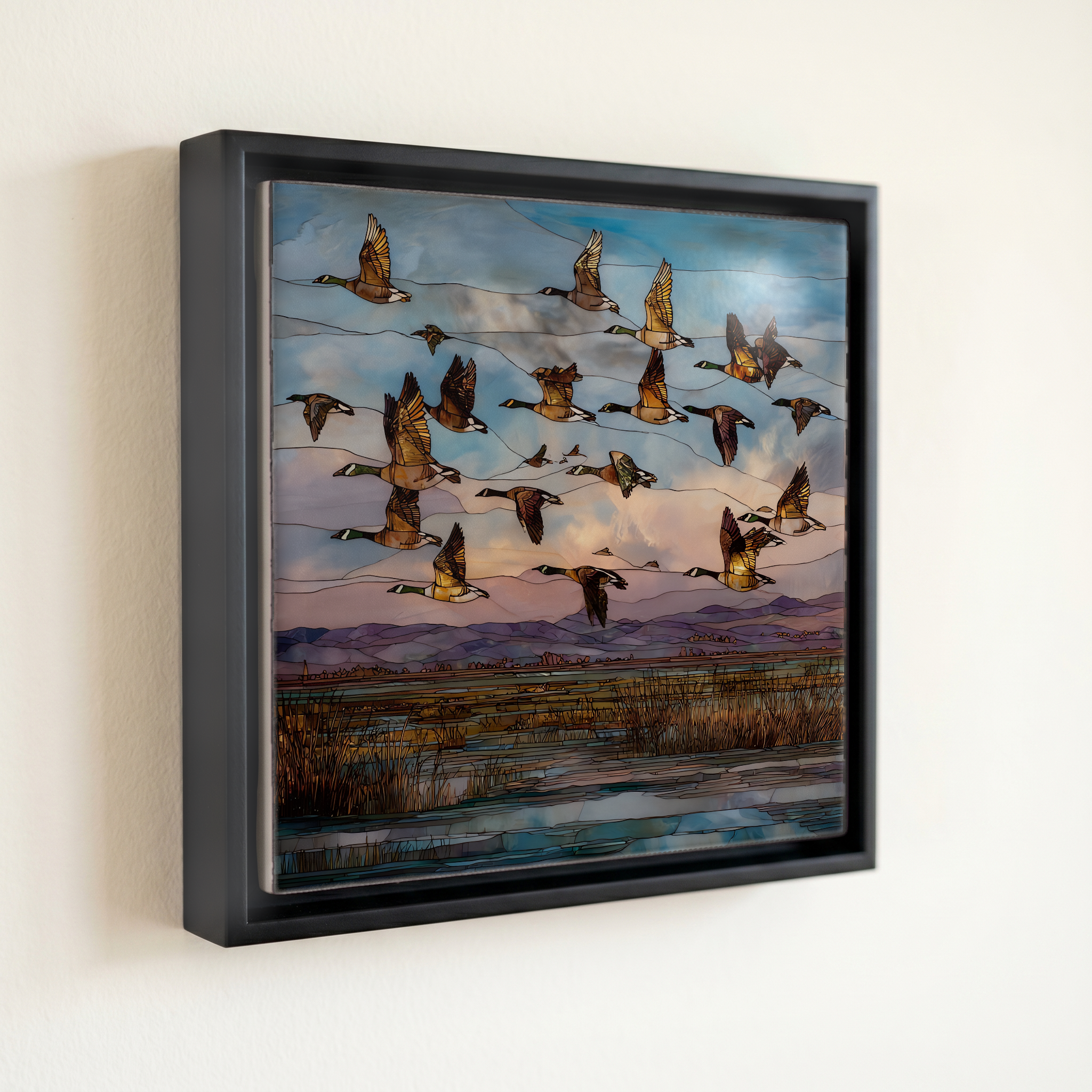
Above the linens, in a slim black surround.
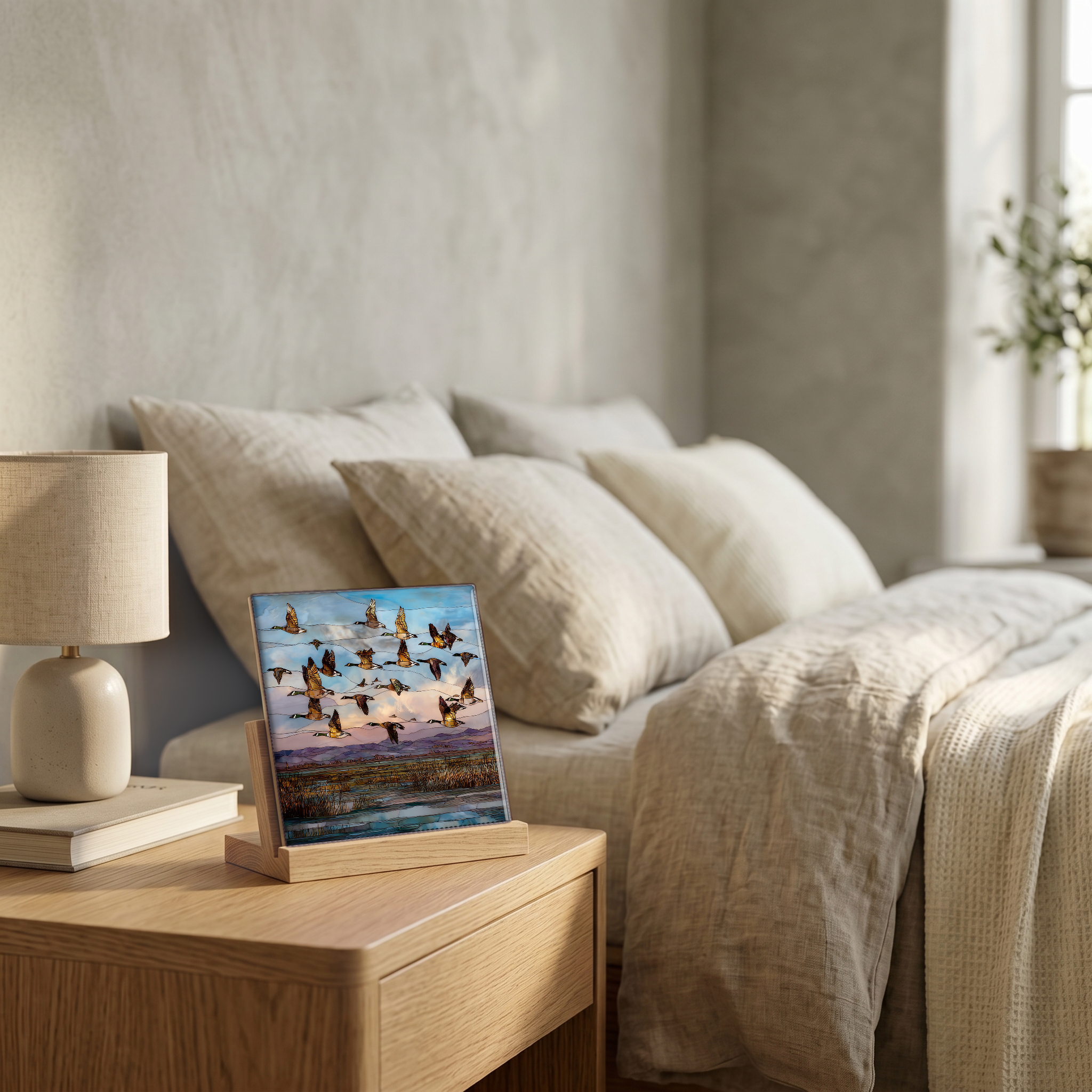
On the nightstand, on a light oak stand.
On a picture ledge, where the light comes in.
a note from the studio

A high desert basin near the Oregon line where the Pacific Flyway narrows. In late fall and early spring the marshes of Lower Klamath and Tule Lake hold the largest concentration of waterfowl in the West. Pintails, snow geese, tundra swans, a quarter-million birds and more at the peak weeks. Theodore Roosevelt set the first refuge here aside in 1908; it was the first waterfowl refuge in the country. Bear Valley, just over the line, holds the largest wintering bald eagle roost in the lower forty-eight. The auto-tour roads run flat along the dikes. Most people leave the windows down.
from the studio
shown in a slim black floating frame · 6 × 6 in
— bring it home

Klamath Basin Waterfowl, on ceramic.

Each tile is finished by hand in our Knoxville studio. Artwork is slowly infused into the ceramic surface under high heat and pressure, and rests beneath a thin glossy finish. The colour lives in the surface, not on top of it.

What kind of piece?
One tile — square or rectangle.
How big?
the popular one — counter, shelf, nightstand
6 × 6 in · 15 cm · 1.6 lb
Surface finish
A clear glossy finish — the artwork reads as if under resin. Ideal for show-pieces and framed wall art.
How it sits
A hidden cleat — sits ¼″ proud of the wall.
$58
Hand-finished and shipped from our studio at the foot of the Smokies. On your wall in about ten days.
size
6 × 6 in
15 cm
weighs
1.6 lb
solid in the hand
surface
ceramic, hand-finished
art rests beneath a thin glossy finish
from
Knoxville, TN
our family studio, at the foot of the Smokies
— start a Coaster Set

Pick any four 4-inch tiles — National Parks you've been to, a Smokies set, the four seasons of one place. $ for a set of , cork-backed, ready to live on the table.
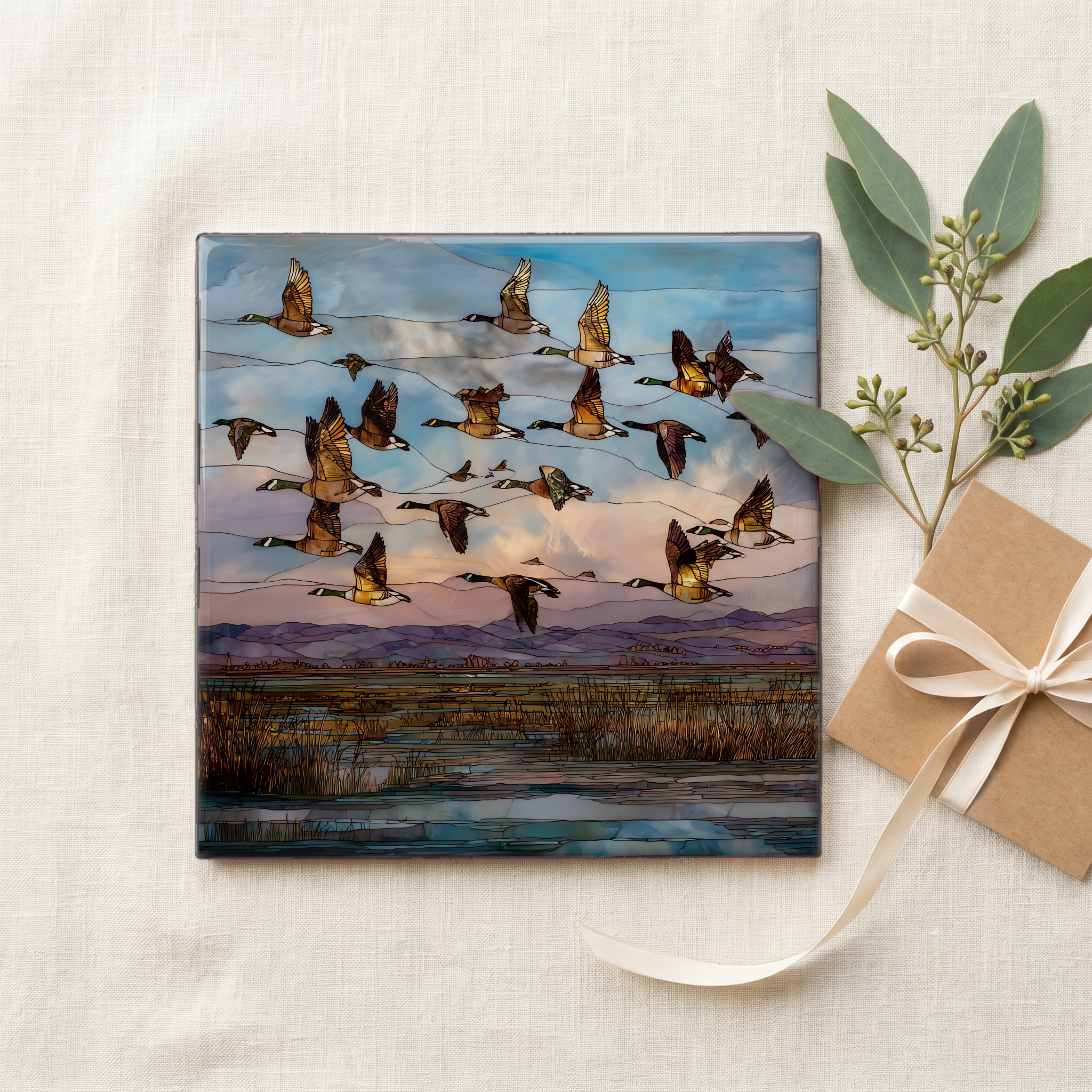
comes gift-ready
comes gift-ready

Each tile ships in a kraft box, tied with cream ribbon, with a handwritten note from the studio if you'd like to add one.
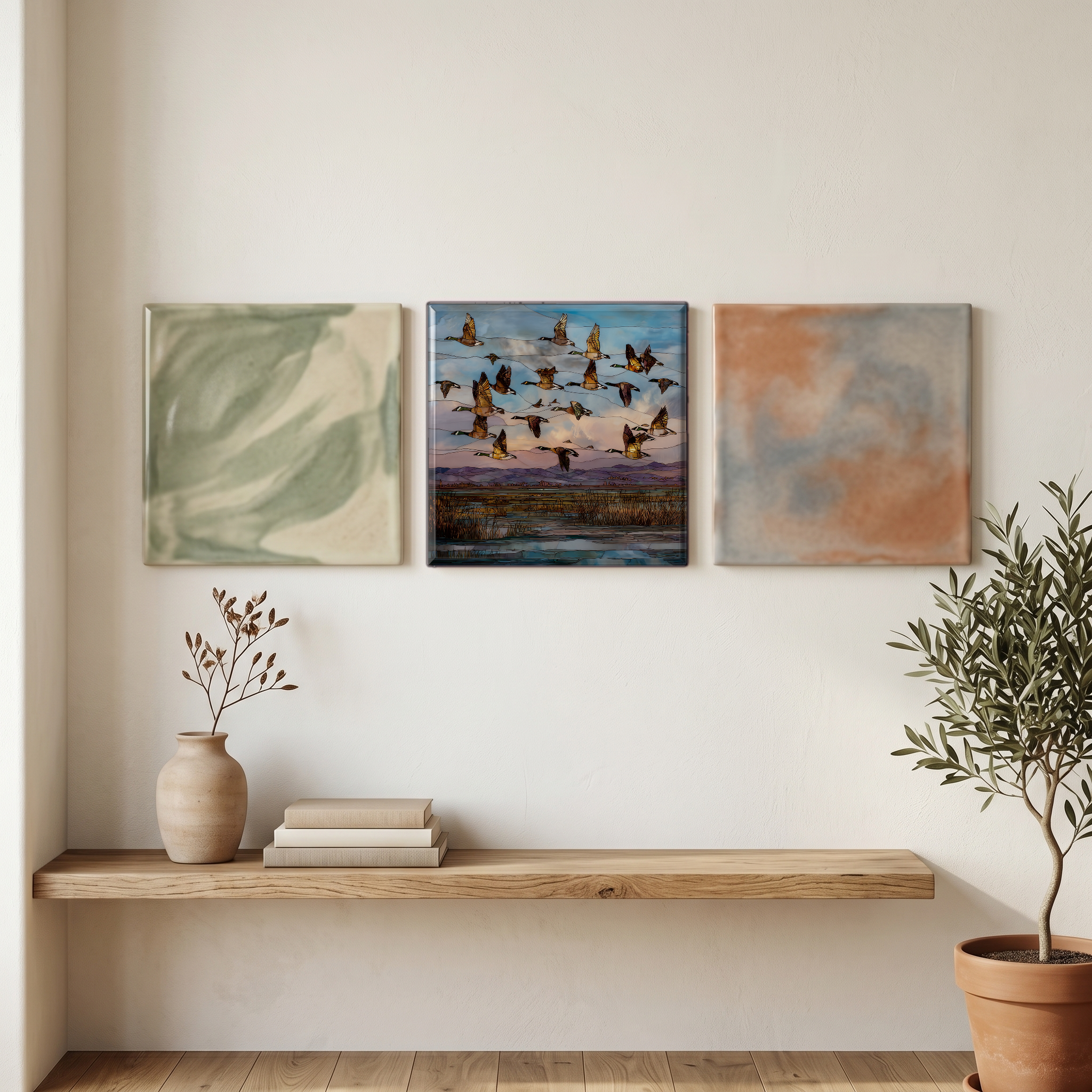
or build a grouping
or build a grouping

Three or five different vistas, hung together — a chapter of places you've been, or want to go.

about Klamath Basin Waterfowl

The place, in three passes.

A little of what's known, in case you fall down the rabbit hole — or want to go see it yourself.
the place

Klamath Basin sits in northeastern California along the Oregon border, a high-desert basin around 4,000 feet of elevation, drained by the Klamath River system. The Klamath Basin National Wildlife Refuge Complex includes six refuges totaling about 200,000 acres of shallow lakes, freshwater marshes, sagebrush uplands, and croplands managed jointly with the U.S. Bureau of Reclamation. The California units (Lower Klamath, Tule Lake, and Clear Lake) sit in Siskiyou and Modoc counties; Bear Valley, Upper Klamath, and Klamath Marsh lie just over the Oregon line. The visitor center is in Tulelake, California, and auto-tour routes circle the marshes at both Tule Lake and Lower Klamath.

the season

Late October through early December brings peak fall migration: hundreds of thousands of pintails, mallards, snow geese, white-fronted geese, and tundra swans pour into the basin, the largest staging concentration on the Pacific Flyway. December through February centers the largest wintering bald eagle population in the lower 48 states; up to 500 eagles roost at Bear Valley National Wildlife Refuge each night and disperse across the marshes by day. Spring migration runs February through April, when many of the same species push north toward Arctic breeding grounds. Summer is quieter; the marshes draw down and managed flooding cycles by refuge unit, depending on water deliveries from the Klamath Project.

the visit

The refuge complex headquarters and visitor center sit at 4009 Hill Road in Tulelake, California, open most days except federal holidays. Two auto-tour routes are the standard way through: a 10-mile loop at Tule Lake National Wildlife Refuge and a longer drive at Lower Klamath, both flat gravel dikes traversable by car in roughly an hour each. There is no entrance fee. Spotting scopes help; the birds work the open water at distance. Clear, cold mornings just after sunrise are when the basin is calmest and the flocks lift first. Dress for high desert weather: temperatures swing from below freezing at dawn to mild by noon.

where
United States · Siskiyou and Modoc Counties, California
within
Klamath Basin National Wildlife Refuge Complex
elevation
1,230 m · 4,040 ft
position
41.9500° N · 121.5500° W
the neighborhood

What's nearby.

A handful of named places within an hour's walk or short drive. Some we've already painted; some we will.
5 km E
Tule Lake
alkali lake and refuge
2 km N
Tulelake
basin town
12 km NW
Lower Klamath National Wildlife Refuge
waterfowl refuge
18 km N
Bear Valley National Wildlife Refuge
bald eagle roost
15 km SW
Lava Beds National Monument
volcanic monument
N
Klamath Basin Waterfowl
Tule Lake
Tulelake
Lower Klamath National Wildlife Refuge
Bear Valley National Wildlife Refuge
Lava Beds National Monument
common questions

What people ask.

A few questions we get about Klamath Basin Waterfowl — and about bringing the piece home.
about the place

The Klamath Basin sits in northeastern California along the Oregon border, in Siskiyou and Modoc counties. The Klamath Basin National Wildlife Refuge Complex spans about 200,000 acres of marshes, shallow lakes, and uplands across six refuges, with its visitor center in Tulelake, California.

The basin is the largest staging area on the Pacific Flyway. In peak fall migration it can hold more than a million ducks, geese, and swans at once. President Theodore Roosevelt set aside Lower Klamath here in 1908, the first national waterfowl refuge in the United States.

Peak fall migration runs late October through early December, when pintails, snow geese, white-fronted geese, and tundra swans concentrate in the marshes. Spring migration peaks February through April. Winter brings the largest wintering bald eagle population in the lower 48 states.

Yes. The Klamath Basin holds the largest wintering bald eagle population in the lower 48 states. Up to 500 eagles roost at Bear Valley National Wildlife Refuge each night from December through February, fanning out across the marshes by day to hunt and scavenge.

Two auto-tour routes are the standard way in: a 10-mile loop at Tule Lake National Wildlife Refuge and a longer drive at Lower Klamath. Both are flat gravel dikes drivable by car. The visitor center sits at 4009 Hill Road in Tulelake, California.

No. The Klamath Basin National Wildlife Refuge Complex charges no entrance fee. The visitor center, the auto-tour routes at Tule Lake and Lower Klamath, and the observation points are open to the public, with hours and road conditions varying seasonally.

Lower Klamath National Wildlife Refuge, established August 8, 1908 by President Theodore Roosevelt. It was the first refuge in the United States set aside specifically for waterfowl. The Klamath Basin complex grew around it over the following decades, with Tule Lake added in 1928.

about the piece in your home

It carries well for both. Birders recognize the Klamath Basin as the largest staging area on the Pacific Flyway, and many people in northeastern California and southern Oregon hold family memories of the auto-tour roads at Tule Lake and Lower Klamath. A Small or Medium with a handwritten studio card travels well.

The palette runs cool blues and marsh ochres, which sit comfortably in mountain-modern, coastal-modern, and Pacific Northwest lodge interiors. It also works in a warm minimalist room where you want one piece doing real visual work above a console or a bed.

Yes. Bird and migration imagery has held steady in nature-modern and biophilic design for several years, and a single ceramic tile at this scale reads as a calm anchor rather than a literal print. The Large or a 4-tile Mural carry the weight in a living room.

A single Large works above most consoles or a smaller sofa. Over a full-length sofa, a 4-tile Mural is the standard. For a tall living-room wall, a 9-tile Mural fills the space without crowding the ceiling.

Yes, with the right finish. The Dura Satin or the Matte finish handles steam, water spray, and routine humidity without issue. The Glossy finish is for dry display walls and framed pieces and is not the choice for a shower wall or a backsplash.

A microfibre cloth dampened with water is enough for routine dust and light fingerprints. For kitchen grease, a drop of mild dish soap and a soft cloth, then a clean-water wipe. Avoid abrasive pads, scouring powder, or bleach-based cleaners.

Yes. Every WenderVista piece is curated and finished by Reid Wender at the family studio in Knoxville, Tennessee. The artwork is not licensed from third parties, and no two places carry the same composition. The colour lives in the ceramic surface itself.

if this one stayed with you

A few you might also love.

Hand-picked by the eye that found Sorapis. Same air, same kind of quiet.