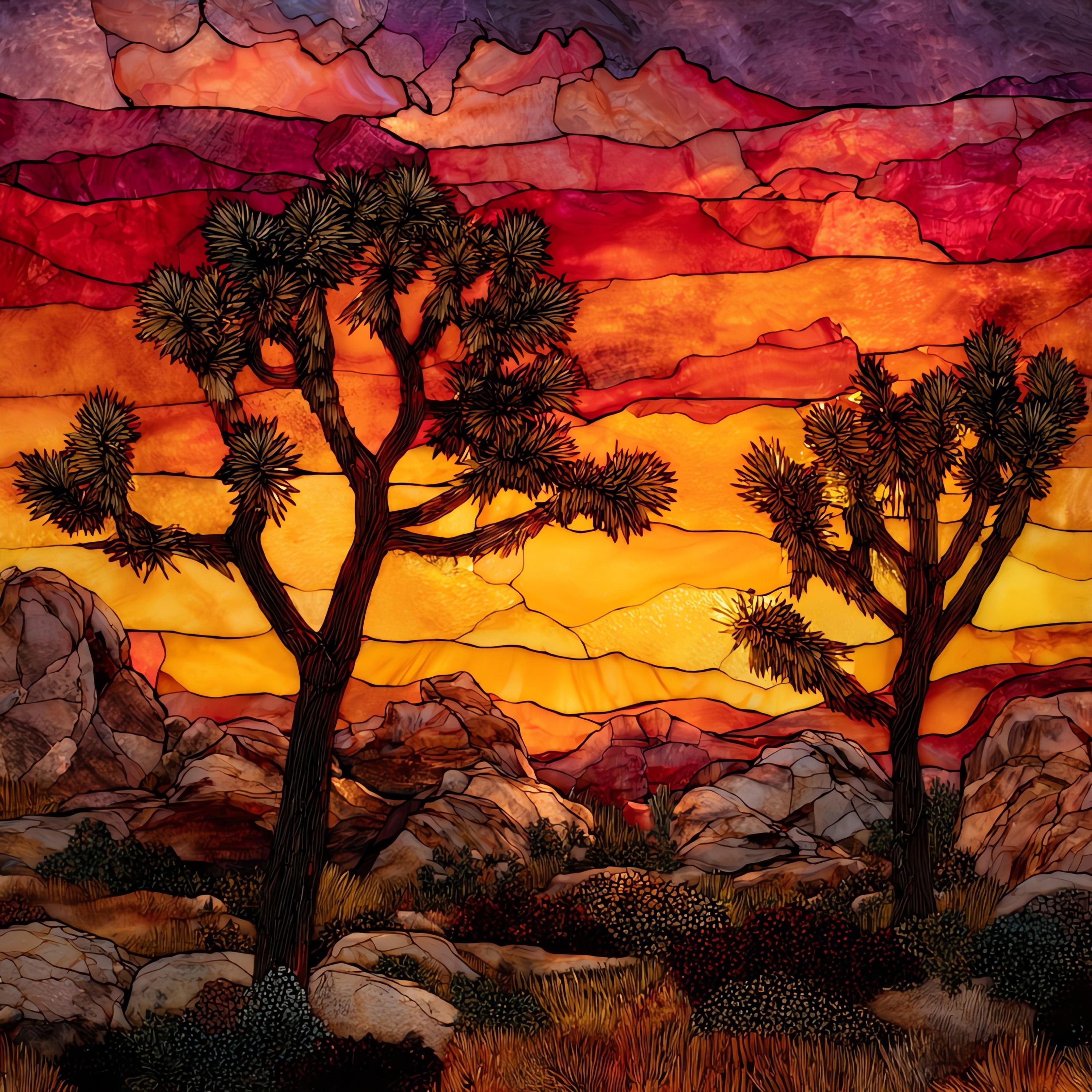
Joshua Tree Forest Burning Sky
— the sky burns down to silhouettes.
Not only on a wall.
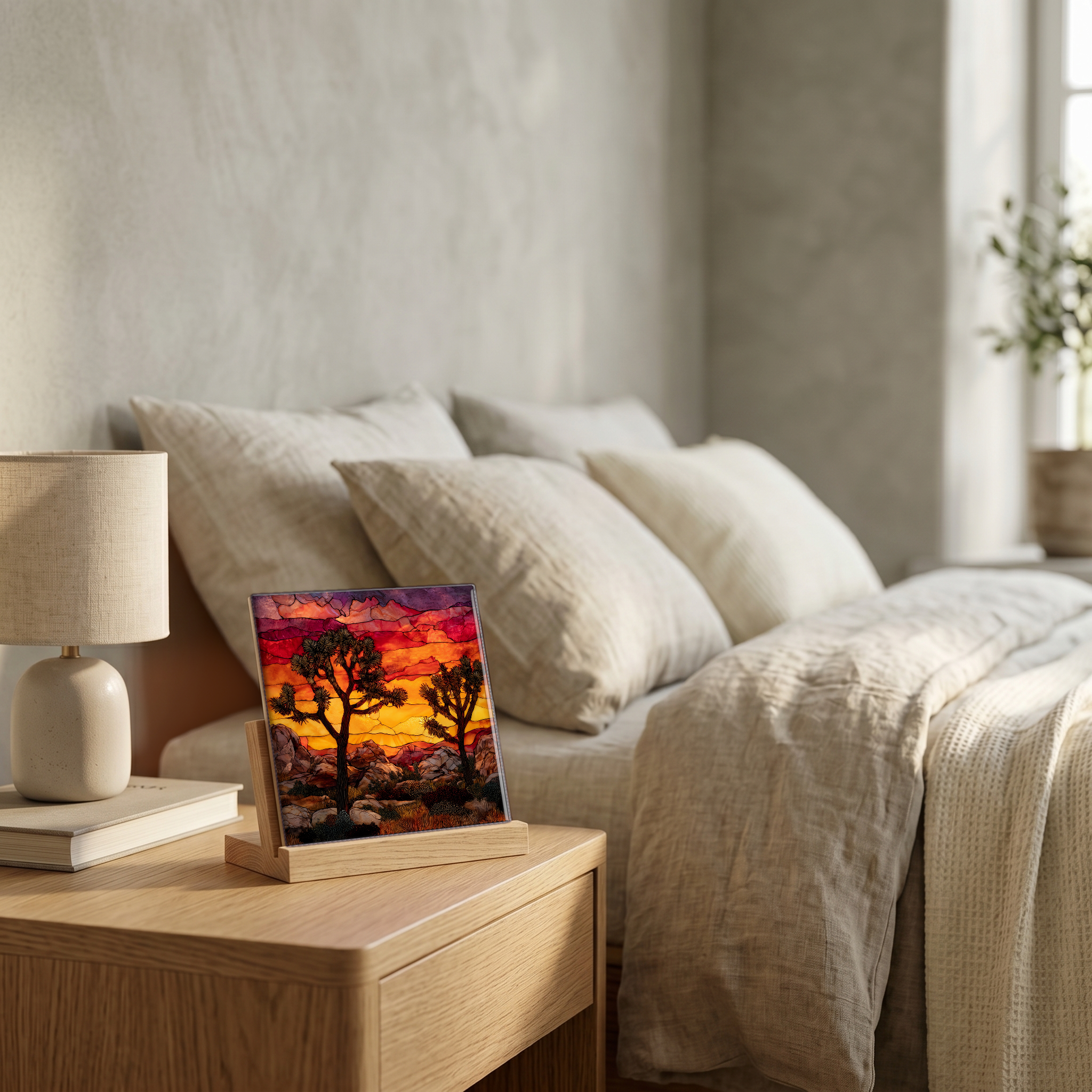
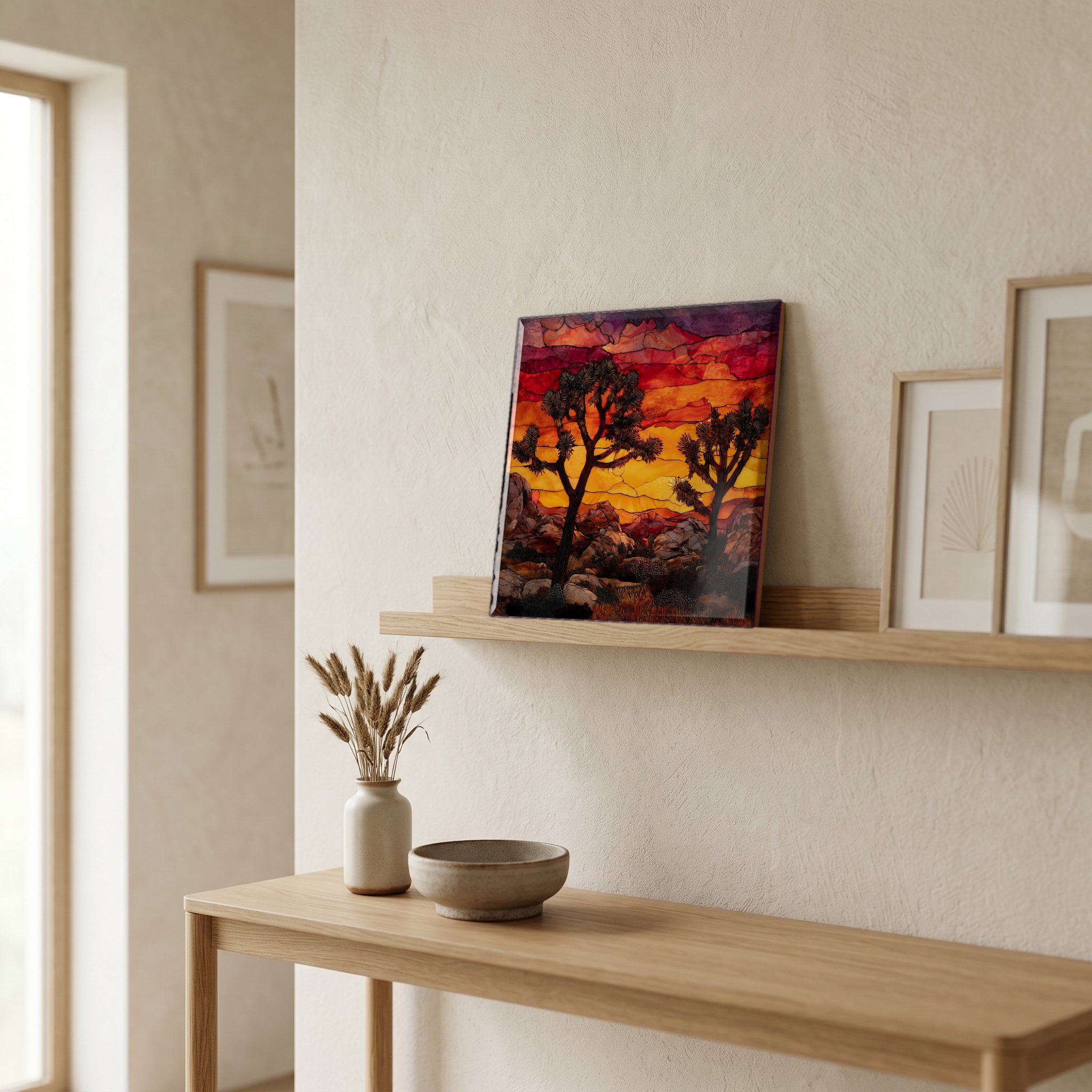
“A high-desert basin where Joshua trees stand thick enough to read as a forest, silhouettes with arms out against the half hour the sky goes red. The park sits where the Mojave and Colorado deserts meet, about two hours east of Los Angeles. People drive in for the rocks and the dark skies and stay for the light. The good light comes twice a day; the sunset comes harder. In late autumn the air is dry enough that the colour holds longer than it should.
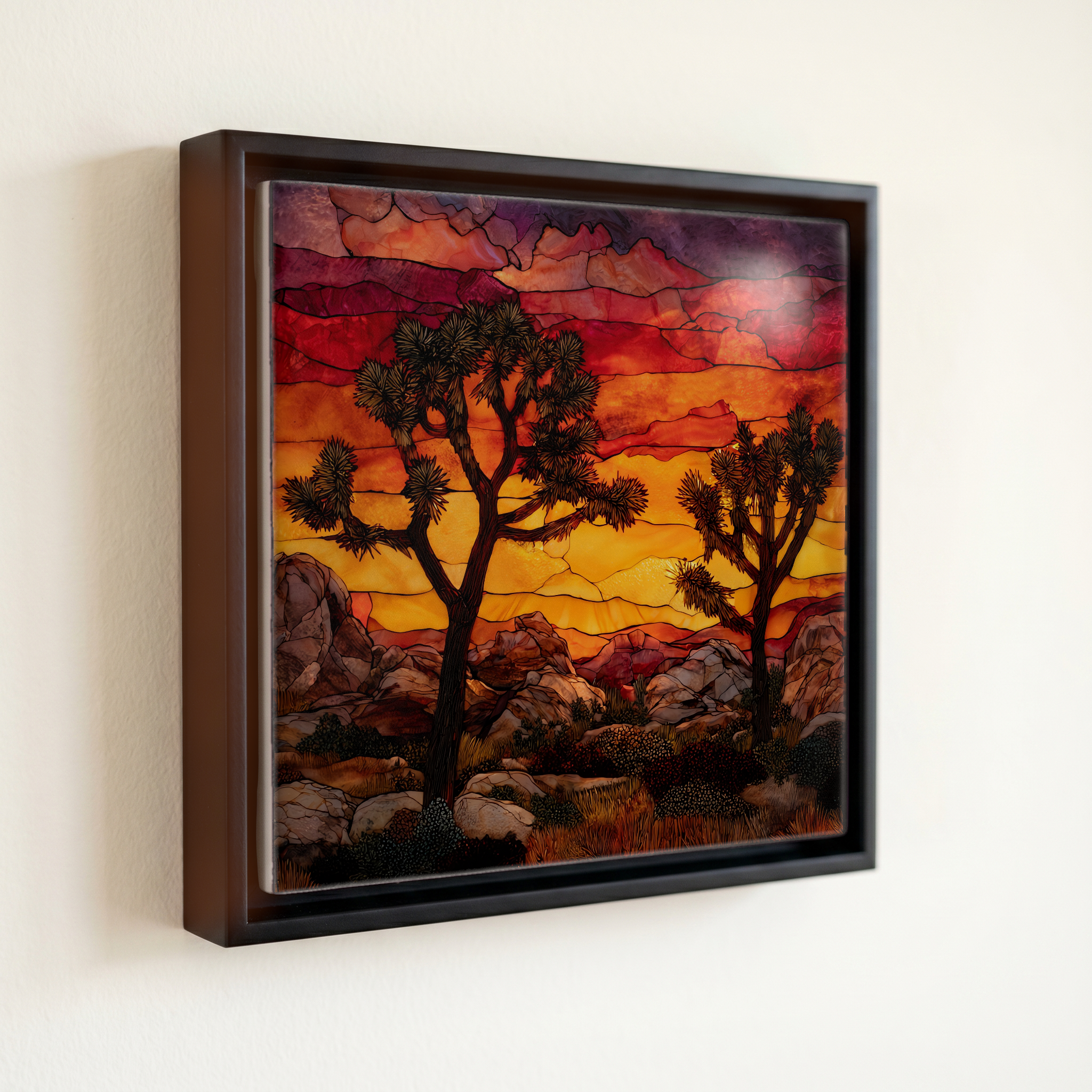
Joshua Tree Forest Burning Sky, on ceramic.
Each tile is finished by hand in our Knoxville studio. Artwork is slowly infused into the ceramic surface under high heat and pressure, and rests beneath a thin glossy finish. The colour lives in the surface, not on top of it.
Pick any four 4-inch tiles — National Parks you've been to, a Smokies set, the four seasons of one place. $ for a set of , cork-backed, ready to live on the table.
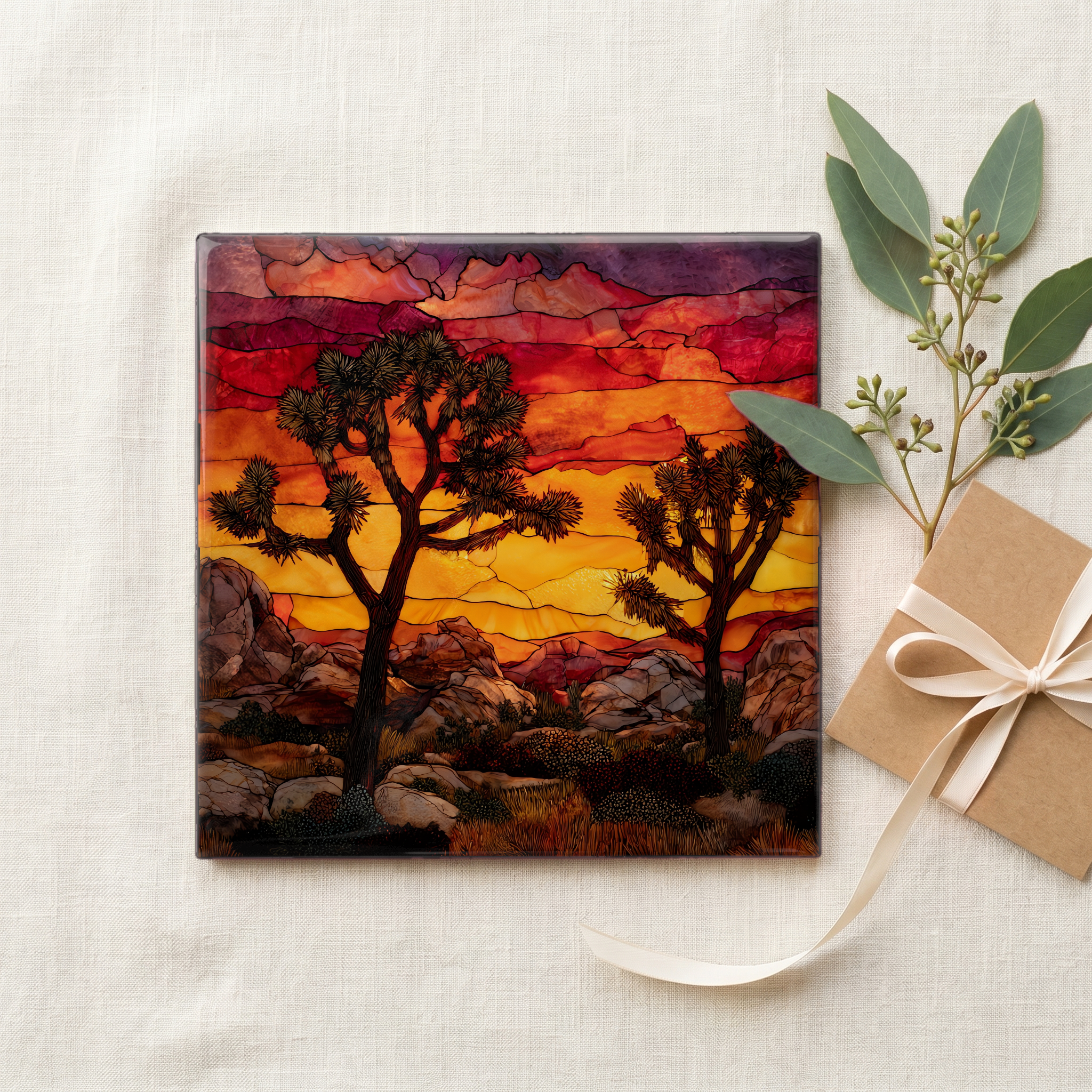
Each tile ships in a kraft box, tied with cream ribbon, with a handwritten note from the studio if you'd like to add one.
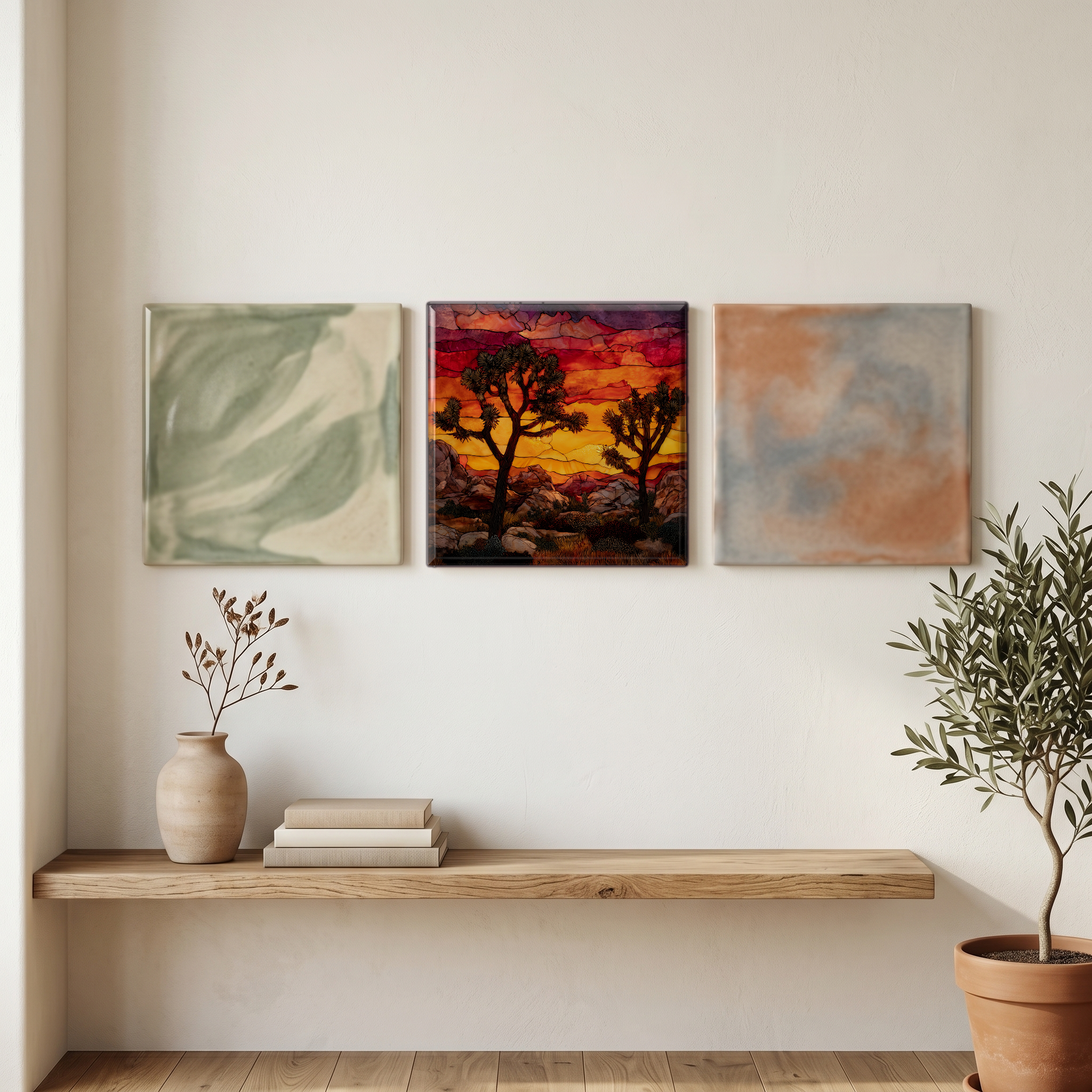
Three or five different vistas, hung together — a chapter of places you've been, or want to go.
The place, in three passes.
Joshua Tree National Park covers about 794,000 acres in southeastern California, where two deserts meet: the higher, cooler Mojave to the west and the lower Colorado to the east [Wikipedia]. The Joshua tree forest sits in the Mojave half, between roughly 2,000 and 5,000 feet of elevation, dense enough through the western basins to read as a woodland rather than a scattering. The park is reached from three gates: Joshua Tree and Twentynine Palms on the north side and Cottonwood on the south, with Los Angeles about 130 miles west [NPS]. It became a National Monument in 1936 under Franklin D. Roosevelt and was redesignated a National Park in 1994 under the California Desert Protection Act.
Sunset in the Mojave runs hot. The sky takes on a band of red and orange that holds for about thirty minutes after the sun is gone, what photographers call the afterglow. The colour comes from fine dust suspended in dry desert air and the long horizontal path the remaining light takes through the lower atmosphere, scattering blue out and leaving the long wavelengths. Joshua trees (Yucca brevifolia) read sharply against that band, their characteristic outstretched arms going black before the rest of the basin does. Joshua Tree was designated an International Dark Sky Park in 2017, one of the largest such parks in the United States, so the burning sky does not give way to city glow but to the Milky Way.
The park is open year-round, but the practical season is October through May; high-summer days routinely break 100°F (38°C) and the granite holds heat well after dark [NPS]. Cooler months pull the crowds: the busiest stretches are spring break and the November-to-March weekends. Three entrances serve the park, the West Entrance near the town of Joshua Tree, the North Entrance at Twentynine Palms, and the Cottonwood entrance off Interstate 10 to the south. The standard entrance fee is $30 per vehicle for a seven-day pass. Keys View, a fifteen-minute drive from the West Entrance, opens the broad sunset window across the Coachella Valley to Mount San Jacinto and the trace of the San Andreas Fault.