Wender·Vista
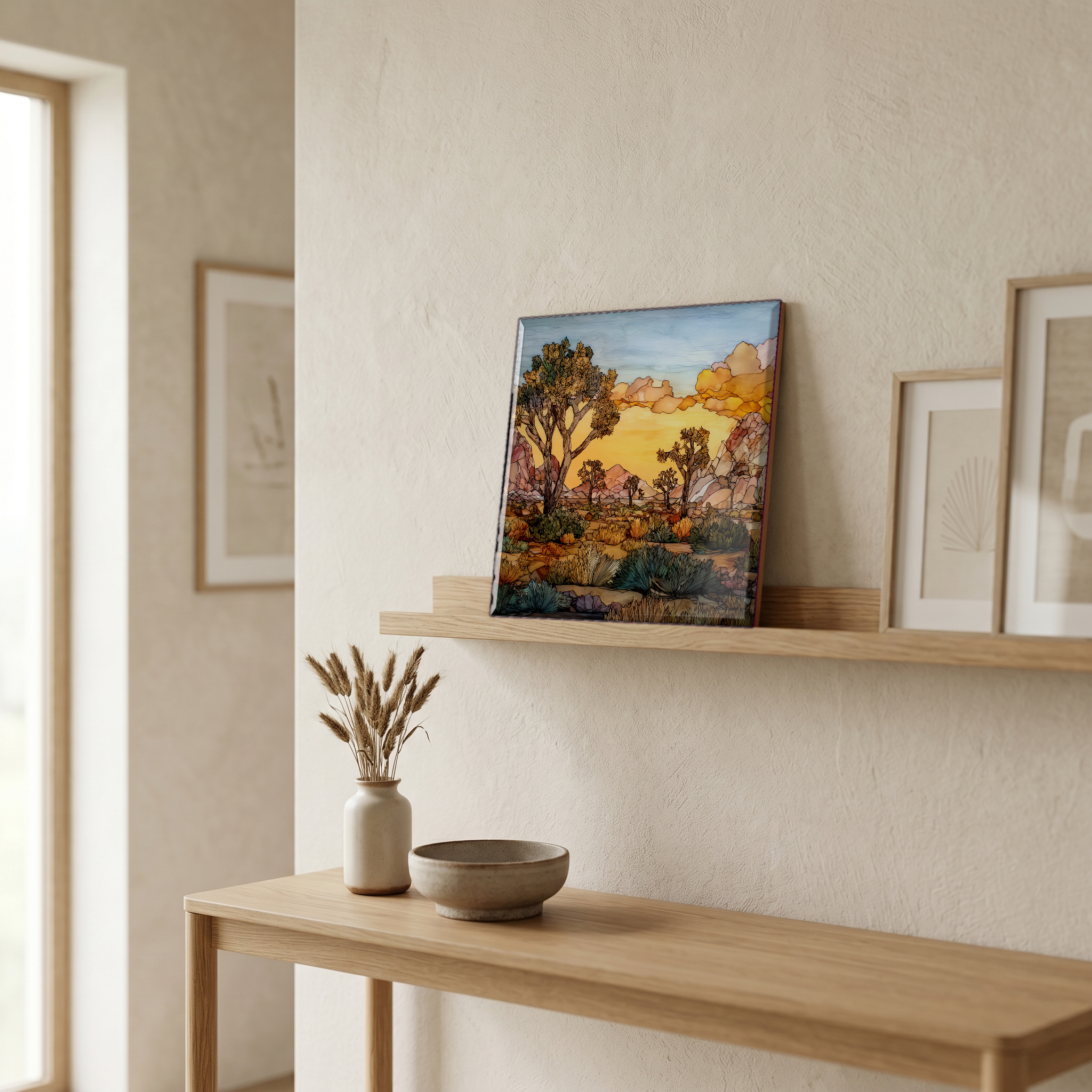
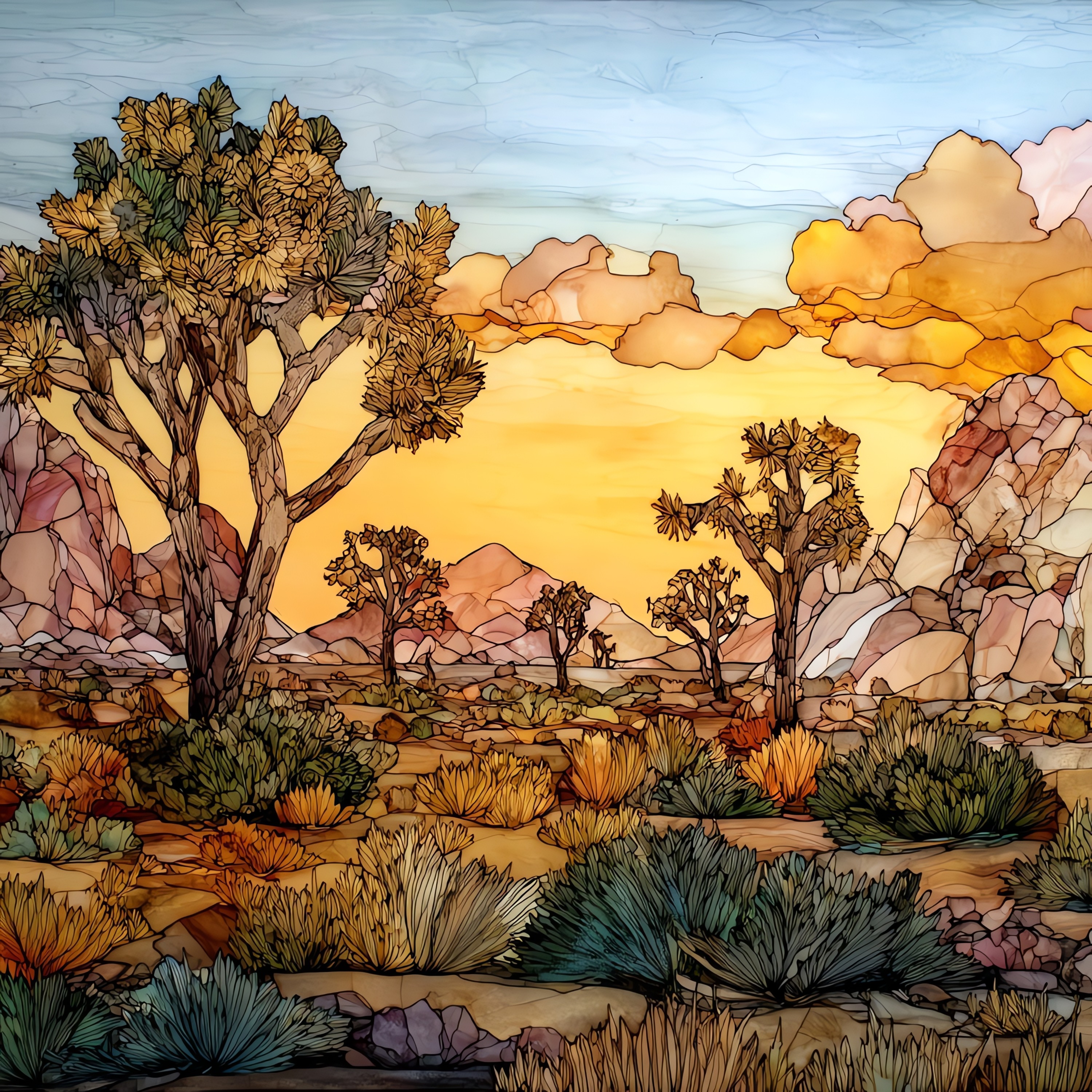
Joshua Tree Forest
shown on ceramic, 12-inch tileCalifornia · United States
in the high Mojave, where two deserts meet

Joshua Tree Forest

a forest with the spaces left in.

Where it lives

Not only on a wall.

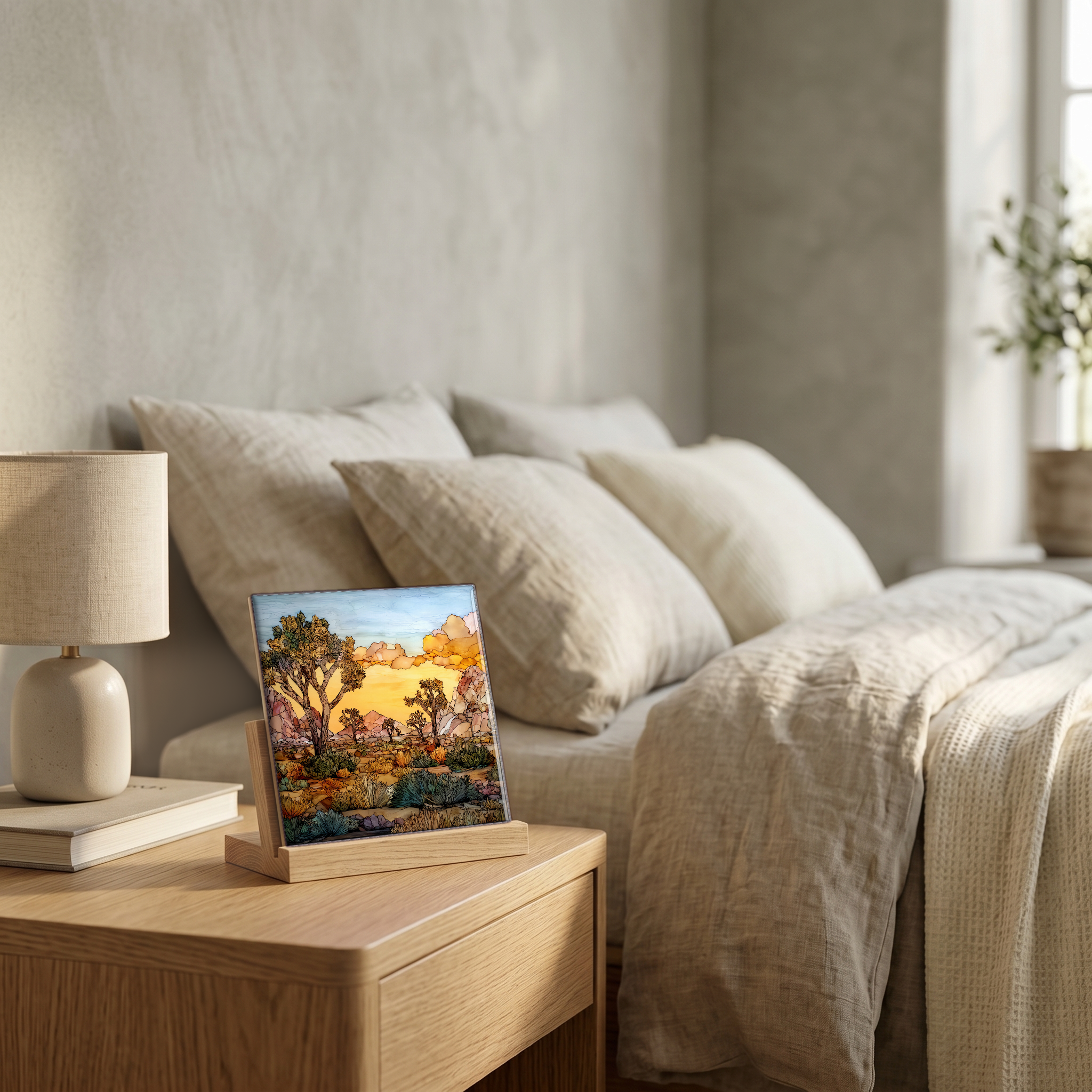
A small tile on the nightstand catching the morning. A larger one above the fire. Yours, wherever you spend the slow hours.
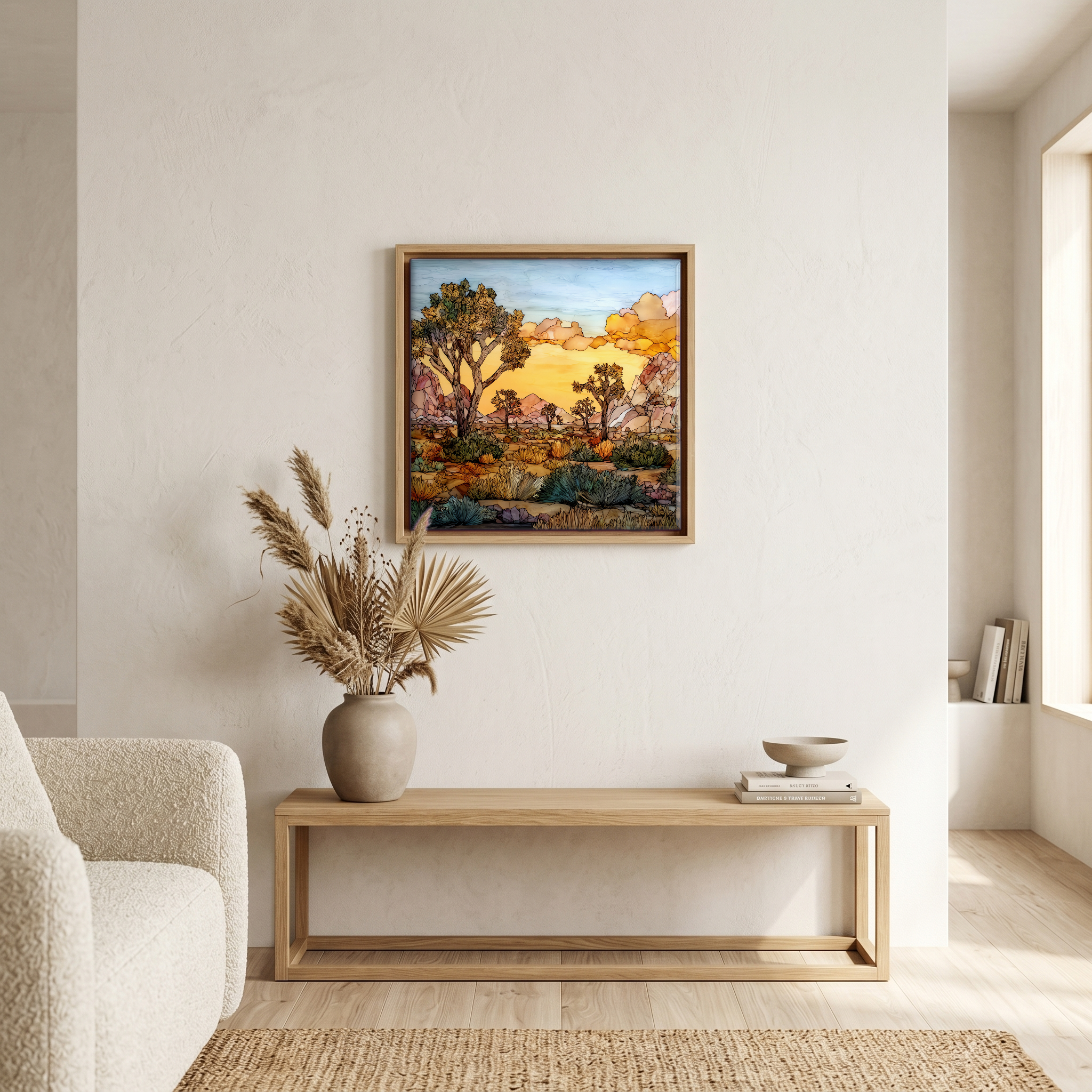
Above the bench, in a warm oak surround.
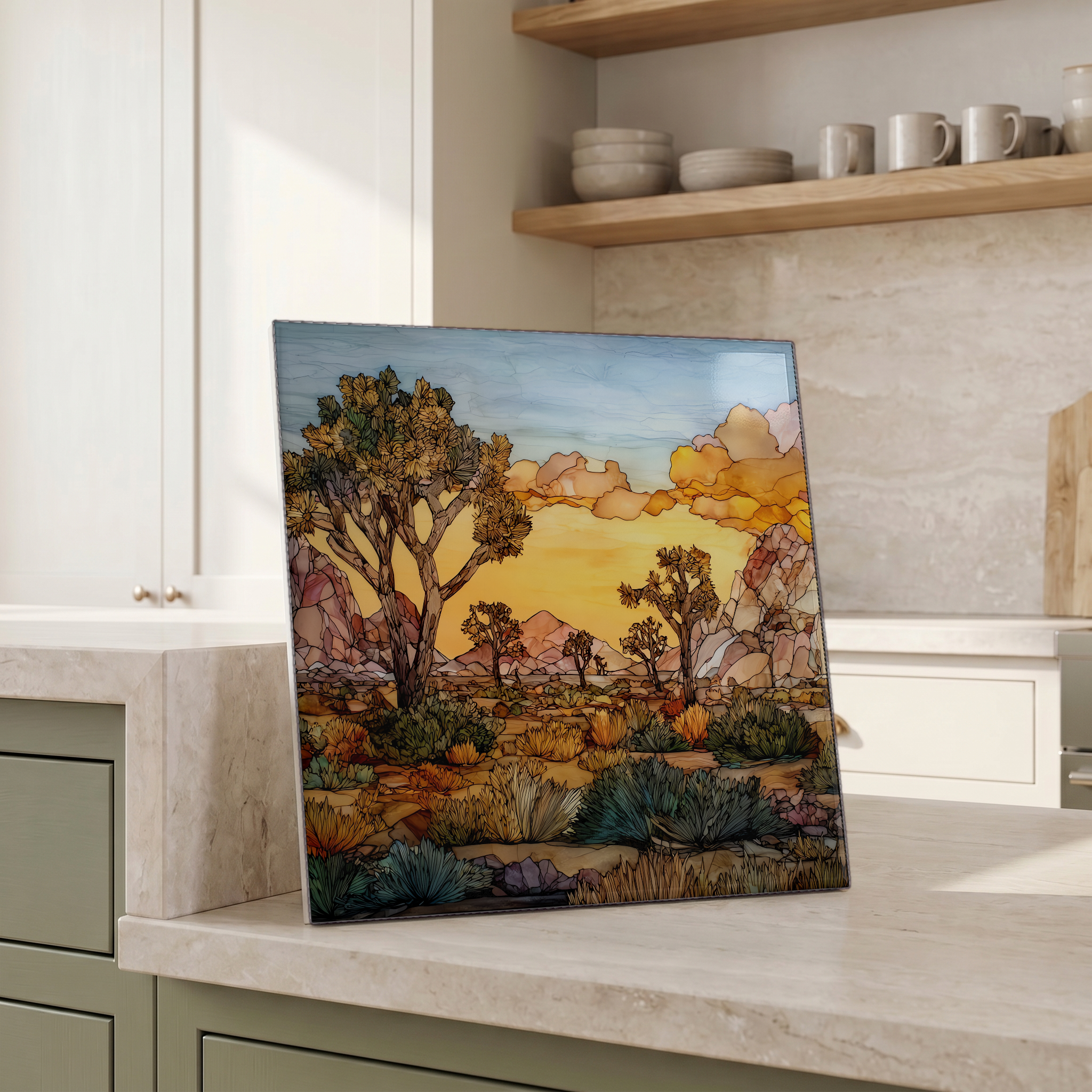
Beside the kettle, propped on the counter.
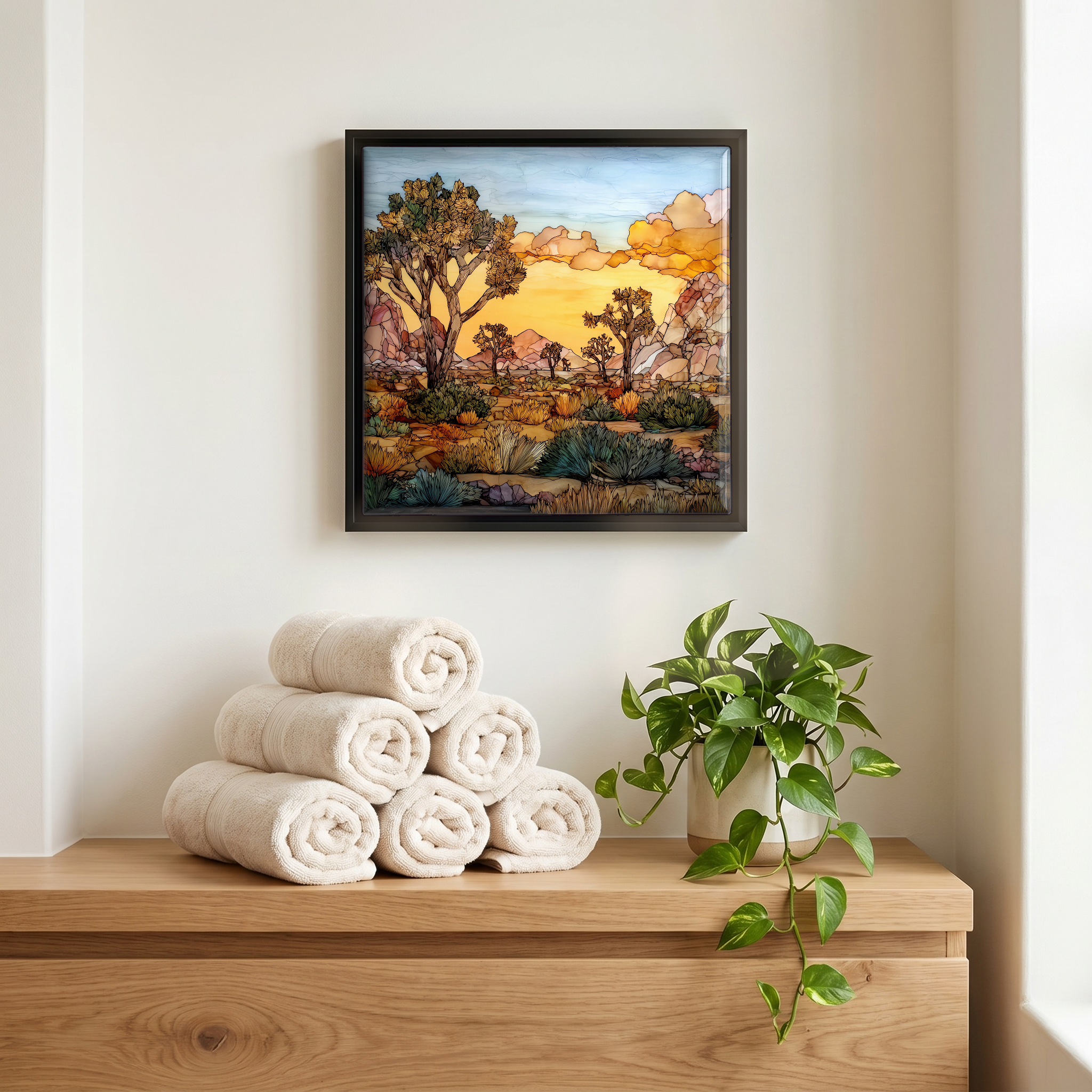
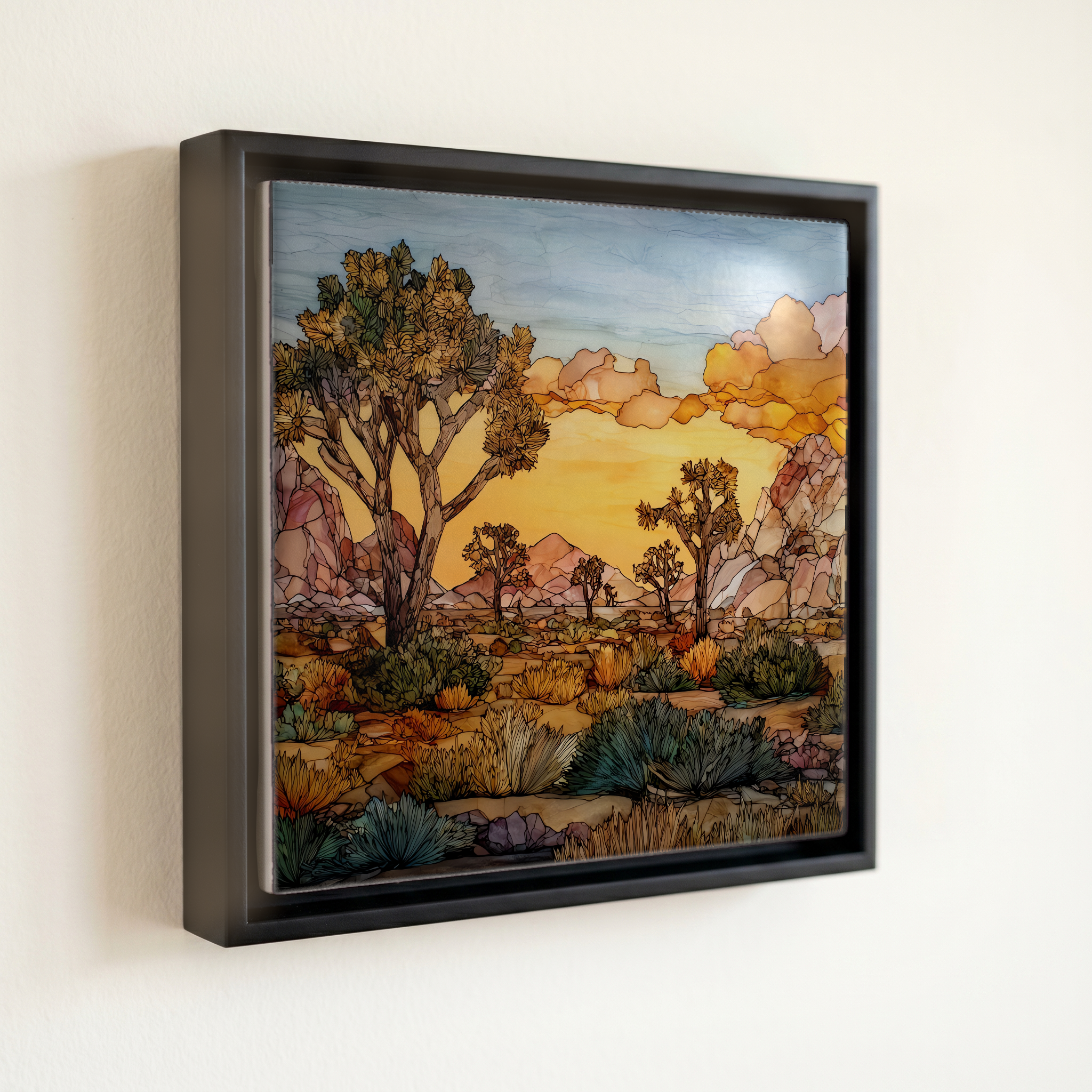
Above the linens, in a slim black surround.
On the nightstand, on a light oak stand.
On a picture ledge, where the light comes in.
a note from the studio

The Joshua trees only grow in the Mojave, only in the high country, only where the winter stays cold enough. The park holds some of the largest stands left: Hidden Valley, Queen Valley, the slow climb up to Keys View. The trees stand apart from one another, the way desert plants do when water is the thing being shared. Some are older than the road. Pollinated by one kind of moth, the way old arrangements work. Best photographed an hour before sunset, when the shadows reach east and the sky behind the arms turns the colour of cooling iron.
from the studio
shown in a slim black floating frame · 6 × 6 in
— bring it home

Joshua Tree Forest, on ceramic.

Each tile is finished by hand in our Knoxville studio. Artwork is slowly infused into the ceramic surface under high heat and pressure, and rests beneath a thin glossy finish. The colour lives in the surface, not on top of it.

What kind of piece?
One tile — square or rectangle.
How big?
the popular one — counter, shelf, nightstand
6 × 6 in · 15 cm · 1.6 lb
Surface finish
A clear glossy finish — the artwork reads as if under resin. Ideal for show-pieces and framed wall art.
How it sits
A hidden cleat — sits ¼″ proud of the wall.
$58
Hand-finished and shipped from our studio at the foot of the Smokies. On your wall in about ten days.
size
6 × 6 in
15 cm
weighs
1.6 lb
solid in the hand
surface
ceramic, hand-finished
art rests beneath a thin glossy finish
from
Knoxville, TN
our family studio, at the foot of the Smokies
— start a Coaster Set

Pick any four 4-inch tiles — National Parks you've been to, a Smokies set, the four seasons of one place. $ for a set of , cork-backed, ready to live on the table.
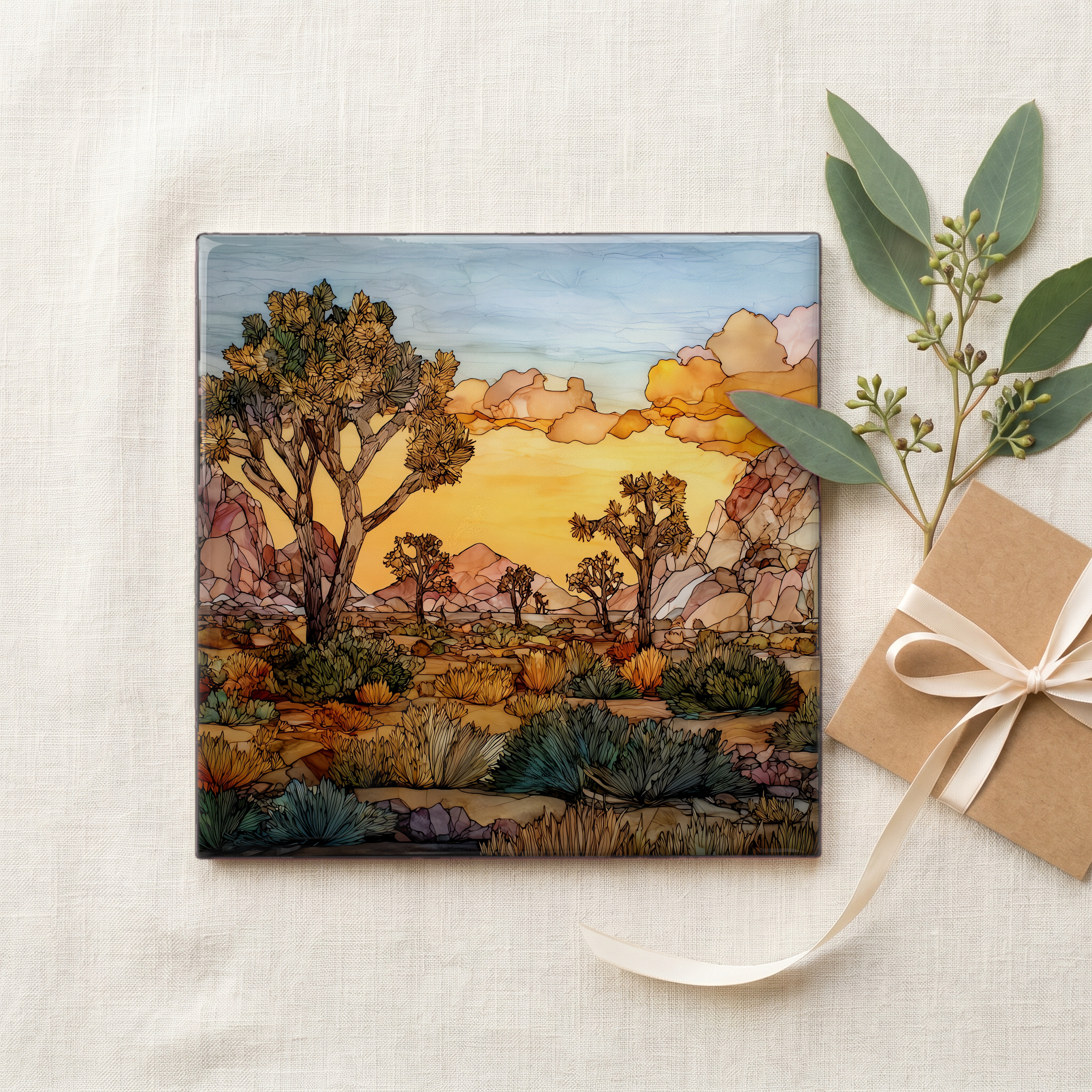
comes gift-ready
comes gift-ready

Each tile ships in a kraft box, tied with cream ribbon, with a handwritten note from the studio if you'd like to add one.
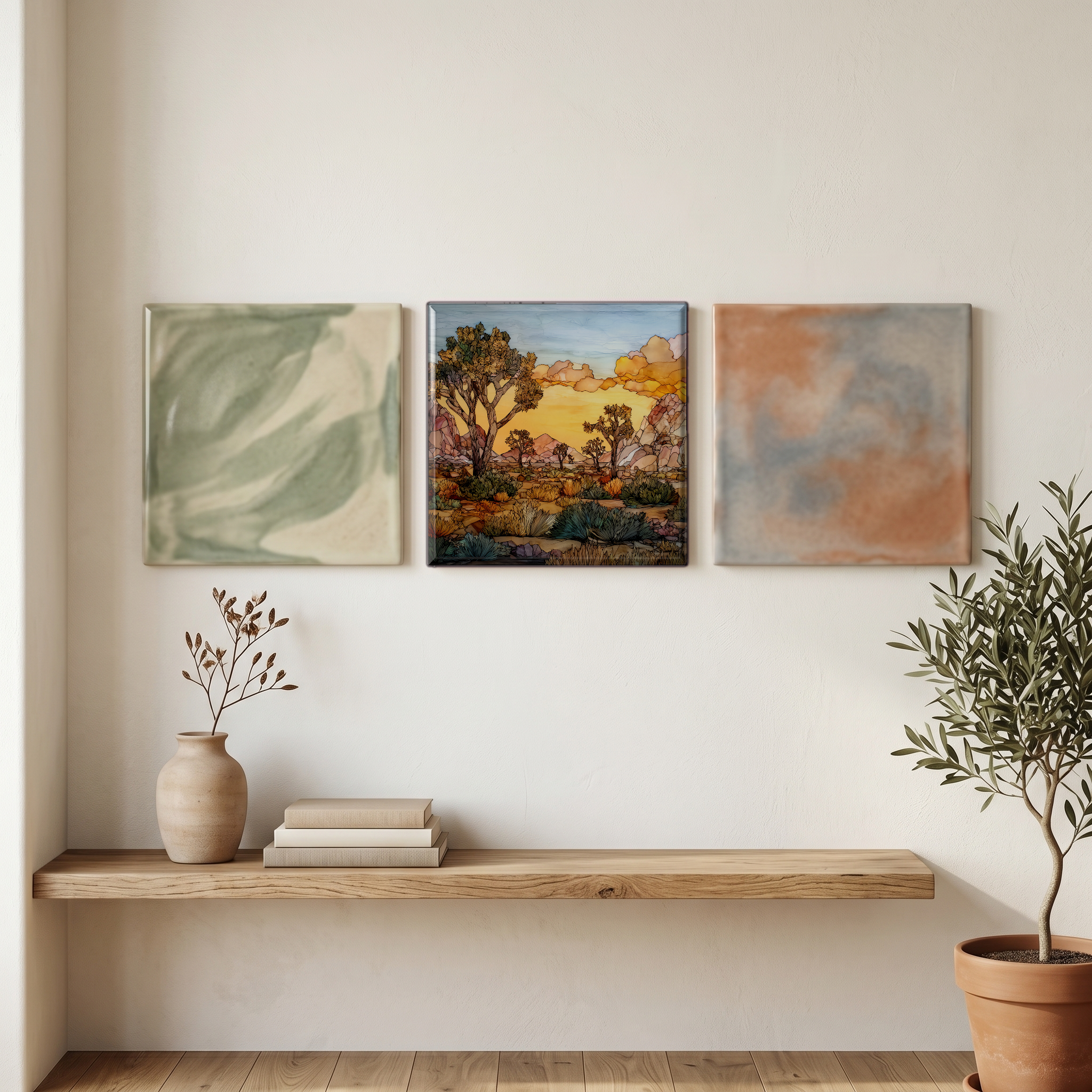
or build a grouping
or build a grouping

Three or five different vistas, hung together — a chapter of places you've been, or want to go.

about Joshua Tree Forest

The place, in three passes.

A little of what's known, in case you fall down the rabbit hole — or want to go see it yourself.
the place

Joshua Tree National Park spans roughly 795,156 acres at the meeting of the Mojave and Colorado deserts in southeastern California, about 140 miles east of Los Angeles. The Joshua tree (Yucca brevifolia) only grows in the Mojave portion of the park, above roughly 3,000 feet, where winter temperatures drop low enough to trigger flowering. Densest stands cluster around Queen Valley, Lost Horse Valley, and Black Rock Canyon. Congress redesignated the area from a national monument to a national park on October 31, 1994, under the California Desert Protection Act, expanding it by some 234,000 acres. The park's high point, Quail Mountain, reaches 5,816 feet.

— informed by NPS, Wikipedia
the season

Joshua trees flower only in years when winter freezes are deep enough and rainfall is right; the bloom runs from late February through April, with cream-white panicles rising up to a foot above the branch tips. The species is pollinated almost exclusively by yucca moths in the genus Tegeticula, a mutualism so specific that without the moths, no seeds set. Climate modeling on park lands projects that much of the current Joshua tree range may become unsuitable by 2100 under high-warming scenarios. Spring (March to April) and autumn (October to November) bring the most workable temperatures; summer afternoons routinely cross 100°F (38°C).

the visit

Three entrance stations serve the park: the West Entrance near the town of Joshua Tree, the North Entrance at Twentynine Palms, and the South Entrance off Interstate 10 at Cottonwood. Park admission is $30 per vehicle for seven days; an annual America the Beautiful pass covers entry. The densest Joshua tree stands run along Park Boulevard between Quail Springs and Jumbo Rocks. The road climbs to Keys View at 5,185 feet, the park's most accessible high overlook, with sight lines across the Coachella Valley to the San Jacinto and San Gorgonio peaks on a clear day. Cell service drops a half-mile inside any gate.

— informed by NPS · Plan Your Visit
where
United States · Riverside and San Bernardino counties, California
within
Joshua Tree National Park
position
33.8734° N · 115.9010° W
the neighborhood

What's nearby.

A handful of named places within an hour's walk or short drive. Some we've already painted; some we will.
1 km W
Hidden Valley
rock formations
3 km N
Wonderland of Rocks
boulder maze
8 km E
Skull Rock
rock formation
10 km E
Jumbo Rocks
granite formations
10 km SW
Keys View
high overlook
15 km NW
Joshua Tree
gateway town
N
Joshua Tree Forest
Hidden Valley
Wonderland of Rocks
Skull Rock
Jumbo Rocks
Keys View
Joshua Tree
common questions

What people ask.

A few questions we get about Joshua Tree Forest — and about bringing the piece home.
about the place

The densest Joshua tree forests grow inside Joshua Tree National Park, in southeastern California, about 140 miles east of Los Angeles. The trees only grow in the park's Mojave Desert section, above roughly 3,000 feet elevation. Park Boulevard between Quail Springs and Jumbo Rocks runs through some of the densest stands.

No. Yucca brevifolia is a yucca, a member of the agave family. It has no annual growth rings, so age is estimated from height and arm count. The largest known specimens in the park are over 40 feet tall and likely 150 to 300 years old.

The accepted story is that Mormon settlers crossing the Mojave in the mid-1800s named the tree after the prophet Joshua, with its upraised arms reading as a figure pointing the way west. The name predates the park's 1936 designation as a national monument.

Joshua trees depend on cold winter nights to flower and on yucca moths in the genus Tegeticula for pollination. Climate modeling on park lands projects that much of the current Joshua tree range may become unsuitable by 2100 under high-warming scenarios, with seedling survival the weakest link.

Cream-white flower panicles appear from late February through April, but only in years when winter cold and rainfall align, typically every two to five years. The bloom rises up to a foot above the branch tips and lasts about two weeks.

March through April and October through November bring workable daytime temperatures, usually 60 to 85°F. Summer afternoons routinely cross 100°F and daytime water needs rise sharply. Spring also overlaps the desert wildflower bloom at lower elevations near the South Entrance.

about the piece in your home

Yes. For someone whose memory of the park is the silhouette against a desert sky, the WenderVista tile carries the place forward. A Small or Medium with a handwritten note from the studio works for a desk or shelf; the Large reads at sofa scale.

The piece sits well in Desert Modern, Mountain-modern, and Mid-century interiors, where its warm earth tones and the structural silhouette of the trees echo the room. The stained-glass treatment also reads at home in Maximalist and Bohemian rooms where the wall already carries colour.

Yes. Desert Modern and the broader Earth-tone Revival lean on terracotta, sage, ochre, and rust, the palette the Joshua Tree tile carries. The work groups well with woven textures, raw oak, and unfinished plaster.

Above a standard 84-inch sofa, the Large reads from across the room. For a stronger statement, a 4-tile Mural gives a 24-inch by 24-inch field; the 9-tile Mural delivers a 36-inch by 36-inch field that anchors a wall. Above a console, the Medium typically holds.

Yes, order it in Dura Satin or Matte. Both finishes resist scratches and stand up to humidity. The Glossy finish is reserved for framed wall pieces kept away from steam and splash.

A soft microfibre cloth with water is enough. For an installed Mural, the same cloth handles dust and fingerprints. Skip ammonia, vinegar, and abrasive cleaners; the colour lives in the surface and does not need polishing.

Yes. Every WenderVista piece is a Reid Wender original, hand-finished in the studio in Knoxville, Tennessee. There is no licensing, no resale of stock images, and no other studio carries the WenderVista line.

if this one stayed with you

A few you might also love.

Hand-picked by the eye that found Sorapis. Same air, same kind of quiet.