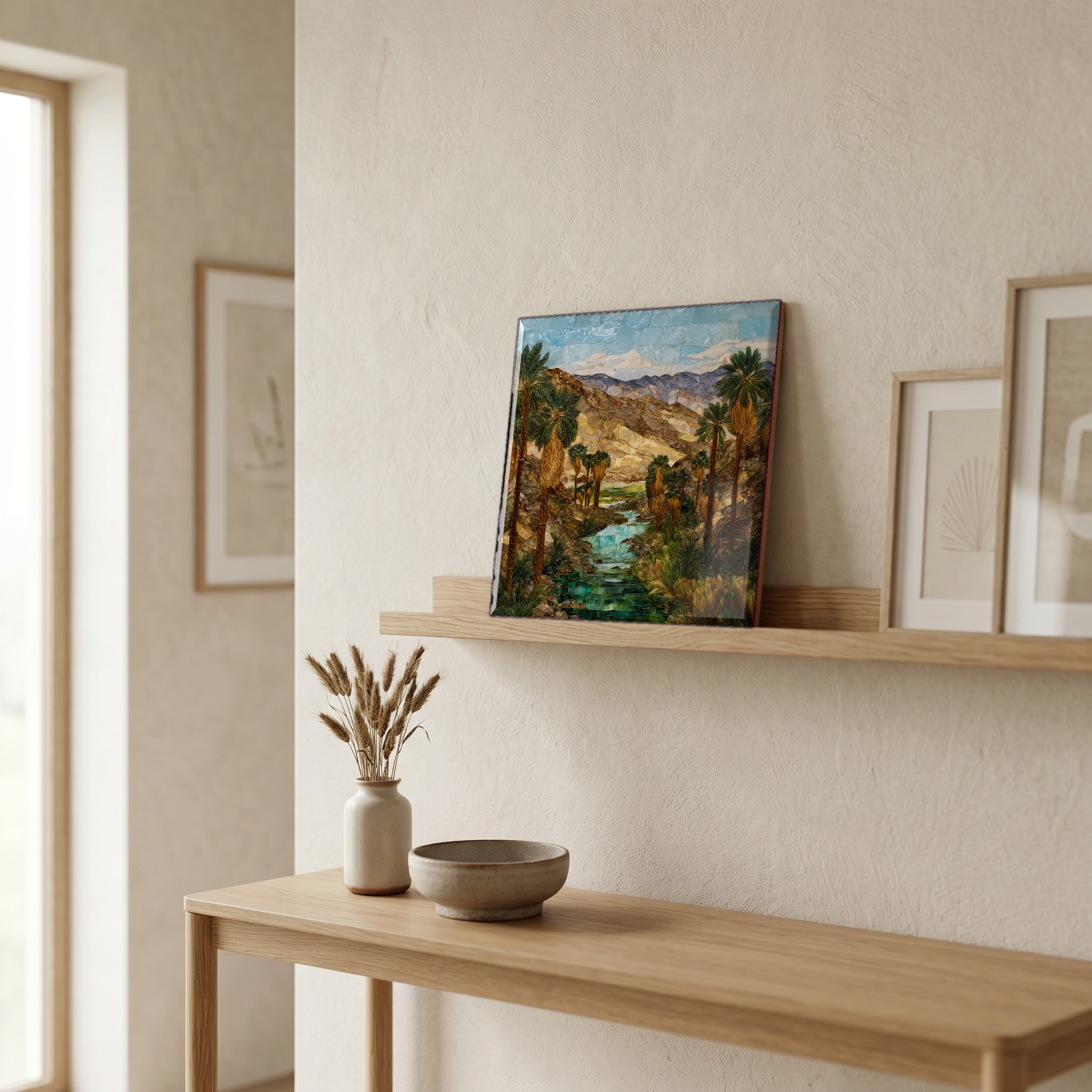
Wender·Vista
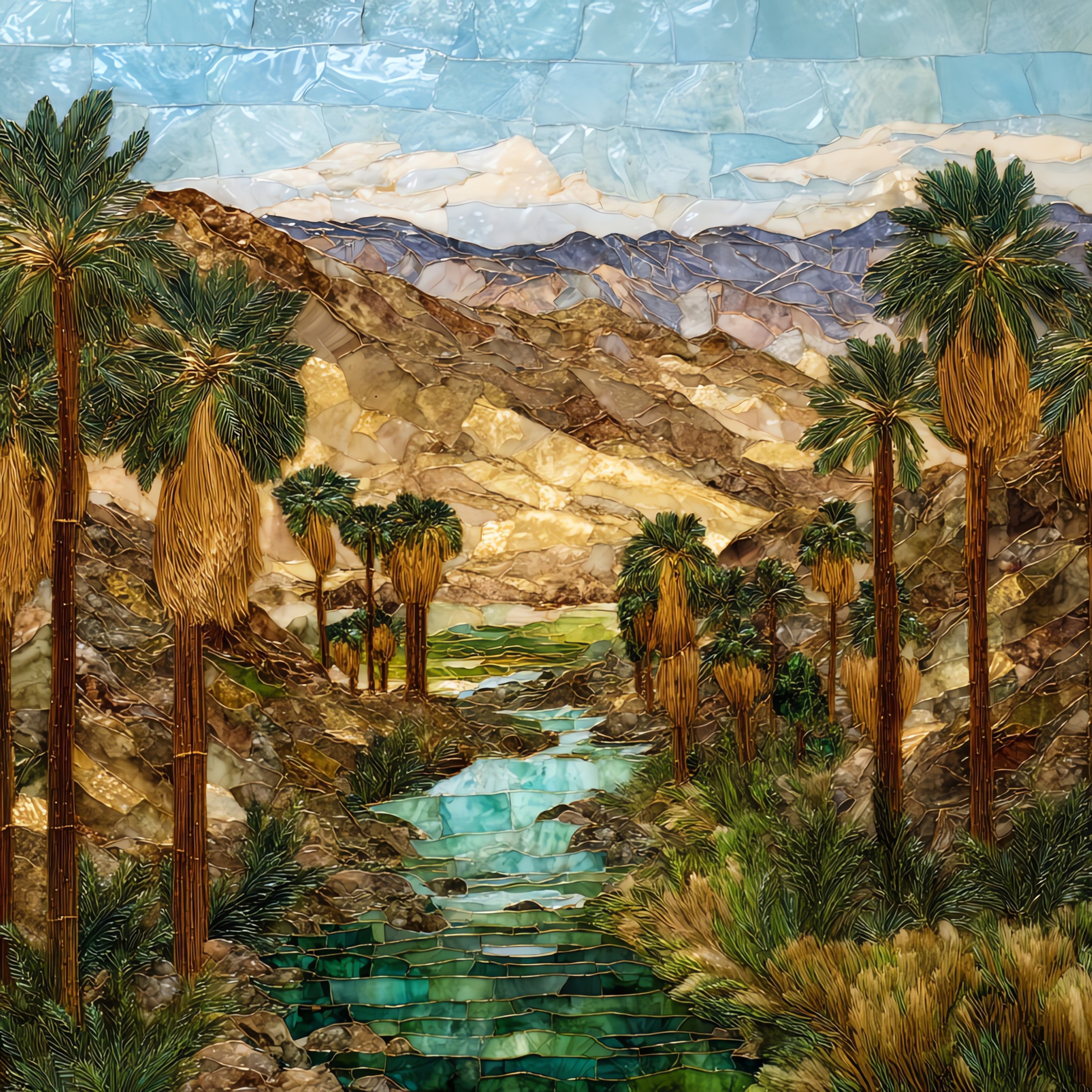
Indian Canyons Palm Springs
shown on ceramic, 12-inch tileCalifornia · United States
south of Palm Springs, at the foot of the San Jacintos

Indian Canyons Palm Springs

the green the desert keeps to itself.

Where it lives

Not only on a wall.

A small tile on the nightstand catching the morning. A larger one above the fire. Yours, wherever you spend the slow hours.
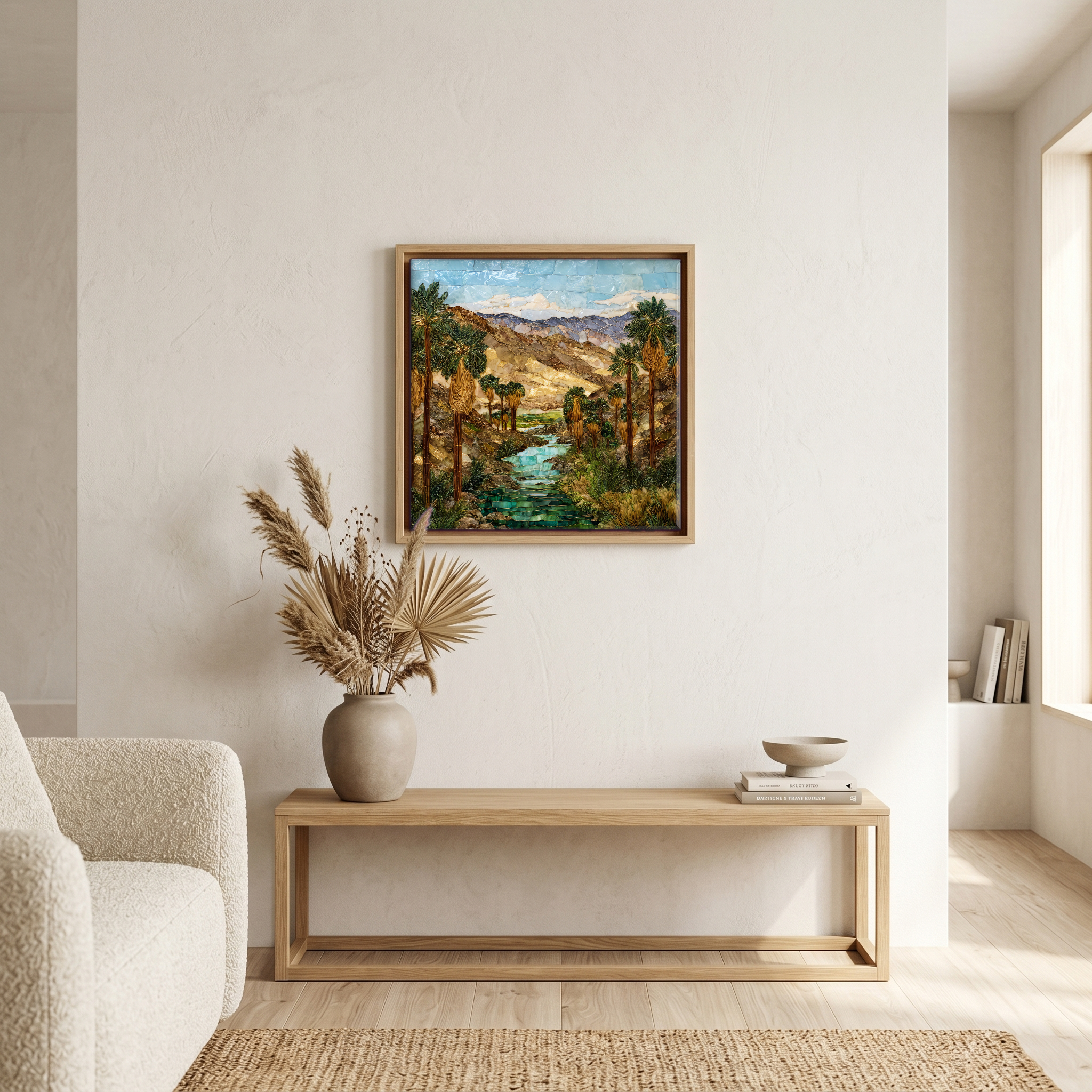
Above the bench, in a warm oak surround.
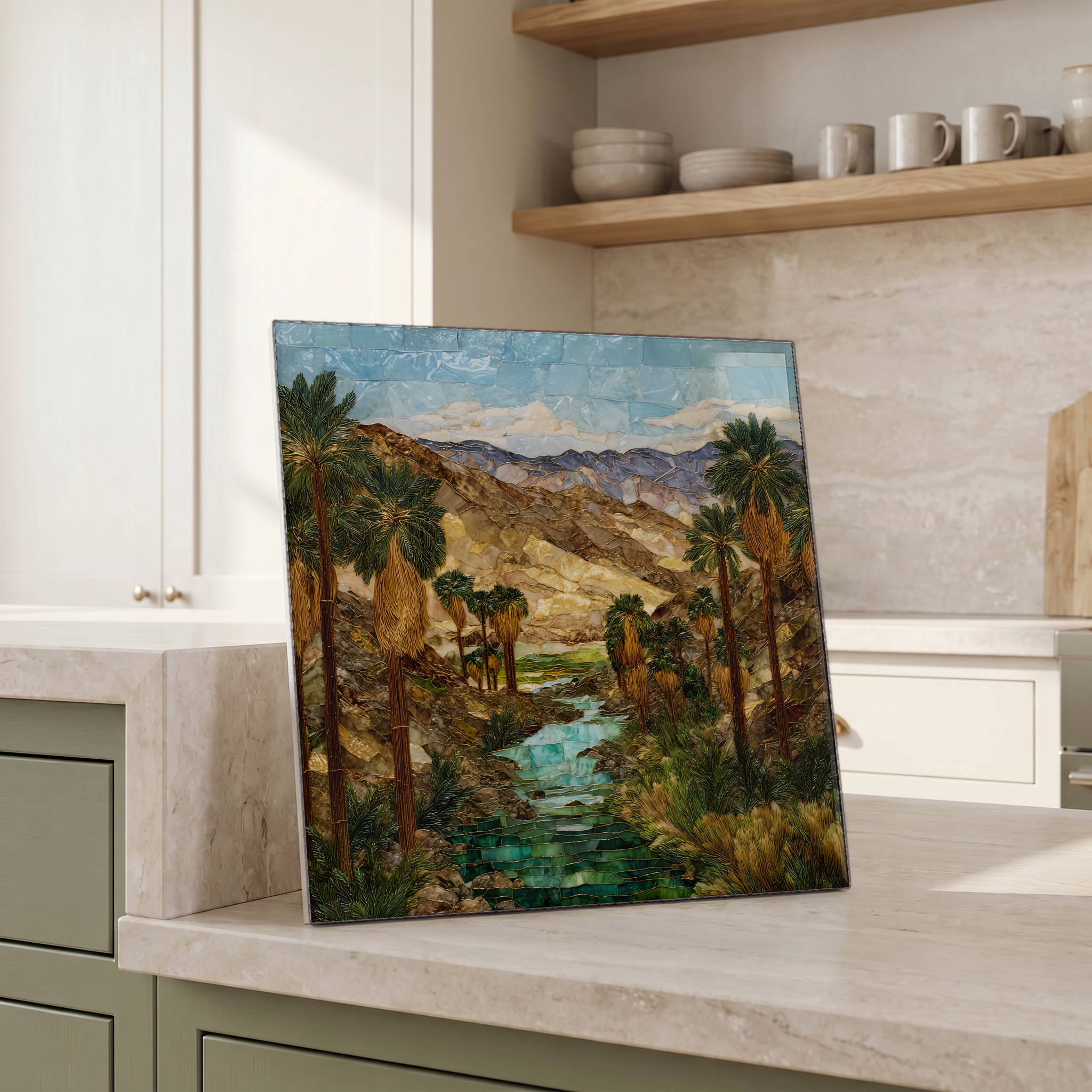
Beside the kettle, propped on the counter.
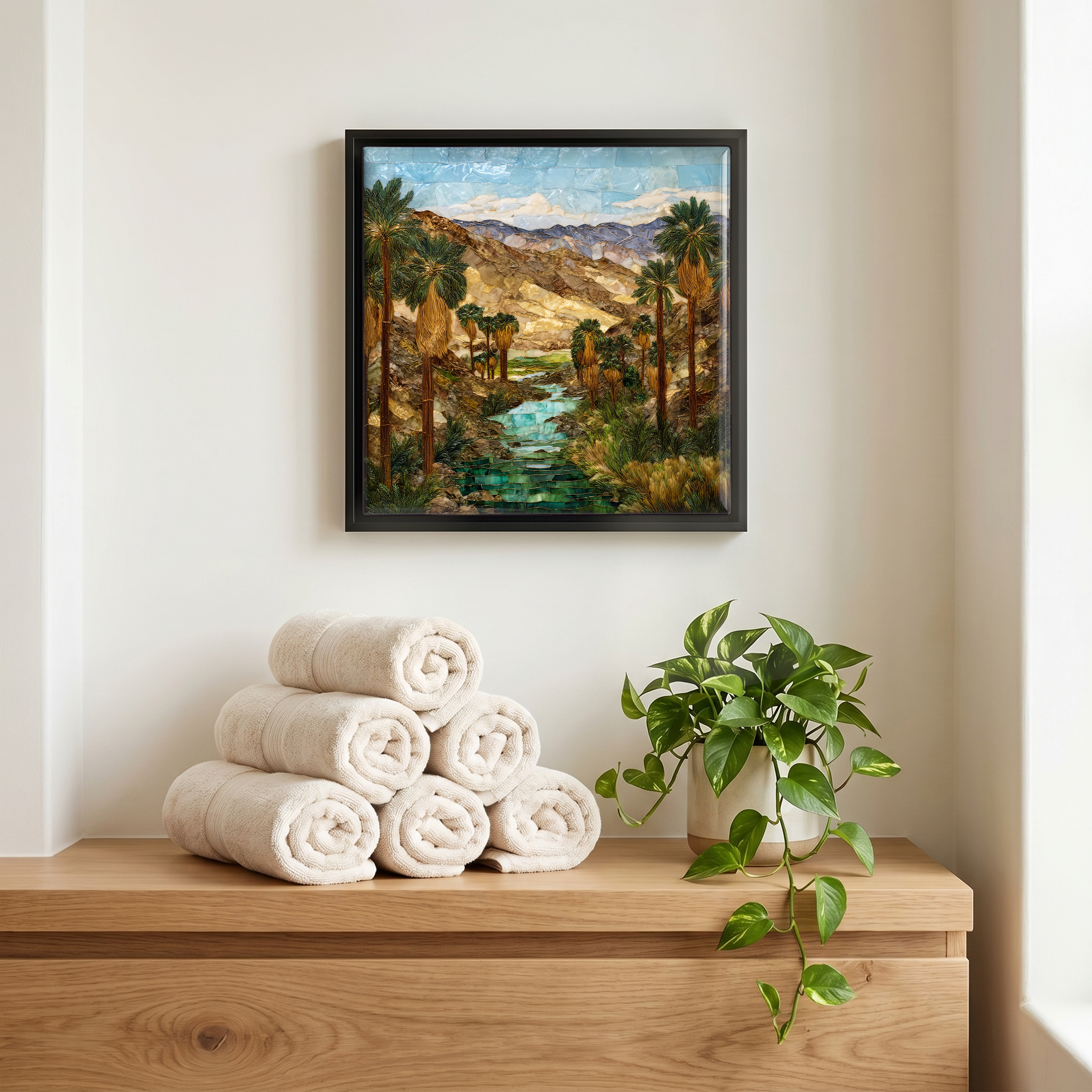
Above the linens, in a slim black surround.
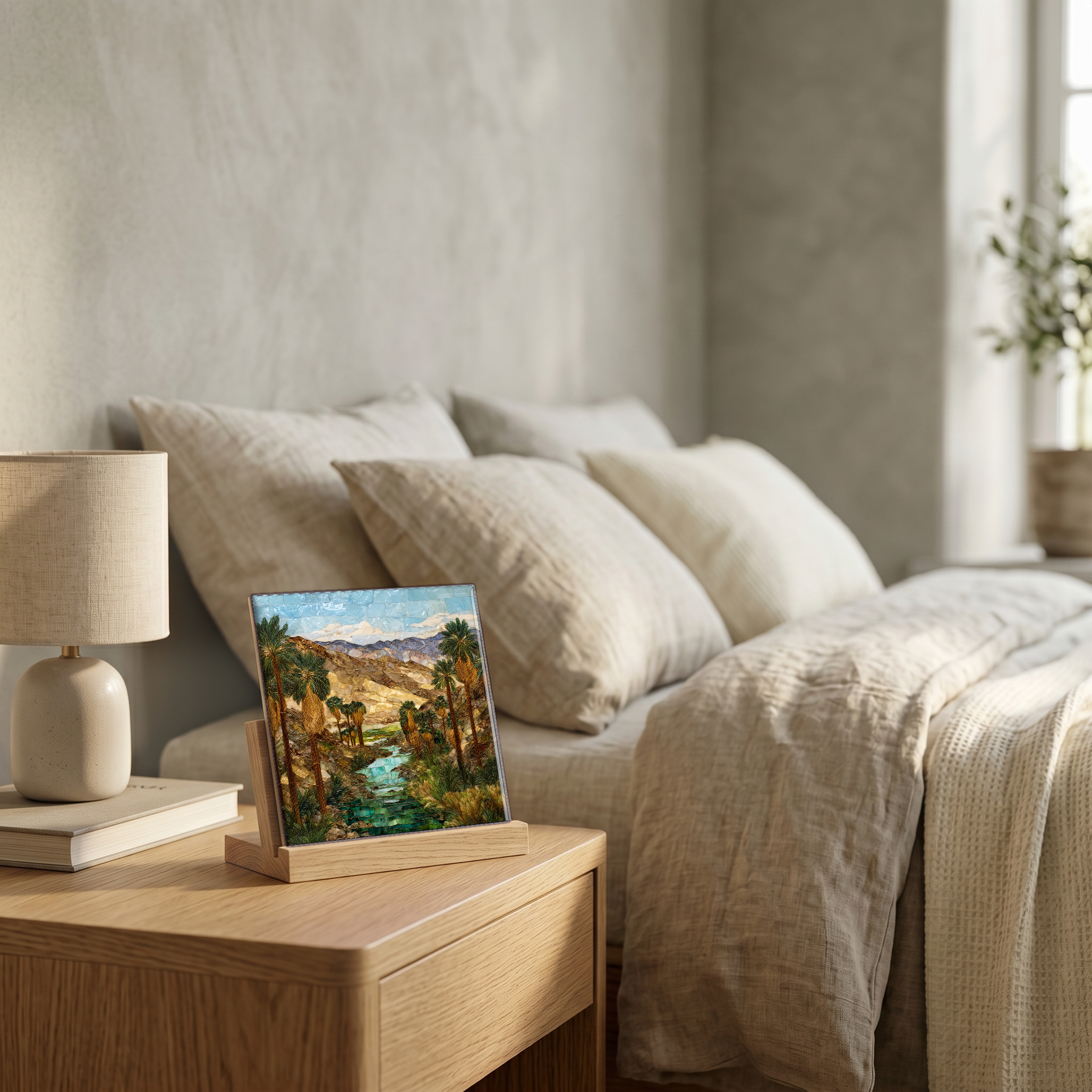
On the nightstand, on a light oak stand.
On a picture ledge, where the light comes in.
a note from the studio

Three canyons cut into the eastern foot of the San Jacintos, on land the Agua Caliente Cahuilla have lived on for centuries. Palm Canyon runs fifteen miles, the world's largest stand of Washingtonia filifera, the only palm tree native to the California desert. The stream runs cold even in July. There are bedrock mortars along the trail in Andreas Canyon where families ground mesquite before the highway came through. Most of the year you can be in the shade by mid-morning.
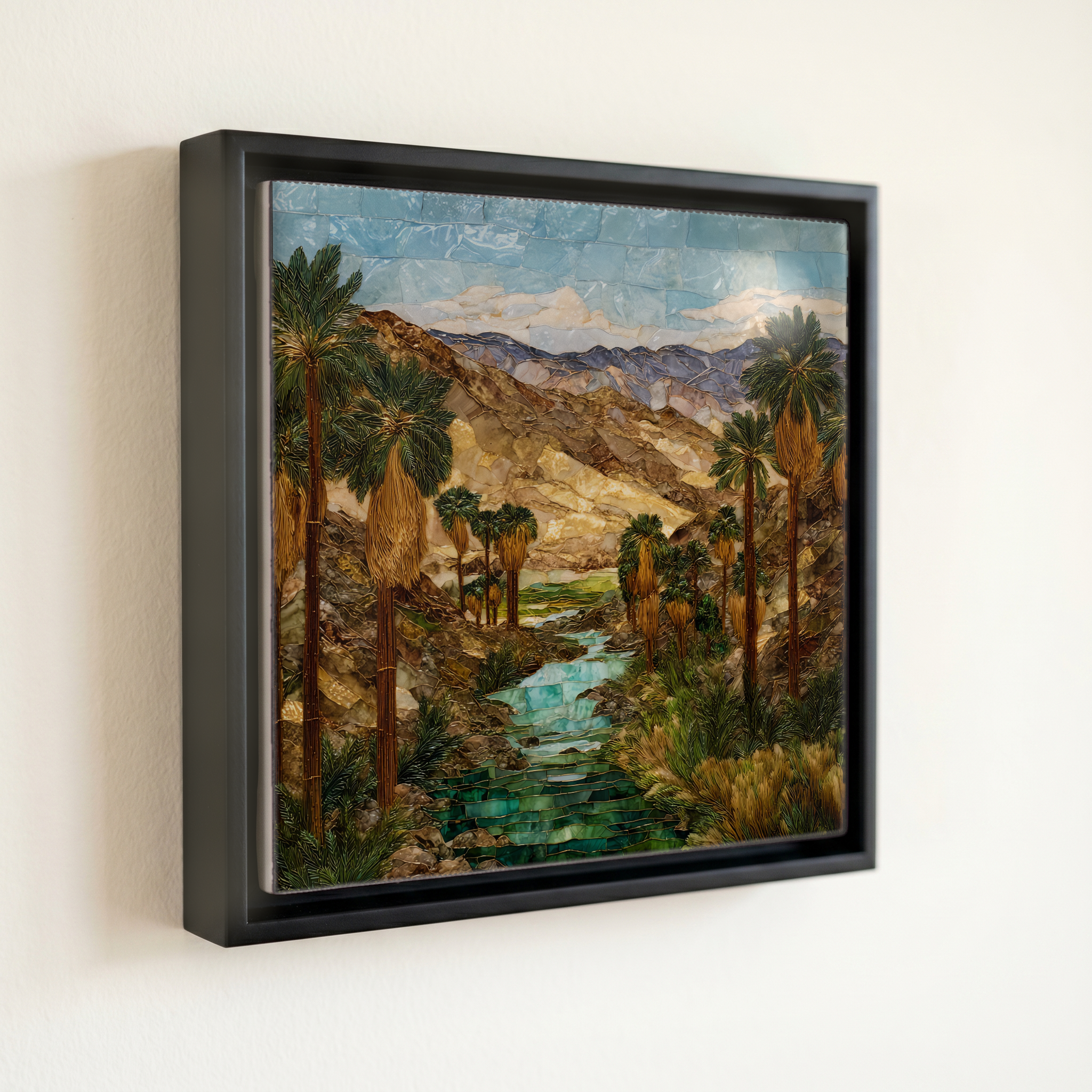
from the studio
shown in a slim black floating frame · 6 × 6 in
— bring it home

Indian Canyons Palm Springs, on ceramic.

Each tile is finished by hand in our Knoxville studio. Artwork is slowly infused into the ceramic surface under high heat and pressure, and rests beneath a thin glossy finish. The colour lives in the surface, not on top of it.

What kind of piece?
One tile — square or rectangle.
How big?
the popular one — counter, shelf, nightstand
6 × 6 in · 15 cm · 1.6 lb
Surface finish
A clear glossy finish — the artwork reads as if under resin. Ideal for show-pieces and framed wall art.
How it sits
A hidden cleat — sits ¼″ proud of the wall.
$58
Hand-finished and shipped from our studio at the foot of the Smokies. On your wall in about ten days.
size
6 × 6 in
15 cm
weighs
1.6 lb
solid in the hand
surface
ceramic, hand-finished
art rests beneath a thin glossy finish
from
Knoxville, TN
our family studio, at the foot of the Smokies
— start a Coaster Set

Pick any four 4-inch tiles — National Parks you've been to, a Smokies set, the four seasons of one place. $ for a set of , cork-backed, ready to live on the table.
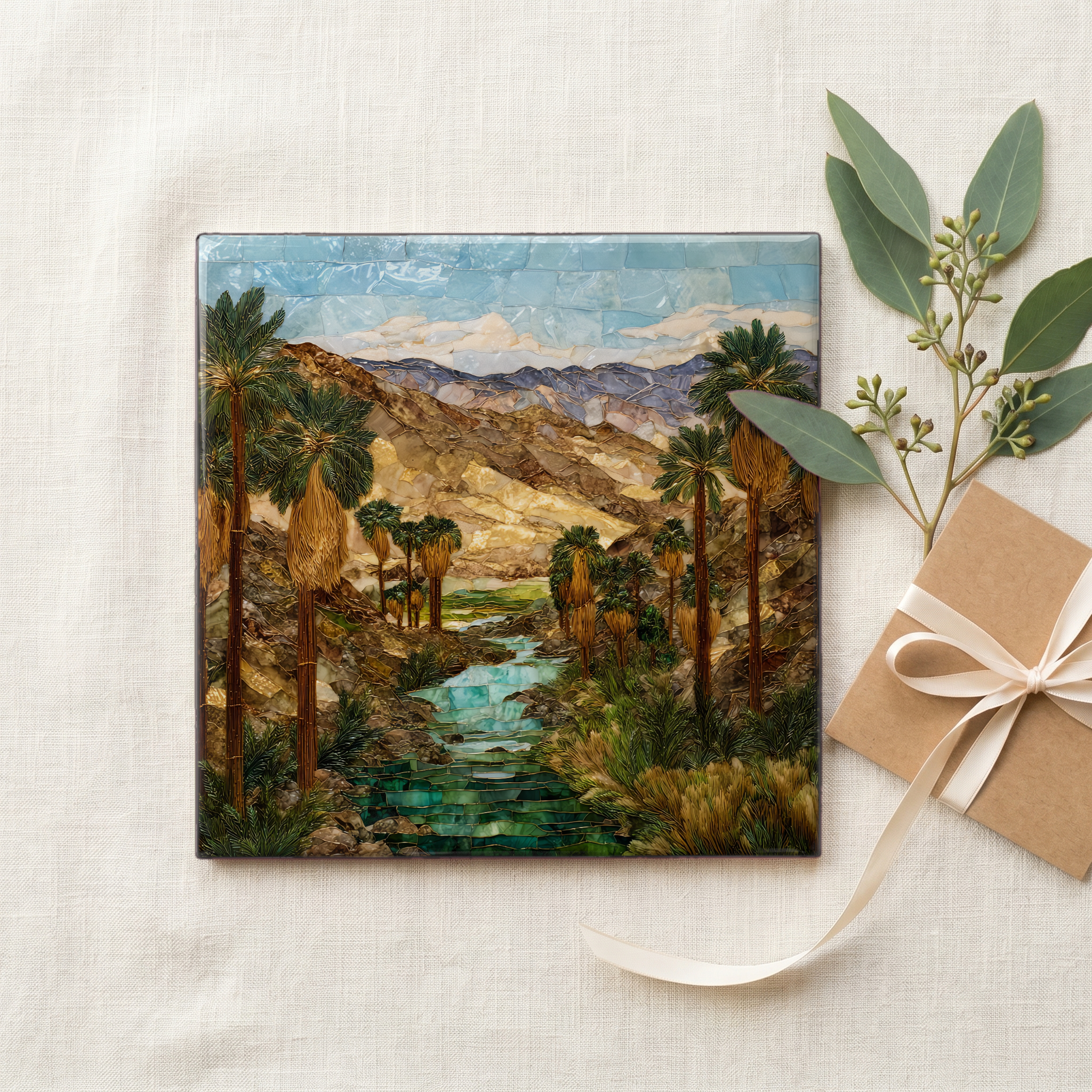
comes gift-ready
comes gift-ready

Each tile ships in a kraft box, tied with cream ribbon, with a handwritten note from the studio if you'd like to add one.
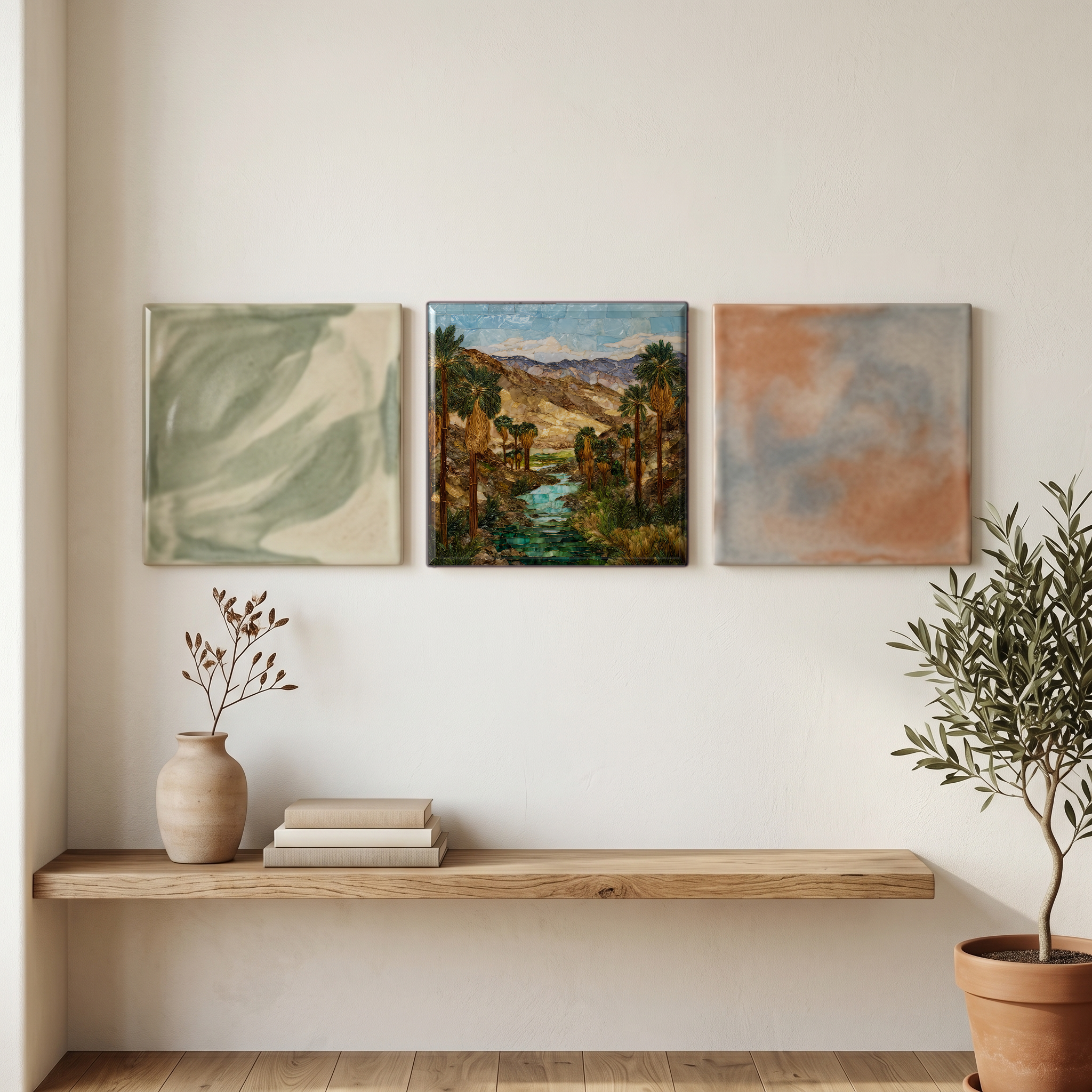
or build a grouping
or build a grouping

Three or five different vistas, hung together — a chapter of places you've been, or want to go.

about Indian Canyons Palm Springs

The place, in three passes.

A little of what's known, in case you fall down the rabbit hole — or want to go see it yourself.
the place

Indian Canyons is a system of three desert palm canyons on the southern edge of Palm Springs, California, on the ancestral and present-day reservation of the Agua Caliente Band of Cahuilla Indians. The main entrance sits at the south end of South Palm Canyon Drive, where the city ends and the foothills of the San Jacinto Mountains begin. From the trading post, foot trails fan into Palm Canyon (fifteen miles long), Andreas Canyon (a short loop along Andreas Creek), and Murray Canyon (about four miles round-trip to the Seven Sisters waterfalls). The canyons are open daily October through early July, and Friday through Sunday only in the hot summer months.

the water

The palms exist because of the water. Streams fed by snowmelt from the San Jacinto Mountains run year-round at the surface of the canyon floors, even in July. Washingtonia filifera, the California fan palm, is the only palm tree native to the western United States, and it depends on this kind of perennial groundwater. Andreas Canyon supports more than 150 plant species along its short loop because the creek does not stop. Murray Canyon ends at the Seven Sisters, a series of small waterfalls fed by the same system. Without the water, the desert resumes within a few hundred feet of the trail.

the visit

Indian Canyons is part of the Agua Caliente Reservation, and admission is operated by the tribe. Adult entry is twelve dollars at the gate; the same fee covers all three canyons. Hours run daily eight to five from October through early July, then Friday through Sunday only in the hot summer months. The trading post at the head of Palm Canyon has cold water, restrooms, and a small selection of Native American crafts. Staying on-trail is asked of visitors, particularly near the bedrock mortars in Andreas Canyon, which the Cahuilla still treat as sacred ground.

where
United States · Palm Springs, Riverside County, California
within
Agua Caliente Reservation
position
33.7460° N · 116.5400° W
the neighborhood

What's nearby.

A handful of named places within an hour's walk or short drive. Some we've already painted; some we will.
3 km NW
Tahquitz Canyon
desert canyon
10 km W
Mount San Jacinto
peak
10 km NW
Palm Springs Aerial Tramway
aerial tramway
5 km N
Palm Springs Art Museum
art museum
15 km SE
The Living Desert Zoo and Gardens
desert garden
N
Indian Canyons Palm Springs
Tahquitz Canyon
Mount San Jacinto
Palm Springs Aerial Tramway
Palm Springs Art Museum
The Living Desert Zoo and Gardens
common questions

What people ask.

A few questions we get about Indian Canyons Palm Springs — and about bringing the piece home.
about the place

On the southern edge of Palm Springs, California, where the foothills of the San Jacinto Mountains begin. The three canyons (Palm, Andreas, Murray) all sit on the Agua Caliente Reservation, accessed from the south end of South Palm Canyon Drive.

Streams from the San Jacinto Mountains run year-round through the canyon floors. Washingtonia filifera, the California fan palm, is the only palm native to the western United States, and it depends on that perennial water. Palm Canyon holds the world's largest stand of them.

The Agua Caliente Band of Cahuilla Indians. Their ancestors established villages in these canyons centuries ago to take advantage of the water and shade. The tribe runs admission, the trading post, and the trail system today.

Fifteen miles. Most visitors only walk the first mile or two from the trading post, which is enough to see the dense palm grove and the perennial stream. The longer reach of the canyon climbs toward the high country of the San Jacintos.

October through April. Palm Springs summers run over 110 degrees, and the canyons close Monday through Thursday from July through September. Spring is when Murray Canyon's Seven Sisters waterfall runs strongest, fed by the last of the snowmelt.

Yes, in Andreas Canyon. The grinding stones, called metates, are still visible along the creek where Cahuilla families processed mesquite and acorn for centuries. Visitors are asked to stay on-trail near them.

about the piece in your home

It has worked well for that. Indian Canyons is one of the places long-time Palm Springs residents and visitors return to year after year, and the artwork holds the green of the palms and the warmth of the desert rock together. A Small or Medium with a handwritten note from the studio carries well.

The palette pulls amber, deep green, and sandstone tones, so it sits well in desert-modern interiors, mid-century Palm Springs aesthetics, and Southwest-warm rooms with terracotta and worn leather. It also reads as a quiet focal point in a Japandi space with natural wood.

Yes. Desert-modern and Palm Springs mid-century have been steady design movements for over a decade, with fan palm, agave, and sandstone motifs core to the look. This piece is figurative without being literal, so it works with mid-century furniture and contemporary minimalism alike.

The single Large reads well above a standard console or small sofa. Over a full sofa, a 4-tile Mural carries the wall better; for a long wall or a primary statement piece, the 9-tile Mural holds the room.

Yes, in Dura Satin or Matte finish. Both are scratch-resistant and handle steam, splash, and warm humidity. Glossy is intended for framed wall art in dry rooms. The colour lives in the surface in all three finishes.

Microfibre cloth and water. The colour is slowly infused into the ceramic surface under high heat and pressure, so it does not lift, fade in sunlight, or scratch in normal use. No special cleaner is needed; no sealant ever needs reapplying.

Yes. Every WenderVista tile is made in our Knoxville studio, from artwork curated by Reid Wender. There is no licensing, no reseller, and no other studio producing the same image. Each piece is hand-finished before it ships.

if this one stayed with you

A few you might also love.

Hand-picked by the eye that found Sorapis. Same air, same kind of quiet.