Wender·Vista
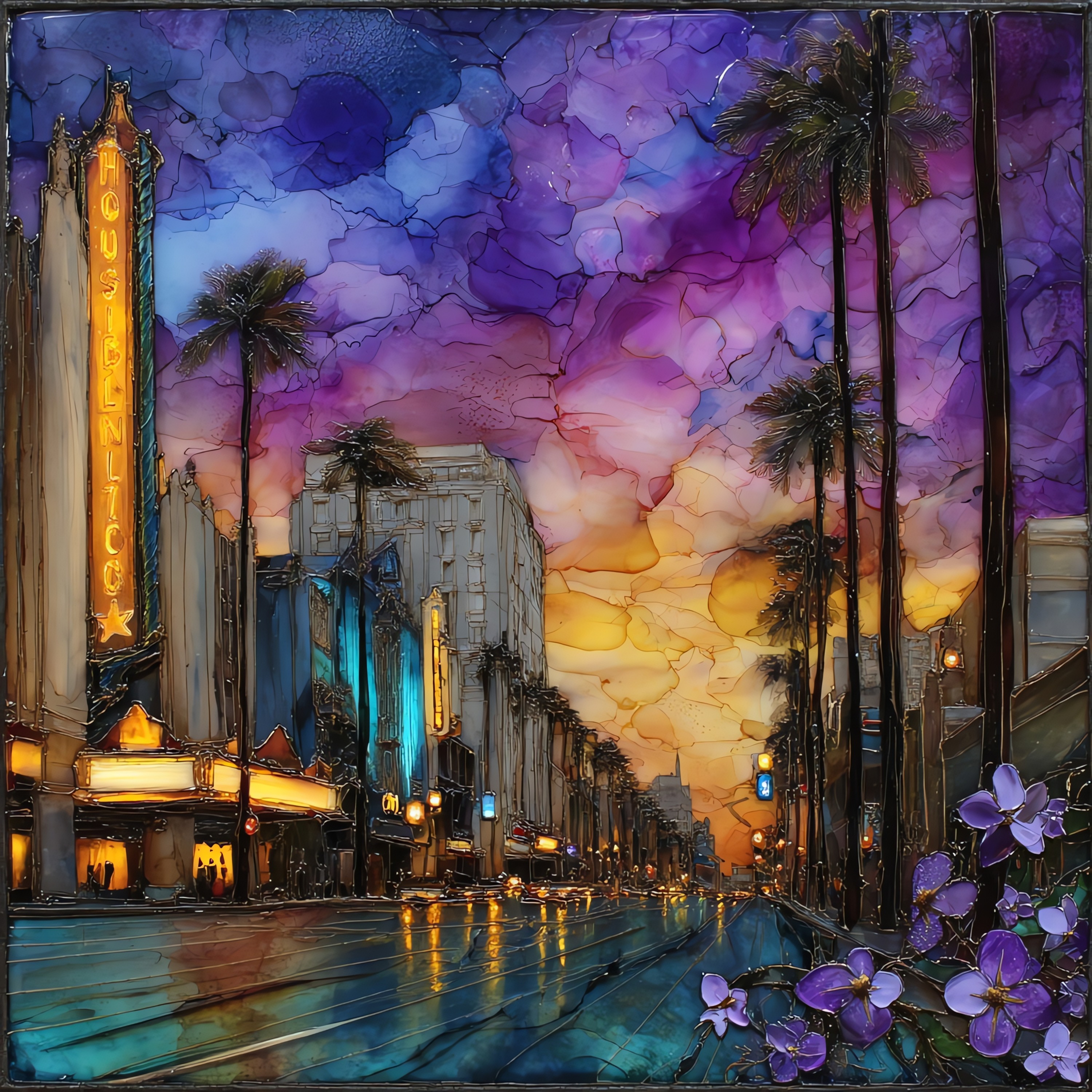
Hollywood Boulevard
shown on ceramic, 12-inch tileCalifornia · United States
in central Los Angeles, beneath the sign on Mount Lee

Hollywood Boulevard

— the names pressed into the sidewalk.

Where it lives

Not only on a wall.

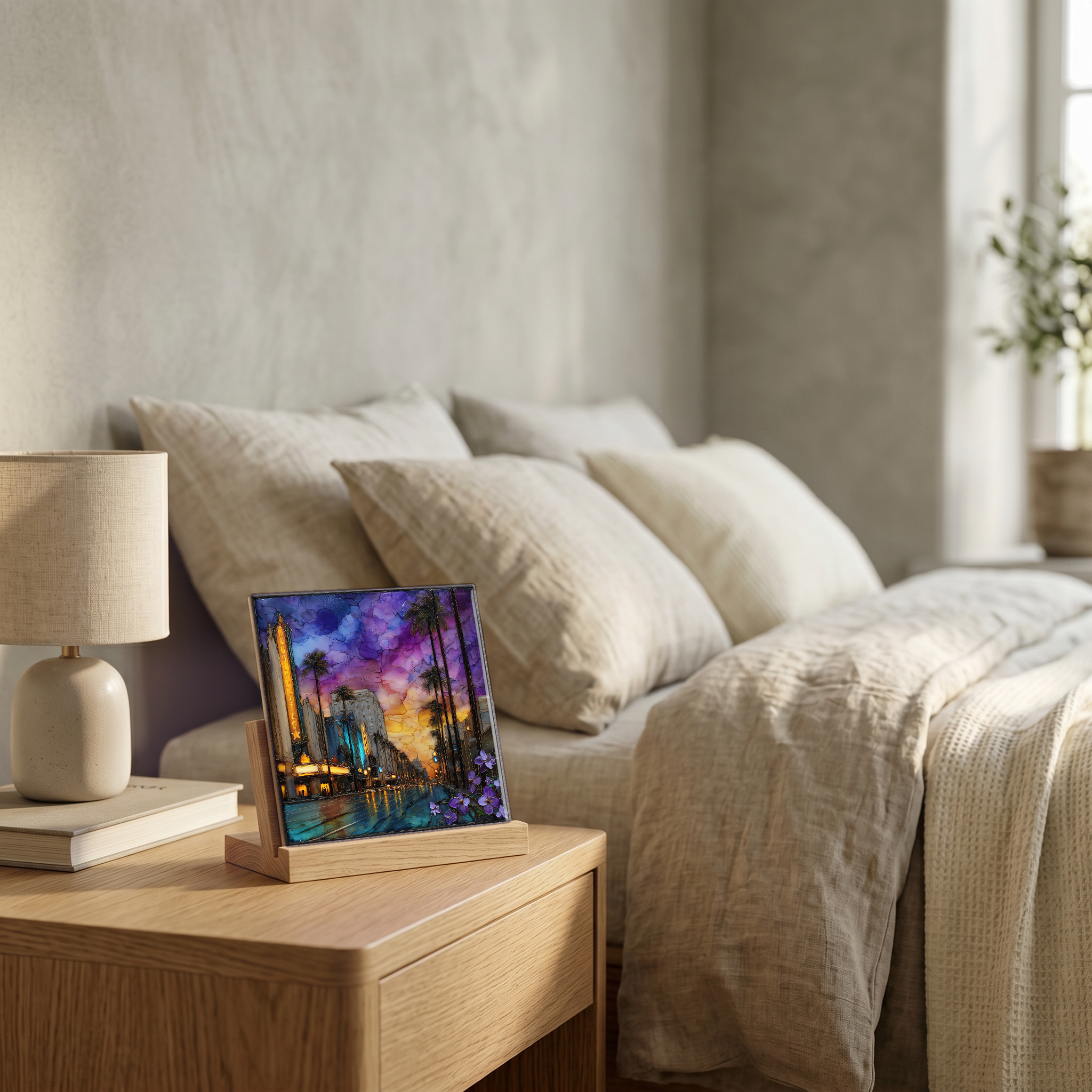
A small tile on the nightstand catching the morning. A larger one above the fire. Yours, wherever you spend the slow hours.
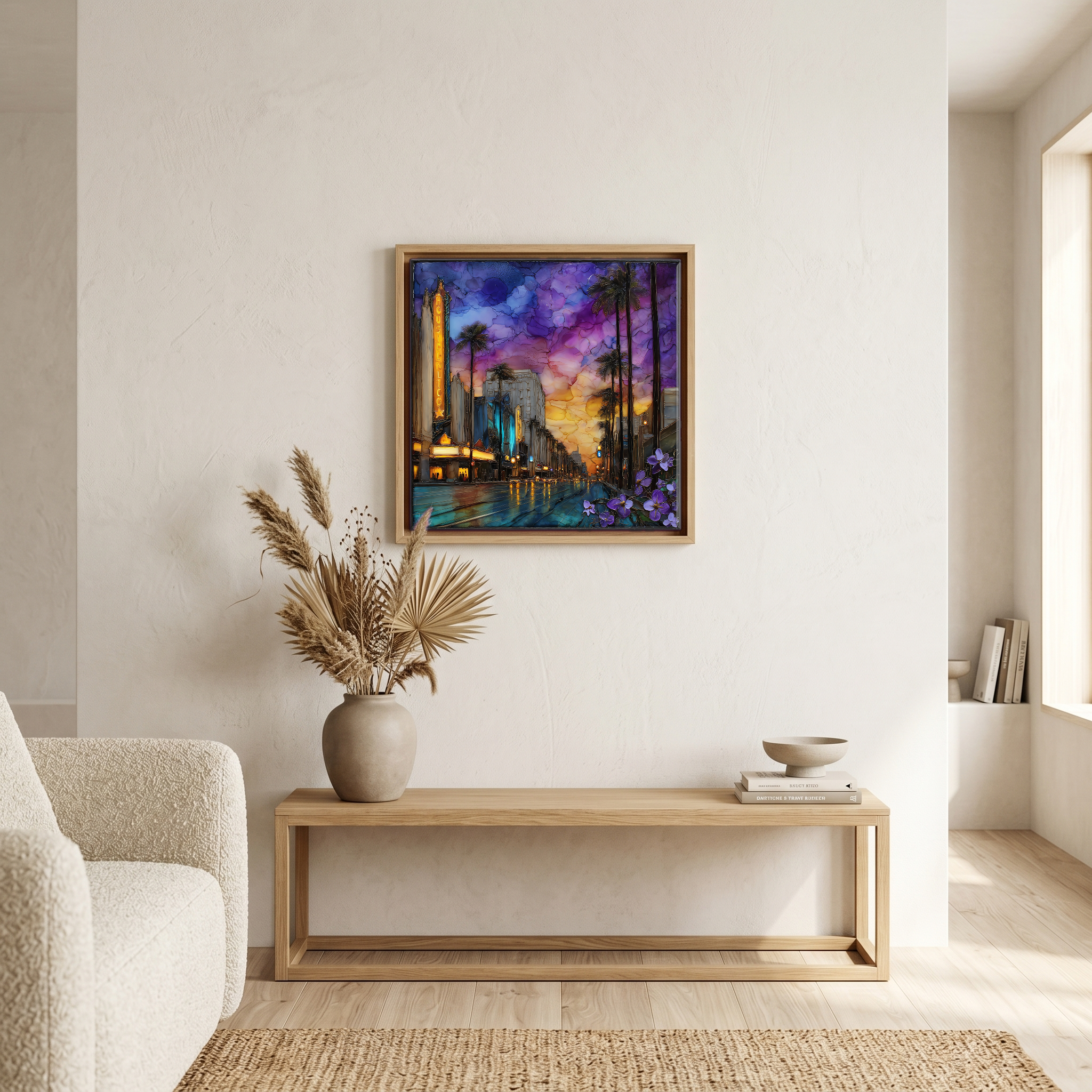
Above the bench, in a warm oak surround.
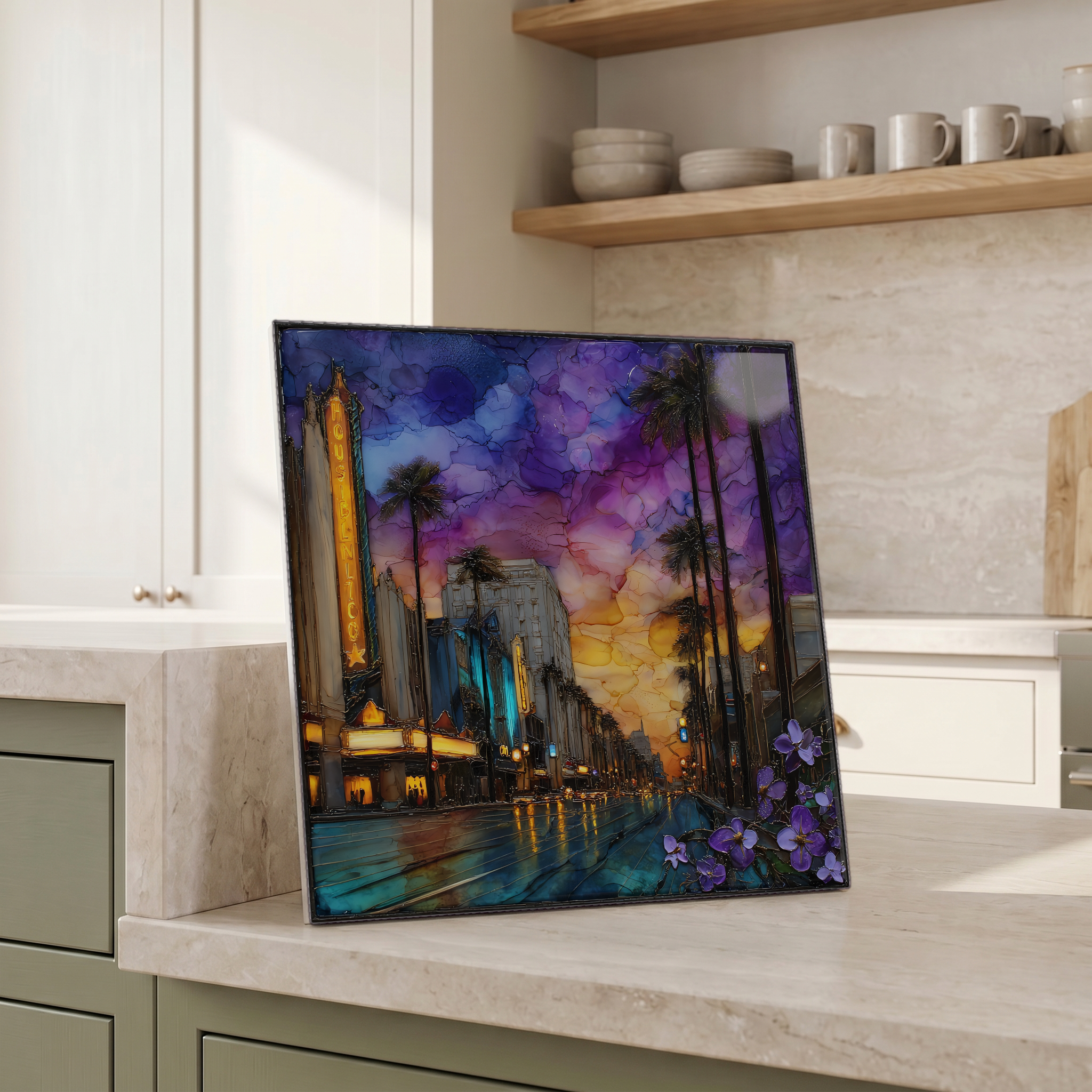
Beside the kettle, propped on the counter.
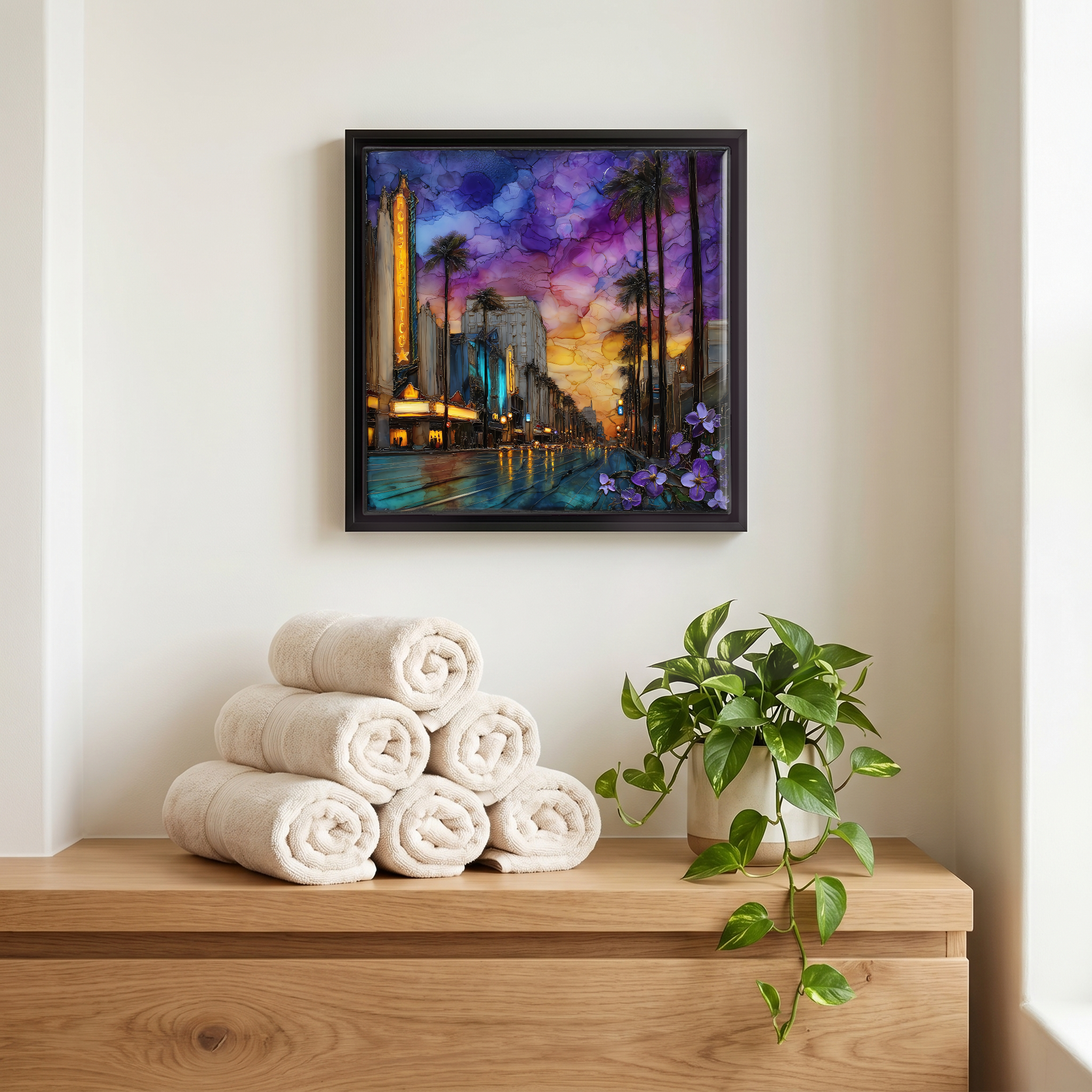
Above the linens, in a slim black surround.
On the nightstand, on a light oak stand.
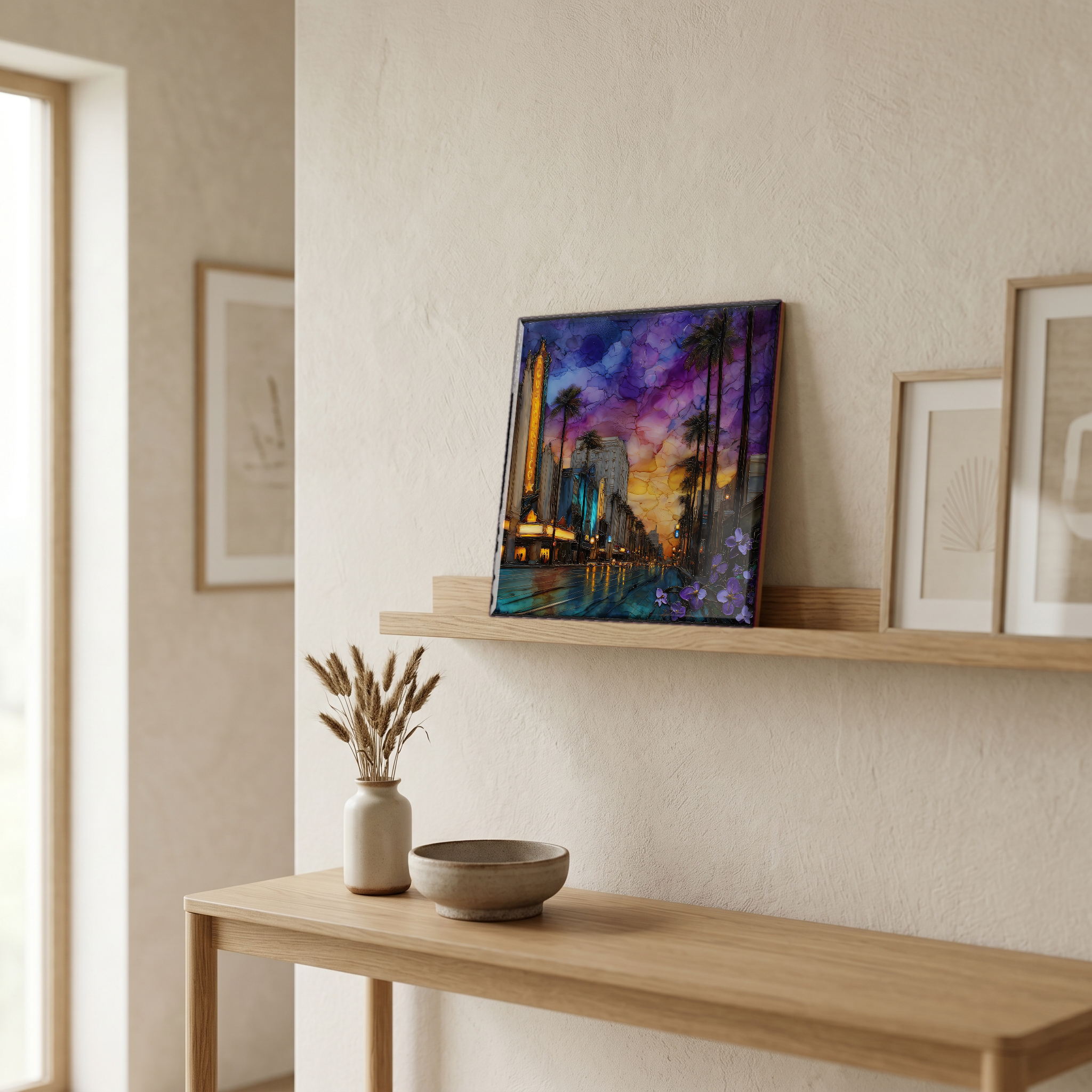
On a picture ledge, where the light comes in.
a note from the studio

The mile and a third where the city keeps its names. Pink terrazzo and brass, set in five-pointed stars, walked over by everyone who comes to look at the Hollywood sign on the hill above. There are theatres along the boulevard from the silent era still standing: the El Capitan, the Chinese, the Egyptian, and a few that came later. Tour buses idle at the corner of Highland. Most days the sidewalk is busier than the street. People come for the names they grew up with and leave having walked past a thousand they didn't.
from the studio
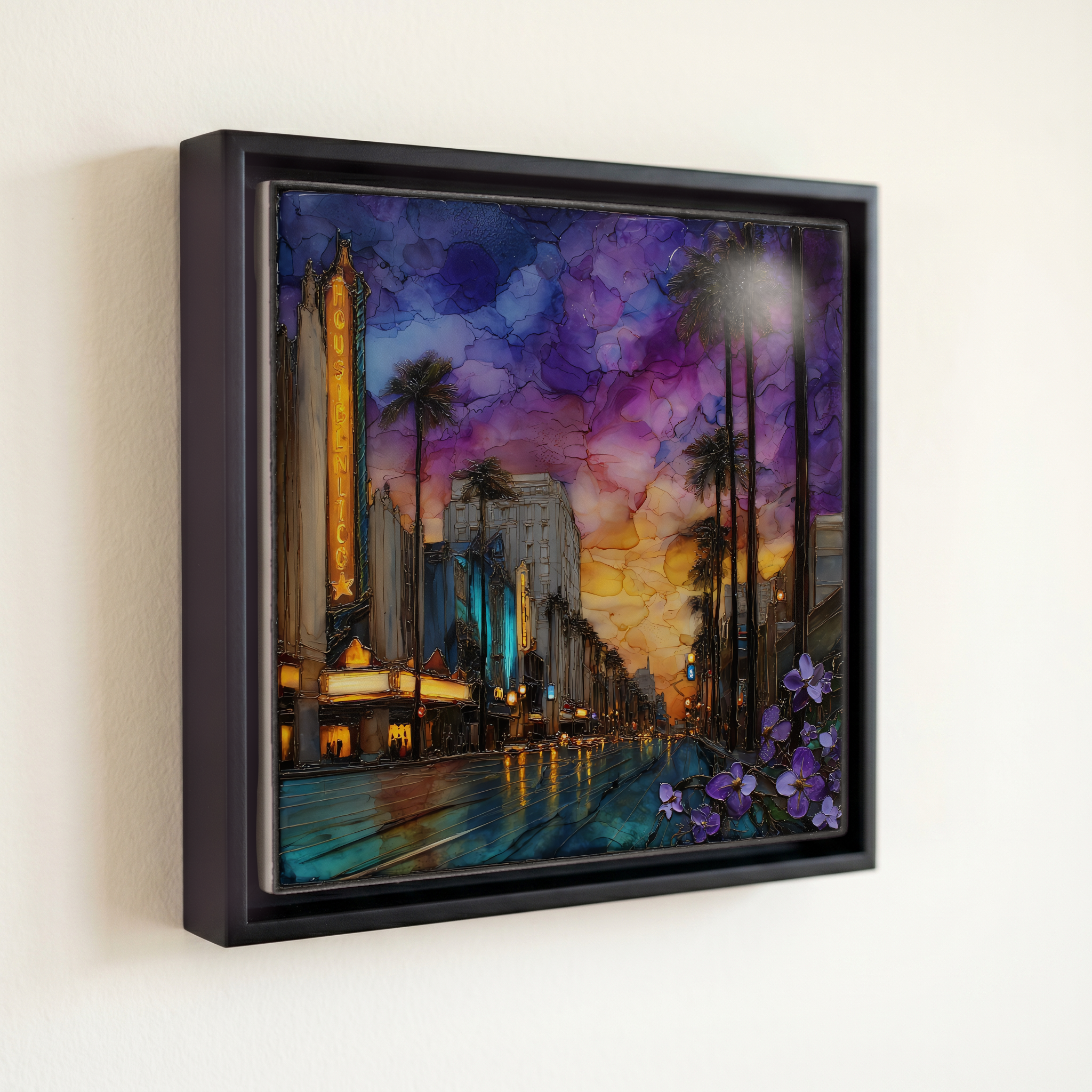
shown in a slim black floating frame · 6 × 6 in
— bring it home

Hollywood Boulevard, on ceramic.

Each tile is finished by hand in our Knoxville studio. Artwork is slowly infused into the ceramic surface under high heat and pressure, and rests beneath a thin glossy finish. The colour lives in the surface, not on top of it.

What kind of piece?
One tile — square or rectangle.
How big?
the popular one — counter, shelf, nightstand
6 × 6 in · 15 cm · 1.6 lb
Surface finish
A clear glossy finish — the artwork reads as if under resin. Ideal for show-pieces and framed wall art.
How it sits
A hidden cleat — sits ¼″ proud of the wall.
$58
Hand-finished and shipped from our studio at the foot of the Smokies. On your wall in about ten days.
size
6 × 6 in
15 cm
weighs
1.6 lb
solid in the hand
surface
ceramic, hand-finished
art rests beneath a thin glossy finish
from
Knoxville, TN
our family studio, at the foot of the Smokies
— start a Coaster Set

Pick any four 4-inch tiles — National Parks you've been to, a Smokies set, the four seasons of one place. $ for a set of , cork-backed, ready to live on the table.
comes gift-ready
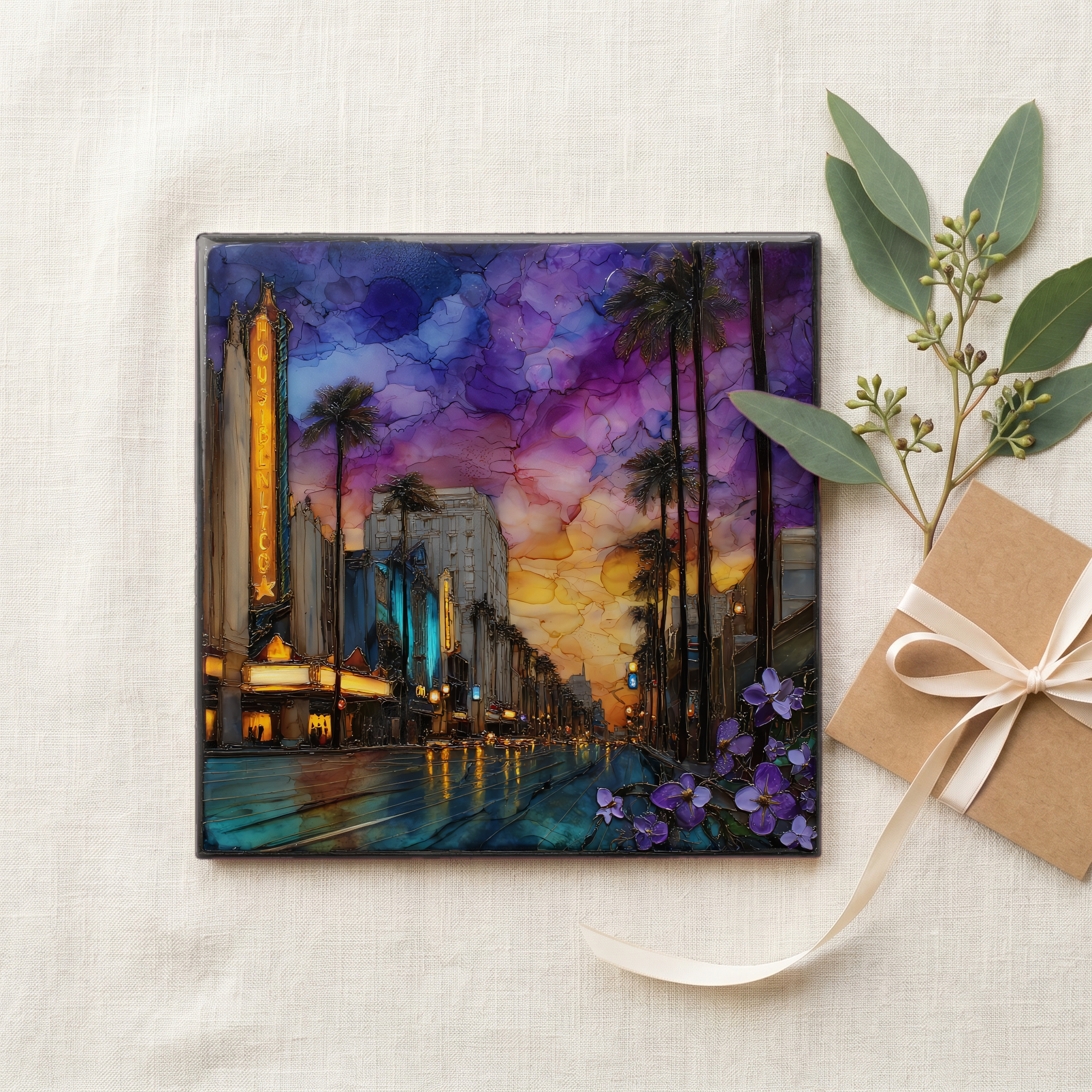
comes gift-ready

Each tile ships in a kraft box, tied with cream ribbon, with a handwritten note from the studio if you'd like to add one.
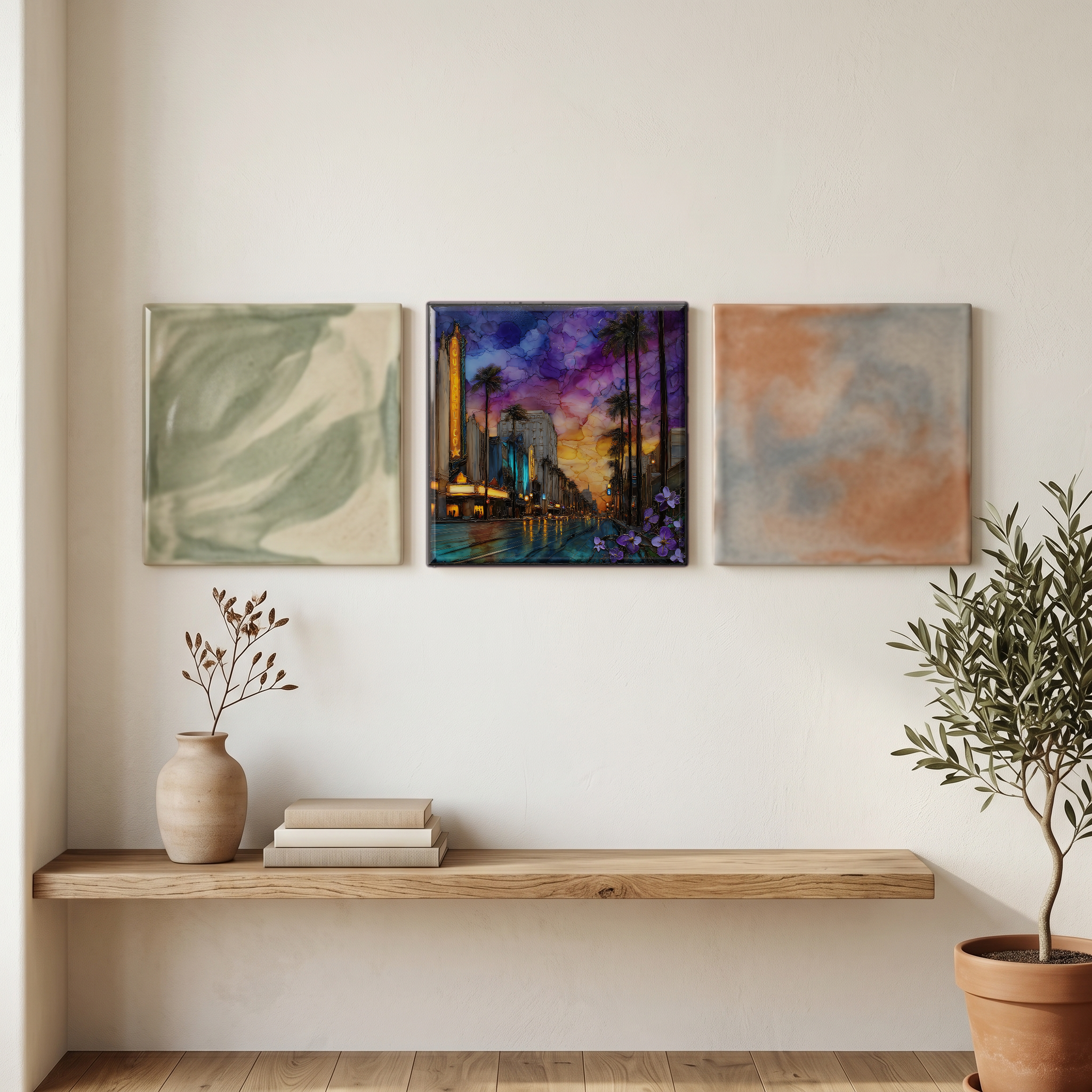
or build a grouping
or build a grouping

Three or five different vistas, hung together — a chapter of places you've been, or want to go.

about Hollywood Boulevard

The place, in three passes.

A little of what's known, in case you fall down the rabbit hole — or want to go see it yourself.
the place

Hollywood Boulevard is a 5.5-mile arterial road through the Hollywood district of Los Angeles, California, running east from Vermont Avenue to Sunset Plaza Drive in West Hollywood. The central commercial mile, between Gower Street and La Brea Avenue, holds most of what people associate with the name: the Walk of Fame, the historic movie palaces, and the view of the Hollywood Sign on Mount Lee to the north. The neighborhood of Hollywood was incorporated as its own municipality in 1903 and consolidated with the City of Los Angeles in 1910. The boulevard sits at about 110 metres above sea level, on the flat plain between the Santa Monica Mountains and the Los Angeles River.

the stone

The Walk of Fame is a 1.3-mile stretch of sidewalk inlaid with more than 2,700 five-pointed stars of pink terrazzo and brass. Each star carries the name of an honoree from film, television, radio, theatre, recording, or sports entertainment. The Hollywood Chamber of Commerce broke ground in 1958, and the first permanent star was installed in February 1960 for the actress Joanne Woodward. The stars run along both sides of Hollywood Boulevard between Gower Street and La Brea Avenue, with three additional blocks extending south down Vine Street. Each new star is sponsored by the nominator at a current fee of $75,000, which funds installation and the Walk's ongoing maintenance.

the visit

Most visitors begin at the corner of Hollywood Boulevard and Highland Avenue, where the Dolby Theatre, home of the Academy Awards since 2002, sits beside the TCL Chinese Theatre, completed in 1927. The Chinese Theatre forecourt holds nearly 200 cement squares with the handprints, footprints, and signatures of film stars going back to the silent-era actress Norma Talmadge in May 1927. The Hollywood and Highland metro station on the B Line places visitors directly on the Walk, and tour buses queue along Highland and Orange Drive. The boulevard is busy day and night, with the marquees of the El Capitan and Pantages lit after dark. Closed roads and crowds attend the Academy Awards each spring and the Hollywood Christmas Parade each November.

where
United States · Los Angeles, California
elevation
110 m · 360 ft
position
34.1016° N · 118.3398° W
the neighborhood

What's nearby.

A handful of named places within an hour's walk or short drive. Some we've already painted; some we will.
3 km N
Hollywood Sign
hillside landmark
4 km NE
Griffith Observatory
observatory
at the lake
TCL Chinese Theatre
movie palace
1 km E
Capitol Records Building
tower
2 km NW
Runyon Canyon Park
city park
2 km S
Hollywood Forever Cemetery
cemetery
N
Hollywood Boulevard
Hollywood Sign
Griffith Observatory
TCL Chinese Theatre
Capitol Records Building
Runyon Canyon Park
Hollywood Forever Cemetery
common questions

What people ask.

A few questions we get about Hollywood Boulevard — and about bringing the piece home.
about the place

Hollywood Boulevard runs through the Hollywood district of central Los Angeles, California, between Vermont Avenue in the east and Sunset Plaza Drive in West Hollywood. The most-visited mile sits between Gower Street and La Brea Avenue, just south of the Hollywood Sign on Mount Lee.

The Walk of Fame stretches 1.3 miles along both sides of Hollywood Boulevard from Gower Street to La Brea Avenue, with three additional blocks running south on Vine Street between Hollywood Boulevard and Sunset Boulevard. It currently holds more than 2,700 brass-and-terrazzo stars and grows by roughly twenty each year.

The first permanent star on the Hollywood Walk of Fame was installed in February 1960 for the actress Joanne Woodward, at 6801 Hollywood Boulevard. An earlier prototype star for the director Stanley Kramer had been laid in 1958, but the Walk's continuous installation of the original 1,558 stars ran from February to November 1960.

Anyone may nominate a person for a Hollywood Walk of Fame star, but the Hollywood Chamber of Commerce's Walk of Fame Committee selects roughly twenty honorees per year from hundreds of applications. The sponsor pays a fee of $75,000, which funds installation and the Walk's ongoing maintenance fund.

The forecourt of the TCL Chinese Theatre, completed in 1927, holds nearly 200 cement squares set with the handprints, footprints, and signatures of film stars. The first impressions were made in May 1927 by the silent-era actress Norma Talmadge, and the tradition has continued through the present.

The boulevard is open and busy all year, but late afternoon into early evening tends to be the best window for photographs of both the Hollywood Sign and the lit theatre marquees. Crowds peak during Academy Awards week each spring and on the Sunday after Thanksgiving for the Hollywood Christmas Parade.

Yes. The sign is visible looking north up several side streets between Highland Avenue and Vine Street. The clearest view is from the intersection of Hollywood Boulevard and Highland Avenue, looking north along Highland past the Hollywood and Highland complex, with the white letters reading against Mount Lee.

about the piece in your home

It's been a meaningful gift for our customers with LA ties. The boulevard is one of the city's enduring landmarks, and the tile reads warmly for someone who associates Hollywood with their first jobs in the industry, teenage memories, or weekend drives down from the Valley. A Small or Medium with a handwritten note carries well.

The Voynich stained-glass treatment of Hollywood Boulevard, with its warm marquee golds, deep boulevard blues, and pink-terrazzo accents, sits well in Maximalist, Eclectic, and Old-Hollywood-Glam interiors. It also reads against a clean dark wall in a Modern Industrial loft, where the colour pulls the eye without competing with raw concrete or black-steel finishes.

Yes. The current Old-Hollywood-Glam revival, often paired with Art Deco geometry and Maximalist colour layering, calls for one or two anchor pieces against velvet, ribbed wood, or smoked-mirror finishes. A Medium or Large tile of Hollywood Boulevard reads as the room's narrative anchor without the kitsch of a movie-poster print.

Above a standard three-seat sofa, a single Large tile reads as a focal anchor; a 4-tile Mural reads as the centerpiece of the room and a 9-tile Mural carries a tall feature wall. For a console table or a hallway runner, a Medium at eye level is the closest match.

Yes. The standard glossy finish suits framed wall installations in a dry room. For bathrooms, kitchens, splashbacks, or any vertical install near water, order the same artwork in the Dura Satin or Matte finish, which is scratch-resistant and humidity-stable. The colour and Voynich detail carry across all three finishes.

Microfibre cloth and water, in slow circles. The colour lives in the surface beneath a thin glossy finish, so it does not lift or fade with normal cleaning. Skip abrasive pads, citrus cleaners, and bleach. For a kitchen splashback in the Dura Satin finish, a damp cloth followed by a dry one is the studio's preferred routine.

Yes. The Hollywood Boulevard tile is painted in the studio's signature Voynich stained-glass and alcohol-ink visual language, then slowly infused into the ceramic surface under high heat and pressure. There is no licensing of third-party photography or art behind it, and no two tiles leave the studio without final hand-finishing.

if this one stayed with you

A few you might also love.

Hand-picked by the eye that found Sorapis. Same air, same kind of quiet.