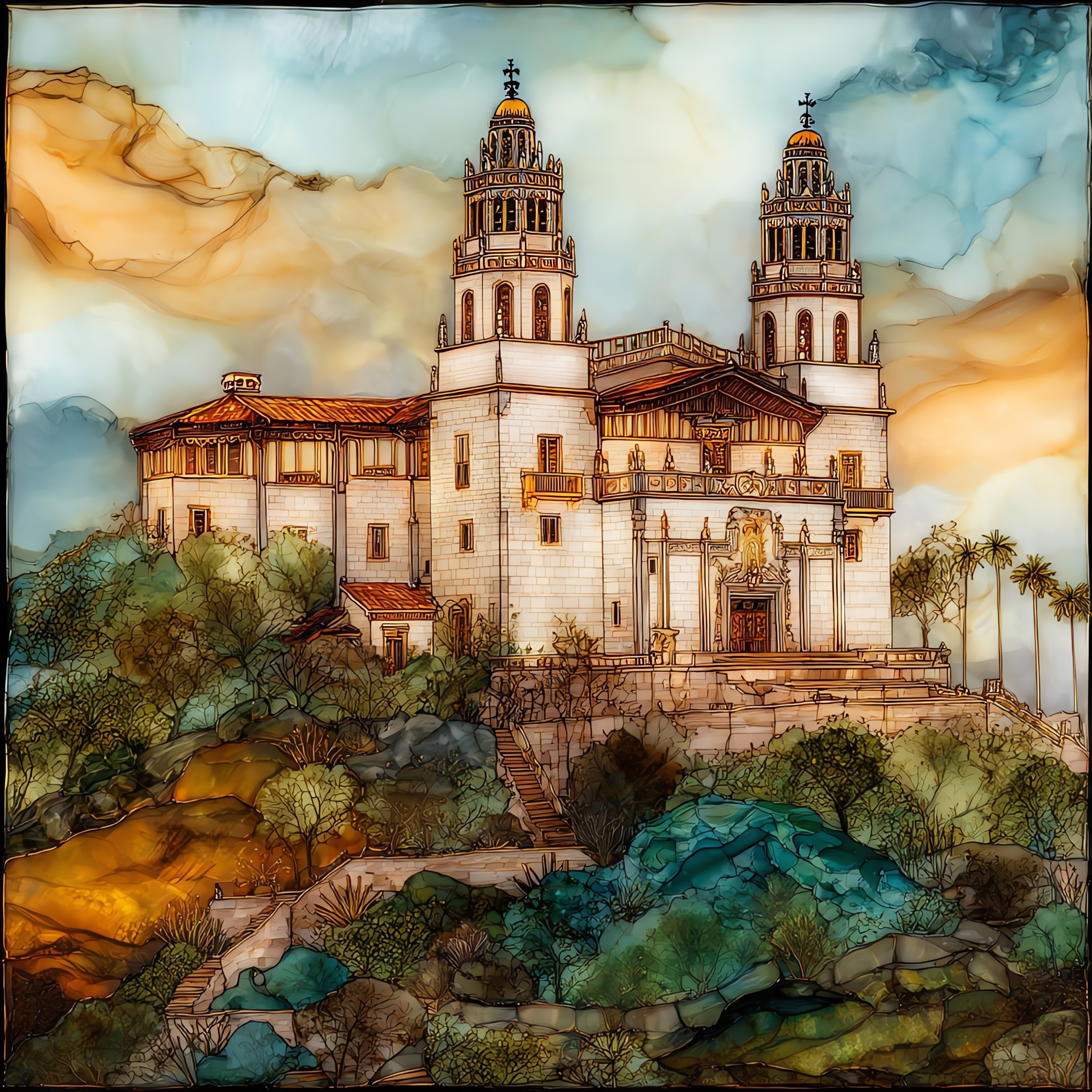
Hearst Castle
— — the two white towers a fortune kept above the sea.
Not only on a wall.
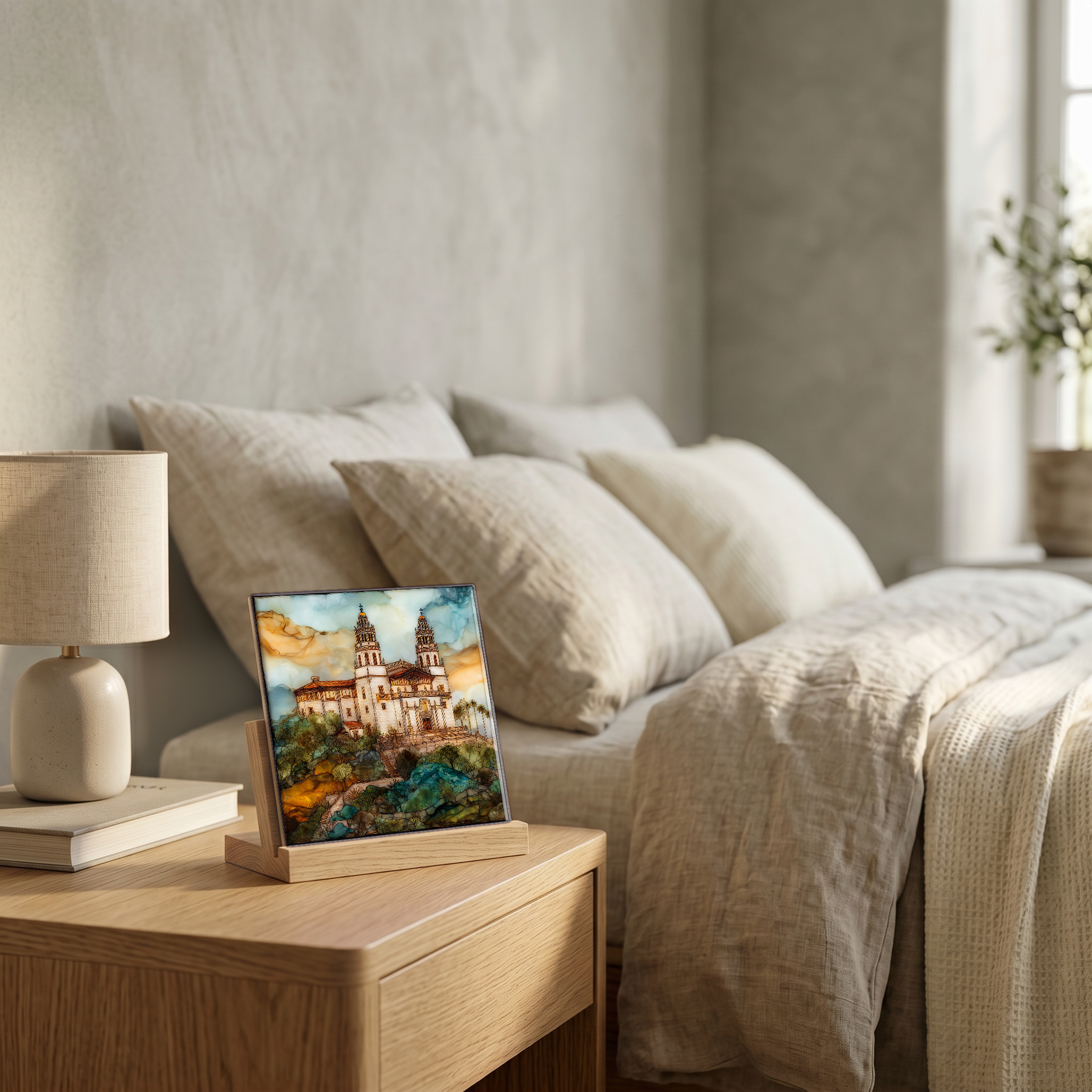
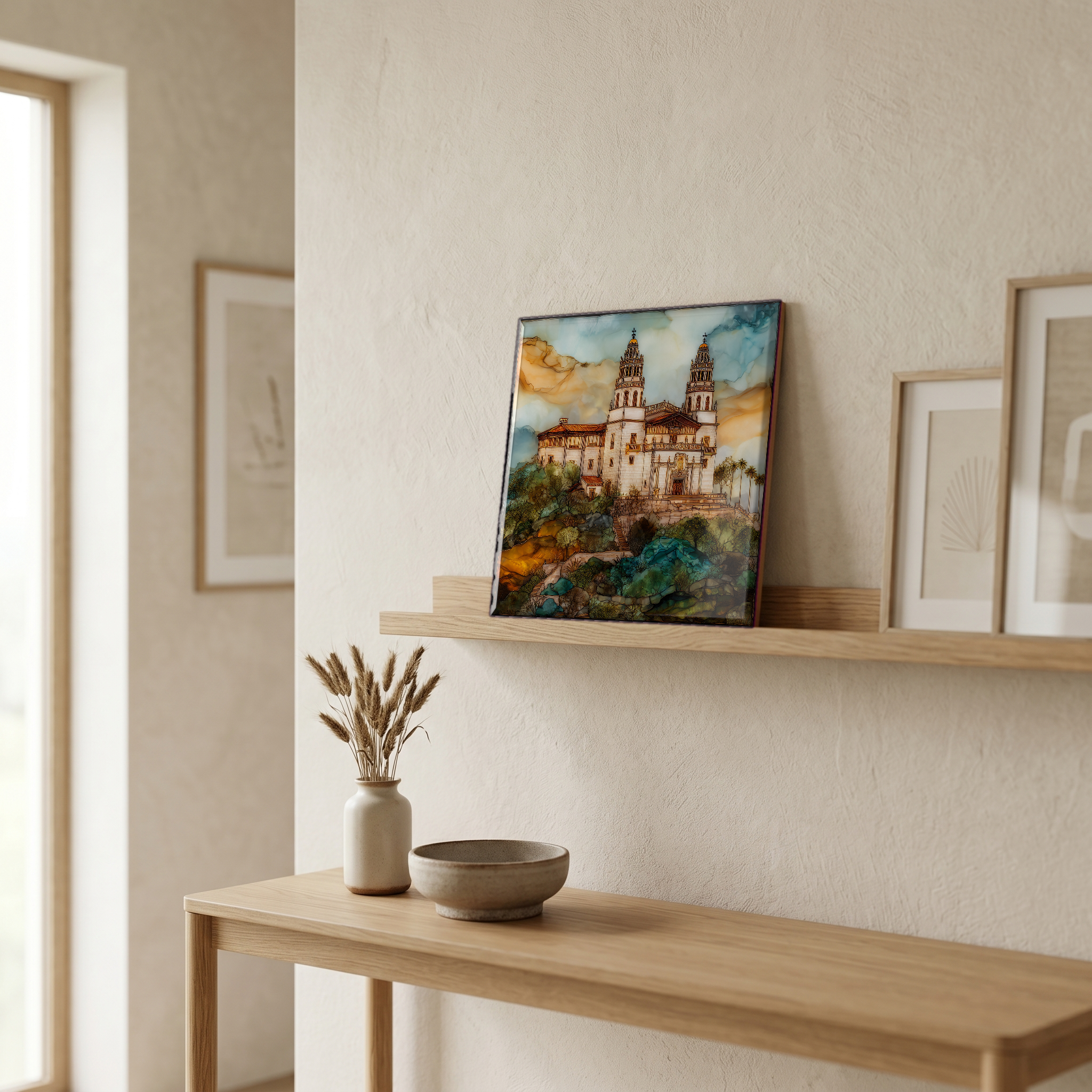
“A hilltop the size of a small county, and on it a Mediterranean palace with two white bell towers, modelled on a church in Ronda. William Randolph Hearst kept it as a private house. Forty-two bedrooms, a Roman pool tiled in blue and gold, a Neptune pool he rebuilt three times. The architect was Julia Morgan, who spent twenty-eight years getting it right. The state runs it now. Down on the ranch below, the descendants of his zebras still graze in the coastal grass, among the cattle, the way no one quite expects.
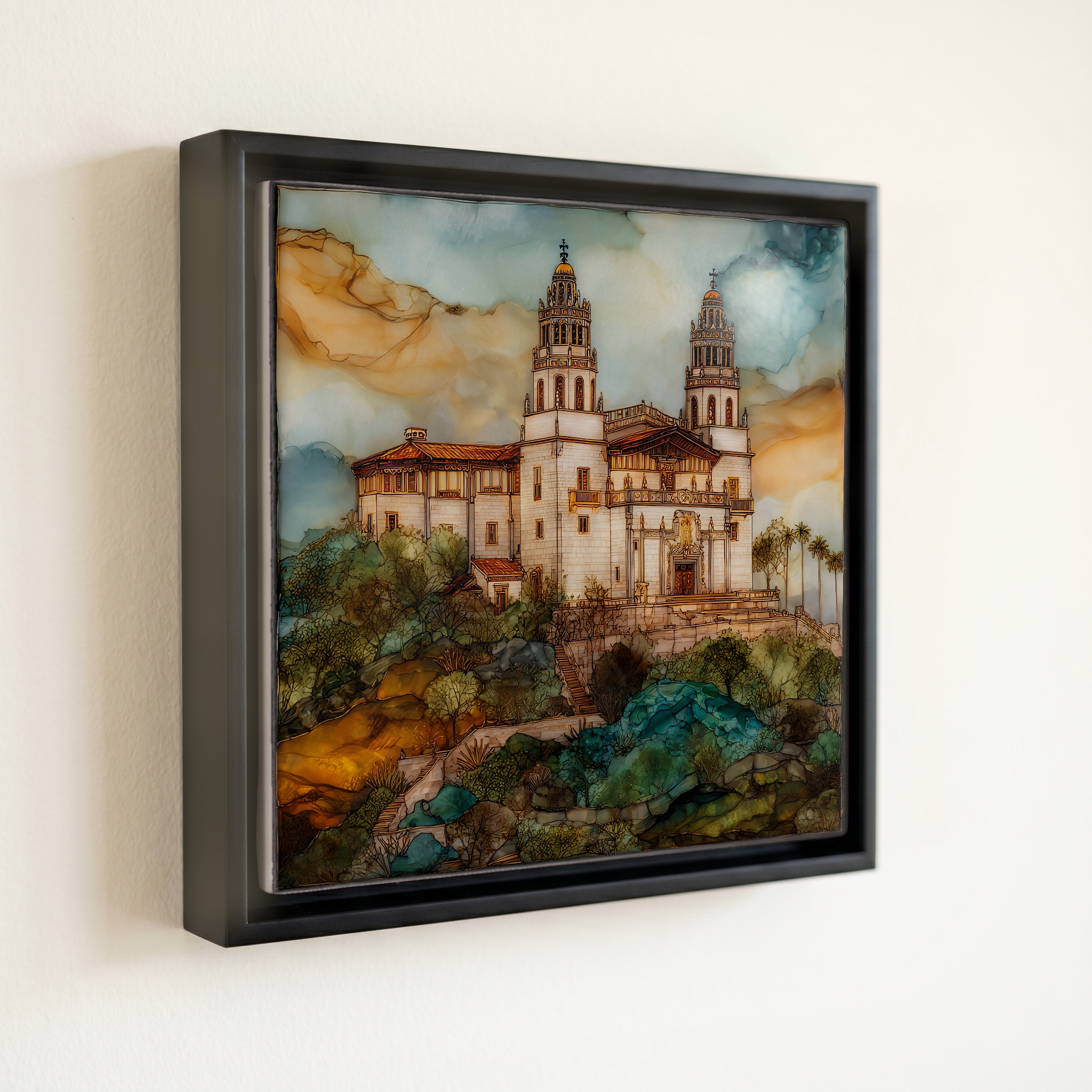
Hearst Castle, on ceramic.
Each tile is finished by hand in our Knoxville studio. Artwork is slowly infused into the ceramic surface under high heat and pressure, and rests beneath a thin glossy finish. The colour lives in the surface, not on top of it.
Pick any four 4-inch tiles — National Parks you've been to, a Smokies set, the four seasons of one place. $ for a set of , cork-backed, ready to live on the table.
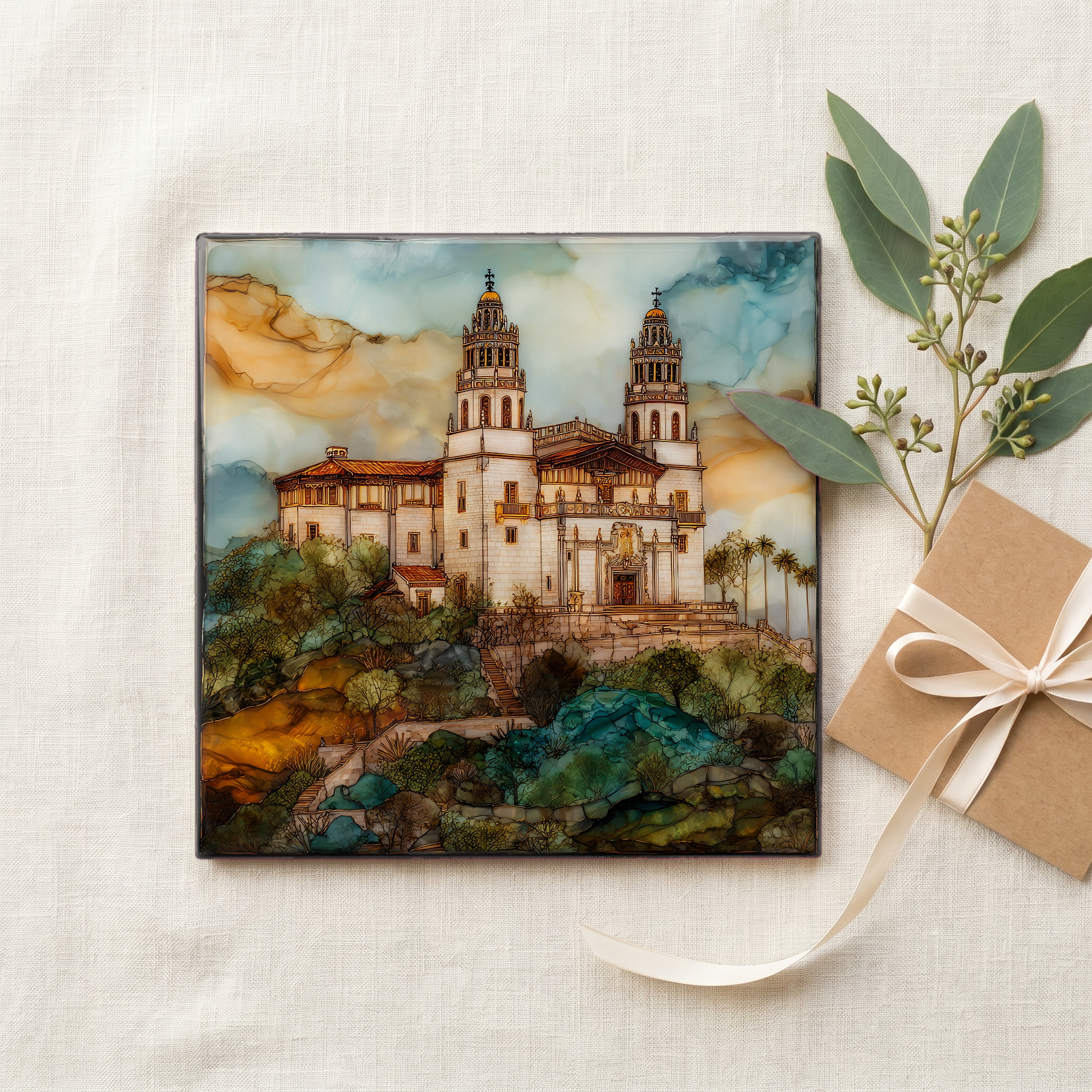
Each tile ships in a kraft box, tied with cream ribbon, with a handwritten note from the studio if you'd like to add one.
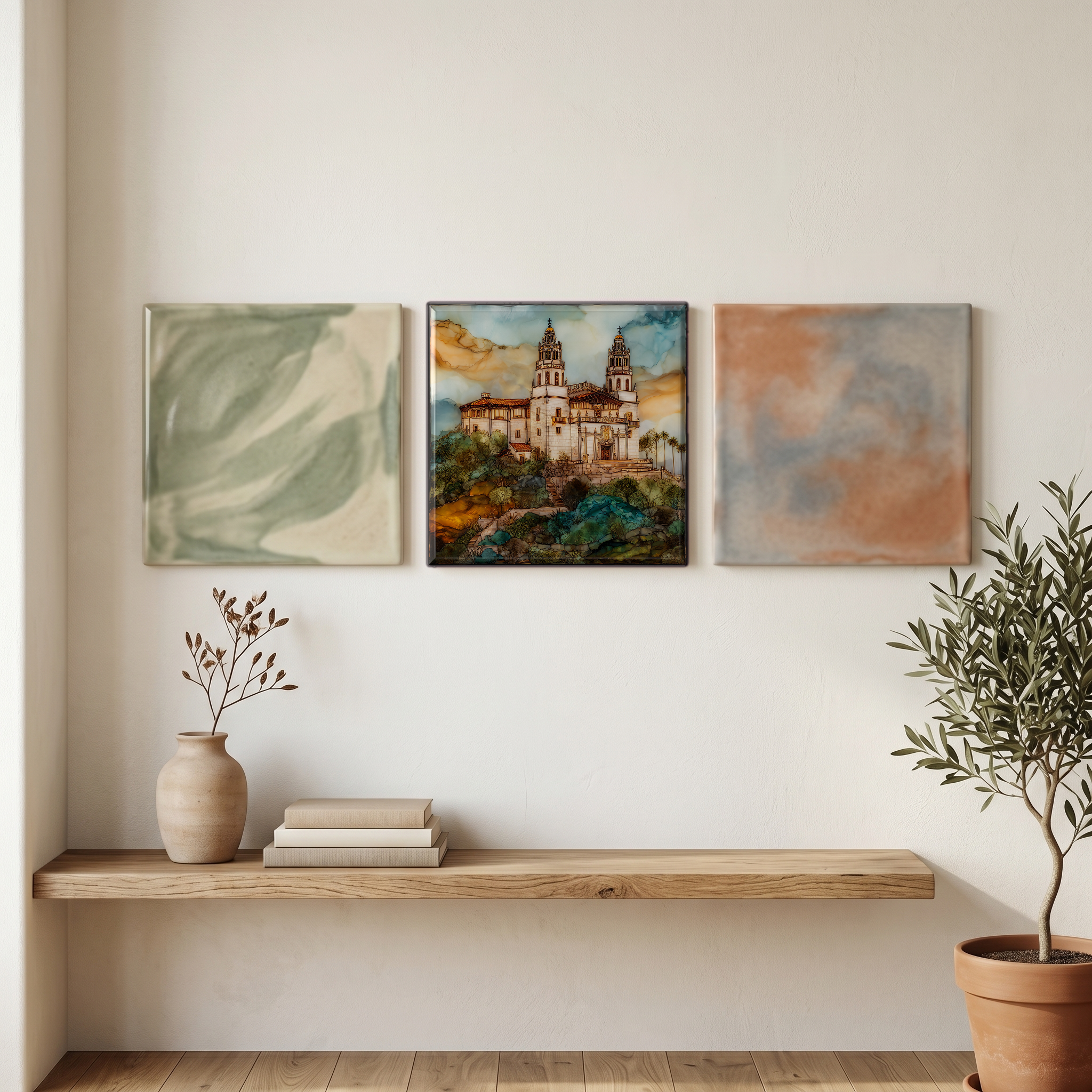
Three or five different vistas, hung together — a chapter of places you've been, or want to go.
The place, in three passes.
Hearst Castle sits on a hilltop about 1,600 feet above the Pacific, near the village of San Simeon in San Luis Obispo County, roughly halfway between Los Angeles and San Francisco on Highway 1. William Randolph Hearst called the hill La Cuesta Encantada, the Enchanted Hill. The estate ran to 250,000 acres at its peak; the Hearst Corporation still holds about 82,000 acres of working ranchland around the monument. The hilltop and its buildings were donated to the State of California in 1958 and have been run since as Hearst San Simeon State Historical Monument, an accredited art museum and California State Park. The nearest town with services is Cambria, about ten miles south.
Julia Morgan, the first woman licensed as an architect in California, drew the place for Hearst between 1919 and 1947 and oversaw nearly every detail of its building. The composite style is Mediterranean Revival, anchored by Casa Grande, whose twin bell towers were modelled on the Church of Santa Maria la Mayor in Ronda, Spain. Inside the main house are 42 bedrooms, 61 bathrooms, and 19 sitting rooms, hung with Flemish weavings, Roman sarcophagi, and ceilings Hearst bought intact from Spanish monasteries. The Roman Pool in the basement is lined with blue-and-gold Venetian glass tile mosaics by the painter Camille Solon. The Neptune Pool on the south terrace was built, demolished, and rebuilt three times before Hearst was satisfied.
Hearst Castle stays open through the year and is reached only by guided tour. Visitors park at the Visitor Center down at Highway 1 and take a shuttle bus about five miles up the hill. Three sixty-minute daytime tours rotate through the season: the Grand Rooms Tour, the Upstairs Suites Tour, and the Cottages and Kitchen Tour. Each pulls a different thread through the estate. An evening tour, with docents in period dress, runs select dates. After the guided portion ends, visitors are free to walk the gardens, the Neptune Pool, and the Roman Pool terraces until closing. Tickets are timed and sell out on summer weekends; California State Parks recommends booking through ReserveCalifornia in advance.