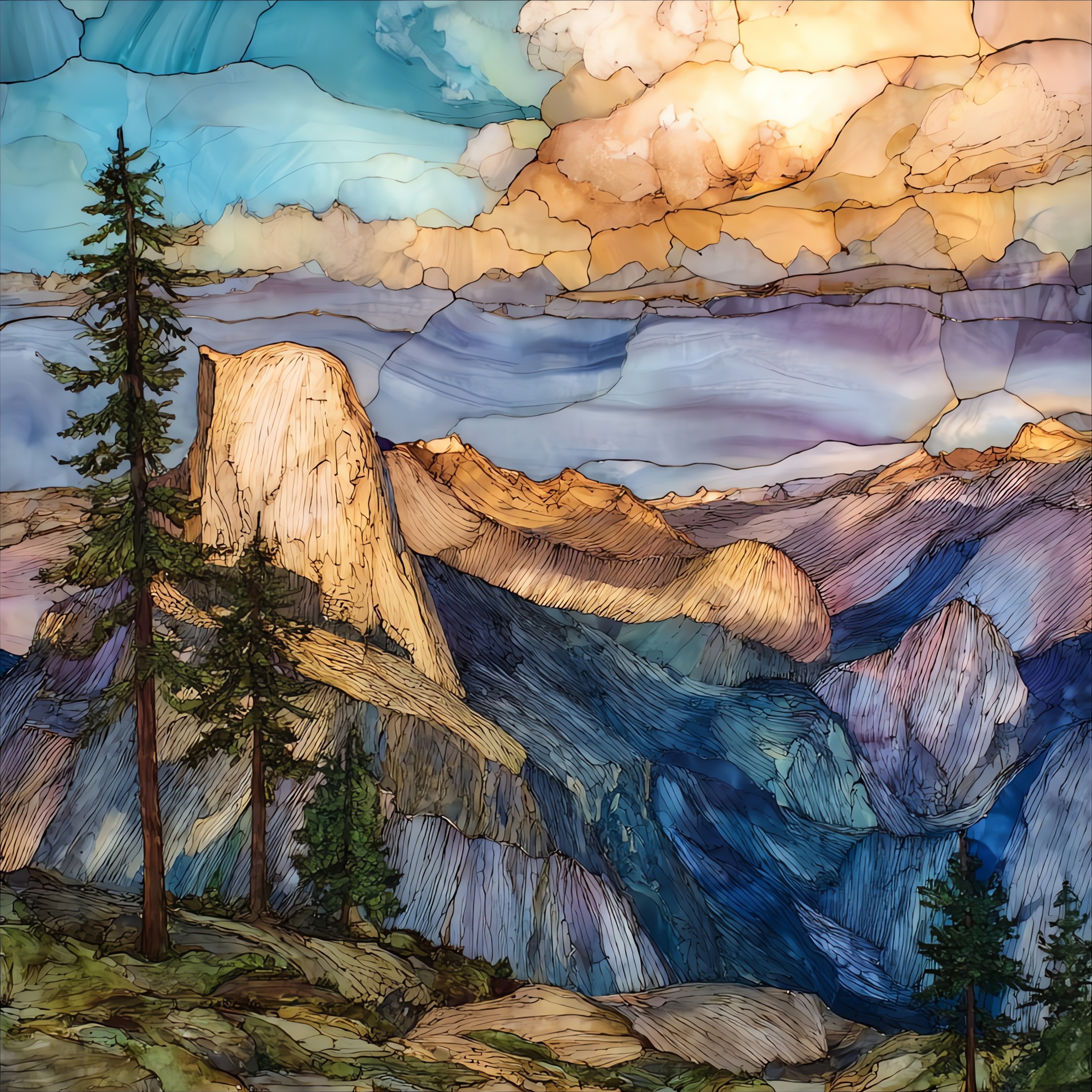
Half Dome Glacier Point
— the face the day leaves last.
Not only on a wall.


“The most reproduced view of Half Dome is from this overlook, seven thousand feet up, across the valley from the dome itself. The northwest face drops more than two thousand feet, straight down. People speak of it as if a glacier sheared it off; geologists say the face was always there, that the granite split along its own planes long before the ice came through. The road closes in winter. The light worth waiting for arrives in the last hour before sunset, when the granite warms to pink and the valley below has already gone blue.
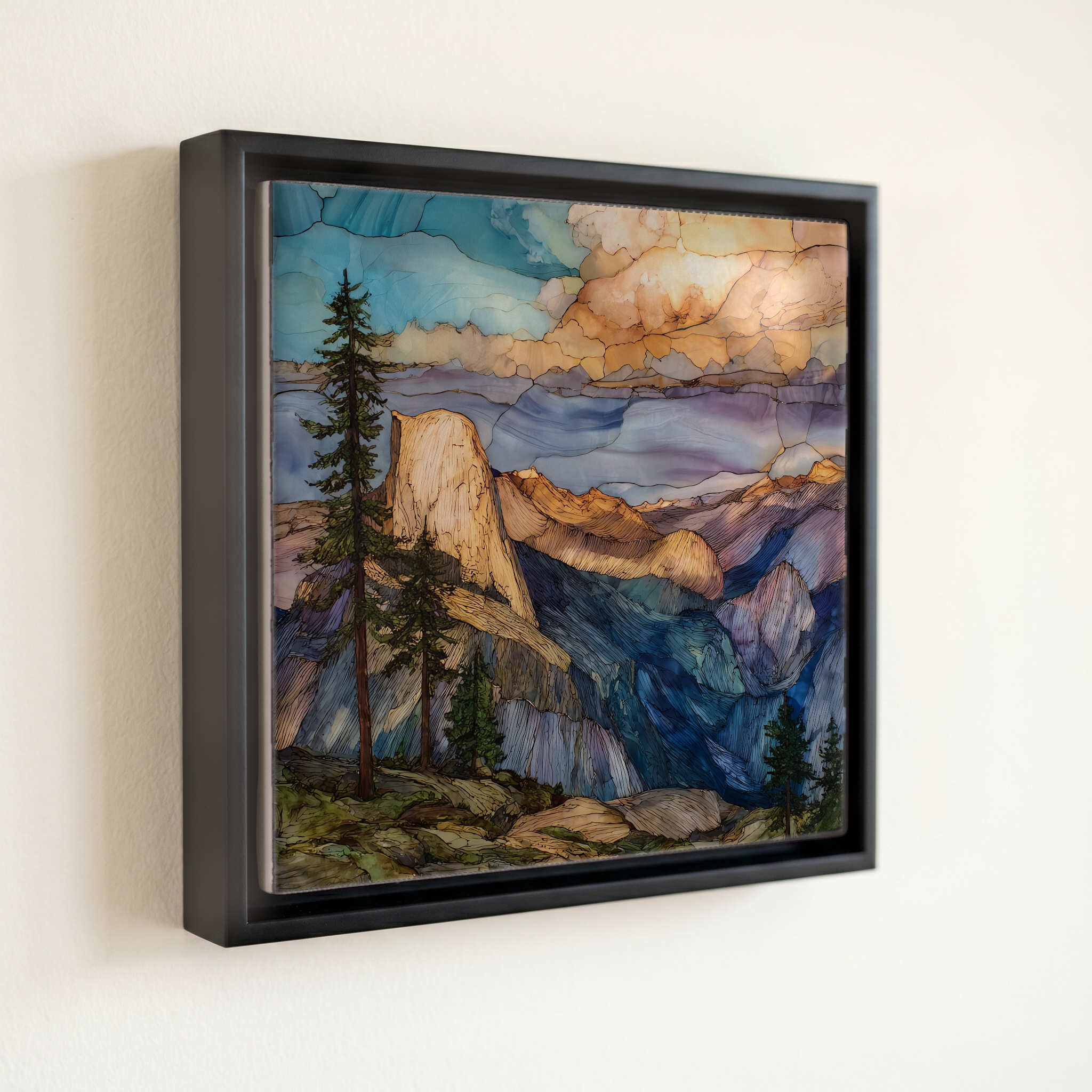
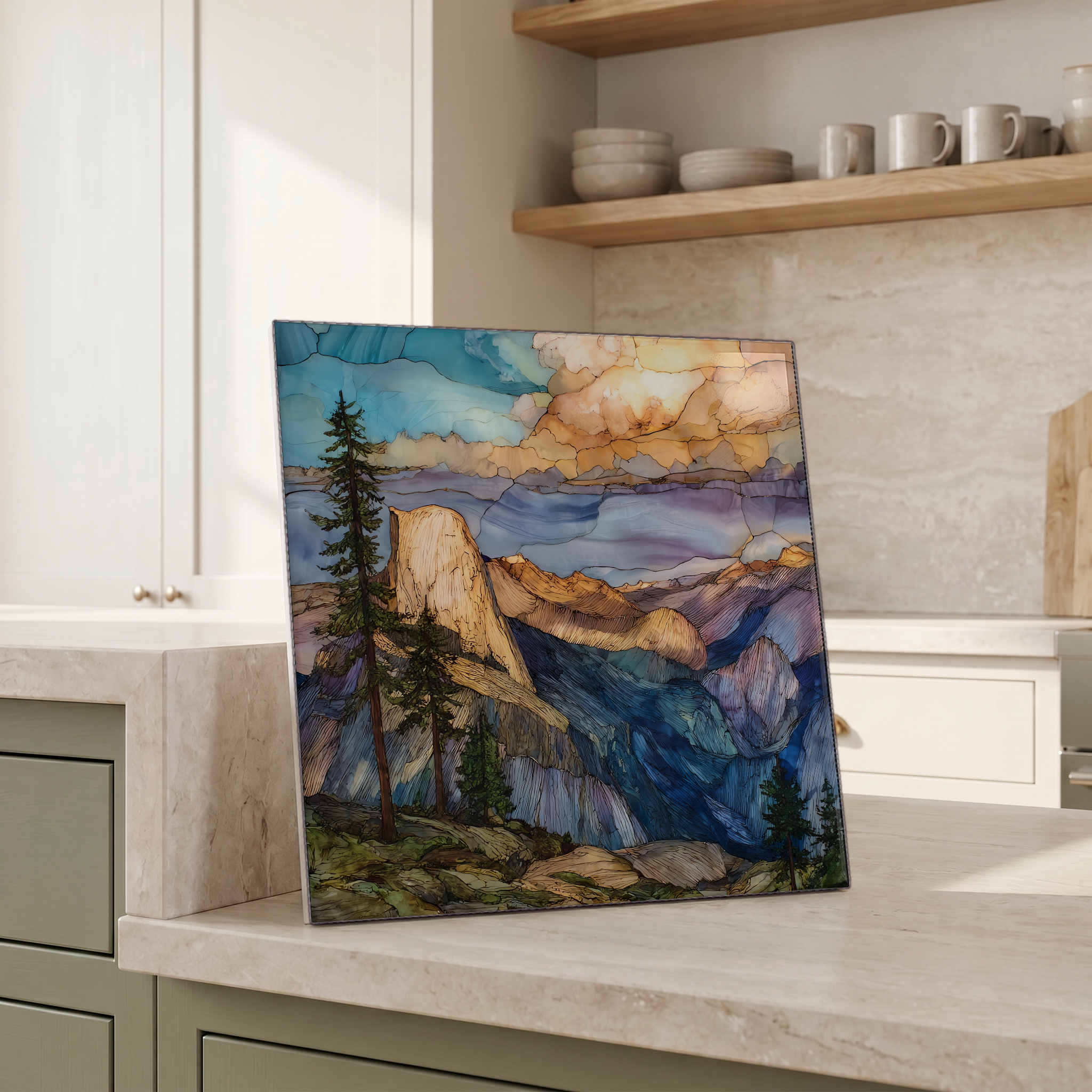
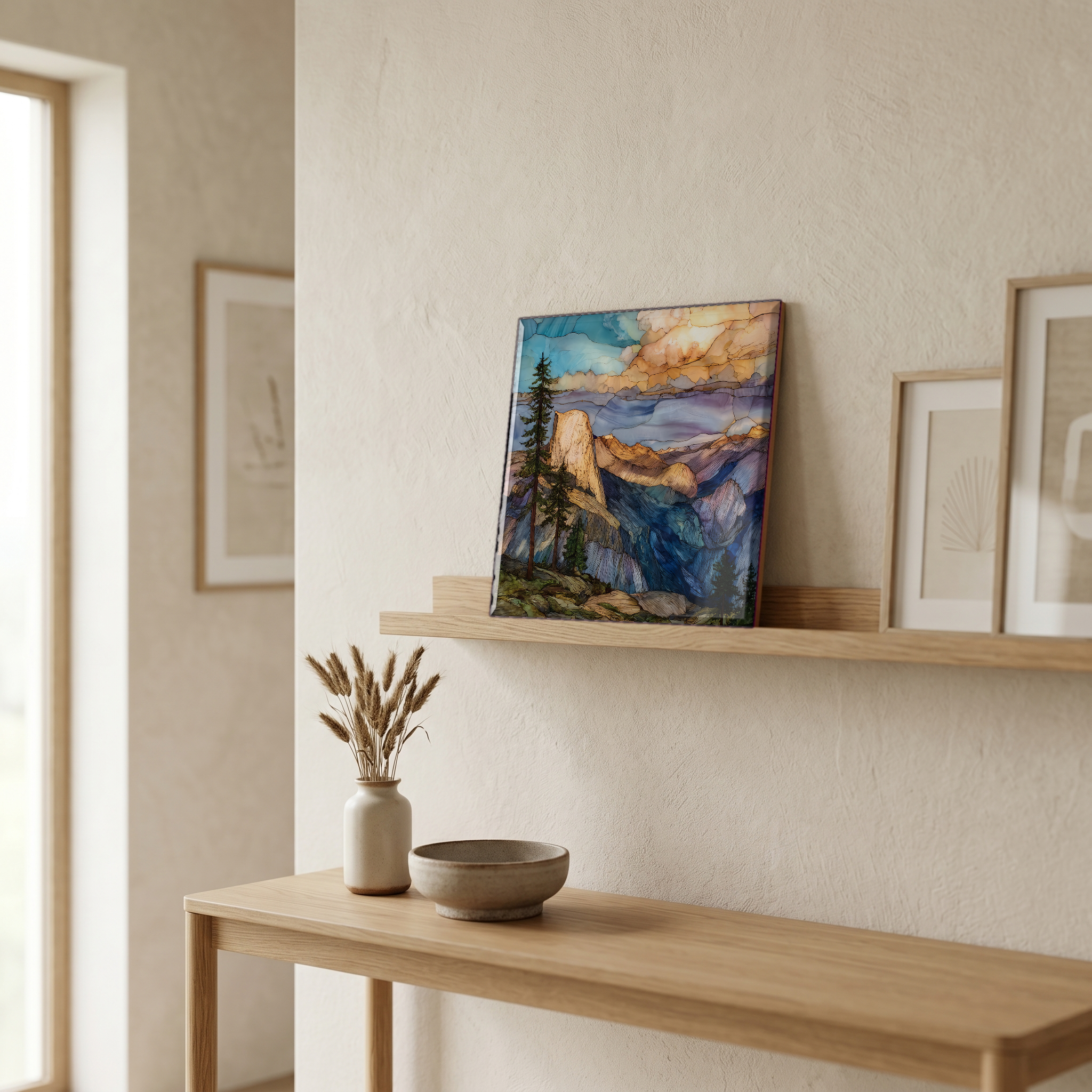
Half Dome Glacier Point, on ceramic.
Each tile is finished by hand in our Knoxville studio. Artwork is slowly infused into the ceramic surface under high heat and pressure, and rests beneath a thin glossy finish. The colour lives in the surface, not on top of it.
Pick any four 4-inch tiles — National Parks you've been to, a Smokies set, the four seasons of one place. $ for a set of , cork-backed, ready to live on the table.
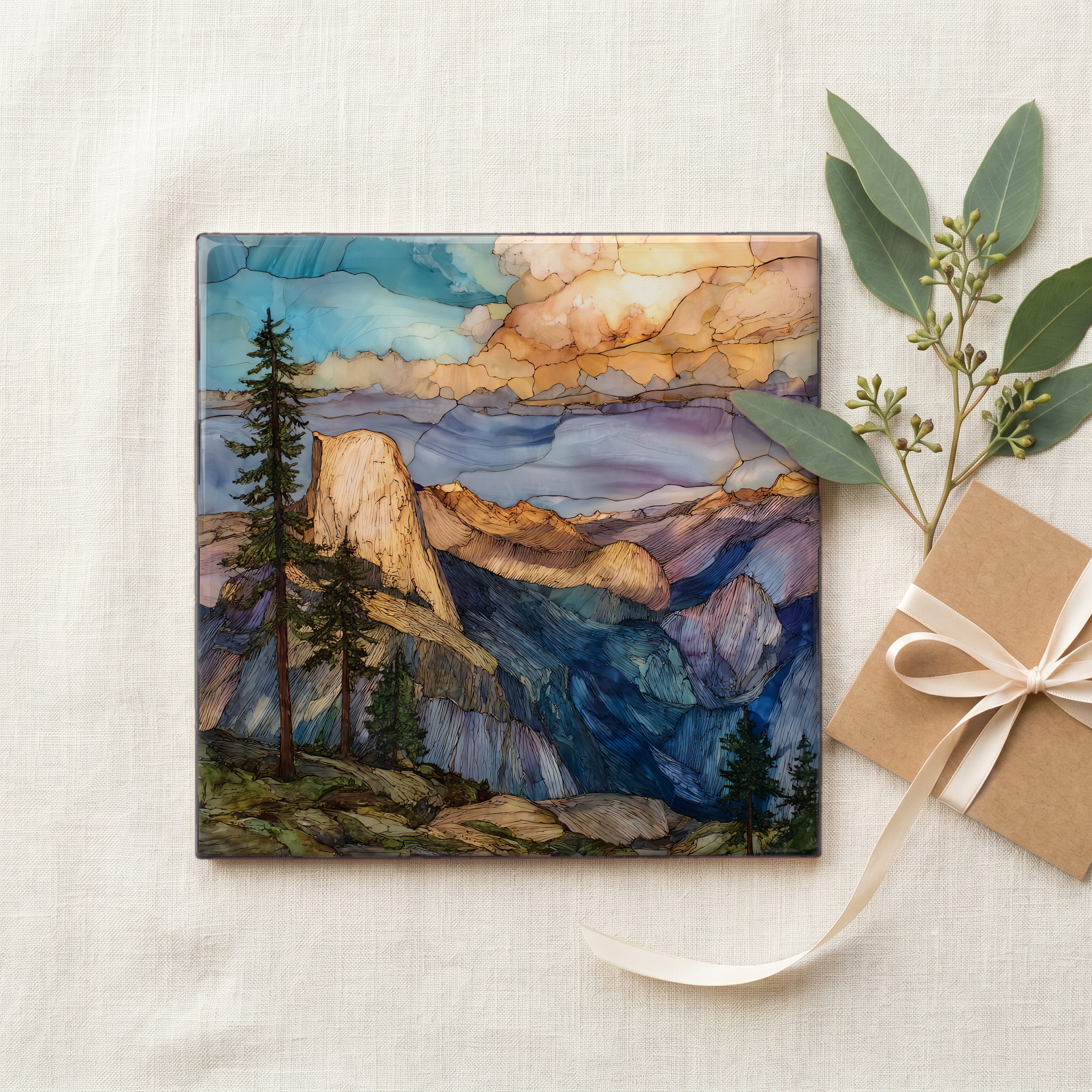
Each tile ships in a kraft box, tied with cream ribbon, with a handwritten note from the studio if you'd like to add one.

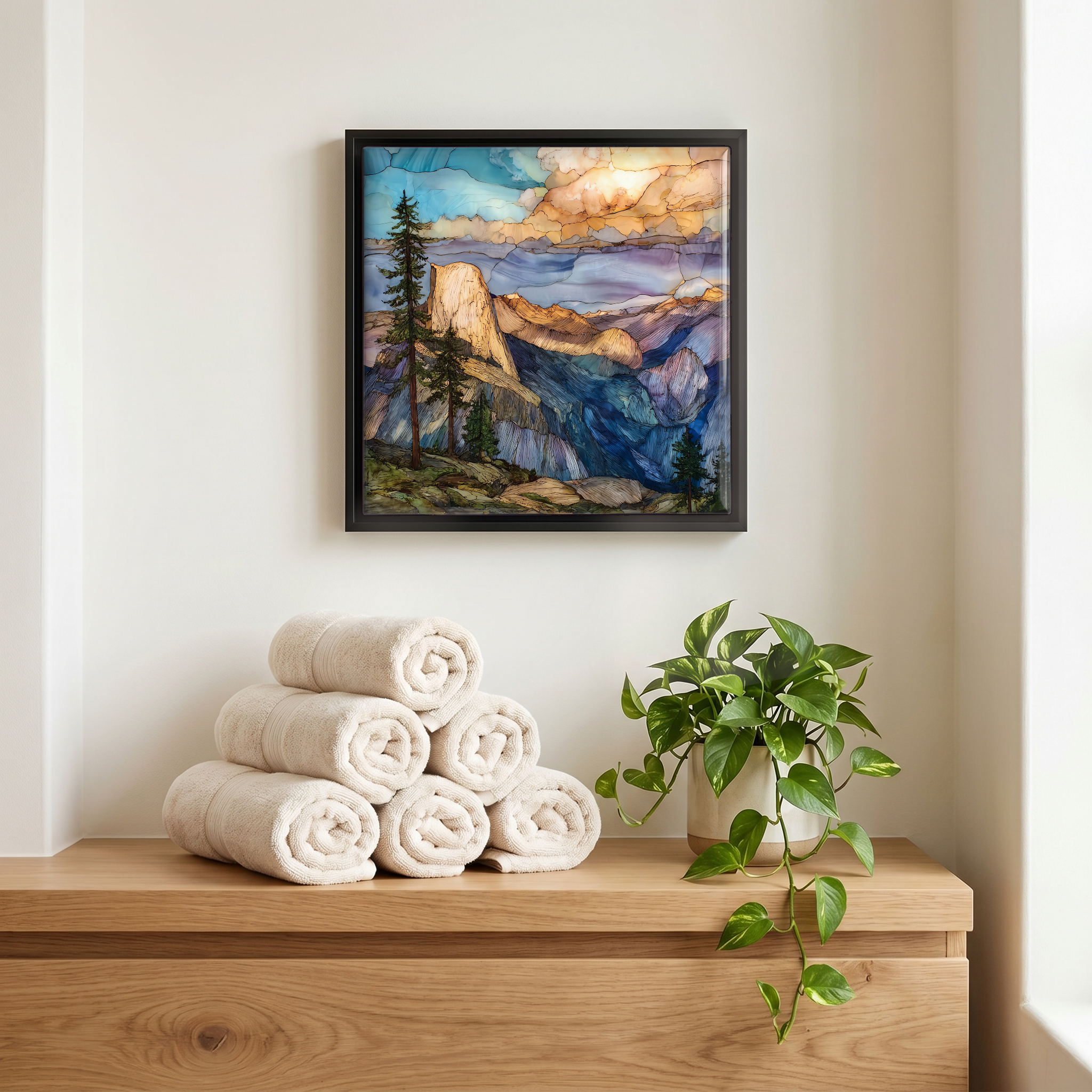
Three or five different vistas, hung together — a chapter of places you've been, or want to go.
The place, in three passes.
Half Dome rises above the eastern end of Yosemite Valley to 8,839 feet, its sheer northwest face dropping more than 2,000 feet from summit to base. The view from Glacier Point, an overlook at 7,214 feet on the south wall of the valley, is the most reproduced angle of the dome and one of the defining images of Yosemite National Park. The park spans 759,620 acres of the central Sierra Nevada, in Mariposa and Tuolumne counties, California. Glacier Point is reached by a sixteen-mile spur off Wawona Road, signed from Highway 41.
The dome is a single mass of granitic rock, exposed when overlying material weathered away over millions of years. The popular story that a glacier sheared off half the formation is a misreading. United States Geological Survey work shows that the northwest face was sculpted primarily by exfoliation, where sheets of granite split and fall along curving joints in the rock, a process driven by the release of pressure as the surrounding stone eroded. Glaciers reached the base of the dome during the last ice age but never overtopped the summit. Less than 20 percent of what once was the dome has been lost, far from a clean half.
Glacier Point is open by car from late May or early June through mid-October or November, depending on snow on the road. Glacier Point Road closes each winter; the National Park Service reopened it for the 2023 season after a year of reconstruction. The drive from the Yosemite Valley floor takes about an hour. The overlook charges no separate fee beyond the park's vehicle pass. Parking fills early on summer weekends. The last hour before sunset is the most crowded window, and the one with the best light, when the granite face warms to pink and orange in the last direct sun.