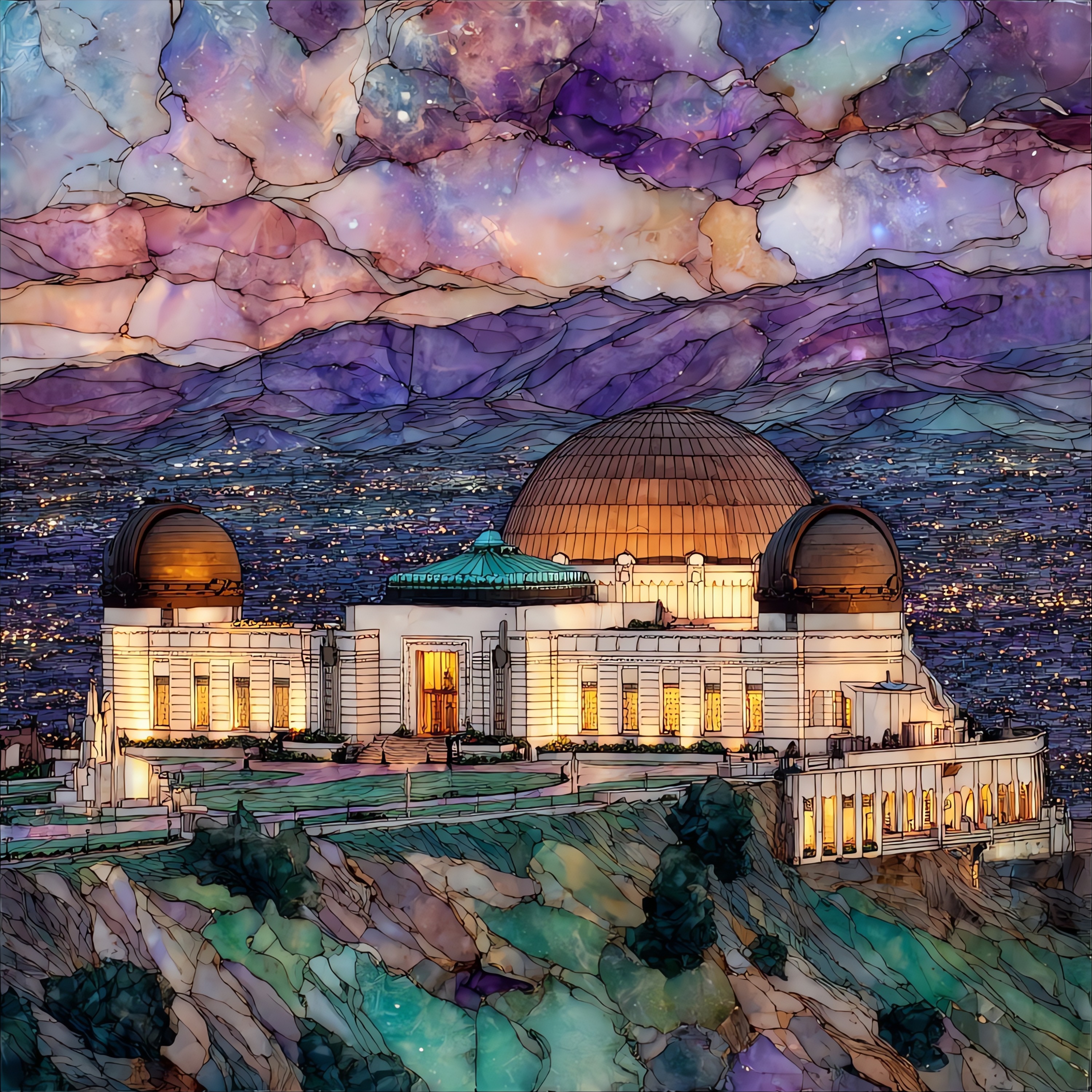
Griffith Observatory
— the dome that holds two skies.
Not only on a wall.
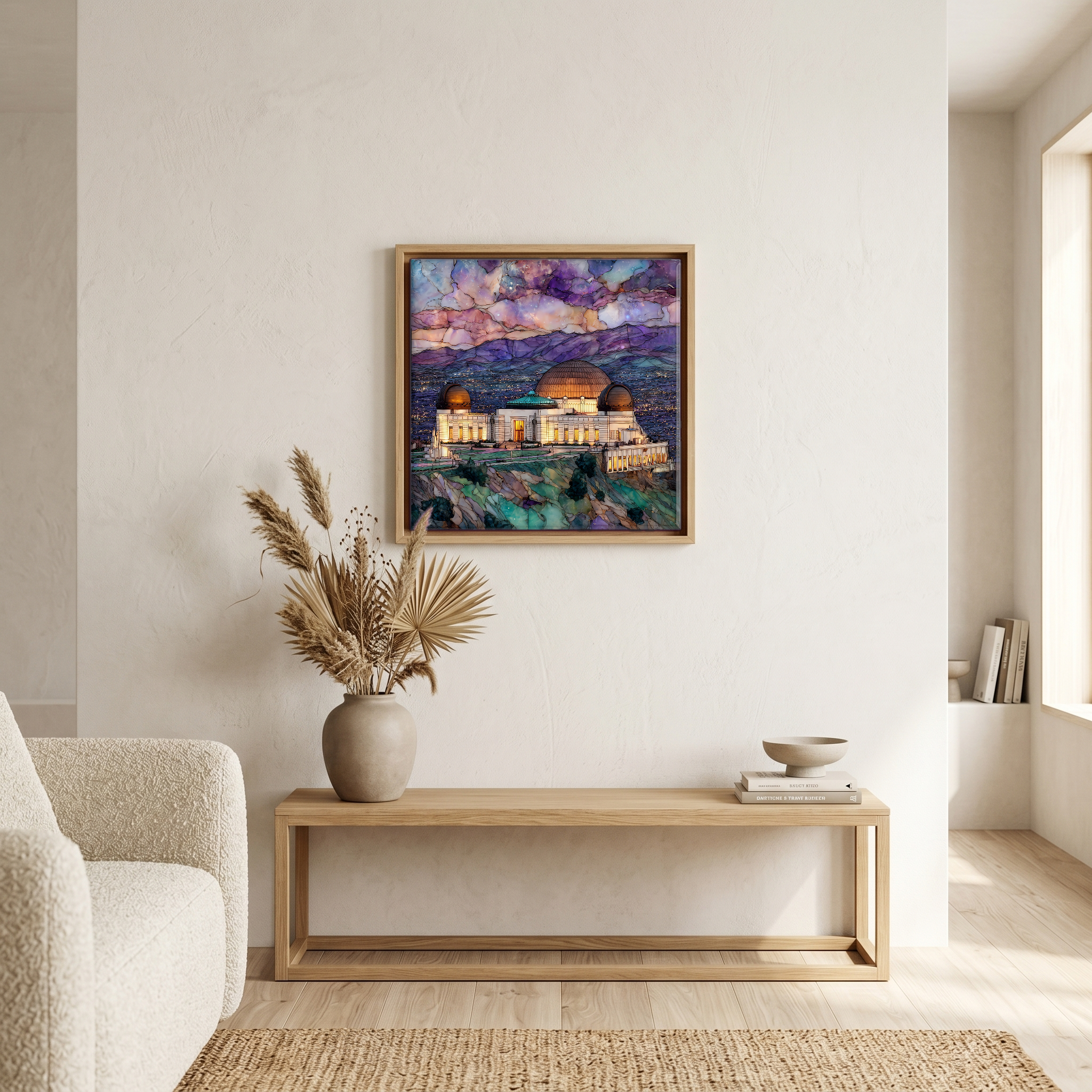
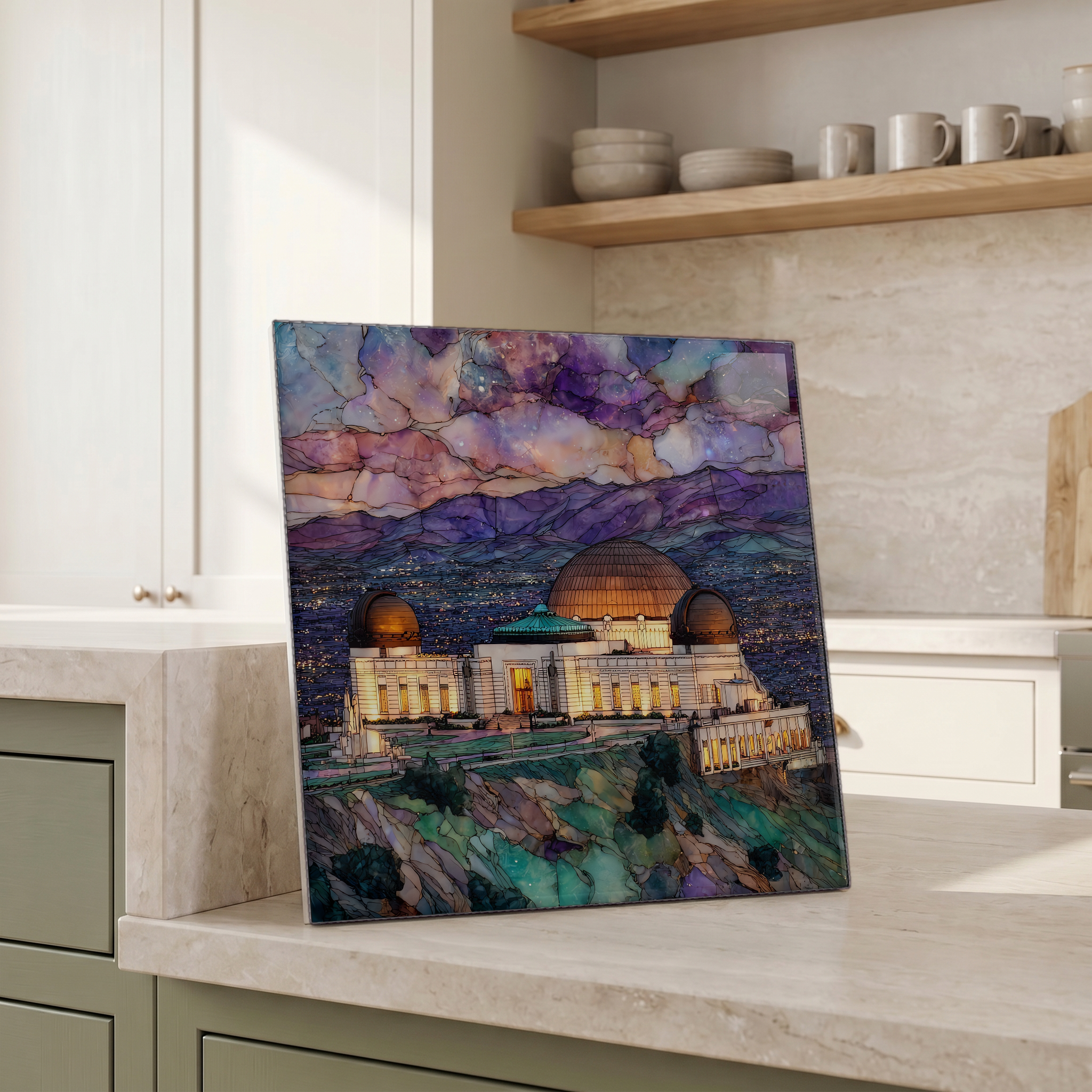
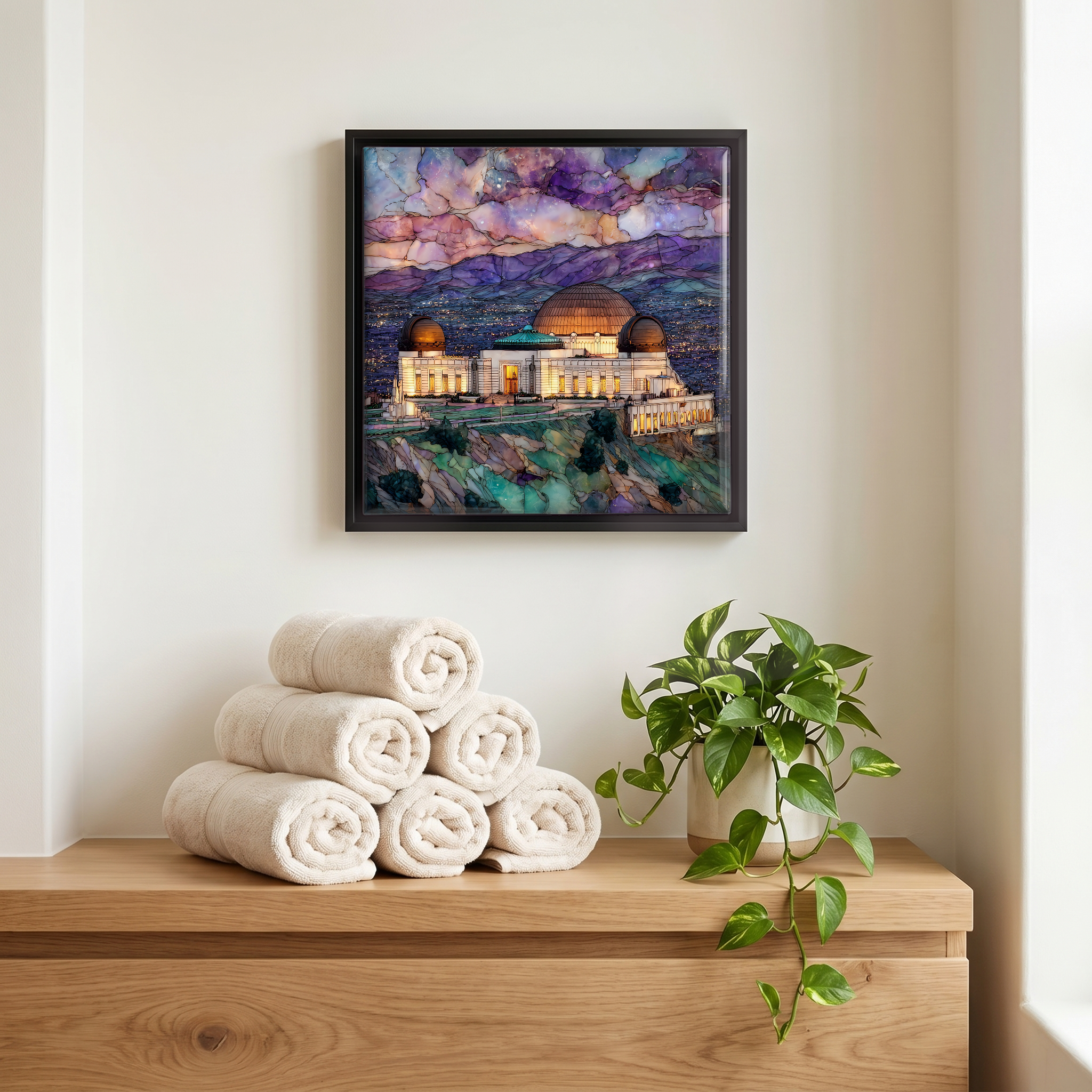
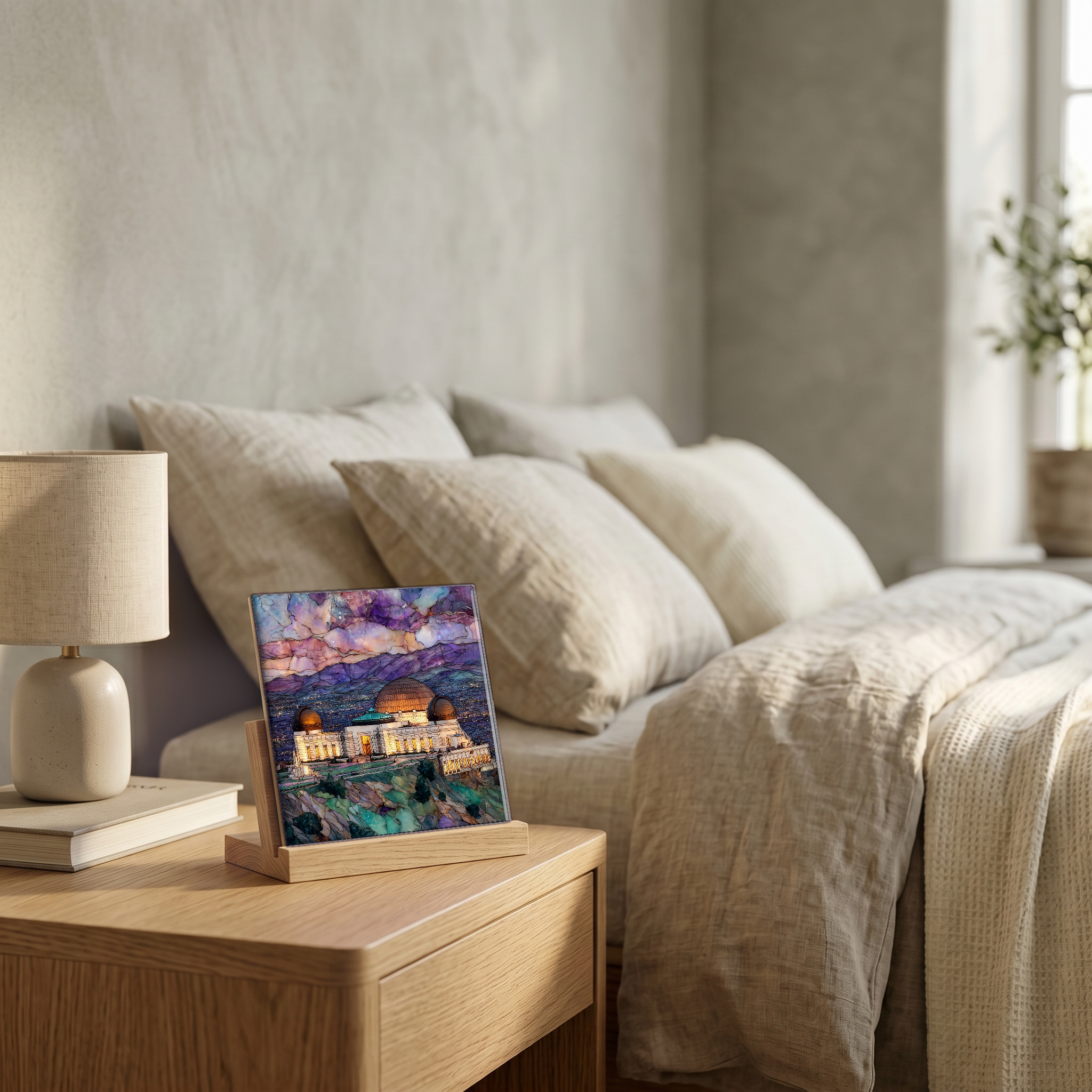
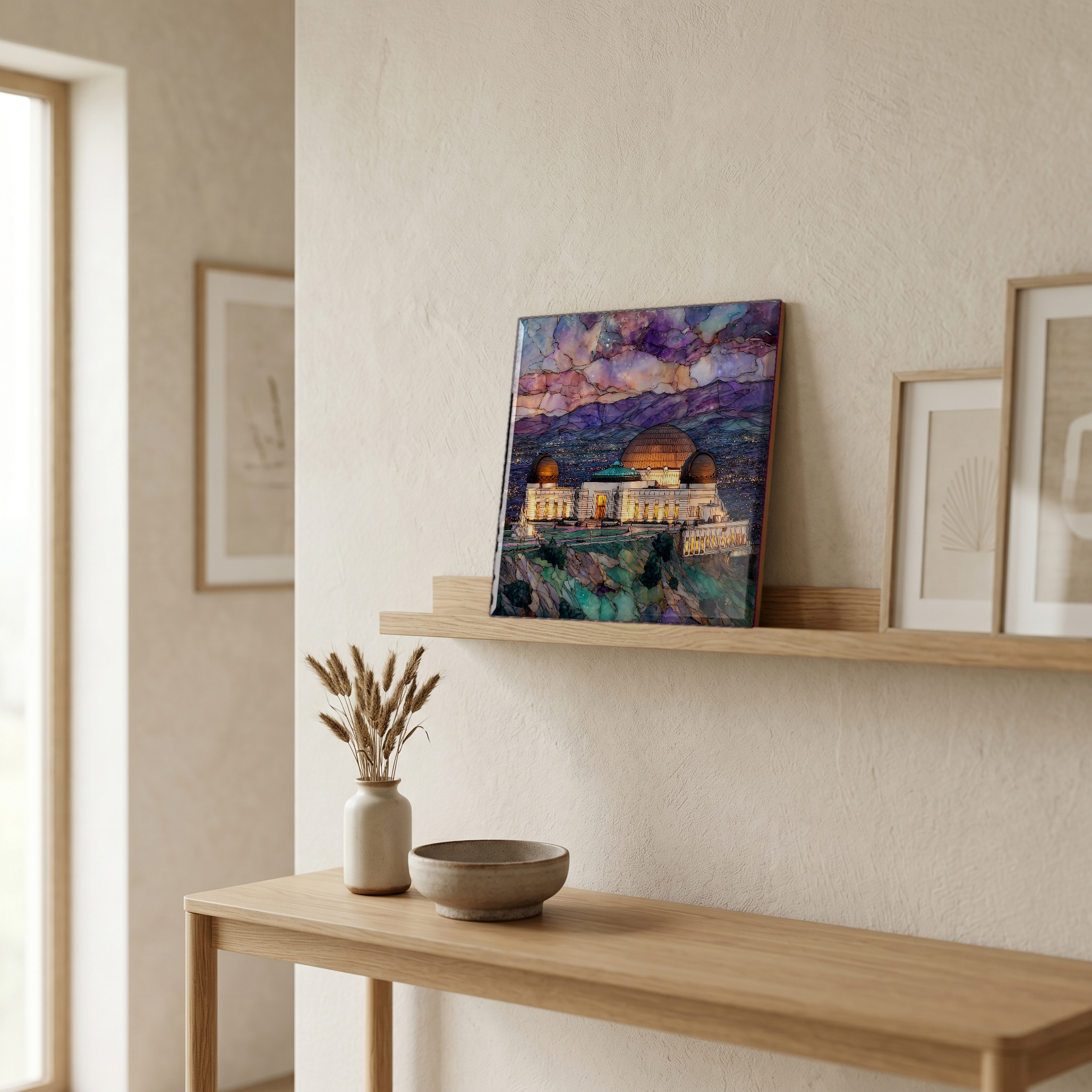
“A copper-domed Art Deco building on the south slope of Mount Hollywood, looking out over the Los Angeles basin. Inside, a 12-inch Zeiss refractor has had more people look through it than any telescope on Earth. Outside, the city becomes the second sky. Open since 1935, free to anyone who climbs the hill. The James Dean bust sits on the west lawn, looking the way Dean did in Rebel Without a Cause. Most evenings the crowd thins after sunset and the lawn quiets down. The basin lights up one switch at a time.
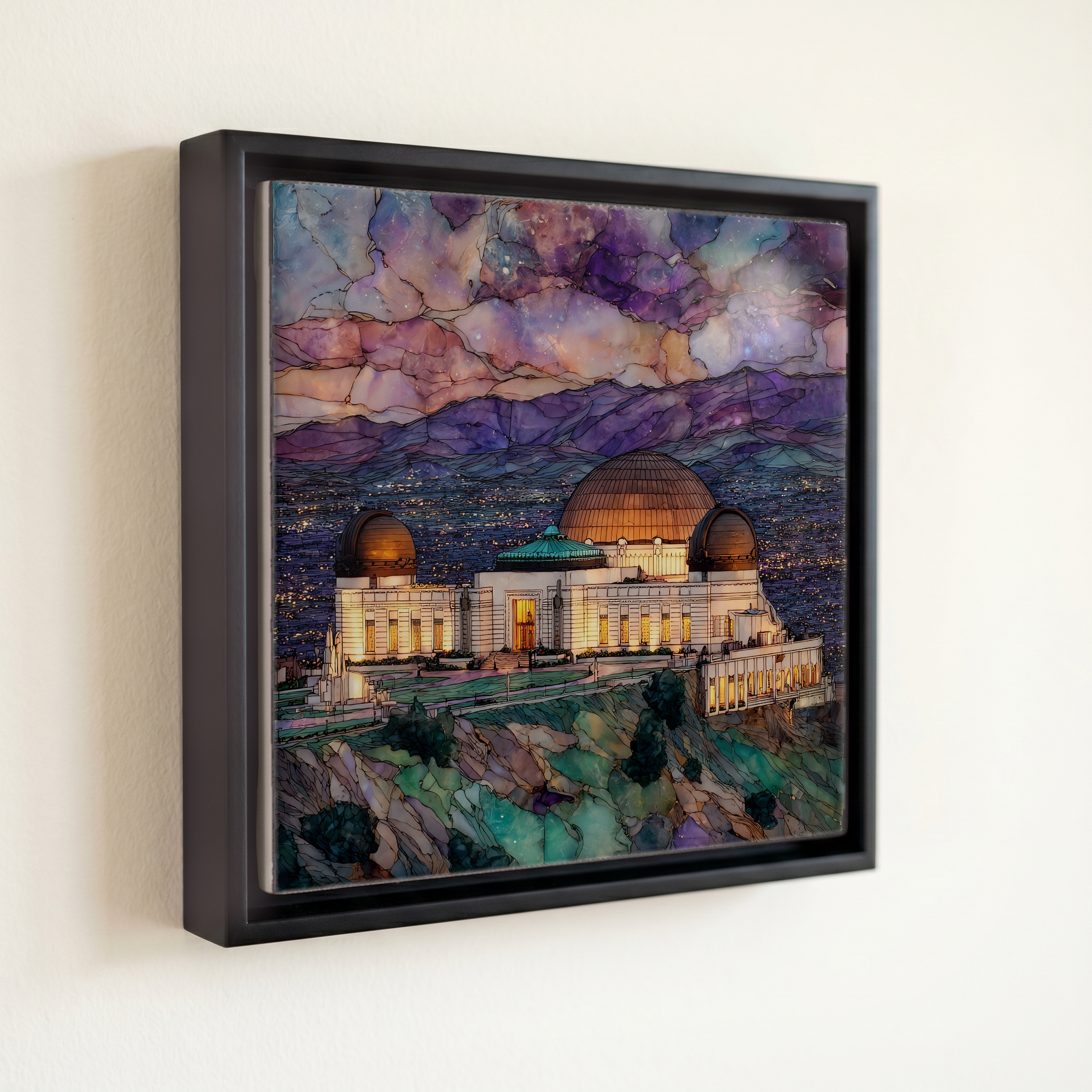
Griffith Observatory, on ceramic.
Each tile is finished by hand in our Knoxville studio. Artwork is slowly infused into the ceramic surface under high heat and pressure, and rests beneath a thin glossy finish. The colour lives in the surface, not on top of it.
Pick any four 4-inch tiles — National Parks you've been to, a Smokies set, the four seasons of one place. $ for a set of , cork-backed, ready to live on the table.
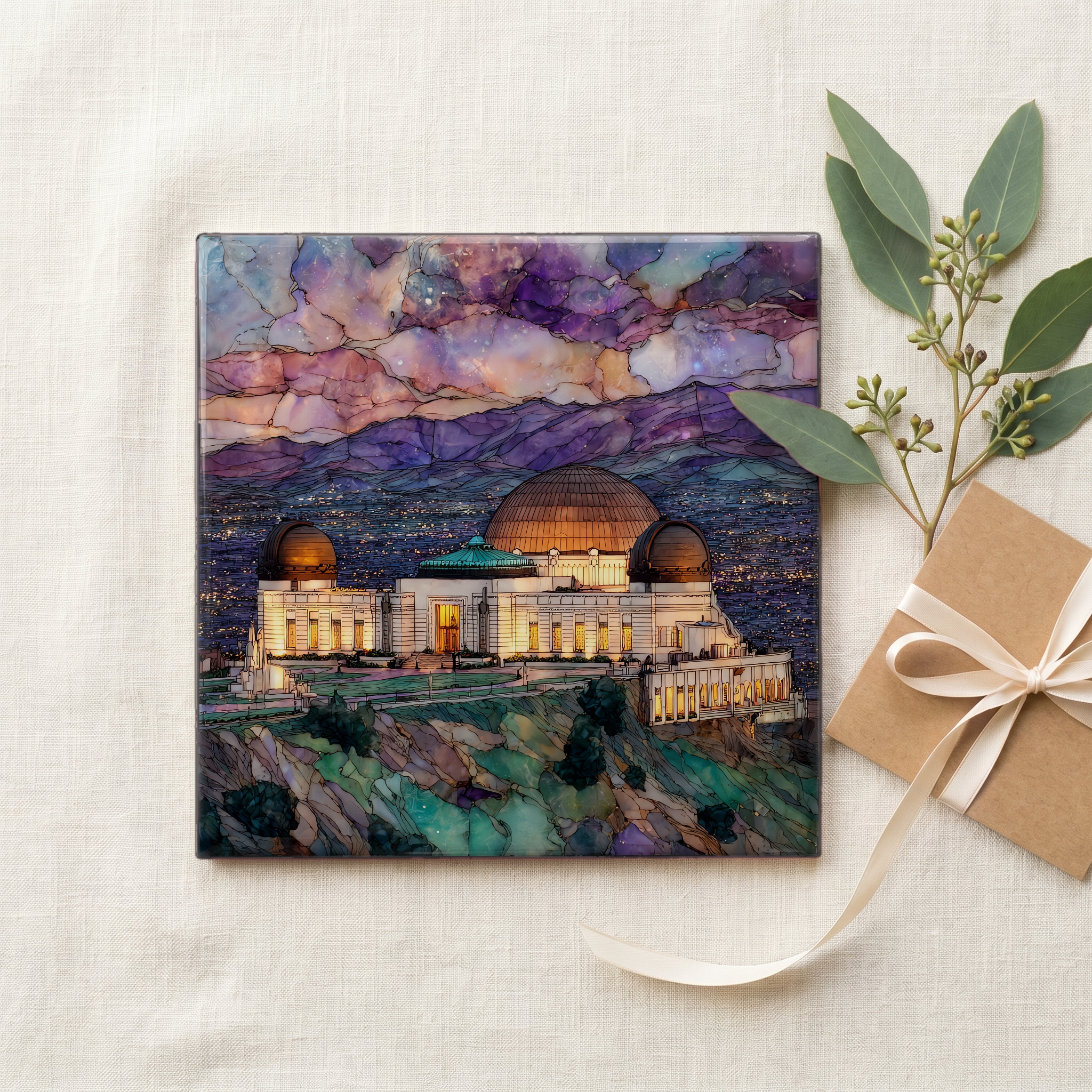
Each tile ships in a kraft box, tied with cream ribbon, with a handwritten note from the studio if you'd like to add one.
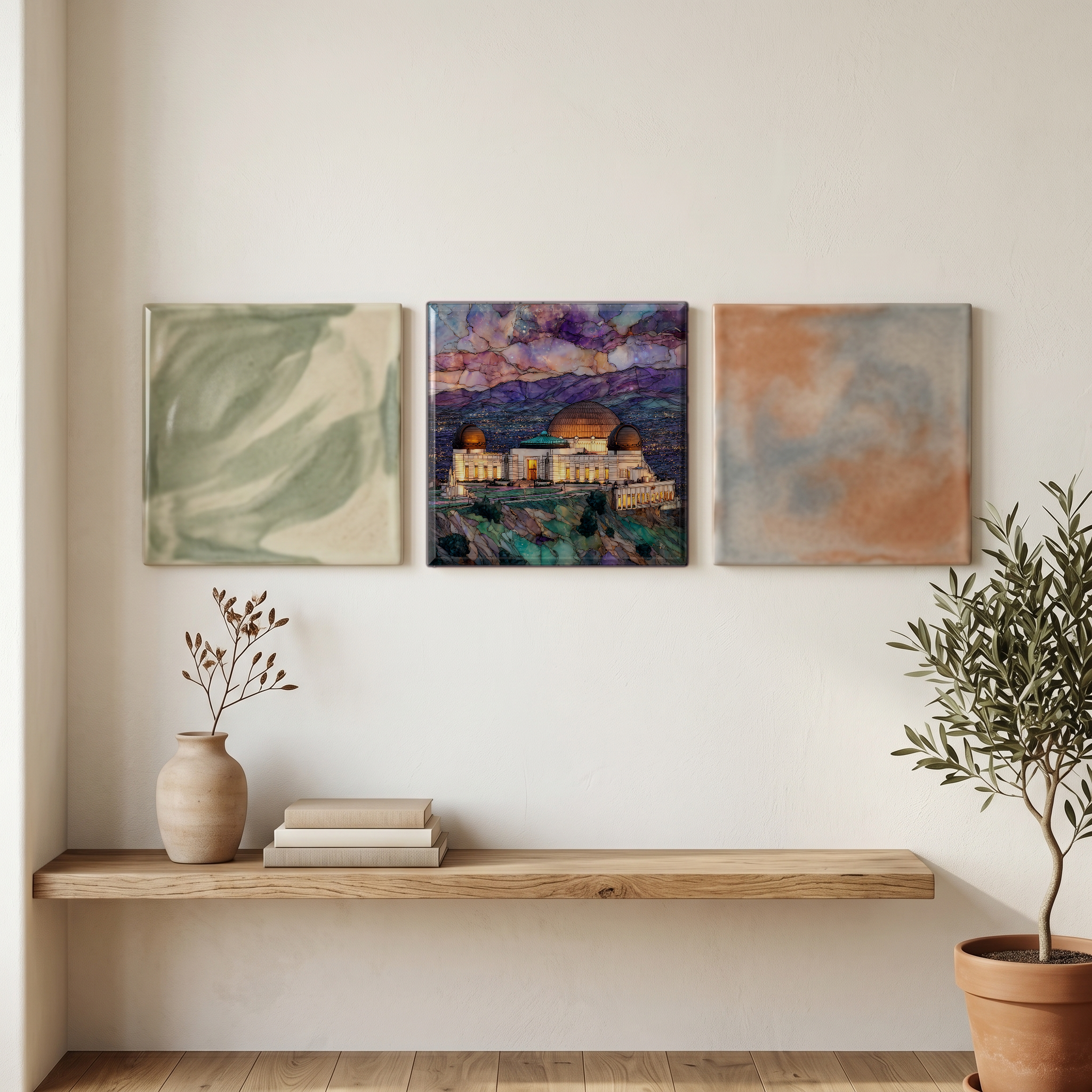
Three or five different vistas, hung together — a chapter of places you've been, or want to go.
The place, in three passes.
Griffith Observatory sits on the south-facing slope of Mount Hollywood, inside Griffith Park, at an elevation of about 1,134 feet above the Los Angeles basin. The park began as a gift of 3,015 acres from Griffith J. Griffith, a Welsh-born industrialist, in 1896; his later bequest of $100,000 funded the observatory's construction. The Art Deco building, designed by John C. Austin and Frederic M. Ashley, opened in 1935 and was conceived from the start as a public science institution rather than a research observatory. It is reached by car along East Observatory Road or on foot from trails climbing through the park, most notably from Fern Dell and the Mount Hollywood Trail.
Sunset and the first hour after it are the reason most people come. The Hollywood Sign rises on Mount Lee to the northwest; downtown Los Angeles sits about seven miles to the southeast. As the sun drops behind the Santa Monica Mountains, the basin's grid lights up in stages: Hollywood Boulevard first, then the freeway arteries, then the further hills. Inside the rotunda, a Foucault pendulum swings beneath Hugo Ballin's 1934 ceiling murals. On the east dome, the 12-inch Zeiss refractor opens after dark; more people have looked through this telescope than any other on Earth. Two skies meet on one hill, an hour apart.
Admission to the building and the grounds is free, as Griffith stipulated in his bequest; only the Samuel Oschin Planetarium shows carry a ticket fee. The observatory is open Tuesday through Friday from noon to 10 p.m. and on weekends from 10 a.m. to 10 p.m., closed Mondays. On clear nights staff astronomers open the dome above the 12-inch Zeiss refractor for public viewing, usually for a few hours after dark. Parking on the summit fills early; the city's DASH Observatory shuttle runs from the Vermont/Sunset Metro station. From the lower park, the Charlie Turner Trail reaches the building on foot in roughly half an hour.