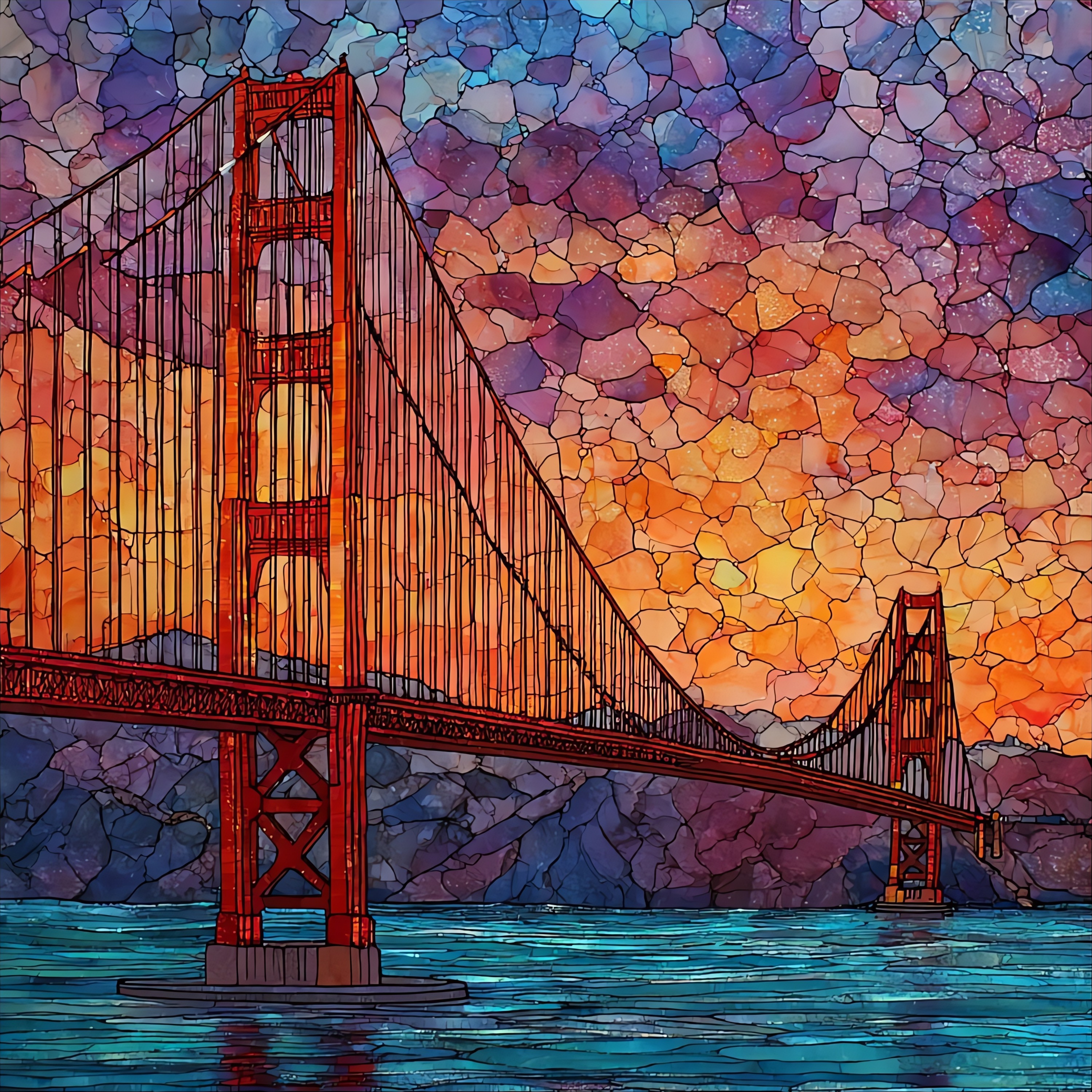
Golden Gate Bridge
— — the orange the fog never quite takes.
Not only on a wall.
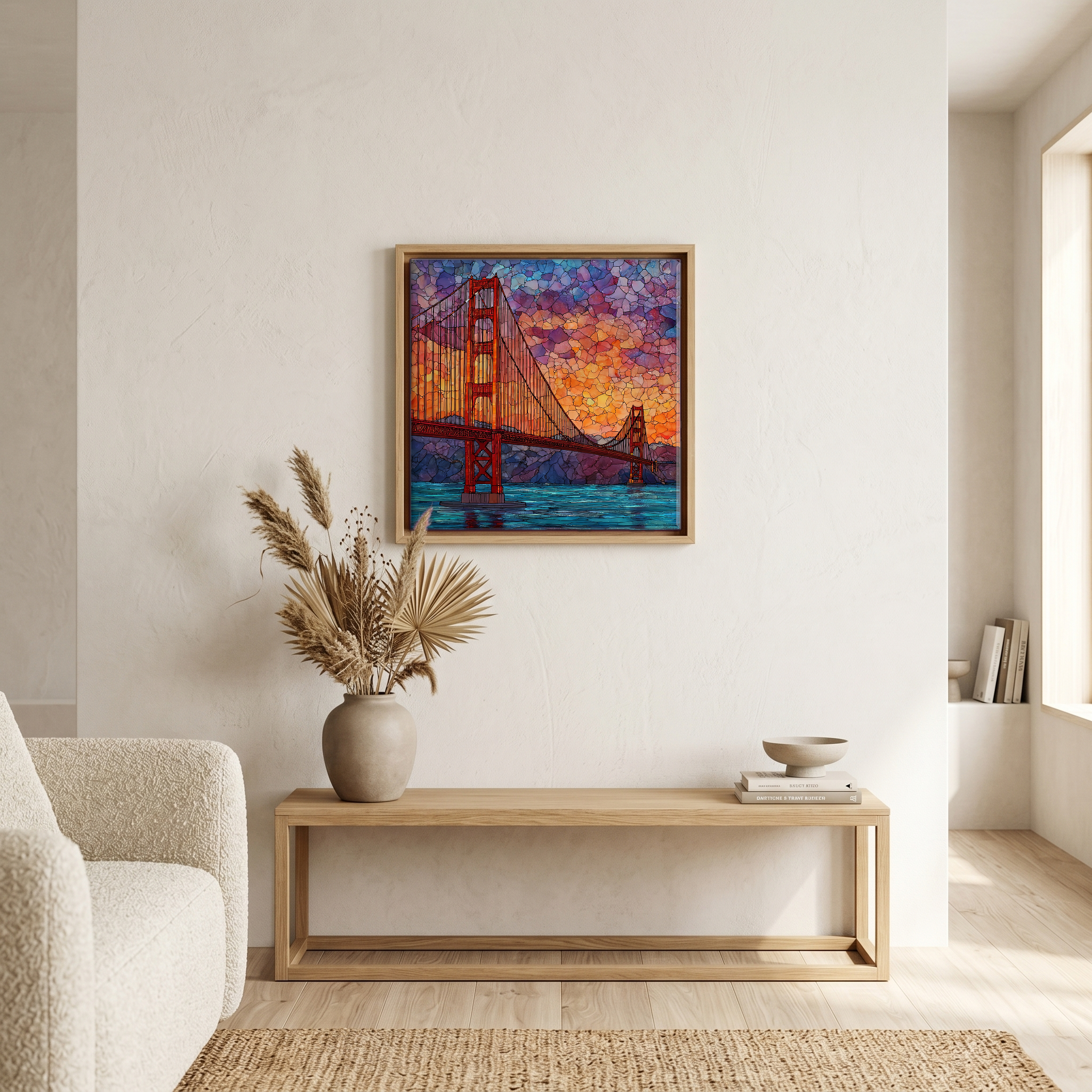
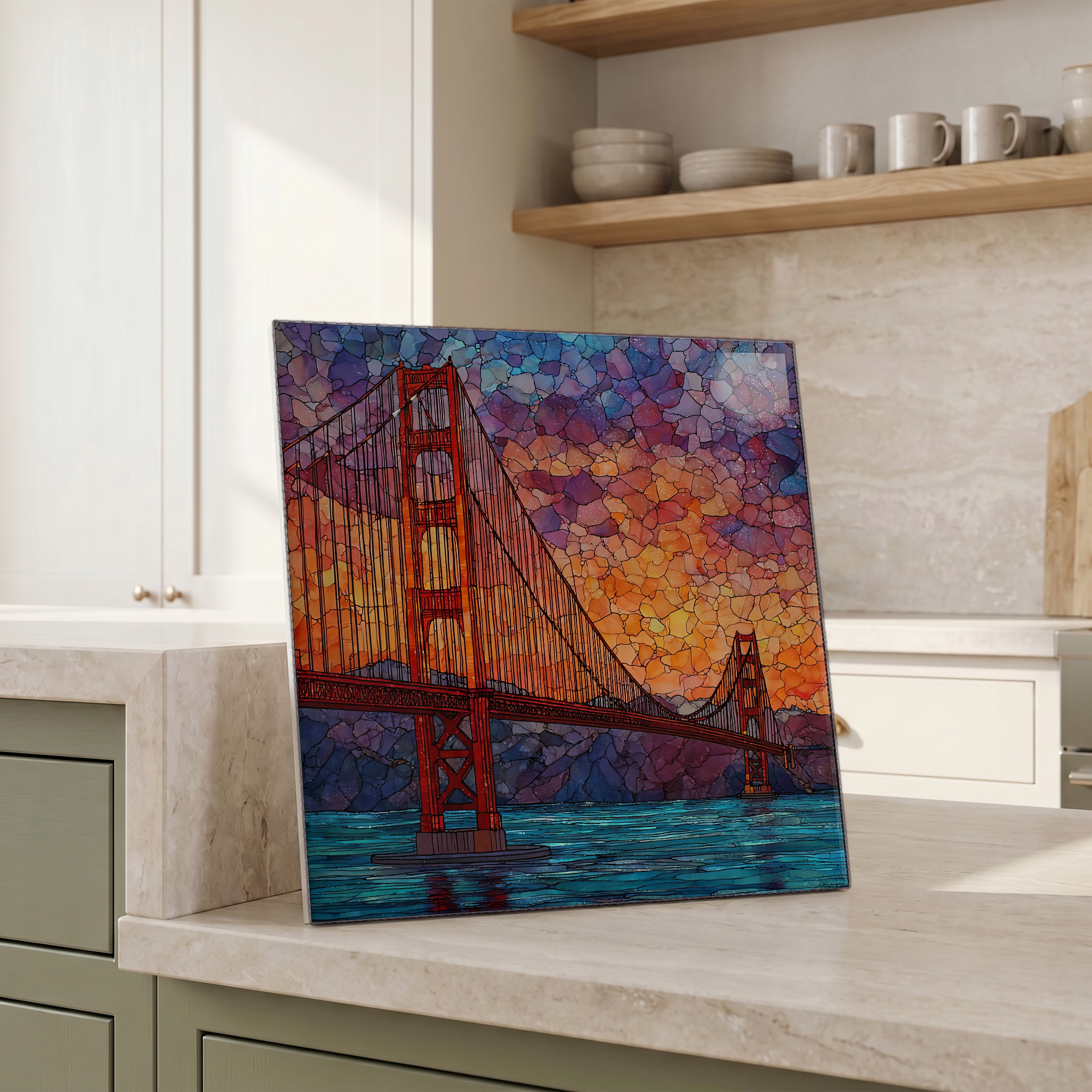
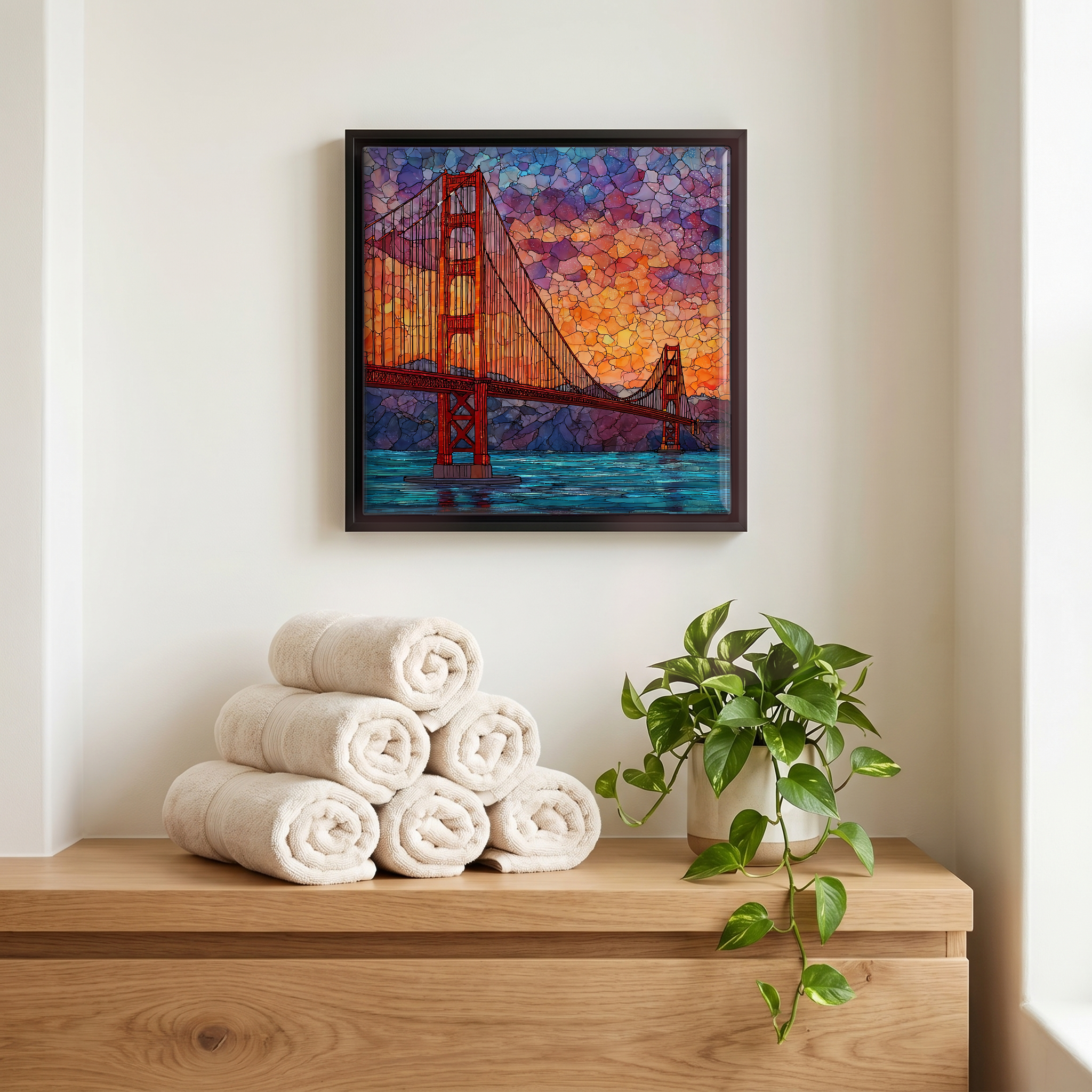
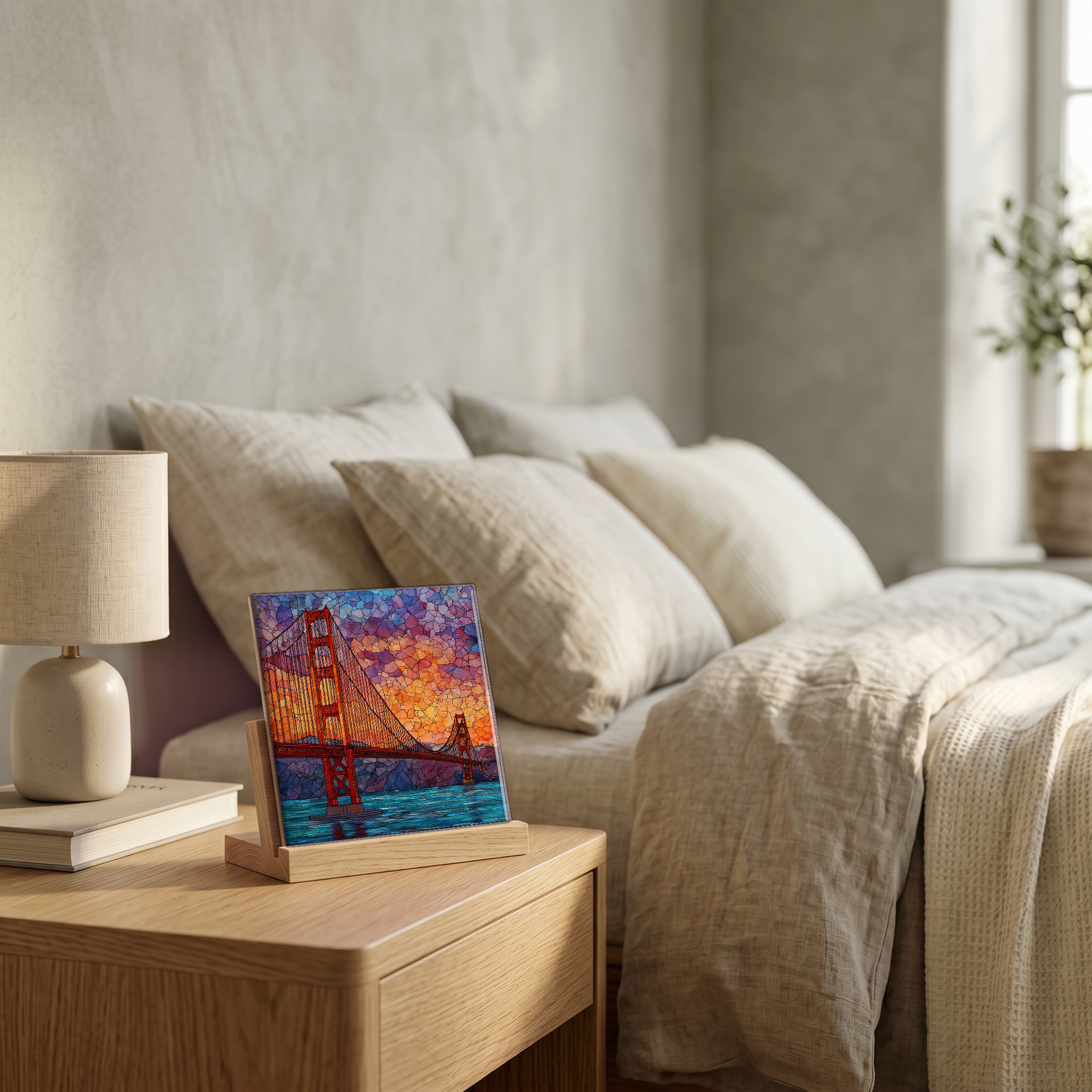
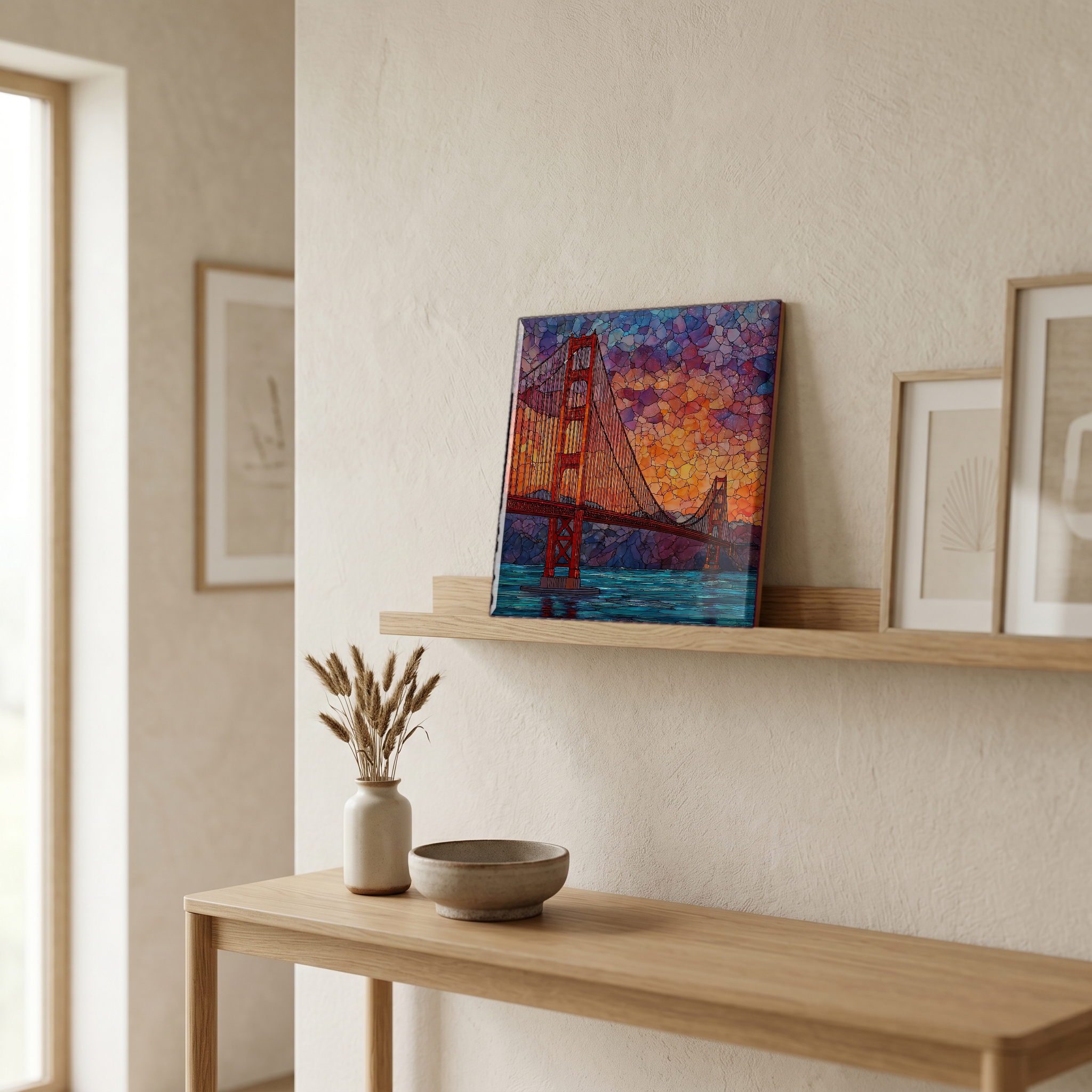
“The bridge crosses the Golden Gate strait, the gap where the Pacific meets San Francisco Bay. Irving Morrow chose the colour against the recommendation of the Navy, who wanted black and yellow stripes. International Orange, a shade picked to read against the fog that rolls in most summer afternoons. From Battery Spencer on the Marin side, the towers come up out of the white the way a piano comes up under a song you half remember. Sausalito is one bend further north. Most of the people standing there don't take a photo for the first few minutes. — from the studio
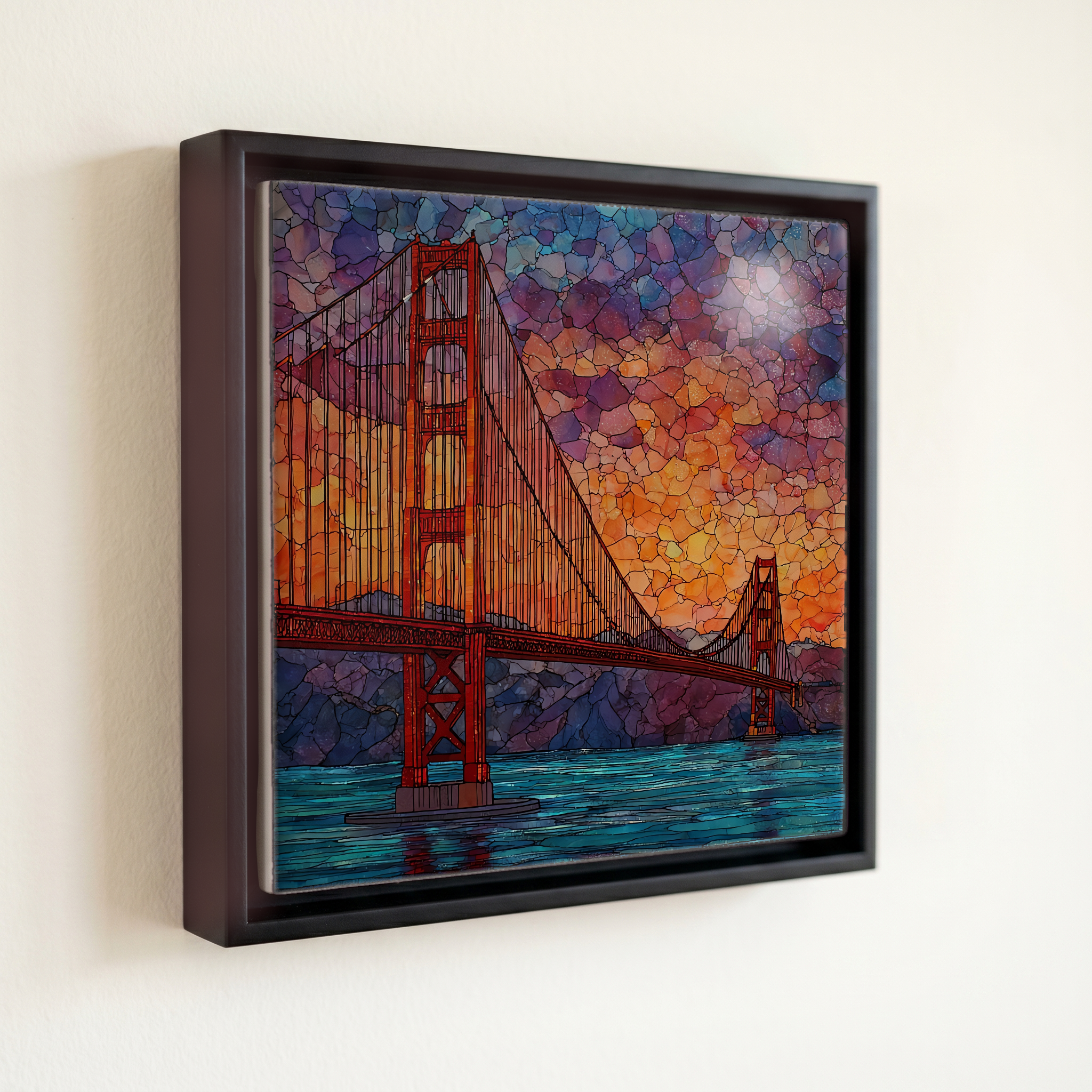
Golden Gate Bridge, on ceramic.
Each tile is finished by hand in our Knoxville studio. Artwork is slowly infused into the ceramic surface under high heat and pressure, and rests beneath a thin glossy finish. The colour lives in the surface, not on top of it.
Pick any four 4-inch tiles — National Parks you've been to, a Smokies set, the four seasons of one place. $ for a set of , cork-backed, ready to live on the table.
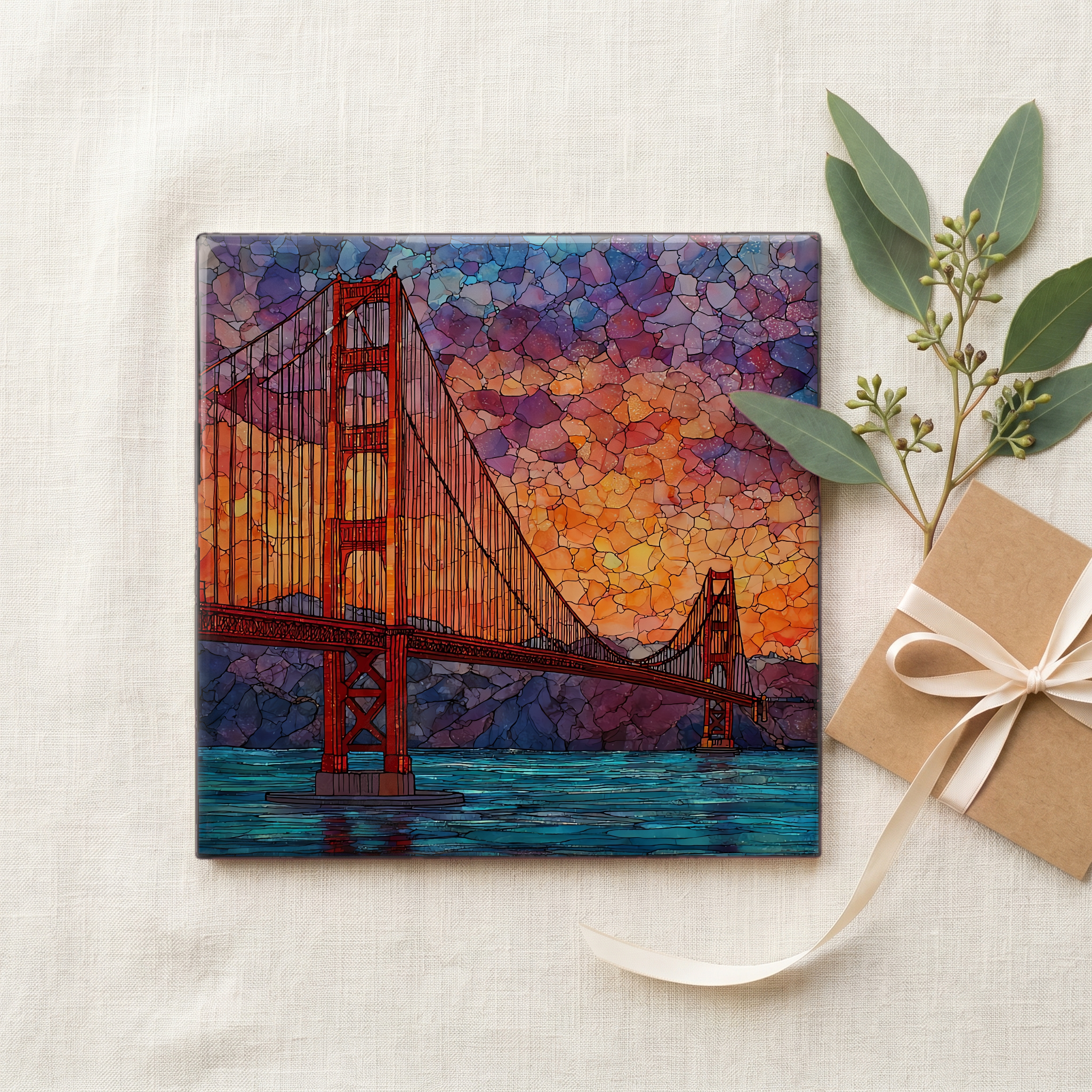
Each tile ships in a kraft box, tied with cream ribbon, with a handwritten note from the studio if you'd like to add one.
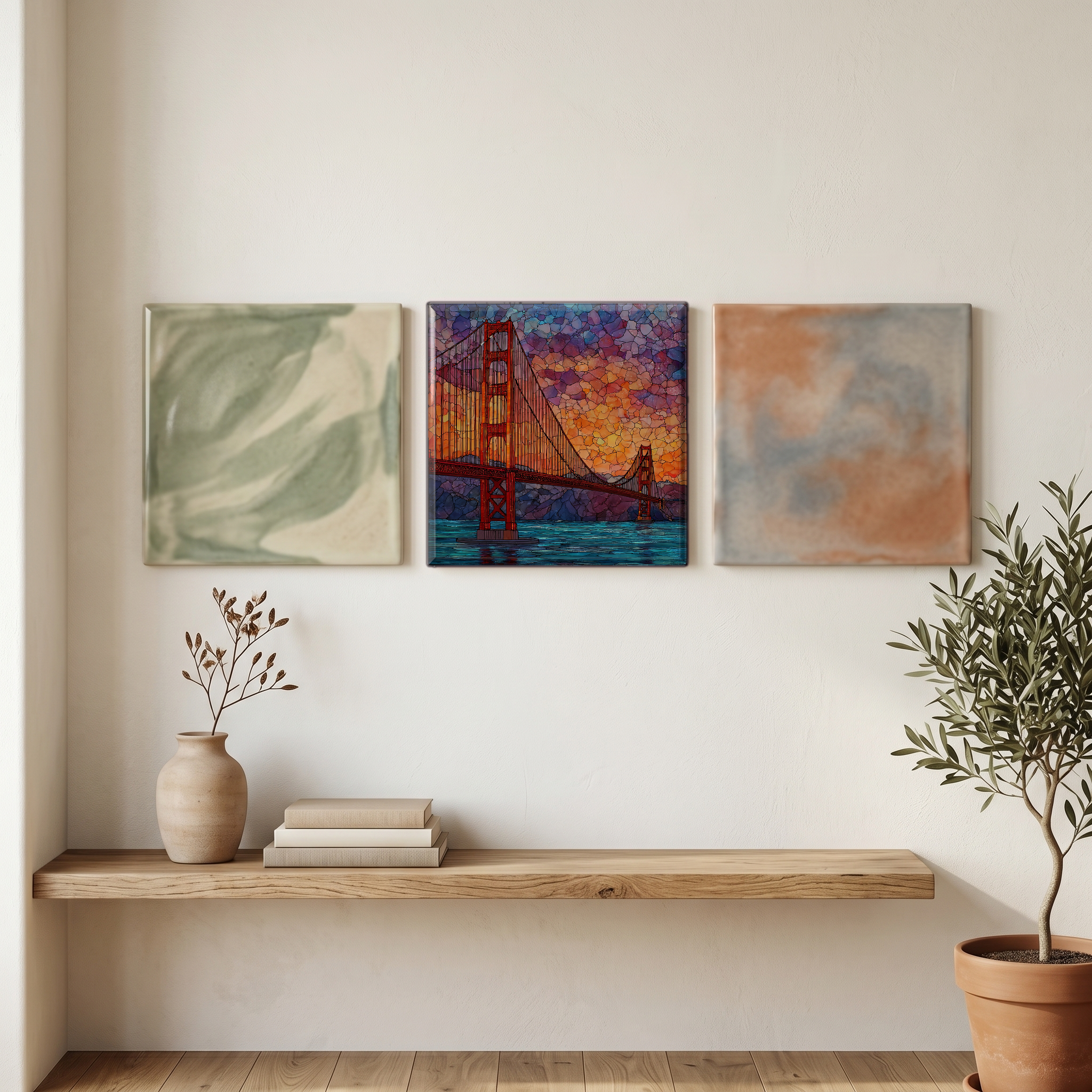
Three or five different vistas, hung together — a chapter of places you've been, or want to go.
The place, in three passes.
The Golden Gate Bridge spans the Golden Gate strait, the one-mile-wide opening where the Pacific Ocean meets San Francisco Bay. It opened on May 27, 1937, after four years of construction supervised by chief engineer Joseph Strauss with design contributions from Charles Ellis and Leon Moisseiff. The main span runs 4,200 feet between two towers that rise 746 feet above the water. It was the longest suspension span in the world until the Verrazzano-Narrows opened in New York in 1964. The southern end sits in the Presidio of San Francisco; the northern end lands in the Marin Headlands above Sausalito. The bridge is owned and operated by the Golden Gate Bridge, Highway and Transportation District.
International Orange was not in the original plan. The Navy wanted the bridge painted with black and yellow stripes for visibility; the Army Air Corps suggested a candy-cane red and white. The consulting architect Irving Morrow, working on the Art Deco styling of the towers and pedestrian railings, noticed the red lead primer the steel arrived in and argued for keeping that family of colours. He wrote that the shade complemented the warm tones of the Marin Headlands and the cool blue-greens of the bay, while reading well against the fog. The exact pigment, a deep red-orange officially called International Orange, has been maintained since the bridge opened. A small in-house paint shop touches up corroded areas continuously rather than repainting the bridge end to end.
Pedestrians and cyclists can cross the bridge free of charge; the southbound vehicle toll is electronic only, paid via FasTrak or licence-plate billing. The east-side walkway is open to people on foot during daylight hours, with cyclists routed to the west side at other times. The most cited photographic vantage is Battery Spencer, a former coastal-defense gun emplacement on the Marin side reached by a short walk from a signed lot off Conzelman Road in the Golden Gate National Recreation Area. Hawk Hill, a few minutes further up the same road, climbs above 900 feet and offers the wider angle that includes the city behind the towers. Summer mornings carry the heaviest fog; clear views are more reliable in autumn and winter.