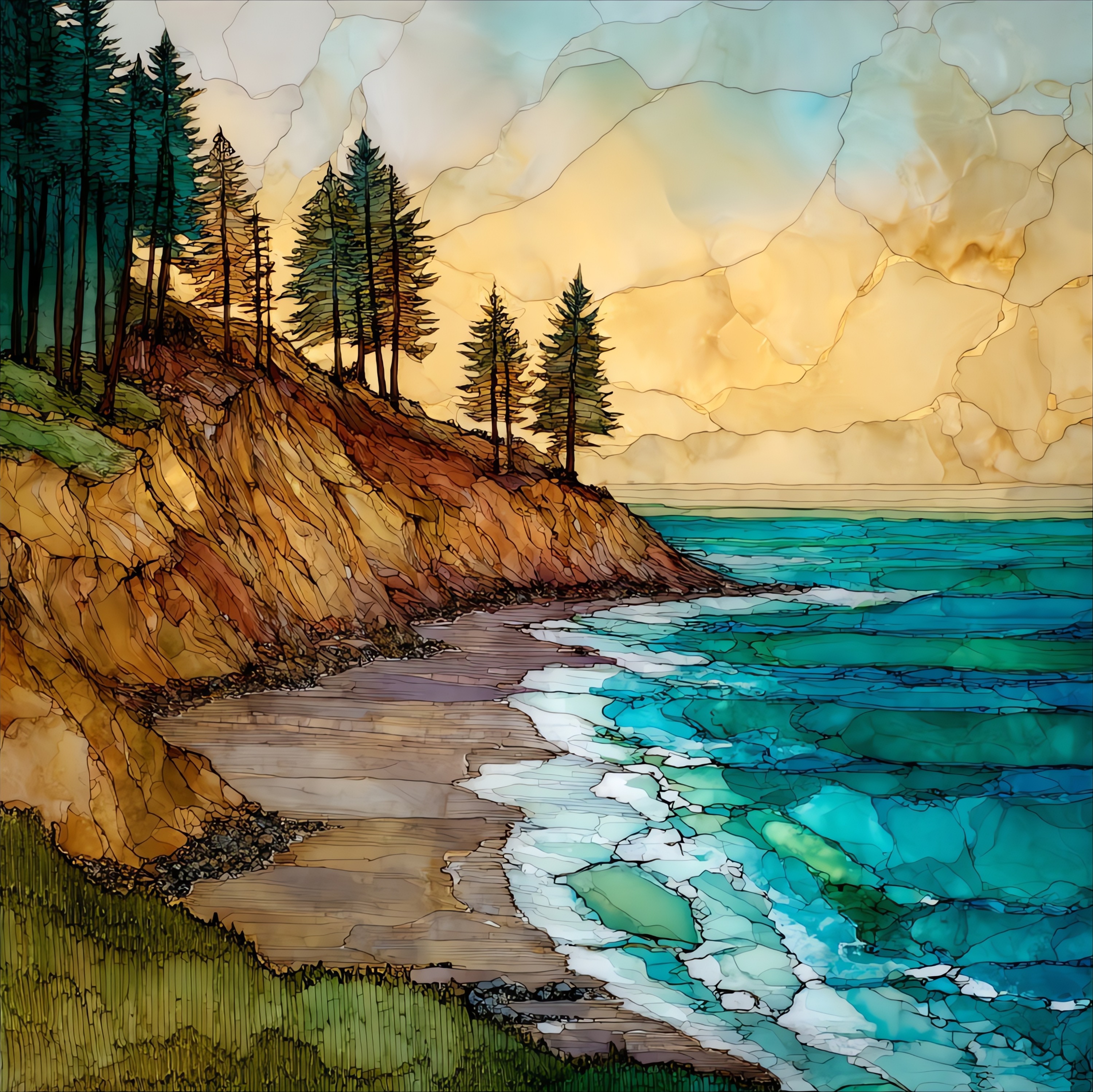
Gold Bluffs Beach
— the morning the elk come down to the sea.
Not only on a wall.
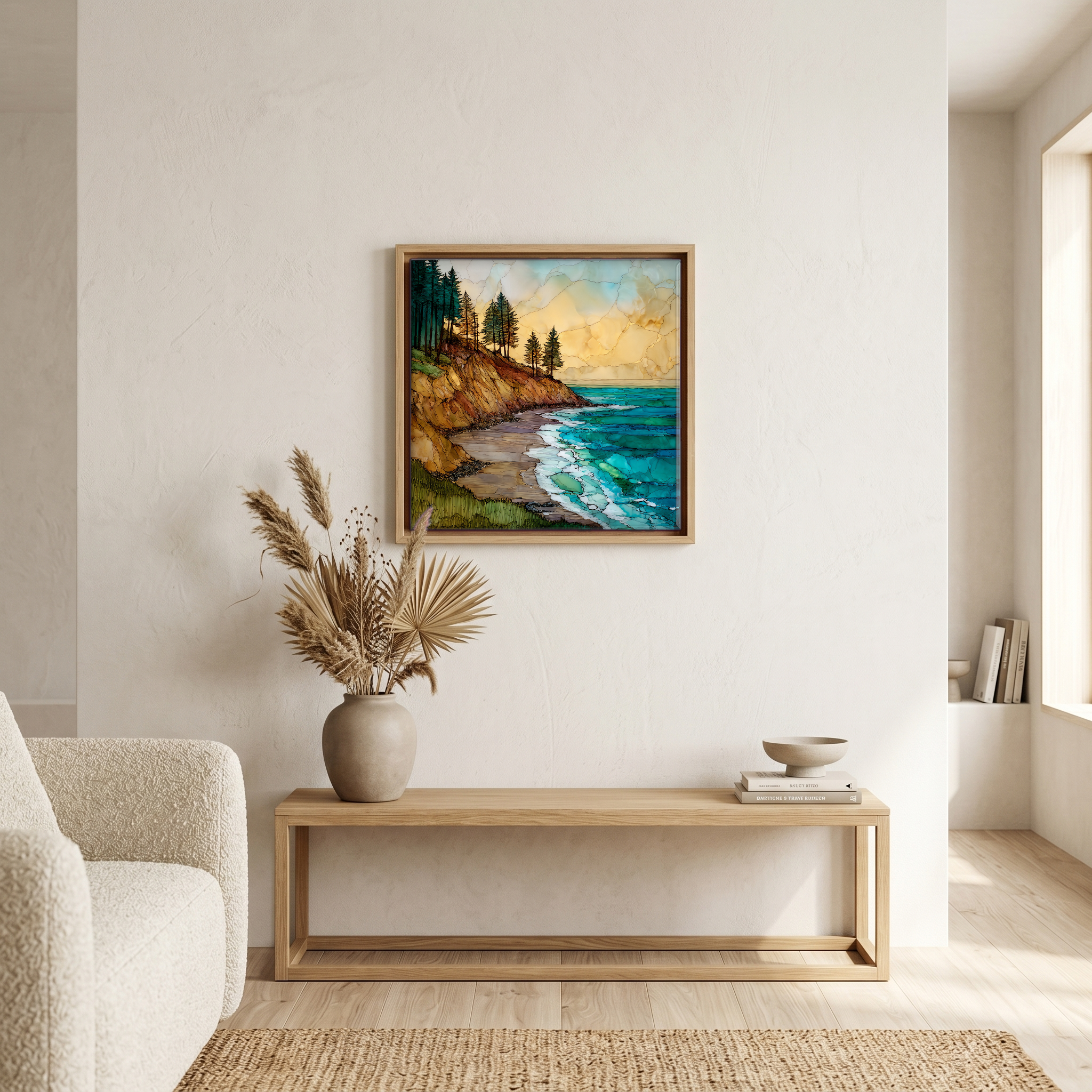
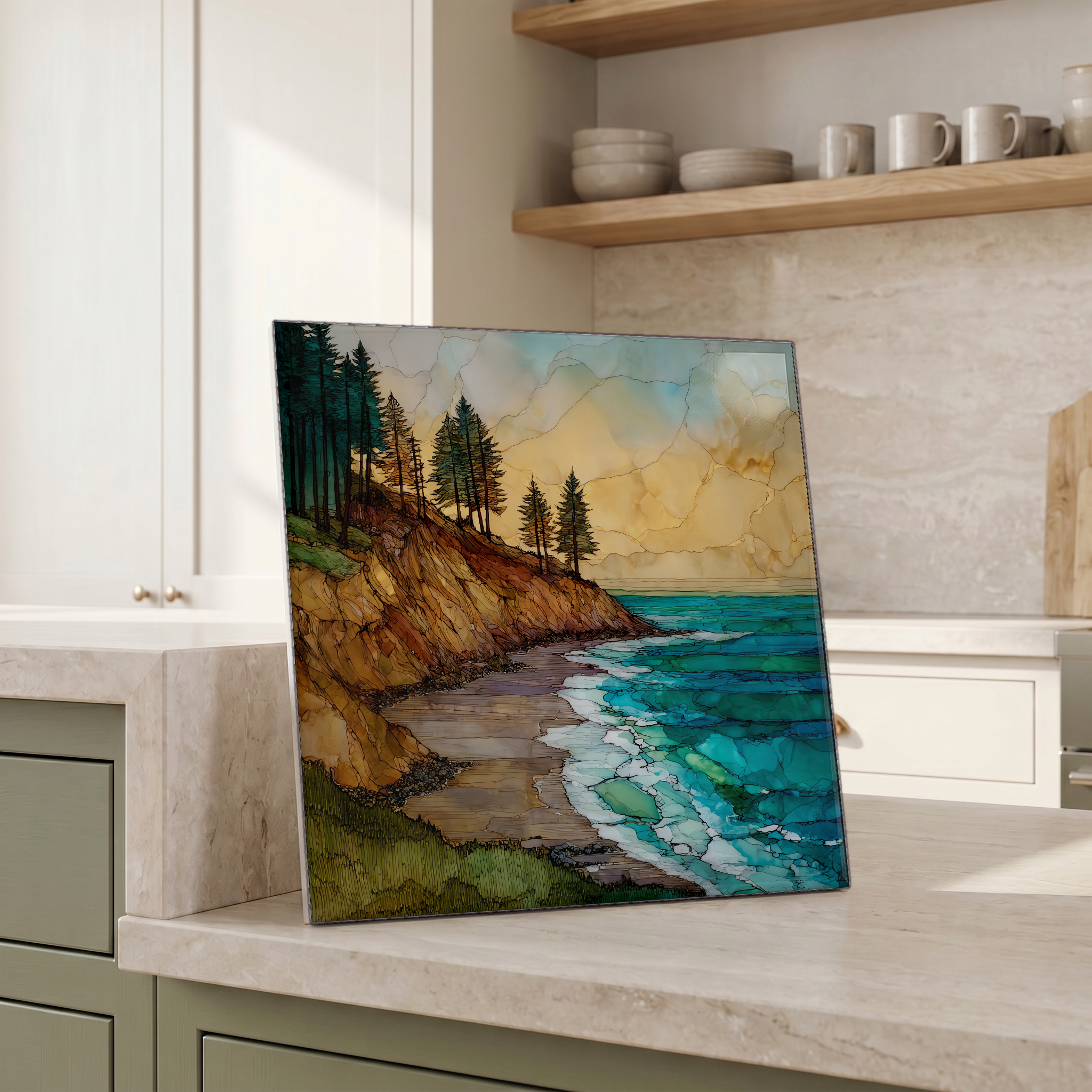
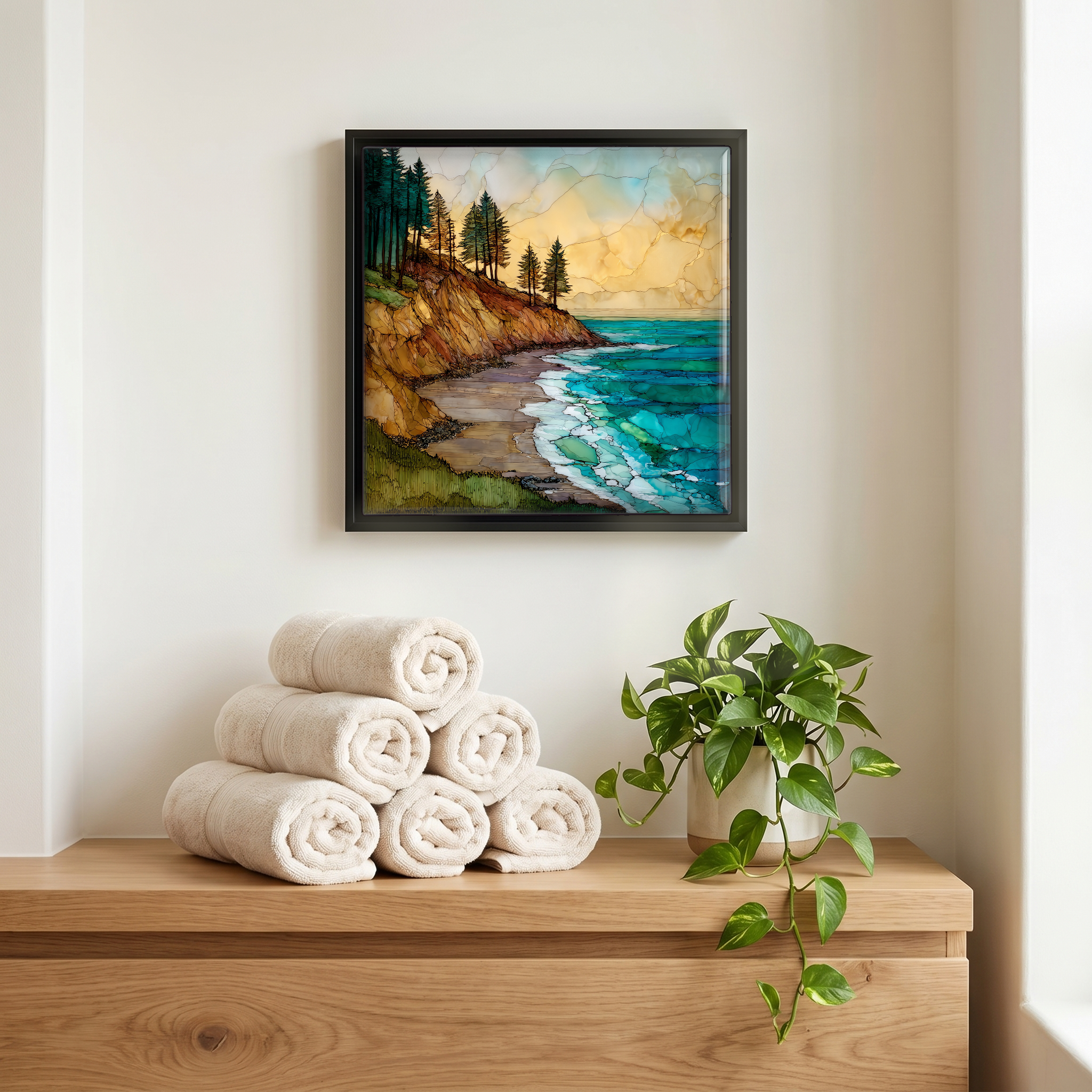

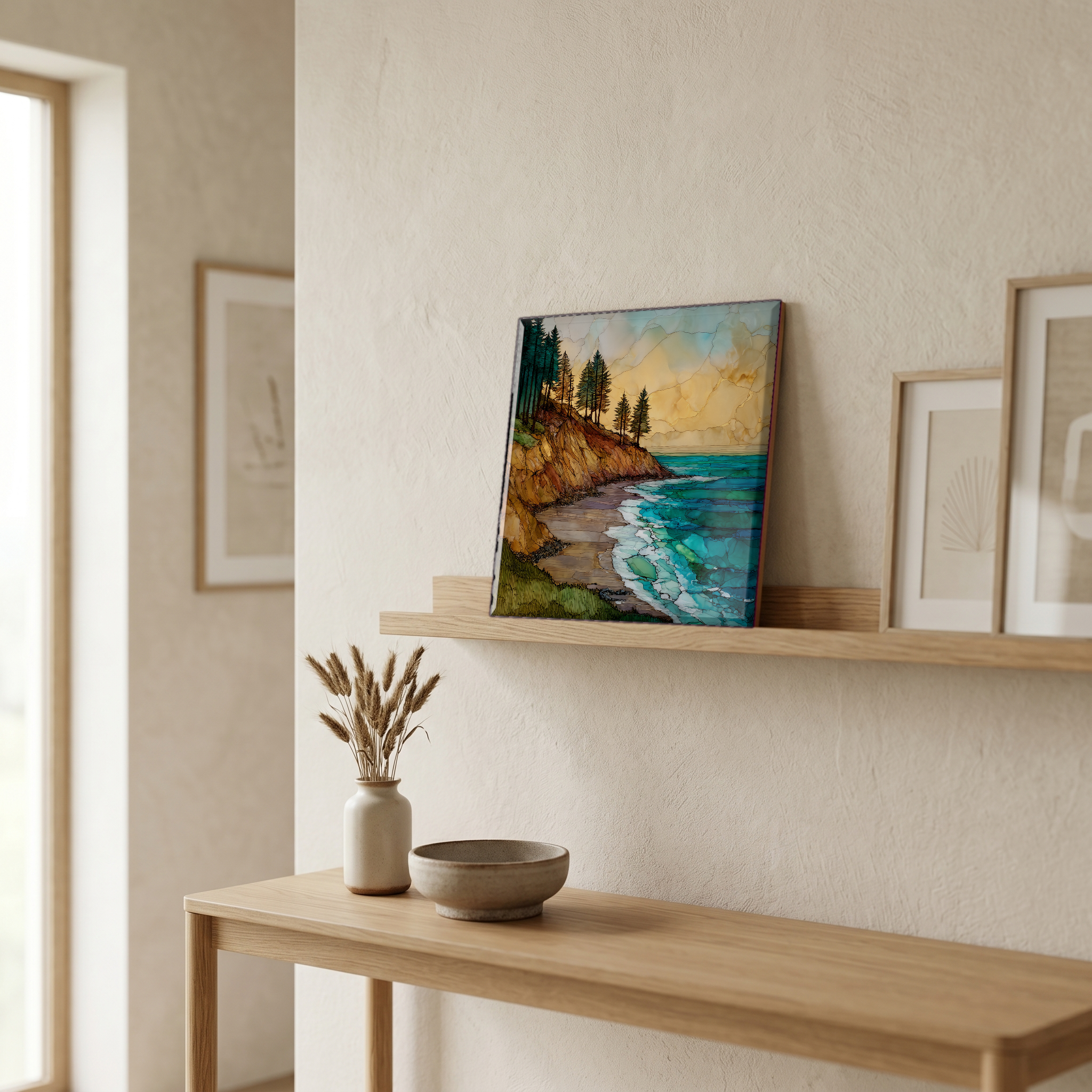
“Ten miles of beach below sedimentary bluffs that gave up flakes of gold to placer miners in 1850 and 1851. The name stuck after the gold ran out. Roosevelt elk come down through the dune grass most mornings and walk the surf line; the herd here had fallen to about fifteen animals by the 1920s before slowly recovering. Fern Canyon opens at the north end, fifty-foot walls hung with five species of fern. The fog comes in by late morning most days, and the line between forest and sea goes soft.
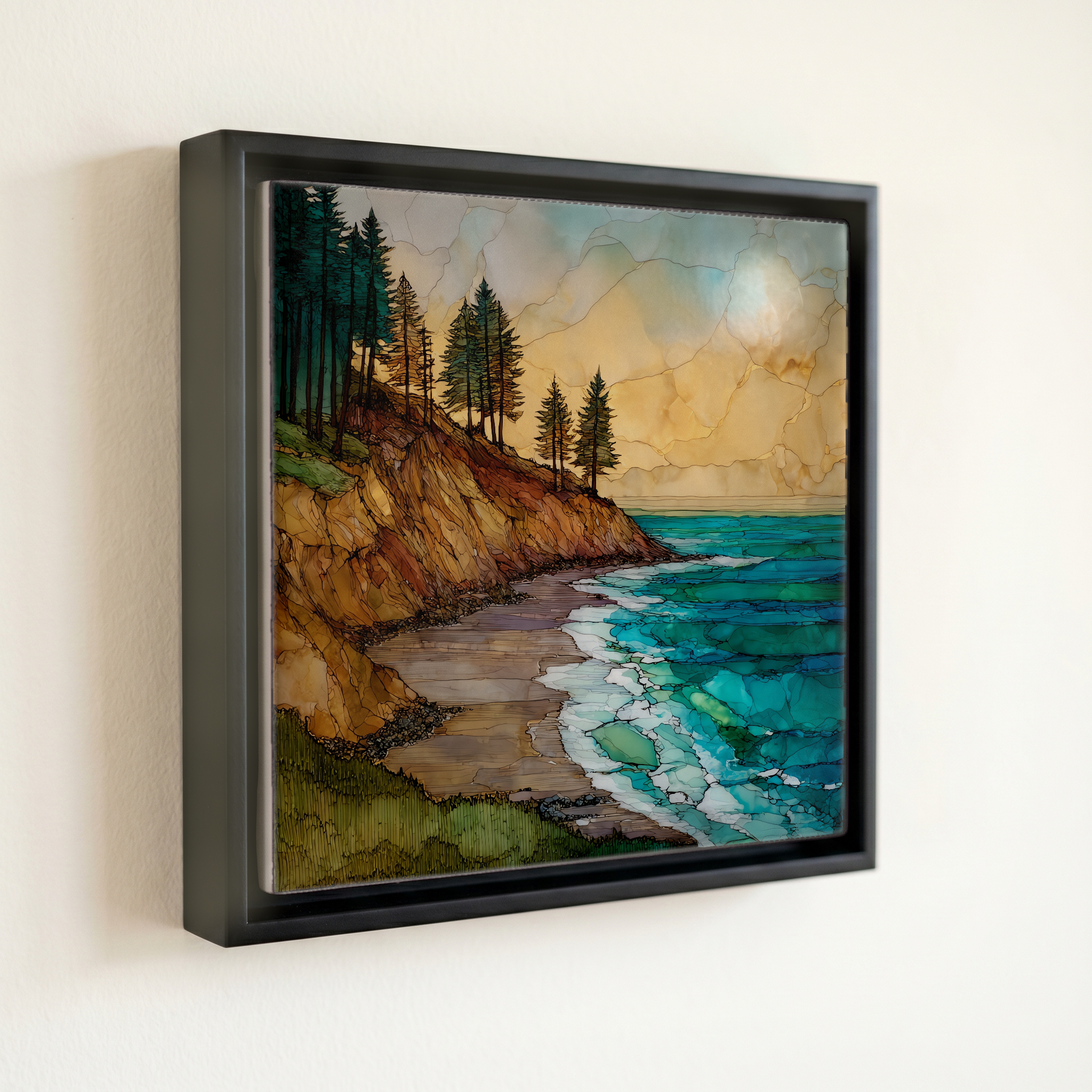
Gold Bluffs Beach, on ceramic.
Each tile is finished by hand in our Knoxville studio. Artwork is slowly infused into the ceramic surface under high heat and pressure, and rests beneath a thin glossy finish. The colour lives in the surface, not on top of it.
Pick any four 4-inch tiles — National Parks you've been to, a Smokies set, the four seasons of one place. $ for a set of , cork-backed, ready to live on the table.
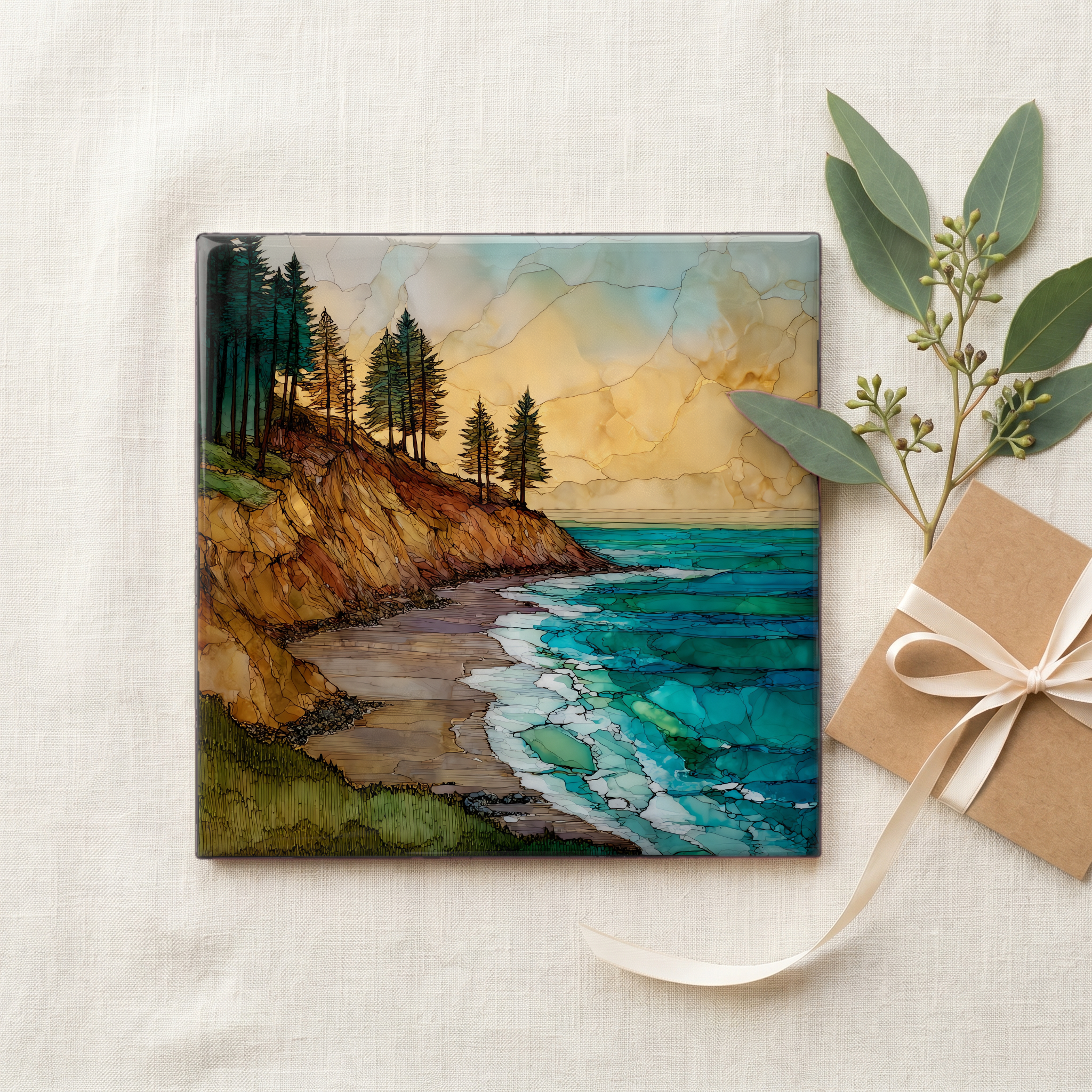
Each tile ships in a kraft box, tied with cream ribbon, with a handwritten note from the studio if you'd like to add one.
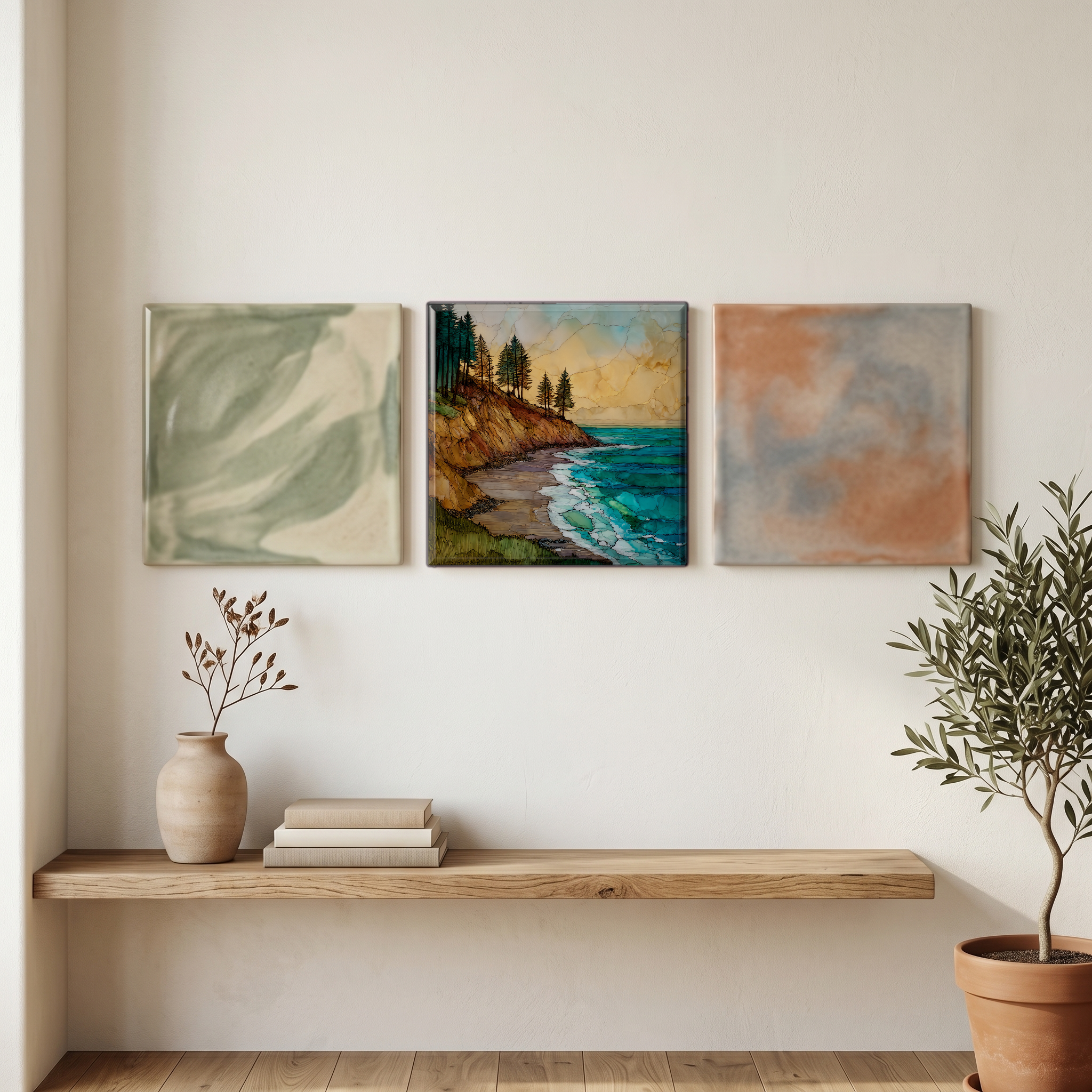
Three or five different vistas, hung together — a chapter of places you've been, or want to go.
The place, in three passes.
Gold Bluffs Beach runs about ten miles along the Pacific in Humboldt County, within Prairie Creek Redwoods State Park and the larger Redwood National and State Parks. The bluffs themselves are mid-Pleistocene sedimentary deposits, rising roughly 100 to 200 feet above the sand. Access is by Davison Road, an unpaved route that leaves U.S. 101 a few miles north of Orick, closed to trailers and RVs. The beach is the western edge of an old coastal terrace; behind it stand coast redwoods (Sequoia sempervirens) that grow within sight of the surf, an arrangement uncommon along the Pacific coast. The Yurok have inhabited this stretch of coast for centuries.
The Pacific marine layer reaches this stretch of coast nearly every summer day, and the fog is part of why the redwoods grow this close to the surf. Coast redwoods draw up to a third of their annual water from fog drip, condensing it directly off the canopy onto the forest floor and soaking the duff that anchors the seedlings. The result at Gold Bluffs is a layered atmosphere: surf at one altitude, fog at another, and old-growth canopy above that, all of it shifting through the morning. Air temperatures rarely climb above the low sixties Fahrenheit in summer, and a windbreaker is the seasonal uniform.
Day use is open from sunrise to sunset, with a vehicle fee collected at the entry kiosk on the access road. Davison Road is unpaved, narrow, and not navigable by RVs or trailers; a regular sedan handles it slowly. The Gold Bluffs Beach Campground at the north end holds about twenty-six sites; reservations open six months ahead and most weekends book out. The road continues another mile and a half to the Fern Canyon trailhead, where a flat half-mile loop walks the canyon floor between fifty-foot walls of five-finger and lady fern. Roosevelt elk move through the dunes and the campground most days; the recommended distance is at least seventy-five feet.