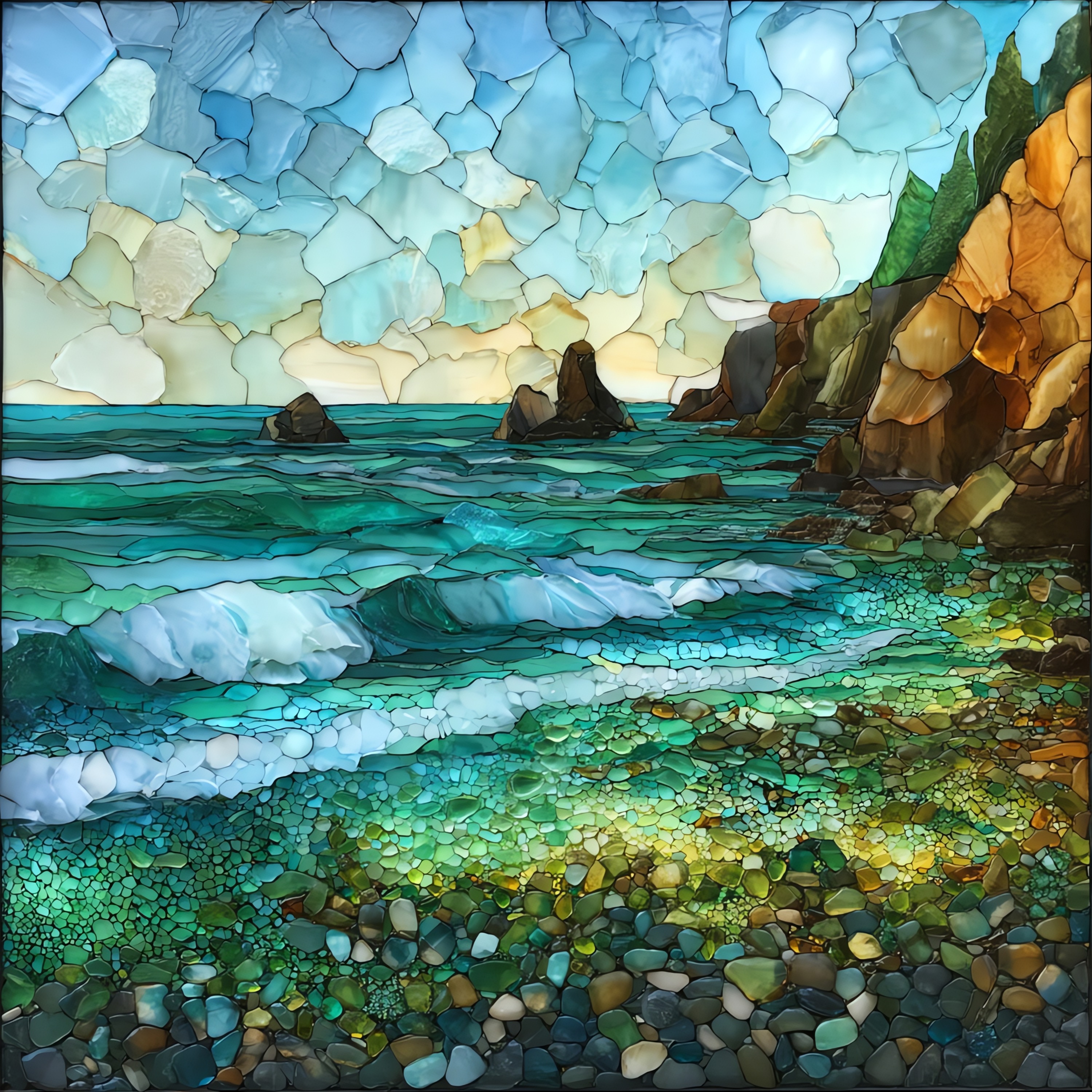
Glass Beach Fort Bragg
— — polished glass where the dump used to be.
Not only on a wall.
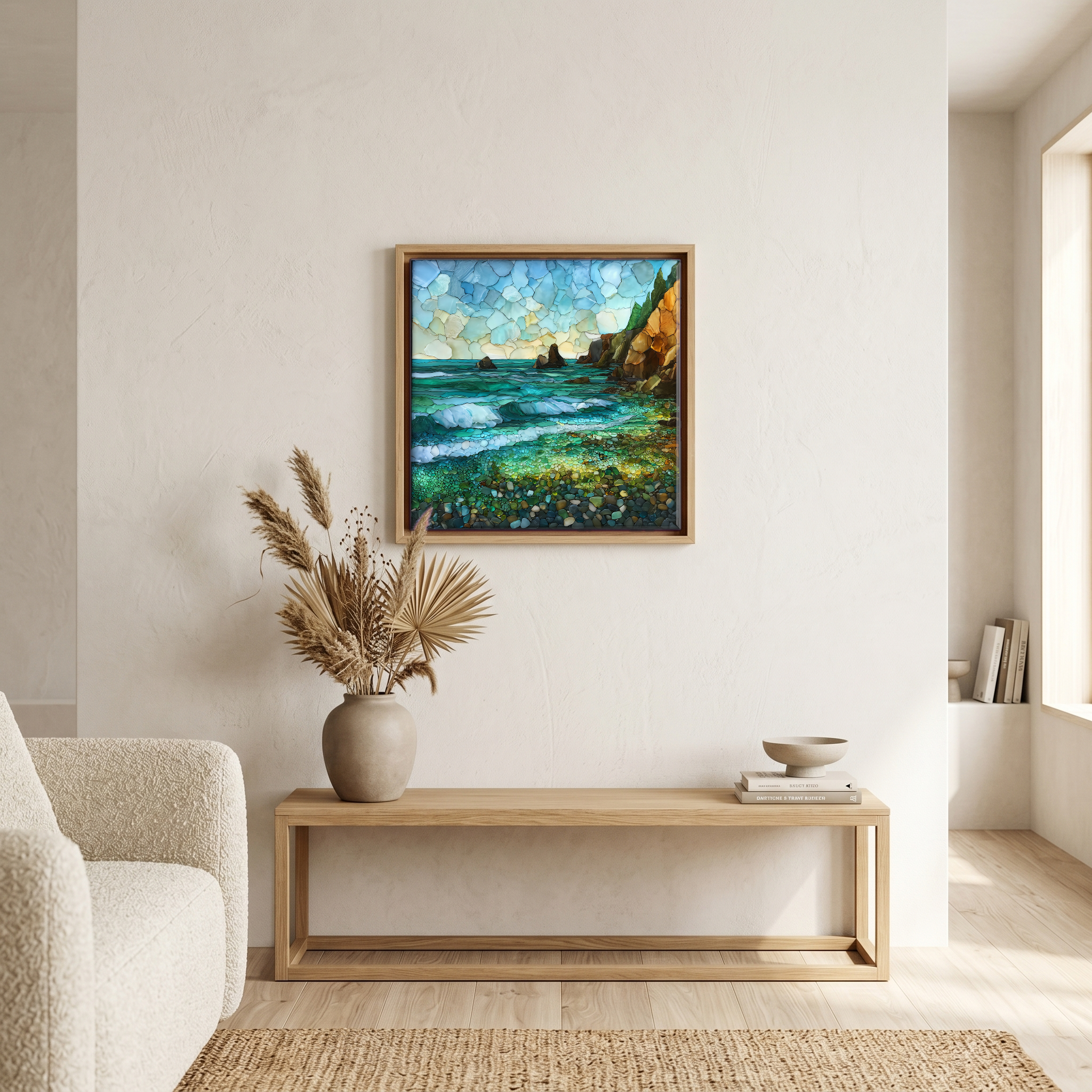
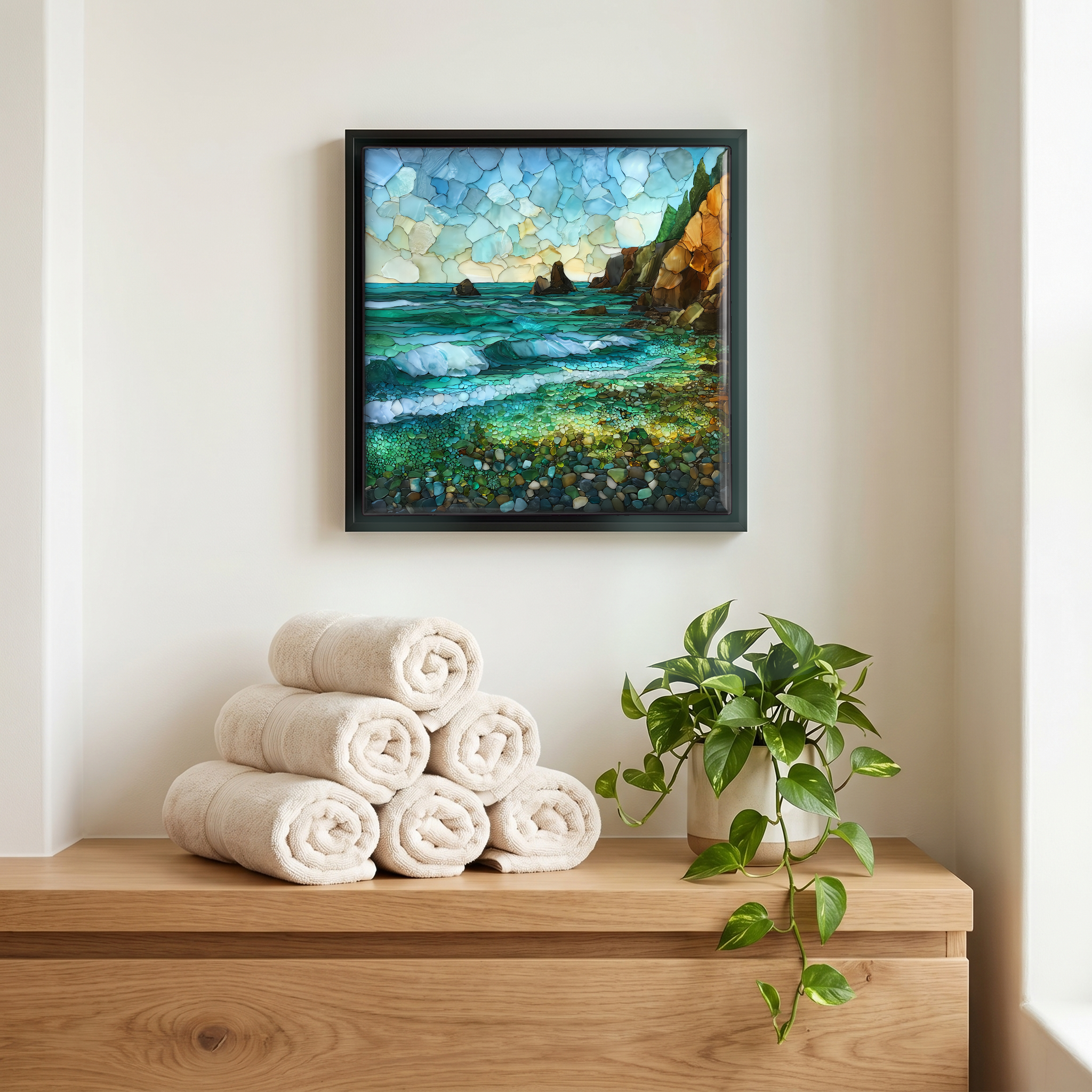
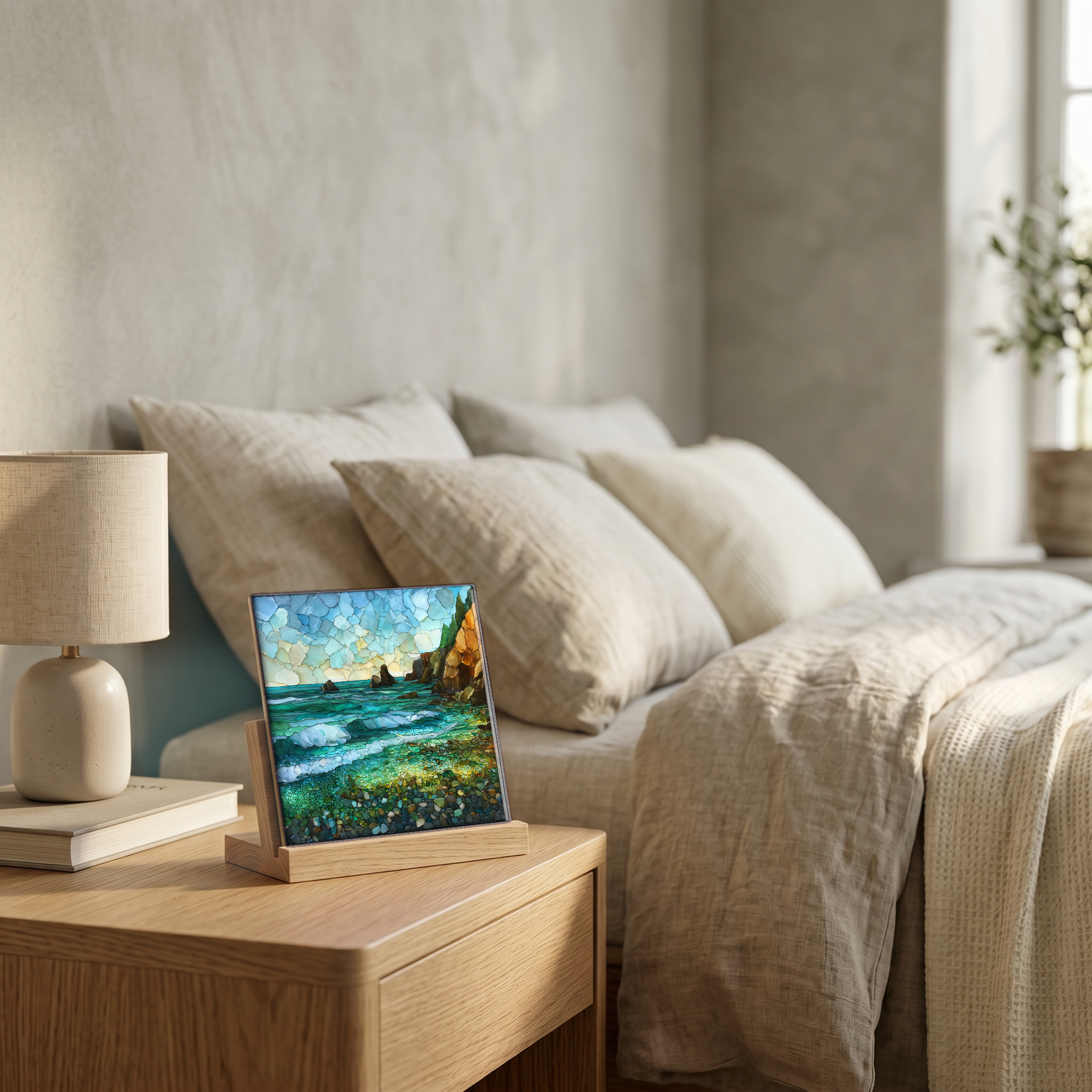
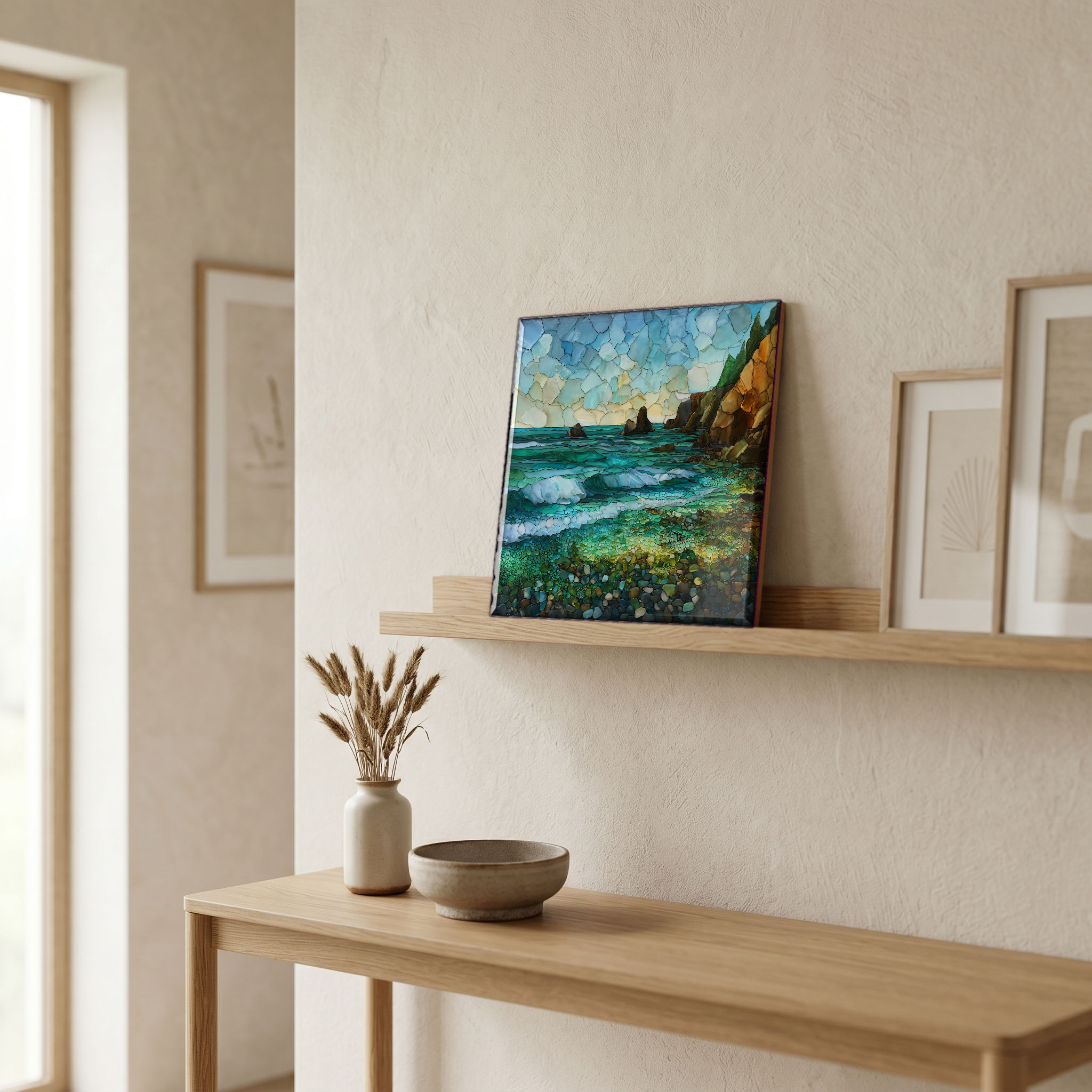
“The northern California coast, where for over sixty years Fort Bragg used the cliffs above the Pacific as a public dump. The ocean did the slow work after. Broken bottles and pottery polished into green and amber and cobalt sea glass, washed back up onto the same beach the dump made. California folded the land into MacKerricher State Park in 2002. The glass is thinning out year by year, walked off in pockets, eased back into the sea by the tide. Most days are cool and grey, the fog low enough to touch.
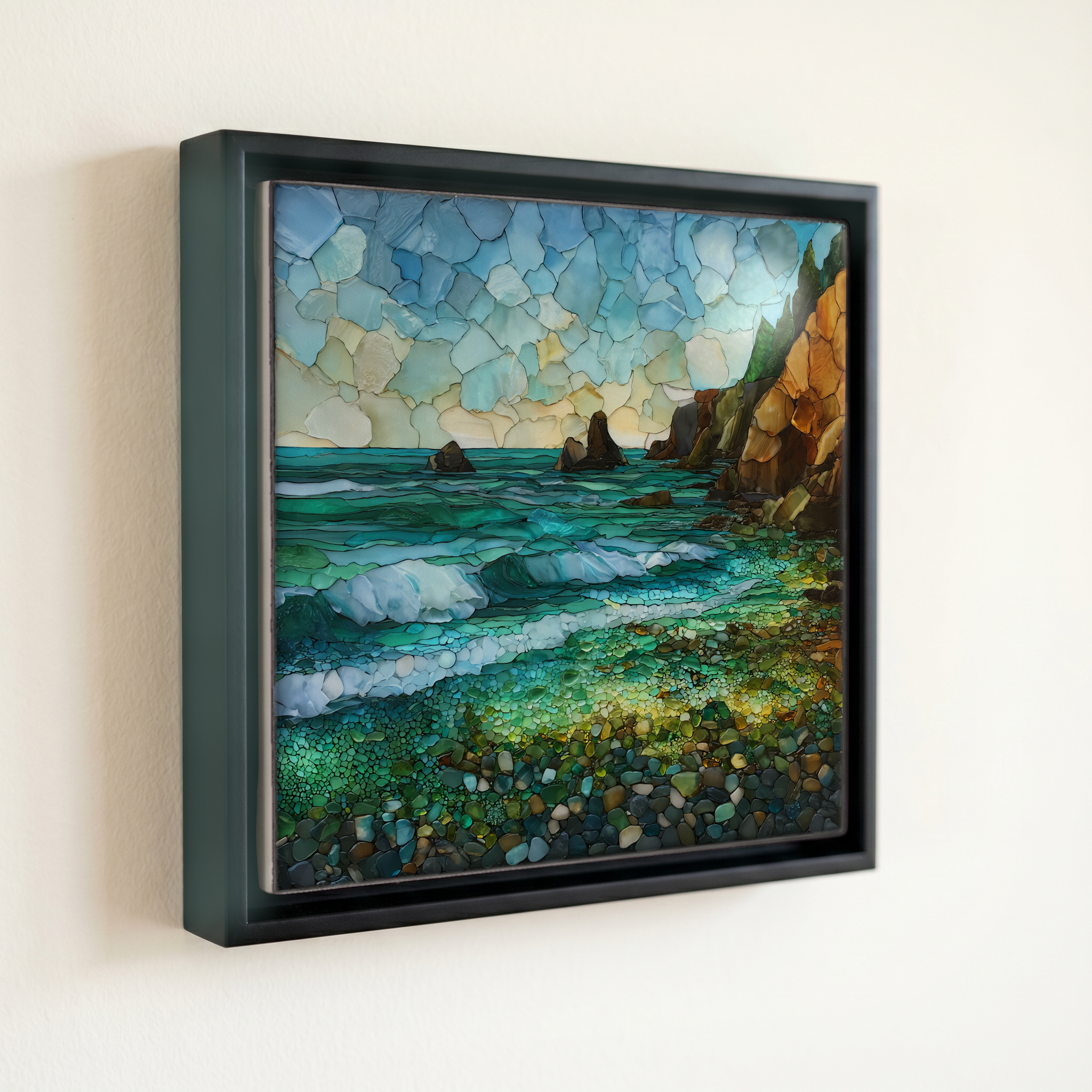
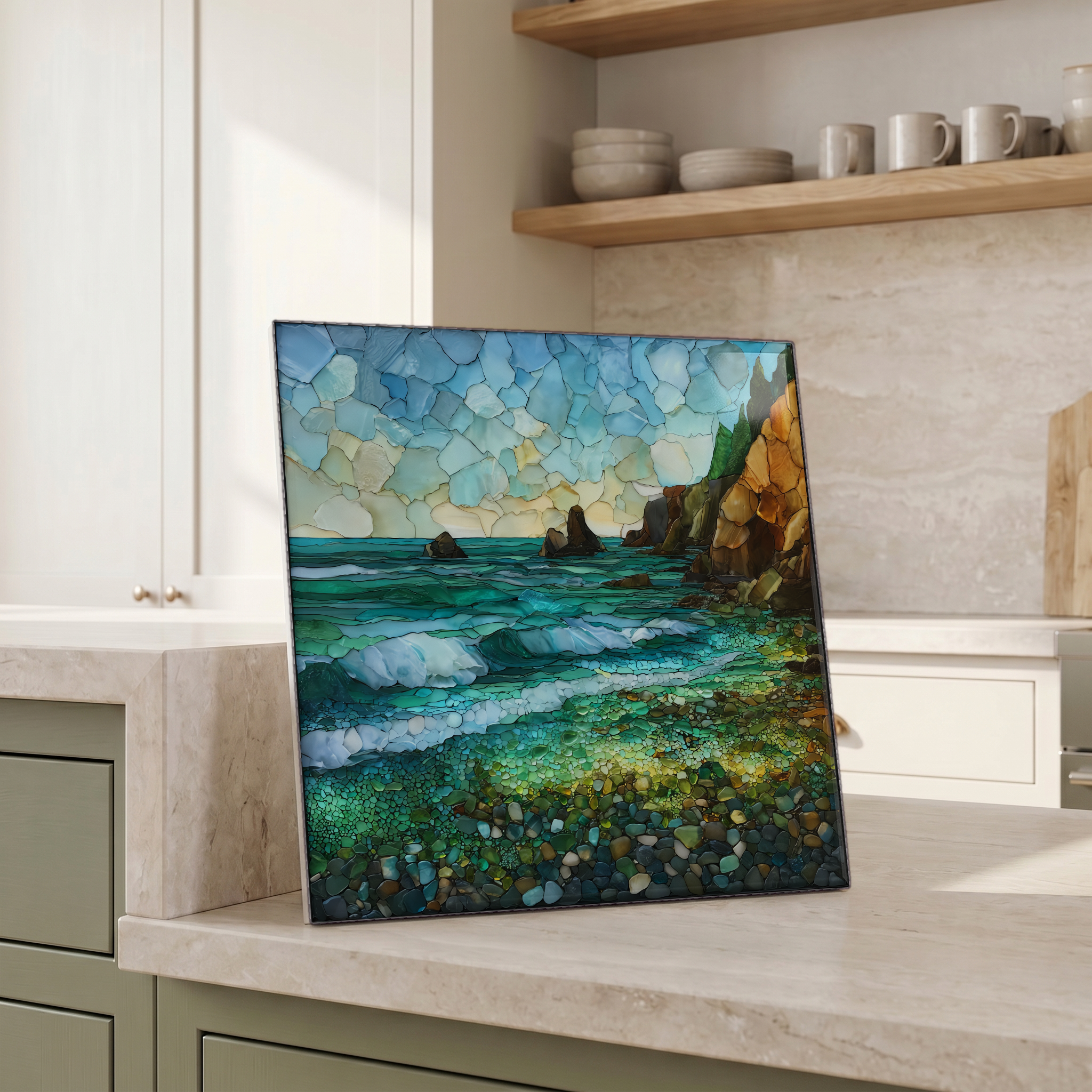
Glass Beach Fort Bragg, on ceramic.
Each tile is finished by hand in our Knoxville studio. Artwork is slowly infused into the ceramic surface under high heat and pressure, and rests beneath a thin glossy finish. The colour lives in the surface, not on top of it.
Pick any four 4-inch tiles — National Parks you've been to, a Smokies set, the four seasons of one place. $ for a set of , cork-backed, ready to live on the table.
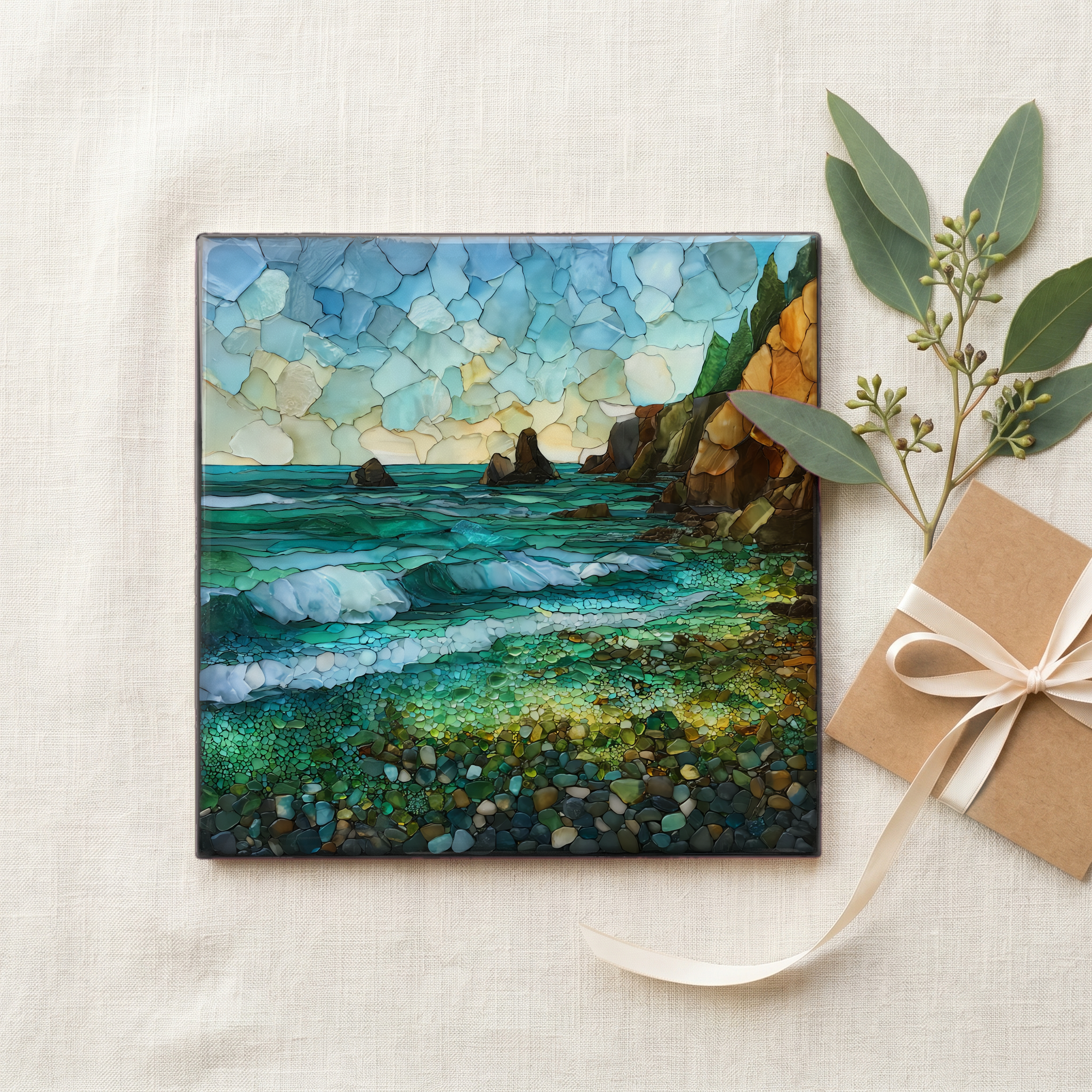
Each tile ships in a kraft box, tied with cream ribbon, with a handwritten note from the studio if you'd like to add one.
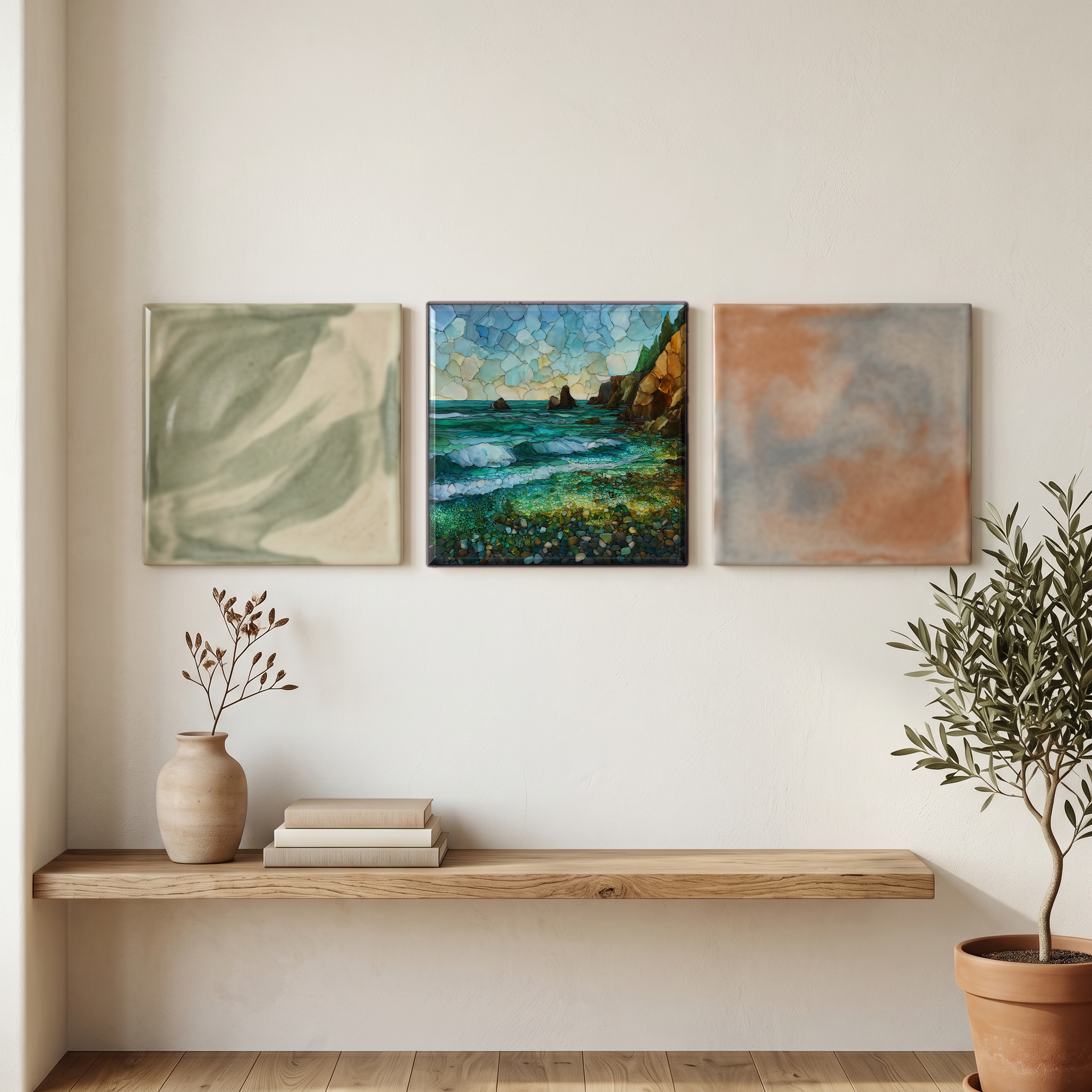
Three or five different vistas, hung together — a chapter of places you've been, or want to go.
The place, in three passes.
Glass Beach sits on the Mendocino Coast in Mendocino County, California, at the end of Elm Street west of Highway 1, on the northern edge of Fort Bragg and inside MacKerricher State Park. The cliffs above the beach were used as a public dump from 1906 until 1967, when state environmental authorities closed the site; the land was folded into the park in 2002 ([California State Parks](https://www.parks.ca.gov/?page_id=437); [Wikipedia](https://en.wikipedia.org/wiki/Glass_Beach,_Fort_Bragg,_California)). Fort Bragg itself, named after the U.S. Army outpost built here in 1857, sits at the western end of California State Route 20. San Francisco is about three and a half hours south by Highway 1.
The glass on the beach is what was left after the ocean spent decades grinding household trash. Bottles, jars, and dishware from the years 1906 to 1967 broke against the rocks, then tumbled through the surf until their edges rounded and their surfaces frosted. Brown, green, and clear pieces dominate. The rarer blues, lavenders, reds, and ambers trace back to specific household products: cobalt from old medicine bottles, lavender from manganese-glass jars poured before 1915, red from automotive tail-light lenses ([Wikipedia](https://en.wikipedia.org/wiki/Glass_Beach,_Fort_Bragg,_California)). The beach is also salted with ceramic shards, occasional porcelain insulator fragments, and worn pieces of metal that came from cars pushed over the cliff during the dump years.
The beach is open every day, free to enter, with parking at the end of Elm Street and a short trail to the cliff edge. The most-visited stretch sits below the parking area; two smaller pocket beaches with thinner glass concentrations lie further along the bluff. The glass supply is finite and shrinking. Collecting any of it is prohibited under California State Parks rules, and rangers do enforce ([California State Parks](https://www.parks.ca.gov/?page_id=437)). Low tide opens the most beach and the largest visible glass fields; check the NOAA tide tables for Noyo Harbor, the gauge about three miles south. Coastal fog is common through summer and the water is cold in every season.