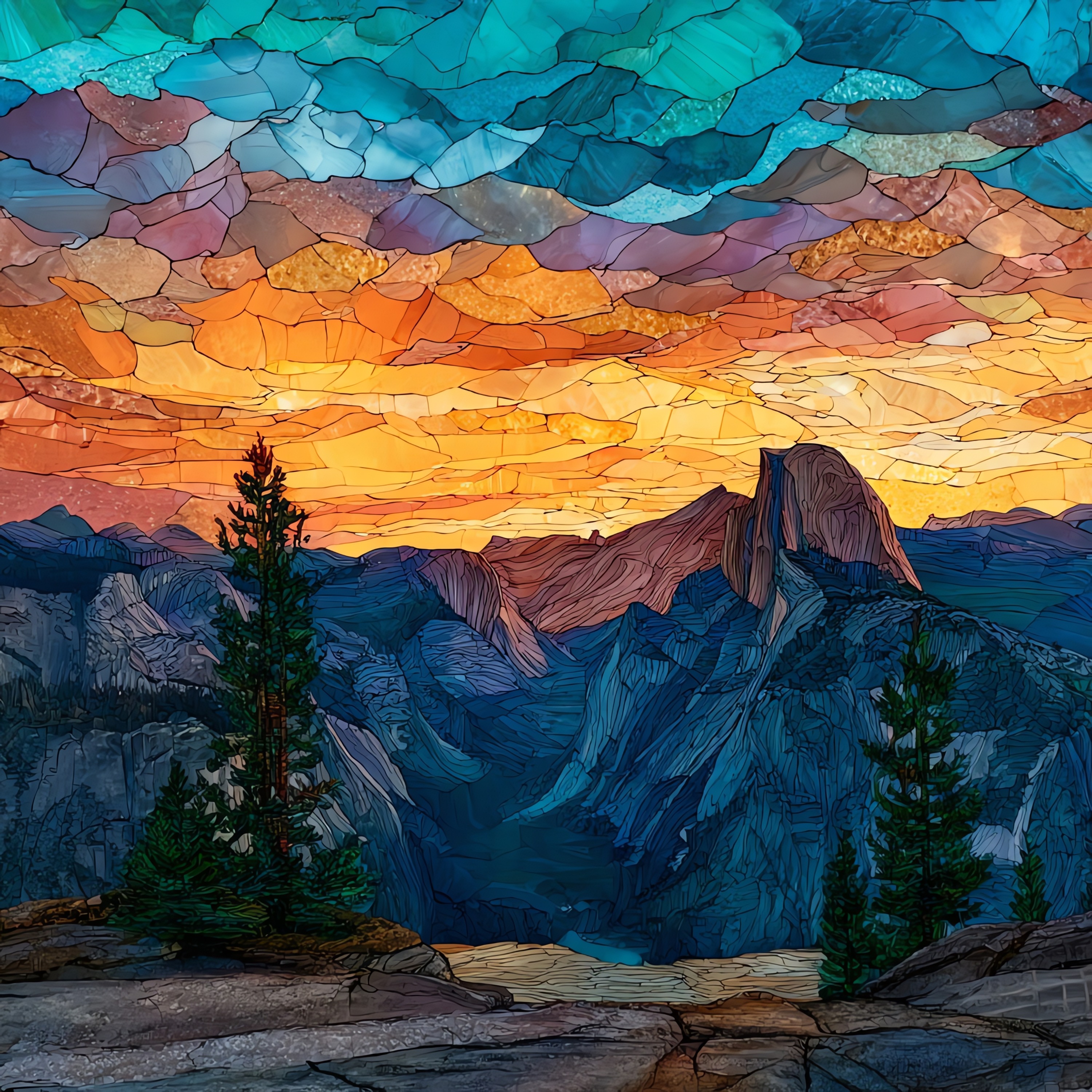
Glacier Point Panorama Sunset
— the pink the granite keeps after the sun is gone.
Not only on a wall.
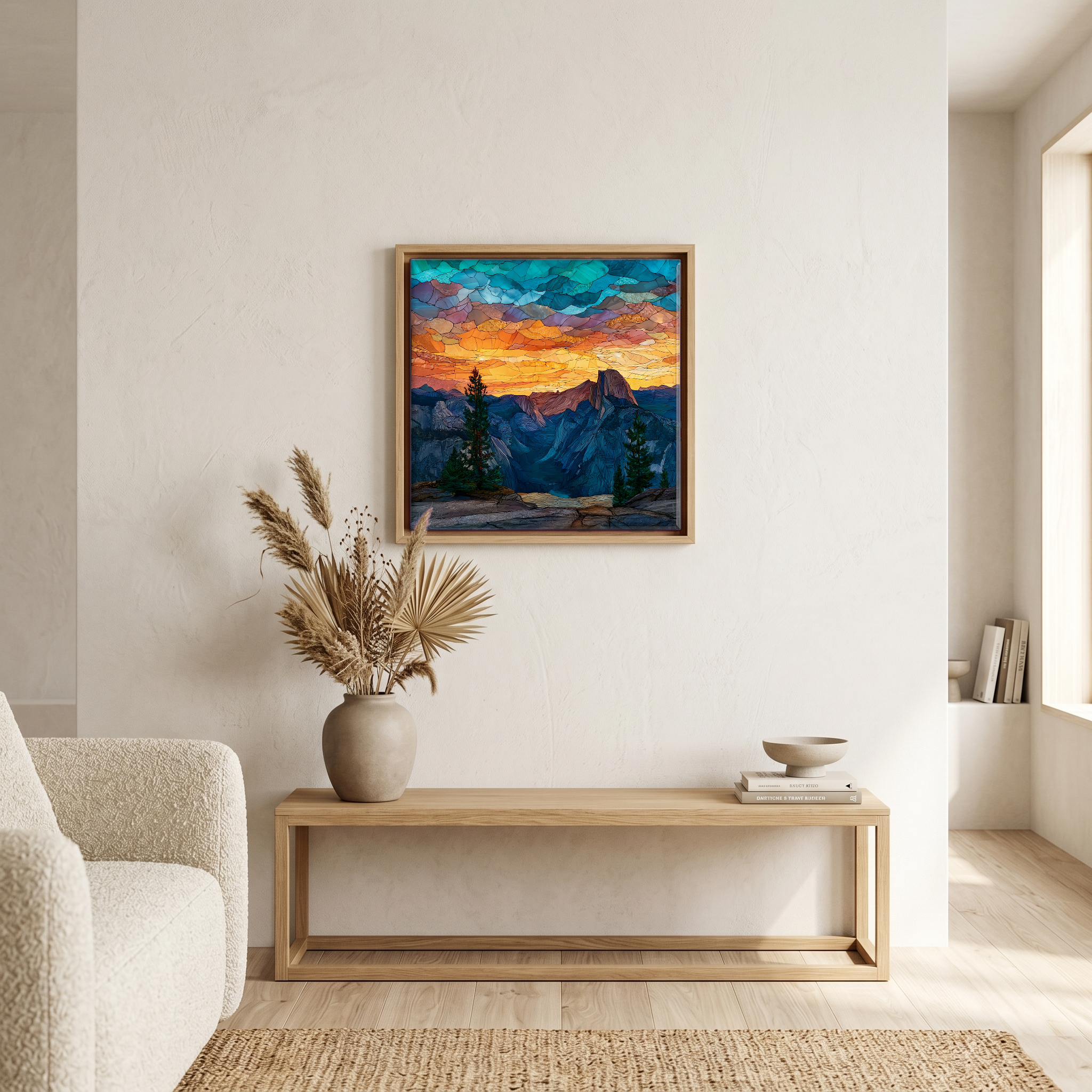
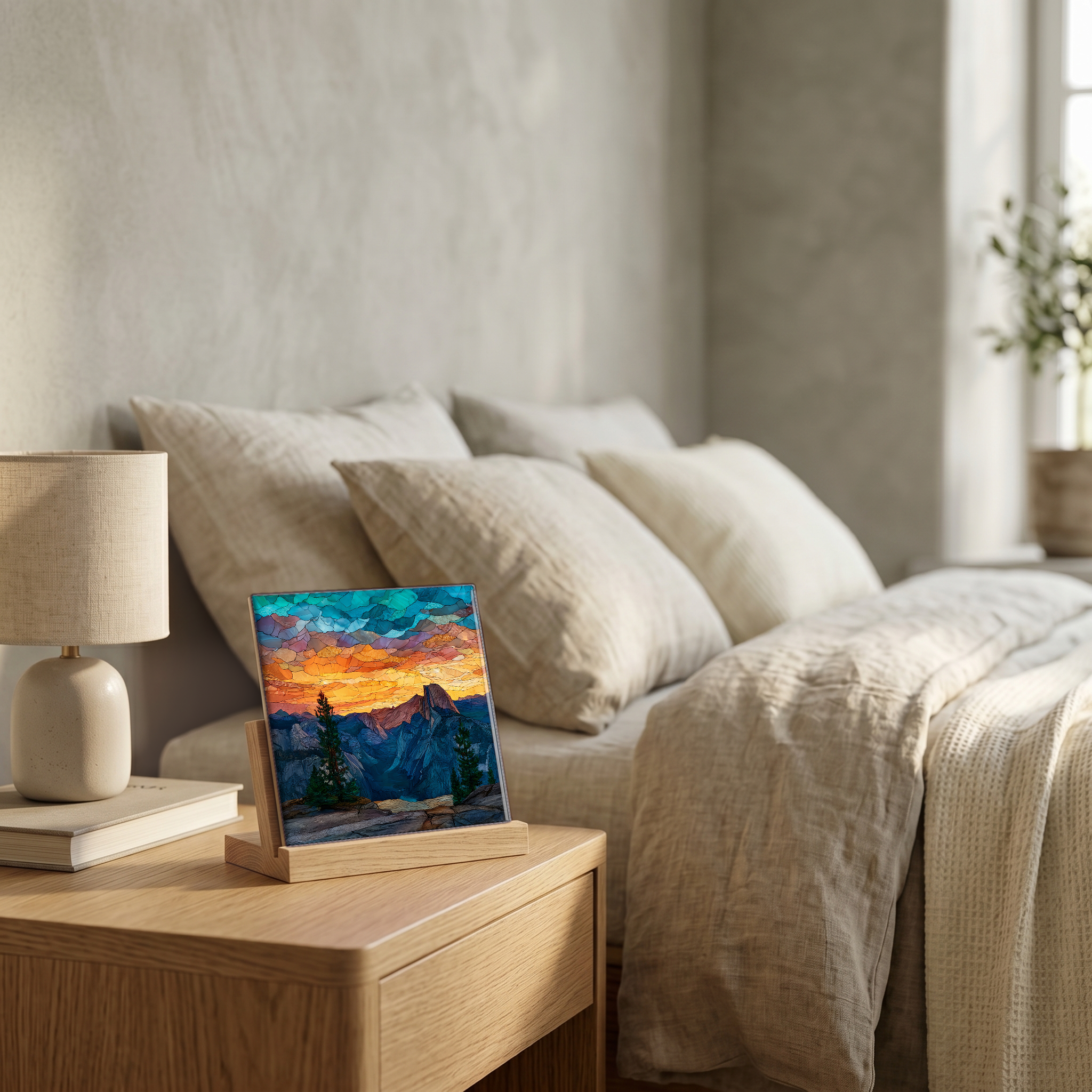
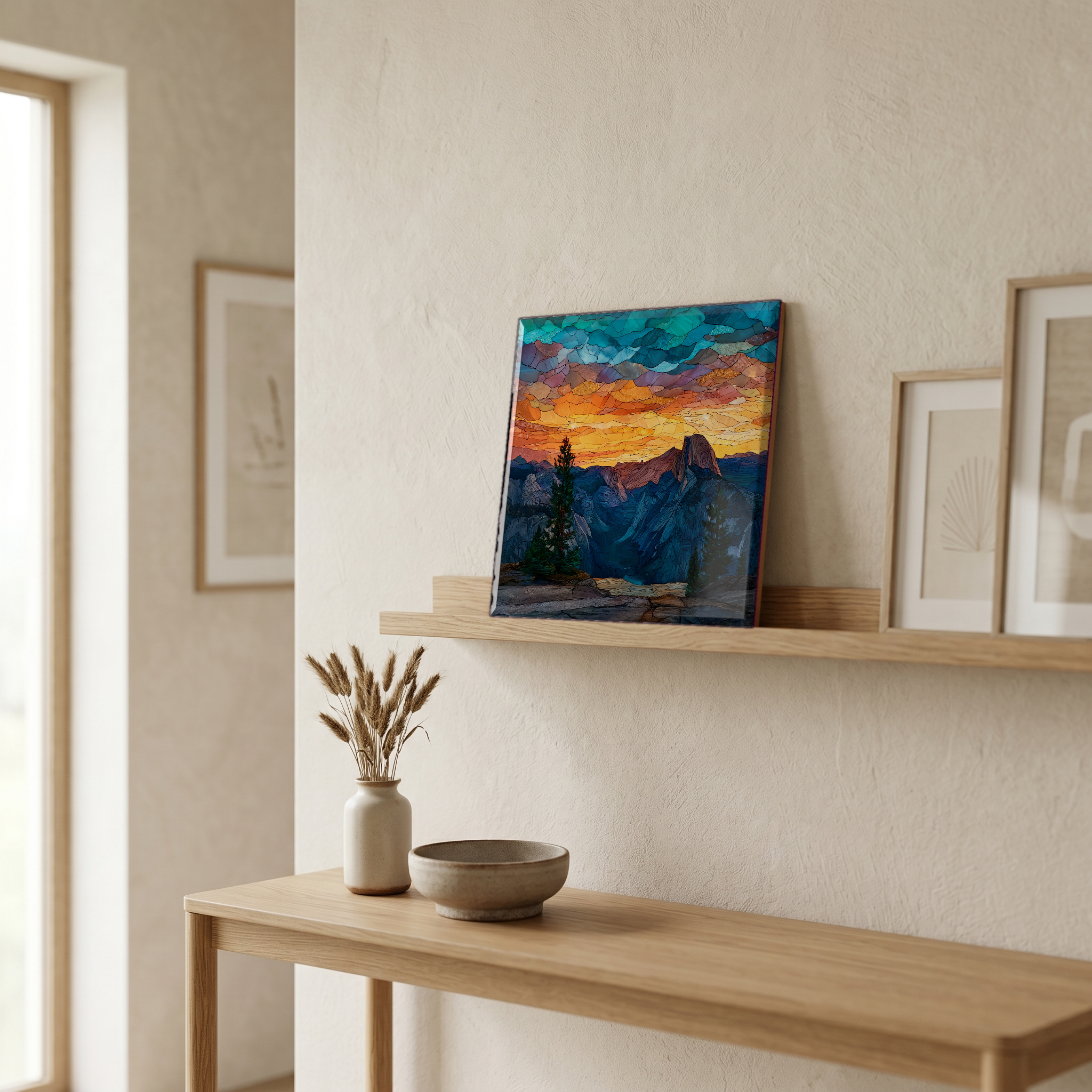
“Three thousand feet above the floor of Yosemite Valley, on the south rim, the overlook that holds the whole picture at once. Half Dome stands to the north, Yosemite Falls drops down the opposite wall, the Clark Range rolls east. The road in closes by November. The hour before dark is the one people come for. The granite face of Half Dome keeps the pink long after the rest of the valley has gone grey, then lets go all at once. Nobody talks much through it.
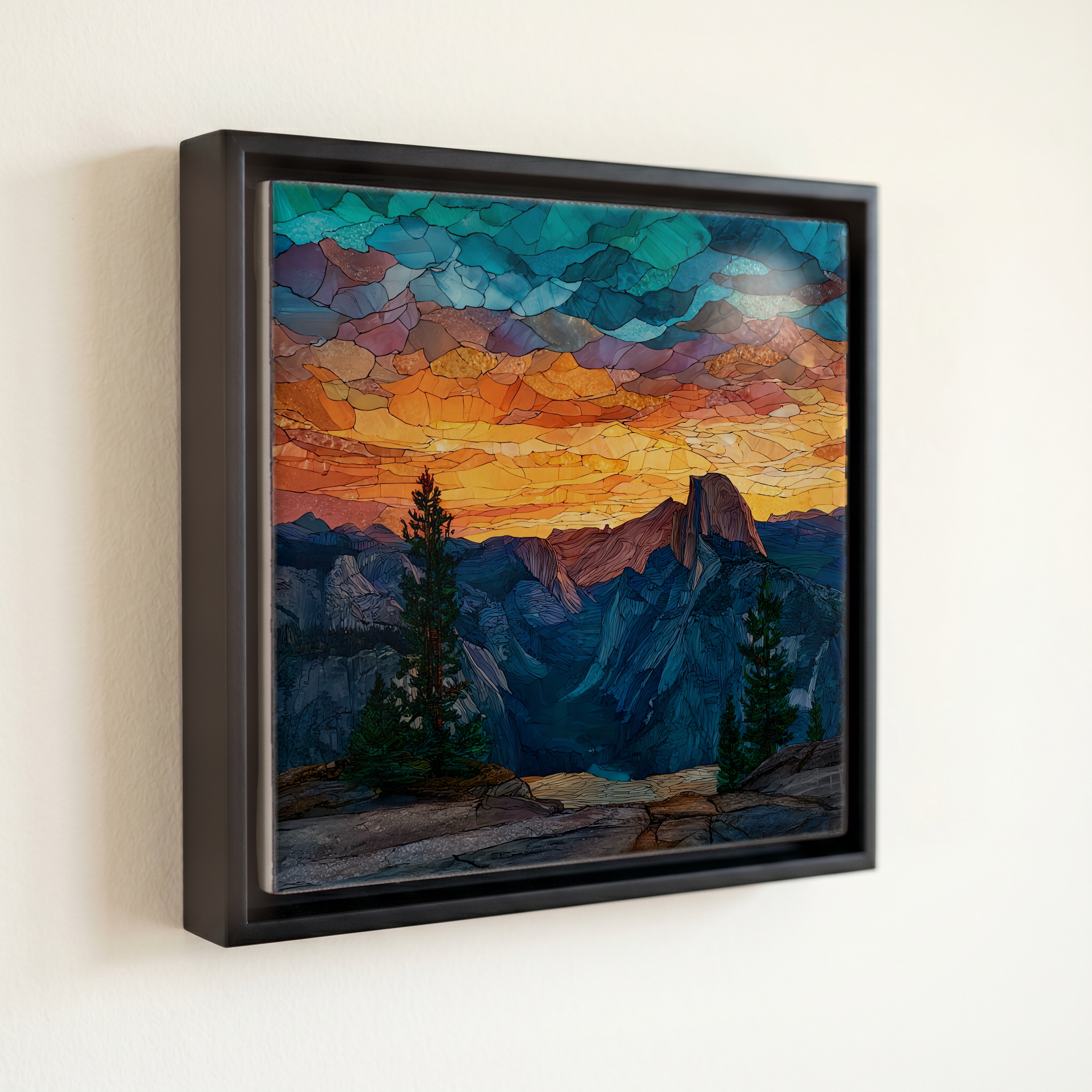
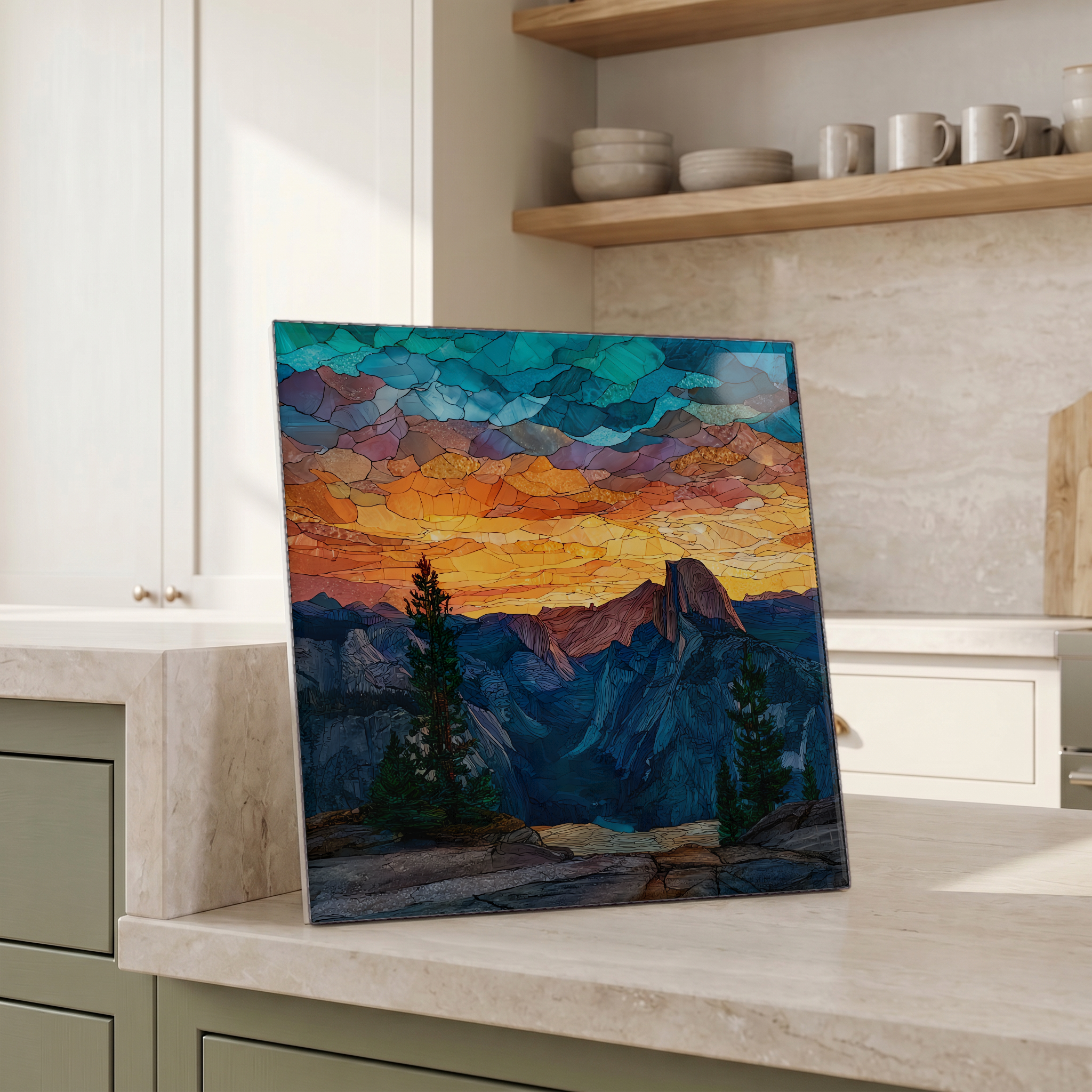
Glacier Point Panorama Sunset, on ceramic.
Each tile is finished by hand in our Knoxville studio. Artwork is slowly infused into the ceramic surface under high heat and pressure, and rests beneath a thin glossy finish. The colour lives in the surface, not on top of it.
Pick any four 4-inch tiles — National Parks you've been to, a Smokies set, the four seasons of one place. $ for a set of , cork-backed, ready to live on the table.
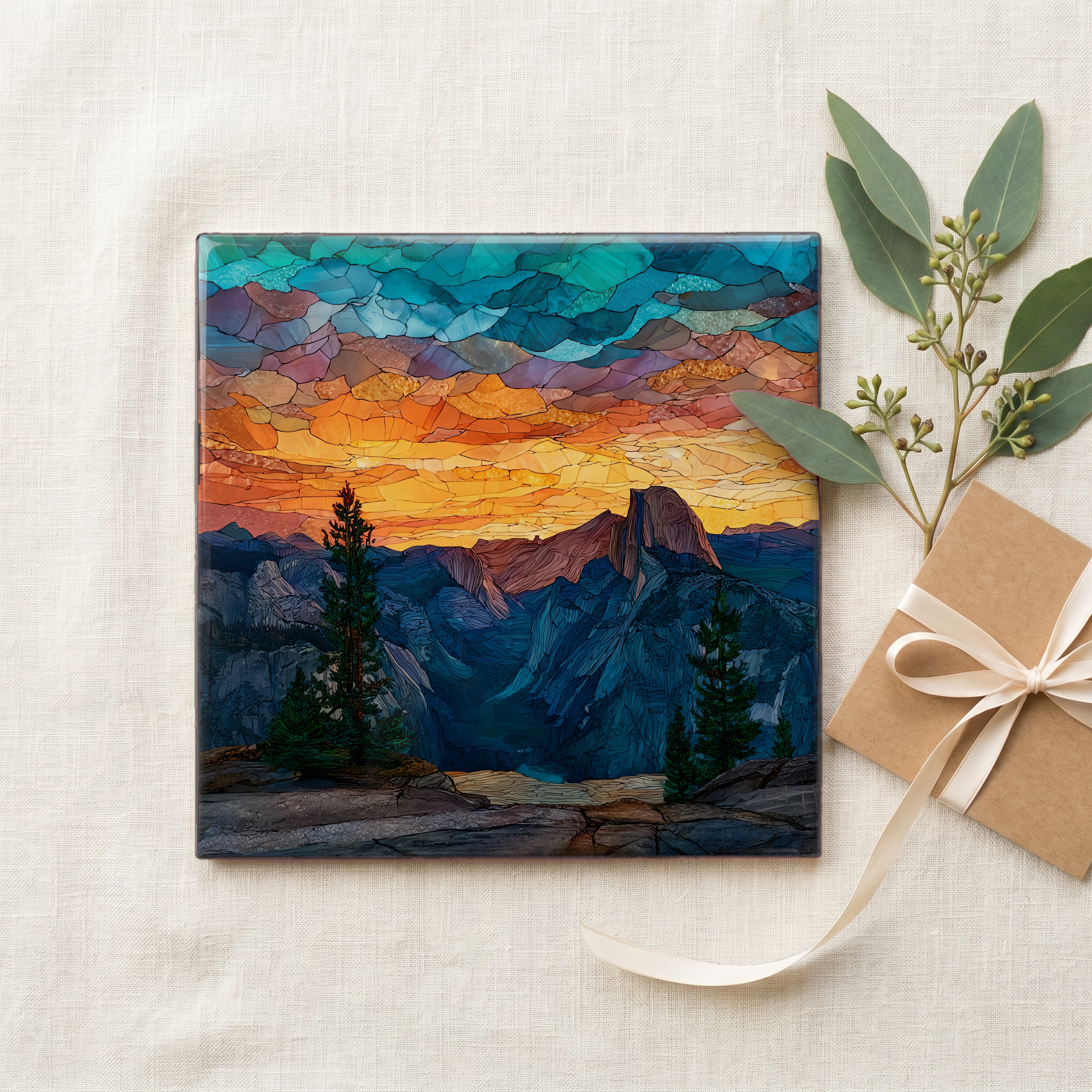
Each tile ships in a kraft box, tied with cream ribbon, with a handwritten note from the studio if you'd like to add one.
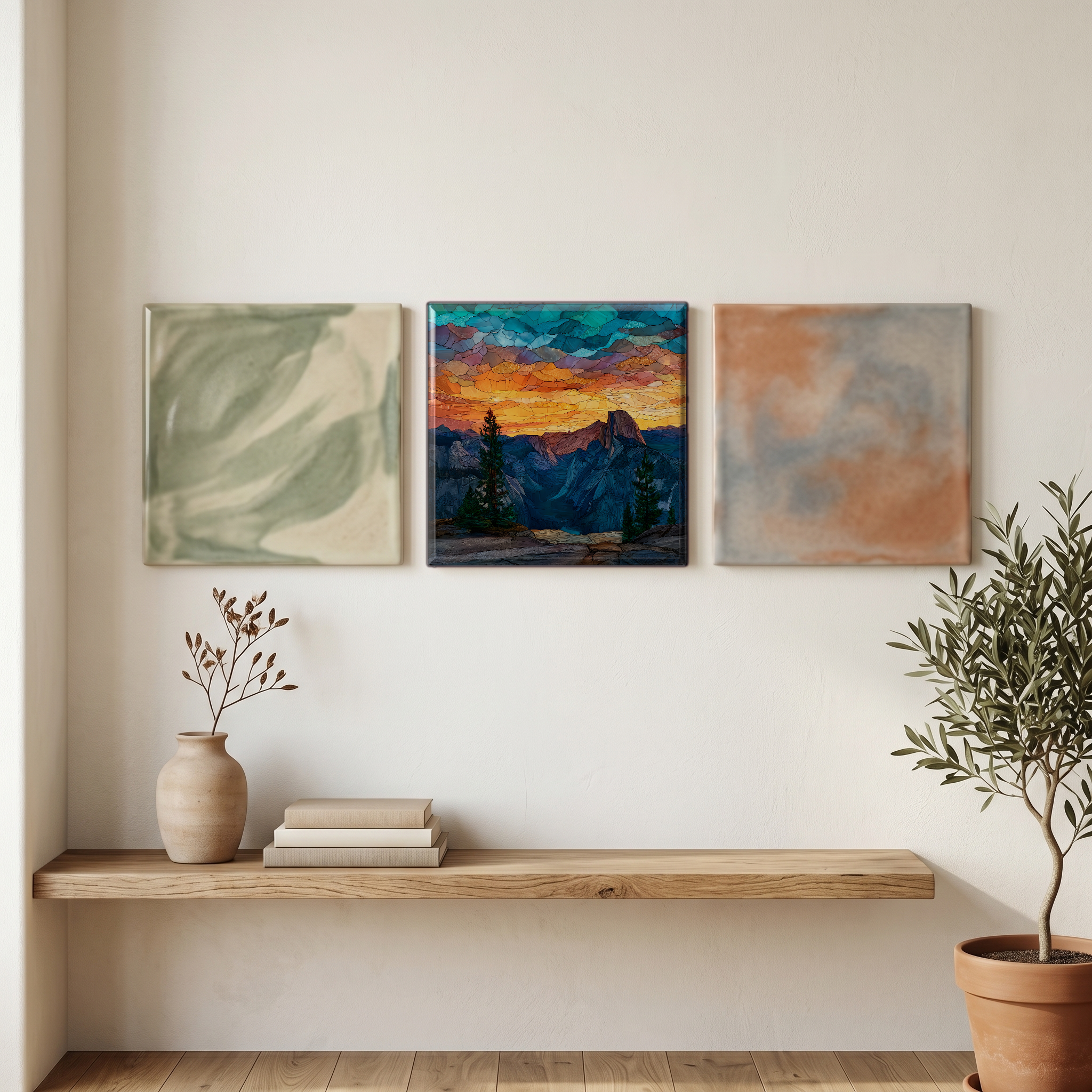
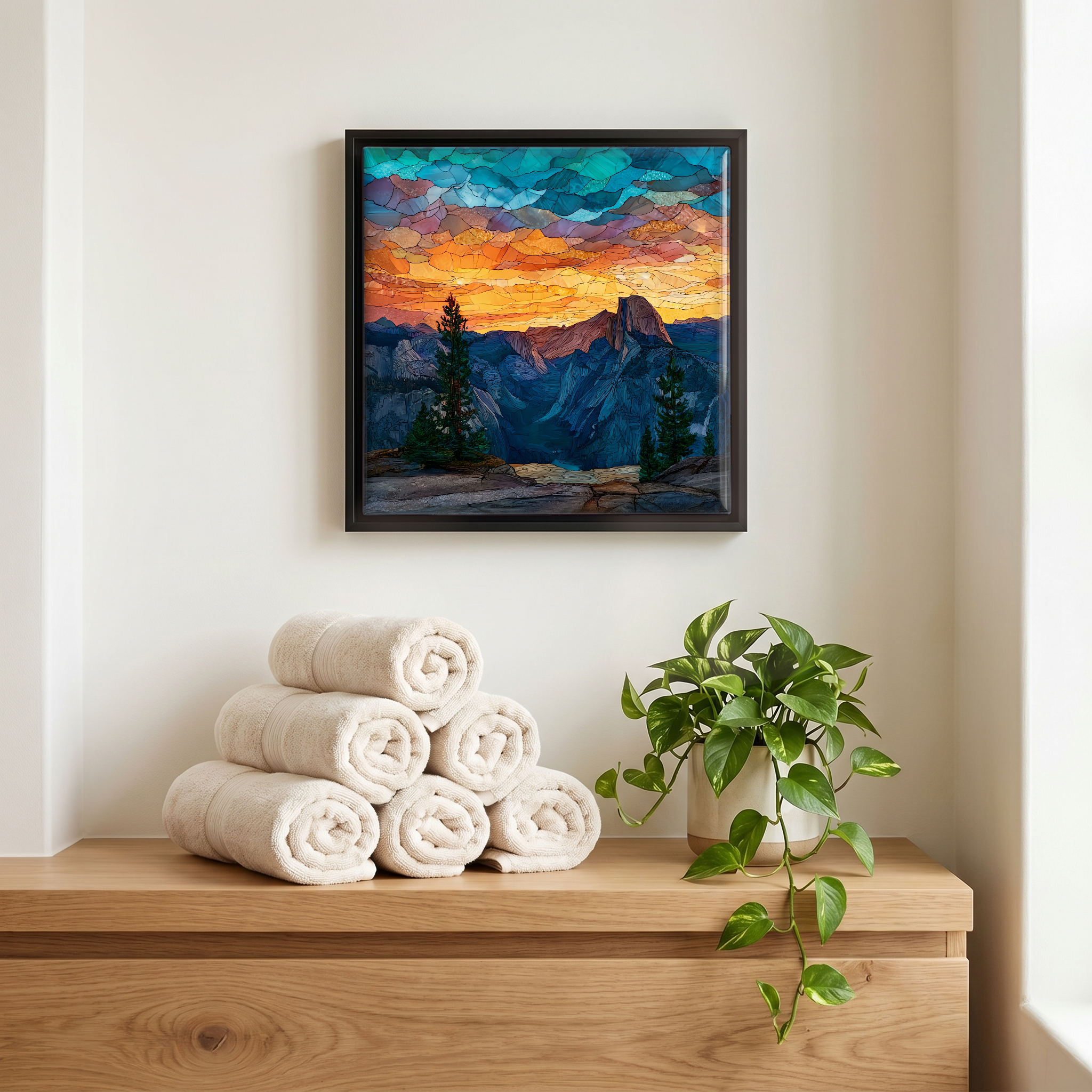
Three or five different vistas, hung together — a chapter of places you've been, or want to go.
The place, in three passes.
Glacier Point sits at 7,214 feet on the south rim of Yosemite Valley, three thousand two hundred feet above the valley floor. The overlook faces north across the gorge to Half Dome, with Yosemite Falls, Vernal Fall, and Nevada Fall visible from the railing and the high country of the Clark Range rolling east. Access is via Glacier Point Road, sixteen miles from the Chinquapin junction on the Wawona Road. The point is part of Yosemite National Park, in Mariposa County, California. The viewpoint has been a destination since the 1870s, when the first trails were built down from the rim into the valley below.
The light is the reason people drive up for sunset. As the sun drops west toward the Merced River drainage, the granite face of Half Dome catches alpenglow, the deep pink-orange that high-altitude rock holds for a few minutes after the sun is gone. The phenomenon comes from longer-wavelength red light scattering through more atmosphere at low sun angles. The east face of Half Dome, 4,737 feet from base to summit, keeps the colour longer than the valley walls because it stays in the sun's line of sight after the western ridge has gone dark. The cycle takes about fifteen minutes from first warm to last grey.
Glacier Point Road is open seasonally, typically from late May or early June through the first heavy snow in October or November. In winter the road closes to vehicles and becomes a 10.5-mile ski and snowshoe trail from Badger Pass to the overlook. From 2022 the road was closed for a full season of rehabilitation by the National Park Service and reopened in late spring 2023. The drive from the Chinquapin junction takes about an hour with stops. There is no entrance fee beyond the park entry, no permit required for sunset viewing, and parking fills early on summer weekends. The Four Mile Trail leads down 3,200 feet to the valley floor in 4.8 miles, strenuous and one-way without a shuttle.