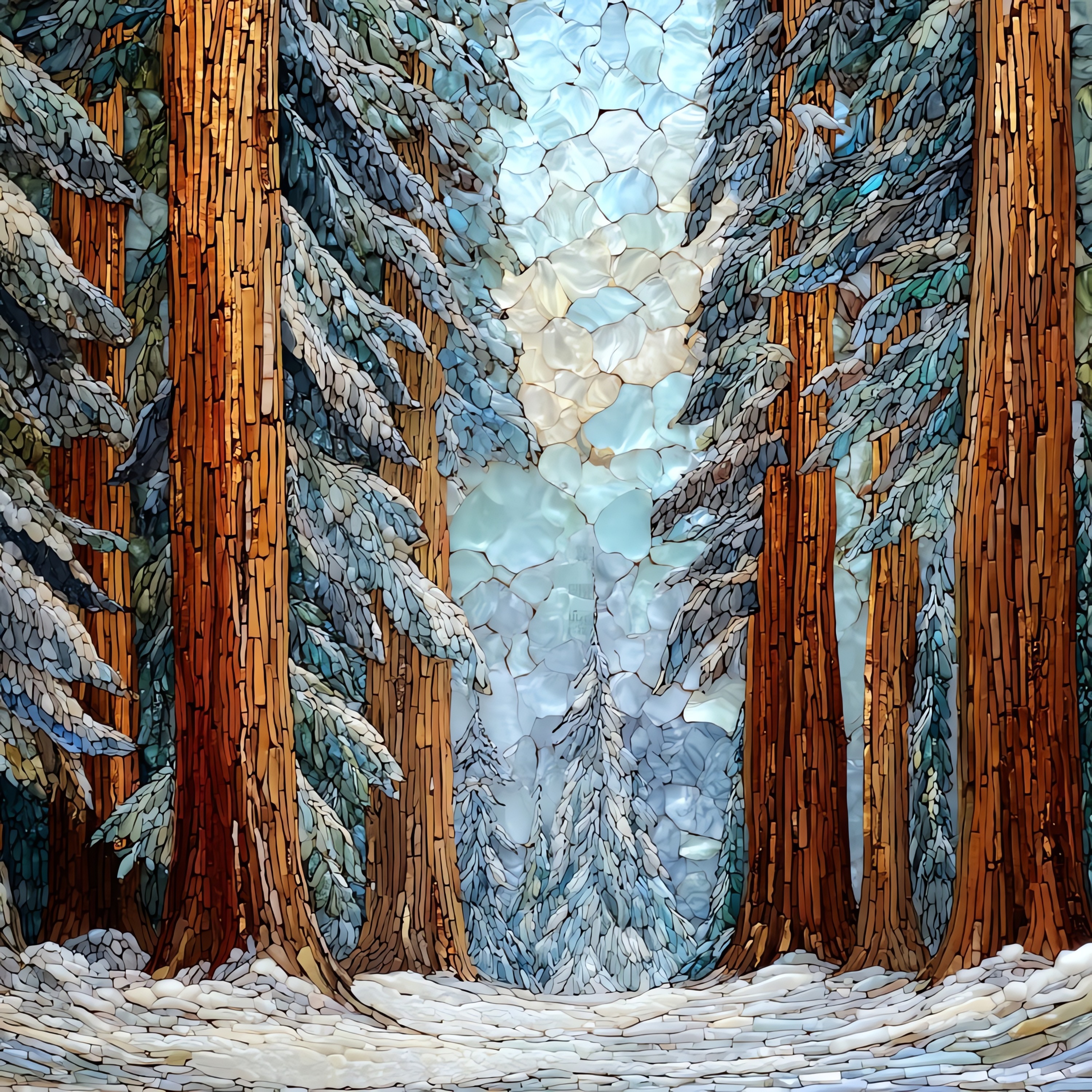
Giant Forest Snow
— — the red bark the snow won't cover.
Not only on a wall.


“Eight thousand sequoias holding heavy snow in the southern Sierra. The Generals Highway climbs out of Three Rivers and chains go on around four thousand feet. By six thousand the forest closes in on the named trees: Sherman, McKinley, the Founders Group. The snow stops the sound of the road. Some afternoons the only sound is a crown letting go a load of fresh powder. The bark stays cinnamon-red through the deepest weeks. Locals from Visalia drive up early to walk the Congress Trail before the chain-control line builds at Hospital Rock.
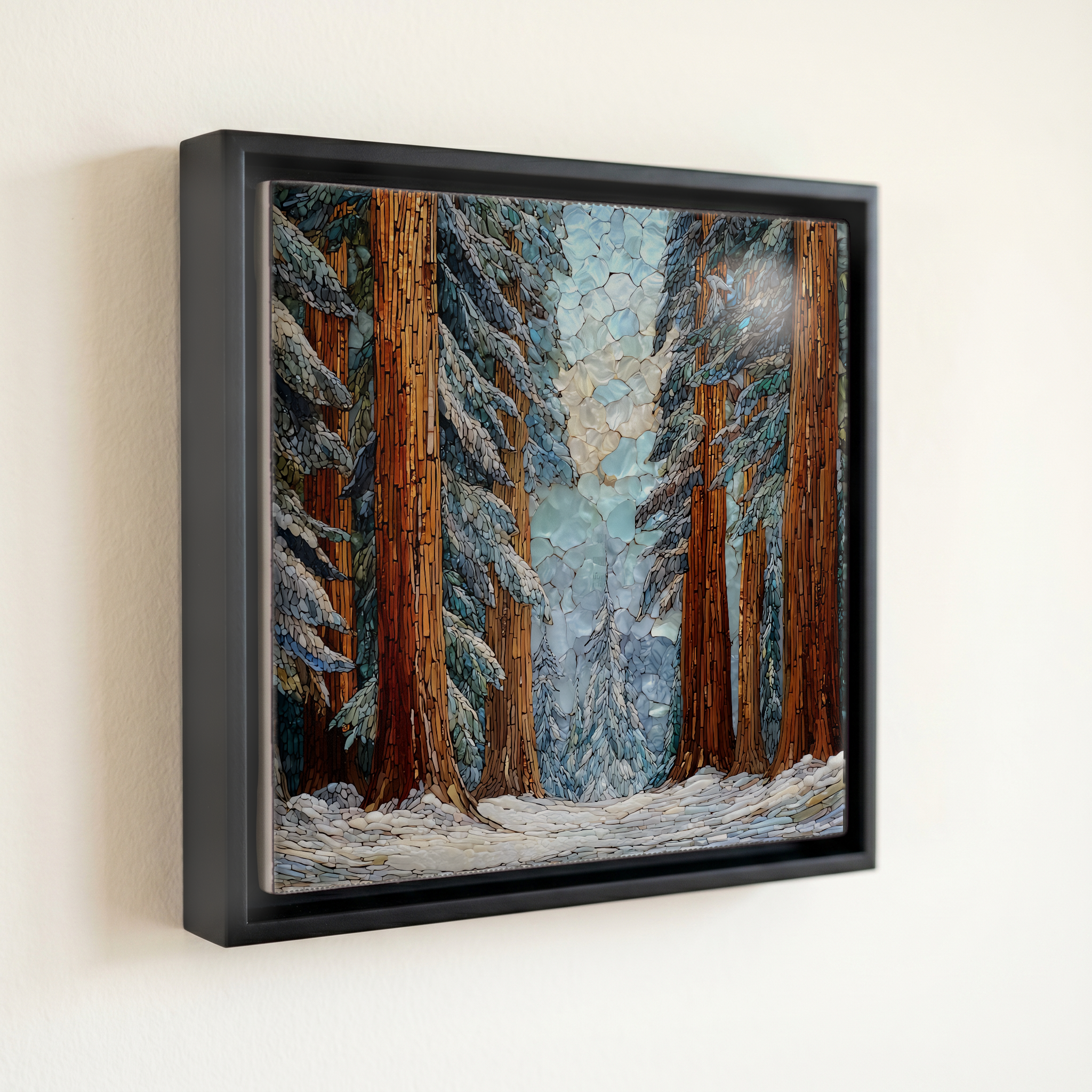
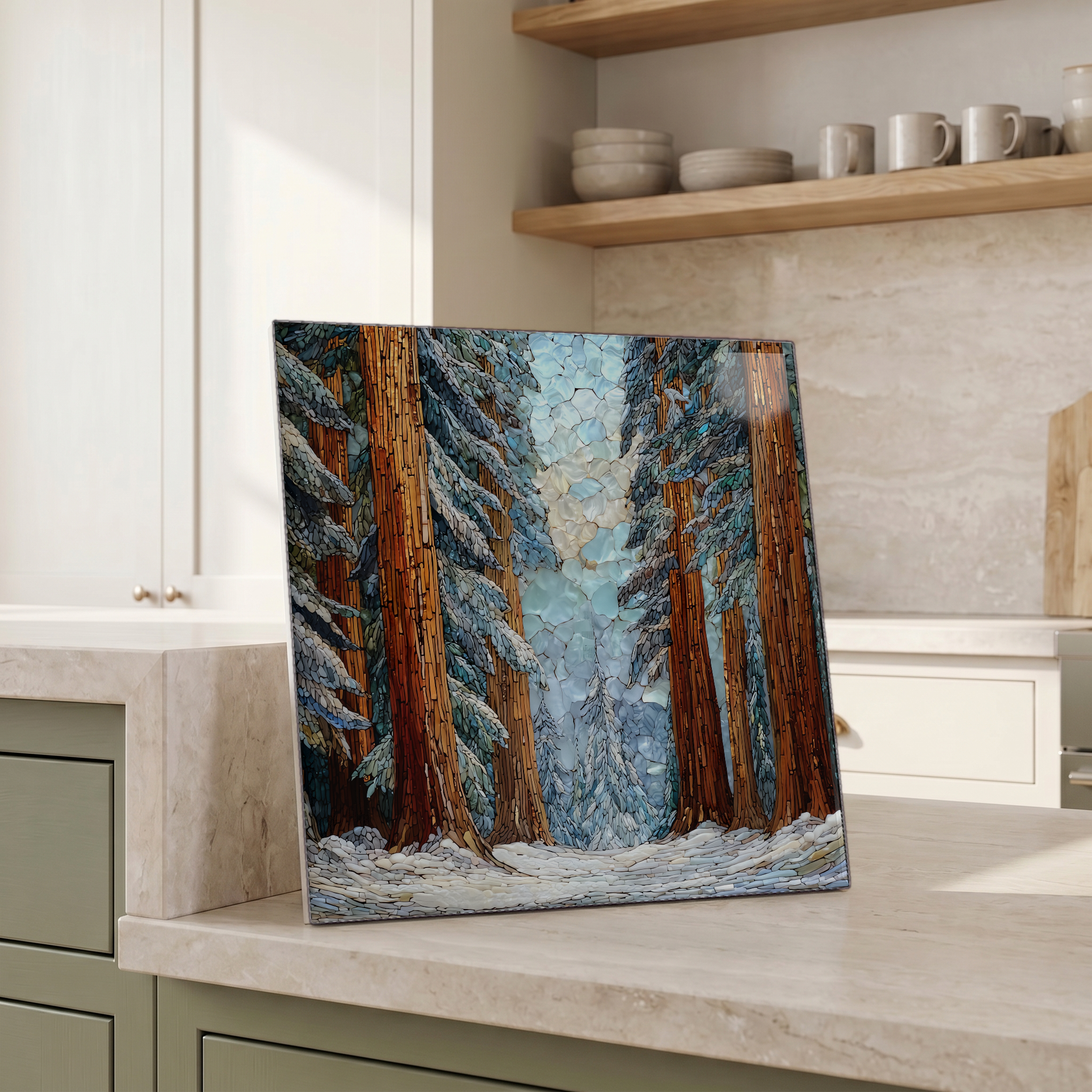
Giant Forest Snow, on ceramic.
Each tile is finished by hand in our Knoxville studio. Artwork is slowly infused into the ceramic surface under high heat and pressure, and rests beneath a thin glossy finish. The colour lives in the surface, not on top of it.
Pick any four 4-inch tiles — National Parks you've been to, a Smokies set, the four seasons of one place. $ for a set of , cork-backed, ready to live on the table.
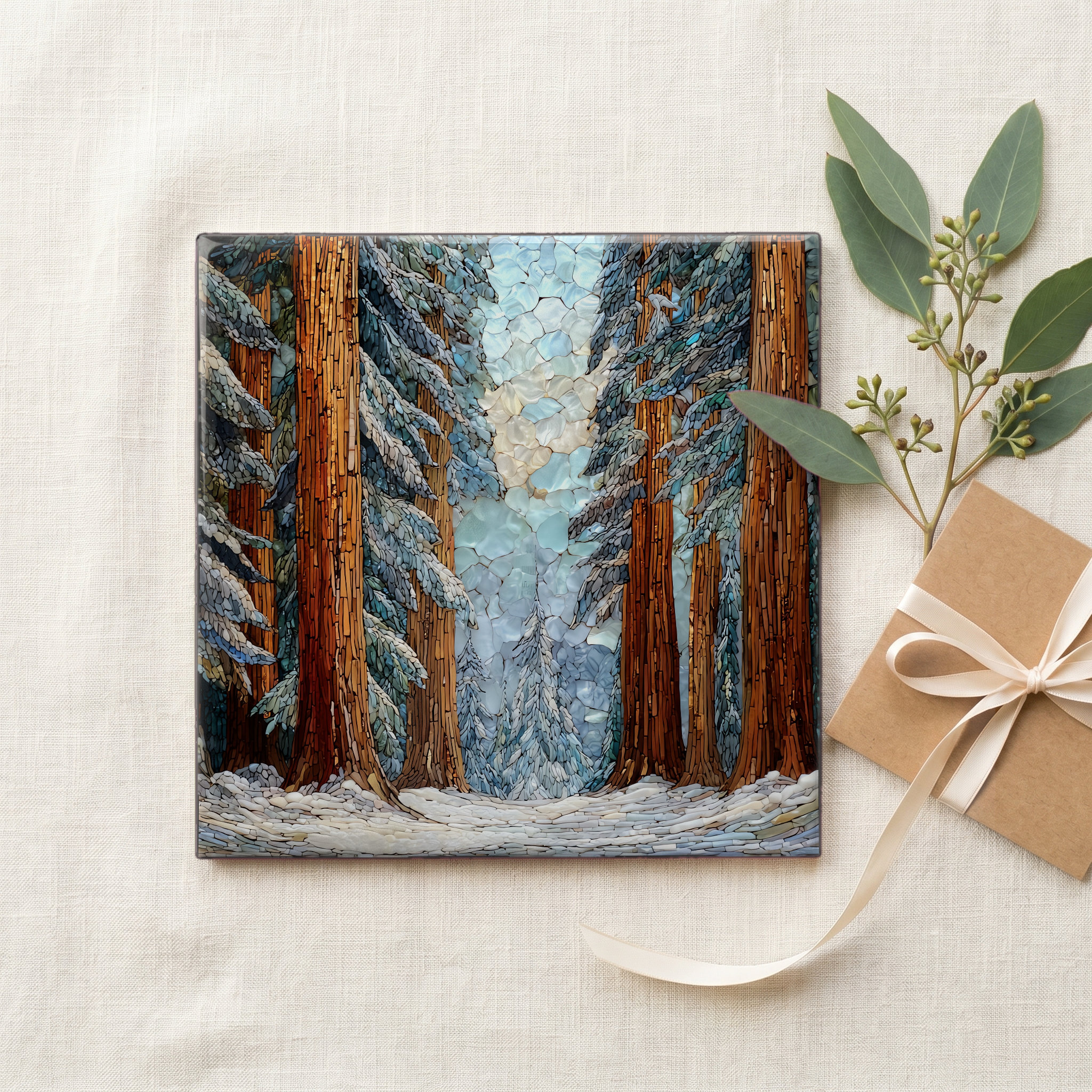
Each tile ships in a kraft box, tied with cream ribbon, with a handwritten note from the studio if you'd like to add one.

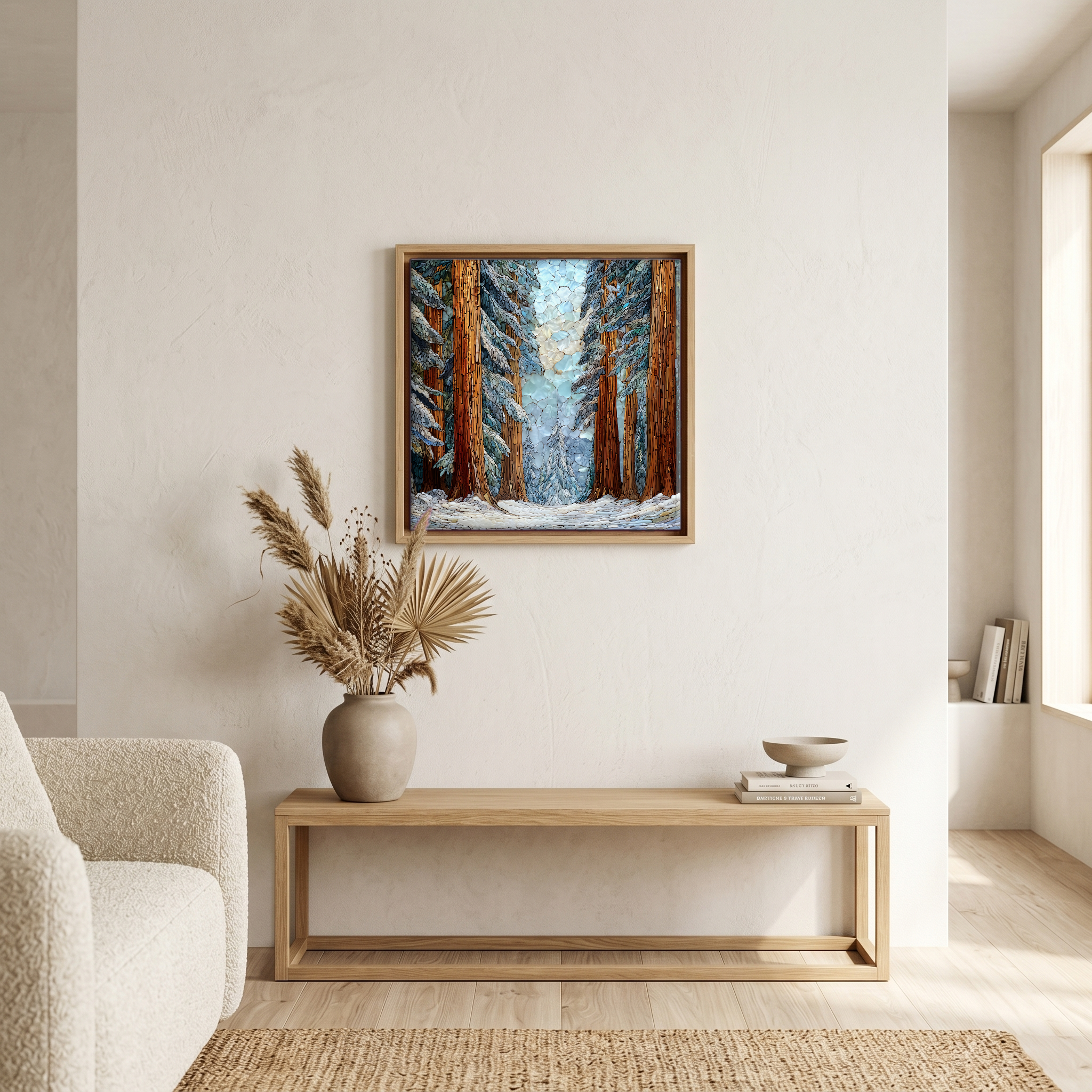
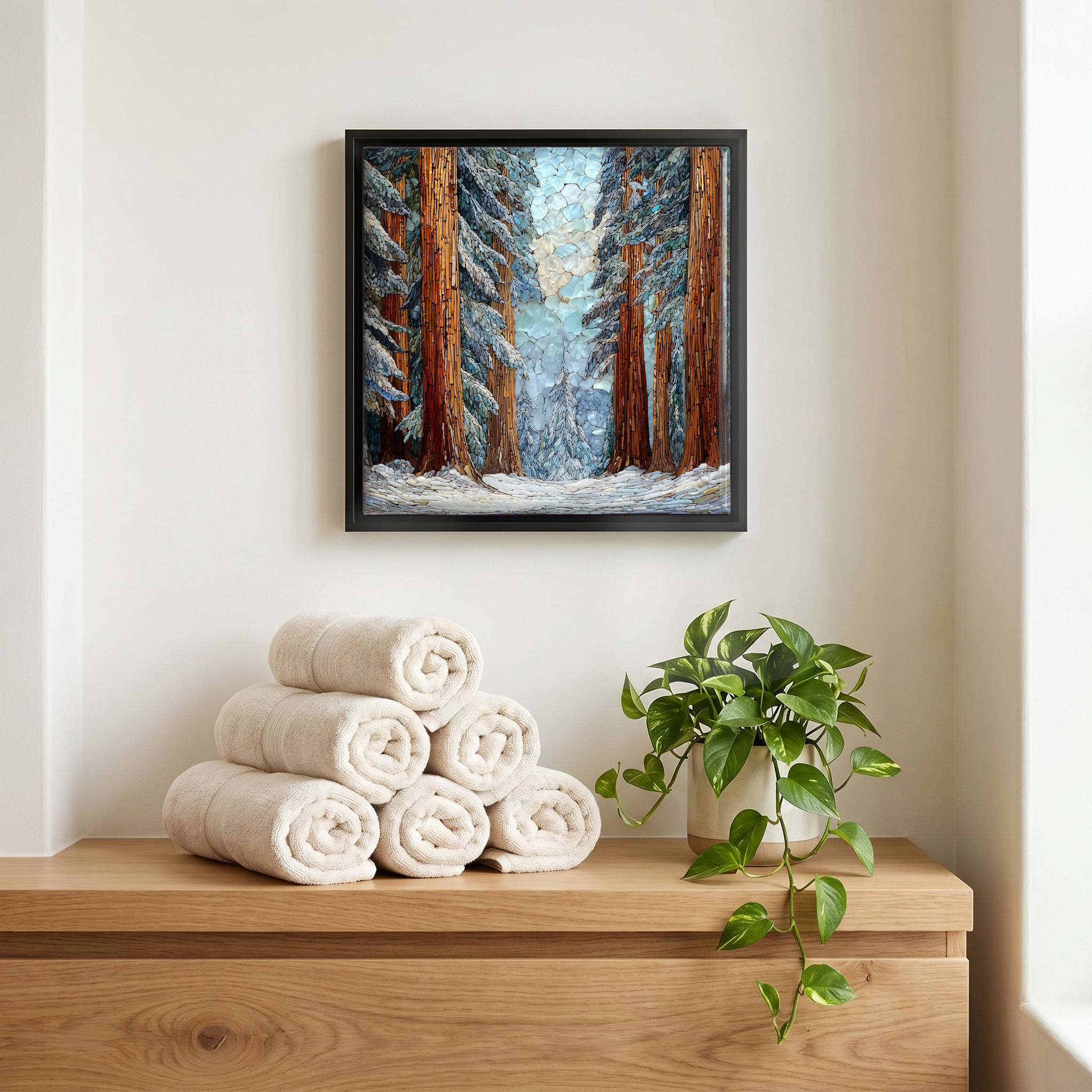
Three or five different vistas, hung together — a chapter of places you've been, or want to go.
The place, in three passes.
Giant Forest is a grove of roughly 8,000 mature giant sequoias in Sequoia National Park, in California's southern Sierra Nevada at about 6,400 feet of elevation. It holds five of the ten largest trees on Earth by trunk volume, including the General Sherman, which stands roughly 275 feet tall and is about 36 feet across at the base. The grove was named by John Muir in 1875, on a walk down from the High Sierra. Sequoia became the country's second national park in 1890, just after Yellowstone. Winter access runs through the town of Three Rivers and up the Generals Highway past Ash Mountain. The grove sits a few miles below Wuksachi Lodge.
Snow muffles sound the way old-growth does, and Giant Forest gives both at once. The crowns of the sequoias hold standing snow at a hundred and fifty feet, and the trunks, six to ten feet thick, absorb what makes it to the floor. On a fresh-snow morning at Round Meadow, the loudest sound is often water moving under the boardwalk, or the cracking lift of a crown shedding its load. The Senate Group and the House Group, two clusters along the Congress Trail near Sherman, are among the densest parts of the grove and stay especially quiet under a foot of new snow. A white-headed woodpecker moves between trunks and the sound carries unusually far.
Winter at Giant Forest runs roughly from late November through April, with the heaviest snow in January and February. The grove sits in the snowpack belt of the southern Sierra at about 6,400 feet, where annual snowfall averages around 200 inches at the Giant Forest Museum and considerably more on the surrounding ridges. The Generals Highway from Three Rivers stays open through winter but tire chains are routinely required above the chain-control line at Hospital Rock. The Kings Canyon Highway, by contrast, closes from November through May. Wolverton, two miles north of the grove, is the park's snow-play area, and snowshoes are loaned at the museum on weekends when conditions allow.