Wender·Vista
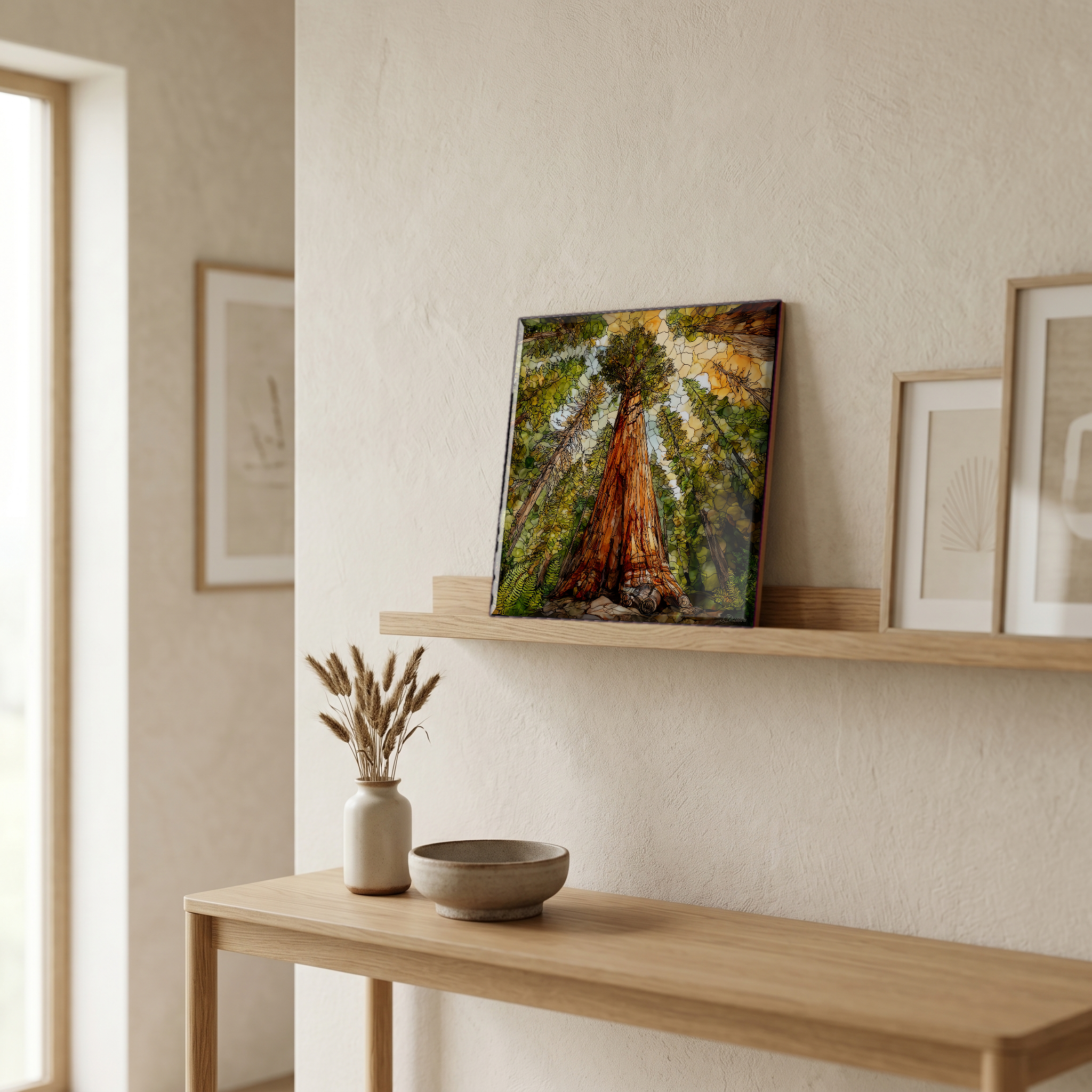
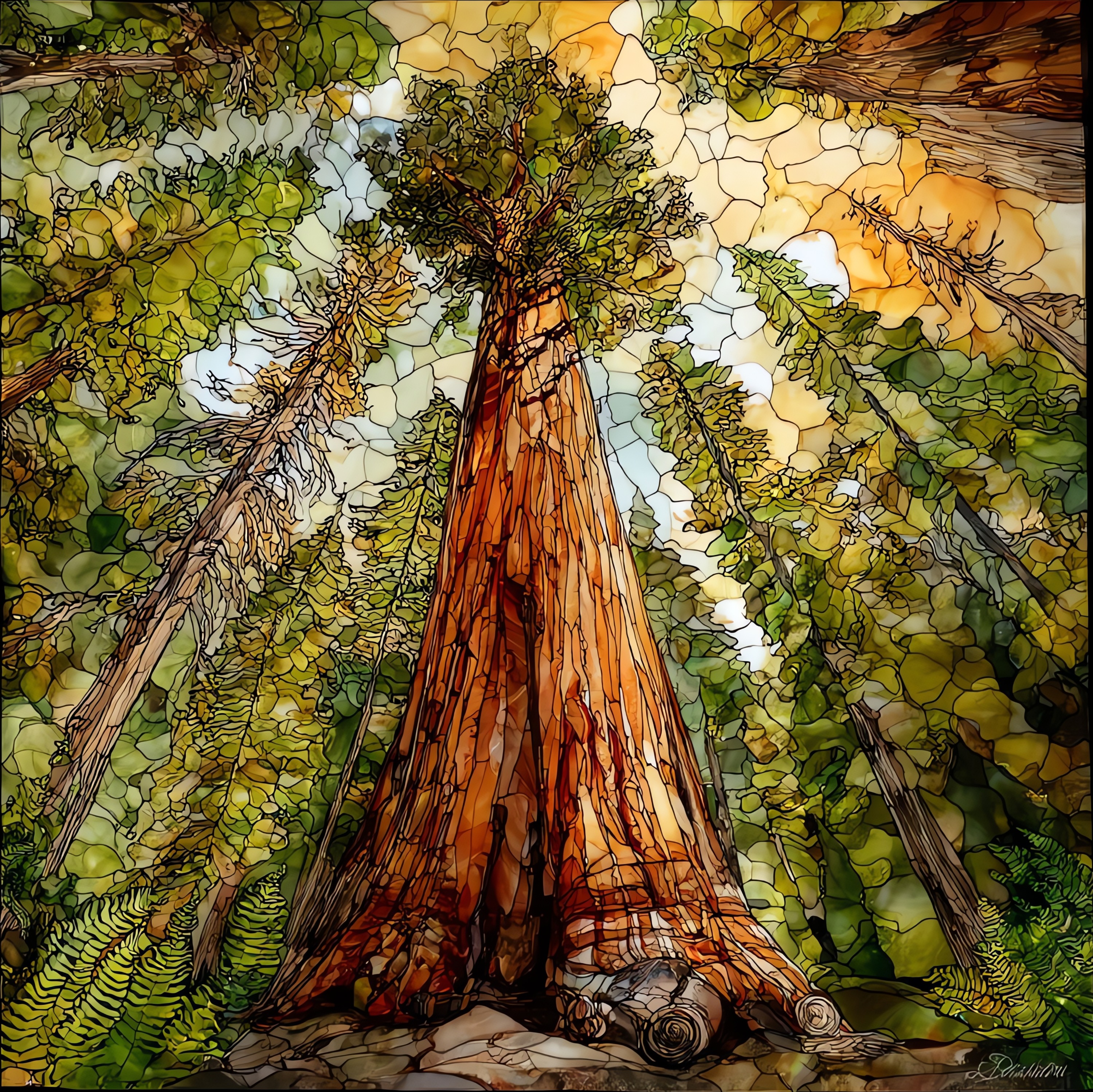
General Sherman Tree
shown on ceramic, 12-inch tileCalifornia · United States
in the Giant Forest, high in the southern Sierra

General Sherman Tree

two thousand winters in one trunk.

Where it lives

Not only on a wall.

A small tile on the nightstand catching the morning. A larger one above the fire. Yours, wherever you spend the slow hours.
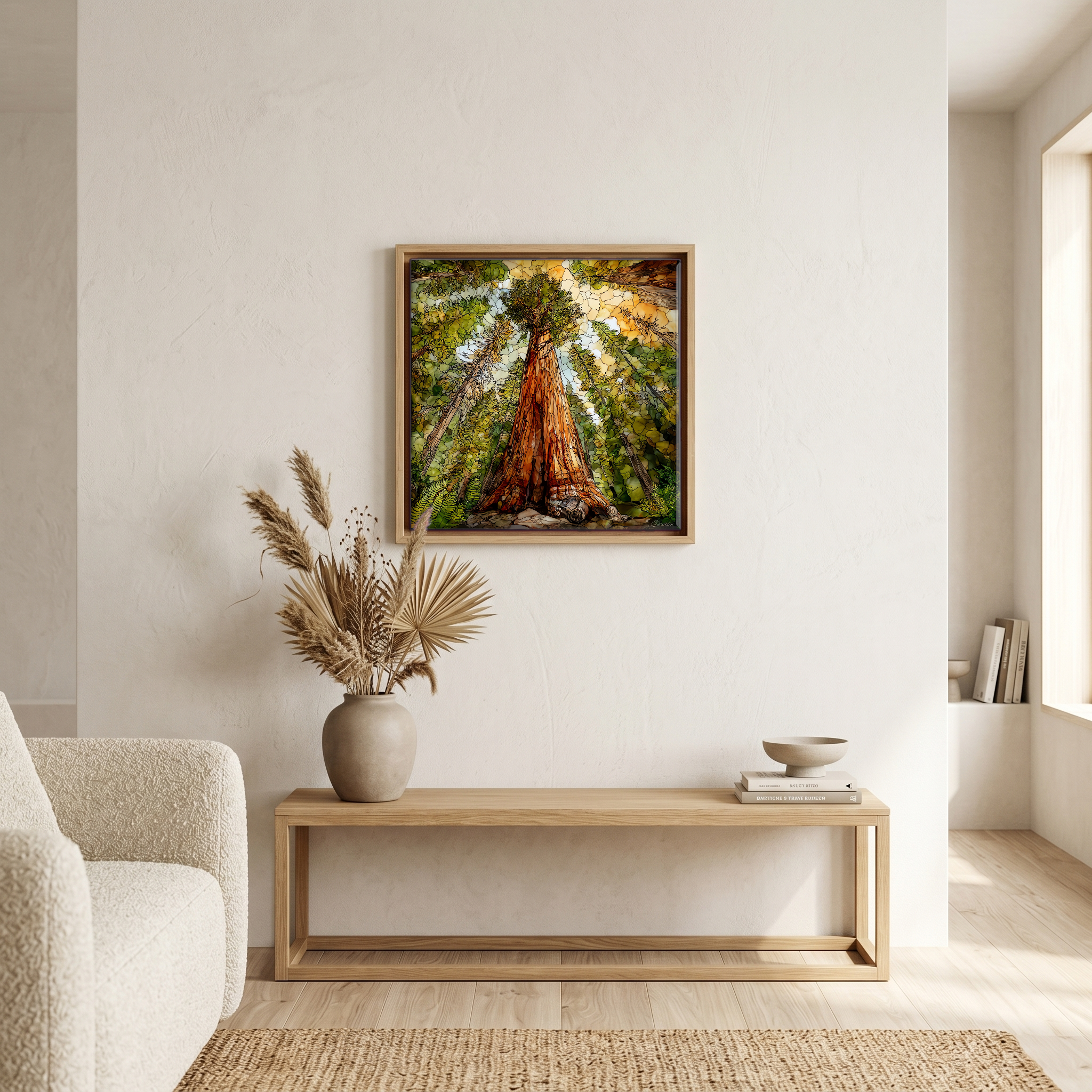
Above the bench, in a warm oak surround.
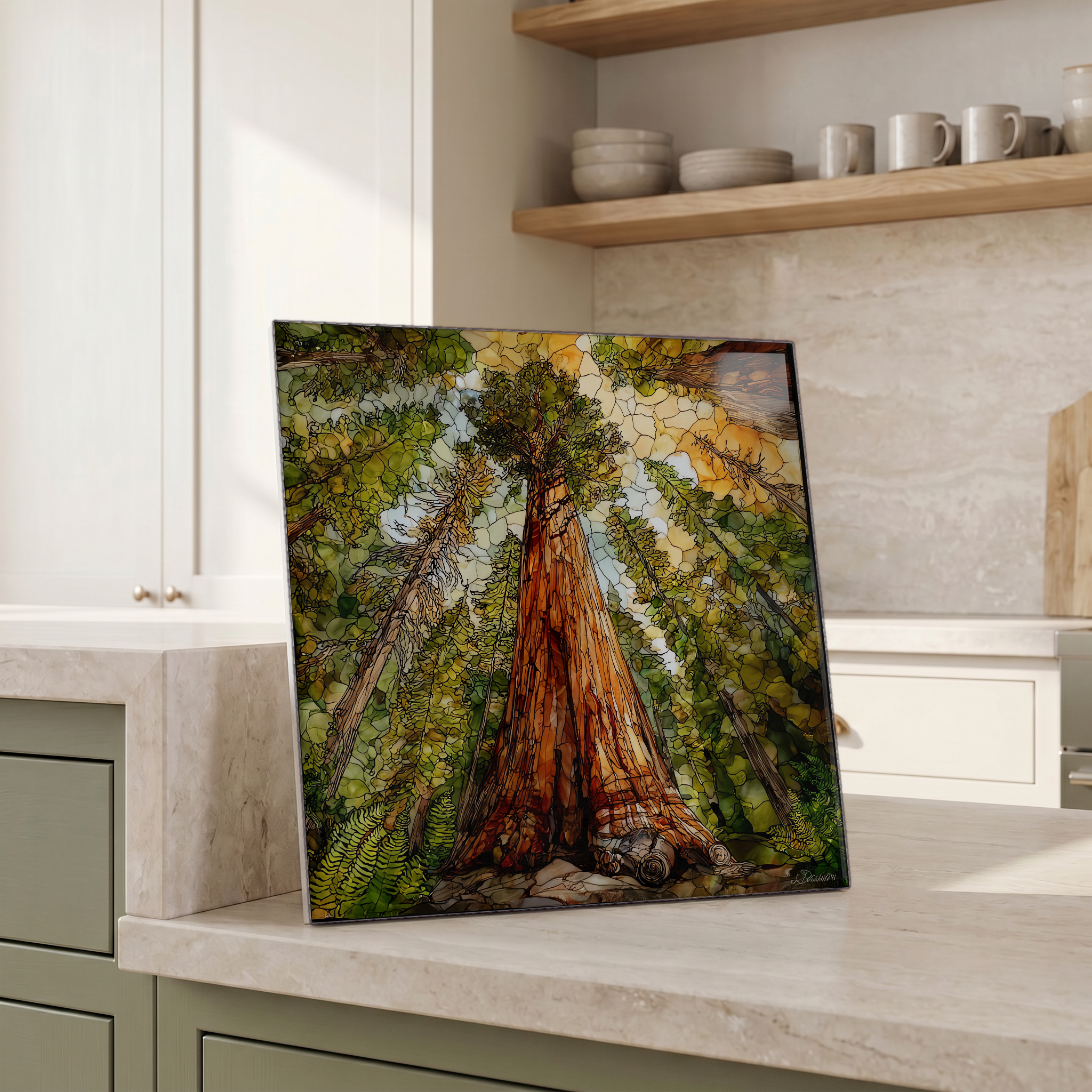
Beside the kettle, propped on the counter.
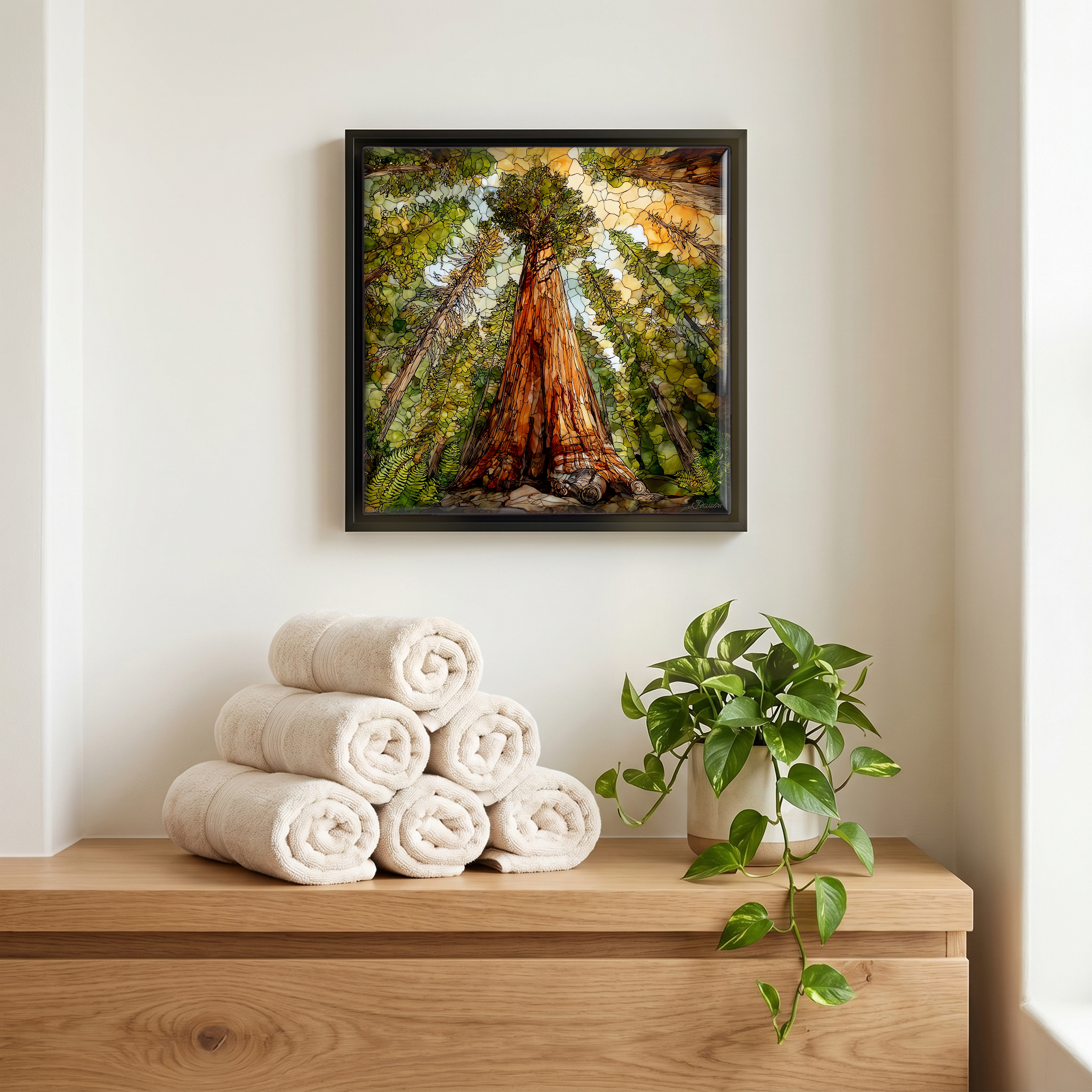
Above the linens, in a slim black surround.
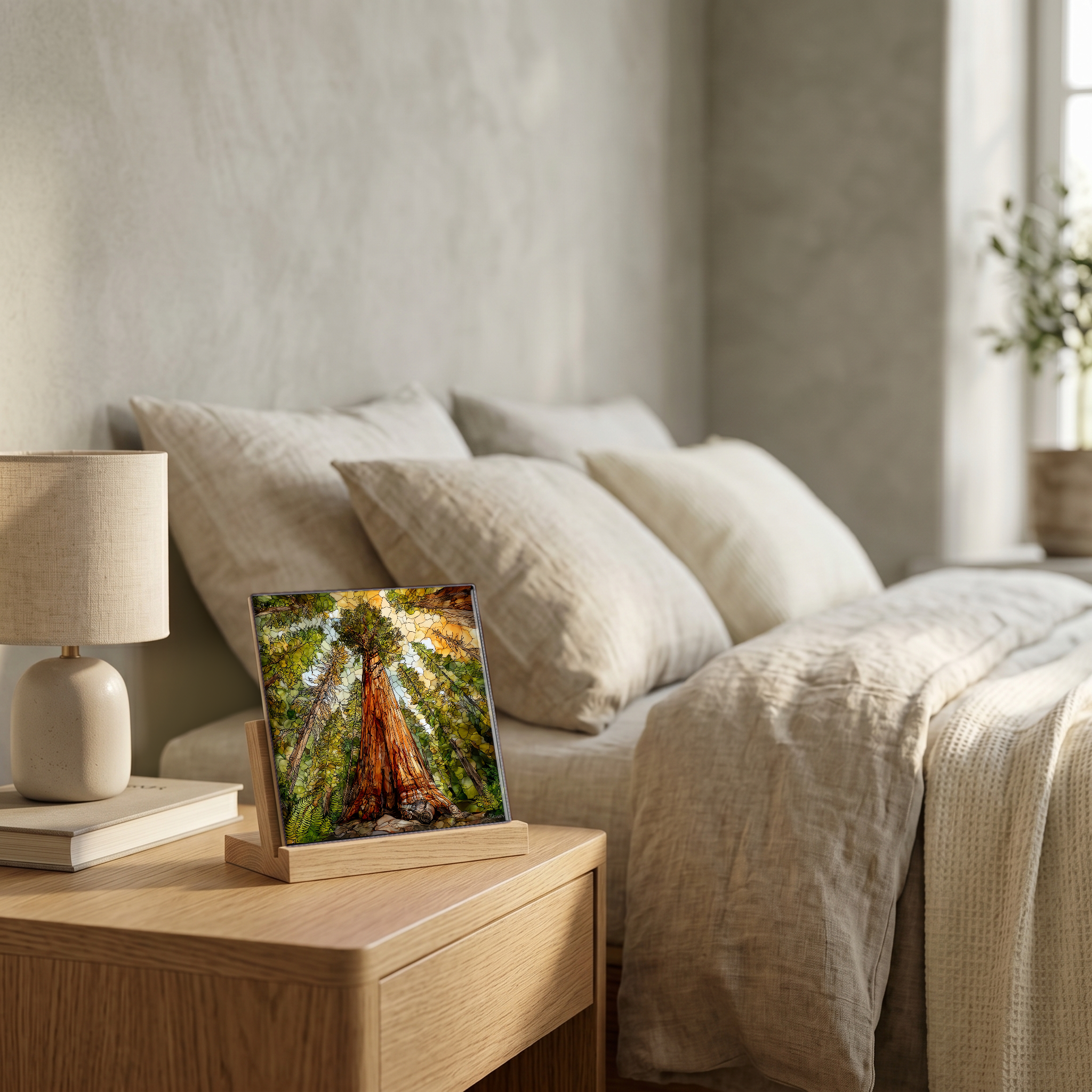
On the nightstand, on a light oak stand.
On a picture ledge, where the light comes in.
a note from the studio

The largest living tree on earth, by volume, in the Giant Forest above the Kaweah River. Two thousand winters of cool fog and dry summer, all of it standing in one place. The bark alone is nearly two feet thick where the trail comes around the base. Up close the scale flattens. The camera can't hold it, and people set a hand on the rail and just look up. James Wolverton named the tree in 1879, for the general he had served under. The grove holds a silence most forests don't, because the canopy is too far up for any sound to come back.
from the studio
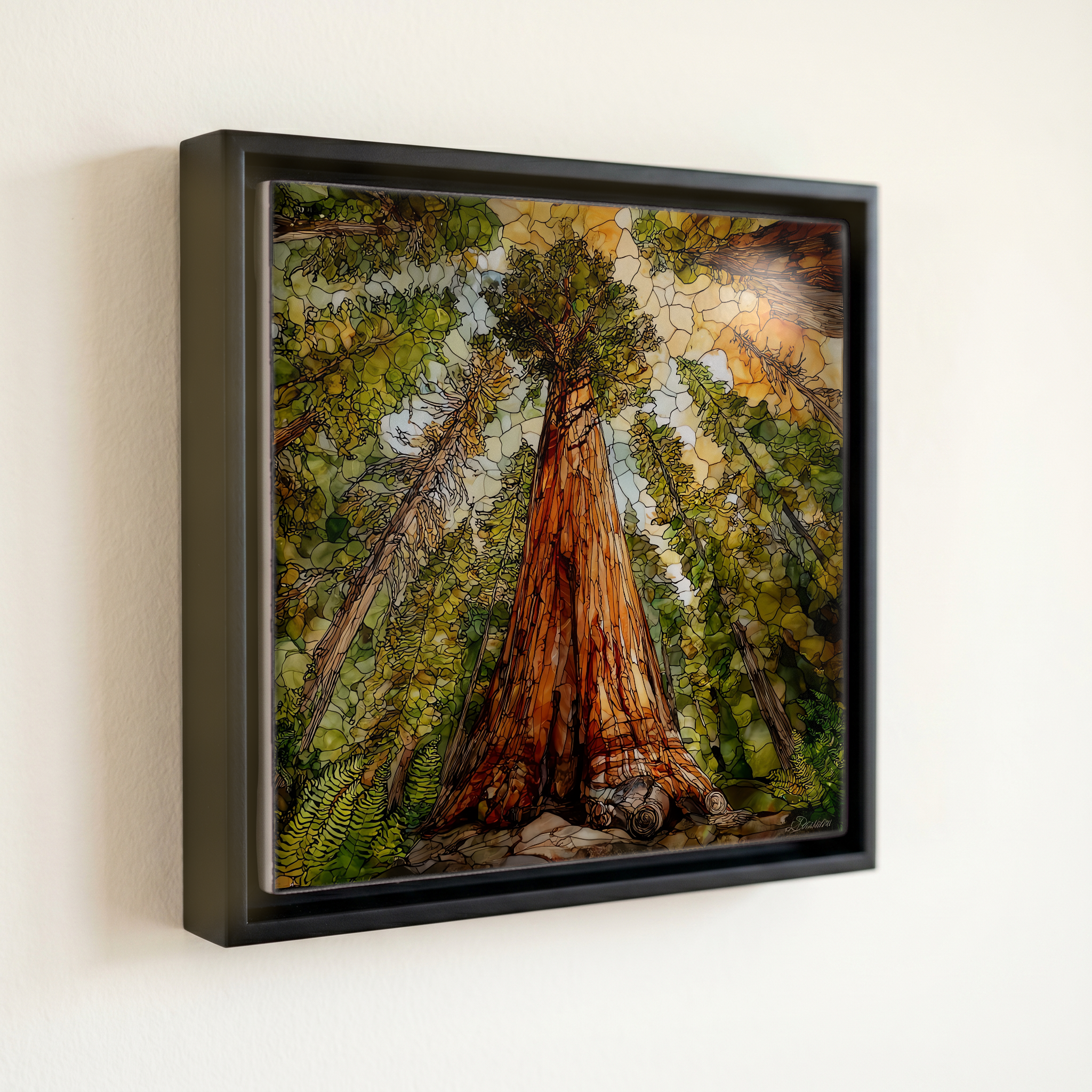
shown in a slim black floating frame · 6 × 6 in
— bring it home

General Sherman Tree, on ceramic.

Each tile is finished by hand in our Knoxville studio. Artwork is slowly infused into the ceramic surface under high heat and pressure, and rests beneath a thin glossy finish. The colour lives in the surface, not on top of it.

What kind of piece?
One tile — square or rectangle.
How big?
the popular one — counter, shelf, nightstand
6 × 6 in · 15 cm · 1.6 lb
Surface finish
A clear glossy finish — the artwork reads as if under resin. Ideal for show-pieces and framed wall art.
How it sits
A hidden cleat — sits ¼″ proud of the wall.
$58
Hand-finished and shipped from our studio at the foot of the Smokies. On your wall in about ten days.
size
6 × 6 in
15 cm
weighs
1.6 lb
solid in the hand
surface
ceramic, hand-finished
art rests beneath a thin glossy finish
from
Knoxville, TN
our family studio, at the foot of the Smokies
— start a Coaster Set

Pick any four 4-inch tiles — National Parks you've been to, a Smokies set, the four seasons of one place. $ for a set of , cork-backed, ready to live on the table.
comes gift-ready
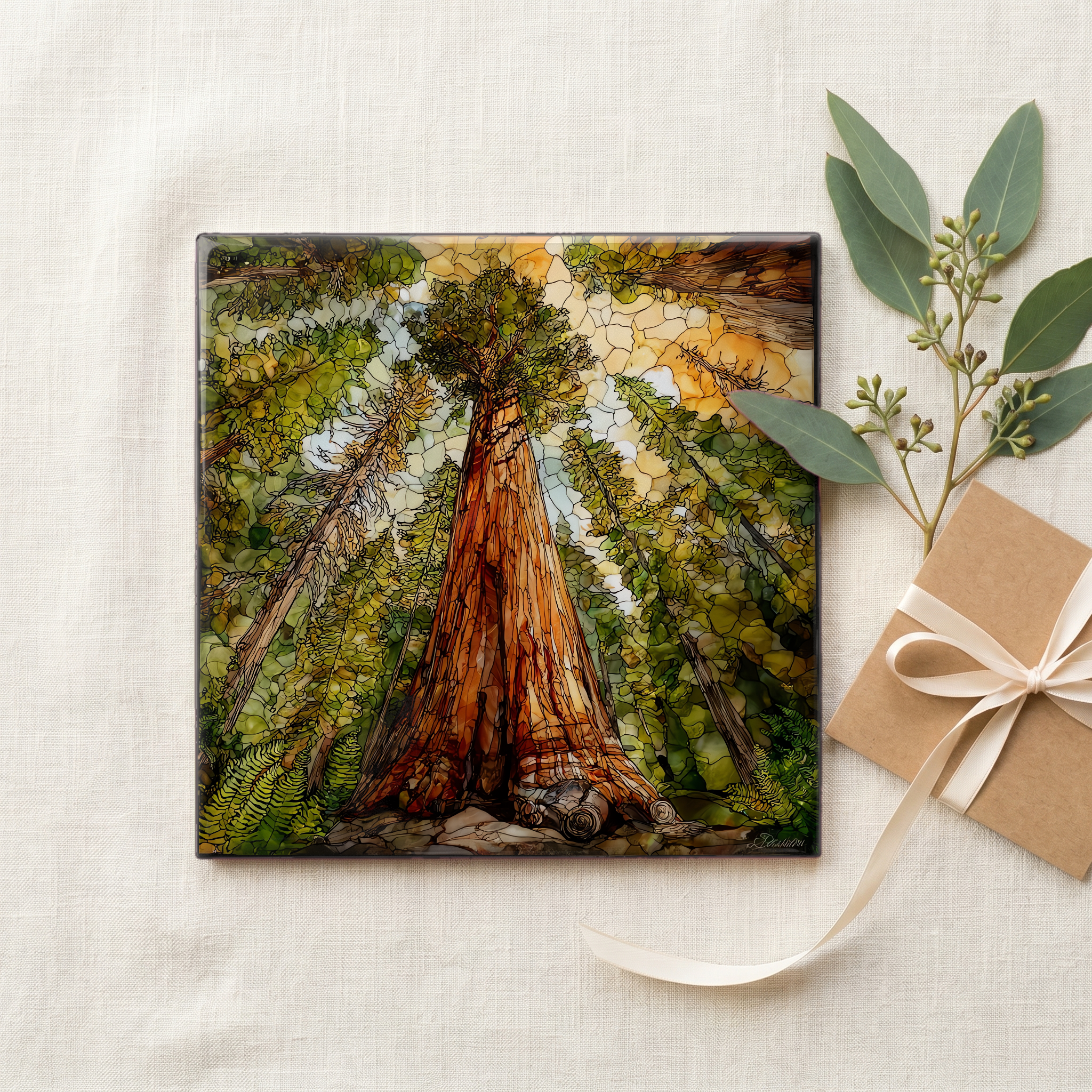
comes gift-ready

Each tile ships in a kraft box, tied with cream ribbon, with a handwritten note from the studio if you'd like to add one.
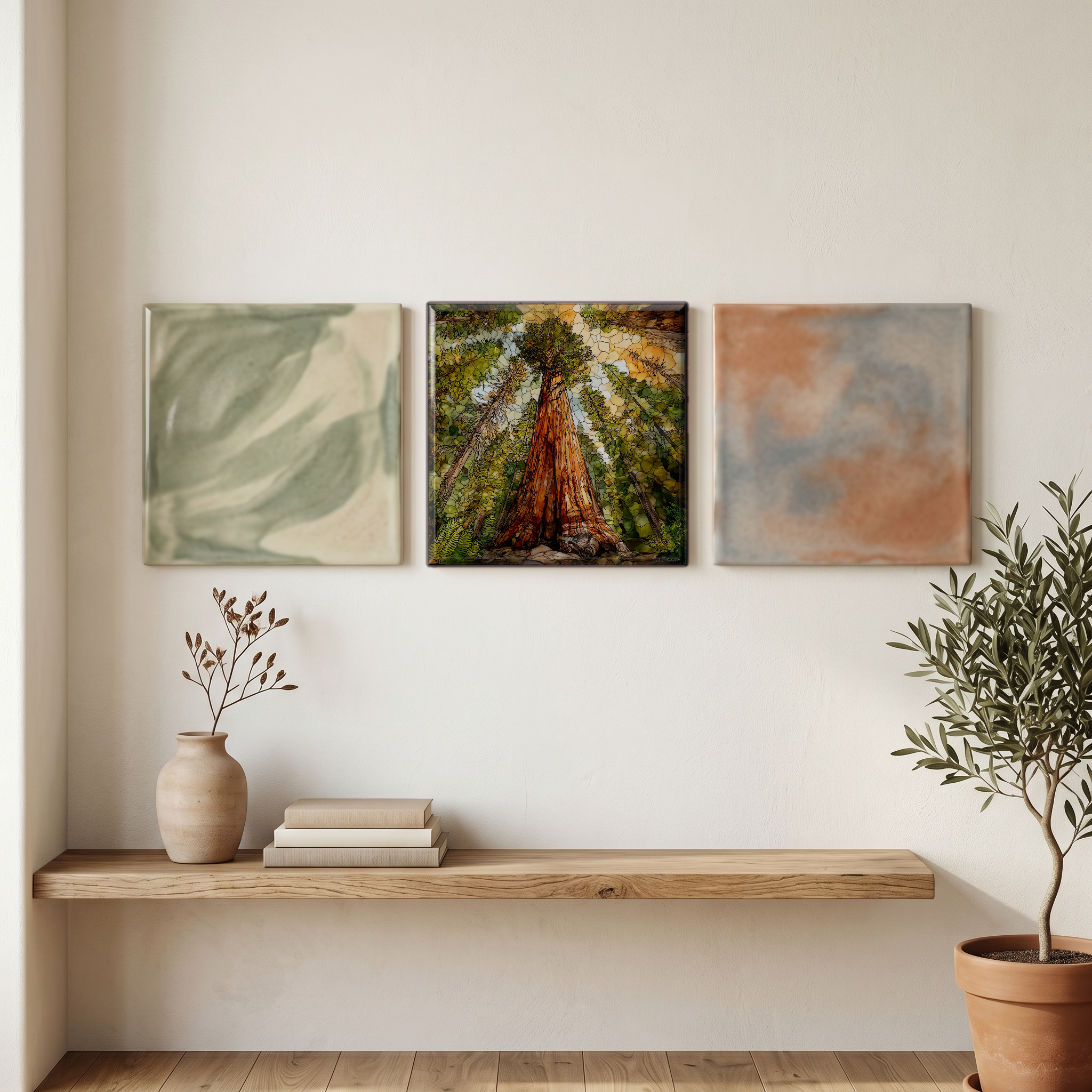
or build a grouping
or build a grouping

Three or five different vistas, hung together — a chapter of places you've been, or want to go.

about General Sherman Tree

The place, in three passes.

A little of what's known, in case you fall down the rabbit hole — or want to go see it yourself.
the place

The General Sherman Tree stands in the Giant Forest, a 1,880-acre grove of giant sequoias in California's Sequoia National Park, about 36 miles east of Visalia and roughly 6,900 feet up the western slope of the southern Sierra Nevada. The park is the second-oldest in the United States, set aside in 1890 specifically to protect these trees. Among the thousands of sequoias in the grove, General Sherman is the largest living single-stem tree on earth by volume, at about 52,500 cubic feet of wood. The half-mile Main Trail drops from the upper parking lot down to the base of the tree; the climb back is steep enough that the park keeps benches every few hundred feet.

the year

Best current estimates put the tree's age at roughly 2,200 to 2,700 years. It would have been a sapling around the time of Augustus Caesar, already mature when the Magna Carta was signed, ancient when California was admitted to the Union in 1850. The trunk gains the equivalent of one ordinary 60-foot tree's worth of wood every year, a rate scientists at the U.S. Geological Survey have used to model how the largest sequoias grow more wood late in life than early. The naturalist James Wolverton named the tree in 1879, for William Tecumseh Sherman, the Union general he had served under during the Civil War. A major branch came down in 2006; the trunk did not notice.

the visit

The trailhead is signed off the Generals Highway, the spine road that climbs through Sequoia National Park from the Ash Mountain Entrance up into the Giant Forest. The main parking lot sits above the tree; the half-mile Main Trail descends through the grove to the base, and the climb back gains roughly 200 feet. A separate accessible trail leaves from the disabled-parking area near the Wolverton Road junction and approaches the tree on level ground. The Giant Forest stays open in every season, though the Generals Highway is plowed in sections only. Winter visits often require tire chains, and the upper roads can close in heavy snow. Rangers ask visitors to stay behind the wooden fence at the base; the surface roots are shallow and easily compacted.

where
United States · Tulare County, California
within
Sequoia National Park
elevation
2,109 m · 6,919 ft
position
36.5814° N · 118.7514° W
the neighborhood

What's nearby.

A handful of named places within an hour's walk or short drive. Some we've already painted; some we will.
1 km S
President Tree
giant sequoia
5 km SW
Moro Rock
granite dome
5 km SE
Crescent Meadow
subalpine meadow
7 km N
Tokopah Falls
granite waterfall
8 km SW
Tunnel Log
fallen sequoia
N
General Sherman Tree
President Tree
Moro Rock
Crescent Meadow
Tokopah Falls
Tunnel Log
common questions

What people ask.

A few questions we get about General Sherman Tree — and about bringing the piece home.
about the place

The General Sherman Tree stands in the Giant Forest of Sequoia National Park in California's southern Sierra Nevada, at about 6,900 feet of elevation. The trailhead is signed off the Generals Highway, roughly 36 miles east of Visalia and the closest gateway town of Three Rivers.

Best estimates put the tree's age at about 2,200 to 2,700 years. The trunk has been quietly adding wood since around the early Roman Empire, which makes the tree one of the oldest single-stem living organisms on earth, though several bristlecone pines in California's White Mountains are older.

It is the largest known living single-stem tree on earth, measured by trunk volume. At about 52,500 cubic feet of wood and roughly 275 feet tall, it is not the tallest tree (Hyperion, a coast redwood, holds that record) nor the oldest, but no other tree carries this much living wood in one trunk.

The naturalist James Wolverton named the tree in 1879 for William Tecumseh Sherman, the Union general he had served under during the Civil War. The name became official after Sequoia National Park was established in 1890.

The General Sherman Tree stands about 275 feet tall, with a base diameter of roughly 36 feet and a ground-level circumference near 103 feet. Coast redwoods grow taller, but no other tree in the world has a thicker base or holds more wood by volume in a single trunk.

No. The National Park Service has enclosed the base in a low wooden fence to protect the shallow surface roots, which compact easily under foot traffic. Visitors walk the paved Main Trail to a viewing area at the base; rangers will redirect anyone who crosses the fence.

Late spring through early fall draws the largest crowds, and the trail can be busy by mid-morning. Early mornings on weekdays in May or October tend to be quietest. The park stays open in winter, but the Generals Highway above 4,000 feet often requires tire chains after snow.

about the piece in your home

It has been a meaningful gift for many of our customers with ties to the southern Sierra. People who have walked the Main Trail or grown up coming to the Giant Forest tend to recognise the tile right away. A Small or Medium with a handwritten note from the studio carries well.

The deep reds of the bark and the cool greens of the surrounding forest pair quietly with three families: Mountain-modern interiors with warm wood and stone, Biophilic rooms built around plant life and earth tones, and Craftsman or Mission interiors where the palette already leans toward redwood, copper, and forest green.

Yes. Biophilic interiors lean on three things: real plants, natural materials, and visual references to specific wild places. A ceramic tile of an old-growth sequoia speaks all three at once, and reads as a piece of a real grove rather than a generic forest pattern. The Medium and Large read well on a feature wall.

For most sofas and consoles, a single Large reads at the right scale. For a wider sectional or a long entry console, a four-tile Mural opens the image to roughly twice the visual presence. A nine-tile Mural is for stair walls and dining rooms where the room calls for one anchoring piece.

Yes. Order the same image in the Dura Satin or Matte finish for any room where humidity, splashes, or scrubbing are in play. Both finishes are scratch-resistant and stand up to daily wipe-downs. The Glossy finish is reserved for framed wall pieces in dry rooms.

A soft microfibre cloth with plain water is enough for routine dust and fingerprints. For kitchen splatter, a small amount of mild dish soap on a damp cloth, then a clean-water wipe. Avoid abrasive pads, bleach, and acidic cleaners; the colour lives in the ceramic surface, not on top of it.

Yes. The General Sherman tile is an original painting by Reid Wender, made for the WenderVista atlas. We are a single family studio in Knoxville, Tennessee, and we do not licence the work, sell the file, or reproduce it under any other brand. Each tile is hand-finished in-house.

if this one stayed with you

A few you might also love.

Hand-picked by the eye that found Sorapis. Same air, same kind of quiet.